

- Industry Size (2025)
- USD 760.1 Mn
- Forecast (2035)
- USD 1762.6 Mn
- CAGR (2025 to 2035)
- 8.8%
Demand for Camel Milk Products in Japan Forecast and Outlook 2025 to 2035
The demand for camel milk products in Japan is expected to grow from USD 760.1 million in 2025 to USD 1,762.6 million by 2035, reflecting a compound annual growth rate (CAGR) of 8.8%. Camel milk is gaining recognition for its nutritional benefits, including higher protein and lower fat content compared to cow’s milk. It is also easier to digest, making it a preferred option for individuals with lactose intolerance. As consumers become more health-conscious and seek functional, plant-based alternatives to traditional dairy products, camel milk products, including milk, cheese, and yogurt, are increasingly incorporated into diets. The expanding awareness of camel milk’s health benefits, combined with the rise of clean-label and natural food trends, positions it for substantial growth in Japan’s competitive dairy industry.
Sustainability trends and the increasing interest in plant-based and natural food options will also support the continued growth of camel milk products in Japan. As more consumers seek ethical and healthier alternatives to traditional dairy, camel milk products will benefit from this shift. The industry’s expansion will be further fueled by increased distribution channels, with camel milk becoming more widely available in supermarkets, health stores, and online outlets. As awareness of camel milk’s benefits increases, demand will remain strong, ensuring robust growth in this sector throughout the forecast period.
Quick Stats of the Demand for Camel Milk Products in Japan
- Demand for Camel Milk Products in Japan Value (2025): USD 760.1 million
- Demand for Camel Milk Products in Japan Forecast Value (2035): USD 1,762.6 million
- Demand for Camel Milk Products in Japan Forecast CAGR (2025-2035): 8.8%
- Demand for Camel Milk Products in Japan Leading Product Type: Plain Milk
- Demand for Camel Milk Products in Japan Key Growth Regions: Kyushu & Okinawa, Kanto, Kansai, Chubu, Tohoku, Rest of Japan
- Demand for Camel Milk Products in Japan Top Players: Camelicious, Desert Farms, Inc., The Camel Milk Co. Australia Pty Ltd., Camilk, CAMEL DAIRY SMITS
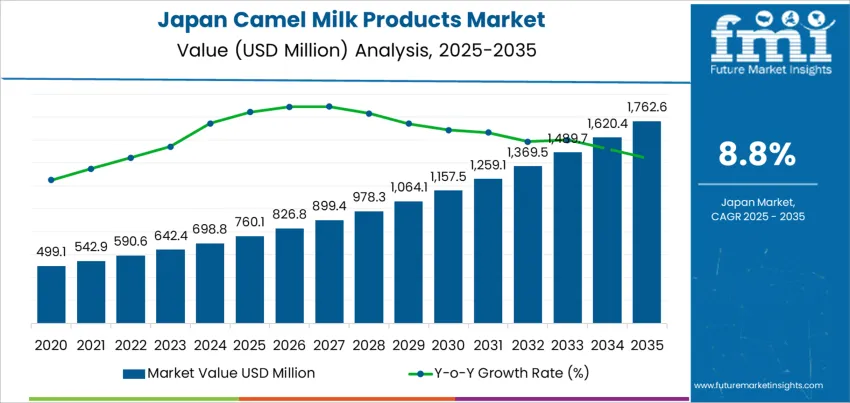
What is the Growth Forecast for the Demand for Camel Milk Products in Japan through 2035?
From 2025 to 2030, demand for camel milk products is expected to grow from USD 760.1 million to USD 1,064.1 million, adding USD 304.0 million in value. This growth will be driven by the increasing availability of camel milk products across both traditional and online retail platforms, making them more accessible to a wider audience. As Japanese consumers become more aware of camel milk’s digestive and immune-boosting properties, the demand for these products will continue to rise. New product innovations, such as camel milk-based fortified beverages and dairy alternatives, will attract health-conscious consumers seeking more sustainable and functional options.
From 2030 to 2035, the demand for camel milk products will continue to rise from USD 1,064.1 million to USD 1,762.6 million, contributing USD 698.5 million in value. The increase in demand during this period will be fueled by growing acceptance of camel milk products in the mainstream industry. With a stronger focus on personalized nutrition and the increasing interest in functional foods that support gut health and immunity, camel milk will establish itself as a preferred dairy alternative. The expanding range of camel milk products available, including fortified versions and various flavors, will drive broader consumer adoption.
Demand for Camel Milk Products in Japan Key Takeaways
| Metric | Value |
|---|---|
| Demand for Camel Milk Products in Japan Value (2025) | USD 760.1 million |
| Demand for Camel Milk Products in Japan Forecast Value (2035) | USD 1,762.6 million |
| Demand for Camel Milk Products in Japan Forecast CAGR (2025-2035) | 8.8% |
Why is the Demand for Camel Milk Products in Japan Growing?
The demand for camel milk products in Japan is growing due to the increasing recognition of camel milk as a nutritious and healthy alternative to cow's milk. Camel milk is rich in proteins, vitamins, and minerals, and is considered easier to digest and less allergenic than traditional dairy. With rising consumer interest in natural and functional foods, camel milk products are gaining traction, particularly among health-conscious individuals and those with lactose intolerance or dairy allergies.
A major driver of this growth is the rising awareness of the unique health benefits offered by camel milk. It is known to contain lower levels of lactose compared to cow's milk, making it an attractive option for individuals with lactose sensitivity. Camel milk is often promoted for its potential to boost immune function, improve gut health, and aid in skin conditions. As consumers increasingly prioritize functional foods and beverages that offer health benefits, camel milk products are becoming more popular.
The trend towards alternative dairy products, driven by both health considerations and ethical concerns about conventional dairy production, is contributing to the growth of camel milk consumption. The rise of plant-based diets and the demand for non-dairy alternatives are opening up new opportunities for camel milk products, including milk, cheese, and yogurt. As awareness of camel milk’s health benefits continues to spread and its availability increases, the industry for camel milk products in Japan is expected to experience continued growth through 2035.
What is the Segment-Wise Analysis of Demand for Camel Milk Products in Japan?
Demand for camel milk products in Japan is segmented by product type, distribution channel, and region. By product type, demand is divided into plain milk, flavored milk, powder, ice cream, and fermented, with plain milk leading at 60%. The demand is also segmented by distribution channel, including offline and online, with offline accounting for 75%. Regionally, demand is distributed across Kyushu & Okinawa, Kanto, Kansai, Chubu, Tohoku, and the rest of Japan.
Why Does Plain Camel Milk Lead the Demand in Japan?
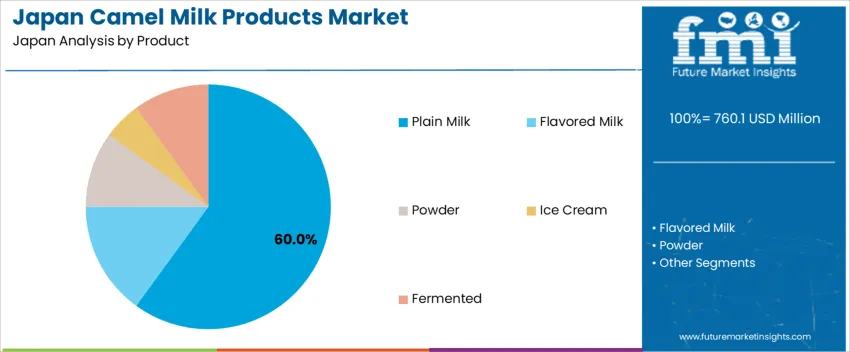
Plain camel milk accounts for 60% of the demand for camel milk products in Japan, driven by its health benefits and nutritional properties. Camel milk is rich in essential nutrients, vitamins, and minerals, making it a popular choice for health-conscious consumers. Its hypoallergenic properties, as well as its ease of digestion compared to cow’s milk, contribute to its popularity, particularly among individuals with lactose intolerance. Plain camel milk is also a versatile product, serving as a base for other camel milk products like flavored milk, powder, and ice cream. The rising awareness of camel milk’s potential health benefits, such as improved immune function and digestive health, further drives demand for plain camel milk. As Japanese consumers increasingly seek alternative, nutrient-dense dairy options, plain camel milk continues to lead the industry.
Why Does Offline Distribution Lead the Demand for Camel Milk Products in Japan?
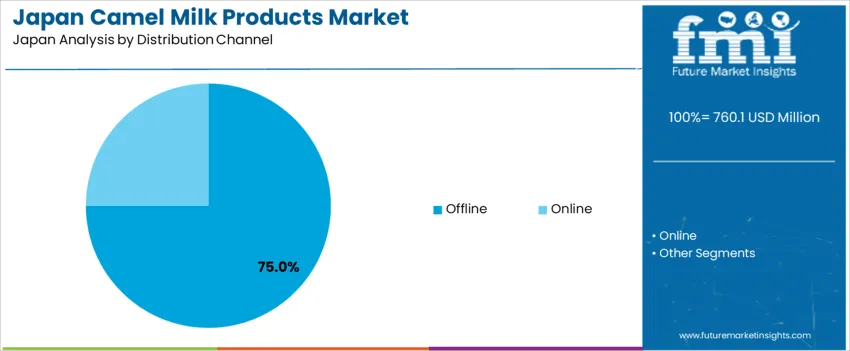
Offline distribution accounts for 75% of the demand for camel milk products in Japan, primarily due to the high visibility and accessibility of these products in physical stores. Health food stores, and specialty retailers are the most common outlets for camel milk, allowing consumers to browse and compare different products in person. These stores offer a variety of camel milk options, catering to the growing demand for alternative dairy products. Offline channels provide the benefit of immediate availability, allowing consumers to purchase camel milk products during their routine shopping trips. With increasing interest in functional foods and wellness, offline retail remains the dominant distribution channel for camel milk in Japan. As demand for healthy, alternative dairy products continues to rise, offline stores will continue to play a key role in the camel milk industry.
What are the Key Trends, Drivers, and Restraints in Demand for Camel Milk Products in Japan?
Camel milk products including plain milk, powder, flavored milk, yogurt, ice cream, and other derivatives are gaining attention for being potentially easier to digest and richer in vitamins and minerals than conventional dairy. Rising interest in functional foods and wellness-oriented diets among health-conscious Japanese consumers drives this trend. Producers are also positioning camel milk as a premium, immunity-boosting, and nutrient-rich alternative to cow’s milk, which increases its appeal among niche buyer segments. The appeal remains limited by several challenges. Camel milk yields are lower than cow’s milk, which reduces availability and raises costs. Import regulations and strict food-safety standards in Japan complicate sourcing and distribution of camel milk products.
Why is Demand for Camel Milk Products Growing in Japan?
Demand is growing because Japanese consumers increasingly prioritize health and nutrition and are open to exploring nontraditional dairy alternatives. Camel milk is being promoted as a functional dairy with potentially lower allergen city and a richer nutrient profile, attracting those seeking dairy with added health value. The growing interest in functional foods and immunity-supportive nutrition fuels willingness to try camel-milk products. In addition, diversification of product offerings from fresh and liquid milk to powdered forms and flavored variants makes camel milk more accessible across different consumer preferences. Another factor is growing retail and distribution efforts. Both offline and online channels are expanding availability, bringing camel milk products from specialty shops to wider retail outlets. This improved accessibility helps more consumers discover and purchase camel milk products, supporting incremental growth.
How are Technological & Industry Innovations Driving Demand for Camel Milk Products in Japan?
Advances in processing, packaging, and distribution technologies are helping camel milk products overcome previous limitations and reach new consumers in Japan. Improved pasteurization and packaging enable longer shelf life and safer distribution. Product innovation has expanded offerings beyond plain milk to include flavored drinks, powdered milk, fermented products, ice cream, and even cosmetics or personal-care items widening appeal and utility. As the global camel milk industry evolves, supply chains are becoming more structured and reliable. Organized production and processing enable better quality control and compliance with Japanese food-safety standards, making it feasible to import or distribute camel milk products in Japan. This helps overcome earlier barriers related to raw-milk instability and inconsistent supply.
What are the Key Challenges and Risks That Could Limit Camel Milk Product Demand in Japan?
Camel milk production yields less per animal compared to cow’s milk, so camel-milk products remain expensive. High price points make it difficult for them to compete with conventional dairy or plant-based alternatives, limiting adoption to a niche, premium segment. Regulatory and supply-chain issues pose another barrier. Import restrictions, strict food-safety, and labeling requirements make it complex to bring camel milk into Japan or produce locally at scale. For new or smaller producers, these hurdles can be heavy. Consumer awareness and acceptance remain limited. Because camel milk is not a traditional dairy in Japan, many consumers are unfamiliar with its taste, benefits, or uses. Cultural preference for cow’s milk or established dairy substitutes along with skepticism about “exotic” dairy may slow broader adoption.
What is the Regional Demand Outlook for Camel Milk Products in Japan?
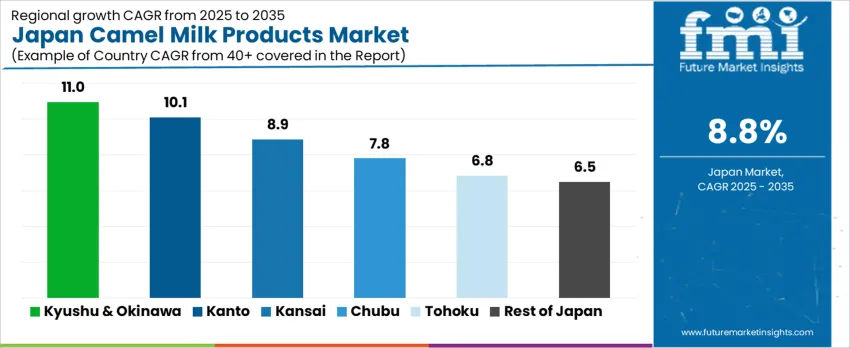
| Region | CAGR (%) |
|---|---|
| Kyushu & Okinawa | 11.0% |
| Kanto | 10.1% |
| Kansai | 8.9% |
| Chubu | 7.8% |
| Tohoku | 6.8% |
| Rest of Japan | 6.5% |
Demand for camel milk products in Japan is steadily growing, with Kyushu & Okinawa leading at an 11.0% CAGR, driven by the region’s warm climate and increasing health-conscious population. Kanto follows with a 10.1% CAGR, fueled by urban demand for plant-based, functional beverages. Kansai shows an 8.9% CAGR, supported by its focus on health and wellness. Chubu experiences a 7.8% CAGR, driven by the region’s growing interest in alternative dairy products. Tohoku and the Rest of Japan see moderate growth at 6.8% and 6.5%, respectively, with increasing awareness of wellness and alternative dairy options. As consumers continue to prioritize health, demand for camel milk products will rise steadily across Japan.
How is Demand for Camel Milk Products Growing in Kyushu & Okinawa?
Kyushu & Okinawa leads the demand for camel milk products, growing at an 11.0% CAGR. The region’s warm climate, particularly in Okinawa, plays a significant role in driving the popularity of refreshing, functional beverages like camel milk. Consumers are increasingly interested in camel milk due to its digestive and nutritional benefits, particularly for individuals with lactose intolerance. The region’s rising health-conscious population and focus on natural, plant-based alternatives further boost demand. Kyushu & Okinawa’s tourism industry also contributes to the growing demand, as tourists seek unique local products, such as camel milk. The increasing availability of camel milk products in local industries and health food stores further supports growth. With the region’s growing wellness culture and interest in alternative dairy, demand for camel milk products in Kyushu & Okinawa is expected to remain strong and continue to rise steadily.
Why is Demand for Camel Milk Products Rising in Kanto?
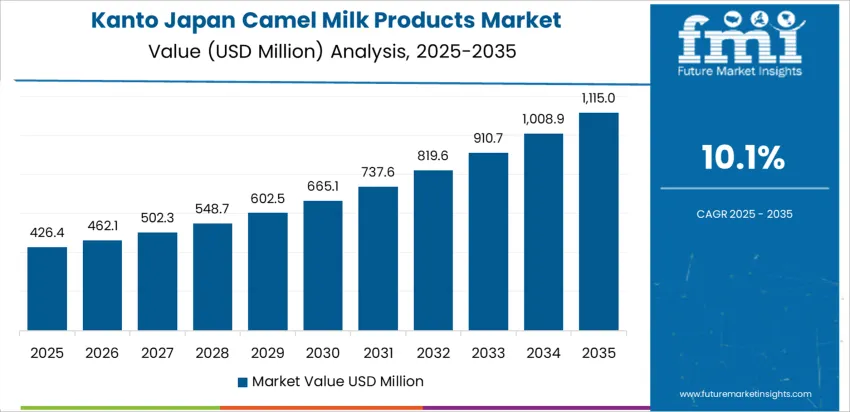
Kanto is experiencing steady demand for camel milk products, with a 10.1% CAGR. The region’s large urban population, particularly in Tokyo, is a key driver of this trend. As consumers in Kanto become more health-conscious and seek plant-based, dairy alternatives, camel milk is gaining popularity due to its health benefits, including being easier to digest than cow’s milk. The region’s strong focus on wellness and sustainable, clean-label products is also contributing to the rise in demand for camel milk. Kanto’s growing interest in functional foods and its increasing retail presence of specialty food products make camel milk more accessible to a wider audience. As more consumers seek healthier and more sustainable dairy options, demand for camel milk products in Kanto will continue to grow steadily, supported by both lifestyle changes and the increasing availability of these products in mainstream retail outlets.
How is Demand for Camel Milk Products Expanding in Kansai?
Kansai is seeing steady demand for camel milk products, growing at an 8.9% CAGR. The region’s growing health-conscious population, particularly in cities like Osaka and Kyoto, is increasingly turning to camel milk as a nutritious alternative to traditional dairy. Camel milk is known for its digestive and immune-boosting properties, which aligns well with the rising interest in wellness and functional foods. Kansai’s strong retail presence and increasing availability of camel milk products in health food stores and online platforms further support the region’s demand growth. The region’s growing focus on sustainability and clean-label products is driving consumer preference for camel milk as a natural and ethical dairy option. As Kansai continues to embrace plant-based diets and alternative nutrition sources, demand for camel milk products is expected to grow steadily, driven by both urban and suburban areas seeking healthier, natural food products.
Why is Demand for Camel Milk Products Growing in Chubu?
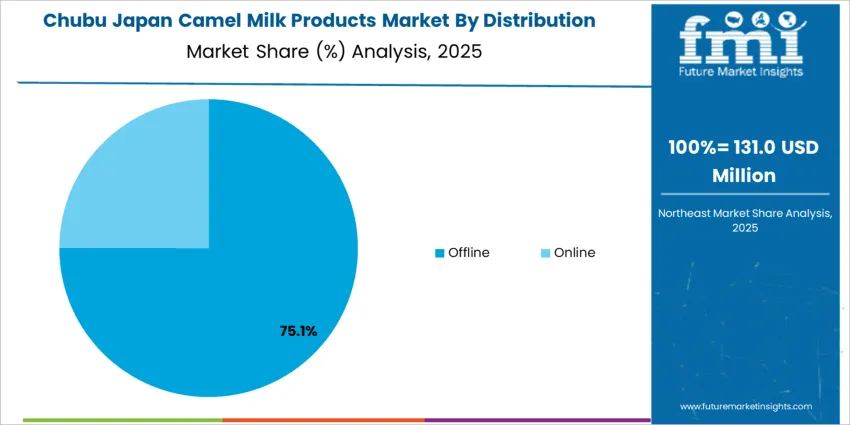
Chubu is experiencing steady demand for camel milk products, with a 7.8% CAGR. The region’s growing awareness of health and wellness, coupled with the increasing focus on plant-based and alternative dairy products, is driving demand for camel milk. Consumers in Chubu are increasingly seeking functional foods that support digestion and overall health, and camel milk fits into this growing trend. The region’s focus on sustainability, along with the growing availability of camel milk products in health food stores is also contributing to the rise in demand. As the region continues to adopt healthier lifestyles and more sustainable food choices, demand for camel milk products is expected to grow steadily. Chubu’s evolving food culture, coupled with its increasing interest in alternative dairy products, will continue to drive demand for camel milk as a nutritious and digestible option for consumers.
How is Demand for Camel Milk Products Expanding in Tohoku?
Tohoku is seeing moderate demand for camel milk products, with a 6.8% CAGR. While the region’s industry for camel milk is smaller compared to major urban centers, there is steady growth as awareness about health and wellness increases. Consumers in Tohoku are becoming more interested in plant-based and alternative dairy products like camel milk, particularly due to its potential health benefits, including being easier to digest and more suitable for individuals with lactose intolerance. As the region’s population becomes more health-conscious, the demand for functional beverages such as camel milk is expected to grow. As retail outlets in rural areas begin to carry more specialized products, including camel milk, consumers are gaining better access to these alternatives. The steady rise in consumer interest for camel milk in Tohoku will continue, driven by both health-conscious individuals and a growing focus on sustainable, ethical food sources.
Why is Demand for Camel Milk Products Steady in the Rest of Japan?
The Rest of Japan is experiencing steady demand for camel milk products, growing at a 6.5% CAGR. Although demand is smaller in rural areas compared to urban regions, there is a consistent rise in interest as consumers across Japan seek healthier and more sustainable food options. Camel milk, known for its digestive benefits and suitability for people with lactose intolerance, is becoming a more popular choice among health-conscious individuals in the Rest of Japan. The growing accessibility of camel milk products in local health food stores supports this gradual increase. As the focus on wellness and sustainability continues to grow, more people in rural and suburban areas are seeking alternative dairy products, contributing to the steady demand for camel milk. Although growth is slower compared to more urbanized regions, the demand for camel milk in the Rest of Japan is expected to rise gradually.
What is Driving the Demand for Camel Milk Products in Japan and Who Are the Key Players Shaping the Industry?
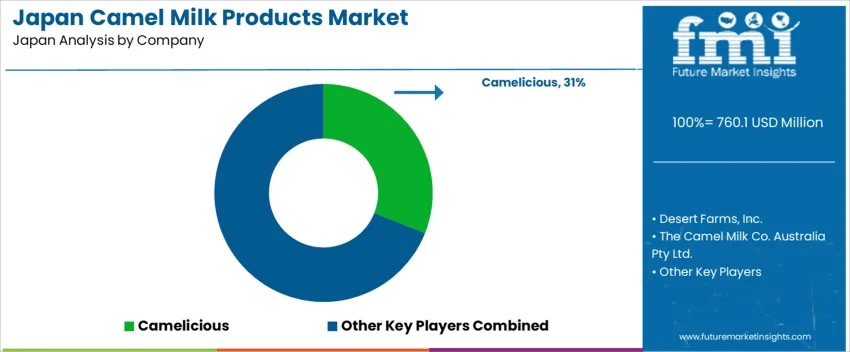
The demand for camel milk products in Japan is growing due to the increasing consumer interest in alternative dairy options with unique health benefits. Camel milk is known for its rich nutritional profile, including higher levels of vitamins, minerals, and proteins compared to traditional cow’s milk. It is also lactose-free, which makes it an attractive option for people with lactose intolerance. Camel milk is believed to support immune function, improve gut health, and provide anti-inflammatory benefits. As Japanese consumers become more health-conscious and seek functional foods that cater to specific dietary needs, camel milk products are gaining popularity. Furthermore, the trend toward plant-based and alternative dairy products has led to greater exploration of camel milk as an innovative option for health-conscious individuals.
Key players shaping the camel milk products industry in Japan include Camelicious, Desert Farms, Inc., The Camel Milk Co. Australia Pty Ltd., Camilk, and CAMEL DAIRY SMITS. Camelicious leads the industry with a dominant share of 31.0%, offering a wide array of camel milk-based products, such as fresh milk, powdered milk, and flavored beverages. These companies are driving industry growth by focusing on consumer education, highlighting the health benefits of camel milk, and expanding their product portfolios to cater to diverse tastes. Their efforts are helping raise awareness of camel milk and its potential advantages over traditional dairy products in Japan’s competitive food and beverage industry.
The growth of the camel milk products industry in Japan is also supported by increasing awareness of global and exotic food trends. As Japanese consumers continue to seek unique, functional food products, camel milk is expected to gain further popularity. With the rising demand for personalized nutrition and dietary solutions, camel milk is positioned to become a key product in the wellness and alternative dairy sectors, fueling its continued growth in Japan.
Key Players in Japan Camel Milk Products Demand
- Camelicious
- Desert Farms, Inc.
- The Camel Milk Co. Australia Pty Ltd.
- Camilk
- CAMEL DAIRY SMITS
Scope of Report
| Items | Values |
|---|---|
| Quantitative Units (2025) | USD million |
| Product Type | Plain Milk, Flavored Milk, Powder, Ice Cream, Fermented |
| Distribution Channel | Offline, Online |
| Region | Kyushu & Okinawa, Kanto, Kansai, Chubu, Tohoku, Rest of Japan |
| Countries Covered | Japan |
| Key Companies Profiled | Camelicious, Desert Farms, Inc., The Camel Milk Co. Australia Pty Ltd., Camilk, CAMEL DAIRY SMITS |
| Additional Attributes | Dollar sales by product type and distribution channel; regional CAGR and growth outlook for camel milk products; industry penetration of online vs offline channels; consumer adoption trends for flavored vs plain milk products; increasing interest in non-cow dairy alternatives; regulatory guidelines for camel milk in Japan. |
Japan Camel Milk Products Demand by Key Segments
Product:
- Plain Milk
- Flavored Milk
- Powder
- Ice Cream
- Fermented
Distribution Channel:
- Offline
- Online
Region:
- Kyushu & Okinawa
- Kanto
- Kansai
- Chubu
- Tohoku
- Rest of Japan
Frequently Asked Questions
How big is the demand for camel milk products in Japan in 2025?
The demand for camel milk products in Japan is estimated to be valued at USD 760.1 million in 2025.
What will be the size of camel milk products in Japan in 2035?
The market size for the camel milk products in Japan is projected to reach USD 1,762.6 million by 2035.
How much will be the demand for camel milk products in Japan growth between 2025 and 2035?
The demand for camel milk products in Japan is expected to grow at a 8.8% CAGR between 2025 and 2035.
What are the key product types in the camel milk products in Japan?
The key product types in camel milk products in Japan are plain milk, flavored milk, powder, ice cream and fermented.
Which distribution channel segment is expected to contribute significant share in the camel milk products in Japan in 2025?
In terms of distribution channel, offline segment is expected to command 75.0% share in the camel milk products in Japan in 2025.
Preview the report firsthand - request a free sample
Get SampleGet the brochure for pricing and purchase details.
Get PDFTable of Content
- Executive Summary
- Japan Market Outlook
- Demand-side Trends
- Supply-side Trends
- Technology Roadmap Analysis
- Analysis and Recommendations
- Market Overview
- Market Coverage / Taxonomy
- Market Definition / Scope / Limitations
- Market Background
- Market Dynamics
- Drivers
- Restraints
- Opportunity
- Trends
- Scenario Forecast
- Demand in Optimistic Scenario
- Demand in Likely Scenario
- Demand in Conservative Scenario
- Opportunity Map Analysis
- Product Life Cycle Analysis
- Supply Chain Analysis
- Investment Feasibility Matrix
- Value Chain Analysis
- PESTLE and Porter’s Analysis
- Regulatory Landscape
- Regional Parent Market Outlook
- Production and Consumption Statistics
- Import and Export Statistics
- Market Dynamics
- Japan Market Analysis 2020 to 2024 and Forecast, 2025 to 2035
- Historical Market Size Value (USD Million) Analysis, 2020 to 2024
- Current and Future Market Size Value (USD Million) Projections, 2025 to 2035
- Y-o-Y Growth Trend Analysis
- Absolute $ Opportunity Analysis
- Japan Market Pricing Analysis 2020 to 2024 and Forecast 2025 to 2035
- Japan Market Analysis 2020 to 2024 and Forecast 2025 to 2035, By Product
- Introduction / Key Findings
- Historical Market Size Value (USD Million) Analysis By Product , 2020 to 2024
- Current and Future Market Size Value (USD Million) Analysis and Forecast By Product , 2025 to 2035
- Plain Milk
- Flavored Milk
- Powder
- Ice Cream
- Fermented
- Y-o-Y Growth Trend Analysis By Product , 2020 to 2024
- Absolute $ Opportunity Analysis By Product , 2025 to 2035
- Japan Market Analysis 2020 to 2024 and Forecast 2025 to 2035, By Distribution Channel
- Introduction / Key Findings
- Historical Market Size Value (USD Million) Analysis By Distribution Channel, 2020 to 2024
- Current and Future Market Size Value (USD Million) Analysis and Forecast By Distribution Channel, 2025 to 2035
- Offline
- Online
- Y-o-Y Growth Trend Analysis By Distribution Channel, 2020 to 2024
- Absolute $ Opportunity Analysis By Distribution Channel, 2025 to 2035
- Market Structure Analysis
- Competition Dashboard
- Competition Benchmarking
- Market Share Analysis of Top Players
- By Regional
- By Product
- By Distribution Channel
- Competition Analysis
- Competition Deep Dive
- Camelicious
- Overview
- Product Portfolio
- Profitability by Market Segments (Product/Age /Sales Channel/Region)
- Sales Footprint
- Strategy Overview
- Marketing Strategy
- Product Strategy
- Channel Strategy
- Desert Farms, Inc.
- The Camel Milk Co. Australia Pty Ltd.
- Camilk
- CAMEL DAIRY SMITS
- Camelicious
- Competition Deep Dive
- Assumptions & Acronyms Used
- Research Methodology


