

- Industry Size (2025)
- USD 12.8 Bn
- Forecast (2035)
- USD 17.8 Bn
- CAGR (2025 to 2035)
- 3.4%
Demand for Deli Meat in Japan Forecast and Outlook 2025 to 2035
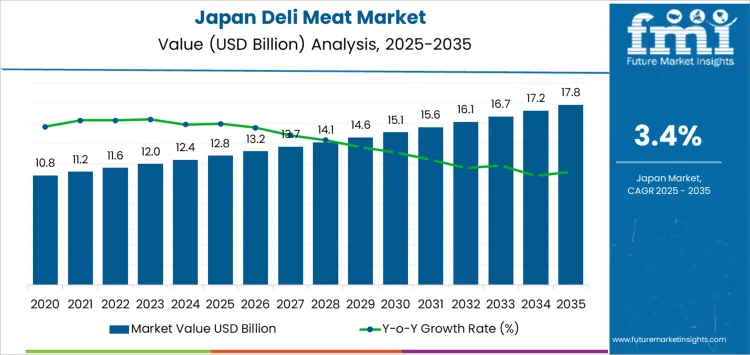
The demand for deli meat in Japan is expected to grow from USD 12.8 billion in 2025 to USD 17.8 billion by 2035, advancing at a 3.4% CAGR. This growth is driven by the increasing preference for convenience and ready-to-eat meal options, with deli meats like ham, turkey, salami, and roast beef becoming a staple for busy urban consumers. Pork-based deli meats dominate the industry, accounting for 47% of total demand, due to their affordability and use in various food products like sandwiches and bento boxes. Cured deli meats lead in product type, representing 67% of the industry, due to their long shelf life, ease of storage, and popularity in both household and foodservice settings. The availability of deli meats in supermarkets, convenience stores, and online retail channels further enhances their accessibility, making them a popular choice for consumers with busy lifestyles.
Quick Stats of the Demand for Deli Meat in Japan
- Demand for Deli Meat in Japan Value (2025): USD 12.8 billion
- Demand for Deli Meat in Japan Forecast Value (2035): USD 17.8 billion
- Demand for Deli Meat in Japan Forecast CAGR (2025-2035): 3.4%
- Demand for Deli Meat in Japan Leading Source: Pork
- Demand for Deli Meat in Japan Leading Product Type: Cured Deli Meat
- Demand for Deli Meat in Japan Key Growth Regions: Kyushu & Okinawa, Kanto, Kansai, Chubu, Tohoku, Rest of Japan
- Demand for Deli Meat in Japan Top Players: Hormel Foods Corporation, Cargill Incorporated, Tyson Foods, Inc., JBS S.A., Maple Leaf Foods, Inc.
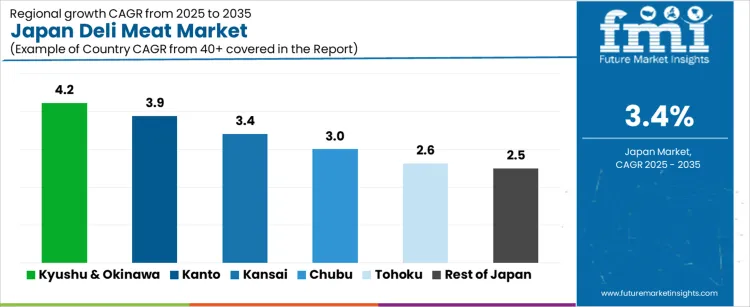
Kyushu & Okinawa leads the demand for deli meat with a 4.2% CAGR, driven by growing consumer interest in ready-to-eat and Western-style meal options. Kanto follows with a 3.9% CAGR, supported by the region's large urban population and the high demand for deli meats in both foodservice and retail sectors. Kansai shows steady growth at 3.4%, influenced by its culinary culture and the growing adoption of international cuisines. Chubu, Tohoku, and the rest of Japan see more moderate growth, reflecting regional shifts towards convenience and protein-rich food options. Key players like Hormel Foods, Cargill, and Tyson Foods dominate the industry, competing on quality, variety, and innovative packaging solutions.
Demand for Deli Meat in Japan Key Takeaways
| Metric | Value |
|---|---|
| Demand for Deli Meat in Japan Value (2025) | USD 12.8 billion |
| Demand for Deli Meat in Japan Forecast Value (2035) | USD 17.8 billion |
| Demand for Deli Meat in Japan Forecast CAGR (2025-2035) | 3.4% |
Why is the Demand for Deli Meat in Japan Growing?
The demand for deli meat in Japan is growing as consumer preferences shift toward convenience and ready-to-eat food options. Deli meats, which include a wide variety of processed and cured meats such as ham, salami, turkey, and roast beef, have become increasingly popular due to their versatility, ease of preparation, and long shelf life. These products are seen as quick and convenient meal solutions, making them ideal for busy urban consumers who seek fast meal options without sacrificing taste or nutritional value.
A major factor driving the growth of deli meat is the increasing demand for high-quality protein sources that are quick and easy to prepare. Deli meats are perfect for sandwiches, wraps, salads, or as snacks, offering a practical and time-saving solution for people with hectic schedules. As Japan’s busy lifestyle continues to influence food consumption habits, deli meats are an attractive choice, particularly for single-person households or families with limited time for meal preparation. The availability of deli meats in supermarkets and convenience stores has made these products even more accessible, contributing to their widespread adoption across different consumer segments.
The growing trend toward Western-style food consumption, especially in urban areas, is fueling the popularity of deli meats. As Japanese consumers seek more variety in their diets and become more open to international cuisines, deli meats are increasingly incorporated into meals. The continuous innovation in flavors, packaging, and product quality further enhances the appeal of deli meats, ensuring that they remain a desirable option for modern consumers. With these factors in play, the demand for deli meat in Japan is projected to continue growing steadily through 2035.
What is the Segment-Wise Analysis of Demand for Deli Meat in Japan?
Demand for deli meat in Japan is segmented by source, product type, distribution channel, and region. By source, demand is divided into pork, chicken, beef, and others. The demand is also segmented by product type, including cured deli meat, cooked deli meat, smoked deli meat, and fresh/uncured deli meat. Distribution channels include online retail, supermarkets/hypermarkets, specialty health stores, and convenience stores. Regionally, demand spans across Kyushu & Okinawa, Kanto, Kansai, Chubu, Tohoku, and the rest of Japan.
How Does Pork Lead the Demand for Deli Meat in Japan?
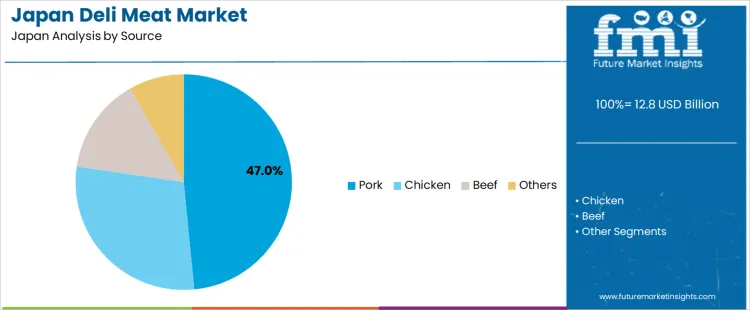
Pork accounts for 47% of the demand for deli meat in Japan, driven by its strong presence in both traditional and modern Japanese cuisines. Pork is commonly used in deli products like ham, sausages, and other processed meats, which are staples in various meals and snacks. Its versatility makes it an ideal ingredient for creating a variety of deli meat options, and its relatively affordable price compared to other meats adds to its popularity. Pork-based deli meats are widely used in sandwiches, bento boxes, and ready-to-eat meals, which cater to Japan's busy, on-the-go consumer lifestyle. Pork offers a rich flavor that complements a wide range of food, further driving its demand. As consumer preferences shift toward convenient, protein-rich foods, pork will continue to dominate the deli meat sector, particularly in Japan’s fast-paced urban areas, where convenience and taste are paramount.
Why Does Cured Deli Meat Lead the Demand for Deli Meat in Japan?
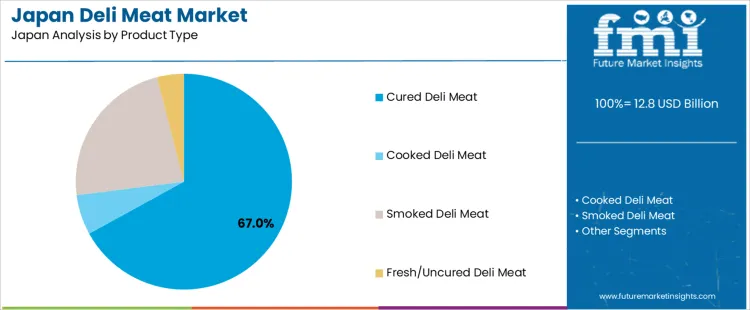
Cured deli meat accounts for 67% of the demand for deli meat in Japan, primarily due to its extended shelf life, rich flavor, and convenience. Cured products such as ham, salami, and pastrami are widely appreciated for their ability to be stored without refrigeration, making them a go-to choice for busy consumers looking for easy-to-store, ready-to-eat options. This convenience, along with the robust and varied flavor profile of cured meats, contributes to their popularity in both household and commercial food settings. The growing demand for Western-style food such as sandwiches and charcuterie has reinforced the position of cured deli meats in the Japanese industry. The rise of international cuisines and dining options, particularly in urban areas, is also driving the demand for cured meats. As Japan increasingly embraces both local and global food trends, cured deli meat will continue to lead the industry, offering both practicality and rich taste.
What are the Key Trends, Drivers, and Restraints in Demand for Deli Meat in Japan?
Demand for deli meat in Japan is growing due to the increasing popularity of convenience foods. Busy urban lifestyles, shrinking household sizes, and changing dietary preferences are driving the demand for ready-to-eat and easy-to-prepare meat products like ham, turkey, and roast beef. Deli meats are commonly found in supermarkets, convenience stores, and chilled-food sections, making them more accessible. The growth of the foodservice sector also supports this demand, as deli meats are often used in sandwiches, salads, and other quick meals. However, some challenges persist. Cultural preferences for fresh, minimally processed foods are still strong in Japan, and concerns about the health risks associated with processed meats, such as preservatives and additives, could limit growth.
Why is Demand for Deli Meat Growing in Japan?
The demand for deli meat in Japan is driven by several factors, including urbanization, smaller household sizes, and busy lifestyles. More people are relying on ready-to-eat or pre-prepared foods due to time constraints, and deli meats provide a convenient source of protein. Dietary trends emphasizing protein consumption have contributed to the popularity of meat products like deli meats, which are quick and easy to use. The rise of Western-style eating habits, particularly in urban areas, has also made deli meats more popular, as products like sandwiches and salads become more common. The wide variety of deli meats, including options like turkey, chicken, pork, and beef, allows consumers to choose according to taste, price, and dietary needs, further driving their adoption in both households and foodservice settings.
How are Technological & Industry Innovations Driving Deli Meat Demand in Japan?
Technological advancements in meat processing, packaging, and logistics have contributed to the growing demand for deli meats in Japan. New techniques like vacuum packaging and modified-atmosphere packaging help extend shelf life and maintain freshness, making deli meats more practical for consumers. Packaging innovations such as resealable pouches and portion-controlled containers also enhance convenience for busy consumers. Improvements in chilled-food distribution networks, including supermarkets and convenience stores, have increased the availability of deli meats, making them accessible to a broader customer base. The growing demand for healthier options has driven manufacturers to introduce lower-fat, reduced-salt, and preservative-free varieties of deli meats, aligning with consumer preferences for clean-label and health-conscious products.
What are the Key Challenges and Risks That Could Limit Deli Meat Demand in Japan?
One of the main obstacles is Japan’s cultural preference for fresh foods, especially fish and minimally processed meats, which limits the widespread adoption of processed meats like deli products. Concerns about the health risks of processed meats, such as high sodium and preservatives, could deter health-conscious consumers from buying deli meats. The regulatory environment also presents challenges, as stricter food safety and labeling regulations can increase costs for producers, which may be passed on to consumers. The competition from alternative protein sources, including fresh meats, plant-based options, and fish, could limit the industry share for deli meats. Price sensitivity is another concern, as rising costs due to raw material and import pressures may lead some consumers to cut back on their deli meat consumption.
What is the Regional Demand Outlook for Deli Meat in Japan?
| Region | CAGR (%) |
|---|---|
| Kyushu & Okinawa | 4.2% |
| Kanto | 3.9% |
| Kansai | 3.4% |
| Chubu | 3.0% |
| Tohoku | 2.6% |
| Rest of Japan | 2.5% |
Demand for deli meat in Japan is growing steadily across all regions, with Kyushu & Okinawa leading at a 4.2% CAGR, driven by increasing consumer interest in ready-to-eat and convenient meal options. Kanto follows with a 3.9% CAGR, supported by the region’s large urban population and the rising demand for deli meats in both foodservice and retail sectors. Kansai shows a 3.4% CAGR, fueled by the region’s growing interest in Western-style food products and convenience foods. Chubu experiences a 3.0% CAGR, as more consumers seek quick and easy meal options that include deli meats. Tohoku and the Rest of Japan see moderate growth at 2.6% and 2.5%, respectively.
How is Demand for Deli Meat Growing in Kyushu & Okinawa?
Kyushu & Okinawa leads the demand for deli meat, growing at a 4.2% CAGR. The region’s increasing preference for convenience foods and ready-to-eat meal options is driving the growth of deli meats in both supermarkets and foodservice outlets. With a rising interest in Western-style sandwiches, salads, and wraps, deli meats are becoming an essential ingredient in daily meals. Okinawa’s growing tourism sector contributes to demand, as visitors seek familiar and quick meal options, including deli meats. The region’s growing focus on modern food trends, combined with the expansion of convenience stores and supermarkets offering ready-to-eat deli products, further supports this trend. As consumer preferences shift towards more convenient, protein-rich foods, the demand for deli meat in Kyushu & Okinawa is expected to continue growing steadily, supported by both local residents and visitors.
Why is Demand for Deli Meat Rising in Kanto?
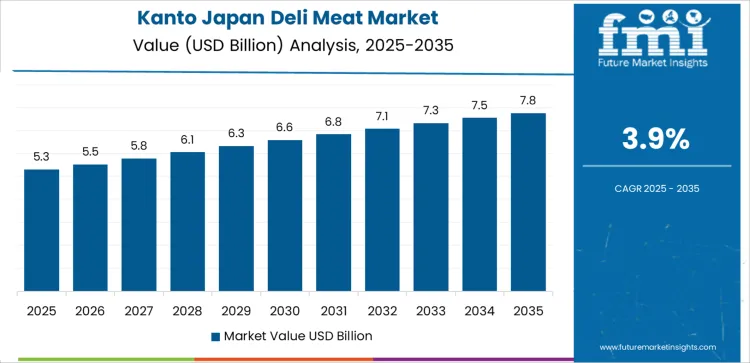
In Kanto, demand for deli meat is rising at a 3.9% CAGR. The region’s large urban population, particularly in Tokyo, is a key driver of this growth, as busy professionals and families seek convenient, ready-to-eat meal options. The rise of sandwiches, salads, and wraps in cafés, quick-service restaurants, and supermarkets is contributing to the growing popularity of deli meats. The increasing availability of deli meat in convenience stores, supermarkets, and meal kits is making it more accessible to consumers. The demand for protein-rich, easy-to-prepare meals is a key factor driving growth in the deli meat sector. As consumer habits continue to evolve and the need for convenient, nutritious meals rises, demand for deli meat in Kanto is expected to remain strong and continue growing steadily.
How is Demand for Deli Meat Expanding in Kansai?
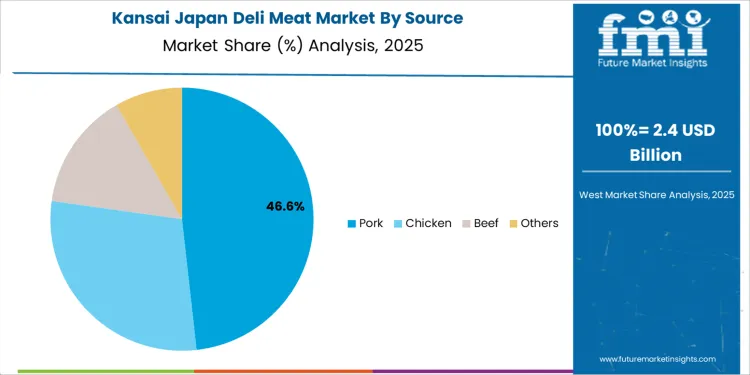
Kansai shows steady demand for deli meat, growing at a 3.4% CAGR. The region’s strong culinary culture, particularly in cities like Osaka and Kyoto, has led to increasing interest in Western-style foods and convenience meals. Deli meats are becoming more popular in sandwiches, bento boxes, and wraps, as consumers look for quick and easy meal solutions. Kansai’s foodservice sector, which includes both international fast-food chains and local restaurants, is increasingly incorporating deli meats into their menus. As consumer preferences shift towards more protein-rich and convenient options, the demand for deli meat is expected to continue to grow. The rise in availability of ready-to-eat deli products in supermarkets and convenience stores also supports this trend, making it easier for consumers in Kansai to access deli meats as part of their daily meals.
Why is Demand for Deli Meat Growing in Chubu?
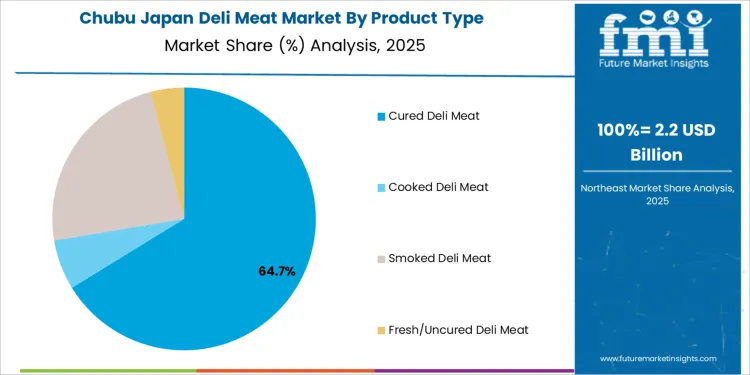
Chubu is experiencing steady demand for deli meat, growing at a 3.0% CAGR. The region’s growing interest in convenience foods, particularly in urban areas like Nagoya, is driving demand for deli meats. With busy lifestyles becoming more common, consumers are increasingly turning to ready-to-eat options like sandwiches, wraps, and salads that feature deli meats. The expanding presence of convenience stores and supermarkets offering deli meat options has made it easier for consumers to purchase these products. Chubu’s growing interest in health-conscious and protein-rich foods is contributing to the rising demand for deli meats. As consumer habits evolve and the need for quick, easy meal solutions grows, the demand for deli meats in Chubu is expected to rise steadily, supported by both busy professionals and families seeking convenient, nutritious food options.
How is Demand for Deli Meat Expanding in Tohoku?
Tohoku is seeing moderate growth in deli meat demand, with a 2.6% CAGR. While the region’s industrial activity is smaller compared to urban centers, there is a steady rise in demand for convenient, protein-rich food options. As more consumers in Tohoku embrace modern food trends and increasingly busy lifestyles, deli meats are becoming a popular addition to sandwiches, salads, and snacks. Supermarkets and convenience stores are expanding their offerings of deli meat products, making them more accessible to consumers in the region. With the growing interest in Western-style fast food and convenience meals, the demand for deli meats is expected to rise steadily. As awareness of the convenience and nutritional benefits of deli meats spreads across Tohoku, their consumption is likely to continue growing at a moderate pace.
Why is Demand for Deli Meat Steady in the Rest of Japan?
The Rest of Japan is experiencing steady demand for deli meat, with a 2.5% CAGR. Although adoption is slower compared to major urban areas, there is growing interest in convenience foods, particularly in smaller cities and rural areas. The increasing availability of deli meats in supermarkets and convenience stores, along with the rising popularity of ready-to-eat meals, is helping to drive consumption. As consumers in these areas become more accustomed to modern eating habits and the demand for protein-rich, convenient meals rises, deli meats are expected to see gradual adoption. The growing penetration of global food trends, along with more accessible distribution channels, will likely contribute to steady growth in the deli meat sector in the Rest of Japan. As consumer preferences evolve, demand for deli meats in these regions is expected to rise slowly but steadily.
What is the Competitive Landscape of Deli Meat Demand in Japan?
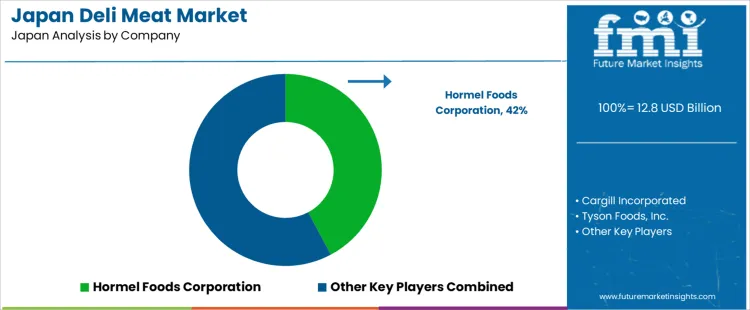
Demand for deli meat in Japan is rising steadily, supported by changing dietary habits, growing urbanization, and increasing adoption of Western-style meals. As households and foodservice outlets seek convenient, ready-to-eat protein options, demand for sliced hams, roast beef, turkey, and cold cuts has grown. The shift toward busier lifestyles have boosted demand for products that offer ease and versatility deli meats fit well as sandwich fillings, quick meals, or toppings for salads and rice bowls.
Key global suppliers active in supplying deli-meat products to Japan include Hormel Foods Corporation, Cargill Incorporated, Tyson Foods, Inc., JBS S.A., and Maple Leaf Foods, Inc. Among them, Hormel Foods Corporation stands out, with an estimated 42.2% share of the demand. These firms supply a variety of processed-meat products ham, turkey breast, roast beef, and cold-cut assortments to retail, hospitality, and foodservice channels across Japan. Their large-scale operations and global supply chains make them able to meet demand even during fluctuations in commodity supply and import cycles.
Competition among deli-meat suppliers centers on balancing quality, variety, convenience, and price. Firms like Hormel emphasize reliability and broad product portfolios offering traditional and Western-style cold-cuts suited for Japanese tastes. Others compete via specialty offerings (e.g. lean turkey or roast beef), improved packaging for freshness, and small-pack portions tailored to Japanese households. Some target food-service and HoReCa channels, offering bulk-ready deli meats for restaurants and cafés, while others focus on retailing pre-sliced meat for convenience stores and supermarkets. As preferences evolve, suppliers that deliver consistent quality, portion flexibility, and convenience while adapting flavors and formats to local demand are likely to lead the industry in Japan.
Key Players in Japan Deli Meat Demand
- Hormel Foods Corporation
- Cargill Incorporated
- Tyson Foods, Inc.
- JBS S.A.
- Maple Leaf Foods, Inc.
Scope of Report
| Items | Values |
|---|---|
| Quantitative Units (2025) | USD billion |
| Source | Pork, Chicken, Beef, Others |
| Product Type | Cured Deli Meat, Cooked Deli Meat, Smoked Deli Meat, Fresh/Uncured Deli Meat |
| Distribution Channel | Online Retail, Supermarkets/Hypermarkets, Specialty Health Stores, Convenience Stores |
| Region | Kyushu & Okinawa, Kanto, Kansai, Chubu, Tohoku, Rest of Japan |
| Countries Covered | Japan |
| Key Companies Profiled | Hormel Foods Corporation, Cargill Incorporated, Tyson Foods, Inc., JBS S.A., Maple Leaf Foods, Inc. |
| Additional Attributes | Dollar sales by product type and source; regional CAGR and growth trends; increasing demand for healthier and organic deli meats; rise in consumer preference for premium and processed deli meats; growing retail presence of deli meats, especially in supermarkets and online channels; innovations in packaging for extended shelf-life and convenience; expanding product offerings in the health-conscious market. |
Japan Deli Meat Demand by Key Segments
Source
- Pork
- Chicken
- Beef
- Others
Product Type
- Cured Deli Meat
- Cooked Deli Meat
- Smoked Deli Meat
- Fresh/Uncured Deli Meat
Distribution Channel
- Online Retail
- Supermarkets/Hypermarkets
- Specialty Health Stores
- Convenience Stores
Region
- Kyushu & Okinawa
- Kanto
- Kansai
- Chubu
- Tohoku
- Rest of Japan
Frequently Asked Questions
How big is the demand for deli meat in Japan in 2025?
The demand for deli meat in Japan is estimated to be valued at USD 12.8 billion in 2025.
What will be the size of deli meat in Japan in 2035?
The market size for the deli meat in Japan is projected to reach USD 17.8 billion by 2035.
How much will be the demand for deli meat in Japan growth between 2025 and 2035?
The demand for deli meat in Japan is expected to grow at a 3.4% CAGR between 2025 and 2035.
What are the key product types in the deli meat in Japan?
The key product types in deli meat in Japan are pork, chicken, beef and others.
Which product type segment is expected to contribute significant share in the deli meat in Japan in 2025?
In terms of product type, cured deli meat segment is expected to command 67.0% share in the deli meat in Japan in 2025.
Preview the report firsthand - request a free sample
Get SampleGet the brochure for pricing and purchase details.
Get PDFTable of Content
- Executive Summary
- Japan Market Outlook
- Demand-side Trends
- Supply-side Trends
- Technology Roadmap Analysis
- Analysis and Recommendations
- Market Overview
- Market Coverage / Taxonomy
- Market Definition / Scope / Limitations
- Market Background
- Market Dynamics
- Drivers
- Restraints
- Opportunity
- Trends
- Scenario Forecast
- Demand in Optimistic Scenario
- Demand in Likely Scenario
- Demand in Conservative Scenario
- Opportunity Map Analysis
- Product Life Cycle Analysis
- Supply Chain Analysis
- Investment Feasibility Matrix
- Value Chain Analysis
- PESTLE and Porter’s Analysis
- Regulatory Landscape
- Regional Parent Market Outlook
- Production and Consumption Statistics
- Import and Export Statistics
- Market Dynamics
- Japan Market Analysis 2020 to 2024 and Forecast, 2025 to 2035
- Historical Market Size Value (USD Million) Analysis, 2020 to 2024
- Current and Future Market Size Value (USD Million) Projections, 2025 to 2035
- Y-o-Y Growth Trend Analysis
- Absolute $ Opportunity Analysis
- Japan Market Pricing Analysis 2020 to 2024 and Forecast 2025 to 2035
- Japan Market Analysis 2020 to 2024 and Forecast 2025 to 2035, By Source
- Introduction / Key Findings
- Historical Market Size Value (USD Million) Analysis By Source , 2020 to 2024
- Current and Future Market Size Value (USD Million) Analysis and Forecast By Source , 2025 to 2035
- Pork
- Chicken
- Beef
- Others
- Y-o-Y Growth Trend Analysis By Source , 2020 to 2024
- Absolute $ Opportunity Analysis By Source , 2025 to 2035
- Japan Market Analysis 2020 to 2024 and Forecast 2025 to 2035, By Product Type
- Introduction / Key Findings
- Historical Market Size Value (USD Million) Analysis By Product Type, 2020 to 2024
- Current and Future Market Size Value (USD Million) Analysis and Forecast By Product Type, 2025 to 2035
- Cured Deli Meat
- Cooked Deli Meat
- Smoked Deli Meat
- Fresh/Uncured Deli Meat
- Y-o-Y Growth Trend Analysis By Product Type, 2020 to 2024
- Absolute $ Opportunity Analysis By Product Type, 2025 to 2035
- Japan Market Analysis 2020 to 2024 and Forecast 2025 to 2035, By Distribution Channel
- Introduction / Key Findings
- Historical Market Size Value (USD Million) Analysis By Distribution Channel, 2020 to 2024
- Current and Future Market Size Value (USD Million) Analysis and Forecast By Distribution Channel, 2025 to 2035
- Online Retail
- Supermarkets/Hypermarkets
- Specialty Health Stores
- Convenience Stores
- Y-o-Y Growth Trend Analysis By Distribution Channel, 2020 to 2024
- Absolute $ Opportunity Analysis By Distribution Channel, 2025 to 2035
- Market Structure Analysis
- Competition Dashboard
- Competition Benchmarking
- Market Share Analysis of Top Players
- By Regional
- By Source
- By Product Type
- By Distribution Channel
- Competition Analysis
- Competition Deep Dive
- Hormel Foods Corporation
- Overview
- Product Portfolio
- Profitability by Market Segments (Product/Age /Sales Channel/Region)
- Sales Footprint
- Strategy Overview
- Marketing Strategy
- Product Strategy
- Channel Strategy
- Cargill Incorporated
- Tyson Foods, Inc.
- JBS S.A.
- Maple Leaf Foods, Inc.
- Hormel Foods Corporation
- Competition Deep Dive
- Assumptions & Acronyms Used
- Research Methodology


