

- Industry Size (2025)
- USD 95.3 Mn
- Forecast (2035)
- USD 144.8 Mn
- CAGR (2025 to 2035)
- 4.3%
Demand for Deli Meat in USA 2025 to 2035
The demand for deli meat in the USA is valued at USD 95.3 million in 2025 and is forecasted to reach USD 144.8 million by 2035, reflecting a CAGR of 4.3%. Demand is supported by consistent consumption of packaged and freshly sliced meats across retail delis, supermarkets, and convenience stores. Growth is driven by product diversification, expansion of premium cold-cut offerings, and increased preference for protein-rich diets. Ready-to-eat formats help reduce meal preparation time and support snacking occasions throughout the day.
Pork-based deli meats represent the leading source due to established processing infrastructure and sustained demand for ham, bacon alternatives, and seasoned sliced meats. Manufacturers continue to improve product quality by offering lower-sodium, nitrate-free, and clean-label formulations that comply with consumer wellness expectations.
Demand remains strongest in the West, South, and Northeast regions, aligned with large urban populations, high convenience food penetration, and widespread operator networks in foodservice. Cost stability, chilled supply-chain efficiency, and consistent safety standards remain important for category performance. Key suppliers include Hormel Foods Corporation, Cargill Incorporated, Tyson Foods, Inc., JBS S.A., and Maple Leaf Foods, Inc. Their strategies focus on automation in processing, protein portfolio expansion, and enhanced distribution across grocery and quick-service retail formats to maintain volume growth and category competitiveness.
Quick Stats for USA Deli Meat Demand
- USA Deli Meat Sales Value (2025): USD 95.3 million
- USA Deli Meat Forecast Value (2035): USD 144.8 million
- USA Deli Meat Forecast CAGR (2025–2035): 4.3%
- Leading Source in USA Deli Meat Demand: Pork
- Key Growth Regions in USA Deli Meat Demand: West USA, South USA, Northeast USA
- Top Players in USA Deli Meat Demand: Hormel Foods Corporation, Cargill Incorporated, Tyson Foods, Inc., JBS S.A., Maple Leaf Foods, Inc.
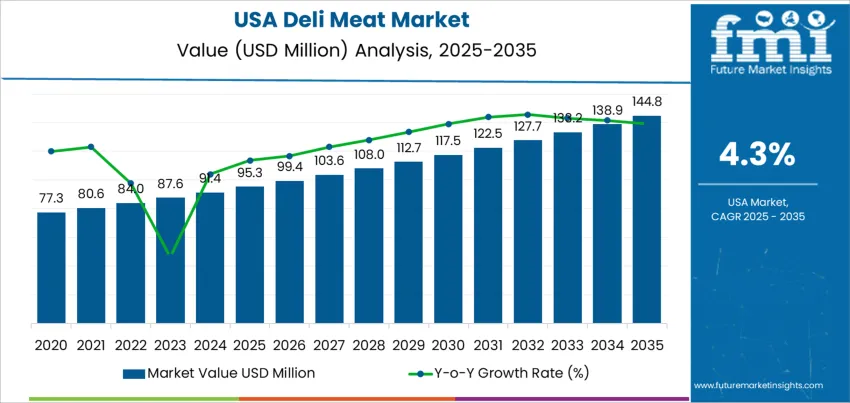
What is the Growth Forecast for Deli Meat Industry in USA through 2035?
Demand for deli meat in the United States shows a historical pattern of alternating peaks and troughs linked to shifting dietary priorities and food safety concerns. Peaks typically coincide with strong consumption of convenience foods, expanded grab-and-go offerings in retail, and the popularity of sandwiches in both food-service and household meal preparation. Product variety, flavor innovation, and resealable packaging formats reinforce consumer engagement during these high-demand phases.
Trough periods align with heightened scrutiny of processed meat ingredients, such as nitrates, sodium, and preservatives. Public health campaigns emphasizing fresh and minimally processed protein options can temporarily weaken consumption. Price fluctuations caused by supply chain disruptions in poultry and livestock also contribute to short-term demand softening. The category responds with reformulation strategies highlighting natural curing methods, clean-label positioning, and reduced-sodium lines to restore confidence.
The overall peak-to-trough pattern indicates a resilient category that adjusts to nutritional expectations rather than facing structural decline. Recovery phases benefit from deli meat’s core value proposition in convenience and protein density. Growth in premium, organic, and low-additive segments contributes to upward demand stabilization as the category moves toward a balanced performance curve in the United States.
USA Deli Meat Key Takeaways
| Metric | Value |
|---|---|
| USA Deli Meat Sales Value (2025) | USD 95.3 million |
| USA Deli Meat Forecast Value (2035) | USD 144.8 million |
| USA Deli Meat Forecast CAGR (2025-2035) | 4.3% |
Why is the Demand for Deli Meat in the USA Growing?
Demand for deli meat in the USA is increasing because many consumers look for quick, protein-rich options for sandwiches, wraps and ready meals. Busy lifestyles and on-the-go eating habits support strong retail sales of sliced ham, turkey, roast beef and chicken. Delis, convenience stores and supermarkets stock pre-sliced packages and freshly carved meat to suit different needs, from grab-and-go lunches to family dinners.
Growth in meal personalization and home cooking also contributes as consumers use deli meats for easy meal prep without significant cooking time. Seasonal occasions such as holidays and gatherings further boost demand for larger deli cuts and bulk packaging. Retailers and foodservice operators expand offerings by including low-sodium, gluten-free and minimally processed deli meat options to appeal to health-conscious buyers.
Institutional buyers such as schools, hospitals and corporate cafeterias continue to rely on deli meats for mass meal programs because they are versatile, quick to serve and easy to portion. Constraints include consumer concern over processed meat consumption and associated health risks, which drives demand toward fresh meats and plant-based protein alternatives. Price volatility in livestock feed and meat supply can impact retail pricing and consumer demand. Some shoppers limit deli meat purchases due to sodium content or preservative use in processed products.
Which Sources, Product Types, and Distribution Channels Lead Demand for Deli Meat in the USA?
Demand for deli meat in the United States is shaped by heavy consumption of convenient proteins across sandwiches, wraps, and ready-to-eat meals. Consumers prioritize flavor variety, freshness retention, sodium-management options, and packaging formats that support portion control. Growth is influenced by high household consumption, robust presence in foodservice, and ongoing innovation in clean-label formulations with fewer preservatives.
By Source, Pork-Based Deli Meat Leads Demand
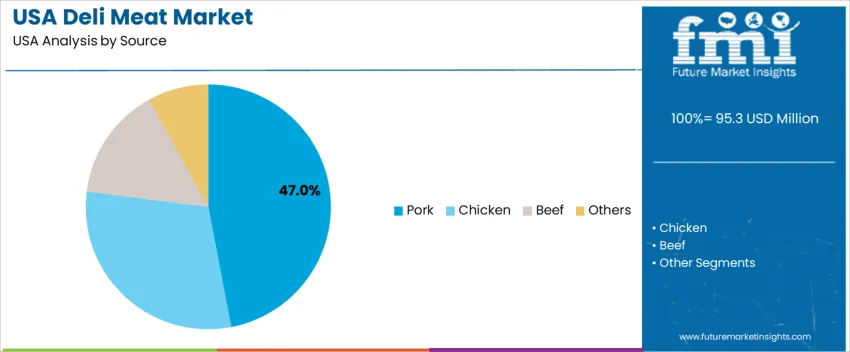
Pork accounts for 47.0%, driven by wide USAge in popular deli formats like ham, bacon, and salami, supporting consistent household and foodservice purchasing. Chicken holds 30.0%, supported by lean-protein positioning and strong adoption among calorie-conscious consumers. Beef contributes 15.0%, concentrated in premium offerings like roast beef and pastrami. Other protein sources represent 8.0%, including turkey and alternative meats aligned with specific dietary choices. Source preference reflects affordability, flavor familiarity, and menu compatibility in USA retail and quick-service outlets.
Key Points:
- Pork leads due to strong product familiarity and availability
- Chicken expands through health-forward positioning
- Beef remains premium-focused with selective distribution
By Product Type, Cured Deli Meat Dominates Sales
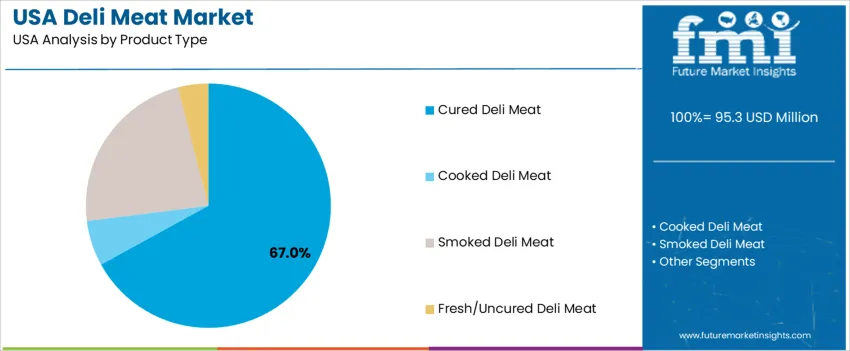
Cured deli meat holds 67.0%, supported by extended shelf life and flavor enhancement, reinforcing strong presence in grocery delis and prepacked sections. Smoked variants capture 23.0%, valued for artisanal taste and use in sandwiches and charcuterie. Cooked deli meat contributes 6.0%, filling demand for quick-use slices in lunch settings. Fresh/uncured offerings hold 4.0%, positioned for clean-label, nitrate-free claims but limited by shorter shelf life. Product adoption aligns with convenience-driven snacking and sandwich consumption in both retail and foodservice environments.
Key Points:
- Cured formats dominate household buying and delis
- Smoked options benefit from flavor-led premium appeal
- Uncured products grow through preservative-conscious niches
By Distribution Channel, Supermarkets and Hypermarkets Lead
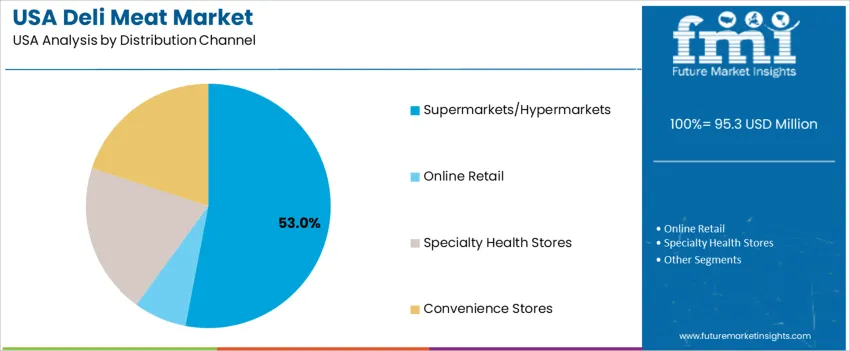
Supermarkets and hypermarkets account for 53.0%, reflecting household reliance on packaged deli meat and service counters during weekly grocery shopping. Specialty health stores hold 20.0%, catering to clean-label, organic, and premium cured selections. Convenience stores also hold 20.0%, driven by grab-and-go sandwiches and packaged slices for quick consumption. Online retail captures 7.0%, expanding through delivery services and subscription-based cold-chain fulfillment. Channel USAge reflects the dominance of brick-and-mortar formats supported by high-frequency replenishment behavior.
Key Points:
- Grocery chains drive mainstream distribution and product visibility
- Specialty stores support niche low-preservative products
- Convenience outlets capture impulse and food-on-the-move demand
What are the Drivers, Restraints, and Key Trends of the Demand for Deli Meat in the USA?
Growth of convenient meal preferences, strong sandwich culture and increasing grab-and-go retail options drive demand.
In the United States, deli meat remains a staple in lunches and quick meals for working adults, students and busy families. Supermarkets and big-box retailers maintain wide assortments of sliced turkey, ham, chicken and specialty meats that support habitual consumption throughout the week. Convenience stores and fuel stations expand availability of pre-packed deli slices to serve commuters and travelers seeking simple protein options. Foodservice channels including cafés, delis and fast-casual restaurants depend heavily on deli meat for sandwiches, wraps and salads, reinforcing consistent ordering patterns. Increased snacking occasions and prepared meal kits encourage use of deli meats as a portable protein source.
Health concerns about processed meat, price sensitivity and competition from alternative proteins restrain demand.
Consumers focused on heart health, reduced sodium intake and lower preservative exposure may limit purchases of processed deli products. Perceived links between processed meats and chronic disease risks contribute to cautious buying behavior among wellness-oriented shoppers. Deli meat production costs fluctuate with livestock pricing and supply chain constraints, which can lead to higher shelf prices and slower movement in cost-sensitive households. Expanded availability of plant-based sliced alternatives, grilled chicken strips and fresh protein options in refrigerated cases creates direct competition for deli choices. These concerns moderate rapid volume growth across mainstream retail.
Shift toward natural and premium varieties, increased demand for resealable and portion-controlled packaging and rising interest in high-protein snacking define key trends.
Brands are introducing natural and organic deli meats with reduced additives to appeal to ingredient-conscious consumers. Premium flavored and slow-roasted options gain traction in foodservice and retail deli counters, supporting higher-value segments. Packaging upgrades such as resealable pouches maintain freshness and improve portion planning for smaller households. Snack-size protein packs featuring deli meats with cheese or crackers cater to office workers, students and travelers. Turkey and chicken slices continue to gain share due to lean-protein positioning and alignment with weight-management goals. These developments indicate sustained demand for deli meat across USA retail and foodservice industries driven by convenience, variety and evolving protein preferences.
Analysis of the Demand for Deli Meat in the USA by Region
Demand for deli meat in the United States continues to evolve as consumers’ balance convenience with shifting nutrition preferences. Growth is supported by ongoing food-service recovery, strong retail sales of sliced meats, and meal simplification trends favoring sandwiches and grab-and-go formats. Clean-label deli offerings with lower sodium, nitrate-free curing, turkey-based proteins, and premium smoked varieties influence product selection in major grocery chains. West USA leads at 4.9% CAGR, followed by South USA at 4.4%, Northeast USA at 3.9%, and Midwest USA at 3.4%. Refrigerated packaging innovation, deli counter modernization, and distribution efficiency continue shaping expansion across regional consumption profiles.
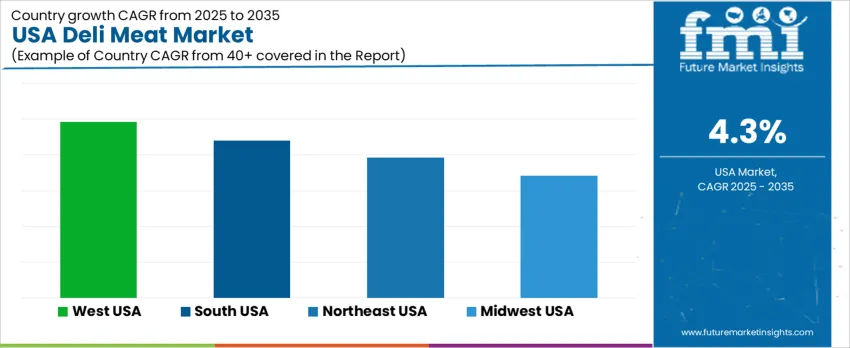
| Region | CAGR (2025-2035) |
|---|---|
| West USA | 4.9% |
| South USA | 4.4% |
| Northeast USA | 3.9% |
| Midwest USA | 3.4% |
How is the West USA driving demand for deli meat?
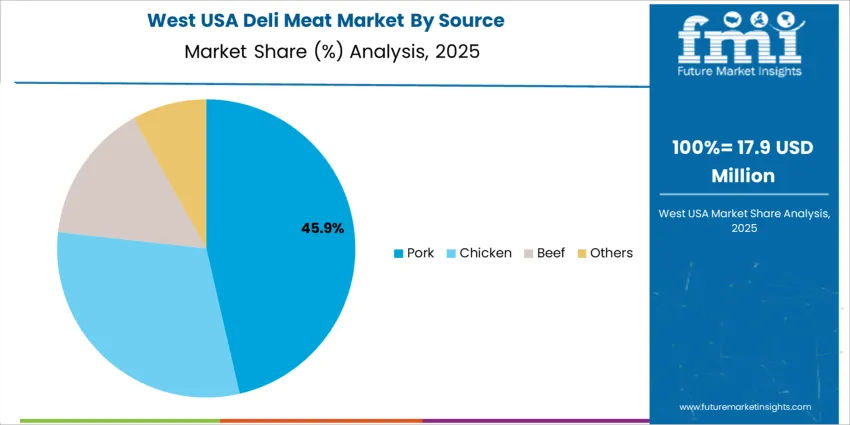
West USA grows at 4.9% CAGR, supported by large metropolitan centers emphasizing premium and wellness-aligned deli products. Retailers promote sliced turkey, chicken breast, plant-enhanced proteins, and “no antibiotics ever” offerings tailored to health-conscious shoppers. Food-service operators incorporate deli meats into artisanal sandwiches, baguettes, and protein snack boxes aligned with convenience dining. Coastal trade routes enable access to imported specialty meats such as prosciutto and bresaola, expanding variety. High adoption of organic and sustainable packaging, including recyclable or reduced-plastic deli packs, influences procurement decisions. Supermarkets expand pre-packed grab-and-go deli walls optimizing speed of shopping.
- Strong demand for organic and clean-label sliced proteins
- Influential food-service sector shaping premium sandwich formats
- Packaging sustainability affecting purchasing strategies
- Wide product variety supported by import access
How is the South USA shaping demand for deli meat?
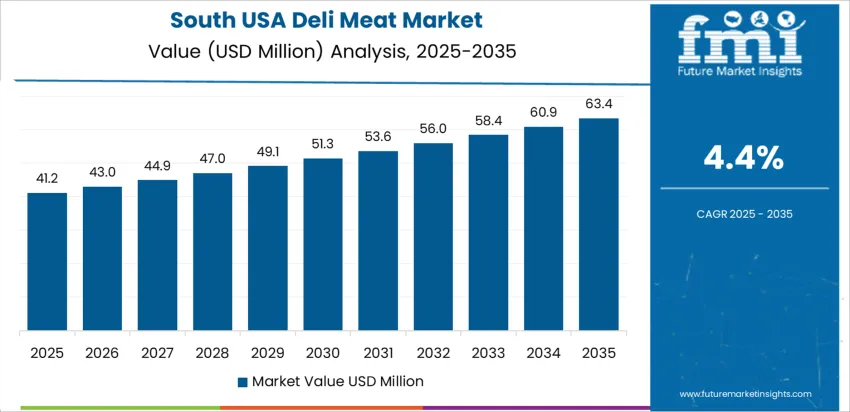
South USA posts 4.4% CAGR, driven by high volume consumption of ham, turkey, and smoked pork products across household and quick-service food channels. Regional flavor preferences support Cajun-style seasonings, honey-roasted varieties, and BBQ-influenced slicing proteins. Retail expansion in suburban areas increases access to deli counters with value-tier bulk selections. Convenience-focused consumers purchase pre-shingled sandwich slices and resealable packs to reduce food waste. Food distributors serving school and workplace cafeterias rely on cost-efficient deli protein formats to maintain meal planning continuity.
- Flavor-forward selections aligning with Southern preferences
- Value-driven pack formats gaining share in retail
- Institutional food-service influencing stable baseline volume
- Smoked and seasoned pork varieties reinforcing consumption
How is the Northeast USA influencing demand for deli meat?

Northeast USA grows at 3.9% CAGR, reflecting long-established deli culture across New York, New Jersey, and Pennsylvania. Premium cold cuts such as pastrami, roast beef, and salami maintain steady consumption in urban sandwich shops. Consumers increasingly evaluate sodium-reduced and natural-cure options backed by transparent ingredient labeling. Smaller living spaces and commuter lifestyles support single-serve snack packs and custom-sliced orders for fresh daily use. Regional distributors ensure reliable chilled-chain performance for fast-moving stock in dense metros.
- Heritage deli culture sustaining traditional protein styles
- Clean-label attributes guiding purchase priorities
- Single-serve formats appealing to on-the-go consumers
- High-velocity distribution in concentrated retail footprints
How is the Midwest USA contributing to demand growth?
Midwest USA expands at 3.4% CAGR, driven by staple sandwich consumption patterns and strong grocery-retail channel penetration across suburban and rural communities. Turkey and ham remain core proteins for lunchbox USAge in households with children. Bulk deli slices and economy packs play key roles in value-oriented purchasing. Regional sports and family gatherings elevate volume during seasonal events. Processors balance affordability with freshness through vacuum-sealed packs and extended shelf-life solutions.
- Lunchbox demand sustaining baseline sliced-meat use
- Value-focused purchasing guiding assortment decisions
- Event-driven consumption boosting seasonal sales
- Shelf-life optimization enabling longer storage
How is competitive concentration in the United States deli meat category shaped by integrated protein supply, brand scale, and prepared-foods capabilities?
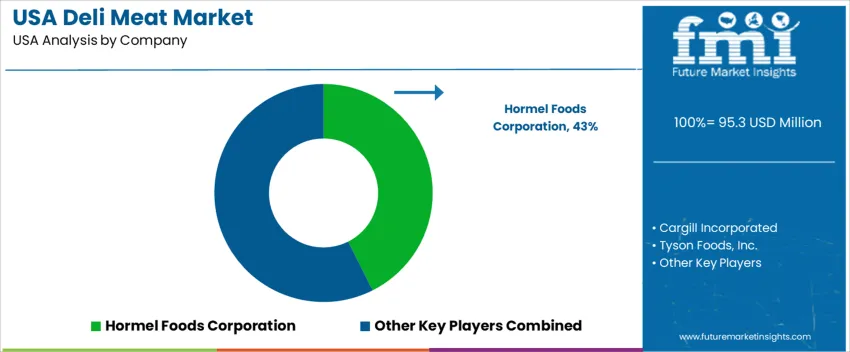
Competitive positioning in the United States deli meat segment is driven by vertically controlled protein sourcing, national brand portfolios, and retailer-aligned packaging formats. Hormel Foods Corporation holds an estimated 42.6%, supported by its established branded presence across packaged slices, deli counter products, and premium convenience SKUs. The company maintains broad consumer reach through category staples such as turkey, ham, and specialty meats targeted at premium household occasions.
Tyson Foods, Inc. leverages diversified poultry production and strong private-label participation. Its distribution into value-oriented refrigerated categories reinforces share in large retail chains. Cargill Incorporated secures competitive strength through integrated beef and turkey processing. Its presence is reinforced by consistent supply to foodservice and strategic partnerships supporting retailer needs for volume and category continuity.
JBS USA contributes scale in pork and beef, with capabilities that align with bulk deli programs and regional deli counters. Maple Leaf Foods maintains a smaller presence relative to domestic operators, primarily through targeted brand placements and selective channel focus. Brand loyalty, clean-label reformulation, and expansion of convenience packaging influence competitive outcomes. Firms that advance premium protein sourcing claims, reduced sodium formulations, and snacking-oriented deli meat solutions are positioned to reinforce retention and incremental household penetration within the United States.
Key Players in USA Deli Meat Demand
- Hormel Foods Corporation
- Cargill Incorporated
- Tyson Foods, Inc.
- JBS S.A.
- Maple Leaf Foods, Inc.
Scope of the Report
| Items | Values |
|---|---|
| Quantitative Units | USD million |
| Source | Pork, Chicken, Beef, Others |
| Product Type | Cured Deli Meat, Cooked Deli Meat, Smoked Deli Meat, Fresh/Uncured Deli Meat |
| Distribution Channel | Supermarkets/Hypermarkets, Online Retail, Specialty Health Stores, Convenience Stores |
| Regions Covered | West USA, South USA, Northeast USA, Midwest USA |
| Key Companies Profiled | Hormel Foods Corporation, Cargill Incorporated, Tyson Foods, Inc., JBS S.A., Maple Leaf Foods, Inc. |
| Additional Attributes | Dollar sales by source and product type categories; trends in clean-label and nitrite-free deli offerings; expansion of e-commerce and chilled direct-to-consumer delivery networks; demand driven by ready-to-eat proteins in household consumption; competitive environment shaped by large integrated meat processors and innovation in processed, smoked, and uncured deli formats. |
USA Deli Meat Demand by Segments
Source:
- Pork
- Chicken
- Beef
- Others
Product Type:
- Cured Deli Meat
- Cooked Deli Meat
- Smoked Deli Meat
- Fresh/Uncured Deli Meat
Distribution Channel:
- Supermarkets/Hypermarkets
- Online Retail
- Specialty Health Stores
- Convenience Stores
Region:
- West USA
- South USA
- Northeast USA
- Midwest USA
Frequently Asked Questions
How big is the demand for deli meat in USA in 2025?
The demand for deli meat in USA is estimated to be valued at USD 95.3 million in 2025.
What will be the size of deli meat in USA in 2035?
The market size for the deli meat in USA is projected to reach USD 144.8 million by 2035.
How much will be the demand for deli meat in USA growth between 2025 and 2035?
The demand for deli meat in USA is expected to grow at a 4.3% CAGR between 2025 and 2035.
What are the key product types in the deli meat in USA?
The key product types in deli meat in USA are pork, chicken, beef and others.
Which product type segment is expected to contribute significant share in the deli meat in USA in 2025?
In terms of product type, cured deli meat segment is expected to command 67.0% share in the deli meat in USA in 2025.
Preview the report firsthand - request a free sample
Get SampleGet the brochure for pricing and purchase details.
Get PDFTable of Content
- Executive Summary
- USA Market Outlook
- Demand-side Trends
- Supply-side Trends
- Technology Roadmap Analysis
- Analysis and Recommendations
- Market Overview
- Market Coverage / Taxonomy
- Market Definition / Scope / Limitations
- Market Background
- Market Dynamics
- Drivers
- Restraints
- Opportunity
- Trends
- Scenario Forecast
- Demand in Optimistic Scenario
- Demand in Likely Scenario
- Demand in Conservative Scenario
- Opportunity Map Analysis
- Product Life Cycle Analysis
- Supply Chain Analysis
- Investment Feasibility Matrix
- Value Chain Analysis
- PESTLE and Porter’s Analysis
- Regulatory Landscape
- Regional Parent Market Outlook
- Production and Consumption Statistics
- Import and Export Statistics
- Market Dynamics
- USA Market Analysis 2020 to 2024 and Forecast, 2025 to 2035
- Historical Market Size Value (USD Million) Analysis, 2020 to 2024
- Current and Future Market Size Value (USD Million) Projections, 2025 to 2035
- Y-o-Y Growth Trend Analysis
- Absolute $ Opportunity Analysis
- USA Market Pricing Analysis 2020 to 2024 and Forecast 2025 to 2035
- USA Market Analysis 2020 to 2024 and Forecast 2025 to 2035, By Source
- Introduction / Key Findings
- Historical Market Size Value (USD Million) Analysis By Source , 2020 to 2024
- Current and Future Market Size Value (USD Million) Analysis and Forecast By Source , 2025 to 2035
- Pork
- Chicken
- Beef
- Others
- Y-o-Y Growth Trend Analysis By Source , 2020 to 2024
- Absolute $ Opportunity Analysis By Source , 2025 to 2035
- USA Market Analysis 2020 to 2024 and Forecast 2025 to 2035, By Product Type
- Introduction / Key Findings
- Historical Market Size Value (USD Million) Analysis By Product Type, 2020 to 2024
- Current and Future Market Size Value (USD Million) Analysis and Forecast By Product Type, 2025 to 2035
- Cured Deli Meat
- Cooked Deli Meat
- Smoked Deli Meat
- Fresh/Uncured Deli Meat
- Y-o-Y Growth Trend Analysis By Product Type, 2020 to 2024
- Absolute $ Opportunity Analysis By Product Type, 2025 to 2035
- USA Market Analysis 2020 to 2024 and Forecast 2025 to 2035, By Distribution Channel
- Introduction / Key Findings
- Historical Market Size Value (USD Million) Analysis By Distribution Channel, 2020 to 2024
- Current and Future Market Size Value (USD Million) Analysis and Forecast By Distribution Channel, 2025 to 2035
- Supermarkets/Hypermarkets
- Online Retail
- Specialty Health Stores
- Convenience Stores
- Y-o-Y Growth Trend Analysis By Distribution Channel, 2020 to 2024
- Absolute $ Opportunity Analysis By Distribution Channel, 2025 to 2035
- Market Structure Analysis
- Competition Dashboard
- Competition Benchmarking
- Market Share Analysis of Top Players
- By Regional
- By Source
- By Product Type
- By Distribution Channel
- Competition Analysis
- Competition Deep Dive
- Hormel Foods Corporation
- Overview
- Product Portfolio
- Profitability by Market Segments (Product/Age /Sales Channel/Region)
- Sales Footprint
- Strategy Overview
- Marketing Strategy
- Product Strategy
- Channel Strategy
- Cargill Incorporated
- Tyson Foods, Inc.
- JBS S.A.
- Maple Leaf Foods, Inc.
- Hormel Foods Corporation
- Competition Deep Dive
- Assumptions & Acronyms Used
- Research Methodology


