

- Industry Size (2025)
- USD 80.7 Mn
- Forecast (2035)
- USD 121.8 Mn
- CAGR (2025 to 2035)
- 4.2%
Demand for Electric Clothes Drying Hanger in Japan Forecast and Outlook 2026 to 2036
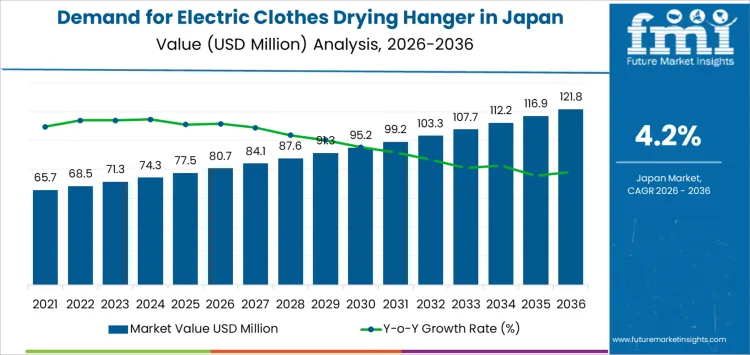
Demand for electric clothes drying hanger in Japan is valued at USD 80.7 million in 2026 and is projected to reach USD 121.8 million by 2036, reflecting a CAGR of 4.2%. The increase from USD 63.1 million in 2020 to USD 80.7 million in 2026 is supported by residential adoption, limited indoor space, and steady purchases across commercial and hospital settings. Freestanding and hanging formats lead early use, while plastic and stainless steel materials remain common due to durability and weight considerations.
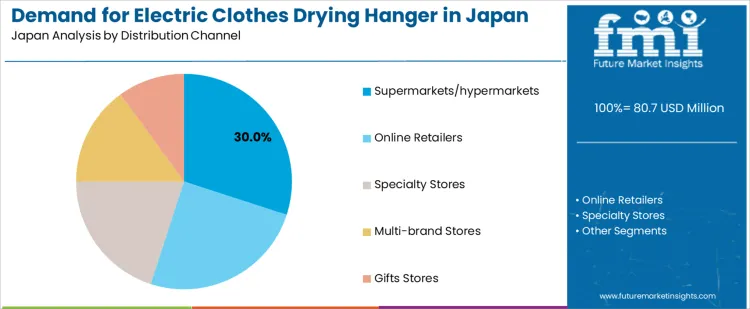
From 2027, demand rises from USD 84.1 million to USD 99.2 million by 2031, then progresses to USD 121.8 million by 2036 through controlled annual additions. Residential users continue to anchor consumption, while hospitals maintain predictable procurement tied to hygiene and workflow needs. Price tiers remain evenly distributed as buyer’s match capacity with room size and load frequency. Online retailers and supermarkets hold leading distribution shares, while specialty and multi brand stores support niche purchases. Long term growth reflects routine replacement cycles and sustained preference for compact drying solutions across Japan.
Quick Stats of the Demand for Electric Clothes Drying Hanger in Japan:
- Demand for Electric Clothes Drying Hanger in Japan Value (2026): USD 80.7 million
- Demand for Electric Clothes Drying Hanger in Japan Forecast Value (2036): USD 121.8 million
- Demand for Electric Clothes Drying Hanger in Japan Forecast CAGR (2026-2036): 4.2%
- Demand for Electric Clothes Drying Hanger in Japan Leading Product Type: Freestanding (30%)
- Demand for Electric Clothes Drying Hanger in Japan Key Growth Regions: Kyushu & Okinawa, Kanto, Kansai
- Demand for Electric Clothes Drying Hanger in Japan Top Players: purStream, Jiffy Steamer, Mixen, Jukkre
What is the Growth Forecast for Electric Clothes Drying Hanger in Japan through 2036?
Between 2026 and 2031, demand for electric clothes drying hangers in Japan increases from USD 80.7 million to USD 95.2 million, reflecting a steady rise supported by compact housing layouts, humidity challenges, and apartment-oriented laundry practices. Adoption during this phase follows a gradual climb as multifunctional indoor drying units gain wider acceptance among urban households. Earlier demand was shaped by convenience needs, while near term growth reflects improved energy efficiency, quieter operation, and stronger alignment with small-space living requirements.
From 2031 to 2036, demand expands from USD 95.2 million to USD 121.8 million, marking a more pronounced upward shift. Growth accelerates due to broader penetration across condominiums, rising installation in renovated homes, and increased interest in automated drying systems among families seeking predictable indoor laundry routines. Earlier gains were influenced by replacement of manual racks, whereas later expansion reflects greater feature differentiation, extended product lifecycles, and stronger presence in home improvement channels. Rising emphasis on moisture control and consistent year-round drying performance reinforces demand across both new and existing residential settings.
Electric Clothes Drying Hanger Industry in Japan Key Takeaways
| Metric | Value |
|---|---|
| Industry Value (2026) | USD 80.7 million |
| Forecast Value (2036) | USD 121.8 million |
| Forecast CAGR (2026–2036) | 4.2% |
What Is Driving the Demand for Electric Clothes Drying Hangers in Japan from 2026 to 2036?
Urban living conditions in Japan created consistent demand for compact drying appliances that handle limited indoor space. Many apartments lack adequate balconies, prompting households to rely on electric hangers for routine drying needs. Seasonal humidity and frequent rainfall encouraged wider household adoption. Historical demand centred on simple heated rods and circulating fans designed for daily use. Retailers reported steady turnover as small households sought dependable devices that supported drying without raising indoor moisture levels during crowded laundry cycles.
Demand from 2026 to 2036 is expected to rise as connected home ecosystems expand and consumers look for smarter laundry solutions. Newer electric hangers incorporate automated airflow control, fabric-sensitive temperature settings, and app-based scheduling. Households value precise drying that protects clothing fibres while reducing indoor moisture. Aging residents, renters, and dual-income families benefit from appliances that shorten drying time in compact interiors. Manufacturers focus on quieter operation, improved safety mechanisms, and foldable designs that fit diverse housing layouts.
What Is the Demand for Electric Clothes Drying Hangers in Japan by Product Type and Material for 2026 to 2036?
The demand for electric clothes drying hangers in Japan from 2026 to 2036 is shaped by compact living spaces, rising indoor drying needs, and consumer preference for automated drying aids. Freestanding models hold a notable share due to ease of placement in apartments and dormitories. Plastic leads by material as lightweight construction supports portability and heat-safe operation across daily use cycles. Procurement is driven by appliance retailers and online platforms supplying compact household devices. Import reliance remains present for heating elements and motorized components.
Why do freestanding models account for 30% of the demand for electric clothes drying hangers in Japan by product type from 2026 to 2036?
Freestanding models account for 30% of the demand for electric clothes drying hangers in Japan by product type due to their adaptability in small rooms and ease of relocation. Consumption intensity rises in rental housing where ceiling installation is restricted. Usage remains steady because these units offer instant setup without structural modification.
Procurement is led by households seeking flexible indoor drying solutions. Freestanding units maintain reliable demand across 2026 to 2036 because families and single-occupancy households require portable drying options during rainy seasons. Repeat utilization stays predictable as heating elements and support frames undergo wear. Buyers favor designs that balance load capacity with compact storage. Margin structure remains steady through retail-driven sales volumes. Regulatory exposure centers on electrical safety and heat emission limits. Import reliance persists for thermostatic controls and compact fans. Substitution pressure from hanging or ceiling-mounted types remains limited among tenants who prioritize non-permanent installation.
Why does plastic represent 28.0% of the demand for electric clothes drying hangers in Japan by material?
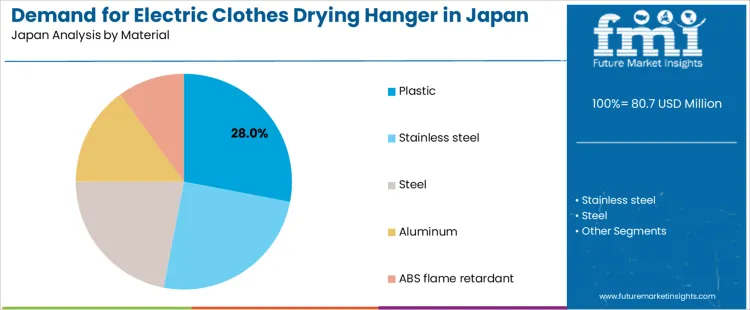
Plastic represents 28.0% of the demand for electric clothes drying hangers in Japan by material due to its light weight, corrosion resistance, and favorable insulation properties around heated components. Consumption intensity is driven by portable and small-capacity models designed for indoor environments. Usage remains steady because plastic frames reduce handling weight while maintaining adequate structural strength. Procurement is dominated by manufacturers producing compact appliances tailored to small living spaces.
Plastic maintains predictable demand from 2026 to 2036 because it supports mass production and consistent quality across high-volume household appliances. Repeat utilization remains reliable as users replace aging units after extended daily use. Buyers favor plastic-based options for their quiet operation and lightweight mobility. Margin structure remains steady under standardized molding processes. Regulatory exposure centers on fire safety compliance and temperature tolerance. Import reliance persists for flame-retardant resin grades and engineered polymers. Substitution pressure from stainless steel or aluminum frames remains limited for consumers prioritizing lower weight and portable designs.
What Is Driving the Demand for Electric Clothes Drying Hanger in Japan Under Evolving Domestic Laundry Conditions?
Demand for electric clothes drying hanger in Japan reflects changing laundry habits shaped by compact homes, varied work schedules, and tighter building ventilation standards. Residents face frequent humidity spikes that prolong indoor drying time, especially in regions where sunlight hours fluctuate sharply across seasons. Newer apartments incorporate smaller balconies or discourage visible laundry, raising dependence on discreet indoor solutions. Users prefer ceiling-mounted devices that lift garments away from living areas, minimizing obstruction. Power-assisted drying appeals to households seeking predictable turnaround without resorting to drum dryers. Demand emerges from daily rhythm shifts, not from broad appliance replacement cycles.
How Are Regional Climate Patterns and Local Lifestyle Practices Influencing Adoption in Japan?
Climate differences across Japan create distinct motivations for adopting electric drying hangers. Coastal prefectures experience extended damp periods, prompting households to avoid musty odors linked to slow evaporation. Mountain regions rely on indoor drying during long winters, when outdoor exposure becomes impractical. In major cities, commuters finish laundry late at night, aiming for silent and efficient overnight systems. Families with school uniforms and sportswear value steady drying regardless of weather. These regional and lifestyle factors create layered, localized demand that does not depend on national appliance trends but on lived conditions within homes shaped by climate and schedule.
Why Are Developers, Landlords, and Housing Renovation Firms Encouraging the Shift Toward Electric Drying Hangers?
Property developers increasingly design units with integrated rails and wiring zones to accommodate electric drying hangers, treating them as standard fixtures for urban tenants. Landlords adopt them to reduce moisture damage on walls and floors caused by long indoor drying, which lowers future repair costs. Renovation firms retrofit older bathrooms with dedicated mounting plates to expand functionality without sacrificing usable space. These decisions reflect building-management priorities tied to humidity control and tenant satisfaction. Demand grows as building professionals treat drying hangers as infrastructure components rather than discretionary household appliances.
What is the Demand for Electric Clothes Drying Hanger in Japan by Region?
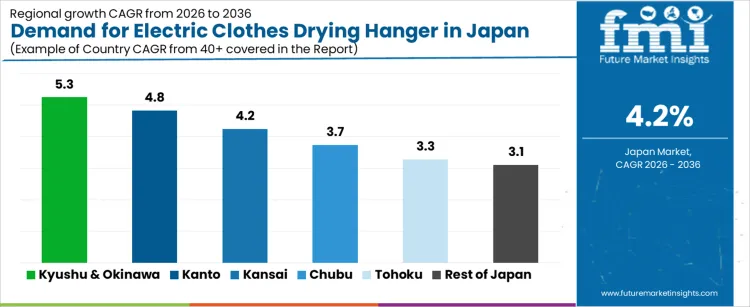
| Region | CAGR (%) |
|---|---|
| Kyushu & Okinawa | 5.3% |
| Kanto | 4.8% |
| Kansai | 4.2% |
| Chubu | 3.7% |
| Tohoku | 3.3% |
| Rest of Japan | 3.1% |
The demand for electric clothes drying hangers in Japan is increasing steadily as households adopt compact and energy efficient drying solutions. Kyushu and Okinawa lead at a 5.3% CAGR, supported by humid climates, limited outdoor drying windows, and strong appliance replacement activity. Kanto follows at 4.8%, driven by dense apartment living, high adoption of space saving home appliances, and strong e commerce distribution. Kansai records 4.2% growth, reflecting stable usage across urban households and small living spaces. Chubu at 3.7% shows moderate uptake linked to mixed urban suburban housing patterns. Tohoku and the Rest of Japan, at 3.3% and 3.1%, reflect slower growth shaped by colder weather drying habits and lower penetration of premium convenience appliances.
How Are Household Routines Shaping Electric Clothes Drying Hanger Demand in Kyushu and Okinawa?
Demand for electric clothes drying hangers in Kyushu and Okinawa is rising at a CAGR of 5.3% from 2026 to 2036, supported by consistent household needs across coastal and urban areas. Families use these systems to manage drying during humid periods and limited indoor space. Apartments and compact homes adopt electric drying hangers as practical alternatives to outdoor drying. Retail channels supply steady volumes aligned with regional stocking patterns. Local installers support regular adoption through accessible setup services. Growth reflects reliable usage habits and household demand for controlled drying performance throughout varied weather conditions.
- Families adopt hangers for space efficiency
- Retailers maintain consistent stock movement
- Installers assist routine household adoption
What Drives Electric Clothes Drying Hanger Adoption Across Kanto?
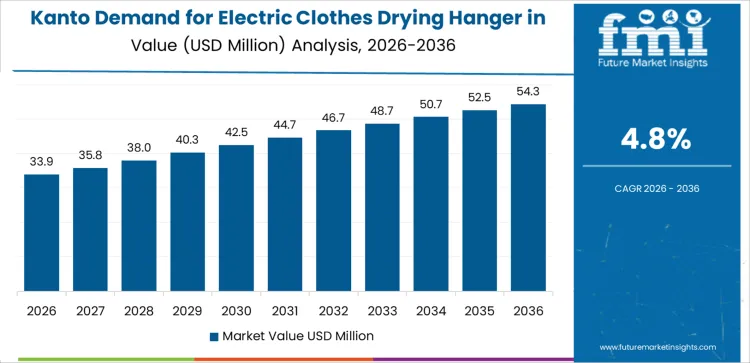
Demand for electric clothes drying hangers in Kanto is progressing at a CAGR of 4.8% from 2026 to 2036, shaped by dense urban living and frequent reliance on indoor drying. Families in compact apartments use electric hangers to manage daily laundry loads with controlled airflow. Retail outlets rotate inventory regularly to match metropolitan purchasing cycles. Multi unit housing complexes encourage adoption where shared drying areas are limited. Product selection aligns with household priorities for convenience, predictable drying times, and reduced dependence on outdoor conditions. Growth follows stable laundry patterns across major cities in the region.
- Urban households depend on indoor drying
- Retailers manage frequent replenishment
- Apartments encourage practical drying solutions
How Is Everyday Usage Supporting Electric Clothes Drying Hanger Demand in Kansai?
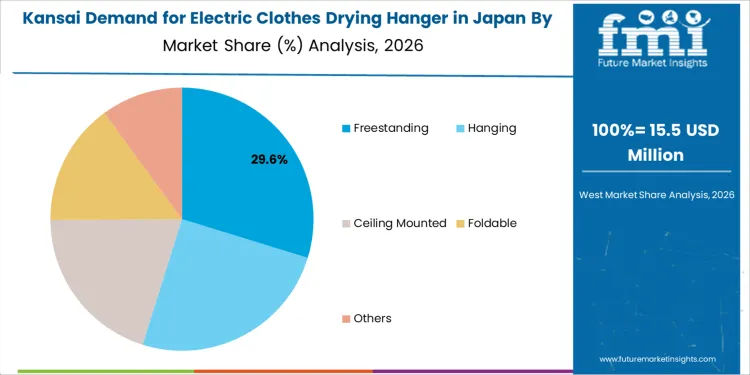
Demand for electric clothes drying hangers in Kansai is increasing at a CAGR of 4.2% from 2026 to 2036 as households rely on consistent indoor drying across varied home layouts. Families use these systems to handle laundry during rainy seasons and for garments requiring gentle drying. Retail stores maintain steady supply supported by predictable turnover. Residential buildings integrate electric hangers to improve laundry convenience for occupants. Regional demand reflects routine home care practices and interest in dependable drying performance that aligns with daily washing schedules across suburban and urban districts.
- Families manage drying during seasonal weather
- Retailers maintain stable product availability
- Buildings integrate hangers for resident use
Which Conditions Influence Electric Clothes Drying Hanger Demand in Chubu?
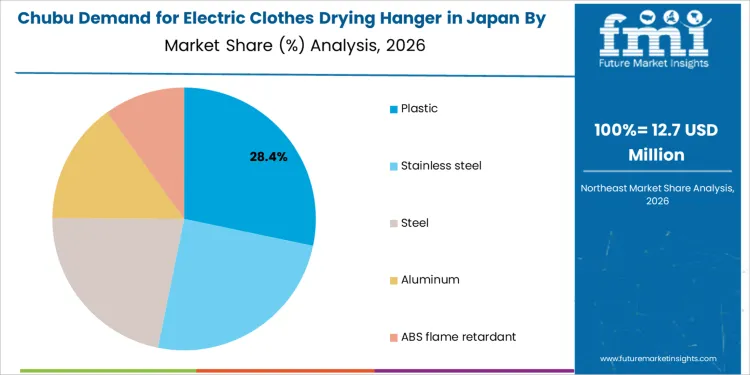
Demand for electric clothes drying hangers in Chubu is trending at a CAGR of 3.7% from 2026 to 2036, supported by household routines, moderate urban density, and mixed weather conditions. Families use these hangers for consistent drying during colder months and for garments requiring controlled airflow. Retail channels distribute steady inventory based on regional purchasing rhythms. Residential developers include electric drying solutions in select new housing projects. Demand remains steady as households choose reliable indoor drying systems that support regular laundry habits across both growing cities and smaller communities in the region.
- Families rely on controlled indoor drying
- Retailers distribute inventory by local demand
- Developers include systems in select projects
How Do Local Weather and Housing Patterns Shape Demand Across Tohoku?
Demand for electric clothes drying hangers in Tohoku is moving at a CAGR of 3.3% from 2026 to 2036, supported by consistent household reliance on indoor drying during colder and snowy months. Families use these systems to manage laundry without outdoor exposure. Retail channels follow predictable purchasing patterns shaped by regional climate needs. Housing units adopt electric hangers to address limited balcony use during winter. Growth reflects practical household adjustments and dependable product availability across cities and rural towns.
- Families adopt hangers for winter laundry needs
- Retailers align stock with seasonal demand
- Homes integrate systems due to weather constraints
What Sustains Electric Clothes Drying Hanger Demand Across Rest of Japan?
Demand for electric clothes drying hangers in Rest of Japan is advancing at a CAGR of 3.1% from 2026 to 2036, driven by households seeking dependable indoor drying across varied climates and housing styles. Families use these systems for garments requiring careful handling and for daily laundry routines. Retail outlets monitor regular reorder cycles tied to local purchasing habits. Smaller housing units integrate electric drying hangers to improve convenience where outdoor drying conditions fluctuate. Overall demand reflects practical household behavior and steady product circulation across dispersed regions.
- Families rely on indoor drying for routine laundry
- Retailers follow steady reorder cycles
- Homes install hangers to improve convenience
What Is Driving the Demand for Electric Clothes Drying Hanger in Japan and Which Companies Shape Household Adoption?
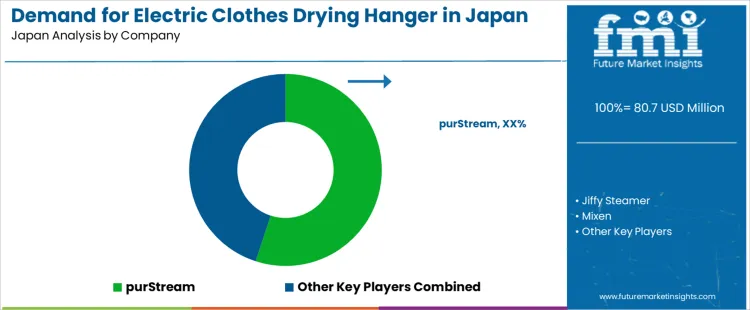
The demand for electric clothes drying hanger in Japan is shaped by limited indoor space, long rainy seasons, and consumer preference for quiet and energy efficient drying options suitable for apartments. Domestic appliance makers drive most adoption through compact ceiling mounted and wall mounted units that fit small laundry areas. purStream participates in Japan through portable drying hangers that appeal to renters seeking easy installation. Jiffy Steamer supports demand through heated air systems adapted from garment care equipment used in homes with limited balcony access. Mixen reaches users through compact foldable models sold online to young households and students living in urban areas. Jukkre contributes through multifunction hangers positioned for quick deodorizing and low heat drying in small rooms.
Product selection in Japan is governed by drying speed under high humidity, safety features for enclosed spaces, and noise control during nighttime operation. Buyers focus on devices that reduce mold buildup, preserve fabric condition, and minimize electricity usage. Many households use electric drying hangers alongside dehumidifiers to handle daily laundry loads without outdoor drying. Retail channels include home centers, appliance stores, and major e commerce platforms. Adoption grows in regions with frequent rainfall and dense apartment living. Demand visibility tracks urban household formation, expansion of smart home appliances, and heightened interest in energy efficient laundry solutions that avoid reliance on full size dryers.
Key Players in the Electric Clothes Drying Hanger Industry in Japan
- purStream
- Jiffy Steamer
- Mixen
- Jukkre
Scope of the Report
| Items | Values |
|---|---|
| Quantitative Units (2026) | USD million |
| Product | Freestanding; Hanging; Ceiling Mounted; Foldable; Others |
| Material | Plastic; Stainless Steel; Steel; Aluminum; ABS Flame Retardant |
| End-use | Residential; Commercial; Hospital |
| Price Range | USD 15.0–30.0; USD 30.0–45.0; Under USD 5.0–15.0; USD 45.0 and Above |
| Distribution Channel | Supermarkets/Hypermarkets; Online Retailers; Specialty Stores; Multi-brand Stores; Gifts Stores |
| Regions Covered | Kyushu & Okinawa; Kanto; Kansai; Chubu; Tohoku; Rest of Japan |
| Countries Covered | Japan |
| Key Companies Profiled | purStream; Jiffy Steamer; Mixen; Jukkre |
| Additional Attributes | Dollar by sales by product and end-use categories; distribution channel performance and retail turnover patterns; drying speed, humidity control, and safety feature requirements; material durability and frame load specifications; apartment installation constraints and portability factors; replacement cycles linked to heating element wear; import reliance for thermostats, compact fans, and heating modules; logistics and e-commerce packaging considerations; noise control and nighttime operation requirements. |
Electric Clothes Drying Hanger Industry in Japan Segmentation
Product:
- Freestanding
- Hanging
- Ceiling Mounted
- Foldable
- Others
Material:
- Plastic
- Stainless Steel
- Steel
- Aluminum
- ABS Flame Retardant
End-use:
- Residential
- Commercial
- Hospital
Price Range:
- USD 15.0 - USD 30.0
- USD 30.0 - USD 45.0
- Under USD 5.0 - USD 15.0
- USD 45.0 and Above
Distribution Channel:
- Supermarkets/Hypermarkets
- Online Retailers
- Specialty Stores
- Multi-brand Stores
- Gifts Stores
Region
- Kyushu & Okinawa
- Kanto
- Kansai
- Chubu
- Tohoku
- Rest of Japan
Frequently Asked Questions
How big is the demand for electric clothes drying hanger in Japan in 2026?
The demand for electric clothes drying hanger in Japan is estimated to be valued at USD 80.7 million in 2026.
What will be the size of electric clothes drying hanger in Japan in 2036?
The market size for the electric clothes drying hanger in Japan is projected to reach USD 121.8 million by 2036.
How much will be the demand for electric clothes drying hanger in Japan growth between 2026 and 2036?
The demand for electric clothes drying hanger in Japan is expected to grow at a 4.2% CAGR between 2026 and 2036.
What are the key product types in the electric clothes drying hanger in Japan?
The key product types in electric clothes drying hanger in Japan are freestanding, hanging, ceiling mounted, foldable and others.
Which material segment is expected to contribute significant share in the electric clothes drying hanger in Japan in 2026?
In terms of material, plastic segment is expected to command 28.0% share in the electric clothes drying hanger in Japan in 2026.
Preview the report firsthand - request a free sample
Get SampleGet the brochure for pricing and purchase details.
Get PDFTable of Content
- Executive Summary
- Japan Market Outlook
- Demand-side Trends
- Supply-side Trends
- Technology Roadmap Analysis
- Analysis and Recommendations
- Market Overview
- Market Coverage / Taxonomy
- Market Definition / Scope / Limitations
- Market Background
- Market Dynamics
- Drivers
- Restraints
- Opportunity
- Trends
- Scenario Forecast
- Demand in Optimistic Scenario
- Demand in Likely Scenario
- Demand in Conservative Scenario
- Opportunity Map Analysis
- Product Life Cycle Analysis
- Supply Chain Analysis
- Investment Feasibility Matrix
- Value Chain Analysis
- PESTLE and Porter’s Analysis
- Regulatory Landscape
- Regional Parent Market Outlook
- Production and Consumption Statistics
- Import and Export Statistics
- Market Dynamics
- Japan Market Analysis 2020 to 2024 and Forecast, 2025 to 2035
- Historical Market Size Value (USD Million) Analysis, 2020 to 2024
- Current and Future Market Size Value (USD Million) Projections, 2025 to 2035
- Y-o-Y Growth Trend Analysis
- Absolute $ Opportunity Analysis
- Japan Market Pricing Analysis 2020 to 2024 and Forecast 2025 to 2035
- Japan Market Analysis 2020 to 2024 and Forecast 2025 to 2035, By Product
- Introduction / Key Findings
- Historical Market Size Value (USD Million) Analysis By Product , 2020 to 2024
- Current and Future Market Size Value (USD Million) Analysis and Forecast By Product , 2025 to 2035
- Freestanding
- Hanging
- Ceiling Mounted
- Foldable
- Others
- Y-o-Y Growth Trend Analysis By Product , 2020 to 2024
- Absolute $ Opportunity Analysis By Product , 2025 to 2035
- Japan Market Analysis 2020 to 2024 and Forecast 2025 to 2035, By Material
- Introduction / Key Findings
- Historical Market Size Value (USD Million) Analysis By Material, 2020 to 2024
- Current and Future Market Size Value (USD Million) Analysis and Forecast By Material, 2025 to 2035
- Plastic
- Stainless steel
- Steel
- Aluminum
- ABS flame retardant
- Y-o-Y Growth Trend Analysis By Material, 2020 to 2024
- Absolute $ Opportunity Analysis By Material, 2025 to 2035
- Japan Market Analysis 2020 to 2024 and Forecast 2025 to 2035, By End-use
- Introduction / Key Findings
- Historical Market Size Value (USD Million) Analysis By End-use, 2020 to 2024
- Current and Future Market Size Value (USD Million) Analysis and Forecast By End-use, 2025 to 2035
- Residential
- Commercial
- Hospital
- Y-o-Y Growth Trend Analysis By End-use, 2020 to 2024
- Absolute $ Opportunity Analysis By End-use, 2025 to 2035
- Japan Market Analysis 2020 to 2024 and Forecast 2025 to 2035, By Price Range
- Introduction / Key Findings
- Historical Market Size Value (USD Million) Analysis By Price Range, 2020 to 2024
- Current and Future Market Size Value (USD Million) Analysis and Forecast By Price Range, 2025 to 2035
- USD 15.0 - USD 30.0
- USD 30.0 - USD 45.0
- Under USD 5.0 - USD 15.0
- USD 45.0 and Above
- Y-o-Y Growth Trend Analysis By Price Range, 2020 to 2024
- Absolute $ Opportunity Analysis By Price Range, 2025 to 2035
- Japan Market Analysis 2020 to 2024 and Forecast 2025 to 2035, By Distribution Channel
- Introduction / Key Findings
- Historical Market Size Value (USD Million) Analysis By Distribution Channel, 2020 to 2024
- Current and Future Market Size Value (USD Million) Analysis and Forecast By Distribution Channel, 2025 to 2035
- Supermarkets/hypermarkets
- Online Retailers
- Specialty Stores
- Multi-brand Stores
- Gifts Stores
- Y-o-Y Growth Trend Analysis By Distribution Channel, 2020 to 2024
- Absolute $ Opportunity Analysis By Distribution Channel, 2025 to 2035
- Market Structure Analysis
- Competition Dashboard
- Competition Benchmarking
- Market Share Analysis of Top Players
- By Regional
- By Product
- By Material
- By End-use
- By Price Range
- By Distribution Channel
- Competition Analysis
- Competition Deep Dive
- purStream
- Overview
- Product Portfolio
- Profitability by Market Segments (Product/Age /Sales Channel/Region)
- Sales Footprint
- Strategy Overview
- Marketing Strategy
- Product Strategy
- Channel Strategy
- Jiffy Steamer
- Mixen
- Jukkre
- purStream
- Competition Deep Dive
- Assumptions & Acronyms Used
- Research Methodology


