

- Industry Size (2025)
- USD 129.70 Mn
- Forecast (2035)
- USD 176.01 Mn
- CAGR (2025 to 2035)
- 3.1%
Demand for Instrument Cleaning Chemistries in Japan Market Size, Market Forecast and Outlook By FMI
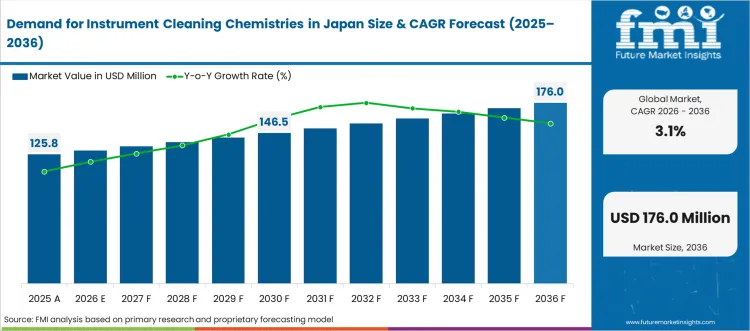
The Instrument Cleaning Chemistries in Japan market was valued at USD 125.80 million in 2025, projected to reach USD 129.70 million in 2026, and is forecast to expand to USD 176.01 million by 2036 at a 3.1% CAGR. As per FMI, tightening infection control enforcement by Japanese healthcare regulators and the expansion of endoscopy and minimally invasive surgical procedure volumes are sustaining steady procurement of specialised cleaning detergents and disinfection chemistries for reusable medical instruments. FMI is of the opinion that the MHLW's updated medical device reprocessing guidelines mandating validated cleaning cycles for every reusable instrument category are converting discretionary cleaning chemistry purchases into mandatory compliance procurement.
Summary of Demand for Instrument Cleaning Chemistries in Japan Market
- Market Overview
- The Instrument Cleaning Chemistries in Japan market is valued at USD 125.80 million in 2025 and is projected to reach USD 176.01 million by 2036.
- The industry is expected to grow at a 3.1% CAGR from 2026 to 2036, creating an incremental opportunity of USD 46.31 million.
- The market is a compliance-driven healthcare consumables category where infection control accreditation mandates, procedure volume growth, and automated reprocessing penetration define competitive positioning among cleaning chemistry suppliers in Japan.
- Demand and Growth Drivers
- Demand is sustained by tightening infection control enforcement and MHLW reprocessing guidelines mandating validated cleaning cycles for all reusable instrument categories.
- Expanding endoscopy and minimally invasive surgical procedure volumes across speciality clinics are increasing cleaning chemistry consumption per facility.
- Hospital accreditation programmes tying infection control compliance to cleaning documentation are converting discretionary purchases into mandatory procurement.
- Kyushu and Okinawa lead at 3.8% CAGR, followed by Kanto at 3.5%, Kansai at 3.1%, Chubu at 2.7%, Tohoku at 2.4%, and Rest of Japan at 2.3%.
- Product and Segment View
- The market includes product type, process type, end user, instrument type as primary segmentation dimensions.
- Detergents leads by Product Type with 73% share in 2026.
- Presoak leads by Process Type with 2.7% share in 2026.
- Specialty Clinics leads by End User with 24% share in 2026.
- Geography and Competitive Outlook
- Kyushu & Okinawa is the fastest-growing region at 3.8% CAGR, while Kanto anchors the second-largest demand base.
- Competition is shaped by technical specialisation, regulatory compliance capability, and distribution depth, with key players including STERIS Plc., Getinge Group, Ecolab Inc., 3M, Dr. Weigert.
- Analyst Opinion at FMI
- Sabyasachi Ghosh, Principal Consultant, opines: 'FMI's analysis reveals that the instrument cleaning chemistries in japan market is entering a phase where procurement decisions are increasingly dictated by regulatory compliance timelines and measurable performance thresholds. Organisations that delay platform investment risk permanent lockout from competitive procurement tiers their counterparts are actively securing.'
- Strategic Implications / Executive Takeaways
- Solution providers must secure certified integration pathways with tier-1 enterprise systems to qualify for forthcoming institutional procurement contracts.
- Capital project directors should phase out legacy approaches and mandate native platform compatibility in all new equipment and software procurement specifications.
- Technical teams must develop specialised competencies in product type validation to demonstrate compliance parameters during the evaluation phase.
Demand for Instrument Cleaning Chemistries in Japan Market Key Takeaways
| Metric | Details |
|---|---|
| Industry Size (2026) | USD 129.70 million |
| Industry Value (2036) | USD 176.01 million |
| CAGR (2026 to 2036) | 3.1% |
Source: Future Market Insights, 2026
FMI analysts observe that regional demand distribution across Japan reflects the concentration of hospital and speciality clinic infrastructure. Kyushu and Okinawa lead at 3.8% CAGR, supported by prefectural hospital accreditation programmes that tie infection control compliance to cleaning chemistry documentation. Kanto follows at 3.5%, anchored by the density of major hospital networks and ambulatory surgical centres in Tokyo requiring high-throughput automated instrument reprocessing. Kansai registers 3.1% growth as Osaka-based speciality clinics expand endoscopy procedure volumes. Chubu maintains 2.7% growth driven by regional hospital system standardisation of cleaning chemistry protocols. Tohoku and Rest of Japan sustain 2.4% and 2.3% growth respectively, with smaller facilities upgrading from manual cleaning to validated automated reprocessing workflows. Based on FMI's report, hospitals that have implemented fully automated instrument reprocessing lines consume cleaning chemistries at volumes 2.5 times greater per procedure than facilities relying on manual cleaning alone.
Demand for Instrument Cleaning Chemistries in Japan Market Definition
Based on FMI's report, the Instrument Cleaning Chemistries in Japan market covers detergents and cleaners formulated specifically for reprocessing reusable medical instruments including surgical instruments, endoscopes, ultrasound probes, and dental instruments across healthcare facilities within Japan.
Demand for Instrument Cleaning Chemistries in Japan Market Inclusions
Future Market Insights analysis covers detergents and cleaners used in presoak, manual cleaning, automatic cleaning, and disinfection workflows for medical instruments. The scope encompasses regional market sizes across Japanese prefectural groupings, forecast projections from 2026 to 2036, and segmentation by product type, process type, end user, and instrument type.
Demand for Instrument Cleaning Chemistries in Japan Market Exclusions
The scope excludes surface disinfectants not designed for instrument reprocessing, sterilisation agents such as ethylene oxide and hydrogen peroxide vapour, and disposable single-use medical devices that do not require reprocessing.
Demand for Instrument Cleaning Chemistries in Japan Market Research Methodology
Primary Research: Analysts conducted interviews with hospital sterile processing department managers, infection control officers, and cleaning chemistry procurement leads to map product selection criteria and regulatory compliance requirements.
Desk Research: Data collection aggregated MHLW infection control enforcement records, PMDA medical device reprocessing guideline updates, and published hospital accreditation statistics from the Japan Council for Quality Health Care.
Market-Sizing and Forecasting: Baseline values derive from a bottom-up aggregation of instrument cleaning chemistry volumes consumed within Japanese healthcare facilities, applying procedure volume growth curves and automated reprocessing penetration rates.
Data Validation and Update Cycle: Projections are cross-validated against quarterly healthcare consumable revenue guidance from major cleaning chemistry manufacturers and MHLW hospital supply expenditure statistics.
Why is the Demand for Instrument Cleaning Chemistries in Japan Growing?
The demand for instrument cleaning chemistries in Japan is increasing as industries such as healthcare, pharmaceuticals, biotechnology, and manufacturing place more emphasis on cleanliness and maintenance of equipment. Instrument cleaning chemistries are essential for ensuring that laboratory, medical, and industrial instruments remain free from contaminants and function efficiently. These cleaning solutions are designed to remove residue, biofilms, and other substances that could compromise the performance and safety of equipment, driving their growing use across a variety of sectors.
A key driver behind the growth of instrument cleaning chemistries is the rising need for stringent hygiene and quality control in industries that require high standards of cleanliness. In healthcare and pharmaceuticals, maintaining sterile conditions and ensuring that medical instruments are properly sanitized is critical for patient safety and regulatory compliance. As Japan continues to prioritize healthcare and technological advancements, the demand for cleaning chemistries that ensure the reliability and longevity of instruments is expected to rise.
The increasing complexity of industrial equipment and laboratory instruments is contributing to the growth of this sector. As technology evolves, instruments become more sophisticated and require specialized cleaning solutions to maintain their precision and functionality. Innovations in cleaning chemistries that offer improved efficiency, safety, and eco-friendliness are further boosting demand. With ongoing advancements in industrial and healthcare sectors, the demand for instrument cleaning chemistries in Japan is projected to grow steadily through 2035.
What is the Segment-Wise Analysis of Demand for Instrument Cleaning Chemistries in Japan?
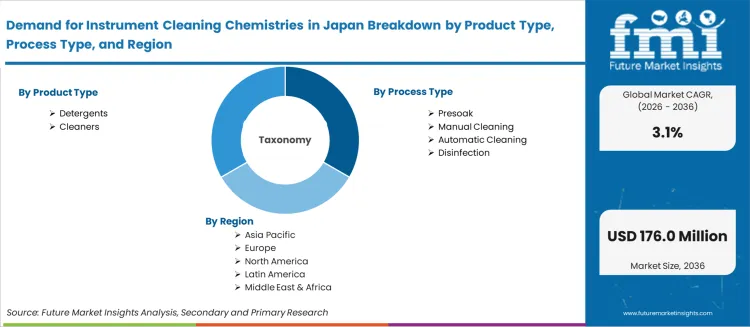
Demand for instrument cleaning chemistries in Japan is segmented by product type, end-user, process type, instrument type, and region. By product type, demand is divided into detergents and cleaners. The demand is also segmented by end-user, including specialty clinics, ambulatory surgical centers, diagnostic centers, hospitals, and others. In terms of process type, demand is spread across presoak, manual cleaning, automatic cleaning, and disinfection. The demand is further divided by instrument type, including surgical instruments, endoscopes, ultrasound, dental instruments, and others. Regionally, demand is distributed across Kyushu & Okinawa, Kanto, Kansai, Chubu, Tohoku, and the rest of Japan.
Why Do Detergents Lead the Demand for Instrument Cleaning Chemistries in Japan?
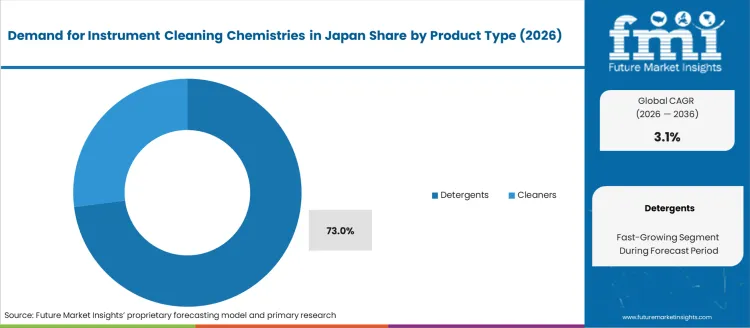
Detergents account for 73% of the demand for instrument cleaning chemistries in Japan, driven by their effectiveness in cleaning medical instruments and their widespread use in healthcare facilities. Detergents are essential for removing biological contaminants, residues, and debris from surgical instruments, endoscopes, and other medical devices. Their ability to break down oils, proteins, and other contaminants makes them the preferred cleaning solution for the healthcare sector. The high demand for detergents is also influenced by their cost-effectiveness and ease of use, as they are often incorporated into automated cleaning systems. In Japan, where maintaining high hygiene standards is critical, the demand for detergents continues to grow. As the healthcare industry prioritizes patient safety and infection prevention, the role of detergents in instrument cleaning will remain indispensable, solidifying their position as the leading product type in this industry.
Why Do Specialty Clinics Lead the Demand for Instrument Cleaning Chemistries in Japan?
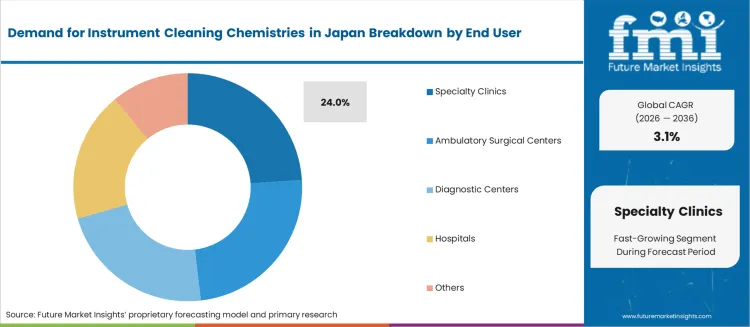
Specialty clinics account for 24% of the demand for instrument cleaning chemistries in Japan, driven by the need for frequent, high-quality cleaning solutions for medical instruments used in specialized treatments. These clinics, often focused on specific types of healthcare services such as dermatology, orthopedics, or ophthalmology, require effective cleaning of instruments to prevent cross-contamination and ensure patient safety. As these clinics typically handle high volumes of patient visits and procedures, the need for efficient cleaning processes and reliable cleaning chemistries becomes paramount. The rise in the number of specialized outpatient services and medical centers in Japan, along with growing awareness of infection control, has led to an increased focus on effective cleaning solutions. The consistent demand for cleaning products in these settings supports specialty clinics as a key driver in the instrument cleaning chemistry industry.
What are the Key Trends, Drivers, and Restraints in Demand for Instrument Cleaning Chemistries in Japan?
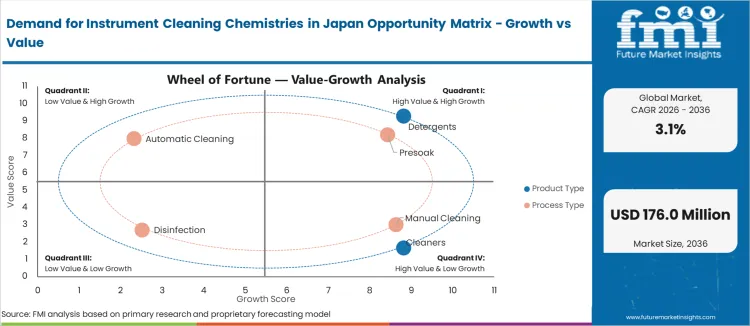
Cleaning chemistries, such as enzymatic detergents and disinfectants, are crucial for cleaning reusable medical instruments and lab equipment. As healthcare standards tighten and infection control awareness grows, industries are investing in more reliable cleaning solutions. This focus on hygiene and sterilization is a significant driver of demand. Challenges exist, such as the high cost of advanced cleaning chemicals, recurring usage requirements, and concerns regarding chemical disposal and compatibility with materials. These factors can limit the widespread adoption of cleaning chemistries, especially among smaller facilities or businesses with tighter budgets, making it more challenging for some sectors to keep up with evolving standards.
Why is Demand for Instrument Cleaning Chemistries Growing in Japan?
Demand for instrument cleaning chemistries in Japan is rising due to expanding healthcare, medical device manufacturing, and laboratory sectors. With more surgeries, growing use of reusable instruments, and stricter infection control standards, there is an increasing need for effective cleaning solutions. Hospital-acquired infections (HAIs) have raised awareness about the importance of proper cleaning protocols to ensure patient safety. The need for cleaning solutions also rises as medical devices become more prevalent and are reused more frequently. Reusable instruments in diagnostics, surgeries, and research require ongoing cleaning, leading to recurring demand for cleaning chemistries. The increased emphasis on hygiene and adherence to strict regulatory guidelines further strengthens the industry, with healthcare providers consistently seeking reliable, high-quality cleaning products to meet safety and compliance standards.
How are Technological & Industry Innovations Driving Demand for Instrument Cleaning Chemistries in Japan?
Technological advancements in cleaning formulations and equipment are driving the demand for instrument cleaning chemistries in Japan. New formulations such as enzymatic detergents, biodegradable solvents, and non-toxic cleaning agents are tailored to meet the specific needs of medical, laboratory, and industrial equipment. Innovations in automated cleaning systems, including ultrasonic cleaners and specialized washing machines, increase efficiency, ensure consistent cleaning quality, and reduce manual labor. These technologies not only improve throughput but also enhance the safety and performance of cleaning solutions. As cleaning methods become more efficient and environmentally friendly, organizations are more inclined to adopt advanced cleaning chemistries. The growing focus on sustainability, coupled with improved processing, ensures that these solutions are practical for larger hospitals, laboratories, and manufacturing facilities, supporting further industry expansion.
What are the Key Challenges and Risks That Could Limit Demand for Instrument Cleaning Chemistries in Japan?
One key challenge is the high cost of advanced cleaning chemicals and automated systems, which may deter smaller businesses, clinics, or laboratories with tight budgets. Regular use of specialized cleaning products leads to recurring costs, making them less affordable for some organizations. There are also concerns about the compatibility of chemicals with certain materials, as prolonged use can degrade instruments or equipment. Stringent regulatory standards for chemical waste disposal add complexity to the use of cleaning chemistries, particularly in industries like healthcare and food processing. Some smaller institutions may opt for traditional or manual cleaning methods due to cost and perceived simplicity, limiting the industry share of advanced cleaning chemistries in certain sectors.
What is the Regional Demand Outlook for Instrument Cleaning Chemistries in Japan?
.webp "Top Country Growth Comparison Demand For Instrument Cleaning Chemistries In Japan Cagr (2026 2036)")
| Region | CAGR (%) |
|---|---|
| Kyushu & Okinawa | 3.8% |
| Kanto | 3.5% |
| Kansai | 3.1% |
| Chubu | 2.7% |
| Tohoku | 2.4% |
| Rest of Japan | 2.3% |
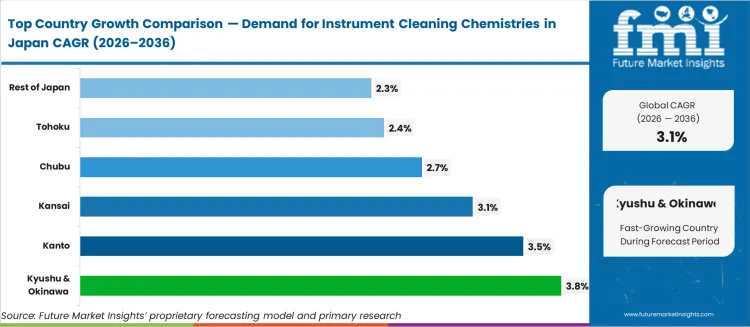
Demand for instrument cleaning chemistries in Japan is steadily growing across all regions, with Kyushu & Okinawa leading at a 3.8% CAGR, driven by the region's expanding healthcare and industrial sectors. Kanto follows with a 3.5% CAGR, supported by the region’s strong industrial base and healthcare infrastructure. Kansai shows a 3.1% CAGR, with demand fueled by increasing focus on hygiene and sanitation in the region's healthcare and food industries. Chubu experiences a 2.7% CAGR, driven by the need for cleaning chemistries in the manufacturing and pharmaceutical sectors. Tohoku and the Rest of Japan see moderate growth at 2.4% and 2.3%, respectively, reflecting an ongoing interest in maintaining cleanliness and hygiene standards across various industries.
How is Demand for Instrument Cleaning Chemistries Growing in Kyushu & Okinawa?
Kyushu & Okinawa leads the demand for instrument cleaning chemistries, growing at a 3.8% CAGR. The region’s expanding healthcare sector, particularly in Okinawa, contributes significantly to this growth. As hospitals and clinics prioritize cleanliness and hygiene, the need for specialized cleaning solutions is increasing. The region's growing industrial base, including pharmaceutical companies, also drives the demand for effective cleaning chemistries. Okinawa’s tourism sector further fuels this trend, as hotels and resorts require rigorous cleaning standards for their equipment. The focus on maintaining high sanitation levels in both healthcare and hospitality ensures continued growth in the region. With the increasing public awareness of health and hygiene, the demand for cleaning solutions in Kyushu & Okinawa is expected to rise steadily, driven by both local industries and the need for cleanliness in healthcare and tourism-related facilities.
Why is Demand for Instrument Cleaning Chemistries Rising in Kanto?
Kanto is experiencing strong demand for instrument cleaning chemistries, with a 3.5% CAGR. The region’s large urban population, particularly in Tokyo, is a key driver of this growth. As healthcare facilities, hospitals, and pharmaceutical companies in Kanto focus on maintaining high cleanliness and hygiene standards, the need for effective instrument cleaning solutions has risen. Kanto’s large industrial base, including the food processing sector, relies on cleaning chemistries to maintain operational efficiency and sanitation. The region’s growing emphasis on health and safety, particularly in response to global health concerns, further accelerates demand for instrument cleaning solutions. As businesses and institutions in Kanto continue to adopt strict hygiene protocols, the demand for cleaning chemistries is expected to grow steadily, making it one of the largest industrys for these products in Japan.
How is Demand for Instrument Cleaning Chemistries Expanding in Kansai?
Kansai shows steady demand for instrument cleaning chemistries, with a 3.1% CAGR. The region’s well-established healthcare, pharmaceutical, and food industries are key contributors to the rising demand for cleaning solutions. As Kansai’s food manufacturing and healthcare sectors grow, the need for high-quality cleaning chemistries to meet hygiene standards is increasing. The region’s growing focus on health and safety, particularly in food production and pharmaceuticals, is driving the adoption of advanced cleaning solutions. Kansai continues to modernize its healthcare infrastructure, there is a greater need for reliable, effective cleaning chemistries. The region’s strong industrial presence, coupled with rising awareness of public health and safety, ensures continued growth in the demand for cleaning products. With these trends, demand for instrument cleaning chemistries in Kansai is expected to remain robust and grow steadily over time.
Why is Demand for Instrument Cleaning Chemistries Growing in Chubu?
Chubu is experiencing steady demand for instrument cleaning chemistries, growing at a 2.7% CAGR. The region’s strong industrial sector, particularly in Nagoya, plays a significant role in driving the demand for cleaning solutions. As manufacturing, pharmaceutical, and food industries in Chubu continue to expand, the need for high-quality cleaning chemistries to maintain hygiene standards in production processes is growing. The region’s focus on health, safety, and operational efficiency in its various industries ensures consistent demand for cleaning solutions. With increasing attention to maintaining cleanliness and compliance with health regulations, companies in Chubu are adopting advanced instrument cleaning products. The rising awareness of the importance of hygiene across all sectors, especially in pharmaceuticals and food manufacturing, ensures steady growth in demand for cleaning chemistries in Chubu. This trend is expected to continue as industrial activities and health concerns drive the adoption of cleaning solutions.
How is Demand for Instrument Cleaning Chemistries Expanding in Tohoku?
Tohoku is seeing moderate demand for instrument cleaning chemistries, with a 2.4% CAGR. While smaller compared to urban centers, the region’s healthcare and food processing sectors are contributing to steady growth in demand for cleaning solutions. As Tohoku modernizes its healthcare infrastructure, hospitals and clinics are increasingly investing in cleaning chemistries to meet higher hygiene standards. The food processing industry in the region, which also requires stringent sanitation, is another key driver of demand. Local manufacturers and small businesses are adopting cleaning products to maintain operational efficiency and hygiene. Tohoku’s growing focus on public health, along with increasing tourism and food-related activities, is further contributing to the rise in demand. As more businesses and healthcare providers in Tohoku recognize the importance of cleanliness, the demand for instrument cleaning chemistries is expected to continue growing steadily over time.
Why is Demand for Instrument Cleaning Chemistries Steady in the Rest of Japan?
The Rest of Japan is experiencing steady demand for instrument cleaning chemistries, with a 2.3% CAGR. While the demand is smaller compared to urban regions, rural and smaller cities are increasingly adopting cleaning solutions as part of the broader trend toward improved hygiene and sanitation. Local healthcare facilities and food manufacturers are becoming more aware of the need for effective cleaning chemistries to meet health and safety standards. The rising focus on health in rural areas, particularly in food production and small healthcare providers, is contributing to the steady growth in demand for cleaning products. The Rest of Japan’s growing industrialization and modernization of food processing sectors are expected to drive further adoption of cleaning chemistries. As awareness of hygiene standards increases across the nation, the demand for these cleaning solutions is expected to continue growing steadily in rural and less urbanized areas.
What is Driving the Demand for Instrument Cleaning Chemistries in Japan and Who Are the Key Players Shaping the Industry?
The demand for instrument cleaning chemistries in Japan is rising as industries such as healthcare, pharmaceuticals, and biotechnology increasingly prioritize effective and efficient sterilization and cleaning solutions. Instrument cleaning chemistries are essential for maintaining the hygiene and functionality of medical and laboratory equipment, ensuring safety and preventing cross-contamination. As Japan’s healthcare sector continues to grow and modernize, driven by an aging population and advancements in medical technologies, the need for high-quality cleaning solutions is expanding. The focus on regulatory compliance and the increasing need for automated and high-performance cleaning systems are also contributing to the rising demand for instrument cleaning chemistries in the country.
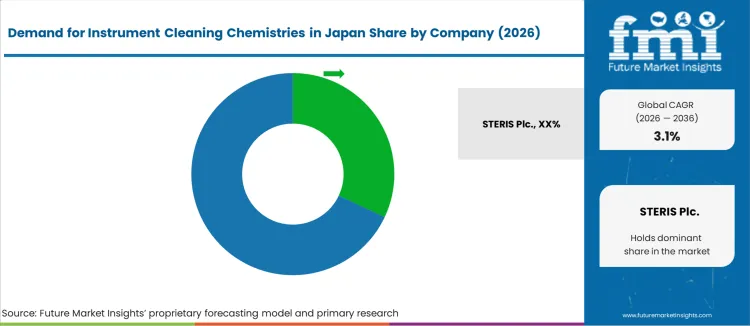
Key players shaping the instrument cleaning chemistries industry in Japan include STERIS Plc., Getinge Group, Ecolab Inc., 3M, and Dr. Weigert. STERIS Plc. holds a significant share of 32.0%, leading the industry with a range of effective cleaning and disinfecting solutions that meet stringent industry standards. These companies provide a variety of instrument cleaning products designed to address the unique needs of healthcare facilities, laboratories, and other industries that require high levels of sanitation. By focusing on innovation and product development, these companies are helping to meet the growing demand for effective cleaning chemistries that enhance both operational efficiency and safety.
The growth of the instrument cleaning chemistries industry in Japan is further supported by advancements in cleaning technology and an increasing emphasis on infection control. As the demand for high-quality and efficient instrument cleaning solutions continues to rise across industries, companies are expected to focus on developing environmentally friendly, cost-effective, and customizable products. These innovations will help meet the evolving needs of Japan’s healthcare, pharmaceutical, and industrial sectors, ensuring continued industry expansion and contributing to the overall improvement of public health standards.
Key Players in Japan Instrument Cleaning Chemistries Demand
- STERIS Plc.
- Getinge Group
- Ecolab Inc.
- 3M
- Dr. Weigert
Scope of the Report
| Metric | Value |
|---|---|
| Quantitative Units | USD 129.70 million to USD 176.01 million, at a CAGR of 3.1% |
| Market Definition | Based on FMI's report, the Instrument Cleaning Chemistries in Japan market covers detergents and cleaners formulated specifically for reprocessing reusable medical instruments including surgical instruments, endoscopes, ultrasound probes, and dental instruments across healthcare facilities within Japan. |
| Segmentation | Product Type: Detergents, Cleaners; Process Type: Presoak, Manual Cleaning, Automatic Cleaning, Disinfection; End User: Specialty Clinics, Ambulatory Surgical Centers, Diagnostic Centers, Hospitals, Others; Instrument Type: Surgical Instruments, Endoscopes, Ultrasound, Dental Instruments, Others |
| Regions Covered | Kyushu & Okinawa, Kanto, Kansai, Chubu, Tohoku, Rest of Japan |
| Key Companies Profiled | STERIS Plc., Getinge Group, Ecolab Inc., 3M, Dr. Weigert |
| Forecast Period | 2026 to 2036 |
| Approach | Hybrid bottom-up methodology combining installed base metrics with regulatory compliance adoption curves and primary research validation. |
Japan Instrument Cleaning Chemistries Demand by Key Segments
Product Type
- Detergents
- Cleaners
Process Type
- Presoak
- Manual Cleaning
- Automatic Cleaning
- Disinfection
Instrument Type
- Surgical Instruments
- Endoscopes
- Ultrasound
- Dental Instruments
- Others
End User
- Specialty Clinics
- Ambulatory Surgical Centers
- Diagnostic Centers
- Hospitals
- Others
Region
- Kyushu & Okinawa
- Kanto
- Kansai
- Chubu
- Tohoku
- Rest of Japan
Bibliography
- 1. Ministry of Health, Labour and Welfare. (2025). Guidelines for Reprocessing Reusable Medical Devices. MHLW Japan.
- 2. Japan Council for Quality Health Care. (2025). Hospital Accreditation Standards: Infection Control Compliance Report. JCQHC.
- 3. World Health Organization. (2024). Global Guidelines on Infection Prevention and Control. WHO.
- 4. International Organization for Standardization. (2024). ISO 15883: Washer-Disinfectors for Medical Instruments. ISO.
- 5. Pharmaceuticals and Medical Devices Agency. (2025). Medical Device Reprocessing: Annual Safety Report. PMDA.
- 6. Organisation for Economic Co-operation and Development. (2025). Health at a Glance: Healthcare Quality Indicators. OECD Publishing.
This bibliography is provided for reader reference. The full Future Market Insights report contains the complete reference list with primary research documentation.
Frequently Asked Questions
How large is the Instrument Cleaning Chemistries in Japan market in 2026?
The Instrument Cleaning Chemistries in Japan market is estimated to be valued at USD 129.70 million in 2026.
What will be the market size of Instrument Cleaning Chemistries in Japan by 2036?
Market size for Instrument Cleaning Chemistries in Japan is projected to reach USD 176.01 million by 2036.
What is the expected CAGR for Instrument Cleaning Chemistries in Japan between 2026 and 2036?
The Instrument Cleaning Chemistries in Japan market is expected to grow at a CAGR of 3.1% between 2026 and 2036.
Which Product Type leads the Instrument Cleaning Chemistries in Japan market in 2026?
Detergents accounts for 73% share in 2026 by Product Type.
Which region is projected to grow fastest?
Kyushu & Okinawa is projected to grow at a CAGR of 3.8% during 2026 to 2036.
What does this report include in its scope?
The report covers market sizing, segmentation analysis, regional forecasts, competitive landscape evaluation, and forecast projections from 2026 to 2036.
How does FMI build and validate the Instrument Cleaning Chemistries in Japan forecast?
Forecasting models apply a bottom-up methodology starting with installed base metrics and cross-validate projections against quarterly revenue volumes and regulatory compliance adoption data.
Preview the report firsthand - request a free sample
Get SampleGet the brochure for pricing and purchase details.
Get PDFTable of Content
- Executive Summary
- Global Market Outlook
- Demand-side Trends
- Supply-side Trends
- Technology Roadmap Analysis
- Analysis and Recommendations
- Market Overview
- Market Coverage / Taxonomy
- Market Definition / Scope / Limitations
- Research Methodology
- Chapter Orientation
- Analytical Lens and Working Hypotheses
- Market Structure, Signals, and Trend Drivers
- Benchmarking and Cross-market Comparability
- Market Sizing, Forecasting, and Opportunity Mapping
- Research Design and Evidence Framework
- Desk Research Programme (Secondary Evidence)
- Company Annual and Sustainability Reports
- Peer-reviewed Journals and Academic Literature
- Corporate Websites, Product Literature, and Technical Notes
- Earnings Decks and Investor Briefings
- Statutory Filings and Regulatory Disclosures
- Technical White Papers and Standards Notes
- Trade Journals, Industry Magazines, and Analyst Briefs
- Conference Proceedings, Webinars, and Seminar Materials
- Government Statistics Portals and Public Data Releases
- Press Releases and Reputable Media Coverage
- Specialist Newsletters and Curated Briefings
- Sector Databases and Reference Repositories
- FMI Internal Proprietary Databases and Historical Market Datasets
- Subscription Datasets and Paid Sources
- Social Channels, Communities, and Digital Listening Inputs
- Additional Desk Sources
- Expert Input and Fieldwork (Primary Evidence)
- Primary Modes
- Qualitative Interviews and Expert Elicitation
- Quantitative Surveys and Structured Data Capture
- Blended Approach
- Why Primary Evidence is Used
- Field Techniques
- Interviews
- Surveys
- Focus Groups
- Observational and In-context Research
- Social and Community Interactions
- Stakeholder Universe Engaged
- C-suite Leaders
- Board Members
- Presidents and Vice Presidents
- R&D and Innovation Heads
- Technical Specialists
- Domain Subject-matter Experts
- Scientists
- Physicians and Other Healthcare Professionals
- Governance, Ethics, and Data Stewardship
- Research Ethics
- Data Integrity and Handling
- Primary Modes
- Tooling, Models, and Reference Databases
- Desk Research Programme (Secondary Evidence)
- Data Engineering and Model Build
- Data Acquisition and Ingestion
- Cleaning, Normalisation, and Verification
- Synthesis, Triangulation, and Analysis
- Quality Assurance and Audit Trail
- Market Background
- Market Dynamics
- Drivers
- Restraints
- Opportunity
- Trends
- Scenario Forecast
- Demand in Optimistic Scenario
- Demand in Likely Scenario
- Demand in Conservative Scenario
- Opportunity Map Analysis
- Product Life Cycle Analysis
- Supply Chain Analysis
- Investment Feasibility Matrix
- Value Chain Analysis
- PESTLE and Porter’s Analysis
- Regulatory Landscape
- Regional Parent Market Outlook
- Production and Consumption Statistics
- Import and Export Statistics
- Market Dynamics
- Global Market Analysis 2021 to 2025 and Forecast, 2026 to 2036
- Historical Market Size Value (USD Million) Analysis, 2021 to 2025
- Current and Future Market Size Value (USD Million) Projections, 2026 to 2036
- Y-o-Y Growth Trend Analysis
- Absolute $ Opportunity Analysis
- Global Market Pricing Analysis 2021 to 2025 and Forecast 2026 to 2036
- Global Market Analysis 2021 to 2025 and Forecast 2026 to 2036, By Product Type
- Introduction / Key Findings
- Historical Market Size Value (USD Million) Analysis By Product Type , 2021 to 2025
- Current and Future Market Size Value (USD Million) Analysis and Forecast By Product Type , 2026 to 2036
- Detergents
- Cleaners
- Detergents
- Y-o-Y Growth Trend Analysis By Product Type , 2021 to 2025
- Absolute $ Opportunity Analysis By Product Type , 2026 to 2036
- Global Market Analysis 2021 to 2025 and Forecast 2026 to 2036, By Process Type
- Introduction / Key Findings
- Historical Market Size Value (USD Million) Analysis By Process Type, 2021 to 2025
- Current and Future Market Size Value (USD Million) Analysis and Forecast By Process Type, 2026 to 2036
- Presoak
- Manual Cleaning
- Automatic Cleaning
- Disinfection
- Presoak
- Y-o-Y Growth Trend Analysis By Process Type, 2021 to 2025
- Absolute $ Opportunity Analysis By Process Type, 2026 to 2036
- Global Market Analysis 2021 to 2025 and Forecast 2026 to 2036, By End User
- Introduction / Key Findings
- Historical Market Size Value (USD Million) Analysis By End User, 2021 to 2025
- Current and Future Market Size Value (USD Million) Analysis and Forecast By End User, 2026 to 2036
- Specialty Clinics
- Ambulatory Surgical Centers
- Diagnostic Centers
- Hospitals
- Others
- Specialty Clinics
- Y-o-Y Growth Trend Analysis By End User, 2021 to 2025
- Absolute $ Opportunity Analysis By End User, 2026 to 2036
- Global Market Analysis 2021 to 2025 and Forecast 2026 to 2036, By Instrument Type
- Introduction / Key Findings
- Historical Market Size Value (USD Million) Analysis By Instrument Type, 2021 to 2025
- Current and Future Market Size Value (USD Million) Analysis and Forecast By Instrument Type, 2026 to 2036
- Surgical Instruments
- Endoscopes
- Ultrasound
- Dental Instruments
- Others
- Surgical Instruments
- Y-o-Y Growth Trend Analysis By Instrument Type, 2021 to 2025
- Absolute $ Opportunity Analysis By Instrument Type, 2026 to 2036
- Global Market Analysis 2021 to 2025 and Forecast 2026 to 2036, By Region
- Introduction
- Historical Market Size Value (USD Million) Analysis By Region, 2021 to 2025
- Current Market Size Value (USD Million) Analysis and Forecast By Region, 2026 to 2036
- North America
- Latin America
- Western Europe
- Eastern Europe
- East Asia
- South Asia and Pacific
- Middle East & Africa
- Market Attractiveness Analysis By Region
- North America Market Analysis 2021 to 2025 and Forecast 2026 to 2036, By Country
- Historical Market Size Value (USD Million) Trend Analysis By Market Taxonomy, 2021 to 2025
- Market Size Value (USD Million) Forecast By Market Taxonomy, 2026 to 2036
- By Country
- USA
- Canada
- Mexico
- By Product Type
- By Process Type
- By End User
- By Instrument Type
- By Country
- Market Attractiveness Analysis
- By Country
- By Product Type
- By Process Type
- By End User
- By Instrument Type
- Key Takeaways
- Latin America Market Analysis 2021 to 2025 and Forecast 2026 to 2036, By Country
- Historical Market Size Value (USD Million) Trend Analysis By Market Taxonomy, 2021 to 2025
- Market Size Value (USD Million) Forecast By Market Taxonomy, 2026 to 2036
- By Country
- Brazil
- Chile
- Rest of Latin America
- By Product Type
- By Process Type
- By End User
- By Instrument Type
- By Country
- Market Attractiveness Analysis
- By Country
- By Product Type
- By Process Type
- By End User
- By Instrument Type
- Key Takeaways
- Western Europe Market Analysis 2021 to 2025 and Forecast 2026 to 2036, By Country
- Historical Market Size Value (USD Million) Trend Analysis By Market Taxonomy, 2021 to 2025
- Market Size Value (USD Million) Forecast By Market Taxonomy, 2026 to 2036
- By Country
- Germany
- UK
- Italy
- Spain
- France
- Nordic
- BENELUX
- Rest of Western Europe
- By Product Type
- By Process Type
- By End User
- By Instrument Type
- By Country
- Market Attractiveness Analysis
- By Country
- By Product Type
- By Process Type
- By End User
- By Instrument Type
- Key Takeaways
- Eastern Europe Market Analysis 2021 to 2025 and Forecast 2026 to 2036, By Country
- Historical Market Size Value (USD Million) Trend Analysis By Market Taxonomy, 2021 to 2025
- Market Size Value (USD Million) Forecast By Market Taxonomy, 2026 to 2036
- By Country
- Russia
- Poland
- Hungary
- Balkan & Baltic
- Rest of Eastern Europe
- By Product Type
- By Process Type
- By End User
- By Instrument Type
- By Country
- Market Attractiveness Analysis
- By Country
- By Product Type
- By Process Type
- By End User
- By Instrument Type
- Key Takeaways
- East Asia Market Analysis 2021 to 2025 and Forecast 2026 to 2036, By Country
- Historical Market Size Value (USD Million) Trend Analysis By Market Taxonomy, 2021 to 2025
- Market Size Value (USD Million) Forecast By Market Taxonomy, 2026 to 2036
- By Country
- China
- Japan
- South Korea
- By Product Type
- By Process Type
- By End User
- By Instrument Type
- By Country
- Market Attractiveness Analysis
- By Country
- By Product Type
- By Process Type
- By End User
- By Instrument Type
- Key Takeaways
- South Asia and Pacific Market Analysis 2021 to 2025 and Forecast 2026 to 2036, By Country
- Historical Market Size Value (USD Million) Trend Analysis By Market Taxonomy, 2021 to 2025
- Market Size Value (USD Million) Forecast By Market Taxonomy, 2026 to 2036
- By Country
- India
- ASEAN
- Australia & New Zealand
- Rest of South Asia and Pacific
- By Product Type
- By Process Type
- By End User
- By Instrument Type
- By Country
- Market Attractiveness Analysis
- By Country
- By Product Type
- By Process Type
- By End User
- By Instrument Type
- Key Takeaways
- Middle East & Africa Market Analysis 2021 to 2025 and Forecast 2026 to 2036, By Country
- Historical Market Size Value (USD Million) Trend Analysis By Market Taxonomy, 2021 to 2025
- Market Size Value (USD Million) Forecast By Market Taxonomy, 2026 to 2036
- By Country
- Kingdom of Saudi Arabia
- Other GCC Countries
- Turkiye
- South Africa
- Other African Union
- Rest of Middle East & Africa
- By Product Type
- By Process Type
- By End User
- By Instrument Type
- By Country
- Market Attractiveness Analysis
- By Country
- By Product Type
- By Process Type
- By End User
- By Instrument Type
- Key Takeaways
- Key Countries Market Analysis
- USA
- Pricing Analysis
- Market Share Analysis, 2025
- By Product Type
- By Process Type
- By End User
- By Instrument Type
- Canada
- Pricing Analysis
- Market Share Analysis, 2025
- By Product Type
- By Process Type
- By End User
- By Instrument Type
- Mexico
- Pricing Analysis
- Market Share Analysis, 2025
- By Product Type
- By Process Type
- By End User
- By Instrument Type
- Brazil
- Pricing Analysis
- Market Share Analysis, 2025
- By Product Type
- By Process Type
- By End User
- By Instrument Type
- Chile
- Pricing Analysis
- Market Share Analysis, 2025
- By Product Type
- By Process Type
- By End User
- By Instrument Type
- Germany
- Pricing Analysis
- Market Share Analysis, 2025
- By Product Type
- By Process Type
- By End User
- By Instrument Type
- UK
- Pricing Analysis
- Market Share Analysis, 2025
- By Product Type
- By Process Type
- By End User
- By Instrument Type
- Italy
- Pricing Analysis
- Market Share Analysis, 2025
- By Product Type
- By Process Type
- By End User
- By Instrument Type
- Spain
- Pricing Analysis
- Market Share Analysis, 2025
- By Product Type
- By Process Type
- By End User
- By Instrument Type
- France
- Pricing Analysis
- Market Share Analysis, 2025
- By Product Type
- By Process Type
- By End User
- By Instrument Type
- India
- Pricing Analysis
- Market Share Analysis, 2025
- By Product Type
- By Process Type
- By End User
- By Instrument Type
- ASEAN
- Pricing Analysis
- Market Share Analysis, 2025
- By Product Type
- By Process Type
- By End User
- By Instrument Type
- Australia & New Zealand
- Pricing Analysis
- Market Share Analysis, 2025
- By Product Type
- By Process Type
- By End User
- By Instrument Type
- China
- Pricing Analysis
- Market Share Analysis, 2025
- By Product Type
- By Process Type
- By End User
- By Instrument Type
- Japan
- Pricing Analysis
- Market Share Analysis, 2025
- By Product Type
- By Process Type
- By End User
- By Instrument Type
- South Korea
- Pricing Analysis
- Market Share Analysis, 2025
- By Product Type
- By Process Type
- By End User
- By Instrument Type
- Russia
- Pricing Analysis
- Market Share Analysis, 2025
- By Product Type
- By Process Type
- By End User
- By Instrument Type
- Poland
- Pricing Analysis
- Market Share Analysis, 2025
- By Product Type
- By Process Type
- By End User
- By Instrument Type
- Hungary
- Pricing Analysis
- Market Share Analysis, 2025
- By Product Type
- By Process Type
- By End User
- By Instrument Type
- Kingdom of Saudi Arabia
- Pricing Analysis
- Market Share Analysis, 2025
- By Product Type
- By Process Type
- By End User
- By Instrument Type
- Turkiye
- Pricing Analysis
- Market Share Analysis, 2025
- By Product Type
- By Process Type
- By End User
- By Instrument Type
- South Africa
- Pricing Analysis
- Market Share Analysis, 2025
- By Product Type
- By Process Type
- By End User
- By Instrument Type
- USA
- Market Structure Analysis
- Competition Dashboard
- Competition Benchmarking
- Market Share Analysis of Top Players
- By Regional
- By Product Type
- By Process Type
- By End User
- By Instrument Type
- Competition Analysis
- Competition Deep Dive
- STERIS Plc.
- Overview
- Product Portfolio
- Profitability by Market Segments (Product/Age /Sales Channel/Region)
- Sales Footprint
- Strategy Overview
- Marketing Strategy
- Product Strategy
- Channel Strategy
- Getinge Group
- Ecolab Inc.
- 3M
- Dr. Weigert
- STERIS Plc.
- Competition Deep Dive
- Assumptions & Acronyms Used


