

- Industry Size (2025)
- USD 31.0 Mn
- Forecast (2035)
- USD 153.0 Mn
- CAGR (2025 to 2035)
- 17.3%
Demand for Medical Drones in Japan Forecast and Outlook 2025 to 2035
Demand for medical drones in Japan is expected to grow significantly from USD 31.0 million in 2025 to USD 153.0 million by 2035, reflecting a robust CAGR of 17.3%. In the first 5 years (2025-2030), demand shows an accelerating growth trajectory. Starting at USD 31.0 million in 2025, it increases to USD 36.3 million in 2026, representing a 17.7% increase. The following years continue to show substantial growth, with demand reaching USD 42.6 million in 2027 and USD 50.0 million by 2028, reflecting growth rates of 16.6% and 17.1%, respectively. By 2029, demand is expected to rise further to USD 58.7 million, maintaining the strong growth trend as adoption of medical drones for transport, delivery of medical supplies, and remote healthcare services increases.
Quick Stats of the Demand for Medical Drones in Japan
- Demand for Medical Drones in Japan Value (2025): USD 31.0 million
- Demand for Medical Drones in Japan Forecast Value (2035): USD 153.0 million
- Demand for Medical Drones in Japan Forecast CAGR (2025-2035): 17.3%
- Demand for Medical Drones in Japan Leading Product Type: Logistics Drones
- Demand for Medical Drones in Japan Key Growth Regions: Kyushu & Okinawa, Kanto, Kansai, Chubu, Tohoku, Rest of Japan
- Demand for Medical Drones in Japan Top Players: Zipline Inc., Flirtey, Matternet, SkyDrop, Flytrex
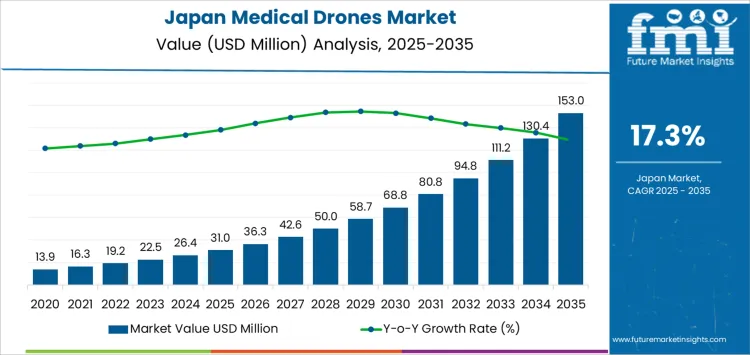
From 2030 to 2035, demand for medical drones in Japan continues to rise, reaching USD 153.0 million by 2035. Demand increases from USD 68.8 million in 2030 to USD 80.8 million in 2031, up 17.4%. Over the next 4 years, growth remains strong, with demand rising to USD 94.8 million in 2033 and USD 111.2 million in 2034, as the healthcare sector increasingly adopts drone technology for critical care logistics, emergency medical deliveries, and transporting healthcare products. The final year of the forecast sees a jump to USD 153.0 million, driven by technological advancements, regulatory support, and growing reliance on drones in healthcare infrastructure to improve delivery times and reduce costs.
Demand for Medical Drones in Japan Key Takeaways
| Metric | Value |
|---|---|
| Industry Value (2025) | USD 31.0 million |
| Industry Forecast Value (2035) | USD 153.0 million |
| Forecast CAGR (2025-2035) | 17.3% |
Why is the Demand for Medical Drones in Japan Growing?
Demand for medical drones in Japan is growing due to the increasing need for efficient and rapid delivery of medical supplies, especially in rural and hard-to-reach areas. Medical drones are being utilized to transport essential supplies like blood, vaccines, and medicines, ensuring timely delivery in emergencies. Japan's aging population and the rise in chronic health conditions have increased the demand for quicker medical responses, further driving the adoption of drones for healthcare logistics. Drones' ability to bypass traffic and reach remote locations rapidly provides significant advantages for enhancing the healthcare system's efficiency and response time.
Technological advancements in drone capabilities, including improved payload capacity, enhanced navigation systems, and better battery life, have made medical drones more reliable and practical for healthcare applications. Japan’s focus on innovation and technological integration into healthcare services has also played a crucial role in this growth. Furthermore, government support for drone technology and regulatory changes that allow for expanded use in medical services are contributing to the growing acceptance and integration of drones in the healthcare sector.
Despite the growth potential, challenges such as regulatory hurdles, concerns about the security and safety of drone operations, and the need for proper infrastructure to support widespread drone use remain. However, with ongoing advancements in technology and supportive policies, the demand for medical drones in Japan is expected to continue growing, providing valuable solutions for healthcare delivery across the country.
What is the Segment-Wise Analysis of Demand for Medical Drones in Japan?
Demand for medical drones in Japan is segmented by product type, application, and region. By product type, logistics drones lead at 52%, followed by ambulance drones, pharmaceutical drones, and blood transport drones. In terms of application, emergency medical services dominate with 41%, while vaccination programs, blood transport, and organ transplantation also contribute to the demand. Regionally, demand spans across Kyushu & Okinawa, Kanto, Kansai, Chubu, Tohoku, and the rest of Japan, with varying levels of adoption based on regional healthcare needs and infrastructure.
How Do Logistics Drones Lead the Demand for Medical Drones in Japan?
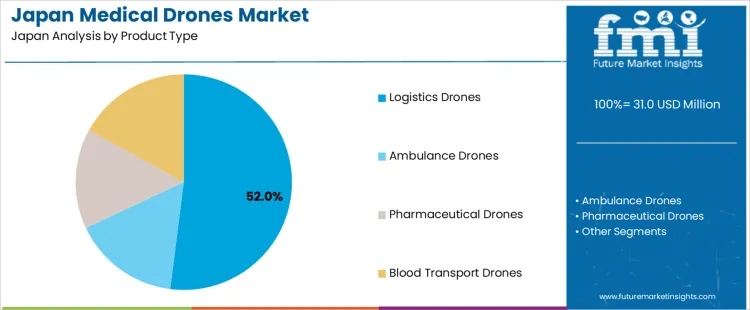
Logistics drones account for 52% of the demand for medical drones in Japan, driven by their ability to efficiently transport medical supplies and equipment. These drones are widely used to quickly deliver essential items, such as medications, vaccines, and medical equipment, to remote or hard-to-reach areas. With Japan's advanced infrastructure and focus on improving healthcare delivery, logistics drones are especially beneficial in regions like Kanto and Kansai, where the need for fast, reliable supply chain solutions is critical. The growing adoption of drones in the healthcare system is also fueled by the increasing demand for real-time deliveries in emergency situations and the growing focus on reducing transportation time for medical products. Logistics drones are integral to improving the efficiency and responsiveness of Japan's healthcare delivery, making them the leading product type in the medical drone sector.
Why Does Emergency Medical Services Lead the Demand for Medical Drones in Japan?
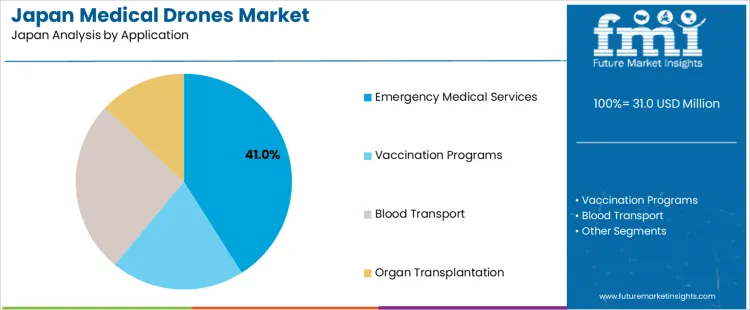
Emergency medical services (EMS) account for 41% of the demand for medical drones in Japan, reflecting their crucial role in delivering rapid healthcare solutions during emergencies. Medical drones used in EMS provide a fast and efficient way to deliver life-saving medications, equipment, and even medical personnel to accident or disaster sites. The demand for drones in EMS is particularly strong in regions with higher population densities, such as Kanto and Kansai, where quick response times are critical. EMS applications also extend to disaster relief and urgent medical supply delivery, making drones an essential tool for enhancing Japan's disaster preparedness. As the need for quick and effective emergency responses grows, medical drones in EMS continue to see increasing adoption, ensuring their continued role in Japan's healthcare and emergency response systems.
What are the Key Trends, Drivers, and Restraints in Demand for Medical Drones in Japan?
Demand for medical drones in Japan is rising due to their potential for rapid, efficient delivery of medical supplies, especially to remote, rural, or disaster-prone areas. Drones can deliver critical items like blood products, vaccines, and medications much faster than ground transport, significantly reducing delivery times. In areas with challenging geography, such as remote islands or mountainous regions, drones provide a reliable alternative where conventional logistics are slow or difficult. Urban tests are also being conducted to overcome traffic congestion and speed up deliveries. As healthcare systems look for more resilient and efficient supply chains, particularly for emergencies and an aging population, drone-based logistics is becoming increasingly attractive.
Why is Demand for Medical Drones Growing in Japan?
The demand for medical drones in Japan is growing due to several key factors. Japan’s geography, with many remote islands and rural areas, benefits from drone logistics as they can significantly reduce delivery times for essential medical supplies, such as blood products and medicines. Furthermore, the growing need for resilient medical logistics, especially in response to disasters like earthquakes and typhoons, has amplified the need for fast and reliable delivery systems. Drones offer a solution for quick medical supply distribution even in challenging conditions. The aging population, which requires continuous medical care, also boosts demand for efficient, fast-response delivery. Recent regulatory changes, including approvals for beyond-visual-line-of-sight (BVLOS) flights over populated areas, are unlocking new possibilities for urban drone deliveries, making the technology increasingly viable and encouraging investment.
How are Technological & Industry Innovations Driving Medical Drone Demand in Japan?
Technological advancements in drone design and functionality are significantly driving demand for medical drones in Japan. Innovations like improved battery life, enhanced navigation and obstacle-avoidance systems, and beyond-visual-line-of-sight (BVLOS) capabilities are making drones more reliable and safer for medical deliveries. Drone technology has already demonstrated success in delivering medicines, blood products, and pharmaceuticals to remote islands and even urban areas. Automation and advanced logistics-management software enable scalability and coordination across large regions. Innovations in packaging, such as thermal solutions for cold-chain logistics, and tracking systems ensure medical-grade safety during transport. As the technology matures and becomes more affordable, drones are increasingly viewed as a practical alternative to conventional delivery methods for emergency services, pharmacies, clinics, and remote-area care.
What are the Key Challenges and Risks That Could Limit Medical Drone Demand in Japan?
Despite their growing potential, medical drones face several challenges that could limit their adoption. Regulatory hurdles remain a significant barrier, as airspace over populated areas requires special permissions, and Japan has strict rules governing drone flights, especially in urban settings. Weather conditions, such as typhoons and strong winds, can affect drone reliability and safety, particularly in Japan’s diverse terrain. The high cost of drone systems, maintenance, and operations may deter smaller healthcare providers or rural clinics from adopting the technology. There are also concerns around privacy, air traffic safety, and liability in case of accidents or failed deliveries. Furthermore, integrating drone logistics with existing healthcare supply chains, including storage, tracking, and distribution systems, requires investment and coordination, slowing widespread adoption, particularly outside major cities or government-backed initiatives.
What is the Regional Demand Outlook for Medical Drones in Japan?
Demand for medical drones in Japan is growing rapidly, with Kyushu & Okinawa leading at a 21.7% CAGR, driven by the region’s adoption of innovative healthcare solutions and its emphasis on remote healthcare delivery. Kanto follows with a 19.9% CAGR, supported by its large urban population, healthcare infrastructure, and interest in advanced technology. Kansai shows a 17.5% CAGR, fueled by the region’s strong healthcare sector and its focus on modernizing medical delivery systems. Chubu experiences a 15.4% CAGR, as the region's healthcare providers begin to integrate drone technology for more efficient medical supply delivery. Tohoku and the Rest of Japan see more moderate growth at 13.5% and 12.8%, respectively, as the adoption of medical drones gradually expands into these regions.
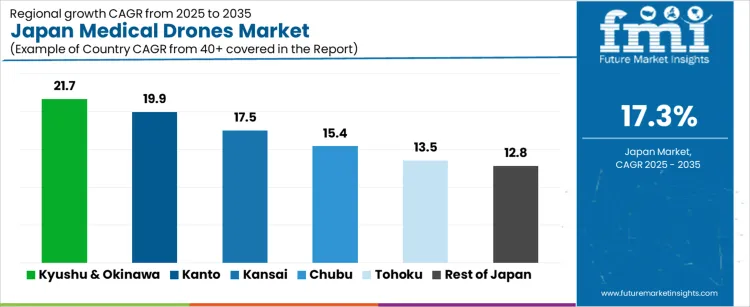
| Region | CAGR (%) |
|---|---|
| Kyushu & Okinawa | 21.7% |
| Kanto | 19.9% |
| Kansai | 17.5% |
| Chubu | 15.4% |
| Tohoku | 13.5% |
| Rest of Japan | 12.8% |
How is Demand for Medical Drones Growing in Kyushu & Okinawa?
Kyushu & Okinawa leads the demand for medical drones, growing at a 21.7% CAGR. The region’s increasing focus on healthcare innovation, particularly in remote areas, has contributed to the rise in demand for medical drones. Okinawa, in particular, is leveraging drone technology to deliver medical supplies and vaccines to remote islands, improving access to healthcare in these regions. Kyushu & Okinawa’s aging population is driving the need for faster, more efficient medical deliveries, especially for time-sensitive treatments and urgent care. The region’s local government and healthcare organizations are embracing drones for tasks such as transporting medical samples, blood, and other essential items between hospitals and clinics. As Kyushu & Okinawa continues to prioritize technological advancements in healthcare, medical drones are expected to play a crucial role in enhancing the efficiency and accessibility of medical services, supporting strong growth in demand across the region.
Why is Demand for Medical Drones Rising in Kanto?
In Kanto, demand for medical drones is rising at a 19.9% CAGR. Kanto’s large urban population, especially in Tokyo, has spurred the region’s adoption of advanced healthcare technologies like medical drones. The high demand for efficient and rapid delivery of medical supplies, including blood, organs, and pharmaceuticals, has led hospitals and healthcare providers in Kanto to integrate drones into their logistics systems. Kanto’s well-established infrastructure for medical research and innovation, along with government initiatives to support drone technology, is accelerating the use of medical drones in the region. The potential of drones to bypass traffic congestion in busy urban areas and speed up delivery times is a significant factor in their growing adoption. As the region continues to focus on improving healthcare efficiency and patient care, demand for medical drones in Kanto is expected to remain robust and continue to rise.
How is Demand for Medical Drones Expanding in Kansai?
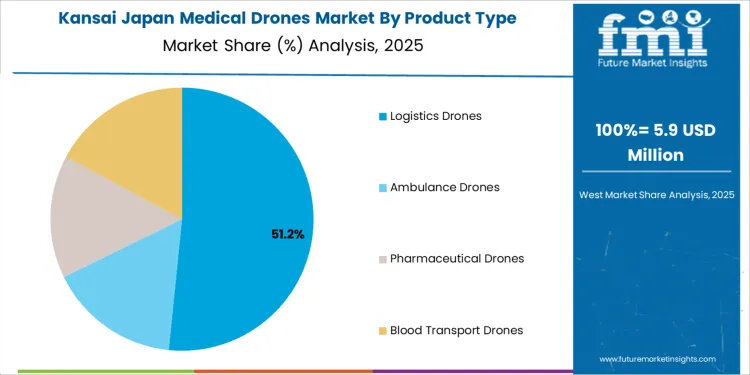
Kansai shows steady demand for medical drones, growing at a 17.5% CAGR. The region’s strong healthcare infrastructure, particularly in cities like Osaka, has supported the adoption of medical drones to improve the delivery of medical supplies and healthcare services. Kansai’s hospitals and clinics are increasingly using drones for the transportation of blood samples, medicines, and medical equipment, reducing delivery times and enhancing overall operational efficiency. The region’s commitment to innovation in healthcare and logistics, along with its focus on reducing transportation costs and improving patient care, contributes to the growing demand for medical drones. Kansai’s medical research institutions and growing interest in precision medicine are also fueling the need for drones to expedite the delivery of specialized medical resources. As Kansai continues to embrace technological advancements in healthcare, demand for medical drones is expected to grow steadily, positioning the region as a key player in the medical drone industry.
Why is Demand for Medical Drones Growing in Chubu?
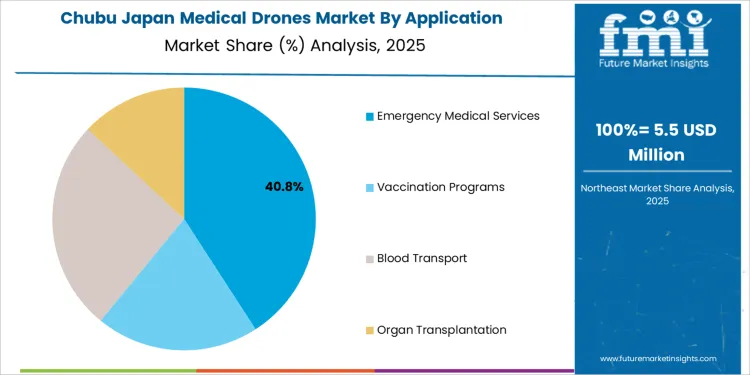
Chubu is experiencing steady demand for medical drones, growing at a 15.4% CAGR. The region’s healthcare providers, particularly in Nagoya, are beginning to adopt drone technology to streamline the delivery of medical supplies and improve service efficiency. As the demand for faster, more reliable transportation of medical goods, such as medications and medical samples, increases, drones are becoming a valuable tool in Chubu’s healthcare infrastructure. The region’s growing focus on innovation and technology in healthcare, combined with the benefits of using drones to reduce delivery times and cut transportation costs, is driving adoption. Chubu’s government and healthcare organizations are increasingly investing in drone technology as part of their long-term plans to improve healthcare delivery, especially in rural and underserved areas. As the region continues to embrace new technologies, the demand for medical drones in Chubu is expected to grow steadily, contributing to overall healthcare system improvements.
How is Demand for Medical Drones Expanding in Tohoku?
Tohoku is seeing moderate growth in medical drone demand, with a 13.5% CAGR. While adoption is slower compared to major urban regions, there is growing interest in using drones to transport medical supplies, especially in rural and remote areas. Tohoku’s challenges related to geographical isolation and an aging population are driving the demand for faster, more efficient healthcare delivery methods. Medical drones are being utilized to improve access to medical resources in these hard-to-reach areas, particularly in emergency situations. As Tohoku’s healthcare infrastructure modernizes and the need for improved healthcare services rises, drones offer an innovative solution to reduce delivery times and ensure essential medical goods reach their destinations quickly. With government support for drone adoption in healthcare, the demand for medical drones in Tohoku is expected to grow steadily, addressing the region’s unique healthcare challenges.
Why is Demand for Medical Drones Steady in the Rest of Japan?
The Rest of Japan is experiencing steady demand for medical drones, with a 12.8% CAGR. While adoption is slower compared to major urban centers, there is a growing recognition of the value of drones in delivering medical supplies efficiently, particularly in rural areas and smaller cities. The increasing focus on improving healthcare access, especially in hard-to-reach regions, is contributing to the gradual expansion of medical drone usage in these areas. Drones are being used to transport time-sensitive medical goods like blood samples and vaccines, improving service delivery and patient care. As more healthcare facilities in the Rest of Japan invest in drone technology and regulatory frameworks are put in place to support their use, demand for medical drones is expected to continue to rise. While growth is more gradual in smaller regions, the long-term potential for medical drones to improve healthcare logistics ensures continued steady demand in these areas.
What is Driving the Demand for Medical Drones in Japan and Who Are the Key Providers?
The demand for medical drones in Japan is rising due to the country's aging population and the logistical challenges posed by its geography. With many remote areas, islands, and mountainous regions, Japan faces difficulties in efficiently delivering medical supplies like medicines, blood products, and diagnostic samples. Medical drones offer a solution by providing fast, flexible, and cost-effective delivery, particularly for time-sensitive supplies. This is especially valuable in rural areas where access to healthcare is limited and traditional transportation methods can be slow or unreliable. Medical drones can play a crucial role in emergency situations, such as natural disasters, where quick delivery of medical aid is essential.
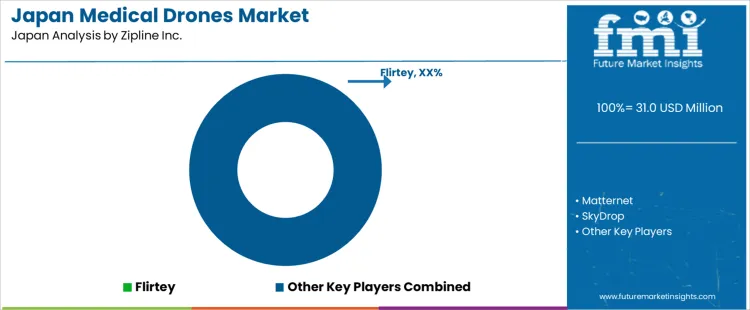
Key providers in the medical drone space include Zipline Inc., Flirtey, Matternet, SkyDrop, and Flytrex. Zipline leads with a share of approximately 35.0%, offering drone delivery services for medical supplies in various countries, including Japan. The company has developed a robust logistics network that delivers blood, vaccines, and other critical supplies to hospitals and clinics, even in hard-to-reach areas. Other players, such as Matternet, are working to expand drone services in Japan by collaborating with local partners to ensure the efficient and safe delivery of medical goods across urban and rural regions.
The rise of medical drones in Japan is further supported by advancements in technology and regulatory changes. Recent developments have made it possible for drones to operate beyond visual line of sight and fly over populated areas, opening up more possibilities for medical deliveries. As the healthcare system in Japan seeks more efficient and sustainable solutions, medical drones are becoming an essential tool to enhance access to care, particularly for the elderly and those in remote locations. With growing infrastructure and acceptance of drone technology, medical drones are set to revolutionize healthcare delivery in Japan.
Key Players in Japan Medical Drones Demand
- Zipline Inc.
- Flirtey
- Matternet
- SkyDrop
- Flytrex
Scope of Report
| Items | Values |
|---|---|
| Quantitative Units (2025) | USD million |
| Product Type | Logistics Drones, Ambulance Drones, Pharmaceutical Drones, Blood Transport Drones |
| Application | Emergency Medical Services, Vaccination Programs, Blood Transport, Organ Transplantation |
| End-User | Hospitals and Clinics, Blood Banks, Emergency Services, Government and Humanitarian Organizations |
| Region | Kyushu & Okinawa, Kanto, Kansai, Chubu, Tohoku, Rest of Japan |
| Countries Covered | Japan |
| Key Companies Profiled | Zipline Inc., Flirtey, Matternet, SkyDrop, Flytrex |
| Additional Attributes | Dollar sales by product type and application; regional CAGR and growth trends; advancements in drone technology and regulatory frameworks; increasing adoption for emergency medical services and organ transportation |
Japan Medical Drones Demand by Key Segments
Product Type:
- Logistics Drones
- Ambulance Drones
- Pharmaceutical Drones
- Blood Transport Drones
Application:
- Emergency Medical Services
- Vaccination Programs
- Blood Transport
- Organ Transplantation
End-User:
- Hospitals and Clinics
- Blood Banks
- Emergency Services
- Government and Humanitarian Organizations
Region:
- Kyushu & Okinawa
- Kanto
- Kansai
- Chubu
- Tohoku
- Rest of Japan
Frequently Asked Questions
How big is the demand for medical drones in Japan in 2025?
The demand for medical drones in Japan is estimated to be valued at USD 31.0 million in 2025.
What will be the size of medical drones in Japan in 2035?
The market size for the medical drones in Japan is projected to reach USD 153.0 million by 2035.
How much will be the demand for medical drones in Japan growth between 2025 and 2035?
The demand for medical drones in Japan is expected to grow at a 17.3% CAGR between 2025 and 2035.
What are the key product types in the medical drones in Japan?
The key product types in medical drones in Japan are logistics drones, ambulance drones, pharmaceutical drones and blood transport drones.
Which application segment is expected to contribute significant share in the medical drones in Japan in 2025?
In terms of application, emergency medical services segment is expected to command 41.0% share in the medical drones in Japan in 2025.
Preview the report firsthand - request a free sample
Get SampleGet the brochure for pricing and purchase details.
Get PDFTable of Content
- Executive Summary
- Japan Market Outlook
- Demand-side Trends
- Supply-side Trends
- Technology Roadmap Analysis
- Analysis and Recommendations
- Market Overview
- Market Coverage / Taxonomy
- Market Definition / Scope / Limitations
- Market Background
- Market Dynamics
- Drivers
- Restraints
- Opportunity
- Trends
- Scenario Forecast
- Demand in Optimistic Scenario
- Demand in Likely Scenario
- Demand in Conservative Scenario
- Opportunity Map Analysis
- Product Life Cycle Analysis
- Supply Chain Analysis
- Investment Feasibility Matrix
- Value Chain Analysis
- PESTLE and Porter’s Analysis
- Regulatory Landscape
- Regional Parent Market Outlook
- Production and Consumption Statistics
- Import and Export Statistics
- Market Dynamics
- Japan Market Analysis 2020 to 2024 and Forecast, 2025 to 2035
- Historical Market Size Value (USD Million) Analysis, 2020 to 2024
- Current and Future Market Size Value (USD Million) Projections, 2025 to 2035
- Y-o-Y Growth Trend Analysis
- Absolute $ Opportunity Analysis
- Japan Market Pricing Analysis 2020 to 2024 and Forecast 2025 to 2035
- Japan Market Analysis 2020 to 2024 and Forecast 2025 to 2035, By Product Type
- Introduction / Key Findings
- Historical Market Size Value (USD Million) Analysis By Product Type , 2020 to 2024
- Current and Future Market Size Value (USD Million) Analysis and Forecast By Product Type , 2025 to 2035
- Logistics Drones
- Ambulance Drones
- Pharmaceutical Drones
- Blood Transport Drones
- Y-o-Y Growth Trend Analysis By Product Type , 2020 to 2024
- Absolute $ Opportunity Analysis By Product Type , 2025 to 2035
- Japan Market Analysis 2020 to 2024 and Forecast 2025 to 2035, By Application
- Introduction / Key Findings
- Historical Market Size Value (USD Million) Analysis By Application, 2020 to 2024
- Current and Future Market Size Value (USD Million) Analysis and Forecast By Application, 2025 to 2035
- Emergency Medical Services
- Vaccination Programs
- Blood Transport
- Organ Transplantation
- Y-o-Y Growth Trend Analysis By Application, 2020 to 2024
- Absolute $ Opportunity Analysis By Application, 2025 to 2035
- Japan Market Analysis 2020 to 2024 and Forecast 2025 to 2035, By End-User
- Introduction / Key Findings
- Historical Market Size Value (USD Million) Analysis By End-User, 2020 to 2024
- Current and Future Market Size Value (USD Million) Analysis and Forecast By End-User, 2025 to 2035
- Hospitals and Clinics
- Blood Banks
- Emergency Services
- Government and Humanitarian Organizations
- Y-o-Y Growth Trend Analysis By End-User, 2020 to 2024
- Absolute $ Opportunity Analysis By End-User, 2025 to 2035
- Market Structure Analysis
- Competition Dashboard
- Competition Benchmarking
- Market Share Analysis of Top Players
- By Regional
- By Product Type
- By Application
- By End-User
- Competition Analysis
- Competition Deep Dive
- Flirtey
- Overview
- Product Portfolio
- Profitability by Market Segments (Product/Age /Sales Channel/Region)
- Sales Footprint
- Strategy Overview
- Marketing Strategy
- Product Strategy
- Channel Strategy
- Matternet
- SkyDrop
- Flytrex
- Flirtey
- Competition Deep Dive
- Assumptions & Acronyms Used
- Research Methodology


