

- Industry Size (2026)
- USD 1.7 Bn
- Forecast (2036)
- USD 2.7 Bn
- CAGR (2026 to 2036)
- 4.4%
Demand for Durable Medical Equipment Rental in Japan Forecast and Outlook 2026 to 2036
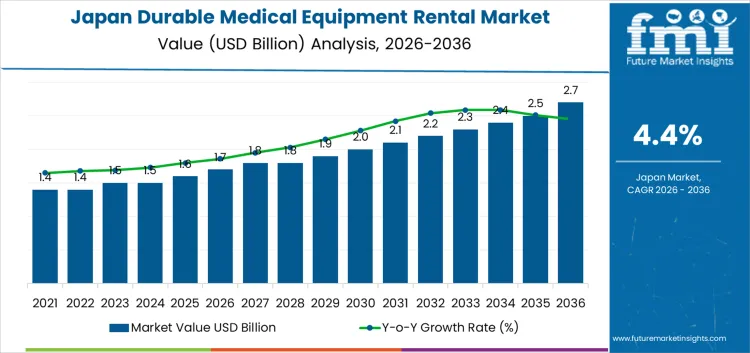
Demand for durable medical equipment (DME) rental in Japan is expected to grow from USD 1.7 billion in 2026 to USD 2.7 billion by 2036, with a 4.4% CAGR. The increasing aging population and preference for home healthcare solutions are driving this growth, particularly for personal mobility devices, which account for 40% of the demand. This includes essential products such as wheelchairs, scooters, and walkers, enabling the elderly to maintain independence. The personal/homecare application, which comprises 55% of the demand, is a significant driver, as more individuals seek affordable access to essential healthcare devices for in-home use.
Quick Stats of the Demand for Durable Medical Equipment Rental in Japan
- Demand for Durable Medical Equipment Rental in Japan Value (2026): USD 1.7 billion
- Demand for Durable Medical Equipment Rental in Japan Forecast Value (2036): USD 2.7 billion
- Demand for Durable Medical Equipment Rental in Japan Forecast CAGR (2026-2036): 4.4%
- Demand for Durable Medical Equipment Rental in Japan Leading Application: Personal Mobility Devices
- Demand for Durable Medical Equipment Rental in Japan Key Growth Regions: Kyushu & Okinawa, Kanto, Kansai, Chubu, Tohoku, Rest of Japan
- Demand for Durable Medical Equipment Rental in Japan Top Players: Hill-Rom Holdings, Inc., Stryker Corporation, Getinge AB, Siemens Financial Services, Universal Hospital Services
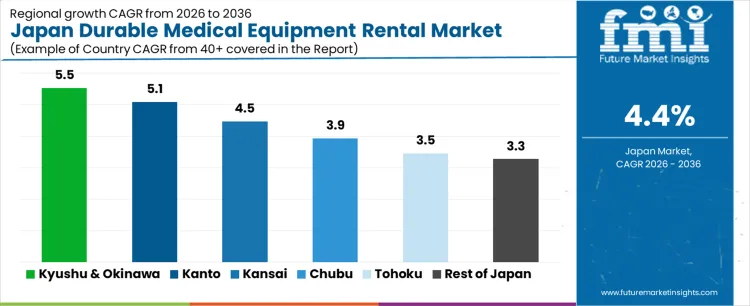
Kyushu & Okinawa leads with a 5.5% CAGR, driven by the aging population and increasing healthcare infrastructure. Kanto follows with a 5.1% CAGR, supported by its large urban population and advanced healthcare system. Kansai shows a 4.5% CAGR, fueled by the region's elderly population and expanding healthcare services. Chubu, Tohoku, and the rest of Japan experience moderate growth, with the need for DME rentals increasing as home healthcare services spread across rural and smaller cities. As Japan’s healthcare system evolves and prioritizes cost-effective solutions, the demand for DME rental services is expected to continue growing steadily across all regions.
Demand for Durable Medical Equipment Rental in Japan Key Takeaways
| Metric | Value |
|---|---|
| Demand for Durable Medical Equipment Rental in Japan Value (2026) | USD 1.7 billion |
| Demand for Durable Medical Equipment Rental in Japan Forecast Value (2036) | USD 2.7 billion |
| Demand for Durable Medical Equipment Rental in Japan Forecast CAGR (2026-2036) | 4.4% |
Why is the Demand for Durable Medical Equipment Rental in Japan Growing?
The demand for durable medical equipment rental in Japan is growing due to the country’s aging population and the increasing preference for home healthcare solutions. DME, including items like wheelchairs, hospital beds, and oxygen tanks, is crucial for individuals with chronic conditions, disabilities, or those recovering from surgery. Renting DME offers an affordable, flexible alternative to purchasing equipment, particularly for short-term use, which is particularly appealing in a country with a growing elderly population.
Key drivers for this demand include Japan's aging demographic, where a higher prevalence of age-related illnesses and mobility issues is increasing the need for assistive devices. The healthcare system, which prioritizes cost-effective, patient-centered care, supports the rental model as a way to provide necessary equipment without the high costs associated with ownership. The growing availability of high-quality, rental medical equipment has improved accessibility for individuals who need specialized devices but cannot afford to buy them outright.
The rising trend of home-based rehabilitation and post-surgery care is also contributing to this growth. Patients increasingly prefer to recover at home in a familiar and comfortable environment. The convenience and affordability of renting DME are key factors driving this shift. Despite logistical challenges, such as maintenance and hygiene concerns, the demand for DME rental services is expected to continue rising as Japan focuses on improving home healthcare and reducing overall healthcare costs.
What is the Segment-Wise Analysis of Demand for Durable Medical Equipment Rental in Japan?
Demand for durable medical equipment rental in Japan is segmented by application, end-use, and region. By application, personal mobility devices lead with 40% of the demand, followed by bathroom safety and medical furniture, and monitoring and therapeutic devices. In terms of end-use, personal/homecare accounts for the largest share, with institutes and laboratories and hospitals contributing to the remainder. Regionally, demand is spread across Kyushu & Okinawa, Kanto, Kansai, Chubu, Tohoku, and the rest of Japan.
Why Do Personal Mobility Devices Lead the Demand for Durable Medical Equipment Rental in Japan?
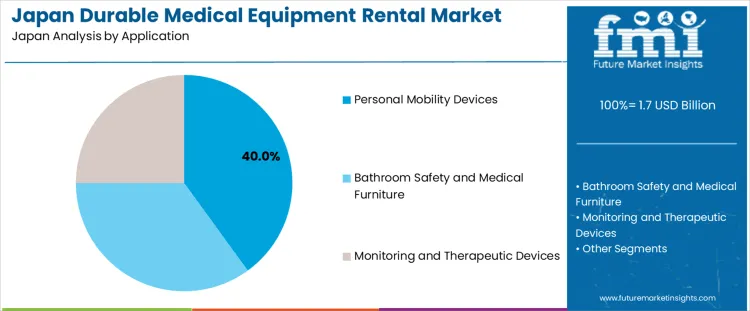
Personal mobility devices account for 40% of the demand for durable medical equipment rental in Japan, driven by the aging population and the rising need for assistance with mobility. These devices, including wheelchairs, scooters, and walkers, help individuals maintain independence and improve their quality of life. As Japan’s elderly population grows, the demand for mobility aids increases, especially in homecare settings where individuals prefer to rent rather than purchase expensive equipment. Rental services for these devices are convenient and cost-effective, ensuring that personal mobility devices continue to be a dominant product in the durable medical equipment rental industry.
How Does Personal/Homecare End-Use Drive the Demand for Durable Medical Equipment Rental in Japan?
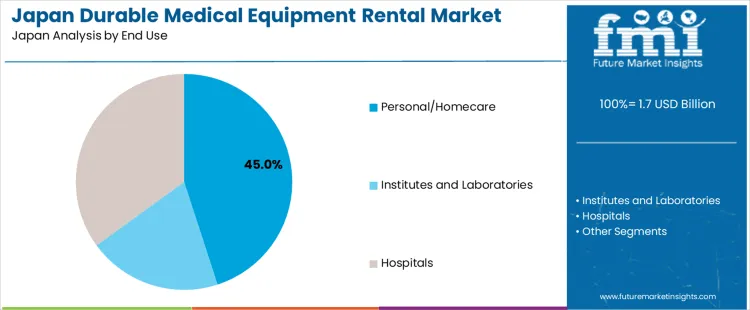
Personal/homecare applications account for 45% share of the demand for durable medical equipment rental in Japan. As the elderly population seeks to live independently, the demand for homecare solutions such as mobility aids, medical furniture, and therapeutic devices continues to rise. Renting durable medical equipment offers individuals affordable access to necessary tools for daily living, without the need for a long-term financial commitment. Preference for in-home care over institutional care has fueled the growth in this segment. As homecare needs continue to grow with Japan’s aging society, the demand for rented medical equipment is expected to remain strong, particularly for devices that enhance mobility and daily function.
What are the Key Trends and Drivers in Demand for Durable Medical Equipment Rental in Japan?
The demand for durable medical equipment rental in Japan is expected to continue growing, driven by the aging population and the shift towards home healthcare. This industry offers cost-effective solutions, particularly in the context of government support for long‑term care. With increasing adoption of smart technologies and home care services, more people are opting for rental options instead of purchasing expensive medical equipment.
What are the Key Drivers of Demand for Durable Medical Equipment Rental in Japan?
The demand for durable medical equipment rental in Japan is driven primarily by the country’s rapidly aging population. As the elderly population increases, so does the need for mobility aids, hospital beds, respiratory devices, and other long‑term care equipment. Government support through long‑term care insurance, along with reimbursement policies, makes rental services more accessible and cost‑effective for families and patients. The shift towards home healthcare, with an increasing preference for aging in place, also contributes to the growing demand for rental equipment, as it provides flexibility and affordability compared to purchasing.
What are the Key Trends in Demand for Durable Medical Equipment Rental in Japan?
Key trends in Japan’s durable medical equipment rental industry include the growing adoption of smart, connected devices that enable remote monitoring and enhance patient care. Devices that facilitate independent living, such as mobility aids and bathroom safety equipment, are seeing increased demand. Home-based care solutions are important, driven by patient preference and supported by advancements in telemedicine and remote monitoring technologies. Rental companies are diversifying their offerings to include more specialized and high-tech equipment to meet the needs of a more tech-savvy and health-conscious aging population.
What is the Regional Demand Outlook for Durable Medical Equipment Rental in Japan?
| Region | CAGR (%) |
|---|---|
| Kyushu & Okinawa | 5.5% |
| Kanto | 5.1% |
| Kansai | 4.5% |
| Chubu | 3.9% |
| Tohoku | 3.5% |
| Rest of Japan | 3.3% |
Demand for durable medical equipment rental in Japan is growing steadily, with Kyushu & Okinawa leading at a 5.5% CAGR, driven by the region’s aging population and the growing need for cost-effective healthcare solutions. Kanto follows with a 5.1% CAGR, supported by its large urban population and advanced healthcare infrastructure. Kansai shows a 4.5% CAGR, fueled by its elderly population and expanding healthcare services. Chubu experiences a 3.9% CAGR, with steady growth driven by the region’s healthcare sector and the increasing demand for home healthcare solutions. Tohoku and the rest of Japan see moderate growth at 3.5% and 3.3% CAGR, respectively.
How is Demand for Durable Medical Equipment Rental Growing in Kyushu & Okinawa?
Kyushu & Okinawa leads the demand for durable medical equipment (DME) rental in Japan, growing at a 5.5% CAGR. The region's aging population, along with the increasing prevalence of chronic diseases, is driving this demand. Kyushu’s growing healthcare infrastructure, particularly in cities like Fukuoka, is contributing to the rising use of rental medical equipment in hospitals, clinics, and home healthcare settings. Okinawa, with its significant elderly population, also plays a key role in the demand for DME rental services. As more individuals require mobility aids, respiratory equipment, and rehabilitation devices, the rental industry is expanding. With a focus on improving healthcare accessibility, both urban and rural areas in Kyushu & Okinawa are increasingly turning to DME rentals to meet the healthcare needs of their aging population.
Why is Demand for Durable Medical Equipment Rental Rising in Kanto?
Kanto is experiencing steady demand for durable medical equipment rental, with a 5.1% CAGR. The region's large urban population, especially in Tokyo, is driving the growth in demand for DME rentals. Kanto’s advanced healthcare infrastructure and growing elderly population are contributing to the increasing adoption of medical equipment rentals in hospitals, clinics, and home healthcare settings. As more patients require long-term care and rehabilitation, the need for cost-effective rental solutions for equipment such as hospital beds, oxygen concentrators, and mobility aids is growing. Kanto’s focus on improving healthcare accessibility and reducing the financial burden on patients is fueling the rise in DME rentals. As the region continues to expand its healthcare services and facilities, the demand for durable medical equipment rentals is expected to remain strong, particularly in home healthcare settings and rehabilitation centers.
How is Demand for Durable Medical Equipment Rental Expanding in Kansai?
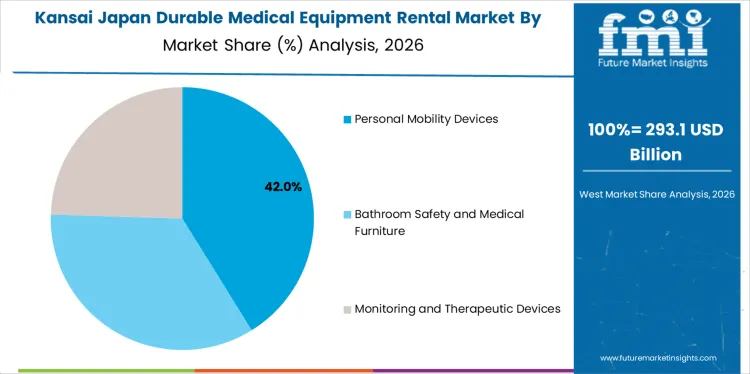
Kansai is seeing moderate demand for durable medical equipment rental, growing at a 4.5% CAGR. The region’s aging population, particularly in cities like Osaka and Kyoto, is driving the growing need for healthcare equipment rentals. Kansai's healthcare sector is expanding, with increasing demand for equipment such as mobility aids, hospital beds, and respiratory devices to support the elderly population. The region’s focus on providing high-quality healthcare services is contributing to the adoption of rental solutions, especially in home healthcare and rehabilitation. As more patients in Kansai require long-term care, the demand for cost-effective medical equipment rentals will continue to rise. Kansai’s growing interest in healthcare innovation and solutions that address the needs of the elderly will support the demand for durable medical equipment rentals.
How is Demand for Durable Medical Equipment Rental Growing in Chubu?
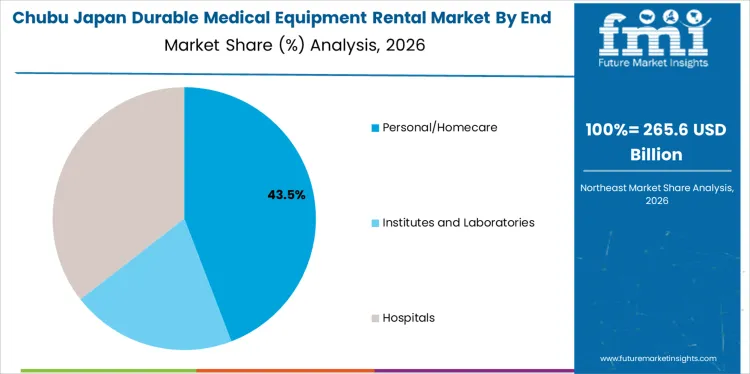
Chubu is experiencing moderate demand for durable medical equipment rental, with a 3.9% CAGR. The region's aging population, particularly in urban areas like Nagoya, is driving the growing need for DME rentals. As more people require long-term care and rehabilitation, the demand for medical equipment such as mobility aids, oxygen therapy devices, and hospital beds is increasing. Chubu’s healthcare sector is expanding, and more individuals are opting for DME rental services to manage the cost of medical equipment. Region’s focus on improving healthcare access and efficiency is contributing to the adoption of rental solutions in both hospitals and home care settings. As Chubu continues to address the needs of its elderly population and expands its healthcare services, the demand for durable medical equipment rentals is expected to grow steadily, offering a cost-effective solution for individuals and healthcare providers.
How is Demand for Durable Medical Equipment Rental Growing in Tohoku?
Tohoku is seeing moderate demand for durable medical equipment rental, growing at a 3.5% CAGR. The region’s aging population, coupled with an increase in chronic illnesses, is driving the demand for medical equipment rentals. While Tohoku’s healthcare infrastructure is less concentrated than in larger urban regions, there is a rising need for equipment such as mobility aids, hospital beds, and respiratory devices to support the elderly and patients with long-term care needs. As the region works to improve healthcare services, the adoption of DME rental solutions is gradually increasing. Tohoku’s focus on sustainability and cost-effective healthcare solutions is contributing to the growing interest in renting medical equipment rather than purchasing it. As the region’s healthcare system continues to evolve to meet the needs of its aging population, the demand for DME rental services is expected to continue to grow at a moderate pace.
How is Demand for Durable Medical Equipment Rental Growing in Rest of Japan?
The rest of Japan is experiencing moderate demand for durable medical equipment rental, growing at a 3.3% CAGR. While demand is less concentrated in major metropolitan regions, there is a steady rise in the need for DME rentals across smaller cities and rural areas. As Japan’s population ages, particularly in rural areas, the demand for medical equipment such as hospital beds, mobility aids, and oxygen concentrators is increasing. The region's growing focus on improving healthcare accessibility and reducing costs is fueling the adoption of rental solutions. Many patients in these areas are opting for cost-effective rental options for home healthcare, particularly those who do not require permanent equipment ownership. As the trend toward renting medical equipment continues to spread across Japan, particularly outside major urban centers, the demand for durable medical equipment rentals is expected to grow steadily in the rest of Japan.
What is the Competitive Landscape of Durable Medical Equipment Rental in Japan?
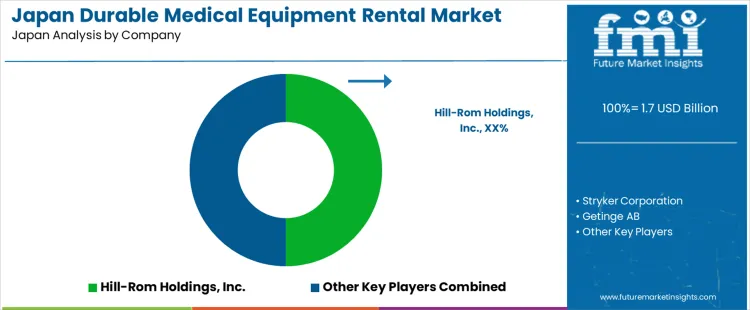
Demand for durable medical equipment (DME) rental in Japan is increasing as healthcare providers seek cost-effective solutions to meet the growing need for medical devices and equipment. With Japan's aging population and the rise of home healthcare services, the rental industry for equipment like hospital beds, wheelchairs, and oxygen tanks is expanding. Renting DME allows healthcare facilities to manage their budgets more efficiently while ensuring that patients receive high-quality care, particularly in long-term care and rehabilitation settings.
Hill-Rom Holdings, Inc. is a leading player in the Japanese industry, offering a broad range of DME rental solutions, including beds, patient lifts, and respiratory equipment. The company's strategy focuses on delivering reliable, high-performance products tailored to the needs of hospitals, nursing homes, and home healthcare providers. Hill-Rom’s reputation for providing quality equipment and services makes it a dominant force in Japan’s DME rental industry.
Stryker offers specialized DME rental services, focusing on equipment for surgical and critical care applications. Getinge AB provides rental solutions for high-demand medical equipment, including ICU beds and ventilators. Siemens Financial Services offers financing options for DME, supporting healthcare organizations in accessing necessary equipment. Universal Hospital Services focuses on providing a comprehensive range of DME for healthcare providers, offering flexible rental and maintenance services. These companies continue to innovate, offering tailored rental solutions to meet the growing demand for healthcare equipment in Japan.
Key Players in Japan Durable Medical Equipment Rental Demand
- Hill-Rom Holdings, Inc.
- Stryker Corporation
- Getinge AB
- Siemens Financial Services
- Universal Hospital Services
Scope of Report
| Items | Values |
|---|---|
| Quantitative Units (2026) | USD billion |
| Key Segments | Personal Mobility Devices, Bathroom Safety and Medical Furniture, Monitoring and Therapeutic Devices |
| End Use | Personal/Homecare, Institutes and Laboratories, Hospitals |
| Key Country | Japan |
| Region | Kyushu & Okinawa, Kanto, Kansai, Chubu, Tohoku, Rest of Japan |
| Key Players Profiled | Hill-Rom Holdings, Inc., Stryker Corporation, Getinge AB, Siemens Financial Services, Universal Hospital Services |
| Additional Attributes | Dollar sales by application and end use; regional CAGR and growth trends in durable medical equipment rental demand in Japan |
Japan Durable Medical Equipment Rental Demand by Key Segments
Application:
- Personal Mobility Devices
- Bathroom Safety and Medical Furniture
- Monitoring and Therapeutic Devices
End Use:
- Personal/Homecare
- Institutes and Laboratories
- Hospitals
Region:
- Kyushu & Okinawa
- Kanto
- Kansai
- Chubu
- Tohoku
- Rest of Japan
Frequently Asked Questions
How big is the demand for durable medical equipment rental in Japan in 2026?
The demand for durable medical equipment rental in Japan is estimated to be valued at USD 1.7 billion in 2026.
What will be the size of durable medical equipment rental in Japan in 2036?
The market size for the durable medical equipment rental in Japan is projected to reach USD 2.7 billion by 2036.
How much will be the demand for durable medical equipment rental in Japan growth between 2026 and 2036?
The demand for durable medical equipment rental in Japan is expected to grow at a 4.4% CAGR between 2026 and 2036.
What are the key product types in the durable medical equipment rental in Japan?
The key product types in durable medical equipment rental in Japan are personal mobility devices, bathroom safety and medical furniture and monitoring and therapeutic devices.
Which end use segment is expected to contribute significant share in the durable medical equipment rental in Japan in 2026?
In terms of end use, personal/homecare segment is expected to command 45.0% share in the durable medical equipment rental in Japan in 2026.
Preview the report firsthand - request a free sample
Get SampleGet the brochure for pricing and purchase details.
Get PDFTable of Content
- Executive Summary
- Japan Market Outlook
- Demand-side Trends
- Supply-side Trends
- Technology Roadmap Analysis
- Analysis and Recommendations
- Market Overview
- Market Coverage / Taxonomy
- Market Definition / Scope / Limitations
- Market Background
- Market Dynamics
- Drivers
- Restraints
- Opportunity
- Trends
- Scenario Forecast
- Demand in Optimistic Scenario
- Demand in Likely Scenario
- Demand in Conservative Scenario
- Opportunity Map Analysis
- Product Life Cycle Analysis
- Supply Chain Analysis
- Investment Feasibility Matrix
- Value Chain Analysis
- PESTLE and Porter’s Analysis
- Regulatory Landscape
- Regional Parent Market Outlook
- Production and Consumption Statistics
- Import and Export Statistics
- Market Dynamics
- Japan Market Analysis 2020 to 2024 and Forecast, 2025 to 2035
- Historical Market Size Value (USD Million) Analysis, 2020 to 2024
- Current and Future Market Size Value (USD Million) Projections, 2025 to 2035
- Y-o-Y Growth Trend Analysis
- Absolute $ Opportunity Analysis
- Japan Market Pricing Analysis 2020 to 2024 and Forecast 2025 to 2035
- Japan Market Analysis 2020 to 2024 and Forecast 2025 to 2035, By Application
- Introduction / Key Findings
- Historical Market Size Value (USD Million) Analysis By Application , 2020 to 2024
- Current and Future Market Size Value (USD Million) Analysis and Forecast By Application , 2025 to 2035
- Personal Mobility Devices
- Bathroom Safety and Medical Furniture
- Monitoring and Therapeutic Devices
- Y-o-Y Growth Trend Analysis By Application , 2020 to 2024
- Absolute $ Opportunity Analysis By Application , 2025 to 2035
- Japan Market Analysis 2020 to 2024 and Forecast 2025 to 2035, By End Use
- Introduction / Key Findings
- Historical Market Size Value (USD Million) Analysis By End Use, 2020 to 2024
- Current and Future Market Size Value (USD Million) Analysis and Forecast By End Use, 2025 to 2035
- Personal/Homecare
- Institutes and Laboratories
- Hospitals
- Y-o-Y Growth Trend Analysis By End Use, 2020 to 2024
- Absolute $ Opportunity Analysis By End Use, 2025 to 2035
- Market Structure Analysis
- Competition Dashboard
- Competition Benchmarking
- Market Share Analysis of Top Players
- By Regional
- By Application
- By End Use
- Competition Analysis
- Competition Deep Dive
- Hill-Rom Holdings, Inc.
- Overview
- Product Portfolio
- Profitability by Market Segments (Product/Age /Sales Channel/Region)
- Sales Footprint
- Strategy Overview
- Marketing Strategy
- Product Strategy
- Channel Strategy
- Stryker Corporation
- Getinge AB
- Siemens Financial Services
- Universal Hospital Services
- Hill-Rom Holdings, Inc.
- Competition Deep Dive
- Assumptions & Acronyms Used
- Research Methodology


