

- Industry Size (2025)
- USD 1.1 Bn
- Forecast (2035)
- USD 1.9 Bn
- CAGR (2025 to 2035)
- 5%
Demand for Mouth Freshener in Japan Forecast and Outlook 2025 to 2035
The demand for mouth fresheners in Japan is expected to grow from USD 1.1 billion in 2025 to USD 1.9 billion by 2035, with a CAGR of 5%. This growth is driven by the increasing emphasis on oral hygiene and fresh breath, as well as the rising popularity of convenient and functional products.
Mouth fresheners, such as mints and chewing gum, have become widely used across Japan as a quick and easy solution for breath freshening. Consumers are also showing growing interest in sugar-free and functional mouth fresheners that offer additional benefits, such as dental protection and relaxation, further fueling their demand.
Quick Stats of the Demand for Mouth Freshener in Japan
- Demand for Mouth Freshener in Japan Value (2025): USD 1.1 billion
- Demand for Mouth Freshener in Japan Forecast Value (2035): USD 1.9 billion
- Demand for Mouth Freshener in Japan Forecast CAGR (2025-2035): 5%
- Demand for Mouth Freshener in Japan Leading Product Type: Mint Candies
- Demand for Mouth Freshener in Japan Key Growth Regions: Kyushu & Okinawa, Kanto, Kansai, Chubu, Tohoku, Rest of Japan
- Demand for Mouth Freshener in Japan Top Players: Johnson & Johnson, The Hershey Company, Mars, Incorporated, Kraft Foods Inc., Lotte
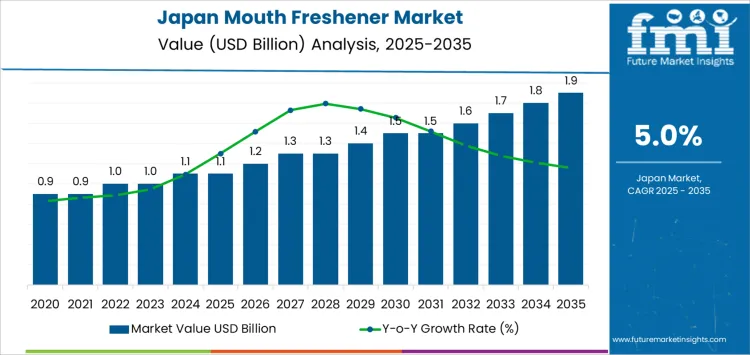
What is the Growth Forecast for the Demand for Mouth Freshener in Japan through 2035?
As demand stabilizes and more consumers opt for established brands, growth will slow. To sustain interest, innovation in product offerings will be crucial. Expanding niche, premium, and health-focused variants will help differentiate products in a competitive landscape. With increasing health consciousness, consumers will seek mouth fresheners that offer added benefits, such as dental protection, stress relief, or digestive support. Technological advancements in flavor and functionality will play an important role in shaping future consumption patterns. As the industry matures, brands that continue to innovate, focusing on unique features and superior quality, will be better positioned to maintain customer loyalty and drive sustained demand for mouth fresheners in Japan.
From 2025 to 2030, demand will experience steady growth. Starting at USD 1.1 billion in 2025, it is expected to reach USD 1.2 billion by 2026. During this period, demand will continue to rise gradually, reaching USD 1.3 billion in 2027, USD 1.4 billion in 2028, and USD 1.5 billion in 2029. Key factors driving this steady increase include the consistent need for fresh breath products, growing health awareness, and the growing popularity of sugar-free alternatives. As consumers become more health-conscious, they will increasingly opt for mouth fresheners with additional benefits, such as vitamins or herbal ingredients, to meet their oral care needs.
Between 2030 and 2035, the pace of growth will accelerate. Demand will rise from USD 1.5 billion in 2030 to USD 1.9 billion by 2035. This period will see a significant surge in demand, driven by the increasing adoption of mouth fresheners across a wider demographic. More consumers will seek products that align with their health and wellness preferences, and the availability of specialized mouth fresheners, such as those combining mint with added benefits like stress relief or improved digestion, will further boost growth. The expansion of retail and online platforms will also play a crucial role in increasing accessibility to these products.
Demand for Mouth Freshener in Japan Key Takeaways
| Metric | Value |
|---|---|
| Demand for Mouth Freshener in Japan Value (2025) | USD 1.1 billion |
| Demand for Mouth Freshener in Japan Forecast Value (2035) | USD 1.9 billion |
| Demand for Mouth Freshener in Japan Forecast CAGR (2025-2035) | 5% |
Why is the Demand for Mouth Freshener in Japan Growing?
The demand for mouth fresheners in Japan is growing as consumers increasingly focus on oral hygiene, freshness, and convenience. Mouth fresheners, which include mints, gums, and other products designed to refresh breath, are becoming a staple for individuals seeking quick solutions for bad breath and overall mouth freshness. These products are especially popular in Japan’s fast-paced urban environments, where consumers value quick and effective solutions that fit into their busy lifestyles. The variety of formats and flavors available also contributes to the growth of this sector.
A key driver behind the growth of mouth fresheners is the increasing awareness of oral hygiene and its connection to overall health. With a growing focus on wellness, consumers are looking for products that not only improve breath but also provide additional benefits such as antibacterial properties or digestive aid. As more people adopt healthier habits, the demand for mouth fresheners with added functional benefits, like sugar-free options or those with herbal ingredients, is rising.
Innovations in product offerings and packaging are contributing to the popularity of mouth fresheners. The introduction of new flavors, along with convenient packaging such as pocket-sized mints and gum, makes these products more accessible and attractive to a wider audience. As oral hygiene continues to be a priority for Japanese consumers, the demand for mouth fresheners is expected to grow steadily through 2035.
What is the Segment-Wise Analysis of Demand for Mouth Fresheners in Japan?
Demand for mouth fresheners in Japan is segmented by type, distribution channel, and region. By type, demand is divided into mint candies, spray, and gum, with mint candies leading at 38%. The demand is also segmented by distribution channel, including retail stores and online stores, with retail stores accounting for 54%. Regionally, demand is divided into Kanto, Kinki, Chubu, Kyushu & Okinawa, Tohoku, and the Rest of Japan.
How Do Mint Candies Lead the Demand for Mouth Fresheners in Japan?
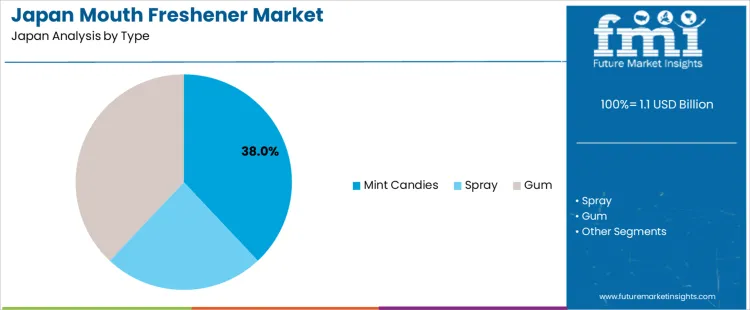
Mint candies account for 38% of the demand for mouth fresheners in Japan, driven by their long-standing popularity and widespread availability. They are a go-to solution for freshening breath, offering a quick, convenient, and easily accessible option for consumers. The mint flavor, often associated with cleanliness and freshness, is especially favored in Japan, where consumers prioritize hygiene and freshness. Mint candies are also highly portable, making them an ideal product for on-the-go use, and their discreet consumption makes them popular in both personal and professional settings.
Mint candies are often incorporated into a wide range of oral care products, such as breath mints and chewing gum, reinforcing their leadership in the industry. As the demand for products that promote fresh breath continues to grow, mint candies are expected to remain dominant in the mouth freshener segment, continuing to be the top choice for Japanese consumers seeking quick, effective breath-freshening solutions.
Why Do Retail Stores Lead the Demand for Mouth Fresheners in Japan?
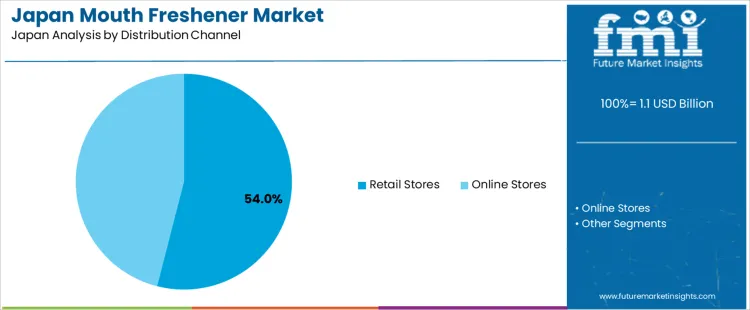
Retail stores account for 54% of the demand for mouth fresheners in Japan, driven by their accessibility and the opportunity for consumers to physically browse and choose from a wide range of products. Convenience stores, and drugstores are the main locations where consumers purchase mouth fresheners, benefiting from high foot traffic and ease of access. These stores allow customers to conveniently add mouth fresheners to their regular shopping routine without making a separate trip.
The ability to compare different brands, flavors, and forms of mouth fresheners in-store also plays a significant role in driving demand. The impulse purchase nature of these products, combined with promotional offers and discounts, increases sales at retail outlets. As Japanese consumers prioritize convenience, in-store shopping continues to be the dominant channel for purchasing mouth fresheners, ensuring that retail stores will maintain their leading position in the industry.
What are the Key Trends, Drivers, and Restraints in Demand for Mouth Freshener Products in Japan?
Products like sugar‑free gum, mints, breath sprays, and lozenges are commonly used by people who want a quick, portable way to freshen breath, especially in urban settings, social situations, or work environments. This trend is supported by busy lifestyles, frequent social interactions, and the preference for convenience and discreteness. Growth is tempered by intense competition among many established products, price sensitivity, and regulatory restrictions on certain ingredients. These factors may prevent some users from adopting premium or specialized mouth‑freshening items consistently.
Why is Demand for Mouth Freshener Growing in Japan?
Demand for mouth fresheners is growing in Japan because people increasingly connect fresh breath with good personal hygiene and social etiquette. As oral‑health awareness rises, many consumers including working adults, commuters, and students reach for convenient breath‑freshening products throughout the day. Products such as chewing gum, mints, breath sprays, and strips provide a quick solution for bad breath, especially after meals, smoking, or drinking. Sugar‑free variants attract health‑conscious consumers who want oral care without added sugars. The widespread availability of these products in convenience stores, superindustrys, and online retail makes them easy to access, supporting broader adoption.
How are Technological & Industry Innovations Driving Mouth Freshener Demand in Japan?
Innovations in formulation, product formats, and packaging have enhanced the appeal of mouth fresheners in Japan. Manufacturers are producing sugar‑free gum and mints, breath sprays, lozenges, and strips that emphasize oral hygiene benefits, such as neutralizing odor, reducing oral bacteria, or refreshing breath quickly. These products often use mint or menthol flavors for a clean, refreshing sensation. Packaging and portion‑control designs small tins, resealable pouches, discreet sprays make these products convenient and portable for urban, on‑the‑go consumers. Improvements in ingredient safety, shelf‑life, flavor stability, and sugar‑free alternatives align with growing health and hygiene expectations, driving broader adoption.
What are the Key Challenges and Risks That Could Limit Mouth Freshener Demand in Japan?
Despite rising interest, several challenges could limit growth of the mouth freshener segment in Japan. Intense competition among many well‑established chewing gum, mint, and candy brands makes differentiation difficult and pressures prices. Regulatory scrutiny of ingredients, especially in functional or medicated breath fresheners, can constrain innovation or increase compliance costs. Some consumers may avoid products perceived as artificial or prefer natural oral hygiene methods, such as brushing or mouthwash, over frequent use of breath mints or sprays. Price sensitivity among certain segments may further restrict consumption of premium products. Changing consumer health trends emphasizing dental hygiene and minimal additive use may shift demand away from conventional mouth freshener formats.
What is the Regional Demand Outlook for Mouth Freshener in Japan?
| Region | CAGR (%) |
|---|---|
| Kyushu & Okinawa | 6.3% |
| Kanto | 5.8% |
| Kansai | 5.1% |
| Chubu | 4.5% |
| Tohoku | 3.9% |
| Rest of Japan | 3.7% |
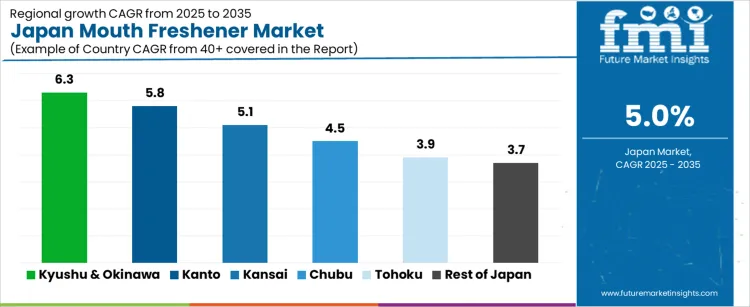
Demand for mouth freshener in Japan is growing steadily across all regions, with Kyushu & Okinawa leading at a 6.3% CAGR, driven by a growing interest in oral hygiene and fresh breath products. Kanto follows with a 5.8% CAGR, supported by the region’s large urban population and increasing consumer focus on personal care. Kansai shows a 5.1% CAGR, driven by rising awareness of health and wellness. Chubu experiences a 4.5% CAGR, with demand rising as consumers become more health-conscious. Tohoku and the Rest of Japan see moderate growth at 3.9% and 3.7%, respectively, as mouth fresheners gain popularity among a broader consumer base.
How is Demand for Mouth Freshener Growing in Kyushu & Okinawa?
Kyushu & Okinawa leads the demand for mouth freshener, growing at a 6.3% CAGR. The region's increasing awareness of oral hygiene and the rising interest in products that offer fresh breath are key factors driving this growth. Okinawa, in particular, has seen an uptick in health-conscious consumers who are seeking mouth fresheners not only for fresh breath but also for their purported digestive benefits. Tourism plays a significant role, as visitors often seek convenient products like mouth fresheners.
Local industrys in Kyushu & Okinawa are increasingly stocking these products, and local food manufacturers are introducing new, regionally inspired flavors to cater to consumer preferences. As consumers continue to prioritize personal care and hygiene, demand for mouth fresheners in Kyushu & Okinawa is expected to remain strong and grow steadily.
Why is Demand for Mouth Freshener Rising in Kanto?
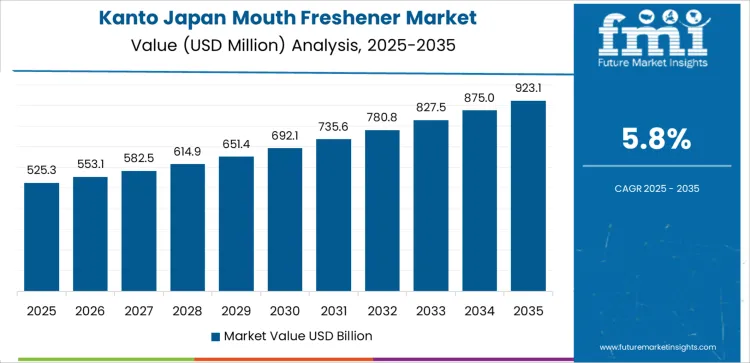
Kanto is experiencing strong demand for mouth fresheners, with a 5.8% CAGR. The region's large urban population, particularly in Tokyo, is driving the demand for products that help maintain oral hygiene and provide fresh breath throughout the day. Busy lifestyles and increased consumer awareness about the importance of fresh breath are contributing to the rise in mouth freshener consumption. The growing trend of health and wellness has led more people to seek out natural and functional products, further fueling the demand.
Mouth fresheners are increasingly available in a wide range of flavors and formats, from gums to mints, making them accessible and convenient. As the region continues to focus on personal hygiene and wellness, demand for mouth fresheners is expected to continue to grow steadily, driven by urban consumers looking for quick and effective solutions for fresh breath.
How is Demand for Mouth Freshener Expanding in Kansai?
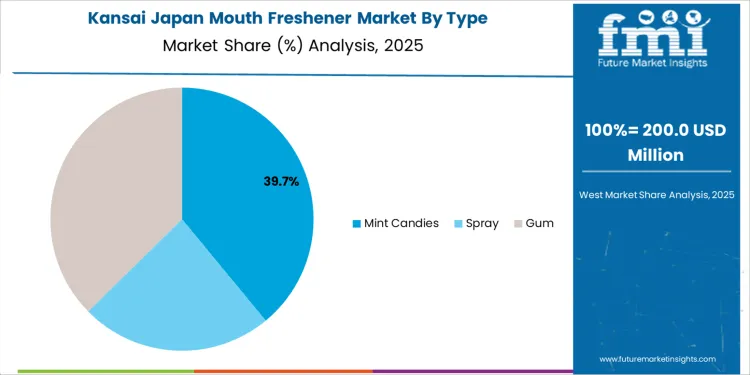
Kansai shows steady demand for mouth fresheners, with a 5.1% CAGR. The region’s rich food culture, particularly in cities like Osaka, drives demand for products that complement local dining experiences and promote oral hygiene. Kansai’s increasing focus on health and wellness is also contributing to the rise in mouth freshener consumption, as more consumers are opting for products that help maintain fresh breath and overall oral care.
The region's growing interest in functional products, especially those made with natural ingredients, is fueling the demand for mouth fresheners. As both younger and older generations in Kansai become more health-conscious, mouth fresheners are becoming a popular choice for quick breath freshening, especially after meals or throughout the day. This trend is expected to continue as more local businesses and retailers stock mouth fresheners in response to the growing consumer demand.
Why is Demand for Mouth Freshener Growing in Chubu?
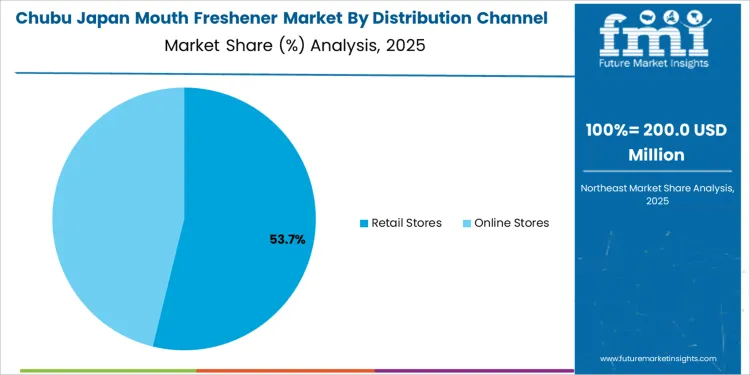
Chubu is experiencing steady demand for mouth fresheners, growing at a 4.5% CAGR. The region’s increasing focus on personal hygiene and health is driving consumers to adopt mouth fresheners as part of their daily routines. With urban areas like Nagoya seeing a rise in health-conscious behaviors, mouth fresheners are gaining popularity as a convenient product for fresh breath and overall oral hygiene. As Chubu's population becomes more aware of the importance of maintaining good oral health, the demand for mouth fresheners has steadily increased.
The rise of functional food and beverage trends, which often include mouth-freshening benefits, has made these products more accessible and appealing to consumers. As the region continues to embrace these health trends, demand for mouth fresheners in Chubu is expected to continue growing, particularly as more consumers seek natural and effective solutions for oral care.
How is Demand for Mouth Freshener Expanding in Tohoku?
Tohoku is seeing moderate demand for mouth fresheners, with a 3.9% CAGR. While the demand in Tohoku is smaller compared to major urban areas, there is a gradual increase in awareness about oral hygiene and the benefits of fresh breath. The region’s growing focus on health and wellness is contributing to the rise in mouth freshener consumption, especially among health-conscious consumers. As local retailers expand their offerings of personal care and hygiene products, mouth fresheners are becoming more readily available.
In addition to traditional consumers, younger generations in Tohoku are increasingly adopting these products as part of their daily hygiene routines. With the growing emphasis on overall wellness and hygiene, demand for mouth fresheners is expected to continue expanding in Tohoku, particularly as more consumers discover the convenience and benefits of these products.
Why is Demand for Mouth Freshener Steady in the Rest of Japan?
The Rest of Japan is experiencing steady demand for mouth fresheners, with a 3.7% CAGR. Although the demand is lower than in urban regions, there is a growing shift toward better oral care and fresh breath in rural and smaller cities. As awareness of personal hygiene and health grows, more consumers in the Rest of Japan are turning to mouth fresheners as a convenient and effective solution for maintaining fresh breath throughout the day.
Local superindustrys and convenience stores are increasingly offering a wider variety of mouth fresheners, making them more accessible to consumers. As consumers seek natural and functional products, there is growing interest in mouth fresheners made with organic ingredients. With these trends in mind, the demand for mouth fresheners in the Rest of Japan is expected to grow steadily, driven by a greater emphasis on health and wellness.
What is Driving the Demand for Mouth Fresheners in Japan and Who Are the Key Players Shaping the Industry?
The demand for mouth fresheners in Japan is growing as consumers increasingly seek convenient, refreshing solutions for oral hygiene and breath freshness throughout the day. In Japan, where personal hygiene is highly valued, mouth fresheners are widely used to maintain fresh breath, particularly after meals or in social situations.
The popularity of mouth fresheners is also driven by the growing focus on convenience and functional products, with many consumers preferring easy-to-carry solutions such as mints, gums, and sprays. The rise in awareness about oral health and the increasing demand for products that offer multiple benefits, such as breath freshening and dental care, further boosts the industry for mouth fresheners.
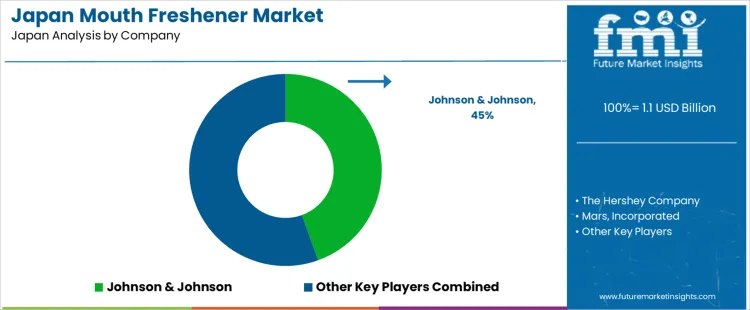
Key players shaping the mouth freshener industry in Japan include Johnson & Johnson, The Hershey Company, Mars, Incorporated, Kraft Foods Inc., and Lotte. Johnson & Johnson leads the industry with a significant share of 44.5%, offering a range of well-known mouth freshener products such as mints and gum. These companies are at the forefront of providing high-quality, innovative products that cater to the evolving preferences of Japanese consumers. They focus on offering freshening solutions with added benefits like sugar-free options and products with breath-freshening properties that support oral health.
The growth of the mouth freshener industry in Japan is also supported by the increasing demand for functional and on-the-go products, as busy lifestyles make convenient solutions more attractive. As consumers seek products that not only freshen breath but also promote oral hygiene, the industry for mouth fresheners is expected to continue expanding. With innovations in flavors, packaging, and formulations, mouth fresheners are poised to remain a popular choice among Japan's health-conscious and convenience-seeking population.
Key Players in Japan Mouth Freshener Demand
- Johnson & Johnson
- The Hershey Company
- Mars, Incorporated
- Kraft Foods Inc.
- Lotte
Scope of Report
| Items | Values |
|---|---|
| Quantitative Units (2025) | USD billion |
| Product Type | Mint Candies, Spray, Gum |
| Distribution Channel | Retail Stores, Online Stores |
| Regions Covered | Kyushu & Okinawa, Kanto, Kansai, Chubu, Tohoku, Rest of Japan |
| Countries Covered | Japan |
| Key Companies Profiled | Johnson & Johnson, The Hershey Company, Mars, Incorporated, Kraft Foods Inc., Lotte |
| Additional Attributes | Dollar sales by product type; regional CAGR and growth trends; increasing consumer preference for sugar-free and organic options; rise in demand for online retail and convenience. |
Japan Mouth Freshener Demand by Key Segments
Type
- Mint Candies
- Spray
- Gum
Distribution Channel
- Retail Stores
- Online Stores
Region
- Kyushu & Okinawa
- Kanto
- Kansai
- Chubu
- Tohoku
- Rest of Japan
Frequently Asked Questions
How big is the demand for mouth freshener in Japan in 2025?
The demand for mouth freshener in Japan is estimated to be valued at USD 1.1 billion in 2025.
What will be the size of mouth freshener in Japan in 2035?
The market size for the mouth freshener in Japan is projected to reach USD 1.9 billion by 2035.
How much will be the demand for mouth freshener in Japan growth between 2025 and 2035?
The demand for mouth freshener in Japan is expected to grow at a 5.0% CAGR between 2025 and 2035.
What are the key product types in the mouth freshener in Japan?
The key product types in mouth freshener in Japan are mint candies, spray and gum.
Which distribution channel segment is expected to contribute significant share in the mouth freshener in Japan in 2025?
In terms of distribution channel, retail stores segment is expected to command 54.0% share in the mouth freshener in Japan in 2025.
Preview the report firsthand - request a free sample
Get SampleGet the brochure for pricing and purchase details.
Get PDFTable of Content
- Executive Summary
- Japan Market Outlook
- Demand-side Trends
- Supply-side Trends
- Technology Roadmap Analysis
- Analysis and Recommendations
- Market Overview
- Market Coverage / Taxonomy
- Market Definition / Scope / Limitations
- Market Background
- Market Dynamics
- Drivers
- Restraints
- Opportunity
- Trends
- Scenario Forecast
- Demand in Optimistic Scenario
- Demand in Likely Scenario
- Demand in Conservative Scenario
- Opportunity Map Analysis
- Product Life Cycle Analysis
- Supply Chain Analysis
- Investment Feasibility Matrix
- Value Chain Analysis
- PESTLE and Porter’s Analysis
- Regulatory Landscape
- Regional Parent Market Outlook
- Production and Consumption Statistics
- Import and Export Statistics
- Market Dynamics
- Japan Market Analysis 2020 to 2024 and Forecast, 2025 to 2035
- Historical Market Size Value (USD Million) Analysis, 2020 to 2024
- Current and Future Market Size Value (USD Million) Projections, 2025 to 2035
- Y-o-Y Growth Trend Analysis
- Absolute $ Opportunity Analysis
- Japan Market Pricing Analysis 2020 to 2024 and Forecast 2025 to 2035
- Japan Market Analysis 2020 to 2024 and Forecast 2025 to 2035, By Type
- Introduction / Key Findings
- Historical Market Size Value (USD Million) Analysis By Type , 2020 to 2024
- Current and Future Market Size Value (USD Million) Analysis and Forecast By Type , 2025 to 2035
- Mint Candies
- Spray
- Gum
- Y-o-Y Growth Trend Analysis By Type , 2020 to 2024
- Absolute $ Opportunity Analysis By Type , 2025 to 2035
- Japan Market Analysis 2020 to 2024 and Forecast 2025 to 2035, By Distribution Channel
- Introduction / Key Findings
- Historical Market Size Value (USD Million) Analysis By Distribution Channel, 2020 to 2024
- Current and Future Market Size Value (USD Million) Analysis and Forecast By Distribution Channel, 2025 to 2035
- Retail Stores
- Online Stores
- Y-o-Y Growth Trend Analysis By Distribution Channel, 2020 to 2024
- Absolute $ Opportunity Analysis By Distribution Channel, 2025 to 2035
- Market Structure Analysis
- Competition Dashboard
- Competition Benchmarking
- Market Share Analysis of Top Players
- By Regional
- By Type
- By Distribution Channel
- Competition Analysis
- Competition Deep Dive
- Johnson & Johnson
- Overview
- Product Portfolio
- Profitability by Market Segments (Product/Age /Sales Channel/Region)
- Sales Footprint
- Strategy Overview
- Marketing Strategy
- Product Strategy
- Channel Strategy
- The Hershey Company
- Mars, Incorporated
- Kraft Foods Inc.
- Lotte
- Johnson & Johnson
- Competition Deep Dive
- Assumptions & Acronyms Used
- Research Methodology


