

- Industry Size (2025)
- USD 278.0 Mn
- Forecast (2035)
- USD 376.3 Mn
- CAGR (2025 to 2035)
- 3.1%
Demand for Paint Cans in Japan Forecast and Outlook 2025 to 2035
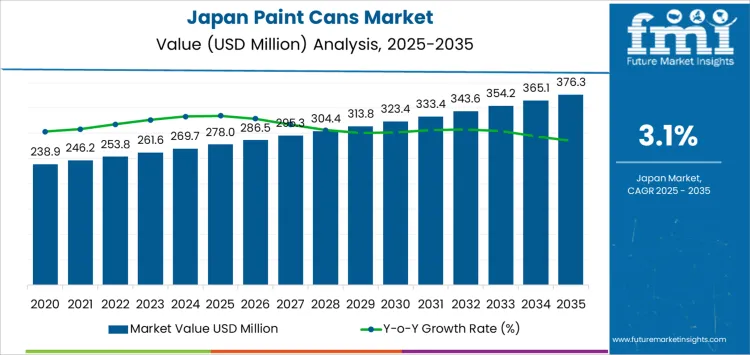
The demand for paint cans in Japan is expected to grow from USD 278.0 million in 2025 to USD 376.3 million by 2035, rising at a CAGR of 3.1%. This growth is driven primarily by the increasing demand for packaging solutions in industries like construction, automotive, and DIY home improvement. The paint can industry is segmented into metal cans, hybrid cans, and plastic cans, with metal cans leading the demand at 45%.
Metal cans are favored for their durability, resistance to corrosion, and ability to protect paint from environmental factors like light and air. Their strength and robustness make them ideal for both industrial and residential applications, ensuring their continued dominance in the Japanese industry.
Quick Stats of the Demand for Paint Cans in Japan
- Demand for Paint Cans in Japan Value (2025): USD 278.0 million
- Demand for Paint Cans in Japan Forecast Value (2035): USD 376.3 million
- Demand for Paint Cans in Japan Forecast CAGR (2025-2035): 3.1%
- Demand for Paint Cans in Japan Leading Product Type: Metal Cans
- Demand for Paint Cans in Japan Leading Material Type: Plastic
- Demand for Paint Cans in Japan Leading Capacity Range: 1001 - 2000 ml
- Demand for Paint Cans in Japan Key Growth Regions: Kyushu & Okinawa, Kanto, Kansai, Chubu, Tohoku, Rest of Japan
- Demand for Paint Cans in Japan Top Players: Ball Corporation, RPC Group Plc., Silgan Containers LLC, Kian Joo Can Factory Berhad, Colep Portugal S.A.
In terms of capacity, 1000 ml and below holds the largest share, accounting for 38.5% of demand. This trend is driven by the growing popularity of small-scale home improvement and DIY projects, where consumers prefer manageable quantities of paint for tasks like furniture, doors, and feature walls. Smaller paint cans are convenient and cost-effective, catering to both occasional users and those with limited storage space.
Hybrid cans are also gaining traction, offering a balance between metal and plastic cans with enhanced durability and flexibility. Plastic cans make up a smaller portion of the industry but are rising due to their lightweight nature and suitability for certain types of paints and coatings. These key segments reflect a shift towards more convenient, durable, and eco-friendly packaging solutions in Japan's expanding paint and coating industries.
Demand for Paint Cans in Japan Key Takeaways
| Metric | Value |
|---|---|
| Demand for Paint Cans in Japan Value (2025) | USD 278.0 million |
| Demand for Paint Cans in Japan Forecast Value (2035) | USD 376.3 million |
| Demand for Paint Cans in Japan Forecast CAGR (2025-2035) | 3.1% |
Why is the Demand for Paint Cans in Japan Growing?
The demand for paint cans in Japan is growing as the country’s construction, home improvement, and automotive industries expand. Paint cans are essential for the storage, transportation, and application of paints, coatings, and other protective finishes. As Japan continues to invest in infrastructure development and residential renovations, the need for packaging solutions like paint cans, which provide secure and durable storage for various paint products, is increasing.
A key driver behind the growth of paint cans is the expanding construction and renovation sectors. As urbanization continues in Japan, along with a focus on renovating older properties and maintaining existing infrastructure, there is a rising demand for paints and coatings. This directly translates into increased demand for paint cans to contain these products. The automotive industry’s continued growth, which relies heavily on high-quality paint finishes, further boosts the need for paint cans as they are used for storing automotive paints and coatings.
Advancements in packaging technology are contributing to the growth of the paint can industry. Innovations in can designs that enhance durability, prevent leakage, and improve ease of use are making paint cans more attractive to both consumers and manufacturers. As the demand for protective coatings and decorative finishes rises across various industries, the demand for paint cans in Japan is expected to grow steadily through 2035.
What is the Segment-Wise Analysis of Demand for Paint Cans in Japan?
Demand for paint cans in Japan is segmented by product type, capacity, material type, and region. By product type, demand is divided into metal cans, hybrid cans, and plastic cans, with metal cans leading at 45%. The demand is also segmented by capacity, including 1000 ml and below, 1001 - 2000 ml, 2001 - 3000 ml, 3001 - 4000 ml, and 4001 ml and above, with 1000 ml and below accounting for 38.5%. Material types include plastic and metal, with metal being the preferred choice for durability and strength. Regionally, demand spans across Kyushu & Okinawa, Kanto, Kansai, Chubu, Tohoku, and the rest of Japan.
How Do Metal Cans Lead the Demand for Paint Cans in Japan?
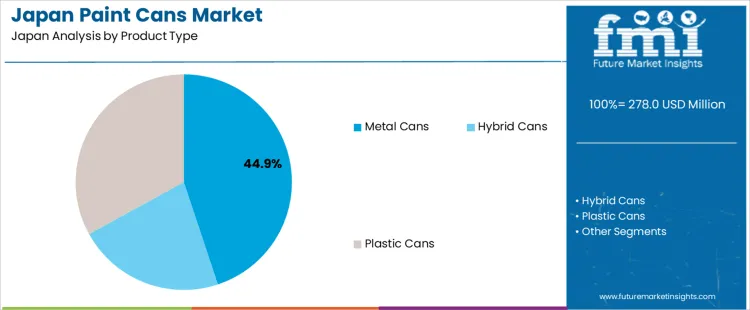
Metal cans account for 45% of the demand for paint cans in Japan, driven by their strength, durability, and protective qualities. Metal cans are the preferred choice for packaging paints due to their resistance to corrosion and ability to withstand external pressures without compromising the integrity of the contents. The robust nature of metal cans ensures that paints are protected from environmental factors, such as light and air, which can degrade the quality of the product.
Metal cans are ideal for larger volumes of paint and are widely used in both industrial and residential applications. As the demand for high-quality, long-lasting packaging solutions increases, metal cans continue to lead the industry for paint cans in Japan, providing the necessary protection and reliability for paint manufacturers and consumers alike.
Why Does the 1000 ml and Below Capacity Lead the Demand for Paint Cans in Japan?

The 1000 ml and below capacity accounts for 38.5% of the demand for paint cans in Japan, driven by the popularity of smaller-sized cans for DIY projects, home improvement, and small-scale commercial applications. Smaller paint cans are ideal for customers who need a manageable quantity for painting smaller areas, such as furniture, doors, or feature walls. These cans are also convenient for consumers who do not want to purchase large volumes of paint, offering a cost-effective option for occasional use.
The demand for smaller paint cans is further fueled by the growing trend of home improvement and DIY activities in Japan, where consumers are increasingly opting for manageable quantities to meet their specific needs. As the preference for smaller, more convenient packaging continues, the 1000 ml and below capacity will remain the leading choice in the paint can industry.
What are the Key Trends, Drivers, and Restraints in Demand for Paint Cans in Japan?
Paint cans, particularly metal ones, are favored for their durability, barrier properties, and recyclability. The rise in DIY home renovations and consumer interest in repainting homes further fuels demand for smaller quantities of paints, often packaged in cans. Challenges include the volatility in raw material costs, such as metals, which can affect the price of cans. Increasing environmental concerns and regulations around packaging waste and recycling may drive the demand for alternative packaging formats, such as plastic pails or smaller containers, potentially limiting growth for traditional paint cans.
Why is Demand for Paint Cans Growing in Japan?
The growing demand for paint cans in Japan is largely driven by robust activity in residential renovation and maintenance, particularly due to the aging housing stock. As homes and buildings age, the need for protective and decorative coatings increases, leading to sustained demand for paints. The industrial sector, including automotive, manufacturing, and infrastructure maintenance, also contributes significantly to the need for coatings, which in turn drives the demand for durable packaging like metal cans.
The increasing popularity of DIY culture and home improvement projects has led to more consumers purchasing smaller quantities of paint in convenient, sealed cans. The shift towards eco-friendly and high-performance coatings, such as water-based paints with low VOC emissions, has increased overall paint consumption, further boosting demand for suitable packaging solutions, including paint cans.
How are Technological & Industry Innovations Driving Paint Can Demand in Japan?
Technological advancements in packaging and paint formulations have played a significant role in boosting the demand for paint cans in Japan. Innovations such as better sealing mechanisms, corrosion-resistant linings, and tamper-evident closures have made paint cans more user-friendly, safe, and sustainable. These improvements ensure that the integrity of the paint is maintained during storage and transportation, reducing waste and spoilage.
The growing use of high-performance or specialized coatings in various sectors, including automotive and industrial applications, requires reliable and durable packaging. The packaging industry has also benefited from automation and advanced manufacturing techniques, which allow for consistent production quality and cost-effective scaling of can production.
What are the Key Challenges and Risks That Could Limit Paint Can Demand in Japan?
One major challenge is the price volatility of metals like steel, tin, and aluminum, which are commonly used in the production of paint cans. Fluctuating raw material costs can lead to higher prices for paint cans, potentially deterring customers from purchasing. There is growing pressure from environmental regulations that encourage the use of lighter or alternative packaging formats, such as plastic pails or refillable containers, which may reduce the industry share for traditional metal cans.
Competition from these alternative packaging options, which may offer convenience or environmental benefits, presents a risk to the dominance of paint cans. Lastly, shifts in consumer preferences, such as a decline in the use of traditional paints in favor of digital or minimalist designs, could also affect overall paint consumption, indirectly impacting the demand for paint cans.
What is the Regional Demand Outlook for Paint Cans in Japan?
| Region | CAGR (%) |
|---|---|
| Kyushu & Okinawa | 3.8% |
| Kanto | 3.5% |
| Kansai | 3.1% |
| Chubu | 2.7% |
| Tohoku | 2.4% |
| Rest of Japan | 2.3% |
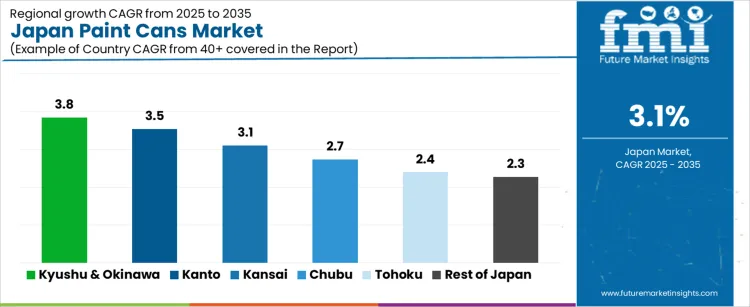
Demand for paint cans in Japan is growing steadily across all regions, with Kyushu & Okinawa leading at a 3.8% CAGR, driven by the region’s ongoing residential and commercial renovation activities. Kanto follows with a 3.5% CAGR, supported by the large urban population and frequent repainting of both residential and commercial properties.
Kansai shows a 3.1% CAGR, fueled by the region’s strong industrial and commercial sectors that rely on paint packaging for maintenance and upkeep. Chubu experiences a 2.7% CAGR, with steady demand from manufacturing, infrastructure, and construction sectors. Tohoku and the Rest of Japan see moderate growth at 2.4% and 2.3%, respectively, driven by rural housing maintenance and occasional repainting needs.
How is Demand for Paint Cans Growing in Kyushu & Okinawa?
Kyushu & Okinawa leads the demand for paint cans, growing at a 3.8% CAGR. The region’s ongoing residential and commercial renovation activity, along with the need for regular maintenance in older buildings, drives consistent demand. In Okinawa, with its coastal climate, the need for frequent repainting due to weather conditions further boosts demand. As DIY projects become increasingly popular in smaller cities and rural areas, the demand for smaller and more manageable paint cans is rising.
Paint cans are also preferred by local contractors and DIY consumers for their ease of handling, storage, and use. With growing awareness of the benefits of home and business maintenance through consistent repainting, the industry for paint cans in Kyushu & Okinawa is expected to continue expanding steadily, supported by both residential and commercial needs.
Why is Demand for Paint Cans Rising in Kanto?
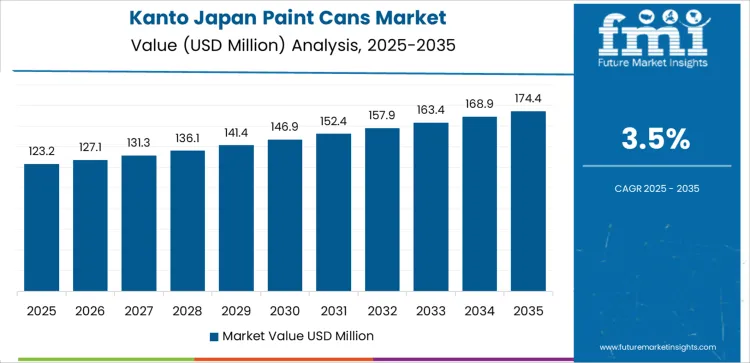
In Kanto, demand for paint cans is rising at a 3.5% CAGR. The region’s dense urban population, particularly in Tokyo, creates a consistent demand for paint products due to frequent repainting needs in both residential and commercial buildings. The growing urbanization in areas like Chiba and Saitama further increases the demand for paint and its packaging.
Ongoing maintenance of older properties, coupled with the rising trend of apartment refurbishments, drives the need for durable, small-volume paint packaging, such as cans. The demand for eco-friendly and sustainable paint packaging solutions also adds to the growth of paint can sales in Kanto. As urban living and building renovations continue to rise, the need for efficient and reliable paint packaging, such as cans, will remain strong in Kanto, contributing to steady growth in the region.
How is Demand for Paint Cans Expanding in Kansai?
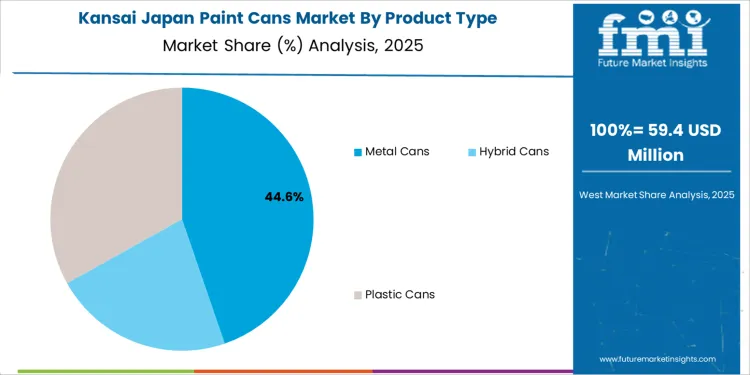
Kansai shows steady demand for paint cans, growing at a 3.1% CAGR. The region’s strong industrial and commercial sectors, particularly in cities like Osaka and Kobe, contribute significantly to the demand for paint packaging for both building maintenance and infrastructure projects. The demand is further supported by the region’s manufacturing base, which requires paint for the protection and upkeep of machinery and facilities.
Residential housing, particularly older properties, requires regular painting to maintain aesthetic appeal and structural integrity. The rise of eco-consciousness also increases the need for sustainable paint cans in the region. As Kansai continues to be a hub for both traditional industries and emerging businesses, the demand for paint cans will remain steady, supported by both commercial and residential sectors.
Why is Demand for Paint Cans Growing in Chubu?
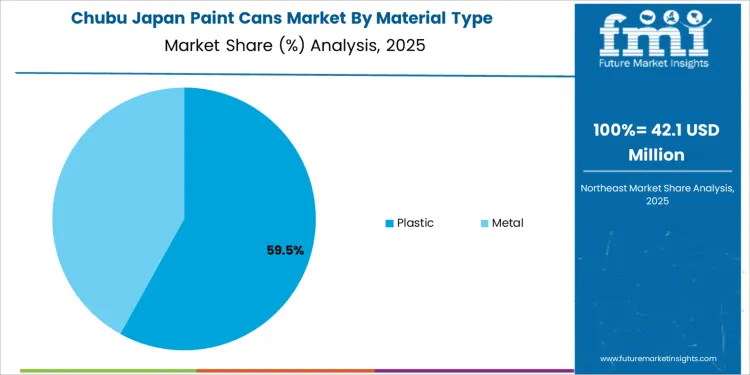
Chubu is experiencing steady demand for paint cans, growing at a 2.7% CAGR. The region’s industrial base, particularly in Nagoya, is a major driver of demand, with manufacturing plants and commercial properties requiring frequent painting for maintenance and durability. The construction and infrastructure sectors in Chubu also contribute to the demand, particularly as urbanization continues in both small and medium-sized cities.
As the region embraces modern infrastructure and renovation projects, demand for paint and packaging solutions remains strong. Small- to mid-sized painting projects in residential areas, coupled with the rising preference for DIY home renovations, contribute to the growing demand for smaller and more accessible paint cans. As Chubu continues to expand both its industrial and residential sectors, the need for efficient and durable paint packaging will drive steady demand for paint cans.
How is Demand for Paint Cans Expanding in Tohoku?
Tohoku is seeing moderate growth in paint can demand, with a 2.4% CAGR. While the region’s overall demand for paint products is smaller compared to major urban areas, there is steady interest driven by residential and small-scale commercial needs. Tohoku’s colder climate requires frequent maintenance and repainting of homes and buildings to protect them from the harsh weather conditions, contributing to a consistent demand for paint cans.
Local contractors and DIY projects, common in more rural settings, also drive the need for easy-to-handle paint packaging. Infrastructure maintenance and government-driven renovation programs in the region help support the demand. As the region continues to modernize and raise awareness of the benefits of regular home and infrastructure upkeep, the demand for paint cans is expected to grow moderately over the coming years.
Why is Demand for Paint Cans Steady in the Rest of Japan?
The Rest of Japan is experiencing steady demand for paint cans, with a 2.3% CAGR. In smaller cities and rural areas, the adoption rate of paint cans is slower compared to larger urban centers, but the consistent need for residential and small-scale commercial painting ensures ongoing demand. As home maintenance and occasional building refurbishments remain essential for homeowners and contractors, the demand for paint cans remains steady, driven by DIY projects and small renovations.
The growth in sustainable and recyclable paint packaging solutions also influences adoption, especially in rural and less urbanized areas. Over time, as infrastructure ages and building maintenance becomes increasingly necessary, the demand for paint cans in the Rest of Japan will likely grow at a slow but steady pace, supported by local contractors and small businesses engaged in property and facility upkeep.
What Is Driving the Demand for Paint Cans in Japan and Who Are the Key Players Shaping the Industry?
The demand for paint cans in Japan is growing due to the ongoing expansion in the construction, automotive, and DIY sectors, all of which require efficient and reliable packaging for paint products. Paint cans are essential for storing, transporting, and preserving the quality of paints, coatings, and related products. As the Japanese economy sees continued growth in infrastructure development and renovation projects, the demand for paint in both commercial and residential sectors is increasing.
The growing popularity of DIY home improvement projects, supported by consumer trends in home decoration and renovation, is further boosting the demand for paint cans. Innovations in paint can designs, including features like better sealing and environmentally friendly materials, are driving industry growth.
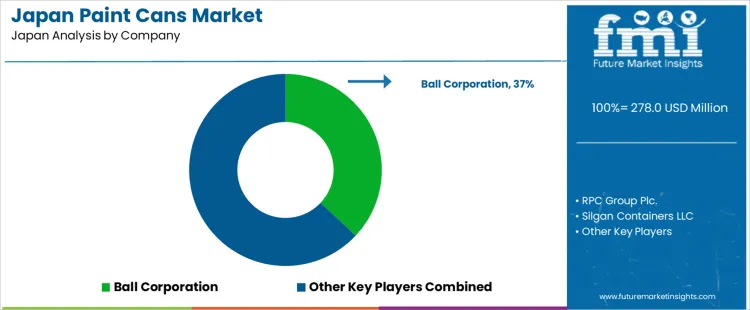
Key players shaping the paint can industry in Japan include Ball Corporation, RPC Group Plc., Silgan Containers LLC, Kian Joo Can Factory Berhad, and Colep Portugal, S.A. Ball Corporation leads the industry with a dominant share of 37.0%, providing a wide range of high-quality, durable paint cans that meet the demands of both industrial and consumer industrys.
These companies focus on ensuring their packaging solutions are efficient, cost-effective, and sustainable, which helps them capture a significant portion of the industry. They are also committed to innovation, focusing on improving the strength, usability, and environmental impact of their products to cater to the growing demand for sustainable packaging.
The growth of the paint can industry in Japan is supported by increasing demand from the construction and manufacturing industries, as well as a growing interest in home improvement projects. As Japan continues to prioritize sustainability and eco-friendly packaging solutions, the paint can industry is likely to see further growth driven by innovations in recyclable materials and energy-efficient manufacturing processes. The industry for paint cans in Japan is poised for continued expansion as both industrial and consumer demand for high-quality and environmentally conscious packaging solutions increases.
Key Players in Japan Paint Cans Demand
- Ball Corporation
- RPC Group Plc.
- Silgan Containers LLC
- Kian Joo Can Factory Berhad
- Colep Portugal, S.A.
Scope of Report
| Items | Values |
|---|---|
| Quantitative Units (2025) | USD million |
| Product Type | Metal Cans, Hybrid Cans, Plastic Cans |
| Material Type | Plastic, Metal |
| Capacity | 1000 ml and below, 1001 - 2000 ml, 2001 - 3000 ml, 3001 - 4000 ml, 4001 ml and above |
| Region | Kyushu & Okinawa, Kanto, Kansai, Chubu, Tohoku, Rest of Japan |
| Countries Covered | Japan |
| Key Companies Profiled | Ball Corporation, RPC Group Plc., Silgan Containers LLC, Kian Joo Can Factory Berhad, Colep Portugal, S.A. |
| Additional Attributes | Dollar sales by product type and capacity; regional CAGR and growth outlook; rising demand for eco-friendly packaging solutions; innovations in hybrid and plastic paint cans; increasing consumer preference for more customizable can sizes. |
Japan Paint Cans Demand by Key Segments
Product Type
- Metal Cans
- Hybrid Cans
- Plastic Cans
Material Type
- Plastic
- Metal
Capacity
- 1000 ml and below
- 1001 - 2000 ml
- 2001 - 3000 ml
- 3001 - 4000 ml
- 4001 ml and above
Region
- Kyushu & Okinawa
- Kanto
- Kansai
- Chubu
- Tohoku
- Rest of Japan
Frequently Asked Questions
How big is the demand for paint cans in Japan in 2025?
The demand for paint cans in Japan is estimated to be valued at USD 278.0 million in 2025.
What will be the size of paint cans in Japan in 2035?
The market size for the paint cans in Japan is projected to reach USD 376.3 million by 2035.
How much will be the demand for paint cans in Japan growth between 2025 and 2035?
The demand for paint cans in Japan is expected to grow at a 3.1% CAGR between 2025 and 2035.
What are the key product types in the paint cans in Japan?
The key product types in paint cans in Japan are metal cans, hybrid cans and plastic cans.
Which material type segment is expected to contribute significant share in the paint cans in Japan in 2025?
In terms of material type, plastic segment is expected to command 57.0% share in the paint cans in Japan in 2025.
Preview the report firsthand - request a free sample
Get SampleGet the brochure for pricing and purchase details.
Get PDFTable of Content
- Executive Summary
- Japan Market Outlook
- Demand-side Trends
- Supply-side Trends
- Technology Roadmap Analysis
- Analysis and Recommendations
- Market Overview
- Market Coverage / Taxonomy
- Market Definition / Scope / Limitations
- Market Background
- Market Dynamics
- Drivers
- Restraints
- Opportunity
- Trends
- Scenario Forecast
- Demand in Optimistic Scenario
- Demand in Likely Scenario
- Demand in Conservative Scenario
- Opportunity Map Analysis
- Product Life Cycle Analysis
- Supply Chain Analysis
- Investment Feasibility Matrix
- Value Chain Analysis
- PESTLE and Porter’s Analysis
- Regulatory Landscape
- Regional Parent Market Outlook
- Production and Consumption Statistics
- Import and Export Statistics
- Market Dynamics
- Japan Market Analysis 2020 to 2024 and Forecast, 2025 to 2035
- Historical Market Size Value (USD Million) Analysis, 2020 to 2024
- Current and Future Market Size Value (USD Million) Projections, 2025 to 2035
- Y-o-Y Growth Trend Analysis
- Absolute $ Opportunity Analysis
- Japan Market Pricing Analysis 2020 to 2024 and Forecast 2025 to 2035
- Japan Market Analysis 2020 to 2024 and Forecast 2025 to 2035, By Product Type
- Introduction / Key Findings
- Historical Market Size Value (USD Million) Analysis By Product Type , 2020 to 2024
- Current and Future Market Size Value (USD Million) Analysis and Forecast By Product Type , 2025 to 2035
- Metal Cans
- Hybrid Cans
- Plastic Cans
- Y-o-Y Growth Trend Analysis By Product Type , 2020 to 2024
- Absolute $ Opportunity Analysis By Product Type , 2025 to 2035
- Japan Market Analysis 2020 to 2024 and Forecast 2025 to 2035, By Material Type
- Introduction / Key Findings
- Historical Market Size Value (USD Million) Analysis By Material Type, 2020 to 2024
- Current and Future Market Size Value (USD Million) Analysis and Forecast By Material Type, 2025 to 2035
- Plastic
- Metal
- Y-o-Y Growth Trend Analysis By Material Type, 2020 to 2024
- Absolute $ Opportunity Analysis By Material Type, 2025 to 2035
- Japan Market Analysis 2020 to 2024 and Forecast 2025 to 2035, By Capacity
- Introduction / Key Findings
- Historical Market Size Value (USD Million) Analysis By Capacity, 2020 to 2024
- Current and Future Market Size Value (USD Million) Analysis and Forecast By Capacity, 2025 to 2035
- 1000 ml and below
- 1001 - 2000 ml
- 2001 - 3000 ml
- 3001 - 4000 ml
- 4001 ml and above
- Y-o-Y Growth Trend Analysis By Capacity, 2020 to 2024
- Absolute $ Opportunity Analysis By Capacity, 2025 to 2035
- Market Structure Analysis
- Competition Dashboard
- Competition Benchmarking
- Market Share Analysis of Top Players
- By Regional
- By Product Type
- By Material Type
- By Capacity
- Competition Analysis
- Competition Deep Dive
- Ball Corporation
- Overview
- Product Portfolio
- Profitability by Market Segments (Product/Age /Sales Channel/Region)
- Sales Footprint
- Strategy Overview
- Marketing Strategy
- Product Strategy
- Channel Strategy
- RPC Group Plc.
- Silgan Containers LLC
- Kian Joo Can Factory Berhad
- Colep Portugal, S.A.
- Ball Corporation
- Competition Deep Dive
- Assumptions & Acronyms Used
- Research Methodology


