

- Industry Size (2025)
- USD 499.9 Mn
- Forecast (2035)
- USD 696.6 Mn
- CAGR (2025 to 2035)
- 3.4%
Demand for Wrap-Around Label in Japan Forecast and Outlook 2025 to 2035
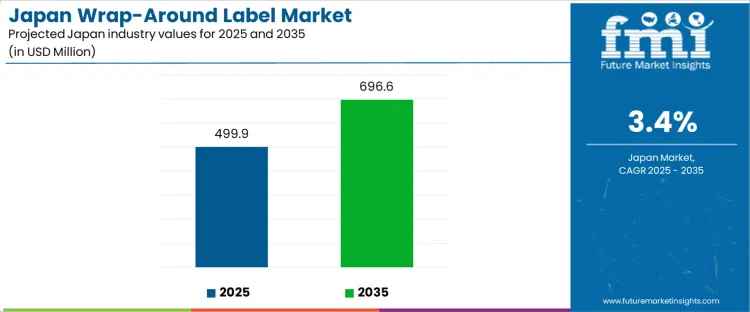
Demand for wrap-around labels in Japan is expected to grow from USD 499.9 million in 2025 to USD 696.6 million by 2035, reflecting a compound annual growth rate (CAGR) of 3.4%. Wrap-around labels, which provide a seamless and efficient labeling solution for cylindrical packaging, are widely used in the food, beverage, and personal care industries. As Japan continues to prioritize product aesthetics, brand visibility, and packaging efficiency, demand for wrap-around labels is expected to increase. These labels offer key benefits, including an enhanced labeling area, improved product presentation, and improved automation on packaging lines, making them a popular choice for manufacturers.
Demand is further supported by innovations in label materials, adhesive technologies, and printing methods, which enable higher-quality and more durable wrap-around labels. As companies in Japan seek to streamline production processes and enhance the consumer experience, the adoption of wrap-around labels is anticipated to grow steadily over the next decade. Environmental concerns and demand for recyclable packaging solutions will also encourage the use of wrap-around labels, as they can be made from eco-friendly materials and reduce packaging waste.
Quick Stats of the Demand for Wrap-Around Label in Japan
- Demand for Wrap-Around Label in Japan Value (2025): USD 499.9 million
- Demand for Wrap-Around Label in Japan Forecast Value (2035): USD 696.6 million
- Demand for Wrap-Around Label in Japan Forecast CAGR (2025-2035): 3.4%
- Demand for Wrap-Around Label in Japan Leading Material: Paper (90%)
- Demand for Wrap-Around Label in Japan Key Growth Regions: Kyushu & Okinawa, Kanto, Kansai, Chubu, Tohoku, Rest of Japan
- Demand for Wrap-Around Label in Japan Key Players: Amcor Plc, Huhtamaki Oyj, Fuji Seal International Inc., Avery Dennison Corp, Klockner Pentaplast Group
What is the Growth Forecast for the Wrap-Around Label Market through 2035?
The 5-year growth block analysis for the wrap-around label market in Japan reveals steady growth in the first phase of the forecast period. Starting at USD 499.9 million in 2025, the market grows to USD 516.7 million in 2026 and USD 534.2 million in 2027. This early-stage growth reflects a steady increase in the adoption of wrap-around labels across various industries, driven by demand for improved packaging solutions that enhance brand identity and operational efficiency.
From 2027 to 2030, the market continues to expand steadily, with values reaching USD 552.2 million in 2028, USD 570.8 million in 2029, and USD 590.1 million in 2030. This phase shows the ongoing trend of growth as packaging solutions become more sophisticated and manufacturers seek labels that provide better functionality, such as ease of application, greater surface area for branding, and enhanced consumer appeal. The growth block analysis highlights a consistent upward trajectory, with wrap-around labels becoming more integral to the packaging strategies of food, beverage, and consumer goods companies in Japan. As the market continues to grow, it is expected to maintain its steady increase, benefiting from ongoing innovations in labeling technologies and growing demand for effective, sustainable packaging solutions.
Key Takeaways of Wrap-Around Label Industry in Japan
| Metric | Value |
|---|---|
| Industry Sales Value (2025) | USD 499.9 million |
| Industry Forecast Value (2035) | USD 696.6 million |
| Industry Forecast CAGR (2025-2035) | 3.4% |
What Is Driving the Demand for Wrap-Around Labels in Japan?
The demand for wrap-around labels in Japan is being shaped by growth in packaged goods, especially beverages, food, personal care, and household products. Wrap-around labels allow branding and regulatory information to cover the full circumference of containers, which supports visual appeal and shelf presence. Japanese manufacturers and brand owners often prefer wrap-around labels for bottles, jars and similar containers because they support efficient high-speed labelling and reduce material waste compared with multi-part labelling solutions. The broader growth of the packaging market, including demand for compact and consumer-friendly packaging, has reinforced the adoption of wrap-around labels.
Future demand for wrap-around labels in Japan is likely to increase as consumption of packaged goods continues to rise and as e-commerce, convenience products, and on-the-go consumption grow. Growth will be supported by continuing demand from beverage and food producers, and by expansion in cosmetics, personal care, and household segments. As manufacturers seek efficient, cost-effective and consistent labelling solutions for high-volume production, wrap-around labels will remain attractive. Regulatory requirements for clear product information and traceability may also drive uptake. The long-term growth of the segment will depend on how well label producers supply diverse materials (paper, plastic, barrier films) that meet performance, recyclability and regulatory requirements.
What Are the Key Segments in Wrap-Around Label Market in Japan?
The wrap-around label market in Japan is segmented by material and product type. Paper is the dominant material, holding 90% of the market share. In terms of product type, stretch labels lead, representing 34.4% of the market. The increasing demand for high-quality, cost-effective, and visually appealing packaging solutions is driving the growth of wrap-around labels, particularly in the food and beverage, consumer goods, and retail sectors.
Which Material Drives Wrap-Around Label Demand in Japan?
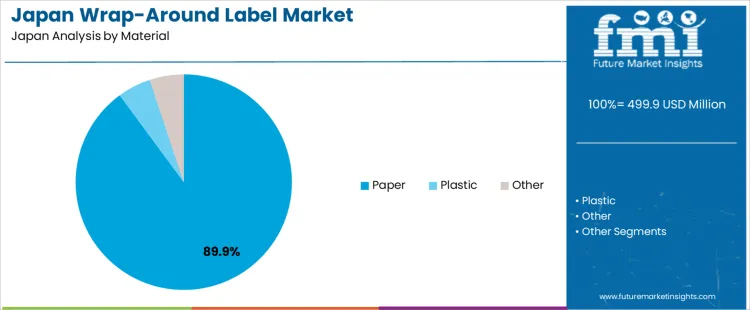
Paper is the most widely used material for wrap-around labels in Japan, accounting for 90% of the market share. Paper labels are preferred for their cost-effectiveness, versatility, and environmental sustainability. They provide excellent print quality, making them ideal for displaying branding, product information, and graphics. The growing demand for eco-friendly packaging solutions has also contributed to the popularity of paper labels, as they are biodegradable and recyclable. While plastic and other materials are used for specific applications requiring additional durability or flexibility, paper remains the dominant choice for wrap-around labels in Japan due to its sustainability and compatibility with a wide range of products and industries.
Which Product Drives Wrap-Around Label Demand in Japan?
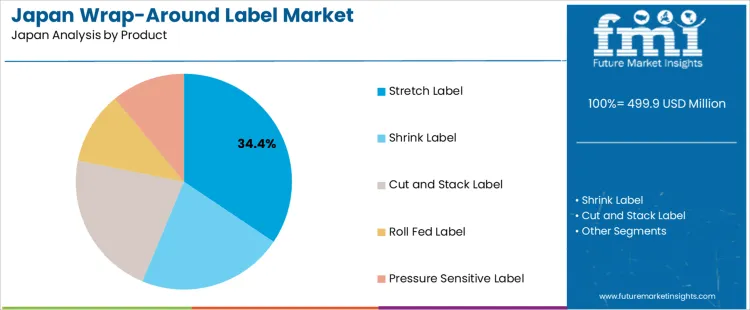
Stretch labels are the leading product type in the wrap-around label market, holding 34.4% of the market share. Stretch labels are highly elastic and conform to the shape of the container, providing a tight fit that ensures the label stays in place even when the container is deformed. This makes stretch labels particularly popular in the packaging of bottles, jars, and other containers with irregular shapes. Their flexibility and ability to create seamless, eye-catching designs are key factors in their widespread adoption. Other product types, such as shrink labels, cut and stack labels, roll-fed labels, and pressure-sensitive labels, also contribute to the market, but stretch labels are the most commonly used for wrap-around applications due to their ability to deliver high-quality results and enhance the appearance of products.
What is the Key Dynamics for Wrap-Around Label Demand in Japan?
The demand for wrap-around labels in Japan is shaped by increasing production of bottled and packaged goods across food, beverages, pharmaceuticals and personal care industries. As manufacturers and brands seek efficient, cost-effective, and attractive packaging, wrap-around labels have gained traction for their ability to deliver 360-degree product branding and strong shelf appeal. Growth in contract manufacturing and private-label brands in Japan supports demand for labels that combine durability, visual impact and efficient application. The trend toward compact packaging lines and flexible batch sizes has also reinforced adoption of wrap-around labels.
What are the Key Drivers for Wrap-Around Label Demand in Japan?
Rising consumption of bottled beverages, ready-to-drink products, personal care items and packaged foods in Japan drives higher demand for wrap-around labels due to their suitability for bottles and containers. The need for consistent, high speed labelling in automated packaging lines encourages adoption of wrap-around solutions. Demand for premium product presentation and brand differentiation pushes companies to use wrap-around labels for aesthetic appeal and 360-degree label coverage. The growth of sectors such as food & beverage, cosmetics, personal care and pharmaceuticals supports demand as these sectors often require robust, full-body labels for branding, compliance and information display.
What are the Restraints for Wrap-Around Label Demand in Japan?
One limitation relates to competition from other label types such as pressure-sensitive labels, shrink-sleeves or in-mould labels which may be preferred due to versatility or lower setup complexity. Cost of specialized films or materials used for wrap-around labels may be higher than simpler label formats, affecting cost structure especially for price-sensitive brands. Smaller producers or niche manufacturers with low volume batches might find initial investment for wrap-around compatible packaging and labelling equipment prohibitive. Regulatory requirements for labelling in sectors like pharmaceuticals or food may impose constraints on certain materials or label designs, reducing flexibility for wrap-around adoption.
What are the Key Trends in Wrap-Around Label Demand in Japan?
A growing trend involves increased use of wrap-around labels in beverage packaging and ready-to-drink product lines as brands seek uniform, attractive packaging. Use of advanced film materials such as BOPP for wrap-around labels is growing, improving cost efficiency and durability. Automation in packaging and labelling lines has increased demand for label formats that work well with high-speed wrap-around labelers. There is rising demand for label solutions that support full-body branding combined with clear regulatory and ingredient information, especially in sectors like food, personal care and pharmaceuticals. The push for better shelf impact and brand differentiation in competitive retail settings continues to support wrap-around label adoption.
What is the Regional Demand Outlook for Wrap-Around Labels in Japan?
Demand for wrap-around labels in Japan is projected to grow steadily, with Kyushu & Okinawa leading the way at a CAGR of 4.2%. Kanto follows closely with a growth rate of 3.9%, while Kansai is expected to grow at 3.4%. Chubu is projected to grow at a rate of 3.0%, while Tohoku and Rest of Japan show more moderate growth, with CAGRs of 2.6% and 2.5%, respectively. Increasing demand for innovative packaging solutions that provide better coverage, enhanced branding, and convenience is driving the adoption of wrap-around labels in Japan's packaging industry.
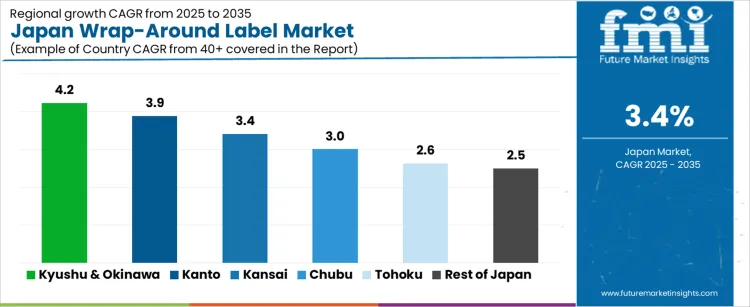
| Region | CAGR (2025-2035) |
|---|---|
| Kyushu & Okinawa | 4.2% |
| Kanto | 3.9% |
| Kansai | 3.4% |
| Chubu | 3.0% |
| Tohoku | 2.6% |
| Rest of Japan | 2.5% |
What is Driving the Growth of Wrap-Around Labels in Kyushu & Okinawa?
Kyushu & Okinawa is projected to experience the highest growth in the wrap-around labels market, with a projected CAGR of 4.2%. The region’s increasing focus on packaging innovation and sustainability is a key driver of this growth. Wrap-around labels offer several advantages, such as better branding opportunities, efficient use of space, and reduced material waste, which align with Kyushu & Okinawa’s efforts to enhance product packaging while minimizing environmental impact. As local businesses seek more versatile and sustainable labeling solutions, the adoption of wrap-around labels is expected to rise. Additionally, the region's emphasis on using innovative technologies and materials for packaging will help fuel the demand for wrap-around labels in both the food and beverage sectors and beyond.
Why is the Wrap-Around Labels Market Expanding in Kanto?
In Kanto, the demand for wrap-around labels is projected to grow at a CAGR of 3.9%. As Japan’s most populous and economically significant region, Kanto is a major hub for packaging and labeling innovations. The region’s robust consumer goods industry, particularly in food, beverages, and personal care products, is driving the need for versatile and attractive packaging solutions. Wrap-around labels, known for their high visual appeal and ability to wrap around a product container, are increasingly sought in Kanto for their effectiveness in showcasing branding and product information.
Additionally, as Kanto continues to embrace sustainability initiatives, demand for eco-friendly labeling solutions, such as wrap-around labels, is rising. The growing trend toward more eye-catching and functional packaging solutions is expected to expand the wrap-around labels market in Kanto significantly.
How is the Wrap-Around Labels Market Growing in Kansai?
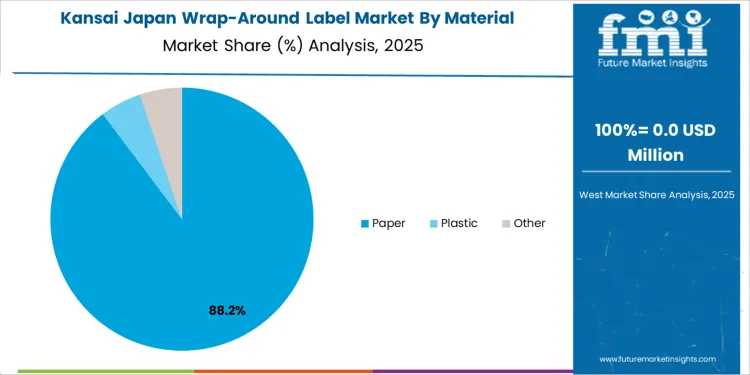
In Kansai, the wrap-around labels market is projected to grow at a CAGR of 3.4%. Kansai’s growing focus on sustainability and packaging innovation is a key factor contributing to the adoption of wrap-around labels. The region’s consumer goods manufacturers, particularly in the food and beverage sectors, are increasingly seeking cost-effective and aesthetically pleasing packaging solutions, and wrap-around labels are proving to be an attractive option. Kansai’s emphasis on environmental responsibility and reducing packaging waste is driving the demand for labels that are efficient and versatile. With wrap-around labels offering better coverage, branding space, and material savings, Kansai’s packaging industry is likely to continue embracing these labels as the market grows.
What is Contributing to the Growth of Wrap-Around Labels in Chubu?
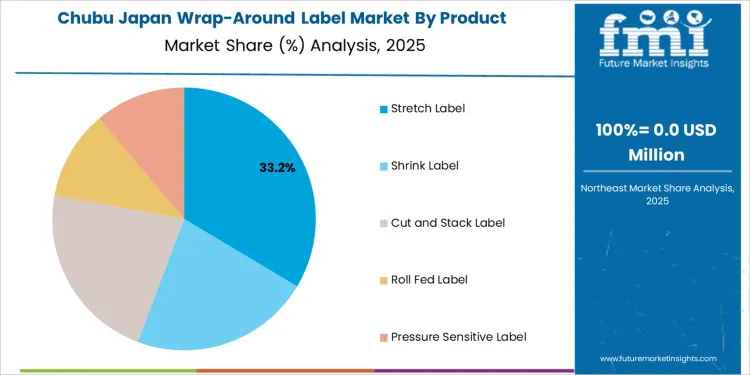
In Chubu, the wrap-around labels market is expected to grow at a CAGR of 3.0%. The region’s packaging industry, which includes automotive, food, and beverage sectors, is increasingly turning to innovative solutions such as wrap-around labels to improve product presentation and functionality. Chubu’s focus on enhancing manufacturing efficiency and offering environmentally friendly packaging options is contributing to the growing adoption of wrap-around labels. These labels offer cost-effective, space-efficient labeling that appeals to businesses looking to improve their product packaging and branding. As Chubu’s packaging sector continues to modernize, the market for wrap-around labels is expected to expand gradually.
What is Influencing the Growth of Wrap-Around Labels in Tohoku?
In Tohoku, the wrap-around labels market is projected to grow at a CAGR of 2.6%. While growth in Tohoku is more moderate than in other regions, demand for innovative packaging solutions, including wrap-around labels, continues to increase. As local businesses and packaging manufacturers in Tohoku focus on improving product visibility and presentation, wrap-around labels are becoming more popular due to their ability to provide comprehensive labeling and branding while minimizing material usage. Additionally, Tohoku’s commitment to sustainability and environmentally friendly practices in manufacturing is helping to drive the adoption of wrap-around labels as part of broader efforts to reduce packaging waste. As awareness of sustainable packaging options grows, Tohoku’s market for wrap-around labels is expected to rise steadily.
What is Contributing to the Growth of Wrap-Around Labels in Rest of Japan?
In Rest of Japan, the wrap-around labels market is expected to grow at a more moderate rate of 2.5%. Although demand is lower than in major urban regions, there is growing interest in more efficient and functional packaging solutions. As packaging manufacturers in rural and less densely populated areas continue to adopt modern labeling technologies, the demand for wrap-around labels is expected to rise. These labels offer significant advantages in terms of packaging efficiency, branding space, and material savings, which are particularly appealing to smaller businesses and local manufacturers. As the market for sustainable and functional packaging expands in Rest of Japan, the demand for wrap-around labels is expected to grow gradually.
What is the Competitive Landscape for Demand for Wrap-Around Labels in Japan?
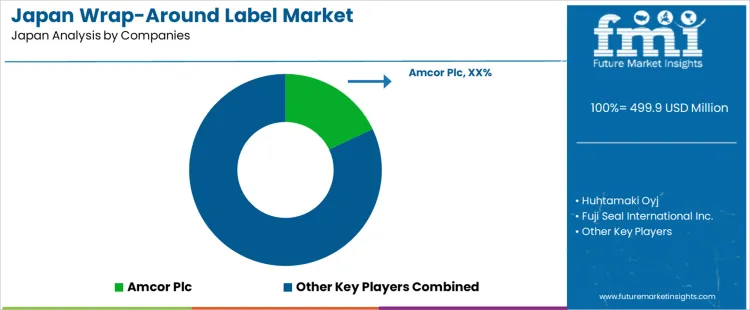
Demand for wrap-around labels in Japan has been increasing as manufacturers across food & beverage, pharmaceuticals, personal care and consumer goods sectors seek efficient, aesthetic, and space-efficient labeling solutions. Wrap-around labels - which encircle a container’s surface - provide 360° coverage and ample space for branding, regulatory information, nutritional facts, and marketing graphics.
As consumer preferences shift toward premium packaging, convenience products, and export-ready goods, demand for wrap-around labeling has grown, especially for round bottles, jars, cans and other cylindrical containers common in beverages, sauces, cosmetics and supplement products. Automated packing and labeling lines, along with Japan’s manufacturing modernization drive, also support increased adoption of wrap-around labels to enable high throughput and consistent output.
Several global packaging and label-materials firms compete for market share. From your list, major players include Amcor Plc, Huhtamaki Oyj, Fuji Seal International Inc., Avery Dennison Corp, and Klockner Pentaplast Group. Each provider brings different strengths - for example, material quality and adhesive performance, sustainability of label substrates, ability to meet stringent Japanese packaging and labeling standards, and versatility across container types.
Competition between suppliers centers on label durability, print clarity, conformability to container shapes (especially for curved surfaces), cost efficiency at high volume, and compatibility with automated wrap-around labeling machines. Suppliers able to combine high-quality wrap-around label materials, regulatory-compliant adhesives and strong logistics are best positioned to meet growing demand as Japanese manufacturers increasingly adopt wrap-around labeling for both domestic sales and export packaging.
Key Players of the Wrap-Around Label Industry in Japan
- Amcor Plc
- Huhtamaki Oyj
- Fuji Seal International Inc.
- Avery Dennison Corp
- Klockner Pentaplast Group
Scope of the Report
| Items | Details |
|---|---|
| Quantitative Units | USD Million |
| Regions Covered | Japan |
| Material | Paper; Plastic; Other |
| Product | Stretch Label; Shrink Label; Cut & Stack Label; Roll-Fed Label; Pressure-Sensitive Label |
| Printing Technology | Rotogravure Printing; Flexographic Printing; Offset Printing; Digital Printing; Letterpress Printing; Thermal Printing |
| End-Use / Application | Food; Beverages; Cosmetics & Personal Care; Pharmaceuticals; Chemicals; Home Care & Pet Care; Other Consumer Goods |
| Key Companies | Amcor Plc; Huhtamaki Oyj; Fuji Seal International Inc.; Avery Dennison Corp.; Klockner Pentaplast Group |
| Additional Attributes | Dollar sales by material, product type and application reflect rising adoption of wrap-around labels driven by growth in beverage, food, cosmetics and personal-care products in Japan; increasing demand for 360° branding, shelf-appeal, and efficient label use; and packaging cost & material efficiencies compared with multi-label or full-body shrink sleeves. |
Key Segments in the Demand for Wrap-Around Label in Japan
Material
- Paper
- Plastic
- Other
Product
- Stretch Label
- Shrink Label
- Cut and Stack Label
- Roll Fed Label
- Pressure Sensitive Label
Printing Technology
- Rotogravure Printing
- Flexographic Printing
- Offset Printing
- Digital Printing
- Letterpress Printing
- Thermal Printing
End Use
- Food
- Beverages
- Cosmetics and Personal Care
- Pharmaceuticals
- Chemicals
- Home Care and Pet Care
- Other Consumer Goods
Region
- Kyushu & Okinawa
- Kanto
- Kansai
- Chubu
- Tohoku
- Rest of Japan
Frequently Asked Questions
How big is the demand for wrap-around label in Japan in 2025?
The demand for wrap-around label in Japan is estimated to be valued at USD 499.9 million in 2025.
What will be the size of wrap-around label in Japan in 2035?
The market size for the wrap-around label in Japan is projected to reach USD 696.6 million by 2035.
How much will be the demand for wrap-around label in Japan growth between 2025 and 2035?
The demand for wrap-around label in Japan is expected to grow at a 3.4% CAGR between 2025 and 2035.
What are the key product types in the wrap-around label in Japan?
The key product types in wrap-around label in Japan are paper, plastic and other.
Which product segment is expected to contribute significant share in the wrap-around label in Japan in 2025?
In terms of product, stretch label segment is expected to command 34.4% share in the wrap-around label in Japan in 2025.
Preview the report firsthand - request a free sample
Get SampleGet the brochure for pricing and purchase details.
Get PDFTable of Content
- Executive Summary
- Japan Market Outlook
- Demand-side Trends
- Supply-side Trends
- Technology Roadmap Analysis
- Analysis and Recommendations
- Market Overview
- Market Coverage / Taxonomy
- Market Definition / Scope / Limitations
- Market Background
- Market Dynamics
- Drivers
- Restraints
- Opportunity
- Trends
- Scenario Forecast
- Demand in Optimistic Scenario
- Demand in Likely Scenario
- Demand in Conservative Scenario
- Opportunity Map Analysis
- Product Life Cycle Analysis
- Supply Chain Analysis
- Investment Feasibility Matrix
- Value Chain Analysis
- PESTLE and Porter’s Analysis
- Regulatory Landscape
- Regional Parent Market Outlook
- Production and Consumption Statistics
- Import and Export Statistics
- Market Dynamics
- Japan Market Analysis 2020 to 2024 and Forecast, 2025 to 2035
- Historical Market Size Value (USD Million) Analysis, 2020 to 2024
- Current and Future Market Size Value (USD Million) Projections, 2025 to 2035
- Y-o-Y Growth Trend Analysis
- Absolute $ Opportunity Analysis
- Japan Market Pricing Analysis 2020 to 2024 and Forecast 2025 to 2035
- Japan Market Analysis 2020 to 2024 and Forecast 2025 to 2035, By Material
- Introduction / Key Findings
- Historical Market Size Value (USD Million) Analysis By Material , 2020 to 2024
- Current and Future Market Size Value (USD Million) Analysis and Forecast By Material , 2025 to 2035
- Paper
- Plastic
- Other
- Y-o-Y Growth Trend Analysis By Material , 2020 to 2024
- Absolute $ Opportunity Analysis By Material , 2025 to 2035
- Japan Market Analysis 2020 to 2024 and Forecast 2025 to 2035, By Product
- Introduction / Key Findings
- Historical Market Size Value (USD Million) Analysis By Product, 2020 to 2024
- Current and Future Market Size Value (USD Million) Analysis and Forecast By Product, 2025 to 2035
- Stretch Label
- Shrink Label
- Cut and Stack Label
- Roll Fed Label
- Pressure Sensitive Label
- Y-o-Y Growth Trend Analysis By Product, 2020 to 2024
- Absolute $ Opportunity Analysis By Product, 2025 to 2035
- Japan Market Analysis 2020 to 2024 and Forecast 2025 to 2035, By Printing Technology
- Introduction / Key Findings
- Historical Market Size Value (USD Million) Analysis By Printing Technology, 2020 to 2024
- Current and Future Market Size Value (USD Million) Analysis and Forecast By Printing Technology, 2025 to 2035
- Rotogravure Printing
- Flexographic Printing
- Offset Printing
- Digital Printing
- Letterpress Printing
- Thermal Printing
- Y-o-Y Growth Trend Analysis By Printing Technology, 2020 to 2024
- Absolute $ Opportunity Analysis By Printing Technology, 2025 to 2035
- Japan Market Analysis 2020 to 2024 and Forecast 2025 to 2035, By End Use
- Introduction / Key Findings
- Historical Market Size Value (USD Million) Analysis By End Use, 2020 to 2024
- Current and Future Market Size Value (USD Million) Analysis and Forecast By End Use, 2025 to 2035
- Food
- Beverages
- Cosmetics and Personal Care
- Pharmaceuticals
- Chemicals
- Home Care and Pet Care
- Other Consumer Goods
- Y-o-Y Growth Trend Analysis By End Use, 2020 to 2024
- Absolute $ Opportunity Analysis By End Use, 2025 to 2035
- Market Structure Analysis
- Competition Dashboard
- Competition Benchmarking
- Market Share Analysis of Top Players
- By Regional
- By Material
- By Product
- By Printing Technology
- By End Use
- Competition Analysis
- Competition Deep Dive
- Amcor Plc
- Overview
- Product Portfolio
- Profitability by Market Segments (Product/Age /Sales Channel/Region)
- Sales Footprint
- Strategy Overview
- Marketing Strategy
- Product Strategy
- Channel Strategy
- Huhtamaki Oyj
- Fuji Seal International Inc.
- Avery Dennison Corp
- Klockner Pentaplast Group
- Amcor Plc
- Competition Deep Dive
- Assumptions & Acronyms Used
- Research Methodology


