

- Industry Size (2025)
- USD 26.1 Mn
- Forecast (2035)
- USD 32.9 Mn
- CAGR (2025 to 2035)
- 2.3%
Demand for Soft Pack Label in Japan Forecast and Outlook 2025 to 2035
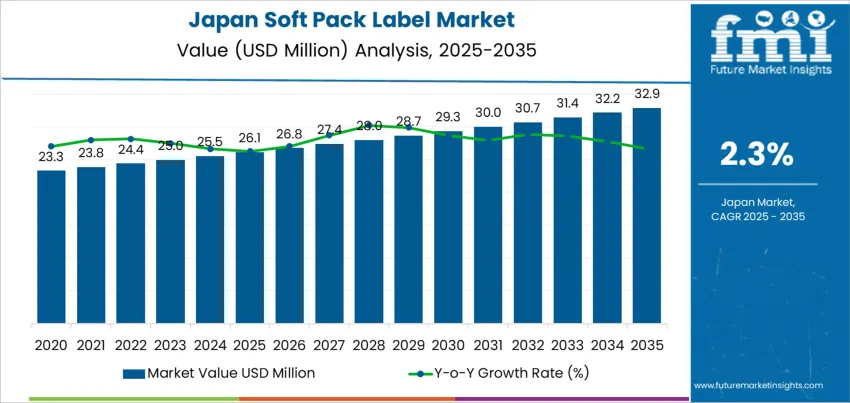
The demand for soft pack labels in Japan is expected to grow from USD 26.1 million in 2025 to USD 32.9 million by 2035, reflecting a compound annual growth rate (CAGR) of 2.3%. Soft pack labels, commonly used for flexible packaging in industries such as food, beverages, and pharmaceuticals, are critical for brand identification and product information.
As Japan continues to emphasize eco-friendly and efficient packaging solutions, the demand for soft pack labels is projected to rise steadily. These labels are valued for their adaptability, as they can be applied to a wide range of flexible packaging materials, making them an essential part of modern packaging systems.
Quick Stats of the Demand for Soft Pack Label in Japan
- Demand for Soft Pack Label in Japan Value (2025): USD 26.1 million
- Demand for Soft Pack Label in Japan Forecast Value (2035): USD 32.9 million
- Demand for Soft Pack Label in Japan Forecast CAGR (2025-2035): 2.3%
- Demand for Soft Pack Label in Japan Key Segments: Paper, Film, Foil
- Demand for Soft Pack Label in Japan Key Growth Regions: Kyushu & Okinawa, Kanto, Kansai, Chubu, Tohoku, Rest of Japan
- Demand for Soft Pack Label in Japan Top Players: Avery Dennison, CCL Industries, UPM Raflatac, Henkel, Toppan Printing
What is the Growth Forecast for the Demand for Soft Pack Label in Japan through 2035?
The rise of the flexible packaging sector in Japan, driven by consumer demand for convenience and portability, is a major factor fueling this growth. Soft pack labels are integral to packaging solutions for ready-to-eat meals, snacks, and beverages, which have seen increasing consumer demand.
The growing trend of personalized packaging, where brands focus on unique designs and custom labeling, is expected to continue driving the industry for soft pack labels. As product differentiation becomes increasingly important in the competitive Japanese industry, companies are increasingly turning to high-quality, customizable soft pack labels to attract consumers.
Japan’s increasing focus on durability is pushing the packaging industry toward eco-friendlier solutions. As brands seek to reduce their environmental footprint, the demand for recyclable, biodegradable, and eco-friendly soft pack labels is expected to rise. Innovations in label materials and printing technologies that align with durability goals will further contribute to the growth of the soft pack label segment.
From 2025 to 2030, the demand for soft pack labels in Japan is expected to grow from USD 26.1 million to USD 30.7 million, adding USD 4.6 million in value. This period will see steady growth, driven by the expansion of the flexible packaging sector, which caters to increasing consumer demand for convenience and portability. Soft pack labels play a crucial role in packaging for ready-to-eat meals, snacks, and beverages, which continue to grow in popularity. The trend toward personalized and customizable packaging solutions will further increase demand for high-quality soft pack labels. The shift toward eco-friendlier packaging options, as businesses seek to align with environmental goals, will also contribute to growth in this sector.
From 2030 to 2035, demand will continue to rise from USD 30.7 million to USD 32.9 million, contributing USD 2.2 million in value. The growth rate may slow slightly as the industry matures, but demand for soft pack labels will remain strong due to their essential role in flexible packaging. Eco-friendly, eco-friendly labels will become increasingly important as businesses continue to prioritize environmental responsibility. The growing adoption of flexible packaging in the food and beverage industries, combined with innovations in recyclable and biodegradable labeling solutions, will support steady demand. As the industry matures, the demand for high-quality, customizable, and eco-friendly labels will continue to drive the industry’s growth.
Demand for Soft Pack Label in Japan Key Takeaways
| Metric | Value |
|---|---|
| Demand for Soft Pack Label in Japan Value (2025) | USD 26.1 million |
| Demand for Soft Pack Label in Japan Forecast Value (2035) | USD 32.9 million |
| Demand for Soft Pack Label in Japan Forecast CAGR (2025-2035) | 2.3% |
Why is the Demand for Soft Pack Label in Japan Growing?
The demand for soft pack labels in Japan is growing as industries focus on improving packaging efficiency, aesthetics, and product labeling standards. Soft pack labels, commonly used in flexible packaging applications, provide versatile and lightweight solutions for labeling a wide variety of products, including food and beverages, personal care items, and household products. As consumer preferences continue to shift towards more convenient and eco-friendly packaging, the demand for soft pack labels is increasing.
A key driver behind this growth is the rising demand for flexible packaging solutions, which are increasingly being used due to their cost-effectiveness, lightweight properties, and ability to preserve product freshness. Soft pack labels are an integral part of this packaging type, offering clear branding, easy application, and the ability to cater to a variety of product sizes and shapes. As Japan’s packaging industry continues to innovate and adapt to the needs of the consumer goods sector, the demand for soft pack labels is expected to increase steadily.
The growing trend toward durability and eco-conscious packaging is also contributing to the industry expansion. Soft pack labels can be designed with environmentally friendly materials, which aligns with Japan's increasing focus on reducing plastic waste and minimizing environmental impact. As packaging manufacturers and brands prioritize eco-friendlier solutions, soft pack labels will continue to play a significant role in the overall packaging ecosystem. The demand for these labels is expected to grow through 2035, driven by both the functional and environmental advantages they offer.
What is the Segment-Wise Analysis of Demand for Soft Pack Labels in Japan?
Demand for soft pack labels in Japan is segmented by material type and end use. By material type, demand is divided into paper, film, and foil, with paper holding the largest share at 62%. The demand is also segmented by end use, including food and beverage, personal care and cosmetics, pharmaceuticals, and household products, with food and beverage leading at 44%. Regionally, demand is divided into Kanto, Kinki, Chubu, Kyushu & Okinawa, Tohoku, and the Rest of Japan.
Why Does Paper Lead the Demand for Soft Pack Labels in Japan?
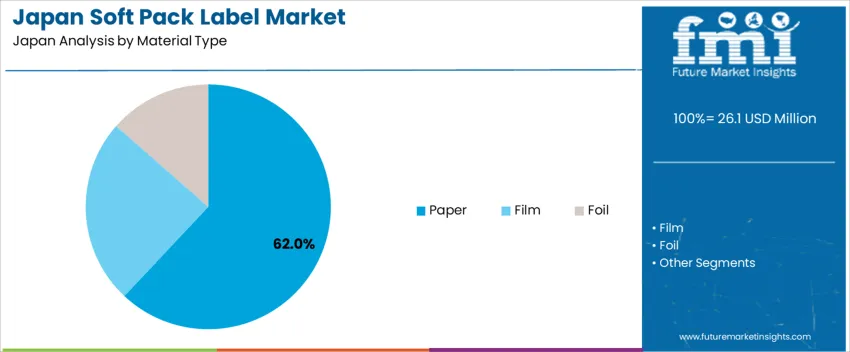
Paper accounts for 62% of the demand for soft pack labels in Japan due to its versatility, durability, and cost-effectiveness. Paper labels are widely used because they are easy to print on, can be produced in a variety of finishes, and offer a classic, natural aesthetic that appeals to both consumers and brands. The environmental benefits of paper also contribute to its popularity, as it is biodegradable and recyclable, aligning with Japan’s growing focus on durability.
In the food and beverage sector, where paper labels are often used for product packaging, they provide an appealing and eco-conscious option for consumers. Paper labels also work well with adhesive technologies, making them a practical choice for soft packaging applications. As consumer preference for eco-friendly packaging increases, paper will continue to lead the industry for soft pack labels in Japan, particularly in eco-friendly product categories.
Why Does the Food and Beverage Sector Lead the Demand for Soft Pack Labels in Japan?
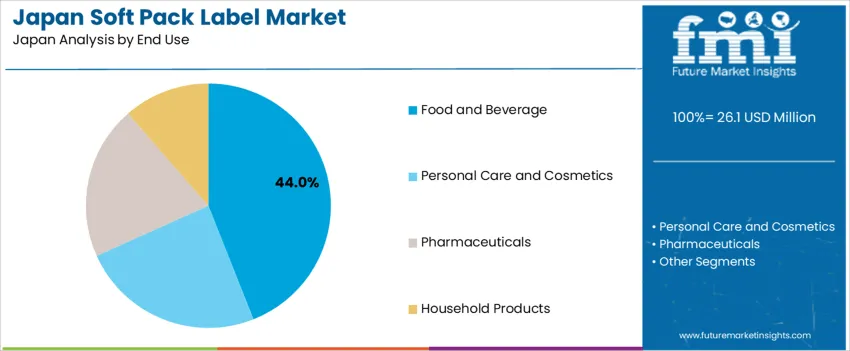
The food and beverage sector accounts for 44% of the demand for soft pack labels in Japan, driven by the need for high-quality, eye-catching labels that are both functional and informative. Soft pack labels are essential in this sector to convey product information such as ingredients, nutritional content, expiration dates, and branding, while also ensuring the packaging remains attractive to consumers. The demand for labels in food and beverage packaging is growing as the industry expands and consumer preference for product transparency increases.
The rising popularity of on-the-go and convenience food products, many of which use soft packaging, further boosts the demand for soft pack labels. The ability to print vibrant designs and detailed information on paper and film labels makes them ideal for food products, contributing to their strong presence in this sector. As consumer demand for quality and durability in food packaging continues to rise, soft pack labels will remain a vital component in the food and beverage industry.
What are the Key Trends, Drivers, and Restraints in Demand for Soft Pack Labels in Japan?
Demand for soft pack labels in Japan is rising in step with the growth of flexible packaging such as pouches, sachets, and lightweight bags used across food & beverage, personal care, pharmaceuticals, and other consumer goods segments. As more manufacturers shift from rigid containers to flexible pack formats for lower cost and better convenience, the need for reliable pressure-sensitive or adhesive labels that can adhere to flexible materials under filling, transport, and handling conditions has increased. The adoption of flexible packaging for single-serve, resealable, or portion-controlled products which Japan’s urban and convenience-oriented consumers favor further supports soft pack label demand.
Why is Demand for Soft Pack Labels Growing in Japan?
Demand is growing because Japanese consumers increasingly prefer products packaged in flexible, lightweight formats such as pouches or soft packs for convenience, portability, and ease of use. Products like ready-to-eat meals, snacks, instant foods, personal care items, and single-serve packs benefit from soft pack formats, which use less material, reduce waste, and are often cheaper to transport. To support these formats, manufacturers require flexible but durable labels that remain intact throughout shipping and retail display. As flexible packaging uptake increases driven by convenience, changing lifestyles, and e-commerce, so does demand for compatible soft pack labels.
How are Technological & Industry Innovations Driving Soft Pack Label Demand in Japan?
Technological advances in label materials, adhesives, and printing are enhancing the suitability and attractiveness of soft pack labels. Modern pressure-sensitive adhesives designed for low-surface-energy films, improved print quality, and the use of recyclable or compostable label materials meet both functional and environmental demands. Innovations such as resealable labels (zipper pouches), tamper-evident seals, and incorporation of smart packaging features such as QR codes and traceability further increase label value. As packaging firms adapt to stricter durability regulations and consumer demand for eco-friendly packaging, newer soft pack label technologies make flexible packaging more viable and appealing, driving increased adoption in Japan.
What are the Key Challenges and Risks That Could Limit Soft Pack Label Demand in Japan?
Despite strong growth prospects, some challenges may limit the expansion of soft pack label demand in Japan. Price fluctuations in raw materials like resins and adhesives increase production costs and may reduce margins, making manufacturers hesitant. Ensuring reliable adhesion and durability on diverse flexible substrates such as ultra-thin films or recyclable materials remains technically challenging, and improper labeling may lead to peeling or damage during transport, storage, or use. Rising regulatory and consumer pressure for eco-friendly and easy-to-recycle packaging may force a shift to label-free packaging solutions such as in-mould labeling or embossing, reducing demand for traditional soft pack labels.
What is the Regional Demand Outlook for Soft Pack Label in Japan?
| Region | CAGR (%) |
|---|---|
| Kyushu & Okinawa | 2.9% |
| Kanto | 2.7% |
| Kansai | 2.3% |
| Chubu | 2.1% |
| Tohoku | 1.8% |
| Rest of Japan | 1.7% |
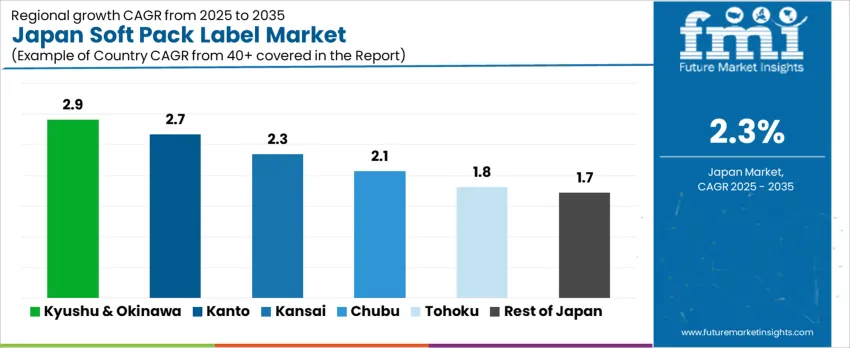
Demand for soft pack labels in Japan is growing steadily across regions, with Kyushu & Okinawa leading at a 2.9% CAGR, driven by the tourism and residential sectors. Kanto follows with a 2.7% CAGR, fueled by urbanization, durability trends, and a strong manufacturing base. Kansai shows a 2.3% CAGR, supported by the region’s tourism and home product industries. Chubu sees 2.1% growth, with rising demand from eco-conscious businesses. Tohoku and the Rest of Japan show more moderate growth at 1.8% and 1.7%, respectively, driven by changing consumer preferences and improved access to modern packaging solutions. As demand for eco-friendly, cost-effective packaging continues to rise, soft pack labels will continue to grow across Japan.
How is Demand for Soft Pack Labels Growing in Kyushu & Okinawa?
Kyushu & Okinawa leads the demand for soft pack labels, growing at a 2.9% CAGR. The region’s tourism sector, particularly in Okinawa, plays a key role in driving this demand, as hotels, resorts, and vacation rentals seek high-quality packaging solutions. With urban households increasingly embracing modern packaging solutions, the demand for soft pack labels grows. Consumers in the region prioritize packaging that offers convenience, durability, and eco-friendliness, which makes flexible packs and soft pack labels a preferred choice. The region's increasing focus on durability also drives the adoption of environmentally friendly packaging materials, supporting the growth of soft pack labels. As both tourism and local residential demand continue to rise, the demand for soft pack labels in Kyushu & Okinawa is expected to grow steadily.
Why is Demand for Soft Pack Labels Rising in Kanto?
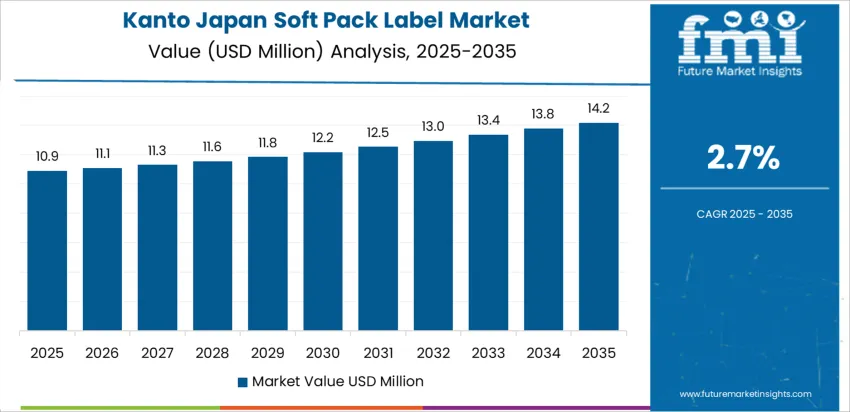
Kanto is experiencing steady demand for soft pack labels, growing at a 2.7% CAGR. With its large urban population, especially in Tokyo, and significant manufacturing activity, Kanto is a hub for consumer goods, food, and beverage industries that increasingly rely on flexible packaging. As more businesses turn to lightweight, cost-efficient, and eco-friendly packaging solutions, demand for soft pack labels is on the rise. The region’s focus on innovation and convenience is driving the adoption of eco-friendly and functional packaging, making soft pack labels a preferred option for businesses.
Kanto’s growing trend toward e-commerce, where packaging is key for shipping and shelf presentation, further increases the need for high-quality, efficient labels. As consumer demand for durability and convenience rises, Kanto’s demand for soft pack labels will continue to grow steadily.
How is Demand for Soft Pack Labels Expanding in Kansai?
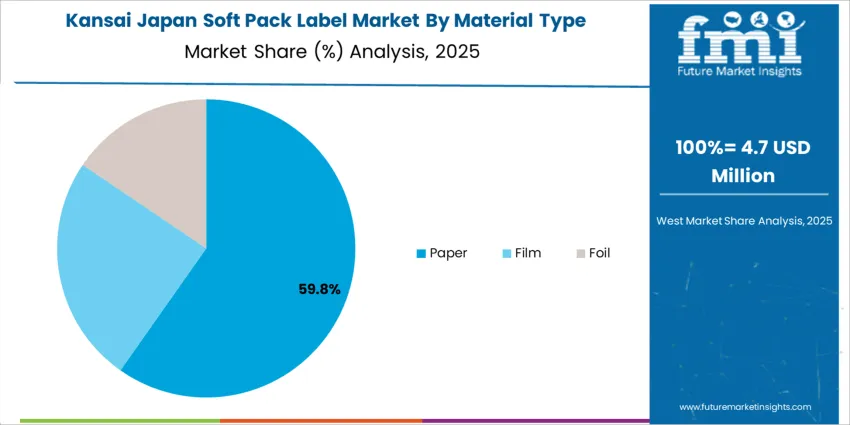
Kansai is seeing moderate demand for soft pack labels, with a 2.3% CAGR. The region's manufacturing base, particularly in Osaka and Kyoto, increasingly turns to flexible packaging to meet consumer preferences for convenience, eco-friendliness, and cost efficiency. With rising demand for packaged foods, beverages, and personal care products, businesses in Kansai are adopting soft pack labels to enhance their packaging's functionality and aesthetic appeal.
As durability becomes a key focus, there is also growing demand for eco-friendly soft pack labels. Kansai's vibrant hospitality sector, with its increasing number of boutique hotels and guesthouses, further boosts the need for attractive, functional packaging for guest amenities. As consumer expectations shift toward high-quality, eco-conscious products, demand for soft pack labels in Kansai is expected to grow at a moderate pace.
Why is Demand for Soft Pack Labels Growing in Chubu?
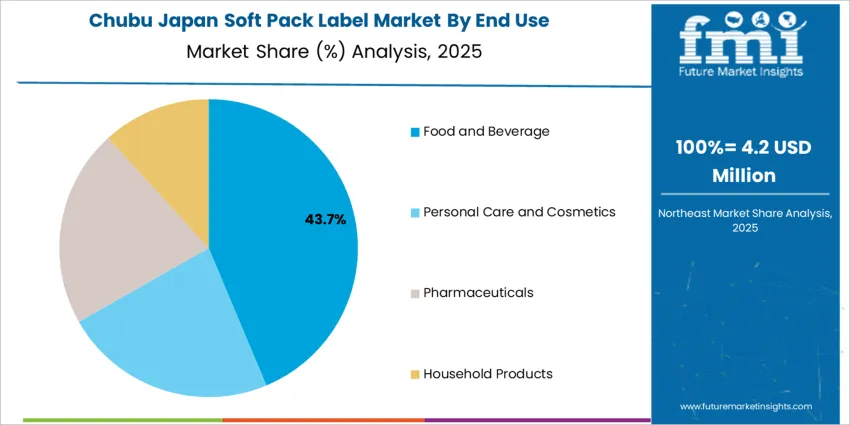
Chubu is experiencing steady demand for soft pack labels, with a 2.1% CAGR. The region's mix of urbanization and industrial activity in cities like Nagoya is contributing to the growing demand for flexible packaging solutions. As more businesses, particularly in the food and beverage sector, seek packaging that is lightweight, cost-effective, and eco-friendly, soft pack labels are becoming increasingly popular. The region's growing focus on durability, coupled with rising consumer preferences for eco-friendly products, supports the adoption of eco-conscious soft pack labels.
Chubu’s thriving small- and medium-sized enterprises (SMEs) are adopting soft pack labels to improve product presentation while reducing packaging costs. As demand for both efficient and eco-friendly packaging solutions increases, Chubu’s demand for soft pack labels is expected to grow steadily.
How is Demand for Soft Pack Labels Expanding in Tohoku?
Tohoku is seeing moderate demand for soft pack labels, with a 1.8% CAGR. The region’s relatively smaller population and slower industrial growth compared to urban areas mean that demand for soft pack labels is more gradual. However, as consumer habits shift toward more convenient, ready-to-consume products, the need for flexible packaging solutions is growing steadily. Tohoku’s agricultural industry, which produces many locally grown products, also contributes to the demand for soft pack labels as packaging solutions for fresh produce and processed food products.
As consumer preferences evolve toward healthier, eco-conscious living, there is also an increasing interest in eco-friendly packaging, including soft pack labels made from biodegradable materials. As these trends continue, demand for soft pack labels in Tohoku is expected to grow slowly but steadily.
Why is Demand for Soft Pack Labels Steady in the Rest of Japan?
The Rest of Japan is experiencing steady demand for soft pack labels, with a 1.7% CAGR. While the industry is smaller than in major urban regions, there is a consistent increase in demand as local businesses and consumers gradually shift toward modern, eco-friendly packaging solutions. The demand for flexible packaging, including soft pack labels, is being driven by smaller businesses, particularly in rural and suburban areas, as they adopt more cost-effective and eco-friendly alternatives to traditional rigid packaging.
As local tourism and small-scale food production continue to grow, so does the demand for soft pack labels for packaging convenience foods and local specialties. As access to e-commerce improves, and the focus on durability continues to rise, the Rest of Japan will see steady but consistent growth in soft pack label adoption.
What is the Competitive Landscape of Soft Pack Label Demand in Japan?
The demand for soft pack labels in Japan is rising as the flexible packaging industry grows, driven by consumer preference for lightweight, space-efficient, and convenient packaging solutions. Soft pack labels are crucial for applications in various industries, including food, beverage, cosmetics, pharmaceuticals, and household products. As more companies shift from rigid packaging to flexible pouches and sachets, the need for labels that can securely adhere to flexible materials has increased. This shift reflects broader trends in packaging that prioritize durability, efficiency, and product convenience.
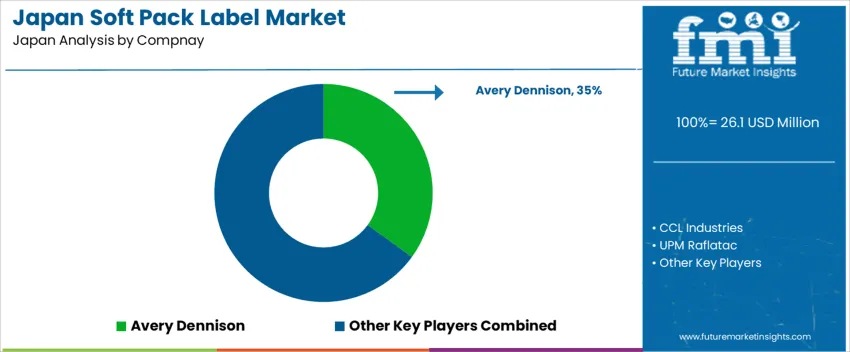
Leading companies in the soft pack label industry in Japan include Avery Dennison, CCL Industries, UPM Raflatac, Henkel, and Toppan Printing. Avery Dennison holds the largest industry share of 35.0%, providing a broad range of label solutions designed to work effectively with flexible packaging. Other key players, such as CCL Industries, UPM Raflatac, and Henkel, offer advanced label materials and adhesive technologies that are optimized for flexible surfaces and high-performance applications. Toppan Printing is another significant provider, known for its expertise in high-quality printing and custom label solutions that cater to the growing demand for flexible and eco-friendly packaging solutions.
Competition in the soft pack label industry is driven by several factors, including the growing demand for flexible packaging, advancements in adhesive technologies, and the need for eco-friendly packaging solutions. Companies compete by offering products that provide reliable adhesion to flexible materials, durability under varying conditions, and compatibility with various printing and branding technologies. As environmental concerns rise, companies are also focusing on eco-friendly materials and eco-friendly production methods.
Key Players in Japan Soft Pack Label Demand
- Avery Dennison
- CCL Industries
- UPM Raflatac
- Henkel
- Toppan Printing
Scope of Report
| Items | Values |
|---|---|
| Quantitative Units (2025) | USD million |
| Material Type | Paper, Film, Foil |
| End-Use | Food and Beverage, Personal Care and Cosmetics, Pharmaceuticals, Household Products |
| Region | Kyushu & Okinawa, Kanto, Kansai, Chubu, Tohoku, Rest of Japan |
| Countries Covered | Japan |
| Key Companies Profiled | Avery Dennison, CCL Industries, UPM Raflatac, Henkel, Toppan Printing |
| Additional Attributes | Dollar sales by material type and end-use; regional CAGR and adoption trends; demand for soft pack labels in food, cosmetics, and pharmaceutical sectors; growth in eco-friendly packaging trends; vendor offerings in labeling and packaging technologies; regulatory influences on packaging |
Japan Soft Pack Label Demand by Key Segments
Material Type
- Paper
- Film
- Foil
End Use
- Food and Beverage
- Personal Care and Cosmetics
- Pharmaceuticals
- Household Products
Region
- Kyushu & Okinawa
- Kanto
- Kansai
- Chubu
- Tohoku
- Rest of Japan
Frequently Asked Questions
How big is the demand for soft pack label in Japan in 2025?
The demand for soft pack label in Japan is estimated to be valued at USD 26.1 million in 2025.
What will be the size of soft pack label in Japan in 2035?
The market size for the soft pack label in Japan is projected to reach USD 32.9 million by 2035.
How much will be the demand for soft pack label in Japan growth between 2025 and 2035?
The demand for soft pack label in Japan is expected to grow at a 2.3% CAGR between 2025 and 2035.
What are the key product types in the soft pack label in Japan?
The key product types in soft pack label in Japan are paper, film and foil.
Which end use segment is expected to contribute significant share in the soft pack label in Japan in 2025?
In terms of end use, food and beverage segment is expected to command 44.0% share in the soft pack label in Japan in 2025.
Preview the report firsthand - request a free sample
Get SampleGet the brochure for pricing and purchase details.
Get PDFTable of Content
- Executive Summary
- Japan Market Outlook
- Demand-side Trends
- Supply-side Trends
- Technology Roadmap Analysis
- Analysis and Recommendations
- Market Overview
- Market Coverage / Taxonomy
- Market Definition / Scope / Limitations
- Market Background
- Market Dynamics
- Drivers
- Restraints
- Opportunity
- Trends
- Scenario Forecast
- Demand in Optimistic Scenario
- Demand in Likely Scenario
- Demand in Conservative Scenario
- Opportunity Map Analysis
- Product Life Cycle Analysis
- Supply Chain Analysis
- Investment Feasibility Matrix
- Value Chain Analysis
- PESTLE and Porter’s Analysis
- Regulatory Landscape
- Regional Parent Market Outlook
- Production and Consumption Statistics
- Import and Export Statistics
- Market Dynamics
- Japan Market Analysis 2020 to 2024 and Forecast, 2025 to 2035
- Historical Market Size Value (USD Million) Analysis, 2020 to 2024
- Current and Future Market Size Value (USD Million) Projections, 2025 to 2035
- Y-o-Y Growth Trend Analysis
- Absolute $ Opportunity Analysis
- Japan Market Pricing Analysis 2020 to 2024 and Forecast 2025 to 2035
- Japan Market Analysis 2020 to 2024 and Forecast 2025 to 2035, By Material Type
- Introduction / Key Findings
- Historical Market Size Value (USD Million) Analysis By Material Type , 2020 to 2024
- Current and Future Market Size Value (USD Million) Analysis and Forecast By Material Type , 2025 to 2035
- Paper
- Film
- Foil
- Y-o-Y Growth Trend Analysis By Material Type , 2020 to 2024
- Absolute $ Opportunity Analysis By Material Type , 2025 to 2035
- Japan Market Analysis 2020 to 2024 and Forecast 2025 to 2035, By End Use
- Introduction / Key Findings
- Historical Market Size Value (USD Million) Analysis By End Use, 2020 to 2024
- Current and Future Market Size Value (USD Million) Analysis and Forecast By End Use, 2025 to 2035
- Food and Beverage
- Personal Care and Cosmetics
- Pharmaceuticals
- Household Products
- Y-o-Y Growth Trend Analysis By End Use, 2020 to 2024
- Absolute $ Opportunity Analysis By End Use, 2025 to 2035
- Market Structure Analysis
- Competition Dashboard
- Competition Benchmarking
- Market Share Analysis of Top Players
- By Regional
- By Material Type
- By End Use
- Competition Analysis
- Competition Deep Dive
- Avery Dennison
- Overview
- Product Portfolio
- Profitability by Market Segments (Product/Age /Sales Channel/Region)
- Sales Footprint
- Strategy Overview
- Marketing Strategy
- Product Strategy
- Channel Strategy
- CCL Industries
- UPM Raflatac
- Henkel
- Toppan Printing
- Avery Dennison
- Competition Deep Dive
- Assumptions & Acronyms Used
- Research Methodology


