

- Industry Size (2026)
- USD 1.8 Bn
- Forecast (2036)
- USD 3.4 Bn
- CAGR (2026 to 2036)
- 6.5%
Low-Temperature Laundry Chemicals Market Forecast and Outlook 2026 to 2036
The global low-temperature laundry chemicals market is experiencing strong growth, driven by the increasing demand for energy-efficient and eco-friendly cleaning solutions across residential, commercial, and industrial laundry sectors. With a projected market value of USD 3.4 billion by 2036, up from USD 1.8 billion in 2026, the market is expected to grow at a CAGR of 6.5%. Low-temperature detergents are the leading product, accounting for 44% of the market, due to their ability to effectively clean at lower temperatures while saving energy. This is particularly appealing to the household/consumer laundry segment, which holds 36% of the market share.
Quick Stats for Low-Temperature Laundry Chemicals Market
- Low-Temperature Laundry Chemicals Market Value (2026): USD 1.8 billion
- Low-Temperature Laundry Chemicals Market Forecast Value (2036): USD 3.4 billion
- Low-Temperature Laundry Chemicals Market Forecast CAGR (2026-2036): 6.5%
- Leading Product Type in Low-Temperature Laundry Chemicals Market: Low-Temperature Detergents
- Key Growth Regions in Low-Temperature Laundry Chemicals Market: Asia Pacific
- Top Players in Low-Temperature Laundry Chemicals Market: Procter & Gamble, Henkel, Unilever, Kao Corporation, Church & Dwight, Ecolab, Diversey, Reckitt, Lion Corporation, Seventh Generation
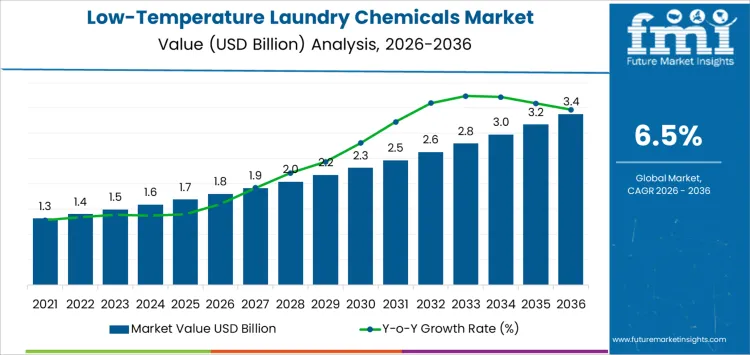
The key drivers of the market include the growing emphasis on sustainability, energy-saving programs, and improved fabric care. The shift towards energy-efficient laundry practices is expected to accelerate as industries like hospitality, healthcare, and retail increasingly prioritize energy conservation and eco-conscious solutions. Innovations in detergent formulations and advancements in smart laundry technologies further support market growth. Countries such as China, Brazil, the USA, and Germany are witnessing strong market growth, with China leading at a 7.5% CAGR, driven by rapid urbanization and an expanding middle class seeking energy-efficient laundry solutions.
Low-Temperature Laundry Chemicals Market Key Takeaways
| Metric | Value |
|---|---|
| Industry Value (2026) | USD 1.8 billion |
| Forecast Value (2036) | USD 3.4 billion |
| Forecast CAGR (2026-2036) | 6.5% |
How is the Global Low-Temperature Laundry Chemicals Sector Evolving?
The global low-temperature laundry chemicals market is growing as demand for energy-efficient and environmentally friendly cleaning solutions increases across residential, commercial, and industrial laundry sectors. Low-temperature laundry chemicals are formulated to work effectively at lower washing temperatures, reducing energy consumption and lowering carbon footprints. This is particularly appealing in sectors where sustainability is a priority, as these chemicals enable laundry operations to meet performance standards while minimizing environmental impact. Initially, low-temperature laundry chemicals were mainly adopted by industrial laundry services, but over time, their usage has expanded to residential and commercial applications due to growing environmental awareness and cost-saving concerns.
The market for low-temperature laundry chemicals is poised for continued growth, supported by increasing awareness of energy consumption and the need for sustainable laundry solutions. Innovations in detergent formulations that enhance cleaning power at lower temperatures without compromising fabric care will further boost demand. As regulatory pressures around sustainability increase, manufacturers are focusing on developing eco-friendlier and biodegradable products. Challenges such as maintaining high cleaning efficacy and overcoming consumer resistance to lower-temperature washing practices may impact market growth.
What Is the Segment-Wise Analysis for the Global Low-Temperature Laundry Chemicals Market?
The global low-temperature laundry chemicals market is shaped by product types and end-use laundry types. Low-temperature detergents lead with a 44% share, as they are specifically formulated to perform effectively at lower washing temperatures, ensuring energy efficiency and fabric care. Other significant products include low-temperature bleach/disinfecting boosters, low-temperature enzyme systems, and other additives designed for specialized cleaning. In terms of end-use sectors, household/consumer laundry accounts for 36% of the market, driven by the growing consumer preference for energy-efficient laundry solutions.
Why Do Low-Temperature Detergents Lead the Laundry Chemicals Market?
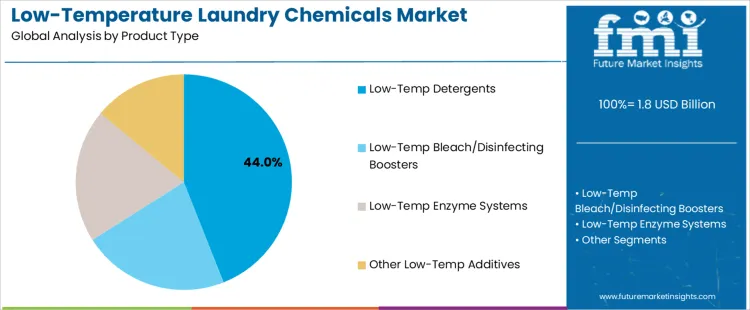
Low-temperature detergents hold a 44% share of the global low-temperature laundry chemicals market due to their ability to provide effective cleaning performance at reduced washing temperatures. These detergents are essential for energy-efficient laundry practices, helping consumers and businesses save on energy costs while still achieving high cleaning standards. The growing demand for sustainable laundry solutions that reduce energy consumption and environmental impact further drives the popularity of low-temperature detergents. Their versatility, combined with the need for effective stain removal and fabric care at lower temperatures, makes them the leading product in the market.
Why Does the Household Sector Hold the Largest Share?
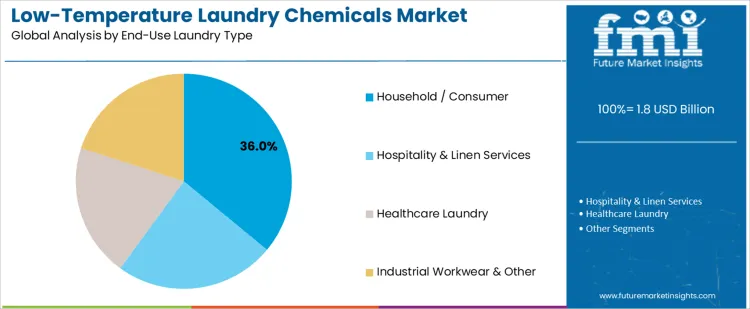
The household/consumer laundry sector accounts for 36% of the global low-temperature laundry chemicals market, driven by the increasing consumer demand for energy-efficient laundry solutions. With rising energy costs and growing environmental awareness, consumers are actively seeking products that can provide excellent cleaning results at lower washing temperatures. Low-temperature detergents, bleach boosters, and enzyme systems are gaining popularity in residential settings, where consumers aim to reduce their carbon footprint while maintaining clean and fresh laundry. The need for cost-effective, eco-friendly, and high-performance laundry solutions continues to drive the household sector's dominance in the market.
What is Shaping the Low Temperature Laundry Chemicals Market?
The low temperature laundry chemicals market is shaped by the growing need for energy efficient and fabric gentle cleaning solutions. As businesses and consumers seek to reduce energy consumption and utility costs, there is increasing demand for detergents and additives that deliver high cleaning performance at lower wash temperatures. Innovations in chemical formulation that ensure stain removal, hygiene, and fabric care even in cool water are advancing market growth. The trend toward sustainability and reduced carbon footprint further encourages the adoption of low temperature laundry chemicals across commercial and residential laundry settings.
What Are the Key Drivers for the Low Temperature Laundry Chemicals Market?
The market for low temperature laundry chemicals is primarily driven by the rising focus on energy conservation and environmental concerns. Washing at lower temperatures significantly reduces electricity usage, leading to cost savings and lower greenhouse gas emissions for both households and commercial laundry services. Improvements in detergent and additive technologies now enable effective stain removal, fabric care, and hygiene performance even in cold water. This makes low temperature laundry chemicals attractive to sectors like hospitality, healthcare, and industrial laundry, where operational efficiency and sustainability are priorities.
What Are the Key Trends Shaping the Low Temperature Laundry Chemicals Market?
Key trends in the low temperature laundry chemicals market include the rising preference for eco friendly and biodegradable formulations that support reduced water and energy use. Manufacturers are innovating with concentrated products that offer powerful cleaning performance in cold washes, reducing packaging waste and transportation emissions. The increasing adoption of advanced laundry technologies and smart washing machines that optimize cleaning cycles for low temperatures is also influencing market growth. S initiatives by businesses and regulatory encouragement for energy saving practices are boosting demand for low temperature laundry solutions.
What is the Growth Outlook for the Low-Temperature Laundry Chemicals Market by Country?
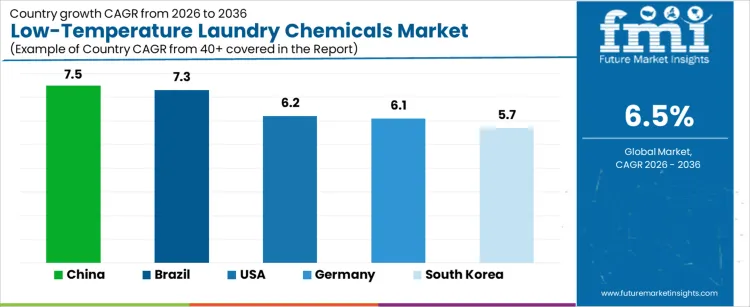
| Country | CAGR (%) |
|---|---|
| USA | 6.2% |
| Germany | 6.1% |
| China | 7.5% |
| South Korea | 5.7% |
| Brazil | 7.3% |
The low-temperature laundry chemicals market is seeing strong growth globally, with China leading at a 7.5% CAGR, driven by increasing demand for energy-efficient cleaning solutions in both commercial and residential sectors. Brazil follows closely at 7.3%, supported by the growing awareness of sustainability and energy-saving solutions. The USA and Germany show moderate growth at 6.2% and 6.1%, respectively, driven by the adoption of energy-efficient laundry solutions across various industries. South Korea’s market is growing at 5.7%, with demand driven by the shift toward eco-friendly and cost-effective laundry products.
Why is the Low-Temperature Laundry Chemicals Market Growing in China?
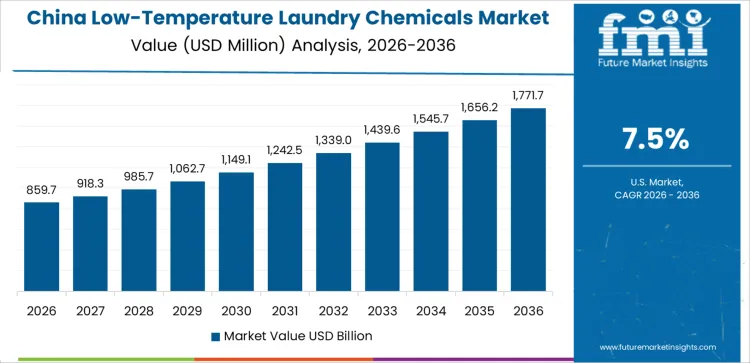
China’s low-temperature laundry chemicals market is growing at a 7.5% CAGR, driven by the rising demand for energy-efficient and environmentally friendly cleaning solutions. As China’s commercial laundry industry grows, particularly in hotels, hospitals, and manufacturing sectors, there is increasing adoption of low-temperature washing technologies that save energy and reduce costs. The growing middle class and their preference for eco-conscious products are contributing to the market’s expansion. With increasing urbanization and the rise of industrial cleaning, low-temperature laundry chemicals offer significant benefits in terms of reduced carbon footprints and energy consumption, which aligns with China’s sustainability goals. As energy efficiency becomes more important, especially in large-scale commercial operations, China’s market for low-temperature laundry chemicals is expected to grow robustly.
What is Contributing to the Growth of the Low-Temperature Laundry Chemicals Market in Brazil?
Brazil’s low-temperature laundry chemicals market is growing at a 7.3% CAGR, driven by the growing need for cost-effective and energy-efficient cleaning solutions. As Brazil’s healthcare, hospitality, and manufacturing sectors continue to expand, there is increasing demand for laundry solutions that reduce energy consumption while maintaining high cleaning performance. With rising awareness about environmental sustainability, consumers and businesses alike are seeking greener, more energy-efficient alternatives. The cost savings associated with low-temperature laundry chemicals also appeal to businesses looking to cut operational expenses. With Brazil’s strong focus on energy efficiency and sustainability, the demand for low-temperature laundry chemicals is expected to grow steadily, supported by both commercial and residential adoption.
How is the Low-Temperature Laundry Chemicals Market Expanding in the USA?
The USA’s low-temperature laundry chemicals market is growing at a 6.2% CAGR, driven by the increasing focus on energy efficiency and sustainability in both commercial and residential sectors. The adoption of low-temperature washing technologies in the hospitality, healthcare, and retail industries is contributing to the growth, as these sectors prioritize both cost-effectiveness and eco-conscious solutions. The growing consumer awareness of environmental issues and energy consumption is influencing the demand for eco-friendly and low-energy cleaning products. As businesses seek ways to reduce their environmental impact and improve operational efficiency, low-temperature laundry chemicals are becoming more popular. The USA’s strong focus on sustainability and energy conservation ensures steady market growth for these solutions.
Why is the Low-Temperature Laundry Chemicals Market Growing in South Korea?
South Korea’s low-temperature laundry chemicals market is growing at a 5.7% CAGR, supported by the rising demand for energy-efficient cleaning solutions. As South Korea’s healthcare, hospitality, and commercial sectors continue to expand, the need for cost-effective, energy-saving laundry solutions is increasing. South Korea’s focus on sustainability and eco-friendly products is contributing to the demand for low-temperature laundry chemicals, as they offer reduced energy consumption and lower environmental impact. With regulations on energy efficiency and a strong public interest in reducing carbon footprints, businesses in South Korea are increasingly adopting low-temperature laundry chemicals. As consumer preferences shift toward greener alternatives, South Korea’s market for these chemicals is expected to continue growing steadily.
What is Shaping the Low-Temperature Laundry Chemicals Market Growth in Germany?
Germany’s low-temperature laundry chemicals market is growing at a 6.1% CAGR, driven by the increasing demand for energy-efficient cleaning solutions in both the residential and commercial sectors. Germany’s strong commitment to sustainability and energy conservation is fueling the adoption of low-temperature laundry chemicals, particularly in industries such as hospitality, healthcare, and retail. As energy costs rise, businesses are increasingly looking for solutions that reduce operational costs while maintaining high cleaning performance. Germany’s regulatory framework, which promotes sustainability and reduces carbon footprints, is supporting the market’s growth. As consumer and business demand for eco-friendly and cost-effective laundry solutions continues to rise, Germany’s market for low-temperature laundry chemicals is expected to expand steadily.
How Do Major Players Compete in the Low-Temperature Laundry Chemicals Market?
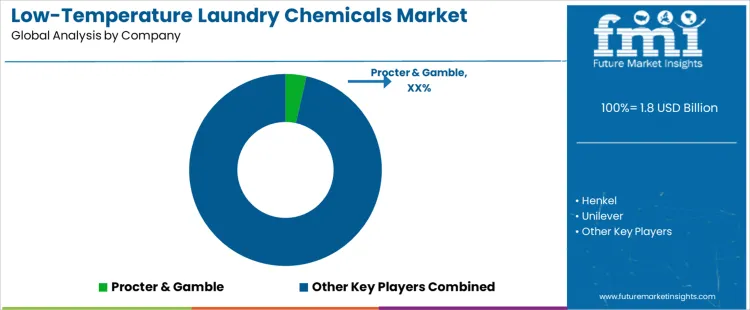
The low-temperature laundry chemicals market is expanding as consumers and businesses seek energy-efficient cleaning solutions. Leading players like Procter & Gamble, Henkel, and Unilever dominate with products that deliver strong performance at lower washing temperatures. Procter & Gamble’s Tide and Henkel’s Persil brands offer effective detergents that excel in cold-water washes, ensuring both powerful stain removal and fabric care. Unilever’s Persil and Skip lines emphasize sustainability, targeting eco-conscious consumers looking for energy-saving options without sacrificing cleaning power.
Kao Corporation, Church & Dwight, and Ecolab also compete by offering specialized low-temperature solutions. Kao’s fabric care products are designed to provide exceptional stain removal in cooler water while protecting fabric integrity. Church & Dwight’s Arm & Hammer detergents activate at lower temperatures, ensuring high performance without the need for hot water. Ecolab focuses on commercial laundry applications, providing low-temperature detergents that meet the needs of large-scale operations while promoting energy efficiency.
Diversey, Reckitt, Lion Corporation, and Seventh Generation contribute by focusing on eco-friendly, high-performance products. Diversey caters to healthcare and institutional markets with low-temperature detergents that maintain hygiene and cleanliness. Reckitt’s Lysol brand offers disinfecting power at low temperatures, while Lion Corporation and Seventh Generation focus on plant-based, biodegradable solutions, appealing to environmentally conscious consumers. These players continue to innovate, meeting the demand for efficient, sustainable laundry solutions in a rapidly growing market.
Key Players in Low-Temperature Laundry Chemicals Market
- Procter & Gamble
- Henkel
- Unilever
- Kao Corporation
- Church & Dwight
- Ecolab
- Diversey
- Reckitt
- Lion Corporation
- Seventh Generation
Scope of Report
| Items | Values |
|---|---|
| Quantitative Units (2026) | USD billion |
| End Use Application | Household / Consumer, Hospitality & Linen Services, Healthcare Laundry, Industrial Workwear & Other |
| Product Type | Low-Temp Detergents, Low-Temp Bleach/Disinfecting Boosters, Low-Temp Enzyme Systems, Other Low-Temp Additives |
| Target Temperature Range | ≤30°C, 31–40°C, 41–50°C, Other Ranges |
| Benefit Driver | Energy-Saving Programs, Fabric Care / Color Protection, Quick Cycle Performance, Other Drivers |
| End-Use Sector | Household / Consumer, Hospitality & Linen Services, Healthcare Laundry, Industrial Workwear & Other |
| Regions Covered | Asia Pacific, Europe, North America, Latin America, Middle East & Africa |
| Countries Covered | USA, China, Japan, South Korea, India, Australia & New Zealand, ASEAN, Germany, UK, France, Italy, Spain, Nordic, BENELUX, Brazil, Chile, Mexico, Saudi Arabia, Other GCC Countries, Turkey, South Africa, Other African Union, Rest of Regions |
| Key Companies Profiled | Procter & Gamble, Henkel, Unilever, Kao Corporation, Church & Dwight, Ecolab, Diversey, Reckitt, Lion Corporation, Seventh Generation |
| Additional Attributes | Dollar sales by product type, target temperature range, and benefit driver; regional CAGR and growth outlook; distribution channels including retail, DTC, e-commerce, and institutional buyers; product form prevalence in low-temp detergents, boosters, and enzyme systems; innovation trends in energy-saving and fabric care; competitive positioning of global vs regional suppliers. |
Low-Temperature Laundry Chemicals Market by Segments
Product Type:
- Low-Temp Detergents
- Low-Temp Bleach/Disinfecting Boosters
- Low-Temp Enzyme Systems
- Other Low-Temp Additives
Target Temperature Range:
- ≤30°C
- 31–40°C
- 41–50°C
- Other Ranges
End-Use Laundry Type:
- Household / Consumer
- Hospitality & Linen Services
- Healthcare Laundry
- Industrial Workwear & Other
Benefit Driver:
- Energy-Saving Programs
- Fabric Care / Color Protection
- Quick Cycle Performance
- Other Drivers
Region:
- Asia Pacific
- China
- Japan
- South Korea
- India
- Australia & New Zealand
- ASEAN
- Rest of Asia Pacific
- Europe
- Germany
- United Kingdom
- France
- Italy
- Spain
- Nordic
- BENELUX
- Rest of Europe
- North America
- United States
- Canada
- Mexico
- Latin America
- Brazil
- Chile
- Rest of Latin America
- Middle East & Africa
- Kingdom of Saudi Arabia
- Other GCC Countries
- Turkey
- South Africa
- Other African Union
- Rest of Middle East & Africa
Frequently Asked Questions
How big is the low-temperature laundry chemicals market in 2026?
The global low-temperature laundry chemicals market is estimated to be valued at USD 1.8 billion in 2026.
What will be the size of low-temperature laundry chemicals market in 2036?
The market size for the low-temperature laundry chemicals market is projected to reach USD 3.4 billion by 2036.
How much will be the low-temperature laundry chemicals market growth between 2026 and 2036?
The low-temperature laundry chemicals market is expected to grow at a 6.5% CAGR between 2026 and 2036.
What are the key product types in the low-temperature laundry chemicals market?
The key product types in low-temperature laundry chemicals market are low-temp detergents, low-temp bleach/disinfecting boosters, low-temp enzyme systems and other low-temp additives.
Which target temperature range segment to contribute significant share in the low-temperature laundry chemicals market in 2026?
In terms of target temperature range, 31–40°c segment to command 44.0% share in the low-temperature laundry chemicals market in 2026.
Preview the report firsthand - request a free sample
Get SampleGet the brochure for pricing and purchase details.
Get PDFTable of Content
- Executive Summary
- Global Market Outlook
- Demand-side Trends
- Supply-side Trends
- Technology Roadmap Analysis
- Analysis and Recommendations
- Market Overview
- Market Coverage / Taxonomy
- Market Definition / Scope / Limitations
- Market Background
- Market Dynamics
- Drivers
- Restraints
- Opportunity
- Trends
- Scenario Forecast
- Demand in Optimistic Scenario
- Demand in Likely Scenario
- Demand in Conservative Scenario
- Opportunity Map Analysis
- Product Life Cycle Analysis
- Supply Chain Analysis
- Investment Feasibility Matrix
- Value Chain Analysis
- PESTLE and Porter’s Analysis
- Regulatory Landscape
- Regional Parent Market Outlook
- Production and Consumption Statistics
- Import and Export Statistics
- Market Dynamics
- Global Market Analysis 2021 to 2025 and Forecast, 2026 to 2036
- Historical Market Size Value (USD Million) Analysis, 2021 to 2025
- Current and Future Market Size Value (USD Million) Projections, 2026 to 2036
- Y-o-Y Growth Trend Analysis
- Absolute $ Opportunity Analysis
- Global Market Pricing Analysis 2021 to 2025 and Forecast 2026 to 2036
- Global Market Analysis 2021 to 2025 and Forecast 2026 to 2036, By Product Type
- Introduction / Key Findings
- Historical Market Size Value (USD Million) Analysis By Product Type , 2021 to 2025
- Current and Future Market Size Value (USD Million) Analysis and Forecast By Product Type , 2026 to 2036
- Low-Temp Detergents
- Low-Temp Bleach/Disinfecting Boosters
- Low-Temp Enzyme Systems
- Other Low-Temp Additives
- Y-o-Y Growth Trend Analysis By Product Type , 2021 to 2025
- Absolute $ Opportunity Analysis By Product Type , 2026 to 2036
- Global Market Analysis 2021 to 2025 and Forecast 2026 to 2036, By Target Temperature Range
- Introduction / Key Findings
- Historical Market Size Value (USD Million) Analysis By Target Temperature Range, 2021 to 2025
- Current and Future Market Size Value (USD Million) Analysis and Forecast By Target Temperature Range, 2026 to 2036
- 31–40°C
- ≤30°C
- 41–50°C
- Other Ranges
- Y-o-Y Growth Trend Analysis By Target Temperature Range, 2021 to 2025
- Absolute $ Opportunity Analysis By Target Temperature Range, 2026 to 2036
- Global Market Analysis 2021 to 2025 and Forecast 2026 to 2036, By End-Use Laundry Type
- Introduction / Key Findings
- Historical Market Size Value (USD Million) Analysis By End-Use Laundry Type, 2021 to 2025
- Current and Future Market Size Value (USD Million) Analysis and Forecast By End-Use Laundry Type, 2026 to 2036
- Household / Consumer
- Hospitality & Linen Services
- Healthcare Laundry
- Industrial Workwear & Other
- Y-o-Y Growth Trend Analysis By End-Use Laundry Type, 2021 to 2025
- Absolute $ Opportunity Analysis By End-Use Laundry Type, 2026 to 2036
- Global Market Analysis 2021 to 2025 and Forecast 2026 to 2036, By Benefit Driver
- Introduction / Key Findings
- Historical Market Size Value (USD Million) Analysis By Benefit Driver, 2021 to 2025
- Current and Future Market Size Value (USD Million) Analysis and Forecast By Benefit Driver, 2026 to 2036
- Energy-Saving Programs
- Fabric Care / Color Protection
- Quick Cycle Performance
- Other Drivers
- Y-o-Y Growth Trend Analysis By Benefit Driver, 2021 to 2025
- Absolute $ Opportunity Analysis By Benefit Driver, 2026 to 2036
- Global Market Analysis 2021 to 2025 and Forecast 2026 to 2036, By Region
- Introduction
- Historical Market Size Value (USD Million) Analysis By Region, 2021 to 2025
- Current Market Size Value (USD Million) Analysis and Forecast By Region, 2026 to 2036
- North America
- Latin America
- Western Europe
- Eastern Europe
- East Asia
- South Asia and Pacific
- Middle East & Africa
- Market Attractiveness Analysis By Region
- North America Market Analysis 2021 to 2025 and Forecast 2026 to 2036, By Country
- Historical Market Size Value (USD Million) Trend Analysis By Market Taxonomy, 2021 to 2025
- Market Size Value (USD Million) Forecast By Market Taxonomy, 2026 to 2036
- By Country
- USA
- Canada
- Mexico
- By Product Type
- By Target Temperature Range
- By End-Use Laundry Type
- By Benefit Driver
- By Country
- Market Attractiveness Analysis
- By Country
- By Product Type
- By Target Temperature Range
- By End-Use Laundry Type
- By Benefit Driver
- Key Takeaways
- Latin America Market Analysis 2021 to 2025 and Forecast 2026 to 2036, By Country
- Historical Market Size Value (USD Million) Trend Analysis By Market Taxonomy, 2021 to 2025
- Market Size Value (USD Million) Forecast By Market Taxonomy, 2026 to 2036
- By Country
- Brazil
- Chile
- Rest of Latin America
- By Product Type
- By Target Temperature Range
- By End-Use Laundry Type
- By Benefit Driver
- By Country
- Market Attractiveness Analysis
- By Country
- By Product Type
- By Target Temperature Range
- By End-Use Laundry Type
- By Benefit Driver
- Key Takeaways
- Western Europe Market Analysis 2021 to 2025 and Forecast 2026 to 2036, By Country
- Historical Market Size Value (USD Million) Trend Analysis By Market Taxonomy, 2021 to 2025
- Market Size Value (USD Million) Forecast By Market Taxonomy, 2026 to 2036
- By Country
- Germany
- UK
- Italy
- Spain
- France
- Nordic
- BENELUX
- Rest of Western Europe
- By Product Type
- By Target Temperature Range
- By End-Use Laundry Type
- By Benefit Driver
- By Country
- Market Attractiveness Analysis
- By Country
- By Product Type
- By Target Temperature Range
- By End-Use Laundry Type
- By Benefit Driver
- Key Takeaways
- Eastern Europe Market Analysis 2021 to 2025 and Forecast 2026 to 2036, By Country
- Historical Market Size Value (USD Million) Trend Analysis By Market Taxonomy, 2021 to 2025
- Market Size Value (USD Million) Forecast By Market Taxonomy, 2026 to 2036
- By Country
- Russia
- Poland
- Hungary
- Balkan & Baltic
- Rest of Eastern Europe
- By Product Type
- By Target Temperature Range
- By End-Use Laundry Type
- By Benefit Driver
- By Country
- Market Attractiveness Analysis
- By Country
- By Product Type
- By Target Temperature Range
- By End-Use Laundry Type
- By Benefit Driver
- Key Takeaways
- East Asia Market Analysis 2021 to 2025 and Forecast 2026 to 2036, By Country
- Historical Market Size Value (USD Million) Trend Analysis By Market Taxonomy, 2021 to 2025
- Market Size Value (USD Million) Forecast By Market Taxonomy, 2026 to 2036
- By Country
- China
- Japan
- South Korea
- By Product Type
- By Target Temperature Range
- By End-Use Laundry Type
- By Benefit Driver
- By Country
- Market Attractiveness Analysis
- By Country
- By Product Type
- By Target Temperature Range
- By End-Use Laundry Type
- By Benefit Driver
- Key Takeaways
- South Asia and Pacific Market Analysis 2021 to 2025 and Forecast 2026 to 2036, By Country
- Historical Market Size Value (USD Million) Trend Analysis By Market Taxonomy, 2021 to 2025
- Market Size Value (USD Million) Forecast By Market Taxonomy, 2026 to 2036
- By Country
- India
- ASEAN
- Australia & New Zealand
- Rest of South Asia and Pacific
- By Product Type
- By Target Temperature Range
- By End-Use Laundry Type
- By Benefit Driver
- By Country
- Market Attractiveness Analysis
- By Country
- By Product Type
- By Target Temperature Range
- By End-Use Laundry Type
- By Benefit Driver
- Key Takeaways
- Middle East & Africa Market Analysis 2021 to 2025 and Forecast 2026 to 2036, By Country
- Historical Market Size Value (USD Million) Trend Analysis By Market Taxonomy, 2021 to 2025
- Market Size Value (USD Million) Forecast By Market Taxonomy, 2026 to 2036
- By Country
- Kingdom of Saudi Arabia
- Other GCC Countries
- Turkiye
- South Africa
- Other African Union
- Rest of Middle East & Africa
- By Product Type
- By Target Temperature Range
- By End-Use Laundry Type
- By Benefit Driver
- By Country
- Market Attractiveness Analysis
- By Country
- By Product Type
- By Target Temperature Range
- By End-Use Laundry Type
- By Benefit Driver
- Key Takeaways
- Key Countries Market Analysis
- USA
- Pricing Analysis
- Market Share Analysis, 2025
- By Product Type
- By Target Temperature Range
- By End-Use Laundry Type
- By Benefit Driver
- Canada
- Pricing Analysis
- Market Share Analysis, 2025
- By Product Type
- By Target Temperature Range
- By End-Use Laundry Type
- By Benefit Driver
- Mexico
- Pricing Analysis
- Market Share Analysis, 2025
- By Product Type
- By Target Temperature Range
- By End-Use Laundry Type
- By Benefit Driver
- Brazil
- Pricing Analysis
- Market Share Analysis, 2025
- By Product Type
- By Target Temperature Range
- By End-Use Laundry Type
- By Benefit Driver
- Chile
- Pricing Analysis
- Market Share Analysis, 2025
- By Product Type
- By Target Temperature Range
- By End-Use Laundry Type
- By Benefit Driver
- Germany
- Pricing Analysis
- Market Share Analysis, 2025
- By Product Type
- By Target Temperature Range
- By End-Use Laundry Type
- By Benefit Driver
- UK
- Pricing Analysis
- Market Share Analysis, 2025
- By Product Type
- By Target Temperature Range
- By End-Use Laundry Type
- By Benefit Driver
- Italy
- Pricing Analysis
- Market Share Analysis, 2025
- By Product Type
- By Target Temperature Range
- By End-Use Laundry Type
- By Benefit Driver
- Spain
- Pricing Analysis
- Market Share Analysis, 2025
- By Product Type
- By Target Temperature Range
- By End-Use Laundry Type
- By Benefit Driver
- France
- Pricing Analysis
- Market Share Analysis, 2025
- By Product Type
- By Target Temperature Range
- By End-Use Laundry Type
- By Benefit Driver
- India
- Pricing Analysis
- Market Share Analysis, 2025
- By Product Type
- By Target Temperature Range
- By End-Use Laundry Type
- By Benefit Driver
- ASEAN
- Pricing Analysis
- Market Share Analysis, 2025
- By Product Type
- By Target Temperature Range
- By End-Use Laundry Type
- By Benefit Driver
- Australia & New Zealand
- Pricing Analysis
- Market Share Analysis, 2025
- By Product Type
- By Target Temperature Range
- By End-Use Laundry Type
- By Benefit Driver
- China
- Pricing Analysis
- Market Share Analysis, 2025
- By Product Type
- By Target Temperature Range
- By End-Use Laundry Type
- By Benefit Driver
- Japan
- Pricing Analysis
- Market Share Analysis, 2025
- By Product Type
- By Target Temperature Range
- By End-Use Laundry Type
- By Benefit Driver
- South Korea
- Pricing Analysis
- Market Share Analysis, 2025
- By Product Type
- By Target Temperature Range
- By End-Use Laundry Type
- By Benefit Driver
- Russia
- Pricing Analysis
- Market Share Analysis, 2025
- By Product Type
- By Target Temperature Range
- By End-Use Laundry Type
- By Benefit Driver
- Poland
- Pricing Analysis
- Market Share Analysis, 2025
- By Product Type
- By Target Temperature Range
- By End-Use Laundry Type
- By Benefit Driver
- Hungary
- Pricing Analysis
- Market Share Analysis, 2025
- By Product Type
- By Target Temperature Range
- By End-Use Laundry Type
- By Benefit Driver
- Kingdom of Saudi Arabia
- Pricing Analysis
- Market Share Analysis, 2025
- By Product Type
- By Target Temperature Range
- By End-Use Laundry Type
- By Benefit Driver
- Turkiye
- Pricing Analysis
- Market Share Analysis, 2025
- By Product Type
- By Target Temperature Range
- By End-Use Laundry Type
- By Benefit Driver
- South Africa
- Pricing Analysis
- Market Share Analysis, 2025
- By Product Type
- By Target Temperature Range
- By End-Use Laundry Type
- By Benefit Driver
- USA
- Market Structure Analysis
- Competition Dashboard
- Competition Benchmarking
- Market Share Analysis of Top Players
- By Regional
- By Product Type
- By Target Temperature Range
- By End-Use Laundry Type
- By Benefit Driver
- Competition Analysis
- Competition Deep Dive
- Procter & Gamble
- Overview
- Product Portfolio
- Profitability by Market Segments (Product/Age /Sales Channel/Region)
- Sales Footprint
- Strategy Overview
- Marketing Strategy
- Product Strategy
- Channel Strategy
- Henkel
- Unilever
- Kao Corporation
- Church & Dwight
- Ecolab
- Diversey
- Reckitt
- Lion Corporation
- Seventh Generation
- Procter & Gamble
- Competition Deep Dive
- Assumptions & Acronyms Used
- Research Methodology


