

- Industry Size (2025)
- USD 14.2 Bn
- Forecast (2035)
- USD 22.9 Bn
- CAGR (2025 to 2035)
- 4.9%
Low Voltage Components Market Forecast and Outlook 2025 to 2035
The global low voltage components market is projected to grow from USD 14.2 billion in 2025 to USD 22.9 billion in 2035, representing a CAGR of 4.9%. The low voltage components market is positioned for substantial expansion over the next decade, driven by accelerating industrial automation adoption, infrastructure modernization initiatives, and the proliferation of renewable energy installations requiring sophisticated electrical distribution systems. The low voltage components market demonstrates robust fundamentals supported by mandatory electrical safety regulations, smart building integration requirements, and the transition toward electrified transportation infrastructure across developed and emerging economies.
Industrial facilities are implementing advanced low voltage switching and protection systems to achieve 20-30% improvement in energy efficiency and operational reliability compared to legacy electrical infrastructure, making these components essential for manufacturing competitiveness and regulatory compliance. The global push toward carbon-neutral operations and Industry 4.0 digitalization accelerates demand for intelligent low voltage components that enable real-time monitoring, predictive maintenance capabilities, and seamless integration with building management systems and industrial control platforms.
Quick Stats for Low Voltage Components Market
- Low Voltage Components Market Value (2025): USD 14.2 billion
- Low Voltage Components Market Forecast Value (2035): USD 22.9 billion
- Low Voltage Components Market Forecast CAGR: 4.9%
- Leading Component Type in Low Voltage Components Market: Switches
- Key Growth Regions in Low Voltage Components Market: Asia Pacific, Europe, and North America
- Top Key Players in Low Voltage Components Market: ABB, Logstrup, DFKRA, CHINT, NATUS, Shonco Engineering, CHS Controls, Himel, Schneider Electric, Eaton, NOARK Electric, Sprecher Automation, Siemens
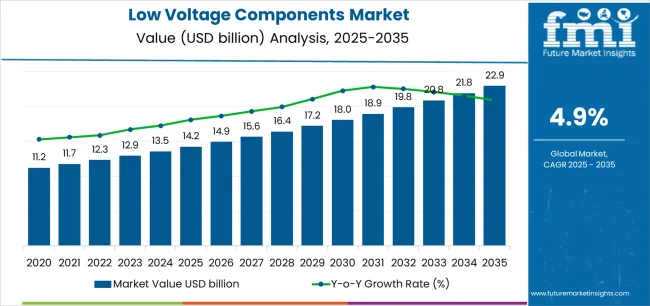
However, the low voltage components market faces headwinds from commodity price volatility affecting copper and electronic component costs, supply chain disruptions impacting component availability, and intense price competition in commoditized product categories. The competitive landscape is characterized by ongoing consolidation among component manufacturers, technology partnerships for IoT-enabled product development, and regional players gaining market share through cost advantages and rapid response capabilities in high-growth emerging markets.
The forecast period will witness accelerated adoption of smart low voltage components featuring communication protocols, energy monitoring capabilities, and cloud connectivity that transform traditional electrical distribution into intelligent power management ecosystems. Geographic expansion in Asia-Pacific industrial corridors, Middle Eastern infrastructure projects, and Latin American utility modernization programs will drive volume growth, while premium segments focused on industrial automation and data center applications will support value expansion through technology differentiation and comprehensive system integration services.
Low Voltage Components Market Key Takeaways
| Metric | Value |
|---|---|
| Market Value (2025) | USD 14.2 billion |
| Market Forecast Value (2035) | USD 22.9 billion |
| Forecast CAGR (2025-2035) | 4.9% |
Why is the Low Voltage Components Market Growing?
The low voltage components market grows by enabling industrial facilities, commercial buildings, and infrastructure operators to achieve superior electrical safety, energy efficiency, and operational reliability while meeting increasingly stringent electrical codes and building performance standards. Facility managers and industrial operators face mounting pressure to reduce energy consumption and improve power quality, with modern low voltage protection and control systems typically providing 15-25% reduction in electrical losses and downtime compared to conventional installations, making these components essential for operational cost optimization and safety compliance.
The industrial automation revolution's need for reliable electrical distribution creates sustained demand for advanced switching, protection, and control solutions that can handle variable frequency drives, servo systems, and sensitive electronic loads across manufacturing, processing, and logistics applications. Smart building initiatives requiring integrated lighting control, HVAC optimization, and energy monitoring drive adoption of intelligent low voltage components that communicate via standard protocols and provide real-time performance data to building management systems.
Government regulations mandating arc-fault protection, ground-fault monitoring, and energy-efficient electrical installations accelerate component upgrades in industrial, commercial, and residential applications, where electrical safety has direct impact on property protection and occupant safety. The global transition toward renewable energy and electric vehicle charging infrastructure creates new demand for specialized low voltage components capable of handling bidirectional power flow, DC distribution, and microgrid integration. However, long product lifecycles in electrical infrastructure and retrofit complexity in existing installations may limit adoption rates in mature markets, while price sensitivity among small contractors and building owners creates pressure on premium product segments requiring sophisticated features and comprehensive certification compliance.
Which Key Segments Are Driving Growth in the Low Voltage Components Market?
The low voltage components market is segmented by component type, application, and region. By component type, the low voltage components market is divided into switches, protection, control, and conversion. Based on application, the low voltage components market is categorized into industrial automation, building power distribution, transportation, and other applications. Regionally, the low voltage components market is divided into Asia Pacific, Europe, North America, Latin America, and Middle East & Africa.
By Component Type, the Switches Segment Accounts for a Dominant Market Share
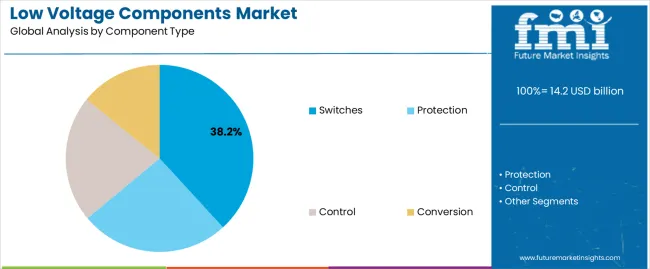
The switches segment represents the dominant force in the low voltage components market, capturing approximately 38% of total market share in 2025. This advanced category encompasses formulations featuring circuit breakers, contactors, disconnectors, and load break switches, delivering comprehensive switching capabilities with enhanced safety features and operational reliability. The switches segment's market leadership stems from its universal requirement across all electrical installations, mandatory replacement cycles driven by safety regulations, and continuous technology advancement toward electronic trip units and communication-enabled switching devices.
The protection segment maintains a substantial 28% market share, serving facilities requiring advanced fault detection and interruption capabilities through residual current devices, motor protection relays, and surge protection devices. The control segment accounts for 21% market share, featuring push buttons, selector switches, and pilot devices essential for machine control and process automation. The conversion segment holds 13% market share through power supplies, transformers, and frequency converters enabling voltage adaptation and power conditioning.
Key advantages driving the switches segment include:
- Universal application across residential, commercial, and industrial electrical systems with mandatory safety compliance
- Technology evolution toward smart switches with energy monitoring and remote operation capabilities
- Regulatory requirements mandating arc-fault and selective coordination features in critical applications
- Retrofit opportunities in aging electrical infrastructure requiring safety upgrades and capacity expansion
By Application, the Industrial Automation Segment Accounts for the Largest Market Share
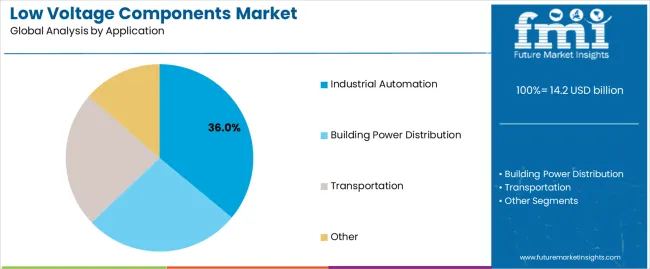
Industrial automation dominates the low voltage components market with approximately 36% market share in 2025, reflecting the critical role of reliable electrical distribution in manufacturing competitiveness and process control effectiveness. The industrial automation segment's market leadership is reinforced by widespread adoption across discrete manufacturing, process industries, and logistics automation requiring sophisticated motor control, machine safety, and energy management capabilities.
The building power distribution segment represents 32% market share through electrical panel installations, lighting control systems, and HVAC distribution serving commercial, residential, and institutional facilities. Transportation applications account for 19% market share, encompassing railway electrification, airport facilities, and electric vehicle charging infrastructure. Other applications hold 13% market share, including renewable energy installations, data centers, and telecommunications facilities.
Key market dynamics supporting application preferences include:
- Industrial automation requiring high-reliability components with extended operating life and minimal maintenance
- Building power distribution benefiting from smart component integration with energy management systems
- Transportation applications demanding specialized components for harsh environments and high availability requirements
- Growing renewable energy and data center segments creating demand for DC-capable components and high-density installations
What are the Drivers, Restraints, and Key Trends of the Low Voltage Components Market?
The low voltage components market is driven by three concrete demand factors tied to electrical infrastructure modernization and safety requirements. Industrial automation expansion creates increasing requirements for reliable motor control and machine safety components, with global manufacturing automation investments growing 8-12% annually in major industrial regions, requiring comprehensive low voltage distribution systems for production equipment integration. Electrical safety regulations and building codes mandate arc-fault protection, ground-fault monitoring, and selective coordination features, with enforcement intensifying across Asia-Pacific, Middle East, and Latin American markets previously relying on basic protection devices. Smart building adoption and energy efficiency programs drive demand for communicating components, with intelligent electrical distribution reducing building energy consumption by 12-18% through optimized load management and power quality improvement.
Market restraints include commodity price volatility affecting manufacturing costs, particularly for copper, aluminum, and electronic components where price fluctuations of 20-40% impact product margins and project economics. Long replacement cycles in electrical infrastructure create limited upgrade opportunities in mature markets, with typical component lifespans of 15-25 years reducing recurring demand outside new construction and capacity expansion projects. Technical fragmentation across regional electrical standards and certification requirements increases market entry costs, as manufacturers must maintain multiple product variants and testing certifications to serve global markets effectively.
Key trends indicate accelerated adoption in China and India industrial corridors, where manufacturing expansion and infrastructure development programs drive substantial component demand. Technology advancement toward IoT-enabled components with predictive maintenance capabilities, energy analytics, and cloud connectivity enables next-generation electrical management systems. However, the low voltage components market thesis could face disruption if solid-state switching technologies and advanced power electronics dramatically reduce component counts and installation complexity while maintaining cost competitiveness against conventional electromechanical devices.
How Are Global Trends Impacting the Low Voltage Components Market Across Key Countries?
| Country | CAGR (2025-2035) |
|---|---|
| China | 6.6% |
| India | 6.1% |
| Germany | 5.6% |
| Brazil | 5.1% |
| USA | 4.7% |
| UK | 4.2% |
| Japan | 3.7% |
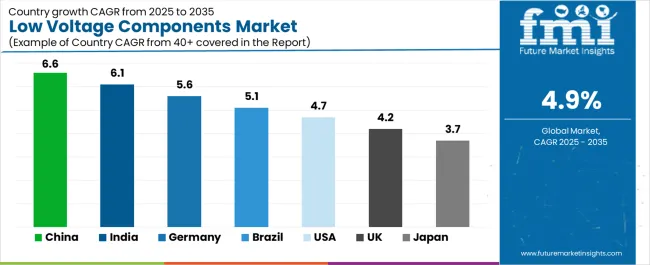
The low voltage components market is gaining momentum worldwide, with China taking the lead thanks to massive industrial expansion and infrastructure development programs across manufacturing belts and urban centers. Close behind, India benefits from government initiatives promoting domestic manufacturing and smart city development, positioning itself as a strategic growth hub in the Asia-Pacific region. Germany shows strong advancement, where Industry 4.0 implementation and renewable energy integration strengthen its role in European industrial supply chains. Brazil demonstrates robust growth through infrastructure modernization and industrial facility upgrades, signaling continued investment in electrical system reliability. The USA maintains steady expansion driven by data center construction, electric vehicle infrastructure, and industrial automation adoption. Meanwhile, the UK. and Japan continue to record consistent progress through building retrofits and infrastructure replacement cycles. Together, China and India anchor the global expansion story, while established markets build stability and diversity into the low voltage components market's growth path.
The report covers an in-depth analysis of 40+ countries, the top-performing countries are highlighted below.
What Factors Are Fueling China’s Leadership in the Low Voltage Components Market?
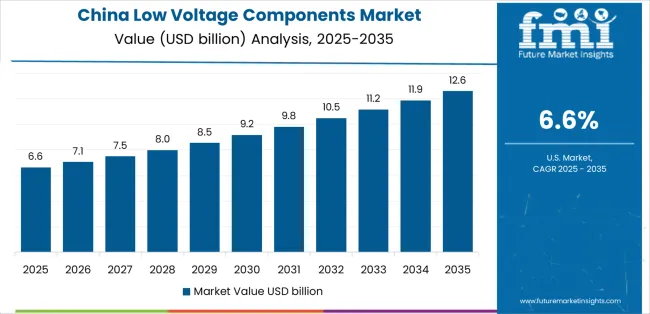
China demonstrates the strongest growth potential in the Low Voltage Components Market with a CAGR of 6.6% through 2035. The country's leadership position stems from comprehensive manufacturing sector expansion, massive infrastructure construction programs, and aggressive industrial automation adoption driving demand for sophisticated electrical distribution systems. Growth is concentrated in major industrial regions, including Guangdong, Jiangsu, Zhejiang, and Shandong, where manufacturing facilities, commercial complexes, and infrastructure projects are implementing advanced low voltage component systems for operational efficiency and safety compliance. Distribution channels through electrical wholesalers, engineering procurement contractors, and direct industrial relationships expand deployment across manufacturing parks, commercial developments, and public infrastructure projects. The country's Made in China 2025 initiative provides policy support for industrial upgrading, including incentives for automation adoption and energy-efficient electrical systems.
Key market factors:
- Manufacturing intensity in eastern coastal provinces with comprehensive industrial automation programs and smart factory initiatives
- Government support through industrial upgrading policies and energy efficiency mandates providing regulatory framework for component adoption
- Comprehensive supply chain ecosystem including domestic component manufacturers and international technology providers with proven capabilities
- Technology integration featuring IoT-enabled components, energy management systems, and intelligent electrical distribution infrastructure
How Is India’s Expanding Industrial Infrastructure Boosting the Demand for Low Voltage Components?
In the Delhi NCR, Maharashtra, Gujarat, and Tamil Nadu regions, the adoption of low voltage component systems is accelerating across manufacturing facilities, commercial buildings, and infrastructure projects, driven by Make in India initiatives and smart city development programs. The low voltage components market demonstrates strong growth momentum with a CAGR of 6.1% through 2035, linked to comprehensive industrial expansion and increasing focus on electrical safety enhancement solutions. Indian facilities are implementing modern switchgear and protection systems to improve operational reliability while meeting national electrical code requirements and industrial safety standards. The country's National Infrastructure Pipeline creates sustained demand for low voltage components, while increasing emphasis on renewable energy integration drives adoption of advanced control and conversion devices.
- Leading industrial development regions, including Pune, Ahmedabad, Chennai, and Bangalore, driving low voltage component system adoption
- Government incentive programs enabling financial support for industrial upgrades and electrical safety improvements through MSME schemes
- Technology collaboration agreements accelerating deployment with international component manufacturers and system integrators
- Policy support through Bureau of Energy Efficiency standards and smart city mission programs linked to infrastructure modernization
Why Does Germany Lead the Low Voltage Components Market in Europe, Particularly in Industrial and Automotive Applications?
Germany's advanced industrial sector demonstrates sophisticated implementation of low voltage component systems, with documented case studies showing 25-35% improvement in electrical system reliability through integrated protection and monitoring solutions. The country's industrial infrastructure in major manufacturing regions, including Bavaria, Baden-Württemberg, North Rhine-Westphalia, and Lower Saxony, showcases integration of intelligent low voltage components with existing factory automation systems, leveraging expertise in precision engineering and quality manufacturing. German industrial operators emphasize safety standards and energy efficiency, creating demand for premium component solutions that support Industry 4.0 digitalization and sustainability commitments. The low voltage components market maintains strong growth through focus on advanced manufacturing and renewable energy integration, with a CAGR of 5.6% through 2035.
Key development areas:
- Automotive and machinery manufacturing sectors implementing comprehensive electrical modernization programs with advanced component systems
- Technical certification requirements ensuring highest safety and performance standards with TÜV and VDE compliance
- Strategic partnerships between component manufacturers and industrial automation providers expanding integrated solution offerings
- Integration of renewable energy systems and energy storage requiring specialized low voltage distribution and control capabilities
What Are the Key Drivers Behind Brazil’s Increasing Adoption of Low Voltage Components in Industrial and Consumer Goods?
The Brazilian market leads in Latin American low voltage component adoption based on infrastructure investment programs and industrial facility modernization initiatives across major economic centers. The country shows solid potential with a CAGR of 5.1% through 2035, driven by construction sector recovery and increasing emphasis on electrical safety compliance across major industrial regions, including São Paulo, Rio de Janeiro, Minas Gerais, and Rio Grande do Sul. Brazilian facilities are adopting certified components for compliance with national electrical standards, particularly in industrial plants requiring reliable power distribution and in commercial developments where electrical safety regulations mandate modern protection devices. Technology deployment channels through electrical distributors, engineering firms, and construction contractors expand coverage across diverse industrial and building applications.
Leading market segments:
- Manufacturing facilities in São Paulo industrial belt implementing electrical upgrades for productivity and safety enhancement
- Commercial construction in major cities requiring comprehensive electrical distribution systems meeting updated building codes
- Strategic collaborations between international component suppliers and local distributors enabling market penetration and technical support
- Focus on electrical safety compliance and energy efficiency driving retrofit opportunities in existing industrial facilities
How Are Technological Advancements in the USA Shaping the Future of the Low Voltage Components Market?
The USA market demonstrates mature implementation focused on industrial automation upgrades, commercial building retrofits, and data center expansion requiring high-reliability electrical distribution systems. The country shows steady potential with a CAGR of 4.7% through 2035, driven by manufacturing reshoring initiatives and growing data center infrastructure across major industrial and technology hubs, including the Midwest manufacturing belt, Texas industrial corridor, and coastal technology centers. American facilities are adopting advanced low voltage components for compliance with National Electrical Code requirements, particularly in industrial automation applications requiring arc-flash mitigation and in mission-critical facilities demanding maximum uptime and power quality. Technology deployment channels through electrical distributors, industrial supply chains, and engineering firms expand coverage across manufacturing, commercial, and infrastructure applications.
Leading market segments:
- Data center construction requiring high-density electrical distribution with comprehensive monitoring and redundancy capabilities
- Manufacturing automation projects implementing safety-certified components for machine control and motor protection applications
- Strategic partnerships between component manufacturers and industrial automation suppliers providing integrated electrical solutions
- Emphasis on electrical safety and energy efficiency driving code compliance upgrades in existing commercial and industrial facilities
What Is Driving the UK’s Adoption of Low Voltage Components in Energy and Building Automation?
The UK's low voltage components market demonstrates steady implementation focused on building retrofits, industrial facility upgrades, and infrastructure renewal programs addressing aging electrical installations. The country maintains consistent growth momentum with a CAGR of 4.2% through 2035, driven by electrical safety regulations and commercial building energy efficiency requirements across major regions including Southeast England, Midlands, Northwest, and Scotland. British facilities are implementing modern protection devices and intelligent switching systems to improve electrical safety while meeting updated wiring regulations and building performance standards in commercial, industrial, and institutional applications.
Key market characteristics:
- Commercial building sector driving component demand for electrical system upgrades and energy management integration
- Regulatory compliance requirements mandating arc-fault detection and RCD protection in building electrical installations
- Technology partnerships between component suppliers and electrical contractors ensuring proper installation and commissioning
- Emphasis on electrical safety and fire prevention driving retrofit programs in existing building stock
How Is Japan’s Precision Engineering Enhancing the Performance of Low Voltage Components in High-Tech Industries?
Japan's low voltage components market demonstrates mature implementation focused on industrial precision, building safety, and infrastructure resilience, with documented integration of seismic protection features and advanced monitoring capabilities. The country maintains steady growth momentum with a CAGR of 3.7% through 2035, driven by manufacturing quality requirements and stringent electrical safety standards across major industrial regions, including Kanto, Chubu, Kansai, and Kyushu. Japanese facilities showcase advanced deployment of low voltage components featuring comprehensive protection coordination, energy monitoring integration, and earthquake-resistant installation methods ensuring operational continuity during seismic events.
Key market characteristics:
- Manufacturing facilities requiring ultra-high reliability components for precision production and process control applications
- Building standards mandating comprehensive electrical protection and emergency shutdown capabilities for public safety
- Technology integration with factory automation systems and building management platforms enabling predictive maintenance
- Emphasis on product longevity and minimal maintenance driving preference for premium component solutions
What Regional Factors Are Shaping the Demand for Low Voltage Components Across Europe?
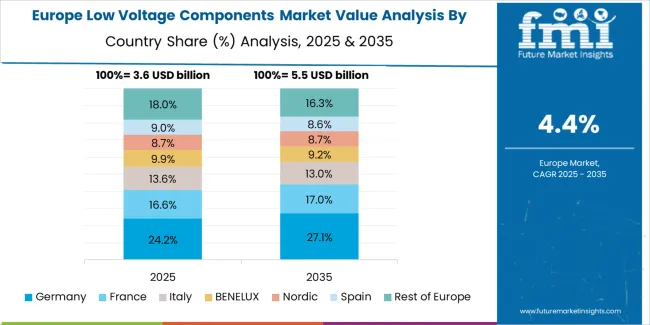
The low voltage components market in Europe is projected to grow from USD 3,583.6 Million in 2025 to USD 5,817.3 Million by 2035, registering a CAGR of 5% over the forecast period. Germany is expected to maintain its leadership position with a 28.5% market share in 2025, declining slightly to 27.8% by 2035, supported by its extensive industrial infrastructure and major manufacturing centers, including Bavaria, Baden-Württemberg, and North Rhine-Westphalia production regions.
France follows with a 19.2% share in 2025, projected to reach 19.5% by 2035, driven by comprehensive industrial modernization programs and nuclear power infrastructure maintenance. The United Kingdom holds a 16.8% share in 2025, expected to decrease to 16.3% by 2035 due to market maturity and slower industrial expansion. Italy commands a 13.5% share in both 2025 and 2035, backed by machinery manufacturing and building sector demand. Spain accounts for 9.7% in 2025, rising to 10.1% by 2035 on renewable energy infrastructure expansion. The Netherlands maintains 4.3% in 2025, reaching 4.5% by 2035 on data center and logistics facility growth. The Rest of Europe region is anticipated to hold 8% in 2025, expanding to 8.5% by 2035, attributed to increasing low voltage component adoption in Nordic countries and emerging Central & Eastern European industrial development programs.
Advanced Protection Systems Dominate Industrial Requirements in Japan
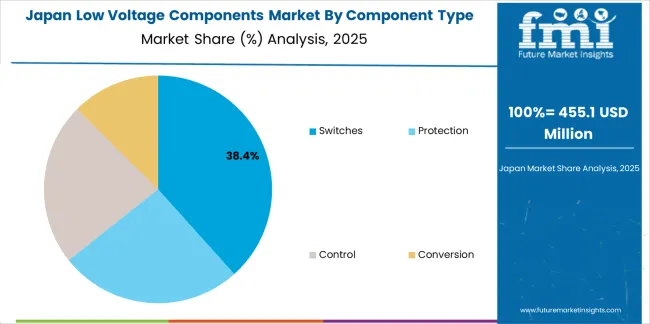
The Japanese low voltage components market demonstrates a mature and quality-focused landscape, characterized by sophisticated integration of protection devices and control systems with existing industrial infrastructure across manufacturing facilities, commercial buildings, and critical infrastructure applications. Japan's emphasis on electrical safety and operational reliability drives demand for premium components that support zero-defect manufacturing commitments and comprehensive facility protection requirements in industrial and commercial installations. The low voltage components market benefits from strong partnerships between international component providers and domestic electrical equipment manufacturers including Mitsubishi Electric, Fuji Electric, and Panasonic, creating comprehensive service ecosystems that prioritize product reliability and long-term performance. Industrial centers in Kanto, Chubu, Kansai, and other major production areas showcase advanced electrical installations where component systems achieve 99.9% reliability through redundant protection schemes and predictive maintenance programs.
International Providers Lead Technology Integration in South Korea
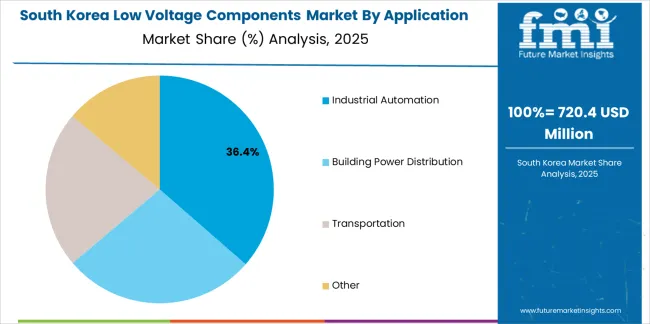
The South Korean low voltage components market is characterized by strong international technology provider presence, with companies maintaining significant positions through comprehensive technical support and advanced product offerings for manufacturing and infrastructure applications. The low voltage components market demonstrates increasing emphasis on smart factory implementation and building automation, as Korean industrial facilities increasingly demand intelligent components that integrate with advanced manufacturing execution systems and facility management platforms deployed across major industrial complexes. Regional component distributors are gaining market share through strategic partnerships with international manufacturers, offering specialized services including Korean electrical code compliance support and application-specific technical assistance for industrial and commercial installations. The competitive landscape shows increasing collaboration between multinational component companies and Korean industrial automation specialists, creating hybrid service models that combine international product technology with local market knowledge and rapid response capabilities.
What Strategies Are Leading Companies Using to Strengthen Their Position in the Low Voltage Components Market?
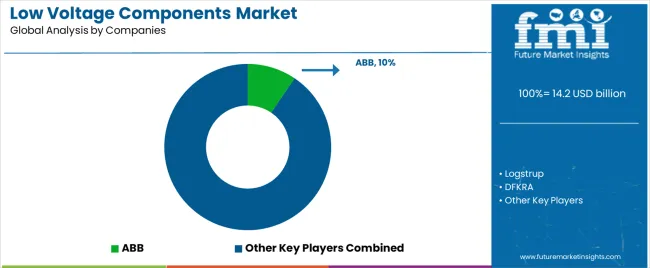
The low voltage components market features approximately 30-40 meaningful players with moderate fragmentation, where the top three companies control roughly 22-28% of global market share through established distribution networks, comprehensive product portfolios, and strong brand recognition among electrical contractors and industrial customers. Competition centers on product reliability, certification compliance, technical support capabilities, and channel partner relationships rather than price competition alone. ABB leads with approximately 9.5% market share through its comprehensive electrical products portfolio and global service network.
Market leaders include ABB, Schneider Electric, and Siemens, which maintain competitive advantages through global manufacturing footprint, extensive product ranges covering all component categories, and deep integration with industrial automation platforms, creating comprehensive solution capabilities for manufacturing and infrastructure applications. These companies leverage research and development capabilities in smart component technologies, IoT integration, and digital services to defend market positions while expanding into emerging markets and specialized application segments including data centers, electric vehicle infrastructure, and renewable energy installations.
Challengers encompass Eaton, Logstrup, and CHINT, which compete through regional market strength, competitive pricing strategies, and growing product portfolios addressing mainstream industrial and building applications. Product specialists, including DFKRA, NATUS, and Himel, focus on specific component categories or regional markets, offering differentiated capabilities in custom solutions, rapid delivery, and application-specific technical support for specialized industrial requirements.
Regional players and emerging component manufacturers create competitive pressure through cost advantages in local markets, particularly in Asia-Pacific and Middle Eastern regions where proximity to growth markets provides logistics benefits and customer relationship advantages. Market dynamics favor companies that combine reliable product quality with comprehensive technical support services, strong distributor relationships, and digital tools that simplify component selection, system design, and installation support for electrical contractors and industrial engineers managing complex electrical distribution projects.
Who Are the Key Innovators Leading the Low Voltage Components Market Towards Future Growth?
- ABB
- Logstrup
- DFKRA
- CHINT
- NATUS
- Shonco Engineering
- CHS Controls
- Himel
- Schneider Electric
- Eaton
- NOARK Electric
- Sprecher Automation
- Siemens
Scope of the Report
| Item | Value |
|---|---|
| Quantitative Units | USD 14.2 billion |
| Component Type | Switches, Protection, Control, Conversion |
| Application | Industrial Automation, Building Power Distribution, Transportation, Other |
| Regions Covered | Asia Pacific, Europe, North America, Latin America, Middle East & Africa |
| Country Covered | China, India, Germany, Brazil, U.S., U.K., Japan, and 40+ countries |
| Key Companies Profiled | ABB, Logstrup, DFKRA, CHINT, NATUS, Shonco Engineering, CHS Controls, Himel, Schneider Electric, Eaton, NOARK Electric, Sprecher Automation, Siemens |
| Additional Attributes | Dollar sales by component type and application categories, regional adoption trends across Asia Pacific, Europe, and North America, competitive landscape with component manufacturers and distribution networks, installation requirements and specifications, integration with industrial automation systems and building management platforms, innovations in smart component technology and IoT connectivity, and development of specialized products with enhanced safety features and energy management capabilities. |
Low Voltage Components Market by Segments
Component Type:
- Switches
- Protection
- Control
- Conversion
Application:
- Industrial Automation
- Building Power Distribution
- Transportation
- Other
Region:
- Asia Pacific
- China
- India
- Japan
- South Korea
- Australia & New Zealand
- ASEAN
- Rest of Asia Pacific
- Europe
- Germany
- United Kingdom
- France
- Italy
- Spain
- Netherlands
- Nordic
- BENELUX
- Rest of Europe
- North America
- United States
- Canada
- Mexico
- Latin America
- Brazil
- Argentina
- Rest of Latin America
- Middle East & Africa
- Kingdom of Saudi Arabia
- Other GCC Countries
- Turkey
- South Africa
- Other African Union
- Rest of Middle East & Africa
Frequently Asked Questions
How big is the low voltage components market in 2025?
The global low voltage components market is estimated to be valued at USD 14.2 billion in 2025.
What will be the size of low voltage components market in 2035?
The market size for the low voltage components market is projected to reach USD 22.9 billion by 2035.
How much will be the low voltage components market growth between 2025 and 2035?
The low voltage components market is expected to grow at a 4.9% CAGR between 2025 and 2035.
What are the key product types in the low voltage components market?
The key product types in low voltage components market are switches, protection, control and conversion.
Which application segment to contribute significant share in the low voltage components market in 2025?
In terms of application, industrial automation segment to command 36.0% share in the low voltage components market in 2025.
Preview the report firsthand - request a free sample
Get SampleGet the brochure for pricing and purchase details.
Get PDFTable of Content
- Executive Summary
- Global Market Outlook
- Demand-side Trends
- Supply-side Trends
- Technology Roadmap Analysis
- Analysis and Recommendations
- Market Overview
- Market Coverage / Taxonomy
- Market Definition / Scope / Limitations
- Market Background
- Market Dynamics
- Drivers
- Restraints
- Opportunity
- Trends
- Scenario Forecast
- Demand in Optimistic Scenario
- Demand in Likely Scenario
- Demand in Conservative Scenario
- Opportunity Map Analysis
- Product Life Cycle Analysis
- Supply Chain Analysis
- Investment Feasibility Matrix
- Value Chain Analysis
- PESTLE and Porter’s Analysis
- Regulatory Landscape
- Regional Parent Market Outlook
- Production and Consumption Statistics
- Import and Export Statistics
- Market Dynamics
- Global Market Analysis 2020 to 2024 and Forecast, 2025 to 2035
- Historical Market Size Value (USD Million) Analysis, 2020 to 2024
- Current and Future Market Size Value (USD Million) Projections, 2025 to 2035
- Y-o-Y Growth Trend Analysis
- Absolute $ Opportunity Analysis
- Global Market Pricing Analysis 2020 to 2024 and Forecast 2025 to 2035
- Global Market Analysis 2020 to 2024 and Forecast 2025 to 2035, By Component Type
- Introduction / Key Findings
- Historical Market Size Value (USD Million) Analysis By Component Type , 2020 to 2024
- Current and Future Market Size Value (USD Million) Analysis and Forecast By Component Type , 2025 to 2035
- Switches
- Protection
- Control
- Conversion
- Y-o-Y Growth Trend Analysis By Component Type , 2020 to 2024
- Absolute $ Opportunity Analysis By Component Type , 2025 to 2035
- Global Market Analysis 2020 to 2024 and Forecast 2025 to 2035, By Application
- Introduction / Key Findings
- Historical Market Size Value (USD Million) Analysis By Application, 2020 to 2024
- Current and Future Market Size Value (USD Million) Analysis and Forecast By Application, 2025 to 2035
- Industrial Automation
- Building Power Distribution
- Transportation
- Other
- Y-o-Y Growth Trend Analysis By Application, 2020 to 2024
- Absolute $ Opportunity Analysis By Application, 2025 to 2035
- Global Market Analysis 2020 to 2024 and Forecast 2025 to 2035, By Region
- Introduction
- Historical Market Size Value (USD Million) Analysis By Region, 2020 to 2024
- Current Market Size Value (USD Million) Analysis and Forecast By Region, 2025 to 2035
- North America
- Latin America
- Western Europe
- Eastern Europe
- East Asia
- South Asia and Pacific
- Middle East & Africa
- Market Attractiveness Analysis By Region
- North America Market Analysis 2020 to 2024 and Forecast 2025 to 2035, By Country
- Historical Market Size Value (USD Million) Trend Analysis By Market Taxonomy, 2020 to 2024
- Market Size Value (USD Million) Forecast By Market Taxonomy, 2025 to 2035
- By Country
- USA
- Canada
- Mexico
- By Component Type
- By Application
- By Country
- Market Attractiveness Analysis
- By Country
- By Component Type
- By Application
- Key Takeaways
- Latin America Market Analysis 2020 to 2024 and Forecast 2025 to 2035, By Country
- Historical Market Size Value (USD Million) Trend Analysis By Market Taxonomy, 2020 to 2024
- Market Size Value (USD Million) Forecast By Market Taxonomy, 2025 to 2035
- By Country
- Brazil
- Chile
- Rest of Latin America
- By Component Type
- By Application
- By Country
- Market Attractiveness Analysis
- By Country
- By Component Type
- By Application
- Key Takeaways
- Western Europe Market Analysis 2020 to 2024 and Forecast 2025 to 2035, By Country
- Historical Market Size Value (USD Million) Trend Analysis By Market Taxonomy, 2020 to 2024
- Market Size Value (USD Million) Forecast By Market Taxonomy, 2025 to 2035
- By Country
- Germany
- UK
- Italy
- Spain
- France
- Nordic
- BENELUX
- Rest of Western Europe
- By Component Type
- By Application
- By Country
- Market Attractiveness Analysis
- By Country
- By Component Type
- By Application
- Key Takeaways
- Eastern Europe Market Analysis 2020 to 2024 and Forecast 2025 to 2035, By Country
- Historical Market Size Value (USD Million) Trend Analysis By Market Taxonomy, 2020 to 2024
- Market Size Value (USD Million) Forecast By Market Taxonomy, 2025 to 2035
- By Country
- Russia
- Poland
- Hungary
- Balkan & Baltic
- Rest of Eastern Europe
- By Component Type
- By Application
- By Country
- Market Attractiveness Analysis
- By Country
- By Component Type
- By Application
- Key Takeaways
- East Asia Market Analysis 2020 to 2024 and Forecast 2025 to 2035, By Country
- Historical Market Size Value (USD Million) Trend Analysis By Market Taxonomy, 2020 to 2024
- Market Size Value (USD Million) Forecast By Market Taxonomy, 2025 to 2035
- By Country
- China
- Japan
- South Korea
- By Component Type
- By Application
- By Country
- Market Attractiveness Analysis
- By Country
- By Component Type
- By Application
- Key Takeaways
- South Asia and Pacific Market Analysis 2020 to 2024 and Forecast 2025 to 2035, By Country
- Historical Market Size Value (USD Million) Trend Analysis By Market Taxonomy, 2020 to 2024
- Market Size Value (USD Million) Forecast By Market Taxonomy, 2025 to 2035
- By Country
- India
- ASEAN
- Australia & New Zealand
- Rest of South Asia and Pacific
- By Component Type
- By Application
- By Country
- Market Attractiveness Analysis
- By Country
- By Component Type
- By Application
- Key Takeaways
- Middle East & Africa Market Analysis 2020 to 2024 and Forecast 2025 to 2035, By Country
- Historical Market Size Value (USD Million) Trend Analysis By Market Taxonomy, 2020 to 2024
- Market Size Value (USD Million) Forecast By Market Taxonomy, 2025 to 2035
- By Country
- Kingdom of Saudi Arabia
- Other GCC Countries
- Turkiye
- South Africa
- Other African Union
- Rest of Middle East & Africa
- By Component Type
- By Application
- By Country
- Market Attractiveness Analysis
- By Country
- By Component Type
- By Application
- Key Takeaways
- Key Countries Market Analysis
- USA
- Pricing Analysis
- Market Share Analysis, 2024
- By Component Type
- By Application
- Canada
- Pricing Analysis
- Market Share Analysis, 2024
- By Component Type
- By Application
- Mexico
- Pricing Analysis
- Market Share Analysis, 2024
- By Component Type
- By Application
- Brazil
- Pricing Analysis
- Market Share Analysis, 2024
- By Component Type
- By Application
- Chile
- Pricing Analysis
- Market Share Analysis, 2024
- By Component Type
- By Application
- Germany
- Pricing Analysis
- Market Share Analysis, 2024
- By Component Type
- By Application
- UK
- Pricing Analysis
- Market Share Analysis, 2024
- By Component Type
- By Application
- Italy
- Pricing Analysis
- Market Share Analysis, 2024
- By Component Type
- By Application
- Spain
- Pricing Analysis
- Market Share Analysis, 2024
- By Component Type
- By Application
- France
- Pricing Analysis
- Market Share Analysis, 2024
- By Component Type
- By Application
- India
- Pricing Analysis
- Market Share Analysis, 2024
- By Component Type
- By Application
- ASEAN
- Pricing Analysis
- Market Share Analysis, 2024
- By Component Type
- By Application
- Australia & New Zealand
- Pricing Analysis
- Market Share Analysis, 2024
- By Component Type
- By Application
- China
- Pricing Analysis
- Market Share Analysis, 2024
- By Component Type
- By Application
- Japan
- Pricing Analysis
- Market Share Analysis, 2024
- By Component Type
- By Application
- South Korea
- Pricing Analysis
- Market Share Analysis, 2024
- By Component Type
- By Application
- Russia
- Pricing Analysis
- Market Share Analysis, 2024
- By Component Type
- By Application
- Poland
- Pricing Analysis
- Market Share Analysis, 2024
- By Component Type
- By Application
- Hungary
- Pricing Analysis
- Market Share Analysis, 2024
- By Component Type
- By Application
- Kingdom of Saudi Arabia
- Pricing Analysis
- Market Share Analysis, 2024
- By Component Type
- By Application
- Turkiye
- Pricing Analysis
- Market Share Analysis, 2024
- By Component Type
- By Application
- South Africa
- Pricing Analysis
- Market Share Analysis, 2024
- By Component Type
- By Application
- USA
- Market Structure Analysis
- Competition Dashboard
- Competition Benchmarking
- Market Share Analysis of Top Players
- By Regional
- By Component Type
- By Application
- Competition Analysis
- Competition Deep Dive
- ABB
- Overview
- Product Portfolio
- Profitability by Market Segments (Product/Age /Sales Channel/Region)
- Sales Footprint
- Strategy Overview
- Marketing Strategy
- Product Strategy
- Channel Strategy
- Logstrup
- DFKRA
- CHINT
- NATUS
- Shonco Engineering
- CHS Controls
- Himel
- Schneider Electric
- Eaton
- NOARK Electric
- Sprecher Automation
- Siemens
- ABB
- Competition Deep Dive
- Assumptions & Acronyms Used
- Research Methodology


