

- Industry Size (2026)
- USD 563.7 Mn
- Forecast (2036)
- USD 1262.8 Mn
- CAGR (2026 to 2036)
- 8.4%
Mercury Capture Sorbents for Flue Gas Market Forecast and Outlook 2026 to 2036
The mercury capture sorbents for flue gas market is valued at USD 563.7 million in 2026 and is forecasted to reach USD 1,262.8 million by 2036, expanding at a CAGR of 8.4%. Growth is driven by tightening air emission standards, enforcement of mercury control regulations, and continued operation of coal-fired power assets in several regions. Utilities deploy sorbent injection systems to achieve compliance without major boiler retrofits, supporting steady adoption across existing thermal power infrastructure.
Activated carbon-based sorbents represent leading sorbent-type demand due to high adsorption efficiency for elemental and oxidized mercury species. These materials enable effective capture under varying flue gas temperatures and compositions, including high sulfur environments. Preference reflects proven performance, flexible injection rates, and compatibility with downstream particulate control devices such as fabric filters and electrostatic precipitators. Segment structure highlights continued reliance on activated carbon solutions, alongside incremental improvements in halogen-treated and specialty carbon grades.
Coal-fired power plants represent leading end-use demand, reflecting regulatory scrutiny of mercury emissions from combustion sources. China, India, USA, Germany, and Japan emerge as fastest-growing countries, supported by emission compliance programs and plant life-extension strategies. Competitive landscape includes ADA Carbon Solutions, Cabot Corporation, Calgon Carbon, Chemviron, and Albemarle Corporation, focusing on high-reactivity sorbents, injection optimization, and cost-effective compliance solutions.
Quick Stats for Mercury Capture Sorbents for Flue Gas Market
- Mercury Capture Sorbents for Flue Gas Market Value (2026): USD 563.7 million
- Mercury Capture Sorbents for Flue Gas Market Forecast Value (2036): USD 1,262.8 million
- Mercury Capture Sorbents for Flue Gas Market Forecast CAGR (2026–2036): 8.4%
- Leading Sorbent Type in Global Demand: Activated Carbon-Based Sorbents
- Fastest-Growing Countries: China, India, USA, Germany, Japan
- Top Players in Global Demand: ADA Carbon Solutions, Cabot Corporation, Calgon Carbon, Chemviron, Albemarle Corporation
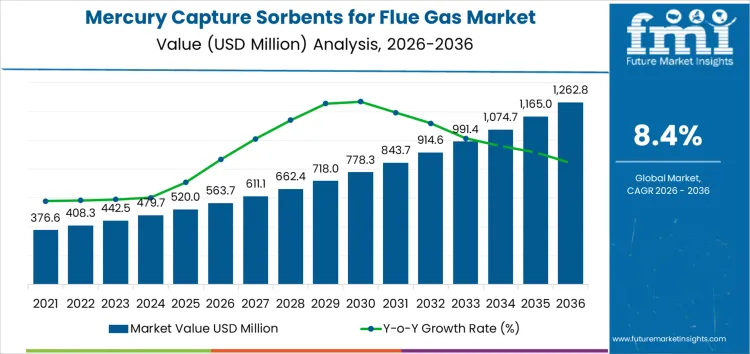
Mercury Capture Sorbents for Flue Gas Market Key Takeaways
| Metric | Value |
|---|---|
| Market Value (2026) | USD 563.7 million |
| Market Forecast Value (2036) | USD 1,262.8 million |
| Forecast CAGR (2026-2036) | 8.4% |
Why is the Demand for Mercury Capture Sorbents for Flue Gas Market Growing?
Demand for mercury capture sorbents for flue gas is growing globally due to tightening air quality regulations and heightened focus on reducing toxic emissions from power plants, waste incinerators, and industrial boilers. Mercury released during combustion of coal and other fossil fuels poses significant environmental and human health risks, including neurological damage and ecosystem contamination. Regulatory frameworks in North America, Europe, and parts of Asia set stringent limits on mercury emissions, which drives adoption of sorbents capable of effectively capturing mercury species from flue gas streams.
Utilities and industrial operators integrate mercury capture sorbents into existing flue gas desulfurization and particulate control systems to comply with emission standards and avoid penalties. Growth in low-emission zones and environmental performance reporting reinforces procurement of high-efficiency sorbents that deliver consistent removal across variable combustion conditions. Research and innovation enhance sorbent selectivity, capacity, and regeneration potential, improving cost effectiveness and reducing operational impact. Cement, pulp and paper, and metal processing sectors also implement mercury control to meet corporate sustainability commitments. Testing and certification programs further strengthen adoption of proven sorbent technologies across global markets.
How Are the Segments Classified in the Mercury Capture Sorbents for Flue Gas Market?
Demand for mercury capture sorbents for flue gas globally is shaped by emission regulations, air toxics standards, and retrofit requirements across combustion assets. Operators evaluate capture efficiency across mercury species, injection compatibility, ash interaction, and operating cost stability. Adoption patterns reflect concentration within coal combustion and high-temperature industrial processes requiring reliable mercury control without major system redesign.
Which Sorbent Type Holds the Largest Share of Global Demand?
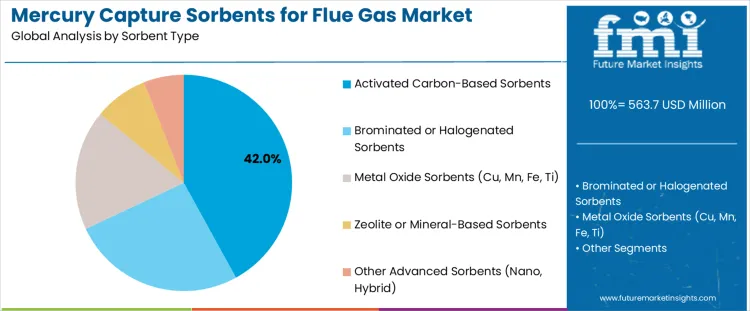
Activated carbon-based sorbents hold 42.0%, representing the largest share of global demand. These sorbents provide broad mercury capture capability and compatibility with dry injection systems. Brominated or halogenated sorbents account for 26.0%, enhancing oxidation and capture of elemental mercury under lower temperatures. Metal oxide sorbents hold 18.0%, supporting catalytic interaction with mercury species. Zeolite or mineral-based sorbents account for 8.0%, addressing niche and lower-cost applications. Other advanced sorbents hold 6.0%. Sorbent-type distribution reflects preference for proven adsorption performance and retrofit flexibility.
Key Points
- Activated carbon dominates due to broad capture effectiveness.
- Halogenated sorbents improve elemental mercury oxidation.
- Metal oxides support catalytic capture mechanisms.
Which End-Use Industry Accounts for the Highest Share of Global Adoption?
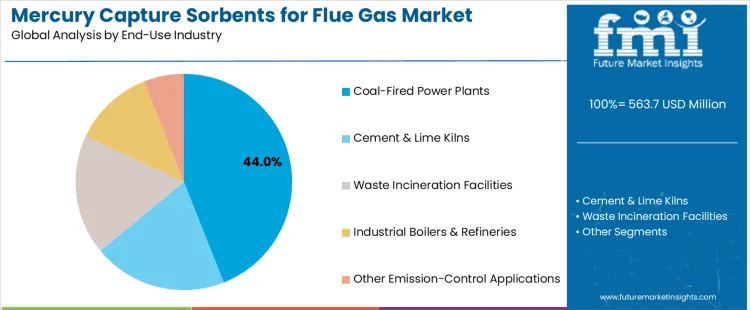
Coal-fired power plants hold 44.0%, accounting for the highest share of global adoption. These facilities face stringent mercury emission limits and operate large flue gas volumes. Cement and lime kilns account for 20.0%, addressing mercury release from raw materials and fuels. Waste incineration facilities hold 18.0%, managing variable mercury input from mixed waste streams. Industrial boilers and refineries account for 12.0%, controlling process-related emissions. Other emission-control applications hold 6.0%. End-use distribution reflects regulatory focus on large stationary emission sources.
Key Points
- Coal power leads due to regulatory enforcement and scale.
- Cement kilns manage mercury from feedstock variability.
- Incineration requires adaptable capture solutions.
Which Application Method Represents the Largest Share of Global Demand?
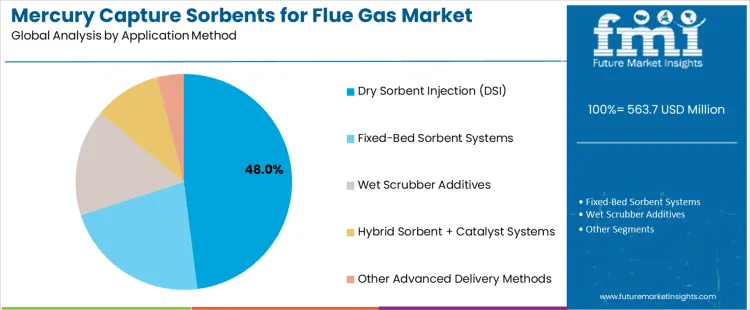
Dry sorbent injection holds 48.0%, representing the largest share of global demand. This method enables rapid deployment and integration with existing flue gas systems. Fixed-bed sorbent systems account for 22.0%, supporting controlled capture in specific process streams. Wet scrubber additives hold 16.0%, integrating mercury control within existing wet treatment infrastructure. Hybrid sorbent and catalyst systems account for 10.0%, enhancing multi-pollutant control. Other advanced delivery methods hold 4.0%. Application-method distribution reflects preference for scalable and retrofit-friendly injection approaches.
Key Points
- Dry injection leads due to ease of retrofit.
- Fixed-bed systems suit controlled process environments.
- Hybrid systems address advanced emission control needs.
What are the Key Dynamics in the Mercury Capture Sorbents for Flue Gas Market?
Global demand rises as power generators, waste-to-energy facilities, and industrial combustion plants adopt mercury capture sorbents to control toxic mercury emissions from flue gas streams. Sorbents such as activated carbon, metal–organic frameworks, and engineered carbonates support compliance with tightening air quality standards. Adoption aligns with regulatory limits on mercury release, public health imperatives, and investment in emissions control infrastructure across regions transitioning toward cleaner energy portfolios. Usage spans coal-fired boilers, biomass combustion, and industrial furnace operations requiring reliable mercury mitigation.
How do air quality regulations and environmental health priorities shape global demand?
Governments and environmental agencies in North America, Europe, Asia-Pacific, and Latin America enforce or strengthen mercury emission limits under frameworks such as the Minamata Convention and national air quality standards. Utilities integrate mercury capture sorbents into flue gas desulfurization, fabric filter, and electrostatic precipitator systems to achieve required removal efficiency ahead of stack release. Industrial sectors with combustion-related emissions adopt sorbent injection to protect ambient air quality and reduce ecosystem deposition of mercury, which can bioaccumulate in aquatic food webs. Enhanced monitoring, public health campaigns, and reporting requirements drive measurable performance targets that reinforce investment in effective capture media.
How do fuel variability, sorbent cost, and operational complexity influence market scalability?
Mercury capture performance depends on flue gas composition, temperature, and presence of competing pollutants, necessitating site-specific sorbent selection and dosing strategies. Activated carbon remains a baseline solution, but engineered sorbents and additives are developed to address variable conditions and enhance capture efficiency. Sorbent cost and frequency of replenishment influence operational budgets, particularly for facilities with high flue gas volumes. Integration with existing emissions control equipment requires engineering adjustments and monitoring to avoid unintended impacts on particulate capture or downstream processes. Disposal of spent sorbent laden with mercury and compliance with hazardous waste regulations introduce additional cost and handling considerations. Regional differences in regulatory stringency and enforcement timelines create variability in adoption urgency. Global growth depends on scalable, cost-effective sorbent technologies and harmonized emissions criteria that support reliable mercury control across diverse combustion contexts worldwide.
How Is Demand for Mercury Capture Sorbents for Flue Gas Evolving?
Demand for mercury capture sorbents for flue gas is increasing globally due to air toxics regulation, coal combustion controls, and industrial emission compliance. China leads with a 9.6% CAGR, supported by power plant emission standards and industrial boiler retrofits. India follows at 9.1%, driven by coal-based power generation and tightening air pollution norms. USA records an 8.2% CAGR, reflecting enforcement of mercury emission limits across utilities and waste incineration. Germany posts 7.4%, shaped by precautionary air quality regulation and fuel transition management. Japan records 7.0%, supported by industrial emission control and environmental compliance. Growth reflects sustained focus on mercury emission reduction worldwide.
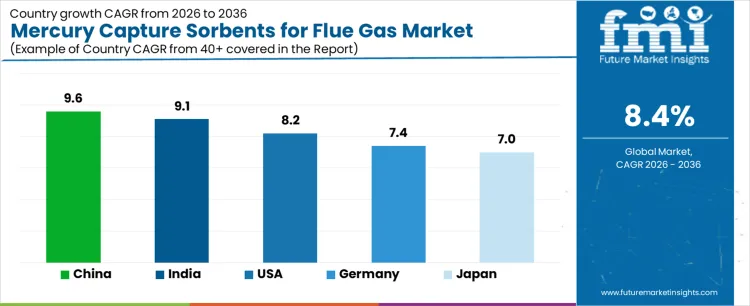
| Country | CAGR (%) |
|---|---|
| China | 9.6% |
| India | 9.1% |
| USA | 8.2% |
| Germany | 7.4% |
| Japan | 7.0% |
What factors are driving strong demand growth for mercury capture sorbents in China?
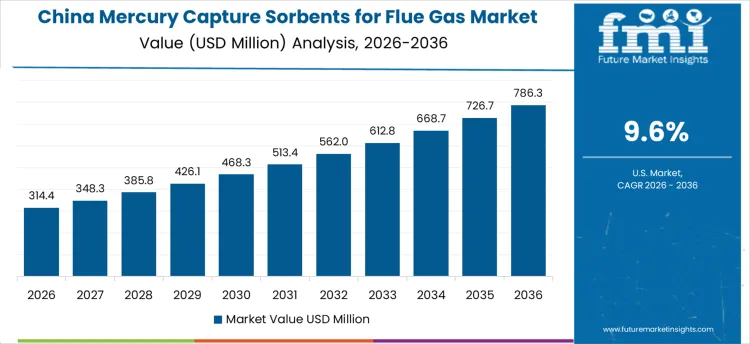
China demand is driven by large installed coal-fired power capacity and regulatory pressure to control hazardous air pollutants. CAGR of 9.6% reflects widespread deployment of activated carbon and halogenated sorbents for flue gas mercury capture. Power plants integrate sorbent injection systems alongside particulate and sulfur controls. Industrial boilers and non-ferrous smelters increase sorbent usage to meet emission limits. Centralized enforcement accelerates adoption across regions. Continuous emissions monitoring supports consistent sorbent consumption. Growth remains scale-driven and compliance-aligned, supported by national air pollution control objectives.
- Coal-fired power plant mercury emission control
- Use of activated carbon and treated sorbents
- Integration with existing flue gas treatment systems
- Centralized enforcement and monitoring
How is India sustaining high growth in mercury capture sorbent usage?
India demand reflects reliance on coal for power generation and strengthening air toxics regulation. CAGR of 9.1% is supported by adoption of mercury sorbents at thermal power plants and industrial combustion units. Emission standards under national clean air programs increase compliance requirements. Utilities apply sorbent injection to reduce mercury without major boiler redesign. Cement and metal industries contribute additional demand. Growth remains infrastructure-led and regulation-focused, aligned with reducing hazardous air emissions and improving public health outcomes.
- Coal-based power generation emission controls
- National air quality compliance requirements
- Sorbent injection without major retrofits
- Industrial combustion source contribution
What regulatory drivers shape mercury capture demand in the USA?
USA demand is shaped by federal and state mercury emission limits for utilities and waste incinerators. CAGR of 8.2% reflects consistent use of activated carbon injection systems to comply with air toxics standards. Power plants optimize sorbent selection to balance capture efficiency and ash reuse constraints. Hazardous waste incineration sustains steady demand. Continuous monitoring and reporting obligations reinforce usage. Growth remains regulation-driven and compliance-focused, aligned with air quality protection and risk reduction.
- Federal mercury emission standards
- Activated carbon injection at utilities
- Incinerator emission compliance
- Monitoring and reporting requirements
Why does Germany show steady but controlled demand growth?
Germany demand reflects precautionary air quality regulation and gradual reduction of coal-based generation. CAGR of 7.4% is supported by targeted use of mercury sorbents at remaining coal units and industrial sources. Operators prioritize high-efficiency capture with minimal secondary waste. Integration with advanced flue gas treatment systems reduces overall consumption intensity. Documentation and validation requirements guide sorbent application. Growth remains efficiency-led and stability-focused, aligned with environmental protection frameworks and energy transition objectives.
- Targeted application at remaining coal units
- High-efficiency mercury capture focus
- Integration with advanced flue gas controls
- Strong documentation and compliance requirements
What supports continued demand for mercury capture sorbents in Japan?
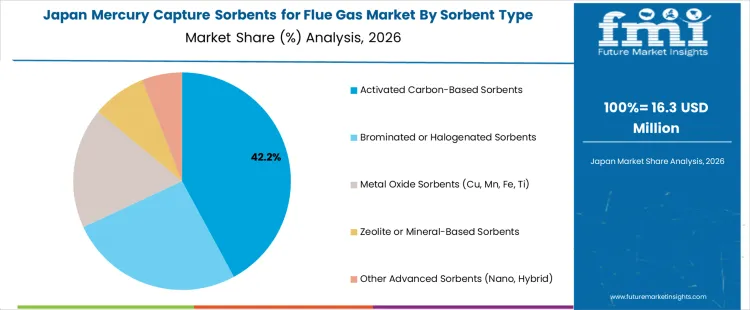
Japan demand reflects industrial emission control requirements and strict environmental compliance. CAGR of 7.0% is supported by use of mercury sorbents in waste incineration, metal processing, and residual coal-based facilities. Operators emphasize reliability and precise dosing. Regulatory oversight enforces consistent emission performance. Advanced monitoring supports optimization of sorbent use. Growth remains compliance-driven and technology-focused, aligned with air quality protection and industrial emission management priorities.
- Industrial and waste incineration emission control
- Precise dosing and high reliability requirements
- Strict regulatory oversight
- Advanced emission monitoring systems
What is the competitive landscape of demand for mercury capture sorbents for flue gas?
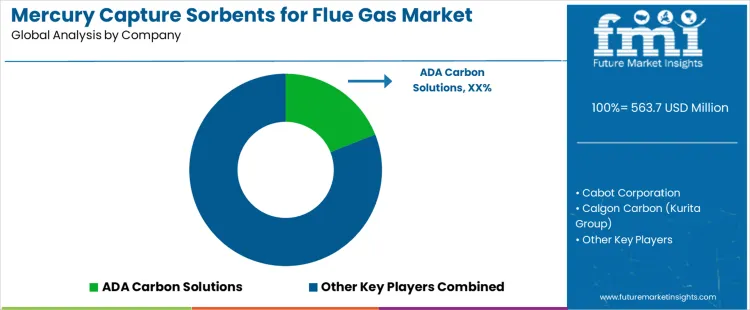
Demand for mercury capture sorbents for flue gas is driven by emission control regulations covering coal-fired power plants, waste incineration, cement kilns, and metal smelting operations. Treatment strategies rely on activated carbon, brominated sorbents, and specialty impregnated materials to adsorb elemental and oxidized mercury from exhaust streams. Buyers evaluate capture efficiency across variable flue gas compositions, sorbent injection rates, compatibility with particulate control devices, and impact on downstream ash utilization. Procurement teams prioritize sorbents with predictable performance, stable supply, and compliance with air toxics standards. Trend in the global market reflects declining coal capacity in some regions offset by stricter emission enforcement, retrofit demand, and continued need for mercury control in industrial combustion sources.
ADA Carbon Solutions maintains strong positioning through engineered activated carbon sorbents designed specifically for mercury capture in power and industrial applications. Cabot Corporation supplies activated carbon products used for multi-pollutant control including mercury adsorption. Calgon Carbon, operating within Kurita Group, provides activated carbon solutions supported by global manufacturing and technical service capabilities. Chemviron contributes activated carbon sorbents applied across energy and industrial emission control systems. Albemarle Corporation participates through specialty chemical materials supporting mercury oxidation and capture in flue gas treatment configurations. Competitive differentiation depends on capture efficiency, sorbent stability, injection performance, and ability to support regulatory compliance across diverse combustion environments.
Key Players in the Mercury Capture Sorbents for Flue Gas Market
- ADA Carbon Solutions
- Cabot Corporation
- Calgon Carbon (Kurita Group)
- Chemviron
- Albemarle Corporation
Scope of the Report
| Items | Values |
|---|---|
| Quantitative Units | USD million |
| Sorbent Type | Activated Carbon-Based Sorbents; Brominated or Halogenated Sorbents; Metal Oxide Sorbents (Cu, Mn, Fe, Ti); Zeolite or Mineral-Based Sorbents; Other Advanced Sorbents (Nano, Hybrid) |
| End-Use Industry | Coal-Fired Power Plants; Cement & Lime Kilns; Waste Incineration Facilities; Industrial Boilers & Refineries; Other Emission-Control Applications |
| Application Method | Dry Sorbent Injection (DSI); Fixed-Bed Sorbent Systems; Wet Scrubber Additives; Hybrid Sorbent + Catalyst Systems; Other Advanced Delivery Methods |
| Regions Covered | Asia Pacific, Europe, North America, Latin America, Middle East & Africa |
| Countries Covered | China, India, USA, Germany, Japan, and 40+ countries |
| Key Companies Profiled | ADA Carbon Solutions; Cabot Corporation; Calgon Carbon (Kurita Group); Chemviron; Albemarle Corporation |
| Additional Attributes | Dollar sales by sorbent type and application method; adoption trends for activated carbon and halogenated mercury capture solutions; mercury removal efficiency across oxidized and elemental Hg species; compatibility with existing flue gas treatment configurations; sorbent consumption rates, ash impact, and byproduct management considerations; emissions compliance standards influencing sorbent selection and deployment. |
Mercury Capture Sorbents for Flue Gas Market by Segment
Sorbent Type:
- Activated Carbon-Based Sorbents
- Brominated or Halogenated Sorbents
- Metal Oxide Sorbents (Cu, Mn, Fe, Ti)
- Zeolite or Mineral-Based Sorbents
- Other Advanced Sorbents (Nano, Hybrid)
End-Use Industry:
- Coal-Fired Power Plants
- Cement & Lime Kilns
- Waste Incineration Facilities
- Industrial Boilers & Refineries
- Other Emission-Control Applications
Application Method:
- Dry Sorbent Injection (DSI)
- Fixed-Bed Sorbent Systems
- Wet Scrubber Additives
- Hybrid Sorbent + Catalyst Systems
- Other Advanced Delivery Methods
Region:
- Asia Pacific
- China
- Japan
- South Korea
- India
- Australia & New Zealand
- ASEAN
- Rest of Asia Pacific
- Europe
- Germany
- United Kingdom
- France
- Italy
- Spain
- Nordic
- BENELUX
- Rest of Europe
- North America
- United States
- Canada
- Mexico
- Latin America
- Brazil
- Chile
- Rest of Latin America
- Middle East & Africa
- Kingdom of Saudi Arabia
- Other GCC Countries
- Turkey
- South Africa
- Other African Union
- Rest of Middle East & Africa
Frequently Asked Questions
How big is the mercury capture sorbents for flue gas market in 2026?
The global mercury capture sorbents for flue gas market is estimated to be valued at USD 563.7 million in 2026.
What will be the size of mercury capture sorbents for flue gas market in 2036?
The market size for the mercury capture sorbents for flue gas market is projected to reach USD 1,262.8 million by 2036.
How much will be the mercury capture sorbents for flue gas market growth between 2026 and 2036?
The mercury capture sorbents for flue gas market is expected to grow at a 8.4% CAGR between 2026 and 2036.
What are the key product types in the mercury capture sorbents for flue gas market?
The key product types in mercury capture sorbents for flue gas market are activated carbon-based sorbents, brominated or halogenated sorbents, metal oxide sorbents (cu, mn, fe, ti), zeolite or mineral-based sorbents and other advanced sorbents (nano, hybrid).
Which end-use industry segment to contribute significant share in the mercury capture sorbents for flue gas market in 2026?
In terms of end-use industry, coal-fired power plants segment to command 44.0% share in the mercury capture sorbents for flue gas market in 2026.
Preview the report firsthand - request a free sample
Get SampleGet the brochure for pricing and purchase details.
Get PDFTable of Content
- Executive Summary
- Global Market Outlook
- Demand-side Trends
- Supply-side Trends
- Technology Roadmap Analysis
- Analysis and Recommendations
- Market Overview
- Market Coverage / Taxonomy
- Market Definition / Scope / Limitations
- Market Background
- Market Dynamics
- Drivers
- Restraints
- Opportunity
- Trends
- Scenario Forecast
- Demand in Optimistic Scenario
- Demand in Likely Scenario
- Demand in Conservative Scenario
- Opportunity Map Analysis
- Product Life Cycle Analysis
- Supply Chain Analysis
- Investment Feasibility Matrix
- Value Chain Analysis
- PESTLE and Porter’s Analysis
- Regulatory Landscape
- Regional Parent Market Outlook
- Production and Consumption Statistics
- Import and Export Statistics
- Market Dynamics
- Global Market Analysis 2021 to 2025 and Forecast, 2026 to 2036
- Historical Market Size Value (USD Million) Analysis, 2021 to 2025
- Current and Future Market Size Value (USD Million) Projections, 2026 to 2036
- Y-o-Y Growth Trend Analysis
- Absolute $ Opportunity Analysis
- Global Market Pricing Analysis 2021 to 2025 and Forecast 2026 to 2036
- Global Market Analysis 2021 to 2025 and Forecast 2026 to 2036, By Sorbent Type
- Introduction / Key Findings
- Historical Market Size Value (USD Million) Analysis By Sorbent Type , 2021 to 2025
- Current and Future Market Size Value (USD Million) Analysis and Forecast By Sorbent Type , 2026 to 2036
- Activated Carbon-Based Sorbents
- Brominated or Halogenated Sorbents
- Metal Oxide Sorbents (Cu, Mn, Fe, Ti)
- Zeolite or Mineral-Based Sorbents
- Other Advanced Sorbents (Nano, Hybrid)
- Activated Carbon-Based Sorbents
- Y-o-Y Growth Trend Analysis By Sorbent Type , 2021 to 2025
- Absolute $ Opportunity Analysis By Sorbent Type , 2026 to 2036
- Global Market Analysis 2021 to 2025 and Forecast 2026 to 2036, By End-Use Industry
- Introduction / Key Findings
- Historical Market Size Value (USD Million) Analysis By End-Use Industry, 2021 to 2025
- Current and Future Market Size Value (USD Million) Analysis and Forecast By End-Use Industry, 2026 to 2036
- Coal-Fired Power Plants
- Cement & Lime Kilns
- Waste Incineration Facilities
- Industrial Boilers & Refineries
- Other Emission-Control Applications
- Coal-Fired Power Plants
- Y-o-Y Growth Trend Analysis By End-Use Industry, 2021 to 2025
- Absolute $ Opportunity Analysis By End-Use Industry, 2026 to 2036
- Global Market Analysis 2021 to 2025 and Forecast 2026 to 2036, By Application Method
- Introduction / Key Findings
- Historical Market Size Value (USD Million) Analysis By Application Method, 2021 to 2025
- Current and Future Market Size Value (USD Million) Analysis and Forecast By Application Method, 2026 to 2036
- Dry Sorbent Injection (DSI)
- Fixed-Bed Sorbent Systems
- Wet Scrubber Additives
- Hybrid Sorbent + Catalyst Systems
- Other Advanced Delivery Methods
- Dry Sorbent Injection (DSI)
- Y-o-Y Growth Trend Analysis By Application Method, 2021 to 2025
- Absolute $ Opportunity Analysis By Application Method, 2026 to 2036
- Global Market Analysis 2021 to 2025 and Forecast 2026 to 2036, By Region
- Introduction
- Historical Market Size Value (USD Million) Analysis By Region, 2021 to 2025
- Current Market Size Value (USD Million) Analysis and Forecast By Region, 2026 to 2036
- North America
- Latin America
- Western Europe
- Eastern Europe
- East Asia
- South Asia and Pacific
- Middle East & Africa
- Market Attractiveness Analysis By Region
- North America Market Analysis 2021 to 2025 and Forecast 2026 to 2036, By Country
- Historical Market Size Value (USD Million) Trend Analysis By Market Taxonomy, 2021 to 2025
- Market Size Value (USD Million) Forecast By Market Taxonomy, 2026 to 2036
- By Country
- USA
- Canada
- Mexico
- By Sorbent Type
- By End-Use Industry
- By Application Method
- By Country
- Market Attractiveness Analysis
- By Country
- By Sorbent Type
- By End-Use Industry
- By Application Method
- Key Takeaways
- Latin America Market Analysis 2021 to 2025 and Forecast 2026 to 2036, By Country
- Historical Market Size Value (USD Million) Trend Analysis By Market Taxonomy, 2021 to 2025
- Market Size Value (USD Million) Forecast By Market Taxonomy, 2026 to 2036
- By Country
- Brazil
- Chile
- Rest of Latin America
- By Sorbent Type
- By End-Use Industry
- By Application Method
- By Country
- Market Attractiveness Analysis
- By Country
- By Sorbent Type
- By End-Use Industry
- By Application Method
- Key Takeaways
- Western Europe Market Analysis 2021 to 2025 and Forecast 2026 to 2036, By Country
- Historical Market Size Value (USD Million) Trend Analysis By Market Taxonomy, 2021 to 2025
- Market Size Value (USD Million) Forecast By Market Taxonomy, 2026 to 2036
- By Country
- Germany
- UK
- Italy
- Spain
- France
- Nordic
- BENELUX
- Rest of Western Europe
- By Sorbent Type
- By End-Use Industry
- By Application Method
- By Country
- Market Attractiveness Analysis
- By Country
- By Sorbent Type
- By End-Use Industry
- By Application Method
- Key Takeaways
- Eastern Europe Market Analysis 2021 to 2025 and Forecast 2026 to 2036, By Country
- Historical Market Size Value (USD Million) Trend Analysis By Market Taxonomy, 2021 to 2025
- Market Size Value (USD Million) Forecast By Market Taxonomy, 2026 to 2036
- By Country
- Russia
- Poland
- Hungary
- Balkan & Baltic
- Rest of Eastern Europe
- By Sorbent Type
- By End-Use Industry
- By Application Method
- By Country
- Market Attractiveness Analysis
- By Country
- By Sorbent Type
- By End-Use Industry
- By Application Method
- Key Takeaways
- East Asia Market Analysis 2021 to 2025 and Forecast 2026 to 2036, By Country
- Historical Market Size Value (USD Million) Trend Analysis By Market Taxonomy, 2021 to 2025
- Market Size Value (USD Million) Forecast By Market Taxonomy, 2026 to 2036
- By Country
- China
- Japan
- South Korea
- By Sorbent Type
- By End-Use Industry
- By Application Method
- By Country
- Market Attractiveness Analysis
- By Country
- By Sorbent Type
- By End-Use Industry
- By Application Method
- Key Takeaways
- South Asia and Pacific Market Analysis 2021 to 2025 and Forecast 2026 to 2036, By Country
- Historical Market Size Value (USD Million) Trend Analysis By Market Taxonomy, 2021 to 2025
- Market Size Value (USD Million) Forecast By Market Taxonomy, 2026 to 2036
- By Country
- India
- ASEAN
- Australia & New Zealand
- Rest of South Asia and Pacific
- By Sorbent Type
- By End-Use Industry
- By Application Method
- By Country
- Market Attractiveness Analysis
- By Country
- By Sorbent Type
- By End-Use Industry
- By Application Method
- Key Takeaways
- Middle East & Africa Market Analysis 2021 to 2025 and Forecast 2026 to 2036, By Country
- Historical Market Size Value (USD Million) Trend Analysis By Market Taxonomy, 2021 to 2025
- Market Size Value (USD Million) Forecast By Market Taxonomy, 2026 to 2036
- By Country
- Kingdom of Saudi Arabia
- Other GCC Countries
- Turkiye
- South Africa
- Other African Union
- Rest of Middle East & Africa
- By Sorbent Type
- By End-Use Industry
- By Application Method
- By Country
- Market Attractiveness Analysis
- By Country
- By Sorbent Type
- By End-Use Industry
- By Application Method
- Key Takeaways
- Key Countries Market Analysis
- USA
- Pricing Analysis
- Market Share Analysis, 2025
- By Sorbent Type
- By End-Use Industry
- By Application Method
- Canada
- Pricing Analysis
- Market Share Analysis, 2025
- By Sorbent Type
- By End-Use Industry
- By Application Method
- Mexico
- Pricing Analysis
- Market Share Analysis, 2025
- By Sorbent Type
- By End-Use Industry
- By Application Method
- Brazil
- Pricing Analysis
- Market Share Analysis, 2025
- By Sorbent Type
- By End-Use Industry
- By Application Method
- Chile
- Pricing Analysis
- Market Share Analysis, 2025
- By Sorbent Type
- By End-Use Industry
- By Application Method
- Germany
- Pricing Analysis
- Market Share Analysis, 2025
- By Sorbent Type
- By End-Use Industry
- By Application Method
- UK
- Pricing Analysis
- Market Share Analysis, 2025
- By Sorbent Type
- By End-Use Industry
- By Application Method
- Italy
- Pricing Analysis
- Market Share Analysis, 2025
- By Sorbent Type
- By End-Use Industry
- By Application Method
- Spain
- Pricing Analysis
- Market Share Analysis, 2025
- By Sorbent Type
- By End-Use Industry
- By Application Method
- France
- Pricing Analysis
- Market Share Analysis, 2025
- By Sorbent Type
- By End-Use Industry
- By Application Method
- India
- Pricing Analysis
- Market Share Analysis, 2025
- By Sorbent Type
- By End-Use Industry
- By Application Method
- ASEAN
- Pricing Analysis
- Market Share Analysis, 2025
- By Sorbent Type
- By End-Use Industry
- By Application Method
- Australia & New Zealand
- Pricing Analysis
- Market Share Analysis, 2025
- By Sorbent Type
- By End-Use Industry
- By Application Method
- China
- Pricing Analysis
- Market Share Analysis, 2025
- By Sorbent Type
- By End-Use Industry
- By Application Method
- Japan
- Pricing Analysis
- Market Share Analysis, 2025
- By Sorbent Type
- By End-Use Industry
- By Application Method
- South Korea
- Pricing Analysis
- Market Share Analysis, 2025
- By Sorbent Type
- By End-Use Industry
- By Application Method
- Russia
- Pricing Analysis
- Market Share Analysis, 2025
- By Sorbent Type
- By End-Use Industry
- By Application Method
- Poland
- Pricing Analysis
- Market Share Analysis, 2025
- By Sorbent Type
- By End-Use Industry
- By Application Method
- Hungary
- Pricing Analysis
- Market Share Analysis, 2025
- By Sorbent Type
- By End-Use Industry
- By Application Method
- Kingdom of Saudi Arabia
- Pricing Analysis
- Market Share Analysis, 2025
- By Sorbent Type
- By End-Use Industry
- By Application Method
- Turkiye
- Pricing Analysis
- Market Share Analysis, 2025
- By Sorbent Type
- By End-Use Industry
- By Application Method
- South Africa
- Pricing Analysis
- Market Share Analysis, 2025
- By Sorbent Type
- By End-Use Industry
- By Application Method
- USA
- Market Structure Analysis
- Competition Dashboard
- Competition Benchmarking
- Market Share Analysis of Top Players
- By Regional
- By Sorbent Type
- By End-Use Industry
- By Application Method
- Competition Analysis
- Competition Deep Dive
- ADA Carbon Solutions
- Overview
- Product Portfolio
- Profitability by Market Segments (Product/Age /Sales Channel/Region)
- Sales Footprint
- Strategy Overview
- Marketing Strategy
- Product Strategy
- Channel Strategy
- Cabot Corporation
- Calgon Carbon (Kurita Group)
- Chemviron
- Albemarle Corporation
- ADA Carbon Solutions
- Competition Deep Dive
- Assumptions & Acronyms Used
- Research Methodology


