

- Industry Size (2026)
- USD 7.7 Bn
- Forecast (2036)
- USD 15.7 Bn
- CAGR (2026 to 2036)
- 4.5%
Metalized Flexible Packaging Market Forecast and Outlook 2026 to 2036
The metalized flexible packaging market is projected to reach USD 15.7 billion by 2036, growing at a CAGR of 4.5% from its 2026 value of USD 7.7 billion. Regional concentration will significantly shape the market, with North America, Europe, and Asia Pacific being the primary demand drivers. In regions like Asia Pacific, demand will be bolstered by cost advantages, as lower manufacturing and labor costs enable competitive pricing. However, uneven adoption patterns will emerge, as markets in developed regions such as North America and Europe adopt more sustainable packaging solutions faster, driven by stringent regulations and consumer demand for eco-friendly products.
Conversely, emerging markets may face slower adoption due to cost considerations and less stringent packaging regulations. Companies with manufacturing facilities in cost-effective regions will be well-positioned to serve global markets, while those in higher-cost areas will focus on premium segments with a higher willingness to pay for sustainable, high-quality packaging solutions.
Quick Stats for the Metalized Flexible Packaging Market
- Metalized Flexible Packaging Market Value (2026): USD 7.7 billion
- Metalized Flexible Packaging Market Forecast Value (2036): USD 15.7 billion
- Metalized Flexible Packaging Market Global Forecast CAGR 2026 to 2036: 4.5%
- Metalized Flexible Packaging Market Leading Segment: Food & Beverages (48%)
- Key Growth Regions in Metalized Flexible Packaging Market: China
- Top Players in Metalized Flexible Packaging Market: Amcor plc, Mondi Plc, Sealed Air Corporation, Huhtamaki Oyj, Transcontinental Inc., Polyplex Corporation Ltd., Uflex Limited, Jindal Poly Films Limited, Cosmo First Limited, Berry Global Inc.
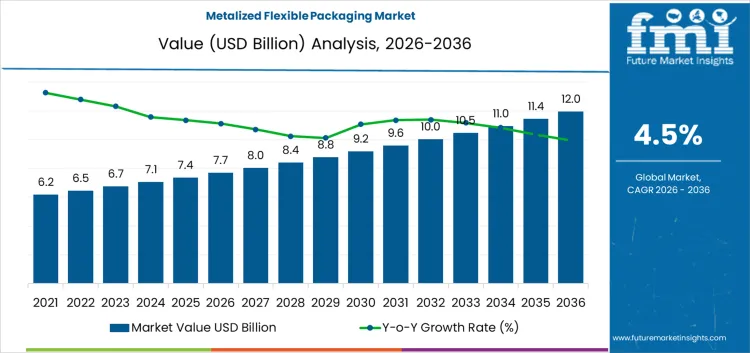
What is the Growth Rate Volatility Index for the Metalized Flexible Packaging Market through 2036?
The growth rate volatility index for the metalized flexible packaging market will likely be moderate throughout the forecast period, with consistent and steady growth. From 2026 to 2028, the market will experience gradual increases in value, from USD 7.7 billion to USD 8.9 billion. This period reflects stable growth driven by increasing adoption of metalized packaging solutions across multiple industries and the development of sustainable packaging materials.
Between 2028 and 2030, the market will see moderate acceleration, with values rising from USD 8.9 billion in 2028 to USD 10.3 billion in 2030. This acceleration will be fueled by the growing preference for packaging solutions that offer both performance and eco-friendliness, as well as technological innovations in metalized films that improve product protection and visual appeal.
From 2030 to 2036, the market will continue to experience steady growth, reaching USD 15.7 billion by 2036. Although the growth rate may stabilize, the demand for innovative, eco-friendly, and high-performance packaging solutions will ensure continued expansion. The volatility index will remain moderate, with minimal fluctuations as the market matures and new developments in packaging technology become more standardized.
Metalized Flexible Packaging Market Key Takeaways
| Metric | Value |
|---|---|
| Industry Sales Value (2026) | USD 7.7 billion |
| Industry Forecast Value (2036) | USD 15.7 billion |
| Industry Forecast CAGR 2026 to 2036 | 4.5% |
What Is Driving the Metalized Flexible Packaging Market?
Historically, the metalized flexible packaging market developed from the limitations of conventional packaging formats that struggled to balance barrier performance, weight, and cost. Early flexible films such as uncoated polyethylene and polypropylene offered basic moisture resistance and low cost, but lacked sufficient protection against oxygen, light, and aroma migration critical for shelf-stable foods, pharmaceuticals, and sensitive consumer goods. The introduction of aluminum foil laminates provided strong barriers but added rigidity and higher processing complexity.
Metalized films-polymer films coated with a thin metallic layer-emerged as a compromise that delivered enhanced barrier properties while retaining flexibility, low weight, and machinability. Initial adoption concentrated in snack foods, confectionery, and instant foods where extended shelf life and visual appeal were priorities. Brand owners valued the metallic sheen for aesthetic differentiation, while converters appreciated ease of sealing and form-fill-seal compatibility. Early market growth clarified performance expectations for metalized structures and established their role in replacing bulkier, heavier materials without compromising protection.
Future demand for the metalized flexible packaging market is expected to be shaped by growth in convenience foods, increasing logistics optimization, and consumer expectations for product freshness and quality. Growth drivers include the expansion of e-commerce and global supply chains, which heighten the need for packaging that protects against mechanical stress, humidity, and oxidation during transit and storage. Advances in coating technologies and metallization processes will improve barrier uniformity while reducing material thickness and cost.
Sustainability pressures will also influence market direction, encouraging development of recyclable mono-layer metalized films and innovations that reduce overall resource use without sacrificing performance. Brand owners are likely to specify metalized structures for premium and high-value products where shelf presence and extended shelf life deliver competitive advantage. Barriers include recycling infrastructure limitations for multi-layer films and rising raw material costs that can affect pricing. Long-term growth will depend on balancing performance with environmental considerations, alignment with regulatory packaging standards, and the ability to innovate solutions that meet evolving consumer and supply chain requirements.
What are the Key Segments in the Metalized Flexible Packaging Market?
The Metalized Flexible Packaging market is segmented by packaging format and end-use industry. Packaging formats include pouches, bags, rollstocks, wraps & films, and others, with pouches holding the largest market share at 45%. End-use industries include food & beverages, pharmaceuticals, personal care, pet food, household & other consumer goods, and industrial applications, with food & beverages leading the market at 48%. The market is driven by the increasing demand for flexible, lightweight, and cost-effective packaging solutions that provide enhanced product protection, shelf life, and visual appeal. The growing need for sustainable and high-performance packaging materials is also contributing to the expansion of the metalized flexible packaging market.
What is Driving Growth in the Pouches Segment?
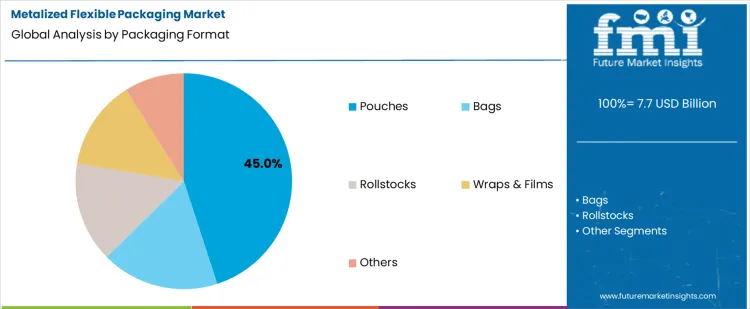
Pouches are the leading packaging format in the Metalized Flexible Packaging market, accounting for 45% of the market share. This growth is primarily driven by the increasing demand for convenient, portable, and lightweight packaging solutions. Pouches offer flexibility in terms of design and functionality, making them suitable for a wide range of products, from food items like snacks and beverages to personal care and pharmaceutical products. Their ability to provide excellent barrier properties, such as protection from moisture, light, and oxygen, helps extend the shelf life of products, particularly in the food & beverages industry.
Metalized pouches are also highly customizable, allowing for eye-catching designs that improve brand visibility. As consumer preferences continue to shift towards more convenient, easy-to-use packaging options, the demand for pouches in metalized flexible packaging is expected to grow, particularly in regions with large consumer markets like North America, Europe, and parts of Asia Pacific.
What is Driving the Demand for Food & Beverages in the End-Use Industry Segment?
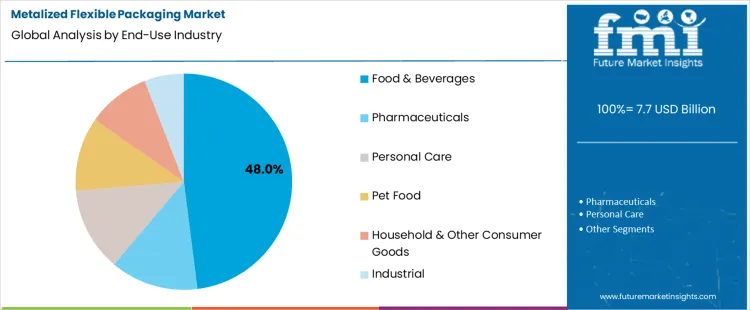
Food & beverages represent the largest end-use industry in the Metalized Flexible Packaging market, holding 48% of the market share. This growth is driven by the need for packaging solutions that provide durability, product protection, and longer shelf life for perishable food and beverage items. Metalized flexible packaging offers superior barrier properties, helping to preserve the freshness, taste, and nutritional value of food products while providing resistance to moisture, light, and oxygen. As the food & beverage industry continues to innovate and introduce new products, metalized flexible packaging is increasingly used for a wide variety of items, including snacks, ready-to-eat meals, beverages, and condiments.
Additionally, the rise in consumer demand for convenience and easy-to-carry packaging solutions is further boosting the adoption of flexible pouches and bags in this segment. The growing focus on sustainability in packaging is also contributing to the market's growth, as metalized flexible packaging can be lighter and more eco-friendly compared to traditional materials like glass and metal cans. As the food & beverage industry continues to evolve, especially in emerging markets, the demand for metalized flexible packaging solutions is expected to remain strong.
What are the Key Dynamics in the Metalized Flexible Packaging Market?
The metalized flexible packaging market is experiencing significant growth due to its increasing application in various industries, including food and beverages, pharmaceuticals, cosmetics, and consumer goods. Metalized flexible packaging offers several advantages, such as improved barrier properties, extended shelf life, and enhanced product protection against moisture, light, and oxygen. The market is driven by the demand for cost-effective, lightweight, and sustainable packaging solutions that provide high-quality product preservation. Additionally, the growing trend toward convenience packaging and the rising consumer preference for visually appealing packaging designs are also contributing to the market's growth. The use of metalized films in flexible packaging provides a sleek, premium appearance while maintaining the functionality required for sensitive products.
What are the Key Drivers of Growth in the Metalized Flexible Packaging Market?
Several factors are driving the growth of the metalized flexible packaging market. The primary driver is the increasing demand for lightweight, cost-effective, and durable packaging solutions, particularly in the food and beverage industry, where extended shelf life and product protection are crucial. Metalized flexible packaging offers excellent barrier properties that help maintain the freshness and quality of perishable goods, making it ideal for packaged foods, snacks, and beverages. Another key driver is the growing focus on sustainability and the use of recyclable materials in packaging, as manufacturers develop eco-friendly metalized films that are lighter and require less material compared to traditional packaging. Additionally, the rise of e-commerce and online food delivery services is driving demand for flexible and durable packaging that can withstand shipping and handling processes. The aesthetic appeal of metalized packaging, which offers a premium look and feel, is also contributing to its popularity among consumer goods manufacturers, particularly in cosmetics and personal care industries.
What are the Key Restraints in the Metalized Flexible Packaging Market?
Despite the market’s growth, several challenges exist. One of the main restraints is the environmental impact of some types of metalized packaging materials, which can be difficult to recycle due to the combination of metal and plastic layers. This has led to concerns regarding the sustainability of metalized flexible packaging, particularly in regions with strict recycling regulations. Additionally, the cost of production for metalized flexible packaging is higher compared to traditional packaging materials, as the metallization process involves specialized equipment and techniques that increase manufacturing costs. This price difference can be a barrier for small-scale producers or businesses operating in cost-sensitive markets. Furthermore, while metalized packaging offers enhanced protection, it can be susceptible to physical damage, such as punctures, which may compromise its protective qualities. Finally, the volatility in raw material prices, particularly for metals used in the metallization process, can impact the cost stability of metalized flexible packaging, adding another layer of uncertainty to market dynamics.
What are the Key Trends in the Metalized Flexible Packaging Market?
Several key trends are shaping the metalized flexible packaging market. One major trend is the increasing demand for sustainable and recyclable packaging solutions. As the packaging industry faces increasing pressure to reduce environmental impact, manufacturers are developing new metalized films made from biodegradable and recyclable materials. The rise of eco-conscious consumers and government regulations that require more sustainable packaging practices are driving this shift. Another trend is the growing adoption of high-barrier metalized flexible packaging in industries such as pharmaceuticals and nutraceuticals, where product integrity and protection from external contaminants are critical. The integration of smart technologies in packaging is also emerging, with innovations such as QR codes, NFC (Near Field Communication) tags, and sensors being incorporated into metalized flexible packaging to provide additional functionality and customer engagement. Furthermore, as demand for premium and aesthetically appealing packaging increases, manufacturers are using advanced printing techniques on metalized films to create visually striking designs that enhance product differentiation. These trends are expected to drive continued innovation in the metalized flexible packaging market, making it more versatile and aligned with consumer and regulatory demands.
What is the Country-Wise Analysis of the Metalized Flexible Packaging Market?
The metalized flexible packaging market is growing as industries increasingly demand packaging solutions that offer superior barrier properties, enhanced shelf life, and aesthetic appeal. Metalized flexible packaging is used in a wide range of applications, including food and beverages, pharmaceuticals, cosmetics, and consumer goods. The market is driven by consumer preferences for lightweight, durable, and eco-friendly packaging solutions. Countries like China, the USA, India, Germany, and Brazil are seeing significant growth in this market, supported by factors such as expanding industrial sectors, increasing demand for packaged goods, and advancements in packaging technologies.
CAGR for Metalized Flexible Packaging Market by Country
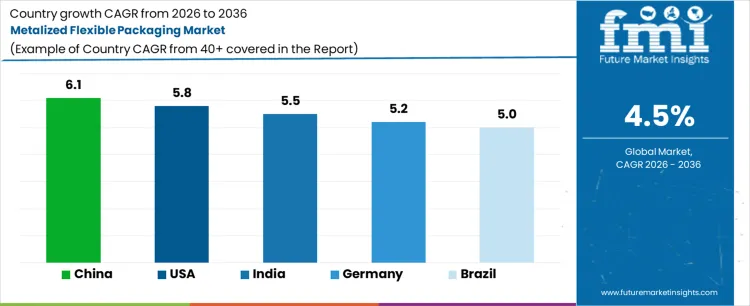
| Country | CAGR (%) |
|---|---|
| China | 6.1% |
| USA | 5.8% |
| India | 5.5% |
| Germany | 5.2% |
| Brazil | 5% |
What is Driving the Growth of the Metalized Flexible Packaging Market in China?
The metalized flexible packaging market in China is growing at a CAGR of 6.1%. The growth is driven by China’s booming manufacturing sector, increasing consumer demand for packaged goods, and advancements in packaging technologies. Metalized flexible packaging is particularly popular in the food and beverage industry, where it helps extend shelf life and maintain product quality. Additionally, the rising trend of consumer convenience and the demand for lightweight, durable packaging solutions are fueling market growth. As China continues to expand its packaging industry and focus on sustainability, the demand for metalized flexible packaging is expected to rise steadily.
How is the Metalized Flexible Packaging Market Performing in the USA?
Sales of metalized flexible packaging in the USA are growing at a CAGR of 5.8%. The USA is seeing increased demand for packaging solutions that offer enhanced protection, aesthetic appeal, and convenience, especially in the food and beverage sector. The growing trend of packaged food, ready-to-eat meals, and consumer goods is driving the adoption of metalized flexible packaging. Additionally, innovations in packaging technologies, such as improvements in barrier properties and recyclability, are contributing to the market’s growth. As the USA continues to prioritize convenience, durability, and sustainability in packaging, the demand for metalized flexible packaging is expected to expand.
What Factors are Shaping the Metalized Flexible Packaging Market in India?
Demand for metalized flexible packaging in India is growing at a CAGR of 5.5%. The growth is fueled by India’s expanding consumer goods and food processing sectors, where metalized flexible packaging provides an ideal solution for preserving product freshness and enhancing shelf life. As the demand for packaged food, beverages, and pharmaceuticals increases, so does the need for high-quality packaging solutions. Additionally, India’s rising focus on sustainability and the adoption of eco-friendly packaging solutions is further supporting the market. As India’s packaging industry continues to evolve, the demand for metalized flexible packaging is expected to grow steadily.
How is the Metalized Flexible Packaging Market Evolving in Germany?
The metalized flexible packaging market in Germany is growing at a CAGR of 5.2%. Germany’s strong industrial base, particularly in the food and beverage, pharmaceuticals, and cosmetics industries, is driving the demand for packaging solutions that offer enhanced protection, long shelf life, and sustainability. The growing trend towards lightweight, high-performance packaging, combined with consumer preferences for eco-friendly solutions, is supporting the adoption of metalized flexible packaging. As Germany continues to focus on sustainable packaging solutions and innovations in packaging technologies, the demand for metalized flexible packaging is expected to increase.
What is Contributing to the Growth of the Metalized Flexible Packaging Market in Brazil?
Sales of metalized flexible packaging in Brazil are growing at a CAGR of 5%. Brazil’s expanding food and beverage sector, coupled with rising demand for packaged consumer goods, is driving the adoption of metalized flexible packaging. The market is also being influenced by the increasing focus on packaging that offers longer shelf life, better protection, and enhanced product presentation. Additionally, Brazil’s growing emphasis on sustainability and eco-friendly packaging solutions is contributing to the demand for metalized flexible packaging. As Brazil continues to modernize its packaging industry, the demand for metalized flexible packaging is expected to grow steadily.
What is the Competitive Landscape for the Metalized Flexible Packaging Market?
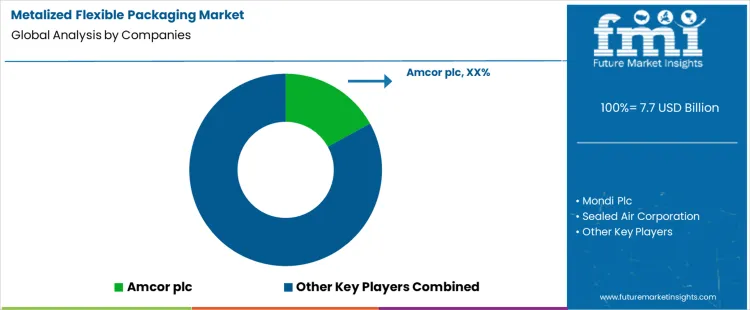
The metalized flexible packaging market is expanding as industries like food and beverage, pharmaceuticals, and consumer goods demand high-performance packaging solutions that offer improved shelf life, barrier properties, and aesthetic appeal. Amcor plc leads the market, offering innovative metalized flexible packaging solutions known for their durability, sustainability, and ability to maintain product freshness. Amcor’s advanced technologies and commitment to sustainability position it as a dominant player in the market. Mondi Plc is another key competitor, providing high-quality metalized packaging that caters to a wide range of industries, with an emphasis on product protection, lightweight materials, and sustainability.
Sealed Air Corporation competes with its range of flexible packaging solutions, which include metalized options that focus on protection, moisture resistance, and tamper-evident features. Huhtamaki Oyj is involved in the market, offering metalized flexible packaging that is widely used in the food and beverage industry, focusing on product quality and minimizing environmental impact. Transcontinental Inc. is another strong player, offering a variety of flexible packaging solutions with metalized finishes that ensure superior performance in both protection and aesthetics.
Polyplex Corporation Ltd. specializes in providing high-quality metalized films used in flexible packaging, known for their exceptional barrier properties and strength. Uflex Limited focuses on innovation by offering cost-effective metalized flexible packaging solutions with high durability and enhanced visual appeal. Jindal Poly Films Limited offers versatile metalized flexible packaging materials that are widely used in food, personal care, and other sectors, prioritizing performance and cost-effectiveness. Cosmo First Limited and Berry Global Inc. also contribute to the market by providing advanced metalized packaging solutions that meet the growing demand for lightweight, high-performance packaging with improved shelf life.
To stay competitive, companies in the metalized flexible packaging market focus on innovation, sustainability, and cost-effective solutions. Amcor plc continues to lead by enhancing its product offerings with advanced barrier technologies, sustainability initiatives, and flexible packaging designs that reduce environmental impact. Mondi Plc is expanding its product portfolio with metalized packaging that combines high performance and recyclability, ensuring that its solutions meet industry sustainability goals. Sealed Air Corporation is working on improving the functional properties of its packaging solutions, focusing on energy-efficient production and waste reduction. Huhtamaki Oyj is enhancing its metalized flexible packaging with solutions that reduce environmental impact while maintaining high protection and product quality.
Transcontinental Inc. is innovating by integrating smart packaging solutions and reducing packaging waste to stay competitive. Polyplex Corporation Ltd. focuses on advancing its technology to provide cost-effective, high-barrier packaging solutions with excellent durability. Uflex Limited is investing in developing more sustainable packaging options, focusing on increasing efficiency and reducing material waste. Jindal Poly Films Limited continues to refine its metalized packaging offerings with new material innovations that enhance performance and meet the changing needs of customers.
Cosmo First Limited and Berry Global Inc. are focusing on providing advanced metalized packaging options that cater to both performance and environmental sustainability, ensuring long-term market growth. These strategies position these companies to lead in the rapidly growing metalized flexible packaging market, which is driven by the demand for high-performance, sustainable, and cost-effective packaging solutions across industries.
Key Players of the Metalized Flexible Packaging Market
- Amcor plc
- Mondi Plc
- Sealed Air Corporation
- Huhtamaki Oyj
- Transcontinental Inc.
- Polyplex Corporation Ltd.
- Uflex Limited
- Jindal Poly Films Limited
- Cosmo First Limited
- Berry Global Inc.
Scope of the Report
| Items | Values |
|---|---|
| Quantitative Units (2026) | USD Billion |
| Material Type | Aluminum-Foil-Based Packaging, Metalized Film (PET/PP & Others), Other Metalized Substrates |
| Packaging Format | Pouches, Bags, Rollstocks, Wraps & Films, Others |
| End-Use Industry | Food & Beverages, Pharmaceuticals, Personal Care, Pet Food, Household & Other Consumer Goods, Industrial |
| Companies | Amcor plc, Mondi Plc, Sealed Air Corporation, Huhtamaki Oyj, Transcontinental Inc., Polyplex Corporation Ltd., Uflex Limited, Jindal Poly Films Limited, Cosmo First Limited, Berry Global Inc. |
| Regions Covered | North America, Latin America, Western Europe, Eastern Europe, South Asia and Pacific, East Asia, Middle East & Africa |
| Countries Covered | United States, Canada, Mexico, Brazil, Argentina, Germany, France, United Kingdom, Italy, Spain, Netherlands, China, India, Japan, South Korea, ANZ, GCC Countries, South Africa |
| Additional Attributes | Dollar by sales by material type, packaging format, end-use industry, and region. Includes market trends towards sustainability, cost-effectiveness, and the role of metalized flexible packaging in enhancing product shelf life and appeal. |
Metalized Flexible Packaging Market Segmentation
By Material Type:
- Aluminum-Foil-Based Packaging
- Metalized Film (PET/PP & Others)
- Other Metalized Substrates
By Packaging Format:
- Pouches
- Bags
- Rollstocks
- Wraps & Films
- Others
By End-Use Industry:
- Food & Beverages
- Pharmaceuticals
- Personal Care
- Pet Food
- Household & Other Consumer Goods
- Industrial
- Other
By Region:
- Asia Pacific
- China
- Japan
- India
- Australia & New Zealand
- ASEAN
- Rest of Asia Pacific
- Europe
- Germany
- United Kingdom
- France
- Italy
- Spain
- Nordic
- BENELUX
- Rest of Europe
- North America
- United States
- Canada
- Mexico
- Latin America
- Brazil
- Argentina
- Rest of Latin America
- Middle East & Africa
- Kingdom of Saudi Arabia
- Other GCC Countries
- South Africa
- Rest of Middle East & Africa
Bibliography
- European Commission. (2023). Proposal for a regulation on packaging and packaging waste (COM(2023) 557 final). Publications Office of the European Union.
- United Nations Environment Programme. (2023). Global assessment of marine litter and plastic pollution: Policy brief. UNEP.
- Ellen MacArthur Foundation, & United Nations Environment Programme. (2023). The state of play on plastic packaging recycling and reuse pathways: National and regional policy levers. UNEP.
- USA Environmental Protection Agency. (2023). Advancing sustainable materials management: 2023 fact sheet. EPA.
- International Organization for Standardization. (2024). ISO 18604: Packaging and the environment - Material recycling - Plastic packaging and plastic packaging waste. ISO.
Frequently Asked Questions
How big is the metalized flexible packaging market in 2026?
The global metalized flexible packaging market is estimated to be valued at USD 7.7 billion in 2026.
What will be the size of metalized flexible packaging market in 2036?
The market size for the metalized flexible packaging market is projected to reach USD 12.0 billion by 2036.
How much will be the metalized flexible packaging market growth between 2026 and 2036?
The metalized flexible packaging market is expected to grow at a 4.5% CAGR between 2026 and 2036.
What are the key product types in the metalized flexible packaging market?
The key product types in metalized flexible packaging market are aluminum‑foil‑based packaging, metalized film (pet/pp & others) and other metalized substrates.
Which packaging format segment to contribute significant share in the metalized flexible packaging market in 2026?
In terms of packaging format, pouches segment to command 45.0% share in the metalized flexible packaging market in 2026.
Preview the report firsthand - request a free sample
Get SampleGet the brochure for pricing and purchase details.
Get PDFTable of Content
- Executive Summary
- Global Market Outlook
- Demand-side Trends
- Supply-side Trends
- Technology Roadmap Analysis
- Analysis and Recommendations
- Market Overview
- Market Coverage / Taxonomy
- Market Definition / Scope / Limitations
- Market Background
- Market Dynamics
- Drivers
- Restraints
- Opportunity
- Trends
- Scenario Forecast
- Demand in Optimistic Scenario
- Demand in Likely Scenario
- Demand in Conservative Scenario
- Opportunity Map Analysis
- Product Life Cycle Analysis
- Supply Chain Analysis
- Investment Feasibility Matrix
- Value Chain Analysis
- PESTLE and Porter’s Analysis
- Regulatory Landscape
- Regional Parent Market Outlook
- Production and Consumption Statistics
- Import and Export Statistics
- Market Dynamics
- Global Market Analysis 2021 to 2025 and Forecast, 2026 to 2036
- Historical Market Size Value (USD Million) Analysis, 2021 to 2025
- Current and Future Market Size Value (USD Million) Projections, 2026 to 2036
- Y-o-Y Growth Trend Analysis
- Absolute $ Opportunity Analysis
- Global Market Pricing Analysis 2021 to 2025 and Forecast 2026 to 2036
- Global Market Analysis 2021 to 2025 and Forecast 2026 to 2036, By Material Type
- Introduction / Key Findings
- Historical Market Size Value (USD Million) Analysis By Material Type, 2021 to 2025
- Current and Future Market Size Value (USD Million) Analysis and Forecast By Material Type, 2026 to 2036
- Aluminum‑Foil‑Based Packaging
- Metalized Film (PET/PP & Others)
- Other Metalized Substrates
- Aluminum‑Foil‑Based Packaging
- Y-o-Y Growth Trend Analysis By Material Type, 2021 to 2025
- Absolute $ Opportunity Analysis By Material Type, 2026 to 2036
- Global Market Analysis 2021 to 2025 and Forecast 2026 to 2036, By Packaging Format
- Introduction / Key Findings
- Historical Market Size Value (USD Million) Analysis By Packaging Format, 2021 to 2025
- Current and Future Market Size Value (USD Million) Analysis and Forecast By Packaging Format, 2026 to 2036
- Pouches
- Bags
- Rollstocks
- Wraps & Films
- Others
- Pouches
- Y-o-Y Growth Trend Analysis By Packaging Format, 2021 to 2025
- Absolute $ Opportunity Analysis By Packaging Format, 2026 to 2036
- Global Market Analysis 2021 to 2025 and Forecast 2026 to 2036, By End‑Use Industry
- Introduction / Key Findings
- Historical Market Size Value (USD Million) Analysis By End‑Use Industry, 2021 to 2025
- Current and Future Market Size Value (USD Million) Analysis and Forecast By End‑Use Industry, 2026 to 2036
- Food & Beverages
- Pharmaceuticals
- Personal Care
- Pet Food
- Household & Other Consumer Goods
- Industrial
- Food & Beverages
- Y-o-Y Growth Trend Analysis By End‑Use Industry, 2021 to 2025
- Absolute $ Opportunity Analysis By End‑Use Industry, 2026 to 2036
- Global Market Analysis 2021 to 2025 and Forecast 2026 to 2036, By Region
- Introduction
- Historical Market Size Value (USD Million) Analysis By Region, 2021 to 2025
- Current Market Size Value (USD Million) Analysis and Forecast By Region, 2026 to 2036
- North America
- Latin America
- Western Europe
- Eastern Europe
- East Asia
- South Asia and Pacific
- Middle East & Africa
- Market Attractiveness Analysis By Region
- North America Market Analysis 2021 to 2025 and Forecast 2026 to 2036, By Country
- Historical Market Size Value (USD Million) Trend Analysis By Market Taxonomy, 2021 to 2025
- Market Size Value (USD Million) Forecast By Market Taxonomy, 2026 to 2036
- By Country
- USA
- Canada
- Mexico
- By Material Type
- By Packaging Format
- By End‑Use Industry
- By Country
- Market Attractiveness Analysis
- By Country
- By Material Type
- By Packaging Format
- By End‑Use Industry
- Key Takeaways
- Latin America Market Analysis 2021 to 2025 and Forecast 2026 to 2036, By Country
- Historical Market Size Value (USD Million) Trend Analysis By Market Taxonomy, 2021 to 2025
- Market Size Value (USD Million) Forecast By Market Taxonomy, 2026 to 2036
- By Country
- Brazil
- Chile
- Rest of Latin America
- By Material Type
- By Packaging Format
- By End‑Use Industry
- By Country
- Market Attractiveness Analysis
- By Country
- By Material Type
- By Packaging Format
- By End‑Use Industry
- Key Takeaways
- Western Europe Market Analysis 2021 to 2025 and Forecast 2026 to 2036, By Country
- Historical Market Size Value (USD Million) Trend Analysis By Market Taxonomy, 2021 to 2025
- Market Size Value (USD Million) Forecast By Market Taxonomy, 2026 to 2036
- By Country
- Germany
- UK
- Italy
- Spain
- France
- Nordic
- BENELUX
- Rest of Western Europe
- By Material Type
- By Packaging Format
- By End‑Use Industry
- By Country
- Market Attractiveness Analysis
- By Country
- By Material Type
- By Packaging Format
- By End‑Use Industry
- Key Takeaways
- Eastern Europe Market Analysis 2021 to 2025 and Forecast 2026 to 2036, By Country
- Historical Market Size Value (USD Million) Trend Analysis By Market Taxonomy, 2021 to 2025
- Market Size Value (USD Million) Forecast By Market Taxonomy, 2026 to 2036
- By Country
- Russia
- Poland
- Hungary
- Balkan & Baltic
- Rest of Eastern Europe
- By Material Type
- By Packaging Format
- By End‑Use Industry
- By Country
- Market Attractiveness Analysis
- By Country
- By Material Type
- By Packaging Format
- By End‑Use Industry
- Key Takeaways
- East Asia Market Analysis 2021 to 2025 and Forecast 2026 to 2036, By Country
- Historical Market Size Value (USD Million) Trend Analysis By Market Taxonomy, 2021 to 2025
- Market Size Value (USD Million) Forecast By Market Taxonomy, 2026 to 2036
- By Country
- China
- Japan
- South Korea
- By Material Type
- By Packaging Format
- By End‑Use Industry
- By Country
- Market Attractiveness Analysis
- By Country
- By Material Type
- By Packaging Format
- By End‑Use Industry
- Key Takeaways
- South Asia and Pacific Market Analysis 2021 to 2025 and Forecast 2026 to 2036, By Country
- Historical Market Size Value (USD Million) Trend Analysis By Market Taxonomy, 2021 to 2025
- Market Size Value (USD Million) Forecast By Market Taxonomy, 2026 to 2036
- By Country
- India
- ASEAN
- Australia & New Zealand
- Rest of South Asia and Pacific
- By Material Type
- By Packaging Format
- By End‑Use Industry
- By Country
- Market Attractiveness Analysis
- By Country
- By Material Type
- By Packaging Format
- By End‑Use Industry
- Key Takeaways
- Middle East & Africa Market Analysis 2021 to 2025 and Forecast 2026 to 2036, By Country
- Historical Market Size Value (USD Million) Trend Analysis By Market Taxonomy, 2021 to 2025
- Market Size Value (USD Million) Forecast By Market Taxonomy, 2026 to 2036
- By Country
- Kingdom of Saudi Arabia
- Other GCC Countries
- Turkiye
- South Africa
- Other African Union
- Rest of Middle East & Africa
- By Material Type
- By Packaging Format
- By End‑Use Industry
- By Country
- Market Attractiveness Analysis
- By Country
- By Material Type
- By Packaging Format
- By End‑Use Industry
- Key Takeaways
- Key Countries Market Analysis
- USA
- Pricing Analysis
- Market Share Analysis, 2025
- By Material Type
- By Packaging Format
- By End‑Use Industry
- Canada
- Pricing Analysis
- Market Share Analysis, 2025
- By Material Type
- By Packaging Format
- By End‑Use Industry
- Mexico
- Pricing Analysis
- Market Share Analysis, 2025
- By Material Type
- By Packaging Format
- By End‑Use Industry
- Brazil
- Pricing Analysis
- Market Share Analysis, 2025
- By Material Type
- By Packaging Format
- By End‑Use Industry
- Chile
- Pricing Analysis
- Market Share Analysis, 2025
- By Material Type
- By Packaging Format
- By End‑Use Industry
- Germany
- Pricing Analysis
- Market Share Analysis, 2025
- By Material Type
- By Packaging Format
- By End‑Use Industry
- UK
- Pricing Analysis
- Market Share Analysis, 2025
- By Material Type
- By Packaging Format
- By End‑Use Industry
- Italy
- Pricing Analysis
- Market Share Analysis, 2025
- By Material Type
- By Packaging Format
- By End‑Use Industry
- Spain
- Pricing Analysis
- Market Share Analysis, 2025
- By Material Type
- By Packaging Format
- By End‑Use Industry
- France
- Pricing Analysis
- Market Share Analysis, 2025
- By Material Type
- By Packaging Format
- By End‑Use Industry
- India
- Pricing Analysis
- Market Share Analysis, 2025
- By Material Type
- By Packaging Format
- By End‑Use Industry
- ASEAN
- Pricing Analysis
- Market Share Analysis, 2025
- By Material Type
- By Packaging Format
- By End‑Use Industry
- Australia & New Zealand
- Pricing Analysis
- Market Share Analysis, 2025
- By Material Type
- By Packaging Format
- By End‑Use Industry
- China
- Pricing Analysis
- Market Share Analysis, 2025
- By Material Type
- By Packaging Format
- By End‑Use Industry
- Japan
- Pricing Analysis
- Market Share Analysis, 2025
- By Material Type
- By Packaging Format
- By End‑Use Industry
- South Korea
- Pricing Analysis
- Market Share Analysis, 2025
- By Material Type
- By Packaging Format
- By End‑Use Industry
- Russia
- Pricing Analysis
- Market Share Analysis, 2025
- By Material Type
- By Packaging Format
- By End‑Use Industry
- Poland
- Pricing Analysis
- Market Share Analysis, 2025
- By Material Type
- By Packaging Format
- By End‑Use Industry
- Hungary
- Pricing Analysis
- Market Share Analysis, 2025
- By Material Type
- By Packaging Format
- By End‑Use Industry
- Kingdom of Saudi Arabia
- Pricing Analysis
- Market Share Analysis, 2025
- By Material Type
- By Packaging Format
- By End‑Use Industry
- Turkiye
- Pricing Analysis
- Market Share Analysis, 2025
- By Material Type
- By Packaging Format
- By End‑Use Industry
- South Africa
- Pricing Analysis
- Market Share Analysis, 2025
- By Material Type
- By Packaging Format
- By End‑Use Industry
- USA
- Market Structure Analysis
- Competition Dashboard
- Competition Benchmarking
- Market Share Analysis of Top Players
- By Regional
- By Material Type
- By Packaging Format
- By End‑Use Industry
- Competition Analysis
- Competition Deep Dive
- Amcor plc
- Overview
- Product Portfolio
- Profitability by Market Segments (Product/Age /Sales Channel/Region)
- Sales Footprint
- Strategy Overview
- Marketing Strategy
- Product Strategy
- Channel Strategy
- Mondi Plc
- Sealed Air Corporation
- Huhtamaki Oyj
- Transcontinental Inc.
- Polyplex Corporation Ltd.
- Uflex Limited
- Jindal Poly Films Limited
- Cosmo First Limited
- Berry Global Inc.
- Amcor plc
- Competition Deep Dive
- Assumptions & Acronyms Used
- Research Methodology


