

- Industry Size (2026)
- USD 860 Mn
- Forecast (2036)
- USD 1980.6 Mn
- CAGR (2026 to 2036)
- 8.7%
Microfibre-Optimised Laundry Detergent & Additive Formulation Substrates Market Forecast and Outlook 2026 to 2036
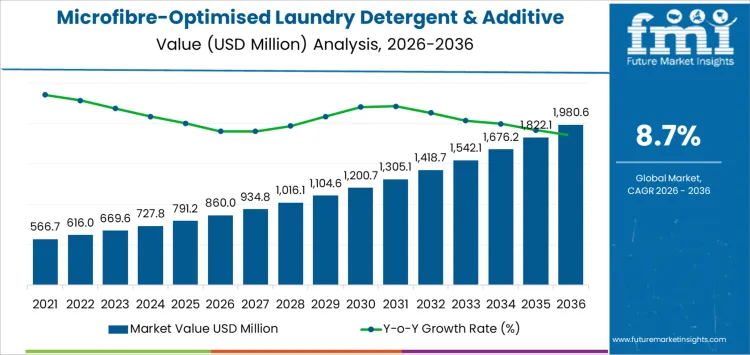
The microfibre-optimised laundry detergent and additive formulation substrates market is expected to grow from USD 860 million in 2026 to USD 1,980.6 million by 2036, reflecting a compound annual growth rate (CAGR) of 8.7%. These substrates are designed to enhance the cleaning efficiency of laundry detergents, particularly for microfibre fabrics, which are commonly used in textiles, sportswear, and cleaning products. As the demand for high-performance and environmentally friendly laundry detergents rises, the market for these optimized formulations is expanding. The growth of this market is further supported by the increasing awareness of microfiber pollution and the growing demand for sustainable and effective cleaning solutions.
The demand for microfibre-optimised formulations is also driven by the increasing consumer preference for advanced laundry care products that not only deliver superior cleaning results but also minimize the environmental impact of washing. Additionally, technological advancements in detergent formulation, which improve fabric care and enhance the lifespan of microfibre materials, are contributing to the market's growth. The ongoing trend of adopting eco-friendly and high-performance cleaning products is expected to drive further adoption of these substrates in both consumer and industrial laundry markets.
Quick Stats of the Microfibre-Optimised Laundry Detergent & Additive Formulation Substrates Market
- Microfibre-Optimised Laundry Detergent & Additive Formulation Substrates Market Value (2026): USD 860 million
- Microfibre-Optimised Laundry Detergent & Additive Formulation Substrates Market Forecast Value (2036): USD 1,980.6 million
- Microfibre-Optimised Laundry Detergent & Additive Formulation Substrates Market Global Forecast CAGR (2026-2036): 8.7%
- Microfibre-Optimised Laundry Detergent & Additive Formulation Substrates Market Leading Segment: End-use / Application (Household Laundry) 50%
- Key Growth Regions in Microfibre-Optimised Laundry Detergent & Additive Formulation Substrates Market: China
- Top Players in Microfibre-Optimised Laundry Detergent & Additive Formulation Substrates Market: P&G, Henkel, Liby, Nirma, Unilever Brazil, Kao Corporation, Unilever, Werner & Mertz, Blue Moon
What is the Growth Forecast for the Microfibre-Optimised Laundry Detergent & Additive Formulation Substrates Market through 2036?
The market growth curve shape analysis for the microfibre-optimised laundry detergent and additive formulation substrates market shows a steady increase over the forecast period, with noticeable acceleration in the later years. Starting at USD 860 million in 2026, the market grows to USD 936.3 million in 2027 and USD 1,019.4 million in 2028, reflecting gradual adoption of these specialized detergent substrates as awareness and demand for microfiber care increase.
From 2028 to 2030, the market experiences moderate growth, reaching USD 1,110.6 million in 2029 and USD 1,210.1 million in 2030. The growth curve shows a period of gradual acceleration, as innovations in formulation substrates lead to enhanced performance and greater consumer and industrial interest. Between 2030 and 2035, the market continues to expand, reaching USD 1,318.6 million in 2031, USD 1,437.2 million in 2032, and USD 1,567.1 million in 2033.
By 2035, the market is projected to reach USD 1,709.9 million, with the final value of USD 1,980.6 million expected in 2036. The growth curve highlights consistent expansion, driven by technological improvements, increasing consumer awareness of microfiber-specific laundry needs, and a strong push for sustainable, high-performance laundry products. The overall trajectory suggests that the market will experience significant acceleration as demand for microfiber-optimized laundry solutions continues to grow.
Microfibre-Optimised Laundry Detergent & Additive Formulation Substrates Market Key Takeaways
| Metric | Value |
|---|---|
| Industry Sales Value (2026) | USD 860 million |
| Industry Forecast Value (2036) | USD 1,980.6 million |
| Industry Forecast CAGR (2026-2036) | 8.7% |
What Is Driving the Demand for the Microfibre-Optimised Laundry Detergent & Additive Formulation Substrates Market Globally?
The global demand for microfibre optimised laundry detergent and additive formulation substrates is driven by the widespread use of microfibre textiles in apparel, activewear, home textiles, and technical fabrics, and by growing consumer expectations for effective cleaning without damaging delicate fibres. Microfibres, with their fine filament structure, trap soil, oil, and odours more readily than traditional fabrics, and conventional detergents can sometimes cause fibre damage, pilling, or loss of performance properties. Detergent formulations optimised for microfibre aim to balance cleaning power with gentle action, preserving the integrity, softness, and moisture management properties of these textiles. Additive substrates may incorporate enzymes, surfactants, or conditioning agents that target typical microfibre soiling while minimising residue and fibre stress. As active lifestyles and performance textile adoption grow globally particularly in North America, Western Europe, and Asia Pacific consumers increasingly seek laundry solutions that care for high performance and delicate garments.
Future demand for microfibre optimised laundry detergents and additive substrates is expected to grow as microfibre usage expands and awareness of fabric specific care increases. Continued innovation in surfactant chemistry, fibre friendly enzyme blends, and biodegradable formulation platforms will support the development of products that deliver effective soil removal with minimal impact on fibre structure and performance. Retailers and brands that offer specialised laundry solutions may attract consumers who prioritise garment longevity, colour retention, and functional performance, strengthening product uptake. Growth may also be supported by e commerce and direct to consumer channels that broaden access to niche and premium laundry formulations tailored to specific materials. Sustainability considerations, such as reducing microfibre shedding during washing and incorporating eco friendly ingredients, will further influence consumer preferences and formulation strategies. Regulatory emphasis on labelling clarity and environmental performance may encourage manufacturers to highlight microfibre optimised benefits and safe ingredients, making such products more visible in competitive markets. As the balance between effective cleaning and fabric care becomes more important to consumers, demand for tailored microfibre optimised detergent and additive formulations is expected to grow steadily worldwide.
What is the Segment Analysis for the Microfibre-Optimised Laundry Detergent & Additive Formulation Substrates Market?
The microfibre-optimised laundry detergent and additive formulation substrates market is shaped by key segments based on end-use/application and packaging format/type. Among the end-use categories, household laundry holds the largest share, accounting for 50% of the market, followed by commercial laundry, retail detergents, and the value laundry segment. These segments are influenced by growing consumer awareness of the importance of fibre care, leading to increased demand for detergents and additives specifically designed for microfibre fabrics. Packaging formats, such as liquid pouches & dose pods, are the most popular, representing 45% of the market, with refill cartridges, sachets & single-dose packs, and powder sachets also contributing significantly. Regional factors, particularly in North America and Europe, play a crucial role in shaping the demand for microfibre-optimised detergent products, as consumers seek more efficient, environmentally friendly laundry solutions. Understanding these segments offers insights into the market's growth drivers, including evolving consumer preferences for convenient, eco-friendly packaging and high-performance detergents.
What is Driving Growth in the Household Laundry Segment of the Microfibre-Optimised Laundry Detergent & Additive Formulation Substrates Market?
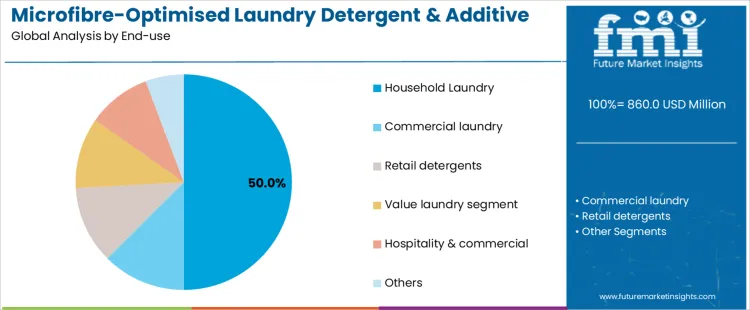
The household laundry segment is the largest end-use category in the microfibre-optimised laundry detergent and additive formulation substrates market, accounting for 50% of the total market share. This growth is primarily driven by increasing consumer awareness of the need for specialized laundry products that help protect and maintain microfibre fabrics. As microfibre materials are widely used in household textiles such as towels, bedding, and cleaning cloths, consumers are looking for detergents that can effectively clean these fabrics without causing damage or wear. Products that enhance the durability and performance of microfibre textiles are in high demand, particularly as consumers become more focused on fabric care and sustainability. The growing popularity of eco-friendly, high-performance laundry products further fuels the growth of this segment. Household laundry detergents specifically formulated for microfibre fabrics offer benefits like better fabric softness, colour retention, and moisture-wicking properties, making them highly sought after by consumers who value both function and sustainability. As the trend toward more sustainable laundry practices continues, the household laundry segment is expected to maintain a leading position in the market, driven by consumer preferences for high-quality, environmentally conscious products that extend the lifespan of their textiles.
What is Contributing to the Growth of Liquid Pouches & Dose Pods Packaging in the Microfibre-Optimised Laundry Detergent Market?
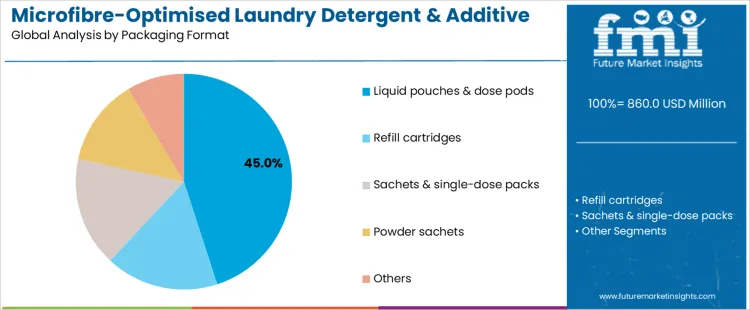
Liquid pouches & dose pods are the leading packaging format in the microfibre-optimised laundry detergent and additive formulation substrates market, accounting for 45% of the market share. This growth is largely driven by the convenience, ease of use, and portion control that these packaging formats offer to consumers. Liquid pouches and dose pods provide a mess-free, easy-to-handle solution for measuring the appropriate amount of detergent, which appeals to busy consumers seeking quick and efficient laundry solutions. Additionally, the rising consumer preference for eco-friendly packaging has contributed to the popularity of liquid pouches, as they are often more lightweight and easier to recycle compared to traditional plastic bottles. Dose pods, in particular, have become a preferred choice due to their convenience, reducing the risk of overuse or waste. These packaging formats also align with the growing trend of reducing plastic waste, as manufacturers increasingly shift to sustainable materials. The combination of convenience, environmental benefits, and effective cleaning properties makes liquid pouches & dose pods a key growth driver in the microfibre-optimised laundry detergent market. As the demand for more sustainable and user-friendly packaging solutions continues, this segment is expected to remain dominant, shaping the future of the market.
What are the Key Dynamics of the Global Microfibre-Optimised Laundry Detergent & Additive Formulation Substrates Market?
The global microfibre optimised laundry detergent and additive formulation substrates market is growing as consumers and professional laundering services seek products that clean textile microfibers effectively and support fabric longevity. These formulations are tailored to trap and remove microfibers during washing, helping reduce environmental release and maintain fabric performance. Growth is supported by rising awareness of microfiber pollution, demand for specialty care products, and adoption of advanced substrates that work with modern washing machines and fabrics. Manufacturers are developing solutions that meet performance and sustainability expectations across regions.
What are the Key Drivers for the Global Microfibre Optimised Laundry Detergent & Additive Formulation Substrates Market?
Increased public awareness of microfiber pollution and its impact on waterways motivates demand for laundry solutions that address fiber shedding. Consumers and institutions are looking for detergents and additives that enhance capture of microfibers in wastewater while thoroughly cleaning garments. Growth in premium fabric care segments and demand for performance detergents that protect delicate textiles supports market uptake. Innovation in formulation science enables product differentiation through effective soil removal and fiber protection. Partnerships with appliance manufacturers and regulatory interest in reducing microfiber release from washing machines also support market expansion.
What are the Restraints for the Global Microfibre Optimised Laundry Detergent & Additive Formulation Substrates Market?
One restraint is higher cost of specialised formulations compared with standard laundry detergents, which can limit adoption among price sensitive consumer segments. Some consumers may not yet perceive microfiber capture as a priority, focusing instead on basic cleaning performance or fragrance attributes. Variation in regional regulatory frameworks for microfiber mitigation can create uncertainty for product positioning and investment decisions. Performance expectations may differ depending on fabric types and washing conditions, requiring extensive testing and product refinement. Competition from alternative microfiber mitigation approaches, such as in machine filters or external capture devices, can also influence market growth.
What is the Key Trends in the Global Microfibre Optimised Laundry Detergent & Additive Formulation Substrates Market?
A key trend is development of multifunctional products that combine effective cleaning with enhanced microfiber capture and fabric care benefits. Manufacturers are focusing on substrates that perform across a range of water temperatures and machine types to address diverse consumer needs. Collaboration with environmental groups, appliance makers and textile producers is increasing to support integrated solutions that reduce microfiber release. Brands are investing in consumer education about microfiber pollution and product use best practices. Expansion of eco certified and lower impact formulations that align with sustainability commitments by retailers and consumers is influencing product development and market uptake.
What are the Key Insights from the Microfibre-Optimised Laundry Detergent & Additive Formulation Substrates Market Analysis?
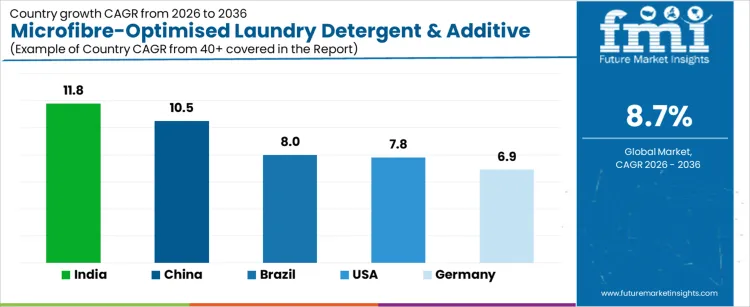
The microfibre-optimised laundry detergent and additive formulation substrates market is forecasted to grow steadily across key regions, with varying compound annual growth rates (CAGRs) reflecting the demand and adoption trends in different countries. The growth is driven by increasing consumer awareness of microfiber pollution, rising demand for eco-friendly laundry solutions, and innovations in detergent formulations designed to better capture microfibers during washing. Countries like India and China are expected to experience high growth rates, driven by rapid urbanization and a growing middle class. Meanwhile, developed markets such as the United States and Germany are projected to see moderate growth, fueled by rising sustainability concerns and the adoption of microfiber-optimised solutions. By analyzing regional growth patterns, businesses can identify strategic opportunities in key markets and position their offerings to meet the increasing demand for sustainable laundry products.
| Country | CAGR (2026 to 2036) |
|---|---|
| USA | 7.8% |
| Germany | 6.9% |
| China | 10.5% |
| India | 11.8% |
| Brazil | 8% |
What is the Growth Outlook for the Microfibre-Optimised Laundry Detergent & Additive Formulation Substrates Market in the USA?
The market for microfibre-optimised laundry detergent and additive formulation substrates in the United States is projected to grow at a CAGR of 7.8%. This growth is driven by the increasing consumer demand for eco-friendly and sustainable laundry products, particularly those that reduce the impact of microfiber pollution. As awareness of microfiber waste grows, both consumers and manufacturers in the U.S. are seeking solutions to address this issue. Innovations in detergent formulations and the growing focus on sustainability are expected to play a key role in driving market growth. The U.S. market benefits from a highly developed retail and distribution network, which facilitates widespread access to these products. As sustainability continues to be a priority, the demand for microfiber-optimised laundry products in the U.S. is expected to steadily increase.
What is the Market Outlook for the Microfibre-Optimised Laundry Detergent & Additive Formulation Substrates Market in Germany?
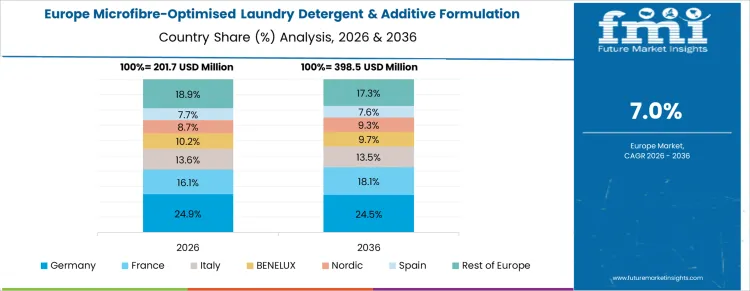
The market for microfibre-optimised laundry detergent and additive formulation substrates in Germany is expected to grow at a moderate pace, with a projected CAGR of 6.9%. Germany is known for its strong commitment to sustainability and environmental protection, and the demand for eco-friendly laundry solutions is growing. As consumers and manufacturers become increasingly aware of the environmental impact of microfibers, Germany's market for specialized laundry detergents and additives is gaining momentum. The country’s stringent environmental regulations and increasing consumer preference for sustainable products further support market growth. Germany’s well-established retail infrastructure and consumer interest in high-performance, environmentally conscious laundry solutions will continue to drive the demand for these products in the coming years.
What is the Growth Forecast for the Microfibre-Optimised Laundry Detergent & Additive Formulation Substrates Market in China?
The microfibre-optimised laundry detergent and additive formulation substrates market in China is expected to grow rapidly, with a projected CAGR of 10.5%. China’s large and growing consumer market, along with increasing awareness of environmental issues, is driving the demand for more sustainable and eco-friendly products. The country's rising middle class and urbanization are contributing to greater adoption of advanced laundry solutions, including microfiber-optimised products. China is also experiencing a shift toward more sustainable consumer habits, with consumers becoming more concerned about the environmental impact of their purchases. As the market for eco-friendly solutions continues to grow, China is expected to see significant expansion in the adoption of microfibre-optimised laundry detergents and additives.
What is the Market Outlook for the Microfibre-Optimised Laundry Detergent & Additive Formulation Substrates Market in India?
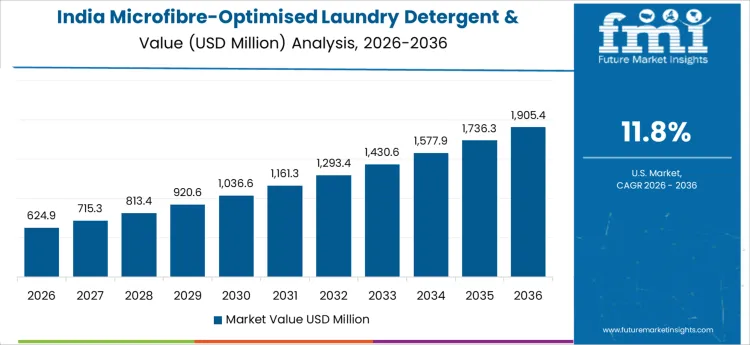
The market for microfibre-optimised laundry detergent and additive formulation substrates in India is projected to grow at the highest rate, with a CAGR of 11.8%. This rapid growth is fueled by India’s increasing urbanization, rising disposable incomes, and growing awareness of environmental issues. As the middle class expands, there is a growing demand for sustainable products, including laundry solutions that help reduce microfiber pollution. The increasing focus on eco-friendly products, combined with a large consumer base, makes India a key market for these innovative detergent formulations. India’s market growth is also supported by the rise in consumer education around the impact of microfibers on the environment, leading to greater interest in sustainable alternatives for everyday cleaning products.
What are the Growth Prospects for the Microfibre-Optimised Laundry Detergent & Additive Formulation Substrates Market in Brazil?
The microfibre-optimised laundry detergent and additive formulation substrates market in Brazil is expected to grow at a CAGR of 8%. Brazil’s market growth is supported by a growing awareness of sustainability and environmental issues, which is leading to a greater demand for products that help reduce microfiber pollution. As Brazil’s middle class expands and consumer preferences shift toward more eco-friendly options, the adoption of microfiber-optimised laundry products is expected to rise. The country’s well-established retail sector ensures that these products are widely accessible. Additionally, increasing efforts to improve environmental standards in Latin America are contributing to the growing market for sustainable laundry solutions in Brazil. This trend is expected to continue as Brazilian consumers place greater importance on the environmental impact of their purchasing decisions.
What is the Competitive Landscape for the Microfibre-Optimised Laundry Detergent & Additive Formulation Substrates Market?
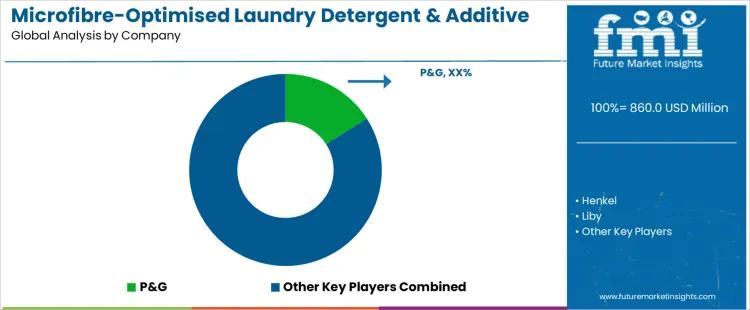
The microfibre-optimised laundry detergent and additive formulation substrates market is expanding, driven by the increasing consumer demand for sustainable and effective laundry solutions. P&G leads the market with its range of advanced detergents and additives, designed to preserve the integrity of microfibres while enhancing cleaning performance. Their products integrate cutting-edge technologies to ensure that synthetic microfibres are protected during the washing process, solidifying P&G’s position as a market leader. Henkel, Liby, and Nirma are key competitors, each offering a variety of laundry detergents and additives that target microfibre protection. Henkel is known for its high-performance detergents that cater to both environmental sustainability and fabric care, while Liby and Nirma provide affordable options without compromising on quality or cleaning efficiency.
Unilever Brazil, Kao Corporation, and Unilever also contribute significantly to the market with their innovative detergent formulations. Unilever Brazil focuses on tailoring solutions for local preferences, while Kao Corporation leverages its expertise in chemical formulations to develop detergents that safeguard microfibres and enhance washing efficiency. Werner & Mertz and Blue Moon add competition with their environmentally conscious detergent offerings, emphasizing sustainability and fibre protection in their formulations. These companies compete by focusing on product innovation, environmental responsibility, and their ability to deliver high-quality, effective solutions that protect both fabrics and the environment in the growing market for microfibre-optimised laundry products.
Key Players of the Microfibre-Optimised Laundry Detergent & Additive Formulation Substrates Market
- P&G
- Henkel
- Liby
- Nirma
- Unilever Brazil
- Kao Corporation
- Unilever
- Werner & Mertz
- Blue Moon
Scope of the Report
| Items | Values |
|---|---|
| Quantitative Units (2026) | USD Million |
| End-use / Application | Household Laundry, Commercial Laundry, Retail Detergents, Value Laundry Segment, Hospitality & Commercial, Others |
| Packaging Format / Type | Liquid Pouches & Dose Pods, Refill Cartridges, Sachets & Single-Dose Packs, Powder Sachets, Others |
| Material | Surfactant & Enzyme Substrates, High-Stability Enzyme Blends, Standard Surfactant Substrates, Cost-Optimised Surfactant Bases, Others |
| Technology | Microfibre-Release Reduction Additives, Time-Release Enzyme Tech, Micro-Encapsulation Additives, Low-Cost Stabilisers, Others |
| Companies | P&G, Henkel, Liby, Nirma, Unilever Brazil, Kao Corporation, Unilever, Werner & Mertz, Blue Moon |
| Regions Covered | North America, Latin America, Western Europe, Eastern Europe, South Asia and Pacific, East Asia, Middle East & Africa |
| Countries Covered | United States, Canada, Mexico, Brazil, Argentina, Germany, France, United Kingdom, Italy, Spain, Netherlands, China, India, Japan, South Korea, ANZ, GCC Countries, South Africa |
| Additional Attributes | Dollar by sales by end-use/application, packaging format/type, material, technology, and region. Includes market trends in microfibre-optimised laundry detergent and additive formulations, focusing on surfactant & enzyme substrates, enzyme blends, microfibre-release reduction additives, and time-release technology. Highlights packaging types such as liquid pouches, sachets, and refill cartridges, as well as cost-optimised surfactant bases and micro-encapsulation additives. Focus on cost-effectiveness, regulatory compliance, and market share of key companies. |
Microfibre-Optimised Laundry Detergent & Additive Formulation Substrates Market Segmentation
End-use / Application
- Household Laundry
- Commercial Laundry
- Retail Detergents
- Value Laundry Segment
- Hospitality & Commercial
- Others
Packaging Format / Type
- Liquid pouches & dose pods
- Refill cartridges
- Sachets & single-dose packs
- Powder sachets
- Others
Material
- Surfactant & enzyme substrates
- High-stability enzyme blends
- Standard surfactant substrates
- Cost-optimised surfactant bases
- Others
Technology
- Microfibre-release reduction additives
- Time-release enzyme tech
- Micro-encapsulation additives
- Low-cost stabilisers
- Others
Region
- Asia Pacific
- China
- Japan
- South Korea
- India
- Australia & New Zealand
- ASEAN
- Rest of Asia Pacific
- Europe
- Germany
- United Kingdom
- France
- Italy
- Spain
- Nordic
- BENELUX
- Rest of Europe
- North America
- United States
- Canada
- Mexico
- Latin America
- Brazil
- Chile
- Rest of Latin America
- Middle East & Africa
- Kingdom of Saudi Arabia
- Other GCC Countries
- Turkey
- South Africa
- Other African Union
- Rest of Middle East & Africa
Frequently Asked Questions
How big is the microfibre-optimised laundry detergent & additive formulation substrates market in 2026?
The global microfibre-optimised laundry detergent & additive formulation substrates market is estimated to be valued at USD 860.0 million in 2026.
What will be the size of microfibre-optimised laundry detergent & additive formulation substrates market in 2036?
The market size for the microfibre-optimised laundry detergent & additive formulation substrates market is projected to reach USD 1,980.6 million by 2036.
How much will be the microfibre-optimised laundry detergent & additive formulation substrates market growth between 2026 and 2036?
The microfibre-optimised laundry detergent & additive formulation substrates market is expected to grow at a 8.7% CAGR between 2026 and 2036.
What are the key product types in the microfibre-optimised laundry detergent & additive formulation substrates market?
The key product types in microfibre-optimised laundry detergent & additive formulation substrates market are household laundry, commercial laundry, retail detergents, value laundry segment, hospitality & commercial and others.
Which packaging format segment to contribute significant share in the microfibre-optimised laundry detergent & additive formulation substrates market in 2026?
In terms of packaging format, liquid pouches & dose pods segment to command 45.0% share in the microfibre-optimised laundry detergent & additive formulation substrates market in 2026.
Preview the report firsthand - request a free sample
Get SampleGet the brochure for pricing and purchase details.
Get PDFTable of Content
- Executive Summary
- Global Market Outlook
- Demand-side Trends
- Supply-side Trends
- Technology Roadmap Analysis
- Analysis and Recommendations
- Market Overview
- Market Coverage / Taxonomy
- Market Definition / Scope / Limitations
- Market Background
- Market Dynamics
- Drivers
- Restraints
- Opportunity
- Trends
- Scenario Forecast
- Demand in Optimistic Scenario
- Demand in Likely Scenario
- Demand in Conservative Scenario
- Opportunity Map Analysis
- Product Life Cycle Analysis
- Supply Chain Analysis
- Investment Feasibility Matrix
- Value Chain Analysis
- PESTLE and Porter’s Analysis
- Regulatory Landscape
- Regional Parent Market Outlook
- Production and Consumption Statistics
- Import and Export Statistics
- Market Dynamics
- Global Market Analysis 2021 to 2025 and Forecast, 2026 to 2036
- Historical Market Size Value (USD Million) Analysis, 2021 to 2025
- Current and Future Market Size Value (USD Million) Projections, 2026 to 2036
- Y-o-Y Growth Trend Analysis
- Absolute $ Opportunity Analysis
- Global Market Pricing Analysis 2021 to 2025 and Forecast 2026 to 2036
- Global Market Analysis 2021 to 2025 and Forecast 2026 to 2036, By End-use
- Introduction / Key Findings
- Historical Market Size Value (USD Million) Analysis By End-use , 2021 to 2025
- Current and Future Market Size Value (USD Million) Analysis and Forecast By End-use , 2026 to 2036
- Household Laundry
- Commercial laundry
- Retail detergents
- Value laundry segment
- Hospitality & commercial
- Others
- Y-o-Y Growth Trend Analysis By End-use , 2021 to 2025
- Absolute $ Opportunity Analysis By End-use , 2026 to 2036
- Global Market Analysis 2021 to 2025 and Forecast 2026 to 2036, By Packaging Format
- Introduction / Key Findings
- Historical Market Size Value (USD Million) Analysis By Packaging Format, 2021 to 2025
- Current and Future Market Size Value (USD Million) Analysis and Forecast By Packaging Format, 2026 to 2036
- Liquid pouches & dose pods
- Refill cartridges
- Sachets & single-dose packs
- Powder sachets
- Others
- Y-o-Y Growth Trend Analysis By Packaging Format, 2021 to 2025
- Absolute $ Opportunity Analysis By Packaging Format, 2026 to 2036
- Global Market Analysis 2021 to 2025 and Forecast 2026 to 2036, By Material
- Introduction / Key Findings
- Historical Market Size Value (USD Million) Analysis By Material, 2021 to 2025
- Current and Future Market Size Value (USD Million) Analysis and Forecast By Material, 2026 to 2036
- Surfactant & enzyme substrates
- High-stability enzyme blends
- Standard surfactant substrates
- Cost-optimised surfactant bases
- Others
- Y-o-Y Growth Trend Analysis By Material, 2021 to 2025
- Absolute $ Opportunity Analysis By Material, 2026 to 2036
- Global Market Analysis 2021 to 2025 and Forecast 2026 to 2036, By Technology
- Introduction / Key Findings
- Historical Market Size Value (USD Million) Analysis By Technology, 2021 to 2025
- Current and Future Market Size Value (USD Million) Analysis and Forecast By Technology, 2026 to 2036
- Microfibre-release reduction additives
- Time-release enzyme tech
- Micro-encapsulation additives
- Low-cost stabilisers
- Others
- Y-o-Y Growth Trend Analysis By Technology, 2021 to 2025
- Absolute $ Opportunity Analysis By Technology, 2026 to 2036
- Global Market Analysis 2021 to 2025 and Forecast 2026 to 2036, By Region
- Introduction
- Historical Market Size Value (USD Million) Analysis By Region, 2021 to 2025
- Current Market Size Value (USD Million) Analysis and Forecast By Region, 2026 to 2036
- North America
- Latin America
- Western Europe
- Eastern Europe
- East Asia
- South Asia and Pacific
- Middle East & Africa
- Market Attractiveness Analysis By Region
- North America Market Analysis 2021 to 2025 and Forecast 2026 to 2036, By Country
- Historical Market Size Value (USD Million) Trend Analysis By Market Taxonomy, 2021 to 2025
- Market Size Value (USD Million) Forecast By Market Taxonomy, 2026 to 2036
- By Country
- USA
- Canada
- Mexico
- By End-use
- By Packaging Format
- By Material
- By Technology
- By Country
- Market Attractiveness Analysis
- By Country
- By End-use
- By Packaging Format
- By Material
- By Technology
- Key Takeaways
- Latin America Market Analysis 2021 to 2025 and Forecast 2026 to 2036, By Country
- Historical Market Size Value (USD Million) Trend Analysis By Market Taxonomy, 2021 to 2025
- Market Size Value (USD Million) Forecast By Market Taxonomy, 2026 to 2036
- By Country
- Brazil
- Chile
- Rest of Latin America
- By End-use
- By Packaging Format
- By Material
- By Technology
- By Country
- Market Attractiveness Analysis
- By Country
- By End-use
- By Packaging Format
- By Material
- By Technology
- Key Takeaways
- Western Europe Market Analysis 2021 to 2025 and Forecast 2026 to 2036, By Country
- Historical Market Size Value (USD Million) Trend Analysis By Market Taxonomy, 2021 to 2025
- Market Size Value (USD Million) Forecast By Market Taxonomy, 2026 to 2036
- By Country
- Germany
- UK
- Italy
- Spain
- France
- Nordic
- BENELUX
- Rest of Western Europe
- By End-use
- By Packaging Format
- By Material
- By Technology
- By Country
- Market Attractiveness Analysis
- By Country
- By End-use
- By Packaging Format
- By Material
- By Technology
- Key Takeaways
- Eastern Europe Market Analysis 2021 to 2025 and Forecast 2026 to 2036, By Country
- Historical Market Size Value (USD Million) Trend Analysis By Market Taxonomy, 2021 to 2025
- Market Size Value (USD Million) Forecast By Market Taxonomy, 2026 to 2036
- By Country
- Russia
- Poland
- Hungary
- Balkan & Baltic
- Rest of Eastern Europe
- By End-use
- By Packaging Format
- By Material
- By Technology
- By Country
- Market Attractiveness Analysis
- By Country
- By End-use
- By Packaging Format
- By Material
- By Technology
- Key Takeaways
- East Asia Market Analysis 2021 to 2025 and Forecast 2026 to 2036, By Country
- Historical Market Size Value (USD Million) Trend Analysis By Market Taxonomy, 2021 to 2025
- Market Size Value (USD Million) Forecast By Market Taxonomy, 2026 to 2036
- By Country
- China
- Japan
- South Korea
- By End-use
- By Packaging Format
- By Material
- By Technology
- By Country
- Market Attractiveness Analysis
- By Country
- By End-use
- By Packaging Format
- By Material
- By Technology
- Key Takeaways
- South Asia and Pacific Market Analysis 2021 to 2025 and Forecast 2026 to 2036, By Country
- Historical Market Size Value (USD Million) Trend Analysis By Market Taxonomy, 2021 to 2025
- Market Size Value (USD Million) Forecast By Market Taxonomy, 2026 to 2036
- By Country
- India
- ASEAN
- Australia & New Zealand
- Rest of South Asia and Pacific
- By End-use
- By Packaging Format
- By Material
- By Technology
- By Country
- Market Attractiveness Analysis
- By Country
- By End-use
- By Packaging Format
- By Material
- By Technology
- Key Takeaways
- Middle East & Africa Market Analysis 2021 to 2025 and Forecast 2026 to 2036, By Country
- Historical Market Size Value (USD Million) Trend Analysis By Market Taxonomy, 2021 to 2025
- Market Size Value (USD Million) Forecast By Market Taxonomy, 2026 to 2036
- By Country
- Kingdom of Saudi Arabia
- Other GCC Countries
- Turkiye
- South Africa
- Other African Union
- Rest of Middle East & Africa
- By End-use
- By Packaging Format
- By Material
- By Technology
- By Country
- Market Attractiveness Analysis
- By Country
- By End-use
- By Packaging Format
- By Material
- By Technology
- Key Takeaways
- Key Countries Market Analysis
- USA
- Pricing Analysis
- Market Share Analysis, 2025
- By End-use
- By Packaging Format
- By Material
- By Technology
- Canada
- Pricing Analysis
- Market Share Analysis, 2025
- By End-use
- By Packaging Format
- By Material
- By Technology
- Mexico
- Pricing Analysis
- Market Share Analysis, 2025
- By End-use
- By Packaging Format
- By Material
- By Technology
- Brazil
- Pricing Analysis
- Market Share Analysis, 2025
- By End-use
- By Packaging Format
- By Material
- By Technology
- Chile
- Pricing Analysis
- Market Share Analysis, 2025
- By End-use
- By Packaging Format
- By Material
- By Technology
- Germany
- Pricing Analysis
- Market Share Analysis, 2025
- By End-use
- By Packaging Format
- By Material
- By Technology
- UK
- Pricing Analysis
- Market Share Analysis, 2025
- By End-use
- By Packaging Format
- By Material
- By Technology
- Italy
- Pricing Analysis
- Market Share Analysis, 2025
- By End-use
- By Packaging Format
- By Material
- By Technology
- Spain
- Pricing Analysis
- Market Share Analysis, 2025
- By End-use
- By Packaging Format
- By Material
- By Technology
- France
- Pricing Analysis
- Market Share Analysis, 2025
- By End-use
- By Packaging Format
- By Material
- By Technology
- India
- Pricing Analysis
- Market Share Analysis, 2025
- By End-use
- By Packaging Format
- By Material
- By Technology
- ASEAN
- Pricing Analysis
- Market Share Analysis, 2025
- By End-use
- By Packaging Format
- By Material
- By Technology
- Australia & New Zealand
- Pricing Analysis
- Market Share Analysis, 2025
- By End-use
- By Packaging Format
- By Material
- By Technology
- China
- Pricing Analysis
- Market Share Analysis, 2025
- By End-use
- By Packaging Format
- By Material
- By Technology
- Japan
- Pricing Analysis
- Market Share Analysis, 2025
- By End-use
- By Packaging Format
- By Material
- By Technology
- South Korea
- Pricing Analysis
- Market Share Analysis, 2025
- By End-use
- By Packaging Format
- By Material
- By Technology
- Russia
- Pricing Analysis
- Market Share Analysis, 2025
- By End-use
- By Packaging Format
- By Material
- By Technology
- Poland
- Pricing Analysis
- Market Share Analysis, 2025
- By End-use
- By Packaging Format
- By Material
- By Technology
- Hungary
- Pricing Analysis
- Market Share Analysis, 2025
- By End-use
- By Packaging Format
- By Material
- By Technology
- Kingdom of Saudi Arabia
- Pricing Analysis
- Market Share Analysis, 2025
- By End-use
- By Packaging Format
- By Material
- By Technology
- Turkiye
- Pricing Analysis
- Market Share Analysis, 2025
- By End-use
- By Packaging Format
- By Material
- By Technology
- South Africa
- Pricing Analysis
- Market Share Analysis, 2025
- By End-use
- By Packaging Format
- By Material
- By Technology
- USA
- Market Structure Analysis
- Competition Dashboard
- Competition Benchmarking
- Market Share Analysis of Top Players
- By Regional
- By End-use
- By Packaging Format
- By Material
- By Technology
- Competition Analysis
- Competition Deep Dive
- P&G
- Overview
- Product Portfolio
- Profitability by Market Segments (Product/Age /Sales Channel/Region)
- Sales Footprint
- Strategy Overview
- Marketing Strategy
- Product Strategy
- Channel Strategy
- Henkel
- Liby
- Nirma
- Unilever Brazil
- Kao Corporation
- Unilever
- Werner & Mertz
- Blue Moon
- P&G
- Competition Deep Dive
- Assumptions & Acronyms Used
- Research Methodology


