

- Industry Size (2026)
- USD 42 Mn
- Forecast (2036)
- USD 89 Mn
- CAGR (2026 to 2036)
- 7.8%
Microplastic-Free Biodegradable Cosmetic Glitter Systems Market Forecast and Outlook 2026–2036
The microplastic-free biodegradable cosmetic glitter systems market is projected to grow from USD 42 million in 2026 to USD 89 million by 2036, with a compound annual growth rate (CAGR) of 7.8%. Regulatory oversight will be a significant driver, as increasing environmental concerns push governments to enforce stricter restrictions on microplastic usage. Companies that offer compliant, biodegradable solutions will be well-positioned to capitalize on these shifting regulations. However, compliance costs can be substantial, especially for smaller suppliers, as developing products that meet regulatory standards and obtaining the necessary certifications often require considerable investment in R&D and testing. The complexity of certification processes adds another layer of challenge, as maintaining consistent product quality while adhering to stringent guidelines can delay market entry or limit scalability. Vendors with established reputations in environmental compliance will likely gain competitive advantage, but the path to securing a dominant position in this market will require navigating regulatory complexities and balancing cost-effective production with regulatory demands.
Quick Stats of the Microplastic-Free Biodegradable Cosmetic Glitter Systems Market
- Microplastic-Free Biodegradable Cosmetic Glitter Systems Market Value (2026): USD 42 million
- Microplastic-Free Biodegradable Cosmetic Glitter Systems Market Forecast Value (2036): USD 89 million
- Microplastic-Free Biodegradable Cosmetic Glitter Systems Market Global Forecast CAGR (2026-2036): 7.8%
- Microplastic-Free Biodegradable Cosmetic Glitter Systems Market Leading Segment: Material Type (Plant-Based Cellulose) 45%
- Key Growth Regions in Microplastic-Free Biodegradable Cosmetic Glitter Systems Market: USA
- Top Players in Microplastic-Free Biodegradable Cosmetic Glitter Systems Market: Bioglitter Limited, EcoStardust Limited, Wild Glitter Company, Ronald Britton Limited, Sigmund Lindner GmbH
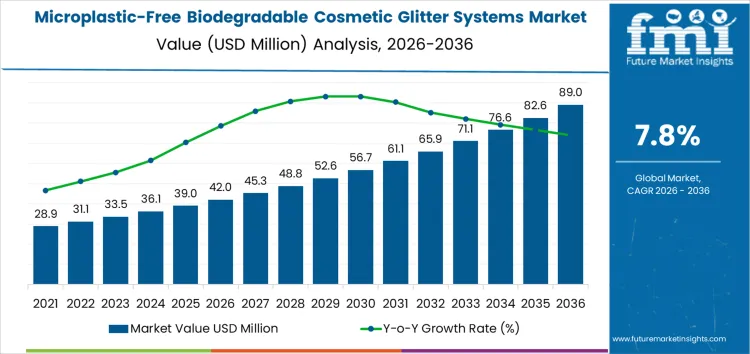
What is the Growth Forecast for the Microplastic-Free Biodegradable Cosmetic Glitter Systems Market through 2036?
The Year-on-Year (YoY) growth analysis for the microplastic-free biodegradable cosmetic glitter systems market shows a consistent increase in market value each year. Starting at USD 42 million in 2026, the market will see incremental growth as demand for sustainable glitter products increases. In 2027, the market will rise by USD 3.3 million to reach USD 45.3 million, and in 2028, it will increase by USD 3.5 million, reaching USD 48.8 million.
From 2029 to 2031, the market will continue to grow at a steady pace, with an increase of approximately USD 4.1 million annually. By 2031, the market will reach USD 61.1 million, reflecting a stable YoY growth rate. From 2032 to 2036, the market will experience consistent increases, with growth rates gradually maintaining a steady pace. The YoY analysis indicates stable expansion, driven by sustained demand for biodegradable and eco-friendly glitter alternatives in the cosmetics industry, as well as increasing regulatory support for sustainable products. The steady year-on-year growth highlights the market’s maturation and its ability to respond to both consumer demand and regulatory changes.
Microplastic-Free Biodegradable Cosmetic Glitter Systems Market Key Takeaways
| Metric | Value |
|---|---|
| Industry Sales Value (2026) | USD 42 million |
| Industry Forecast Value (2036) | USD 89 million |
| Industry Forecast CAGR (2026-2036) | 7.8% |
What Is Driving the Demand for the Microplastic Free Biodegradable Cosmetic Glitter Systems Market Globally?
The global demand for microplastic free biodegradable cosmetic glitter systems is being driven by rising consumer concern about microplastic pollution and the push for environmentally responsible personal care products. Conventional cosmetic glitter is often made from microplastic films that shed tiny particles into water systems during use and washing, contributing to persistent pollution in oceans and freshwater bodies. As awareness of plastic pollution increases, regulators in Europe, North America, and parts of Asia are moving toward restrictions on microplastics in rinse off and leave on cosmetic products.
Brands and formulators are responding by adopting biodegradable alternatives made from plant based cellulose, minerals, or other degradable substrates that deliver similar sparkle and aesthetic appeal without the environmental cost. Consumer preferences are shifting toward clean, sustainable beauty formulations that combine performance with transparent ingredient sourcing and lower ecological impact. Social media and influencer culture have reinforced interest in eco friendly beauty innovations, which further accelerates adoption of non plastic glitter options in make up, body art, nail products, and special effects cosmetics.
Future demand for microplastic free biodegradable cosmetic glitter systems is expected to grow as sustainability commitments by beauty brands and retailers deepen and regulatory frameworks evolve. Advances in biodegradable substrate technologies are improving color range, durability, and sparkle intensity, making these systems more comparable to traditional glitter in performance. Growth in indie and mass market cosmetic lines that prioritise environmental messaging will support broader market penetration, particularly among younger consumers who value ethical and ecological credentials.
Expansion of international standards and testing protocols that define biodegradability and environmental safety will help harmonize product claims and build consumer confidence. Retailer procurement policies and retailer level sustainability targets may further reinforce adoption by requiring microplastic free formulations on shelves. As global beauty markets continue to innovate and differentiate through eco centric branding and product development, biodegradable glitter systems that balance aesthetic appeal with environmental responsibility are likely to see steady market expansion.
What are the Leading Segments in the Global Microplastic-Free Biodegradable Cosmetic Glitter Systems Market?
The global microplastic-free biodegradable cosmetic glitter systems market is segmented by material type and end-use. Among material types, plant-based cellulose leads the market, capturing 45% of the share, followed by mineral-based mica, synthetic biodegradable polymers, and algae-derived materials. Plant-based cellulose is favored for its natural, biodegradable properties and is widely used in glitter formulations. On the end-use side, personal care & beauty dominates the market, holding 38% of the share, followed by professional makeup artists, entertainment & events, and educational & craft. Personal care & beauty is the largest sector driving the demand for eco-friendly and microplastic-free glitter in cosmetic products due to increased awareness of environmental impact.
What Drives the Growth of Plant-Based Cellulose in the Microplastic-Free Biodegradable Cosmetic Glitter Systems Market?
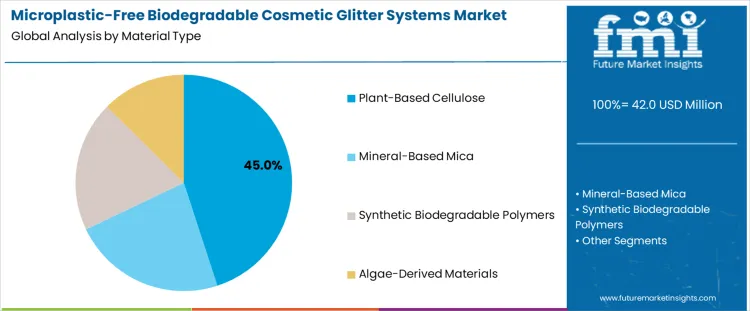
Plant-based cellulose is the leading material type in the microplastic-free biodegradable cosmetic glitter systems market, holding 45% of the share. This growth is driven by the increasing demand for sustainable and eco-friendly cosmetic ingredients. Plant-based cellulose is naturally biodegradable, non-toxic, and derived from renewable resources, making it a popular alternative to synthetic, microplastic-based glitter.
As the cosmetic industry moves toward cleaner, more environmentally responsible products, plant-based cellulose offers a practical solution for creating glitter that does not contribute to plastic pollution in oceans and waterways. The growing preference for biodegradable ingredients in personal care and beauty products, particularly among environmentally conscious consumers, is expected to further drive the adoption of plant-based cellulose in glitter systems. As regulations around microplastics become stricter, the demand for cellulose-based glitter is expected to continue growing, solidifying its dominance in the market.
What is Driving the Demand for Personal Care & Beauty in the Microplastic-Free Biodegradable Cosmetic Glitter Systems Market?
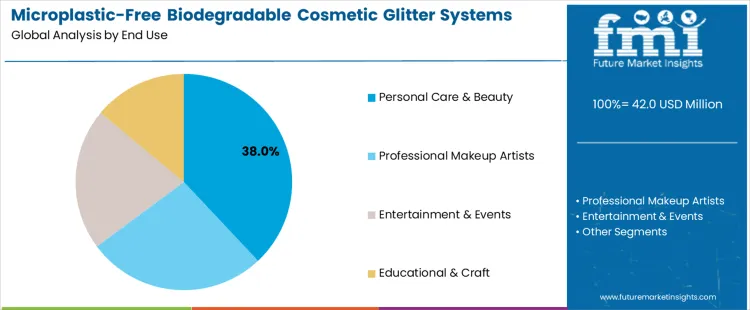
Personal care & beauty is the leading end-use segment in the microplastic-free biodegradable cosmetic glitter systems market, capturing 38% of the share. This demand is primarily driven by the growing trend toward sustainable, eco-conscious beauty products. Consumers are increasingly concerned about the environmental impact of cosmetics, especially microplastics, which can accumulate in aquatic ecosystems and harm marine life.
The personal care & beauty industry is adopting biodegradable alternatives, such as microplastic-free cosmetic glitter, to meet consumer expectations for greener products. Eco-friendly glitter made from plant-based cellulose or other biodegradable materials is seen as an attractive solution for beauty brands looking to improve their sustainability credentials. As regulations around plastic use tighten and consumers demand cleaner products, the personal care & beauty sector is expected to continue driving the growth of microplastic-free biodegradable cosmetic glitter systems in the market.
What are the Key Dynamics in the Global Microplastic Free Biodegradable Cosmetic Glitter Systems Market?
The global microplastic free biodegradable cosmetic glitter systems market is growing as cosmetic brands and consumers seek sparkle and visual appeal without environmental harm. These glitter systems are designed from plant based, biodegradable materials that break down in natural environments rather than persisting as microplastic pollutants. Growth reflects rising awareness of plastic pollution, stricter regulations on microplastic use in personal care products, and demand for clean beauty formulations that align with sustainability values. Adoption spans makeup, nail art, body care and festival cosmetics where aesthetic effects and environmental responsibility both matter.
What are the Key Drivers for the Microplastic Free Biodegradable Cosmetic Glitter Systems Market?
A key driver is heightened consumer and regulatory focus on eliminating microplastic ingredients in personal care. Consumers increasingly prefer products that combine performance with reduced ecological impact, prompting brands to replace traditional plastic glitter with biodegradable alternatives. Legislation in multiple regions restricting microplastic additives in cosmetics further accelerates reformulation efforts. Growth in premium and indie beauty segments that emphasize sustainability supports innovation in glitter systems made from cellulose, mica and other natural substrates. Social media and influencer trends also elevate demand for visually striking products that are marketed as eco friendly.
What are the Restraints for the Microplastic Free Biodegradable Cosmetic Glitter Systems Market?
A restraint is the technical challenge of matching performance of conventional plastic glitter while ensuring consistent biodegradability and safety in cosmetic formulations. Biodegradable materials can vary in shimmer, particle size and compatibility with makeup bases, requiring formulation expertise and testing. Cost pressures exist because plant based and specialty glitter ingredients can be more expensive than conventional polyester glitters, which may limit use in price sensitive products. Consumer perception that biodegradable options may perform differently than traditional glitter affects early adoption in some segments. Regulatory definitions of biodegradable and measurable standards can vary by market, complicating global product positioning.
What are the Key Trends in the Microplastic Free Biodegradable Cosmetic Glitter Systems Market?
A key trend is development of high performance biodegradable glitter with enhanced color intensity and light reflectance that rivals traditional plastic counterparts. Ingredient suppliers are focusing on sustainable feedstocks such as cellulose from wood pulp and approved mineral substrates, with certified biodegradation pathways. Integration of biodegradable glitter into multifunctional beauty products that offer skin care benefits or sun protection expands application opportunities. Brands are increasing transparency in environmental claims, using third party certifications and lifecycle information to build trust. Packaging innovations support recyclability and reduced waste, reinforcing the eco friendly narrative around glitter systems in personal care.
What is the Country-Wise Analysis of the Microplastic-Free Biodegradable Cosmetic Glitter Systems Market?
The microplastic-free biodegradable cosmetic glitter systems market is experiencing steady growth, driven by increasing consumer demand for eco-friendly and sustainable beauty products. These glitter systems, formulated from biodegradable materials, offer an alternative to conventional plastic-based glitters that contribute significantly to microplastic pollution in oceans and water bodies. This market is being propelled by stringent environmental regulations, consumer awareness about plastic pollution, and the growing trend of clean beauty.
Developed markets such as the USA, Germany, and the UK are witnessing significant demand for these sustainable glitter products, with regulatory pressures pushing brands toward cleaner, more environmentally responsible formulations. In emerging markets like Japan and Australia, consumer preferences for green beauty products and increased awareness about environmental sustainability are contributing to the steady expansion of this market. As environmental regulations tighten globally and consumers prioritize sustainable beauty solutions, the demand for biodegradable cosmetic glitter systems is set to increase.
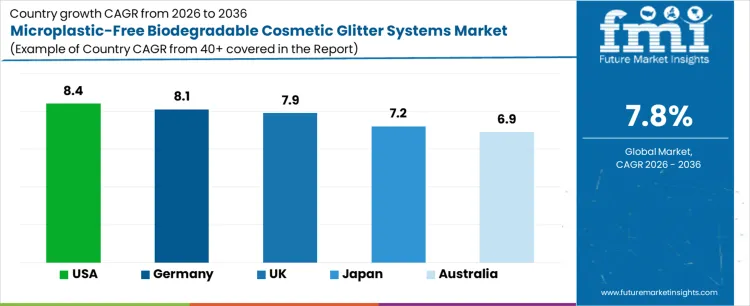
| Country | CAGR (2026-2036) |
|---|---|
| USA | 8.4% |
| Germany | 8.1% |
| UK | 7.9% |
| Japan | 7.2% |
| Australia | 6.9% |
What is the Growth Outlook for the Microplastic-Free Biodegradable Cosmetic Glitter Systems Market in the USA?
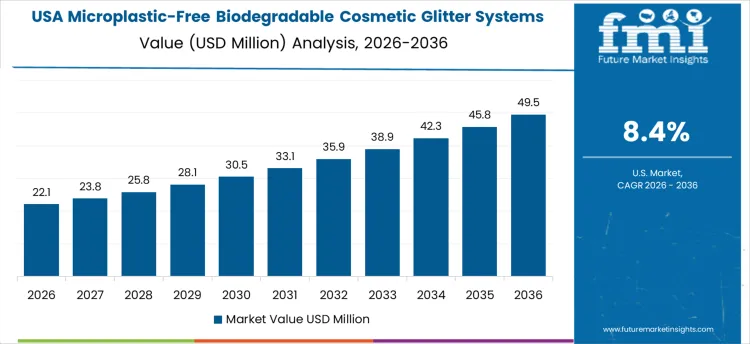
The USA is expected to lead the microplastic-free biodegradable cosmetic glitter systems market with a projected CAGR of 8.4% from 2026 to 2036. As one of the largest markets for personal care products, the USA has witnessed a significant shift towards clean and sustainable beauty solutions, driven by growing consumer awareness of the environmental impact of plastic waste. Microplastics, particularly in cosmetics, have become a major concern, prompting the U.S. government to push for regulations that limit the use of plastic-based ingredients in personal care products. In response to these regulations and consumer demand, the beauty industry is increasingly adopting bioplastic and biodegradable alternatives, including eco-friendly glitter systems.
The clean beauty movement in the U.S. continues to gain momentum, with consumers demanding products that not only deliver performance but also align with their sustainability values. Furthermore, the rise in regulatory measures, such as the microbead ban and other plastic waste initiatives, is significantly shaping the U.S. market, contributing to the steady growth of biodegradable glitter systems. As the demand for natural, non-toxic ingredients increases, the U.S. market for microplastic-free biodegradable cosmetic glitter is expected to expand rapidly, with brands continuously innovating to meet consumer expectations for sustainable beauty.
What is the Market Outlook for the Microplastic-Free Biodegradable Cosmetic Glitter Systems Market in Germany?
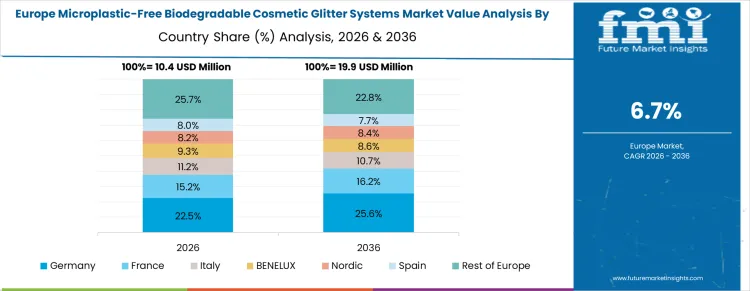
Germany is projected to experience steady growth in the microplastic-free biodegradable cosmetic glitter systems market, with a projected CAGR of 8.1% from 2026 to 2036. Known for its strong environmental policies and commitment to sustainability, Germany is a key market for eco-friendly beauty solutions. The country has implemented some of the strictest regulations in Europe aimed at reducing plastic waste, including a ban on microplastics in cosmetic products, which is directly driving the demand for alternatives such as biodegradable glitter systems. The growing concern over the environmental impact of microplastics, especially in water bodies, has led to an increasing preference for products that minimize ecological harm.
German consumers, particularly in urban areas, are becoming more conscious of the products they use, and demand for clean and sustainable beauty items is on the rise. The German beauty industry is responding by investing in innovative solutions that meet the growing demand for eco-conscious beauty alternatives. With sustainability becoming an integral part of both consumer behavior and regulatory frameworks, the market for microplastic-free biodegradable glitter systems is expected to continue expanding in Germany, as both manufacturers and consumers embrace greener options in cosmetics.
What is the Growth Forecast for the Microplastic-Free Biodegradable Cosmetic Glitter Systems Market in the UK?
The UK is projected to experience steady growth in the microplastic-free biodegradable cosmetic glitter systems market, with a projected CAGR of 7.9% from 2026 to 2036. The UK has been a pioneer in the fight against plastic pollution, with policies in place to limit plastic waste in cosmetics, including bans on microplastics in rinse-off personal care products. As a result, there is increasing demand for biodegradable and non-toxic alternatives to traditional plastic-based glitters, which are used in a variety of cosmetic products, including makeup and skincare.
The UK’s robust environmental awareness, coupled with the increasing popularity of clean beauty products, is driving growth in this market. British consumers are increasingly seeking products that align with their environmental values, leading to a shift towards sustainable and ethically sourced beauty products. The rising demand for transparency in the beauty industry, along with growing awareness of the environmental impact of microplastics, is further encouraging brands in the UK to develop and offer biodegradable glitter systems. With strong regulatory support and consumer preference for sustainable options, the UK market for microplastic-free biodegradable cosmetic glitter is expected to grow steadily, as beauty companies innovate to meet these evolving demands.
What is the Market Outlook for the Microplastic-Free Biodegradable Cosmetic Glitter Systems Market in Japan?
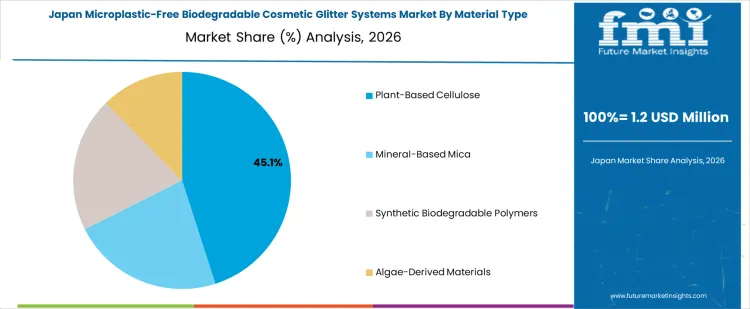
Japan is expected to experience steady growth in the microplastic-free biodegradable cosmetic glitter systems market, with a projected CAGR of 7.2% from 2026 to 2036. As a country highly focused on environmental sustainability and innovation, Japan is increasingly addressing the challenge of plastic waste, particularly microplastics in cosmetics. The beauty industry in Japan is evolving rapidly, with an increasing number of brands introducing products that are free from synthetic microplastics and harmful chemicals.
Consumer preferences in Japan are shifting towards sustainable and environmentally friendly alternatives, and this has created a demand for biodegradable glitter systems in cosmetics. Japan’s strict environmental regulations and growing concern about the harmful effects of plastic pollution on marine life are further driving the adoption of eco-friendly alternatives. The demand for non-toxic, sustainable beauty products, including biodegradable glitter, is expected to rise steadily as Japanese consumers become more eco-conscious. As the market for sustainable beauty products expands, the adoption of microplastic-free biodegradable cosmetic glitter in Japan is likely to increase, making it a key player in the global market for clean beauty solutions.
What are the Growth Prospects for the Microplastic-Free Biodegradable Cosmetic Glitter Systems Market in Australia?
Australia is projected to experience steady growth in the microplastic-free biodegradable cosmetic glitter systems market, with a projected CAGR of 6.9% from 2026 to 2036. Australia’s commitment to environmental sustainability and reducing plastic waste is driving the demand for eco-friendly alternatives in various industries, including cosmetics. As awareness of the negative environmental impact of plastic pollution grows, particularly in marine environments, Australian consumers are increasingly seeking clean, sustainable beauty products. The Australian government has introduced policies aimed at reducing plastic waste, which is encouraging the cosmetics industry to develop and adopt biodegradable glitter systems.
Additionally, the growing popularity of the clean beauty movement, coupled with the rise in consumer demand for ethical and sustainable products, is helping to drive growth in this market. The Australian beauty industry is responding to these trends by increasing the availability of biodegradable alternatives to traditional plastic-based glitters. With environmental sustainability becoming a top priority for consumers and regulators alike, the market for microplastic-free biodegradable cosmetic glitter systems in Australia is expected to grow steadily as more brands shift toward offering cleaner, greener beauty options.
What is the Competitive Landscape for the Microplastic-Free Biodegradable Cosmetic Glitter Systems Market?
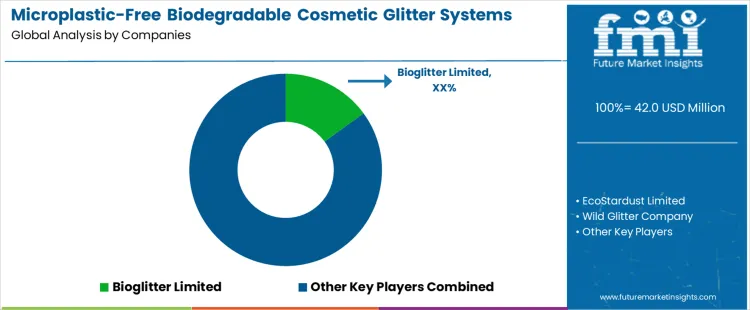
The microplastic-free biodegradable cosmetic glitter systems market is growing rapidly as consumers and the cosmetic industry increasingly prioritize eco-friendly and sustainable alternatives to traditional plastic-based glitter. Bioglitter Limited leads the market with its innovative microplastic-free biodegradable glitter systems, offering high-quality, environmentally responsible products that meet the growing demand for sustainable glitter options in cosmetics. Their focus on product performance, biodegradability, and environmental compliance has made them a dominant player. EcoStardust Limited, Wild Glitter Company, and Ronald Britton Limited are key competitors, each providing specialized biodegradable glitter solutions. EcoStardust Limited offers eco-friendly glitter made from plant-based materials, while Wild Glitter Company focuses on creating natural, biodegradable glitter that is both safe and environmentally responsible. Ronald Britton Limited provides innovative glitter systems that meet sustainability standards and cater to the growing demand for green cosmetic products.
Sigmund Lindner GmbH further strengthens the competitive landscape with its own range of microplastic-free biodegradable glitter systems. Sigmund Lindner GmbH emphasizes the importance of high-quality, eco-friendly materials for cosmetic glitter applications, providing sustainable solutions to the beauty industry. These companies compete by focusing on product innovation, sustainability, and the ability to meet the increasing consumer demand for biodegradable, microplastic-free glitter in cosmetics. As environmental concerns and regulations around plastic pollution continue to rise, the market for biodegradable glitter systems is expected to grow, driving further competition and innovation in the sector.
Key Players of the Microplastic-Free Biodegradable Cosmetic Glitter Systems Market
- Bioglitter Limited
- EcoStardust Limited
- Wild Glitter Company
- Ronald Britton Limited
- Sigmund Lindner GmbH
Scope of the Report
| Items | Values |
|---|---|
| Quantitative Units (2026) | USD Million |
| Material Type | Plant Based Cellulose, Mineral Based Mica, Synthetic Biodegradable Polymers, Algae Derived Materials |
| End Use | Personal Care & Beauty, Professional Makeup Artists, Entertainment & Events, Educational & Craft |
| Companies | Bioglitter Limited, EcoStardust Limited, Wild Glitter Company, Ronald Britton Limited, Sigmund Lindner GmbH |
| Regions Covered | North America, Latin America, Western Europe, Eastern Europe, South Asia and Pacific, East Asia, Middle East & Africa |
| Countries Covered | United States, Canada, Mexico, Brazil, Argentina, Germany, France, United Kingdom, Italy, Spain, Netherlands, China, India, Japan, South Korea, ANZ, GCC Countries, South Africa |
| Additional Attributes | Dollar by sales by material type, end use, and region. Includes market trends in microplastic free biodegradable cosmetic glitter adoption, performance in beauty and craft applications, cost drivers, environmental impact considerations, market share and competitive positioning of key companies, regulatory and compliance factors, consumer preferences for sustainable cosmetic products, and innovations in biodegradable glitter formulations. |
Microplastic-Free Biodegradable Cosmetic Glitter Systems Market Segmentation
Material Type:
- Plant-Based Cellulose
- Mineral-Based Mica
- Synthetic Biodegradable Polymers
- Algae-Derived Materials
End Use:
- Personal Care & Beauty
- Professional Makeup Artists
- Entertainment & Events
- Educational & Craft
Region:
- Asia Pacific
- China
- Japan
- South Korea
- India
- Australia & New Zealand
- ASEAN
- Rest of Asia Pacific
- Europe
- Germany
- United Kingdom
- France
- Italy
- Spain
- Nordic
- BENELUX
- Rest of Europe
- North America
- United States
- Canada
- Mexico
- Latin America
- Brazil
- Chile
- Rest of Latin America
- Middle East & Africa
- Kingdom of Saudi Arabia
- Other GCC Countries
- Turkey
- South Africa
- Other African Union
- Rest of Middle East & Africa
Frequently Asked Questions
How big is the microplastic-free biodegradable cosmetic glitter systems market in 2026?
The global microplastic-free biodegradable cosmetic glitter systems market is estimated to be valued at USD 42.0 million in 2026.
What will be the size of microplastic-free biodegradable cosmetic glitter systems market in 2036?
The market size for the microplastic-free biodegradable cosmetic glitter systems market is projected to reach USD 89.0 million by 2036.
How much will be the microplastic-free biodegradable cosmetic glitter systems market growth between 2026 and 2036?
The microplastic-free biodegradable cosmetic glitter systems market is expected to grow at a 7.8% CAGR between 2026 and 2036.
What are the key product types in the microplastic-free biodegradable cosmetic glitter systems market?
The key product types in microplastic-free biodegradable cosmetic glitter systems market are plant‑based cellulose, mineral‑based mica, synthetic biodegradable polymers and algae‑derived materials.
Which end use segment to contribute significant share in the microplastic-free biodegradable cosmetic glitter systems market in 2026?
In terms of end use, personal care & beauty segment to command 38.0% share in the microplastic-free biodegradable cosmetic glitter systems market in 2026.
Preview the report firsthand - request a free sample
Get SampleGet the brochure for pricing and purchase details.
Get PDFTable of Content
- Executive Summary
- Global Market Outlook
- Demand-side Trends
- Supply-side Trends
- Technology Roadmap Analysis
- Analysis and Recommendations
- Market Overview
- Market Coverage / Taxonomy
- Market Definition / Scope / Limitations
- Market Background
- Market Dynamics
- Drivers
- Restraints
- Opportunity
- Trends
- Scenario Forecast
- Demand in Optimistic Scenario
- Demand in Likely Scenario
- Demand in Conservative Scenario
- Opportunity Map Analysis
- Product Life Cycle Analysis
- Supply Chain Analysis
- Investment Feasibility Matrix
- Value Chain Analysis
- PESTLE and Porter’s Analysis
- Regulatory Landscape
- Regional Parent Market Outlook
- Production and Consumption Statistics
- Import and Export Statistics
- Market Dynamics
- Global Market Analysis 2021 to 2025 and Forecast, 2026 to 2036
- Historical Market Size Value (USD Million) Analysis, 2021 to 2025
- Current and Future Market Size Value (USD Million) Projections, 2026 to 2036
- Y-o-Y Growth Trend Analysis
- Absolute $ Opportunity Analysis
- Global Market Pricing Analysis 2021 to 2025 and Forecast 2026 to 2036
- Global Market Analysis 2021 to 2025 and Forecast 2026 to 2036, By Material Type
- Introduction / Key Findings
- Historical Market Size Value (USD Million) Analysis By Material Type , 2021 to 2025
- Current and Future Market Size Value (USD Million) Analysis and Forecast By Material Type , 2026 to 2036
- Plant‑Based Cellulose
- Mineral‑Based Mica
- Synthetic Biodegradable Polymers
- Algae‑Derived Materials
- Plant‑Based Cellulose
- Y-o-Y Growth Trend Analysis By Material Type , 2021 to 2025
- Absolute $ Opportunity Analysis By Material Type , 2026 to 2036
- Global Market Analysis 2021 to 2025 and Forecast 2026 to 2036, By End Use
- Introduction / Key Findings
- Historical Market Size Value (USD Million) Analysis By End Use, 2021 to 2025
- Current and Future Market Size Value (USD Million) Analysis and Forecast By End Use, 2026 to 2036
- Personal Care & Beauty
- Professional Makeup Artists
- Entertainment & Events
- Educational & Craft
- Personal Care & Beauty
- Y-o-Y Growth Trend Analysis By End Use, 2021 to 2025
- Absolute $ Opportunity Analysis By End Use, 2026 to 2036
- Global Market Analysis 2021 to 2025 and Forecast 2026 to 2036, By Region
- Introduction
- Historical Market Size Value (USD Million) Analysis By Region, 2021 to 2025
- Current Market Size Value (USD Million) Analysis and Forecast By Region, 2026 to 2036
- North America
- Latin America
- Western Europe
- Eastern Europe
- East Asia
- South Asia and Pacific
- Middle East & Africa
- Market Attractiveness Analysis By Region
- North America Market Analysis 2021 to 2025 and Forecast 2026 to 2036, By Country
- Historical Market Size Value (USD Million) Trend Analysis By Market Taxonomy, 2021 to 2025
- Market Size Value (USD Million) Forecast By Market Taxonomy, 2026 to 2036
- By Country
- USA
- Canada
- Mexico
- By Material Type
- By End Use
- By Country
- Market Attractiveness Analysis
- By Country
- By Material Type
- By End Use
- Key Takeaways
- Latin America Market Analysis 2021 to 2025 and Forecast 2026 to 2036, By Country
- Historical Market Size Value (USD Million) Trend Analysis By Market Taxonomy, 2021 to 2025
- Market Size Value (USD Million) Forecast By Market Taxonomy, 2026 to 2036
- By Country
- Brazil
- Chile
- Rest of Latin America
- By Material Type
- By End Use
- By Country
- Market Attractiveness Analysis
- By Country
- By Material Type
- By End Use
- Key Takeaways
- Western Europe Market Analysis 2021 to 2025 and Forecast 2026 to 2036, By Country
- Historical Market Size Value (USD Million) Trend Analysis By Market Taxonomy, 2021 to 2025
- Market Size Value (USD Million) Forecast By Market Taxonomy, 2026 to 2036
- By Country
- Germany
- UK
- Italy
- Spain
- France
- Nordic
- BENELUX
- Rest of Western Europe
- By Material Type
- By End Use
- By Country
- Market Attractiveness Analysis
- By Country
- By Material Type
- By End Use
- Key Takeaways
- Eastern Europe Market Analysis 2021 to 2025 and Forecast 2026 to 2036, By Country
- Historical Market Size Value (USD Million) Trend Analysis By Market Taxonomy, 2021 to 2025
- Market Size Value (USD Million) Forecast By Market Taxonomy, 2026 to 2036
- By Country
- Russia
- Poland
- Hungary
- Balkan & Baltic
- Rest of Eastern Europe
- By Material Type
- By End Use
- By Country
- Market Attractiveness Analysis
- By Country
- By Material Type
- By End Use
- Key Takeaways
- East Asia Market Analysis 2021 to 2025 and Forecast 2026 to 2036, By Country
- Historical Market Size Value (USD Million) Trend Analysis By Market Taxonomy, 2021 to 2025
- Market Size Value (USD Million) Forecast By Market Taxonomy, 2026 to 2036
- By Country
- China
- Japan
- South Korea
- By Material Type
- By End Use
- By Country
- Market Attractiveness Analysis
- By Country
- By Material Type
- By End Use
- Key Takeaways
- South Asia and Pacific Market Analysis 2021 to 2025 and Forecast 2026 to 2036, By Country
- Historical Market Size Value (USD Million) Trend Analysis By Market Taxonomy, 2021 to 2025
- Market Size Value (USD Million) Forecast By Market Taxonomy, 2026 to 2036
- By Country
- India
- ASEAN
- Australia & New Zealand
- Rest of South Asia and Pacific
- By Material Type
- By End Use
- By Country
- Market Attractiveness Analysis
- By Country
- By Material Type
- By End Use
- Key Takeaways
- Middle East & Africa Market Analysis 2021 to 2025 and Forecast 2026 to 2036, By Country
- Historical Market Size Value (USD Million) Trend Analysis By Market Taxonomy, 2021 to 2025
- Market Size Value (USD Million) Forecast By Market Taxonomy, 2026 to 2036
- By Country
- Kingdom of Saudi Arabia
- Other GCC Countries
- Turkiye
- South Africa
- Other African Union
- Rest of Middle East & Africa
- By Material Type
- By End Use
- By Country
- Market Attractiveness Analysis
- By Country
- By Material Type
- By End Use
- Key Takeaways
- Key Countries Market Analysis
- USA
- Pricing Analysis
- Market Share Analysis, 2025
- By Material Type
- By End Use
- Canada
- Pricing Analysis
- Market Share Analysis, 2025
- By Material Type
- By End Use
- Mexico
- Pricing Analysis
- Market Share Analysis, 2025
- By Material Type
- By End Use
- Brazil
- Pricing Analysis
- Market Share Analysis, 2025
- By Material Type
- By End Use
- Chile
- Pricing Analysis
- Market Share Analysis, 2025
- By Material Type
- By End Use
- Germany
- Pricing Analysis
- Market Share Analysis, 2025
- By Material Type
- By End Use
- UK
- Pricing Analysis
- Market Share Analysis, 2025
- By Material Type
- By End Use
- Italy
- Pricing Analysis
- Market Share Analysis, 2025
- By Material Type
- By End Use
- Spain
- Pricing Analysis
- Market Share Analysis, 2025
- By Material Type
- By End Use
- France
- Pricing Analysis
- Market Share Analysis, 2025
- By Material Type
- By End Use
- India
- Pricing Analysis
- Market Share Analysis, 2025
- By Material Type
- By End Use
- ASEAN
- Pricing Analysis
- Market Share Analysis, 2025
- By Material Type
- By End Use
- Australia & New Zealand
- Pricing Analysis
- Market Share Analysis, 2025
- By Material Type
- By End Use
- China
- Pricing Analysis
- Market Share Analysis, 2025
- By Material Type
- By End Use
- Japan
- Pricing Analysis
- Market Share Analysis, 2025
- By Material Type
- By End Use
- South Korea
- Pricing Analysis
- Market Share Analysis, 2025
- By Material Type
- By End Use
- Russia
- Pricing Analysis
- Market Share Analysis, 2025
- By Material Type
- By End Use
- Poland
- Pricing Analysis
- Market Share Analysis, 2025
- By Material Type
- By End Use
- Hungary
- Pricing Analysis
- Market Share Analysis, 2025
- By Material Type
- By End Use
- Kingdom of Saudi Arabia
- Pricing Analysis
- Market Share Analysis, 2025
- By Material Type
- By End Use
- Turkiye
- Pricing Analysis
- Market Share Analysis, 2025
- By Material Type
- By End Use
- South Africa
- Pricing Analysis
- Market Share Analysis, 2025
- By Material Type
- By End Use
- USA
- Market Structure Analysis
- Competition Dashboard
- Competition Benchmarking
- Market Share Analysis of Top Players
- By Regional
- By Material Type
- By End Use
- Competition Analysis
- Competition Deep Dive
- Bioglitter Limited
- Overview
- Product Portfolio
- Profitability by Market Segments (Product/Age /Sales Channel/Region)
- Sales Footprint
- Strategy Overview
- Marketing Strategy
- Product Strategy
- Channel Strategy
- EcoStardust Limited
- Wild Glitter Company
- Ronald Britton Limited
- Sigmund Lindner GmbH
- Bioglitter Limited
- Competition Deep Dive
- Assumptions & Acronyms Used
- Research Methodology


