

- Industry Size (2026)
- USD 9.8 Bn
- Forecast (2036)
- USD 23.4 Bn
- CAGR (2026 to 2036)
- 9.1%
PCR Market for Liquor, Water & Beverage Bottles Forecast and Outlook 2026 to 2036
The PCR market for liquor, water, and beverage bottles is likely to be valued at USD 9.8 billion in 2026 and is forecasted to reach USD 23.4 billion by 2036, at a CAGR of 9.1% over the forecast period. Growth is driven by rising recycled content mandates, retailer sustainability requirements, and brand commitments to reduce virgin plastic use in high-volume beverage packaging. Bottle-grade PCR, particularly rPET, is increasingly specified for water, carbonated soft drinks, and spirits, where clarity, mechanical strength, and food-contact compliance remain critical.
Market development reflects steady improvement in decontamination, additive formulation, and traceability systems that enable PCR resins to meet high-speed bottling and carbonation performance requirements. Bottles and preforms dominate adoption due to compatibility with existing filling infrastructure and scalability across mass beverage formats. Demand growth is strongest where regulatory pressure and deposit-return systems support reliable supply of food-grade recycled feedstock. Adoption progresses through incremental increases in PCR inclusion rates rather than full material substitution, balancing sustainability targets with cost control, processing reliability, and shelf appearance expectations.
Quick Stats for PCR Market for Liquor, Water & Beverage Bottles
- PCR Market for Liquor, Water & Beverage Bottles Value (2026): USD 9.8 billion
- PCR Market for Liquor, Water & Beverage Bottles Forecast Value (2036): USD 23.4 billion
- PCR Market for Liquor, Water & Beverage Bottles Forecast CAGR (2026-2036): 9.1%
- Leading Bottle Type by Demand Share: Bottles & preforms
- Fastest-Growing Countries: India, China, Brazil, Germany, USA
- Top Players in Global Demand: Indorama Ventures, Plastipak, ALPLA, Krones, Far Eastern New Century
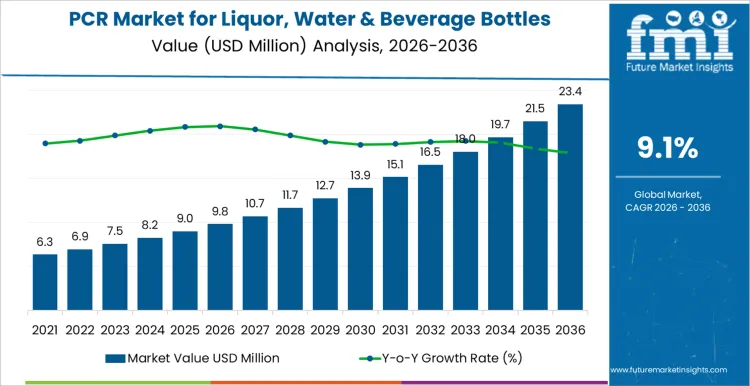
PCR Market for Liquor, Water & Beverage Bottles Key Takeaways
| Metric | Value |
|---|---|
| Market Value (2026) | USD 9.8 billion |
| Market Forecast Value (2036) | USD 23.4 billion |
| Forecast CAGR (2026-2036) | 9.1% |
Why is the Demand for PCR Market for Liquor, Water & Beverage Bottles Growing?
Demand for post-consumer recycled (PCR) resin in liquor, water, and beverage bottles is expanding as beverage producers respond to regulatory recycled content targets and shifting retailer requirements in major markets. PET and HDPE resins recovered from consumer packaging are being processed into PCR that meets stringent clarity and mechanical standards essential for transparent water and flavored drink bottles. Bottlers of spirits and ready-to-drink cocktails seek high quality PCR that does not compromise barrier properties or bottle strength during filling, capping, and cold chain distribution. Retail chains evaluating sustainability scorecards for suppliers prioritize packaging with verified PCR percentages, prompting brand teams to reformulate bottle specs to include higher recycled content.
In syrup and concentrate packaging, converters qualify PCR materials that retain tensile and impact performance on high-speed blow molding lines. Procurement strategies in beverage supply chains reflect investments in traceability and material certification that ensure PCR feedstocks are free of contaminants that could affect sensory quality or regulatory compliance. Resin compounders apply advanced decontamination and additive systems that maintain clarity, minimize haze, and sustain color consistency across production lots. Quality assurance teams implement spectrophotometric measurements and mechanical testing protocols before approval for food contact use. Collaboration between bottlers, recyclers, and material scientists supports stable PCR availability, enabling brand owners to meet sustainability commitments while preserving processing reliability and consumer appeal.
How Is the PCR Segment for Liquor, Water & Beverage Bottles Structured by Bottle Type, Material, and End Use?
Demand for PCR bottles across liquor, water, and beverage categories is shaped by recycled content mandates, brand sustainability targets, and visual quality expectations. Bottlers require consistent clarity, mechanical strength, and food-contact compliance while integrating higher recycled polymer ratios. Processing efficiency, lightweighting goals, and shelf presentation influence bottle and resin selection. Segmentation by bottle type, material, and end use explains how performance requirements differ across mass-volume beverages, premium packaging formats, and regulated liquid applications.
Which Bottle Type Holds the Largest Share in PCR Beverage Packaging?
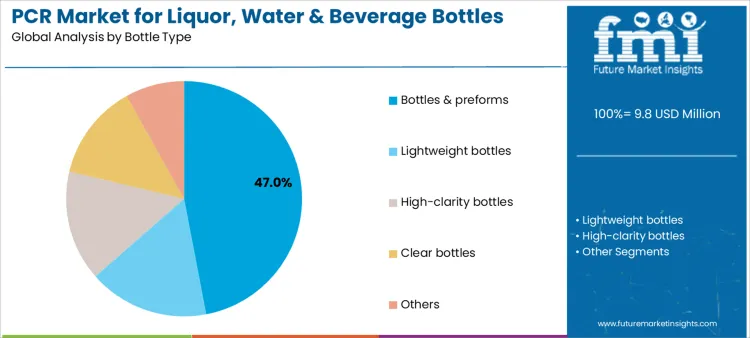
Bottles and preforms hold 47.0%, reflecting their central role in standardized filling operations and supply chain scalability. This segment benefits from established conversion infrastructure, predictable processing behavior, and compatibility with high-throughput bottling lines. Lightweight bottle formats are adopted to reduce resin usage and transportation impact, while maintaining top-load and drop performance. High-clarity and clear bottle variants address brand visibility and shelf differentiation needs, particularly in water and spirits. Other bottle configurations serve niche design or functional requirements. Bottle-type segmentation reflects prioritization of operational efficiency, recyclability, and visual consistency across beverage packaging programs.
Key Points
- Bottles and preforms anchor high-volume PCR adoption.
- Lightweight designs support material reduction goals.
- Clarity-focused bottles address brand presentation needs.
How Does Material Selection Influence PCR Bottle Adoption?
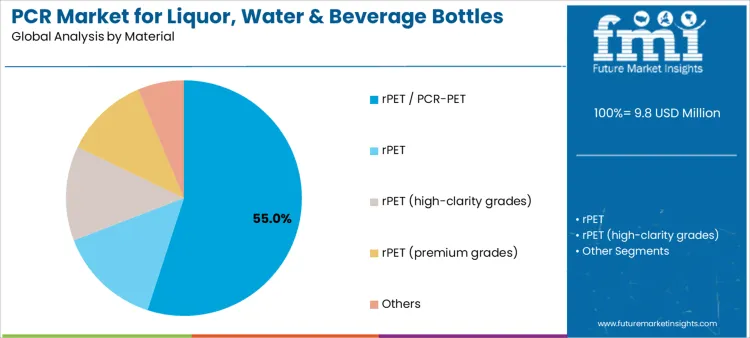
rPET and PCR-PET account for 55.0%, driven by food-contact compliance, mechanical reliability, and strong recycling infrastructure. This material choice enables higher recycled content while preserving clarity and strength required for beverage containers. Standard rPET grades support cost-sensitive applications, while high-clarity rPET grades address visual requirements in premium water and spirits packaging. Premium rPET grades are applied where color consistency and surface aesthetics are critical. Other materials serve limited or transitional applications. Material segmentation reflects how resin quality tiers align with brand positioning, regulatory thresholds, and performance risk tolerance.
Key Points
- rPET dominates due to compliance and recyclability.
- High-clarity grades support premium bottle aesthetics.
- Material tiering aligns with brand and cost strategies.
Which End-Use Categories Drive PCR Bottle Demand?
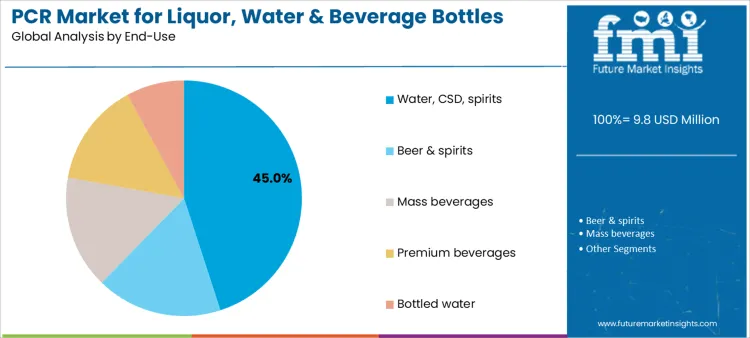
Water, carbonated soft drinks, and spirits account for 45.0%, reflecting large production volumes and strong regulatory pressure for recycled content. Beer and spirits packaging emphasizes barrier performance and color control, while mass beverages prioritize cost efficiency and supply reliability. Premium beverages require enhanced clarity, finish quality, and branding consistency. Bottled water remains a major volume driver due to transparency expectations and sustainability commitments. Other end uses address niche beverage formats. End-use segmentation highlights concentration of PCR demand where scale, compliance, and brand commitments intersect.
Key Points
- Water and mainstream beverages lead PCR utilization.
- Premium beverages demand higher visual consistency.
- Spirits packaging balances aesthetics with performance.
What are the Key Dynamics in the PCR Market for Liquor, Water & Beverage Bottles?
Demand in the post-consumer recycled (PCR) market for liquor, water, and beverage bottles is shaped by stringent food and beverage contact safety standards alongside corporate and regulatory recycled content targets. Brand owners in bottled water, spirits, and ready-to-drink (RTD) beverages seek PCR resins that deliver consistent clarity, mechanical strength, and barrier performance under fill-and-seal conditions. Growth reflects consumer preference for sustainability claims on high-volume packaging formats, with emphasis on bottle integrity, flavor neutrality, and process reliability at high production speeds.
How do food contact safety and clarity expectations influence adoption?
Beverage producers require PCR resins that meet regulatory requirements for food contact and migration thresholds specific to potable water, alcoholic beverages, and flavored drinks. Clear PCR polyethylene terephthalate (PET) is often specified for water and spirits bottles because optical clarity affects brand perception and consumer confidence. Suppliers focus on producing PCR with low haze and controlled intrinsic viscosity to support blow molding cycles without compromising wall uniformity or bottle strength, which are critical during automated filling operations. In liquor packaging, where bottles may be returned or reused in refill models, PCR grades must resist repeated handling and maintain label adhesion and neck finish precision. RTD beverage producers prioritize PCR materials that support high throughput while maintaining organoleptic neutrality, ensuring that no off-flavors migrate from the bottle into the liquid contents.
How do supply chain quality constraints and regulatory frameworks affect market scalability?
Scalability of the PCR bottle market is influenced by variability in feedstock quality and by regional regulatory frameworks governing recycled content and food contact approvals. Collection systems with efficient sorting and decontamination are key to delivering low-contaminant PCR suitable for beverage applications; feedstock with residual labels, adhesives, or non-PET contaminants can degrade performance or require extensive preprocessing. Regulatory differences across jurisdictions affect where PCR bottles can be deployed without additional safety testing, particularly for alcoholic products with long shelf life. Price competitiveness relative to virgin PET shapes adoption in cost-sensitive segments such as value water brands, while premium bottled liquors may absorb higher PCR costs if material meets clarity and performance thresholds. Seasonal fluctuations in bottle demand and regional variations in recycling infrastructure capacity influence how converters and brand owners plan PCR resin procurement and manage risk in supply continuity.
How Is Demand for the PCR Market for Liquor, Water & Beverage Bottles Evolving Globally?
Global demand for PCR materials in liquor, water, and beverage bottles is expanding as brand owners reduce reliance on virgin plastics. Growth reflects regulatory recycled content mandates, corporate sustainability targets, and rising scrutiny of packaging footprints. Bottle-grade PCR adoption focuses on clarity, barrier performance, and food-contact safety. Qualification cycles emphasize contaminant control, color consistency, and mechanical strength for high-speed bottling lines. India records 11.6% CAGR, China records 10.8% CAGR, Brazil records 9.4% CAGR, Germany records 9.0% CAGR, and the USA records 8.6% CAGR. Market expansion follows compliance readiness and resin quality improvements rather than beverage volume growth.
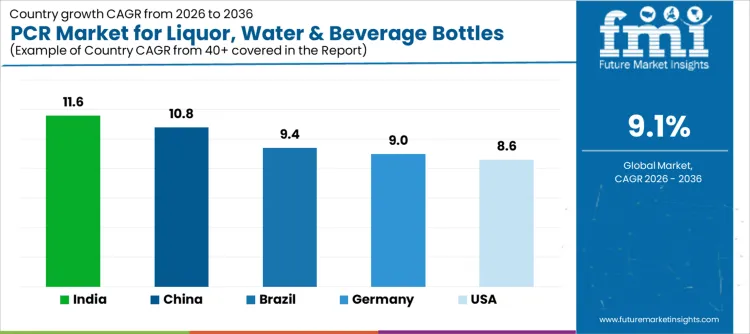
| Country | CAGR (%) |
|---|---|
| India | 11.6% |
| China | 10.8% |
| Brazil | 9.4% |
| Germany | 9.0% |
| USA | 8.6% |
What is driving growth of PCR bottle demand across liquor, water and beverages in India?
Demand for PCR materials in liquor, water, and beverage bottles in India is rising as packaged beverage consumption scales across urban markets. Growth at 11.6% CAGR reflects adoption of PCR PET in water bottles and select alcoholic beverage formats. Regulatory pressure on single-use plastics increases recycled content integration. Bottlers prioritize PCR grades supporting clarity and carbonation resistance. Cost sensitivity drives optimization of PCR inclusion rates rather than full substitution. Domestic resin suppliers expand food-grade recycling capacity to support high-volume bottling operations. Demand remains strongest within bottled water and mass-market spirits distributed through organized retail channels.
- Expansion of bottled water consumption
- Regulatory pressure on plastic usage
- Focus on bottle-grade PCR clarity
- Growth of domestic food-grade recycling
Why is China seeing expansion in PCR adoption for liquor, water and beverage bottles?
PCR demand for liquor, water, and beverage bottles in China is increasing as beverage producers align packaging with sustainability policies. Growth at 10.8% CAGR reflects large-scale adoption within bottled water and ready-to-drink segments. Regulatory mandates on plastic reduction accelerate PCR usage. High-speed bottling operations require consistent resin performance and color control. Centralized recycling infrastructure supports supply of bottle-grade PCR at scale. Export-oriented beverage brands require compliance with international recycled content standards. Demand remains concentrated within high-volume PET bottle formats serving national distribution networks.
- Regulatory mandates on recycled plastics
- High-volume bottled beverage production
- Need for consistent bottle-grade PCR
- Export compliance requirements
What factors are shaping PCR bottle sales for beverages in Brazil?
Sales of PCR materials for liquor, water, and beverage bottles in Brazil are rising as beverage brands respond to sustainability commitments. Growth at 9.4% CAGR reflects adoption in bottled water, soft drinks, and beer packaging. Regional recycling infrastructure improvements support PCR availability. Beverage producers balance recycled content goals with cost and performance considerations. Bottle lightweighting strategies increase sensitivity to resin quality. Demand concentrates within domestic consumption markets rather than export-led packaging. Qualification focuses on food-contact compliance and mechanical integrity under warm climate distribution conditions.
- Growth of bottled beverage consumption
- Improvement in regional recycling capacity
- Focus on food-contact compliance
- Sensitivity to lightweight bottle performance
How is Germany supporting growth of PCR use in liquor, water and beverage bottles?
PCR demand in liquor, water, and beverage bottles in Germany is advancing as circular economy regulations tighten packaging standards. Growth at 9.0% CAGR reflects strong adoption in bottled water and premium beverage segments. EU recycled content targets increase substitution pressure for virgin PET. German bottlers emphasize traceability, deposit system compatibility, and material purity. Advanced collection systems support high-quality PCR supply. Demand remains driven by regulatory compliance and consumer expectations for sustainable packaging rather than beverage category expansion.
- EU recycled content mandates
- Strong deposit return infrastructure
- High standards for material traceability
- Consumer preference for sustainable bottles
What is driving expansion of PCR bottle demand in the USA beverage market?
Demand for PCR materials in liquor, water, and beverage bottles in the USA is increasing as brands execute packaging sustainability roadmaps. Growth at 8.6% CAGR reflects integration across bottled water, carbonated drinks, and alcoholic beverages. Retail sustainability commitments influence packaging specifications. Bottlers prioritize PCR grades meeting clarity and stress crack resistance requirements. State-level regulations drive recycled content adoption at varying speeds. Demand is driven by portfolio-wide packaging transitions rather than incremental beverage launches.
- Retail sustainability specification pressure
- Adoption across water and alcoholic beverages
- Focus on clarity and stress resistance
- Influence of state-level regulations
What is the competitive landscape of demand for the PCR market for liquor, water & beverage bottles globally?
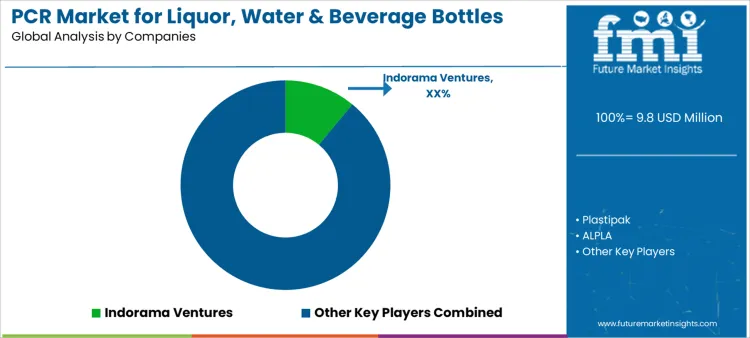
Brand commitments to recycled content, deposit-return expansion, and bottle-to-bottle mandates are intensifying Demand for PCR in beverage packaging. Bottlers evaluate intrinsic viscosity retention, acetaldehyde control, color neutrality, and mechanical performance under high-speed blowing and filling. Buyer assessment includes food-contact approvals, consistency across flakes and pellets, compatibility with lightweight bottle designs, and availability at scale for multi-country operations. Procurement behavior favors long-term offtake contracts, vertically integrated recyclers, and suppliers aligned with brand sustainability scorecards. Trend in the PCR market for liquor, water and beverage bottles reflects rising rPET inclusion rates while protecting carbonation retention and shelf clarity.
Indorama Ventures leads competitive positioning through large-scale food-grade rPET capacity integrated with global beverage supply chains. Plastipak competes by pairing in-house recycling with bottle manufacturing, enabling closed-loop supply and consistent quality. ALPLA maintains relevance via regional recycling hubs supplying rPET tailored to customer bottle specifications. Far Eastern New Century supports demand with high-purity rPET outputs serving major beverage producers in Asia and beyond. Krones participates through preform-centric solutions that optimize PCR processing at bottler plants. Competitive differentiation centers on rPET purity, supply security, processing performance, and alignment with global brand requirements.
Key Players in the PCR Market for Liquor, Water & Beverage Bottles
- Indorama Ventures
- Plastipak
- ALPLA
- Krones (preforms)
- Far Eastern New Century
- JEPLAN
- Suntory Recycling
- Others
Scope of the Report
| Items | Values |
|---|---|
| Quantitative Units | USD billion |
| Bottle Type | Bottles & preforms; Lightweight bottles; High-clarity bottles; Clear bottles; Others |
| Material | rPET / PCR-PET; rPET; rPET (high-clarity grades); rPET (premium grades); Others |
| End-Use | Water, CSD, spirits; Beer & spirits; Mass beverages; Premium beverages; Bottled water |
| Regions Covered | Asia Pacific, Europe, North America, Latin America, Middle East & Africa |
| Countries Covered | India, China, Brazil, Germany, USA, and 40+ countries |
| Key Companies Profiled | Indorama Ventures; Plastipak; ALPLA; Krones (preforms); Far Eastern New Century; JEPLAN; Suntory Recycling; Others |
| Additional Attributes | Dollar sales by bottle type, material grade, and beverage category; integration of high-clarity rPET in liquor and premium water bottles; lightweighting strategies aligned with PCR content targets; compatibility of PCR bottles with high-speed filling and carbonation requirements; regional sourcing models for food-grade and beverage-grade recycled PET. |
PCR Market for Liquor, Water & Beverage Bottles by Segment
Bottle Type:
- Bottles & preforms
- Lightweight bottles
- High-clarity bottles
- Clear bottles
- Others
Material:
- rPET / PCR-PET
- rPET
- rPET (high-clarity grades)
- rPET (premium grades)
- Others
End-Use:
- Water, CSD, spirits
- Beer & spirits
- Mass beverages
- Premium beverages
- Bottled water
Region:
- Asia Pacific
- China
- Japan
- South Korea
- India
- Australia & New Zealand
- ASEAN
- Rest of Asia Pacific
- Europe
- Germany
- United Kingdom
- France
- Italy
- Spain
- Nordic
- BENELUX
- Rest of Europe
- North America
- United States
- Canada
- Mexico
- Latin America
- Brazil
- Chile
- Rest of Latin America
- Middle East & Africa
- Kingdom of Saudi Arabia
- Other GCC Countries
- Turkey
- South Africa
- Other African Union
- Rest of Middle East & Africa
Bibliography
- European Commission. (2023). Packaging and Packaging Waste Regulation (PPWR): Recycled content requirements for beverage bottles. Publications Office of the European Union.
- United States Food and Drug Administration. (2023). Use of recycled plastics in food packaging: Chemistry considerations and safety evaluation. FDA.
- World Health Organization. (2024). Chemical safety and migration assessment of recycled plastics in drinking‑water containers. WHO.
Frequently Asked Questions
How big is the PCR market for liquor, water, and beverage bottles in 2026?
The PCR market for liquor, water, and beverage bottles is projected to be valued at USD 9.8 billion in 2026.
What will be the size of the PCR market for liquor, water, and beverage bottles in 2036?
The market size for PCR liquor, water, and beverage bottles is projected to reach USD 23.4 billion by 2036.
How much will the demand for PCR liquor, water, and beverage bottles grow between 2026 and 2036?
Demand for PCR liquor, water, and beverage bottles is projected to grow at a 9.1% CAGR between 2026 and 2036.
Which bottle type holds a significant share in the PCR liquor, water, and beverage bottles market in 2026?
In terms of bottle type, bottles and preforms are expected to account for a 47.0% share in 2026.
Which end-use segment contributes a major share in the PCR liquor, water, and beverage bottles market in 2026?
The water, carbonated soft drinks, and spirits segment is expected to command a 45.0% share in the PCR liquor, water, and beverage bottles market in 2026.
Preview the report firsthand - request a free sample
Get SampleGet the brochure for pricing and purchase details.
Get PDFTable of Content
- Executive Summary
- Global Market Outlook
- Demand-side Trends
- Supply-side Trends
- Technology Roadmap Analysis
- Analysis and Recommendations
- Market Overview
- Market Coverage / Taxonomy
- Market Definition / Scope / Limitations
- Market Background
- Market Dynamics
- Drivers
- Restraints
- Opportunity
- Trends
- Scenario Forecast
- Demand in Optimistic Scenario
- Demand in Likely Scenario
- Demand in Conservative Scenario
- Opportunity Map Analysis
- Product Life Cycle Analysis
- Supply Chain Analysis
- Investment Feasibility Matrix
- Value Chain Analysis
- PESTLE and Porter’s Analysis
- Regulatory Landscape
- Regional Parent Market Outlook
- Production and Consumption Statistics
- Import and Export Statistics
- Market Dynamics
- Global Market Analysis 2021 to 2025 and Forecast, 2026 to 2036
- Historical Market Size Value (USD Million) Analysis, 2021 to 2025
- Current and Future Market Size Value (USD Million) Projections, 2026 to 2036
- Y-o-Y Growth Trend Analysis
- Absolute $ Opportunity Analysis
- Global Market Pricing Analysis 2021 to 2025 and Forecast 2026 to 2036
- Global Market Analysis 2021 to 2025 and Forecast 2026 to 2036, By Bottle Type
- Introduction / Key Findings
- Historical Market Size Value (USD Million) Analysis By Bottle Type , 2021 to 2025
- Current and Future Market Size Value (USD Million) Analysis and Forecast By Bottle Type , 2026 to 2036
- Bottles & preforms
- Lightweight bottles
- High-clarity bottles
- Clear bottles
- Others
- Bottles & preforms
- Y-o-Y Growth Trend Analysis By Bottle Type , 2021 to 2025
- Absolute $ Opportunity Analysis By Bottle Type , 2026 to 2036
- Global Market Analysis 2021 to 2025 and Forecast 2026 to 2036, By Material
- Introduction / Key Findings
- Historical Market Size Value (USD Million) Analysis By Material, 2021 to 2025
- Current and Future Market Size Value (USD Million) Analysis and Forecast By Material, 2026 to 2036
- rPET / PCR-PET
- rPET
- rPET (high-clarity grades)
- rPET (premium grades)
- Others
- rPET / PCR-PET
- Y-o-Y Growth Trend Analysis By Material, 2021 to 2025
- Absolute $ Opportunity Analysis By Material, 2026 to 2036
- Global Market Analysis 2021 to 2025 and Forecast 2026 to 2036, By End-Use
- Introduction / Key Findings
- Historical Market Size Value (USD Million) Analysis By End-Use, 2021 to 2025
- Current and Future Market Size Value (USD Million) Analysis and Forecast By End-Use, 2026 to 2036
- Water, CSD, spirits
- Beer & spirits
- Mass beverages
- Premium beverages
- Bottled water
- Water, CSD, spirits
- Y-o-Y Growth Trend Analysis By End-Use, 2021 to 2025
- Absolute $ Opportunity Analysis By End-Use, 2026 to 2036
- Global Market Analysis 2021 to 2025 and Forecast 2026 to 2036, By Region
- Introduction
- Historical Market Size Value (USD Million) Analysis By Region, 2021 to 2025
- Current Market Size Value (USD Million) Analysis and Forecast By Region, 2026 to 2036
- North America
- Latin America
- Western Europe
- Eastern Europe
- East Asia
- South Asia and Pacific
- Middle East & Africa
- Market Attractiveness Analysis By Region
- North America Market Analysis 2021 to 2025 and Forecast 2026 to 2036, By Country
- Historical Market Size Value (USD Million) Trend Analysis By Market Taxonomy, 2021 to 2025
- Market Size Value (USD Million) Forecast By Market Taxonomy, 2026 to 2036
- By Country
- USA
- Canada
- Mexico
- By Bottle Type
- By Material
- By End-Use
- By Country
- Market Attractiveness Analysis
- By Country
- By Bottle Type
- By Material
- By End-Use
- Key Takeaways
- Latin America Market Analysis 2021 to 2025 and Forecast 2026 to 2036, By Country
- Historical Market Size Value (USD Million) Trend Analysis By Market Taxonomy, 2021 to 2025
- Market Size Value (USD Million) Forecast By Market Taxonomy, 2026 to 2036
- By Country
- Brazil
- Chile
- Rest of Latin America
- By Bottle Type
- By Material
- By End-Use
- By Country
- Market Attractiveness Analysis
- By Country
- By Bottle Type
- By Material
- By End-Use
- Key Takeaways
- Western Europe Market Analysis 2021 to 2025 and Forecast 2026 to 2036, By Country
- Historical Market Size Value (USD Million) Trend Analysis By Market Taxonomy, 2021 to 2025
- Market Size Value (USD Million) Forecast By Market Taxonomy, 2026 to 2036
- By Country
- Germany
- UK
- Italy
- Spain
- France
- Nordic
- BENELUX
- Rest of Western Europe
- By Bottle Type
- By Material
- By End-Use
- By Country
- Market Attractiveness Analysis
- By Country
- By Bottle Type
- By Material
- By End-Use
- Key Takeaways
- Eastern Europe Market Analysis 2021 to 2025 and Forecast 2026 to 2036, By Country
- Historical Market Size Value (USD Million) Trend Analysis By Market Taxonomy, 2021 to 2025
- Market Size Value (USD Million) Forecast By Market Taxonomy, 2026 to 2036
- By Country
- Russia
- Poland
- Hungary
- Balkan & Baltic
- Rest of Eastern Europe
- By Bottle Type
- By Material
- By End-Use
- By Country
- Market Attractiveness Analysis
- By Country
- By Bottle Type
- By Material
- By End-Use
- Key Takeaways
- East Asia Market Analysis 2021 to 2025 and Forecast 2026 to 2036, By Country
- Historical Market Size Value (USD Million) Trend Analysis By Market Taxonomy, 2021 to 2025
- Market Size Value (USD Million) Forecast By Market Taxonomy, 2026 to 2036
- By Country
- China
- Japan
- South Korea
- By Bottle Type
- By Material
- By End-Use
- By Country
- Market Attractiveness Analysis
- By Country
- By Bottle Type
- By Material
- By End-Use
- Key Takeaways
- South Asia and Pacific Market Analysis 2021 to 2025 and Forecast 2026 to 2036, By Country
- Historical Market Size Value (USD Million) Trend Analysis By Market Taxonomy, 2021 to 2025
- Market Size Value (USD Million) Forecast By Market Taxonomy, 2026 to 2036
- By Country
- India
- ASEAN
- Australia & New Zealand
- Rest of South Asia and Pacific
- By Bottle Type
- By Material
- By End-Use
- By Country
- Market Attractiveness Analysis
- By Country
- By Bottle Type
- By Material
- By End-Use
- Key Takeaways
- Middle East & Africa Market Analysis 2021 to 2025 and Forecast 2026 to 2036, By Country
- Historical Market Size Value (USD Million) Trend Analysis By Market Taxonomy, 2021 to 2025
- Market Size Value (USD Million) Forecast By Market Taxonomy, 2026 to 2036
- By Country
- Kingdom of Saudi Arabia
- Other GCC Countries
- Turkiye
- South Africa
- Other African Union
- Rest of Middle East & Africa
- By Bottle Type
- By Material
- By End-Use
- By Country
- Market Attractiveness Analysis
- By Country
- By Bottle Type
- By Material
- By End-Use
- Key Takeaways
- Key Countries Market Analysis
- USA
- Pricing Analysis
- Market Share Analysis, 2025
- By Bottle Type
- By Material
- By End-Use
- Canada
- Pricing Analysis
- Market Share Analysis, 2025
- By Bottle Type
- By Material
- By End-Use
- Mexico
- Pricing Analysis
- Market Share Analysis, 2025
- By Bottle Type
- By Material
- By End-Use
- Brazil
- Pricing Analysis
- Market Share Analysis, 2025
- By Bottle Type
- By Material
- By End-Use
- Chile
- Pricing Analysis
- Market Share Analysis, 2025
- By Bottle Type
- By Material
- By End-Use
- Germany
- Pricing Analysis
- Market Share Analysis, 2025
- By Bottle Type
- By Material
- By End-Use
- UK
- Pricing Analysis
- Market Share Analysis, 2025
- By Bottle Type
- By Material
- By End-Use
- Italy
- Pricing Analysis
- Market Share Analysis, 2025
- By Bottle Type
- By Material
- By End-Use
- Spain
- Pricing Analysis
- Market Share Analysis, 2025
- By Bottle Type
- By Material
- By End-Use
- France
- Pricing Analysis
- Market Share Analysis, 2025
- By Bottle Type
- By Material
- By End-Use
- India
- Pricing Analysis
- Market Share Analysis, 2025
- By Bottle Type
- By Material
- By End-Use
- ASEAN
- Pricing Analysis
- Market Share Analysis, 2025
- By Bottle Type
- By Material
- By End-Use
- Australia & New Zealand
- Pricing Analysis
- Market Share Analysis, 2025
- By Bottle Type
- By Material
- By End-Use
- China
- Pricing Analysis
- Market Share Analysis, 2025
- By Bottle Type
- By Material
- By End-Use
- Japan
- Pricing Analysis
- Market Share Analysis, 2025
- By Bottle Type
- By Material
- By End-Use
- South Korea
- Pricing Analysis
- Market Share Analysis, 2025
- By Bottle Type
- By Material
- By End-Use
- Russia
- Pricing Analysis
- Market Share Analysis, 2025
- By Bottle Type
- By Material
- By End-Use
- Poland
- Pricing Analysis
- Market Share Analysis, 2025
- By Bottle Type
- By Material
- By End-Use
- Hungary
- Pricing Analysis
- Market Share Analysis, 2025
- By Bottle Type
- By Material
- By End-Use
- Kingdom of Saudi Arabia
- Pricing Analysis
- Market Share Analysis, 2025
- By Bottle Type
- By Material
- By End-Use
- Turkiye
- Pricing Analysis
- Market Share Analysis, 2025
- By Bottle Type
- By Material
- By End-Use
- South Africa
- Pricing Analysis
- Market Share Analysis, 2025
- By Bottle Type
- By Material
- By End-Use
- USA
- Market Structure Analysis
- Competition Dashboard
- Competition Benchmarking
- Market Share Analysis of Top Players
- By Regional
- By Bottle Type
- By Material
- By End-Use
- Competition Analysis
- Competition Deep Dive
- Indorama Ventures
- Overview
- Product Portfolio
- Profitability by Market Segments (Product/Age /Sales Channel/Region)
- Sales Footprint
- Strategy Overview
- Marketing Strategy
- Product Strategy
- Channel Strategy
- Plastipak
- ALPLA
- Krones (preforms)
- Far Eastern New Century
- JEPLAN
- Suntory Recycling
- Others
- Indorama Ventures
- Competition Deep Dive
- Assumptions & Acronyms Used
- Research Methodology


