

- Industry Size (2026)
- USD 3.6 Bn
- Forecast (2036)
- USD 14.7 Bn
- CAGR (2026 to 2036)
- 15.1%
High-Stress PCR HDPE Detergent Bottles Market Size, Market Forecast and Outlook By FMI
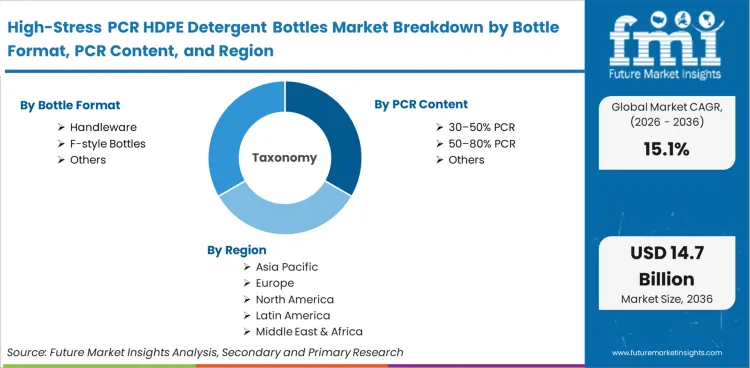
In 2025, the high-stress PCR HDPE detergent bottles market established a growth at USD 3.1 billion further driving the momentum to cross USD 3.6 billion in 2026 at a CAGR of 15.1% during the forecast period. Sustained investment lifts total market valuation to USD 14.7 billion through 2036 as global extended producer responsibility mandates shift from voluntary targets to binding inclusion minimums for rigid packaging.
Procurement directors evaluating high-stress detergent bottle packaging face a distinct commercial penalty if they delay integrating recycled resins into their high-volume liquid portfolios. Packaging engineers are actively balancing recycled content percentages against environmental stress cracking resistance failure rates on warehouse pallets. Delaying this qualification process exposes formulation companies to upcoming plastic tax liabilities across European and North American jurisdictions while attempting to meet aggressive home care bottle recycled content targets. Implementing bottle to bottle recycling protocols requires validating entirely new drop-test thresholds for heavy liquid containers.
Summary of High-Stress PCR HDPE Detergent Bottles Market
- High-Stress PCR HDPE Detergent Bottles Market Definition
- High-Stress PCR HDPE Detergent Bottles Market defines the commercial ecosystem of rigid blow-molded containers engineered to hold chemically aggressive household liquids while incorporating post-consumer recycled high-density polyethylene under strict stress-resistance parameters.
- Demand Drivers in the Market
- Impending plastic tax liabilities force procurement directors at FMCG brands to baseline a minimum percentage of post-consumer resin across their entire rigid packaging portfolios.
- Retailer sustainability scorecards compel category managers to delist home care products packaged in completely virgin polymer formats.
- Advancements in detergent packaging circular economy protocols allow blow molding operators to utilize heavily contaminated post-consumer bales for mid-layer co-extrusion applications.
- Key Segments Analyzed in the FMI Report
- Handleware: 39.0% share in 2026, driven by the ergonomic necessity of distributing heavy liquid weights safely across weakened recycled polymer structures.
- 30-50% PCR: 44.0% share in 2026, representing the maximum feasible threshold before drop-test survival rates decline sharply without expensive compatibilizers.
- Laundry Care: 49.0% share in 2026, shaped by the massive volumetric throughput of liquid surfactants in global retail channels.
- 1-2 L: 37.0% share in 2026, balancing consumer value expectations against the physical constraints of recycled container walls.
- Converter-Led: 58.0% share in 2026, reflecting the massive capital expenditure required to install specialized blending silos capable of homogenizing inconsistent resin batches.
- India: Progressing at a 17.2% CAGR, driven by rapid formalization of the liquid detergent sector coinciding with new national plastic waste management mandates.
- Analyst Opinion at FMI
- Ismail Sutaria, Principal Analyst, Packaging, at FMI, points out that, "Packaging engineers focus heavily on drop-test survival rates for new resin blends. What procurement teams frequently miss is the slow-acting chemical attack from concentrated laundry surfactants on the weakened polymer chains over a six-month shelf life. This tension between immediate mechanical survival and long-term chemical degradation dictates which tooling setups actually secure multi-year supplier contracts."
- Strategic Implications / Executive Takeaways
- Tooling engineers must redesign pinch-off geometries at the base of containers to accommodate the lower melt strength of post-consumer resins.
- Procurement directors who lock in multi-year supply contracts for high-quality natural bales will outmaneuver competitors facing spot-market volatility.
- Formulation chemists face pressure to adjust surfactant concentration levels to limit the chemical stress placed on lightweight recycled packaging walls.
- Methodology
- Primary research targets facility managers and packaging engineers actively navigating post-consumer resin qualification hurdles.
- Desk research evaluates compliance filings, recycling facility throughput data, and material safety testing logs.
- Forecasting anchors on total rigid plastic tonnage allocated to the household care sector, cross-validated against regional recycling infrastructure capacities.
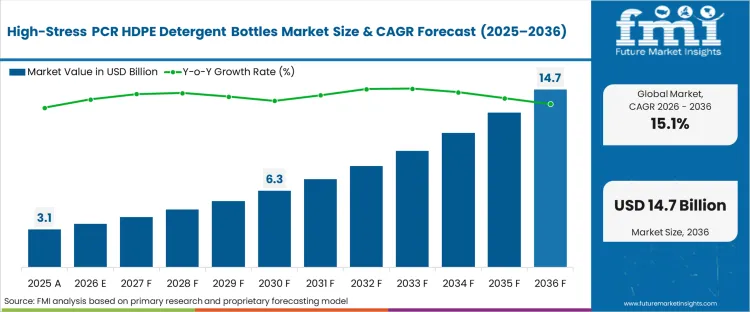
Once blow molding operators standardize fractional-melt blending protocols for ESCR HDPE detergent bottles, the technical premium for stable extrusion drops sharply. Standardization stabilizes the melt strength variations inherent to post-consumer streams. Extrusion consistency allows mid-tier detergent manufacturers to adopt high-recycled-content geometries without sacrificing filling-line speeds or risking catastrophic seam failures during transport.
The PCR HDPE bottle CAGR reflects strong regional divergence based on collection maturity. India leads adoption at 17.2%, driven by aggressive implementation of plastic waste management rules against a formalizing liquid detergent sector. China follows at 16.4% as domestic resin producers expand premium chemical recycling capacity. Brazil advances at 15.8%, reflecting localized supply chain shifts away from virgin plastics. The United States tracks at 14.1%, while Germany registers 13.4% as established HDPE bottles collection infrastructure matures. The United Kingdom expands at 13.1%, and Japan sits at 12.5%.
High-Stress PCR HDPE Detergent Bottles Market Definition
The recycled HDPE detergent bottle market defines the commercial ecosystem of rigid blow-molded containers engineered to hold chemically aggressive household liquids while incorporating post-consumer recycled high-density polyethylene. Structural boundaries mandate that these vessels withstand specific stress crack resistance in recycled HDPE parameters under heavy top-load pressure across extended shelf lives.
High-Stress PCR HDPE Detergent Bottles Market Inclusions
Scope incorporates fractional-melt extruded HDPE containers utilizing post-consumer recycled resin fractions for liquid detergent, fabric softener, and surface cleaner applications. Coverage integrates bottle-to-bottle HDPE recycling initiatives, handleware designs, dosing cap interfaces, and multi-layer co-extruded structures where the core contains recycled content to satisfy regulatory inclusion targets for rigid packaging for cleaning products.
High-Stress PCR HDPE Detergent Bottles Market Exclusions
Analysis omits virgin-only polymer containers, polyethylene terephthalate formulations, and flexible pouch architectures entirely. Rigid formats holding agricultural chemicals, industrial lubricants, or food-grade products remain outside this boundary due to diverging regulatory pathways and distinct resin decontamination requirements that alter fundamental manufacturing economics.
High-Stress PCR HDPE Detergent Bottles Market Research Methodology
- Primary Research: Procurement directors, packaging engineers at FMCG brands, and facility managers representing any high ESCR recycled bottle supplier actively qualifying high-recycled-content geometries.
- Desk Research: Extended producer responsibility compliance registries, technical datasheets for fractional-melt post-consumer resins, and polymer testing laboratory certifications.
- Market-Sizing and Forecasting: Annual volumetric output of rigid high-density polyethylene packaging destined specifically for the household care sector.
- Data Validation and Update Cycle: Verification against municipal bale yield data and secondary resin pricing indexes reported by polymer commodities exchanges.
Segmental Analysis
High-Stress PCR HDPE Detergent Bottles Market Analysis By Bottle Format
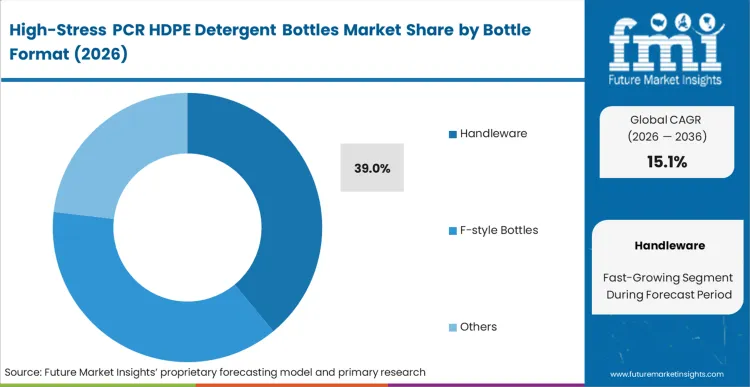
Physical weight distribution dictates the adoption curve for rigid formats housing heavy liquids. Handleware commands 39.0% share in 2026, and FMI's assessment indicates this dominance stems directly from ergonomic constraints intersecting with weakened polymer physics. Packaging engineers at major brands rely on handle geometries to ensure consumers can safely pour concentrated liquids without dropping the vessel. Incorporating recycled plastic packaging materials introduces inherent micro-flaws into the extrusion matrix, compromising overall structural integrity compared to virgin plastics. What procurement directors frequently overlook is that the failure point rarely occurs on the handle itself. Stress fractures concentrate at the pinch-off seam near the base where impurities gather during the blow molding process. Redesigning these molds for handleware laundry bottles to accommodate inferior melt strength requires substantial capital expenditure. Brands opting for standard rounds without handles to save tooling costs often experience elevated damage rates during warehouse palletization.
- Initial Tool Qualification: Packaging engineers redesign base pinch-off geometries to handle reduced melt strength. Converter-led facilities secure initial pilot runs based on their ability to minimize base seam fractures.
- Pilot Drop-Test Validation: Quality assurance directors measure failure rates during warehouse drop tests simulating real-world transit. Formats passing this threshold proceed to full-scale continuous extrusion.
- Retailer Scorecard Renewal: Category managers present the fully qualified handleware to retail buyers to satisfy sustainability metrics. Brands failing to secure this validation face immediate delisting threats from premium shelf spaces.
High-Stress PCR HDPE Detergent Bottles Market Analysis By PCR Content
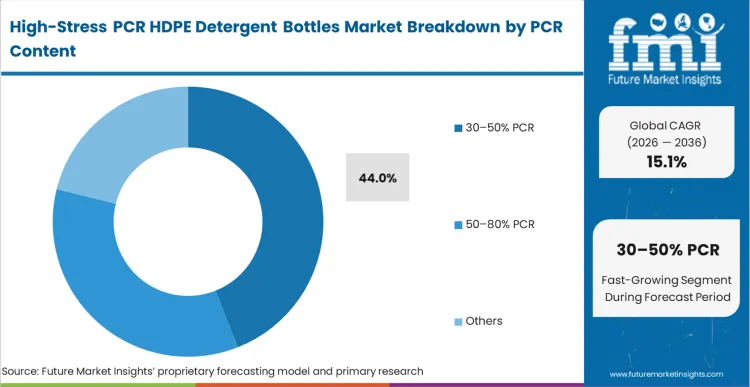
Balancing inclusion targets against mechanical failure defines the blending strategy for household liquids. The 30-50% PCR tier captures 44.0% share in 2026, and FMI's analysis indicates this ratio represents the absolute limit of structural viability before unit costs spiral. Procurement directors push for higher percentages to satisfy corporate sustainability mandates, but production managers resist due to the cascading operational issues caused by heavily contaminated bales. When analysts evaluate 30% PCR vs 50% PCR HDPE bottles, they observe that adding higher fractions of plastic packaging supply resins severely degrades environmental stress cracking resistance unless expensive compatibilizers are introduced into the melt. What sustainability officers rarely acknowledge is that pushing past the 50% threshold often generates a negative carbon footprint once the energy-intensive chemical additives and higher scrap rates are factored into the lifecycle analysis. Procurement teams delaying qualification at the 30% baseline risk severe competitive disadvantages as high-quality natural bales become heavily contracted by early movers.
- Baseline Resin Procurement: Sourcing managers negotiate forward contracts for fractional-melt bales to lock in pricing. Securing consistent feedstock limits exposure to spot-market volatility during raw material shortages.
- Operational Scrap Costs: Extrusion operators constantly adjust machine temperatures to handle inconsistent melt flow indices. Higher scrap generation during startup sequences quietly destroys the profit margins of aggressive inclusion strategies.
- Lifecycle Cost Comparison: Finance directors calculate the true cost of high-inclusion targets by adding compatibilizer expenses to the raw resin price. Facilities failing to map these hidden costs suffer severe margin compression.
High-Stress PCR HDPE Detergent Bottles Market Analysis By Application
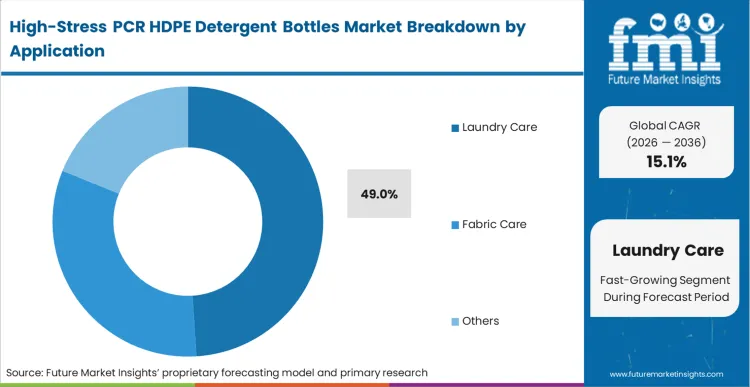
Chemical aggression from concentrated liquids forces specific engineering solutions for storage containers. R&D directors at chemical companies formulate increasingly concentrated detergents to reduce shipping weights, inadvertently compounding the stress placed on the vessel walls. Relying on recycled packaging share data reveals only part of the challenge. Laundry care accounts for 49.0% share in 2026, reflecting the immense volume of surfactants moving through global retail channels. FMI observes that the actual constraint for recycled laundry detergent bottles is the chemical interaction between active surfactants and the shortened polymer chains of post-consumer resins. What generalist analysts miss is that laundry detergents actively attack the container matrix from the inside, meaning bottles face continuous chemical degradation long before they reach the consumer's washing machine. Operations managers who ignore this degradation timeline face catastrophic pallet collapses in regional distribution centers, prompting massive product recalls.
- Surfactant Degradation Prevention: Formulation chemists balance active cleaning ingredients against the chemical tolerance of the selected resin blend. Finding this equilibrium prevents the container from cracking under hydrostatic pressure.
- Warehouse Pallet Collapse: Logistics directors discover hidden structural weaknesses when stacked pallets remain in high-temperature environments. Heat accelerates the chemical attack, leading to sudden seam ruptures.
- Wall Thickness Optimization: Tooling engineers must thicken specific load-bearing sections of the bottle to survive the intended shelf life. Over-thickening destroys the cost savings originally intended by lightweighting initiatives.
High-Stress PCR HDPE Detergent Bottles Market Analysis By Capacity
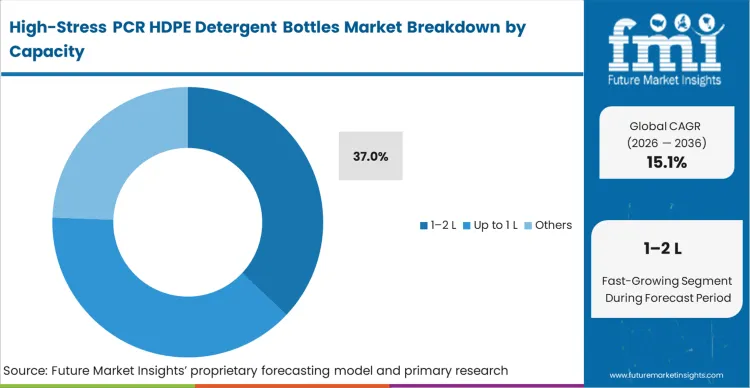
Volume determines the specific physical strain exerted on recycled polymer walls. The 1-2 L segment holds 37.0% share in 2026, representing the sweet spot between consumer purchasing habits and safe handling limits. Production managers at bottling facilities design filling lines around this specific volumetric parameter to maximize throughput speeds. Evaluating post consumer packaging adoption curves shows a sharp drop-off in recycled content beyond the two-liter mark. What is fundamentally misunderstood about larger capacities is that the hydrostatic pressure of the liquid itself becomes the primary structural threat, preventing high-inclusion ratios without utilizing expensive multi-layer co-extrusion technology. Brands that force high recycled percentages into 4-liter formats using single-layer machines inevitably experience sidewall paneling as the product cools and contracts.
- Municipal Bale Sourcing: Procurement directors secure local supply lines of natural high-density polyethylene bales. Localized sourcing reduces transportation emissions but exposes the facility to regional contamination variations.
- Feedstock Homogenization Limits: Plant managers install massive blending silos to average out the wildly differing melt flow indices of incoming batches. Facilities lacking this infrastructure produce bottles with dangerous thin spots.
- Long-Term Supply Stability: Supply chain executives map availability curves toward 2036 to ensure consistent production. Securing reliable feedstock access determines which converters survive the upcoming regulatory tightening.
High-Stress PCR HDPE Detergent Bottles Market Analysis By Production Model
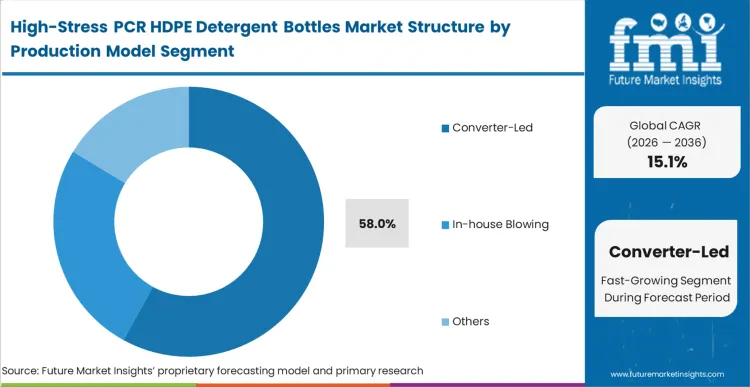
Implementing RHDPE recycling processes requires advanced melt filtration screens and odor control in PCR HDPE bottles that most captive blow molding operations simply cannot justify financially. The finance directors at FMCG companies realize too late that the outsourcing contract blow molding PCR HDPE bottles transfers immense pricing power to a consolidated tier of specialized converters. Operations managers at major FMCG brands actively offshore this technical risk to dedicated converters rather than upgrading their in-house blowing capabilities. Brands that dismantle their internal technical expertise become entirely dependent on toll molders for future format innovations. Capital expenditure requirements dictate the manufacturing pathway for high-inclusion geometries. Converter-led production represents 58.0% share in 2026, driven by the specialized infrastructure necessary to handle inconsistent raw materials.
- Melt Filtration-Out Performance: Machine operators utilize advanced continuous screen changers to filter out paper and metal impurities from the melt. Exceptional filtration prevents stress concentrators from forming in the bottle wall.
- Odor Retention Gaps: Quality control managers reject batches where residual fragrances from previous lifecycles contaminate the new product. Masking agents only partially solve this issue under high-heat warehouse conditions.
- Multi-Layer Qualification Standards: Packaging engineers mandate three-layer co-extrusion setups where virgin resin encapsulates the recycled core. Achieving this standard requires highly calibrated equipment that captive blowers rarely possess.
High-Stress PCR HDPE Detergent Bottles Market Drivers, Restraints, and Opportunities
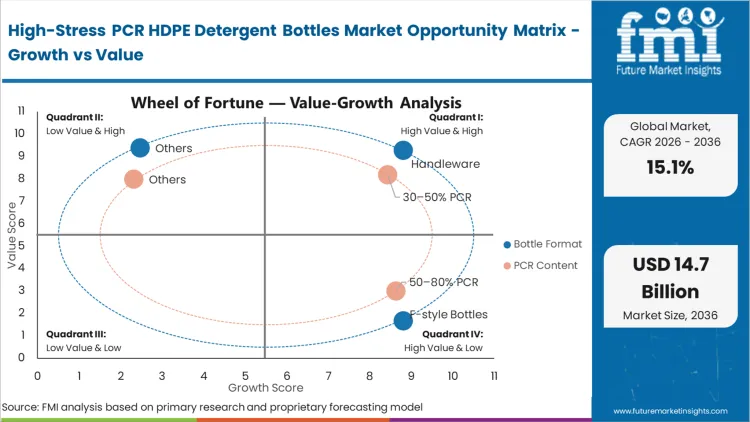
Procurement directors face impending PPWR recycled content packaging taxes that fundamentally alter the unit economics of virgin resin containers. Penalties for missing minimum inclusion targets erase the traditional cost advantages of virgin high-density polyethylene across major European and North American markets. Category managers at massive retail chains now deploy strict sustainability scorecards, threatening to delist liquid detergents that fail to utilize post-consumer materials. Implementing odour control technology becomes a necessary compliance investment rather than a sustainability marketing expense, as brands scramble to qualify functional packaging before binding legislation takes effect.
Sourcing consistent, high-quality post-consumer resin bales creates severe bottlenecks for continuous extrusion operations. Melt flow indices vary wildly between municipal collection batches, forcing machine operators to constantly adjust processing temperatures and cycle times to prevent blow-outs. Recycled plastic bottle odor issues further complicate qualification, as brands reject batches that interfere with the product's intended fragrance profile. This fundamental inconsistency destroys the operational efficiencies built over decades of optimizing virgin polymer runs.
Opportunities in the High-Stress PCR HDPE Detergent Bottles Market
- Chemical Decontamination Scaling: Installing solvent recycling plants enables converters to strip volatile organic compounds from heavily contaminated bales. Plant managers access a cheaper raw material pool while maintaining required mechanical properties for bulk recycled HDPE home care bottles.
- Pigmented HDPE Processing: Tooling engineers upgrade existing single-layer blow molding machines with satellite extruders to handle pigmented HDPE bottle recycling. Operations managers achieve high inclusion targets by burying inferior colored resins inside virgin skin layers.
- Machine Vision Quality Sorting: Quality assurance directors deploy automated optical inspection systems to catch un-melted particles before bottles reach the filling line. Identifying defects early prevents costly catastrophic failures during transit.
Regional Analysis
Global adoption of high-stress PCR HDPE detergent bottles is heavily dictated by regional disparities in recycling infrastructure and binding regulatory mandates. While advanced markets focus on localized supply chain security, emerging economies are rapidly formalizing their waste management frameworks to support rigid packaging circularity. Based on regional analysis, the market is segmented into North America and Latin America, Europe, Asia-Pacific, and Middle East & Africa across 40 plus countries.
.webp "Top Country Growth Comparison High Stress Pcr Hdpe Detergent Bottles Market Cagr (2026 2036)")
| Country | CAGR (2026 to 2036) |
|---|---|
| India | 17.2% |
| China | 16.4% |
| Brazil | 15.8% |
| United States | 14.1% |
| Germany | 13.4% |
| United Kingdom | 13.1% |
| Japan | 12.5% |
Source: Future Market Insights (FMI) analysis, based on proprietary forecasting model and primary research
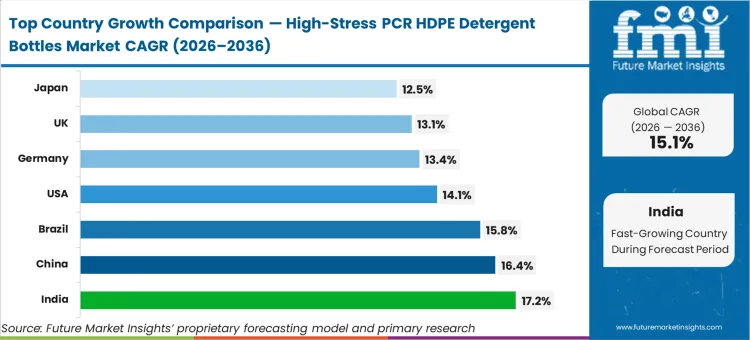
Asia-Pacific High-Stress PCR HDPE Detergent Bottles Market Analysis
Massive capital expenditure from domestic petrochemical giants toward advanced chemical recycling infrastructure is reshaping rigid packaging procurement across the Asia-Pacific region. Multinational FMCG brands operating locally must adapt global tooling designs to accommodate heavily degraded local resin streams, frequently relying on multi-layer technologies to shield active laundry formulations. This sudden regulatory pressure exposes a severe deficit in formal sorting and washing infrastructure, yet the availability of near-virgin quality recycled resin allows regional home care brands to skip the difficult optimization phases that Western counterparts endured.
- India: Advancing at a rapid 17.2% CAGR, the India recycled detergent bottles market is undergoing a massive transformation driven by the aggressive implementation of plastic waste management rules recycled content targets. To survive the transition to regulated packaging, procurement directors are scrambling to secure output from newly commissioned chemical recycling facilities. Securing multi-year supply agreements for premium fractional-melt bales ultimately determines the success of local brands in this rapidly formalizing liquid detergent sector.
- China: Packaging engineers are utilizing highly consistent feedstock streams from expanding domestic food-grade and premium chemical recycling capacity, pushing the sector to a 16.4% CAGR over the forecast period. Category managers push inclusion limits aggressively, and the operational outcome of utilizing this premium recycled resin is a near-zero defect rate during warehouse drop testing, which matches historical virgin polymer performance.
- Japan: Converters benefit from exceptionally clean input streams right from the municipal level due to stringent localized sorting behaviors. This dynamic allows established players to export highly technical recycling processes to adjacent Asian markets facing infrastructure deficits, expanding the local base at 12.5% CAGR, while tooling engineers safely optimize thin-walled geometries.
As per FMI’s assessments, tooling engineers maintain high filling-line speeds across the Asia-Pacific region because the advanced feedstock behaves predictably during the extrusion blow molding cycle.
Europe High-Stress PCR HDPE Detergent Bottles Market Analysis
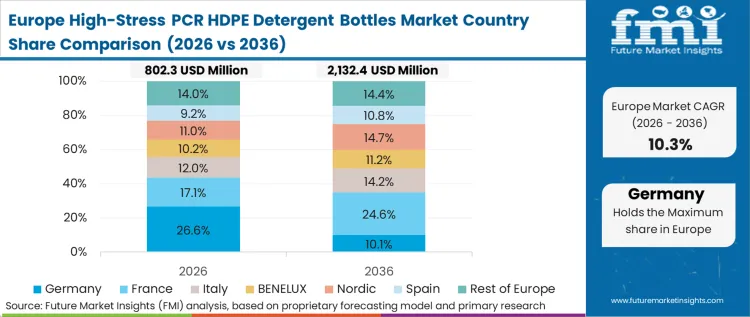
Procurement directors across the bloc must source sufficient post-consumer resins to comply with aggressive legislation while maintaining uniform packaging performance across the entire continental supply chain. Binding regional policy mandates are fundamentally transforming the commercial calculus for rigid home care packaging, forcing brands to over-engineer their baseline inclusion targets to satisfy the strictest national requirement. Disruptions in continuous extrusion schedules at major converter plants remain a constant friction point for logistics managers, stemming directly from inconsistent bale quality across varying municipal material recovery facilities.
- Germany: Sourcing managers navigating intense spot-market pricing volatility are positioning the market for 13.4% CAGR, even as established material recovery facilities output sufficient volumes of natural high-density polyethylene to meet surging FMCG demand. Brands operating in the broader Europe PCR HDPE detergent bottles market achieve a definitive cost advantage over competitors reliant on open-market sourcing by successfully locking in vertical supply chains with dedicated wash plants.
- United Kingdom: Expanding at a 13.1% CAGR, adoption is largely compelled by aggressive retailer sustainability scorecards that force suppliers to transition toward circular packaging faster than baseline legal requirements. The operational necessity here is continuous melt filtration to prevent catastrophic stress cracking on the retail shelf, prompting tooling engineers to optimize blow molding parameters to handle lower-quality domestic bales.
FMI reports, diverging recycling infrastructure capabilities across European borders require FMCG operators to maintain separate tooling profiles to handle varying resin melt strengths.
North America and Latin America High-Stress PCR HDPE Detergent Bottles Market Analysis
National packaging strategies for major household care brands are highly complicated by state-level legislative divergence and fragmented recycling infrastructure. Logistics managers face constant friction as inconsistent bale quality from varying municipal material recovery facilities disrupts continuous extrusion schedules at major converter plants. The brands are then forced to over-engineer their baseline inclusion targets to satisfy the strictest regional requirements while battling unpredictable open-market supply lines.
- Brazil: Localized supply chain shifts away from virgin plastics are driving a robust 15.8% of market expansion as regional converters aggressively scale their operations. Packaging engineers in the region are adapting to these new feedstock realities by adjusting mold geometries to prevent catastrophic stress-cracking failures during transit.
- United States: Surging FMCG demand is severely straining established material recovery facilities, which struggle to output sufficient volumes of natural high-density polyethylene. Projected to grow at 14.1% CAGR, brands that successfully lock in vertical supply chains with dedicated wash plants achieve a definitive cost advantage over competitors navigating the intense spot-market pricing volatility of the United States HDPE detergent bottle recycling market.
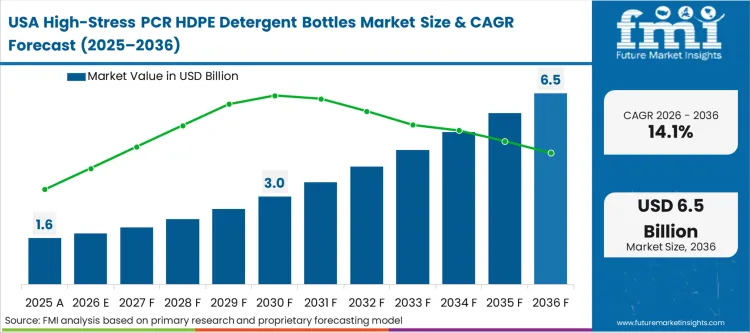
FMI's report indicates that navigating these cross-continental supply disparities requires multinational brands to forge dedicated, long-term partnerships with specialized wash plants to secure the necessary volume of extrusion-grade resins.
Competitive Aligners for Market Players
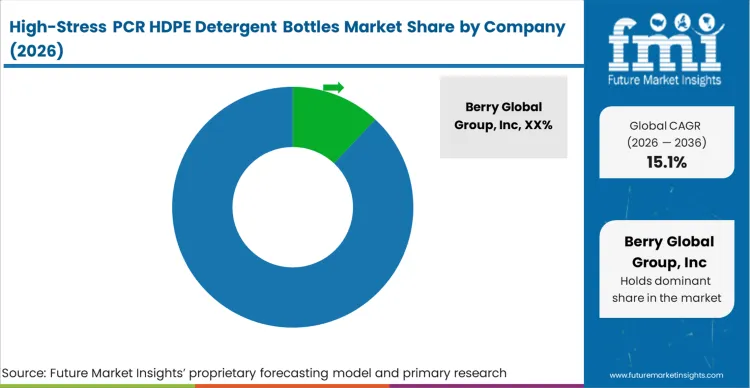
Specialized converter facilities command immense pricing power by absorbing the technical risk of extruding highly inconsistent post-consumer feedstocks. Operations managers at major brands like Berry Global Group, Inc. and ALPLA Group deploy advanced sustainable packaging structures utilizing multi-layer co-extrusion, effectively hiding inferior recycled materials between layers of virgin polymer. This specific capability prevents chemical attacks from active laundry surfactants while satisfying corporate inclusion mandates. Procurement directors sourcing from top PCR HDPE detergent bottle suppliers actively evaluate partners based on their ability to guarantee specific drop-test survival rates rather than competing purely on unit weight.
Incumbent packaging manufacturers possess extensive internal libraries detailing how specific fractional-melt resin batches interact with aggressive chemical formulas over extended timeframes. Graham Packaging Company and Silgan Plastics leverage this proprietary data to expedite tool qualification for plastic bottles destined for heavy-duty applications. Challengers entering the space lack this historical failure data, forcing them to conduct lengthy and expensive stress-cracking resistance trials before securing any volume contracts. Deeply entrenched HDPE detergent bottle manufacturers with PCR capabilities ensure these incumbents receive priority access to the cleanest municipal bales during supply shortages.
Large FMCG buyers actively resist converter lock-in by standardizing neck finishes and base geometries, allowing them to shift molds between different toll manufacturers when sourcing custom recycled HDPE laundry bottles. Packaging engineers mandate universal processing parameters for blow molded bottles to ensure seamless transitions if a primary supplier fails to secure adequate post-consumer feedstock. The structural necessity for advanced melt filtration and continuous screen changing capabilities ensures that only highly capitalized extrusion facilities remain viable for Tier-1 liquid detergent contracts, especially when brands evaluate virgin HDPE vs PCR HDPE detergent bottles across total lifecycle costs.
Key Players in High-Stress PCR HDPE Detergent Bottles Market
- Berry Global Group, Inc. (12.0%)
- ALPLA Group
- Graham Packaging Company
- Silgan Plastics
- Plastipak Holdings, Inc.
- Logoplaste
- CKS Packaging, Inc.
Scope of the Report
| Metric | Value |
|---|---|
| Quantitative Units | USD 3.6 billion to USD 14.7 billion, at a CAGR of 15.1% |
| Market Definition | The recycled HDPE detergent bottle market defines the commercial ecosystem of rigid blow-molded containers engineered to hold chemically aggressive household liquids while incorporating post-consumer recycled high-density polyethylene under strict stress-resistance parameters. |
| Segmentation | Bottle format, PCR content, Application, Capacity, Production model, and Region |
| Regions Covered | North America, Latin America, Western Europe, Eastern Europe, East Asia, South Asia & Pacific, and Middle East & Africa |
| Countries Covered | United States, Canada, Brazil, Mexico, Germany, United Kingdom, France, Spain, Italy, Russia, China, Japan, South Korea, India, ASEAN, GCC Countries, South Africa |
| Key Companies Profiled | Berry Global Group, Inc., ALPLA Group, Graham Packaging Company, Silgan Plastics, Plastipak Holdings, Inc., Logoplaste, CKS Packaging, Inc. |
| Forecast Period | 2026 to 2036 |
| Approach | Forecasting anchors on total rigid plastic tonnage allocated to the household care sector, cross-validated against regional recycling infrastructure capacities. |
Source: Future Market Insights (FMI) analysis, based on proprietary forecasting model and primary research
High-Stress PCR HDPE Detergent Bottles Market Segments
Bottle Format:
- Handleware
- Dosing bottles
- F-style bottles
- Standard rounds
PCR Content:
- 30-50% PCR
- 50-80% PCR
- 80%+ PCR
- Virgin blends
Application:
- Laundry care
- Fabric care
- Dish care
- Surface care
Capacity:
- 1-2 L
- Up to 1 L
- 2-4 L
- 4 L+
Production Model:
- Converter-led
- In-house blowing
- Closed-loop supply
- Toll molding
Regions:
- North America & Latin America
- United States
- Canada
- Mexico
- Brazil
- Argentina
- Chile
- Europe
- Germany
- United Kingdom
- France
- Italy
- Spain
- Asia-Pacific
- China
- Japan
- South Korea
- India
- ASEAN
- ANZ
- Middle East & Africa
- UAE
- Saudi Arabia
- South Africa
Bibliography
- Khaki, A., Bäcker, J., Remerie, K., Picchioni, F., & Rastin, H. (2024). Root causes of post-consumer high-density polyethylene failing in environmental stress cracking resistance. Resources, Conservation and Recycling, 209, 107776.
- Blanco, A., del Rosario, A., González, J., & Fullana-i-Palmer, P. (2024). Assessing the circularity of post-consumer HDPE milk bottles based on life cycle assessment and mechanical recycling process stability. Cleaner Environmental Systems, 13, 100230.
- Patel, A. D., Liu, M., Zheng, J., Snyder, C. R., & Ellison, C. J. (2024). Defining quality by quantifying degradation in the mechanical recycling of high-density polyethylene. Nature Communications, 15, 8368.
- Association of Plastic Recyclers. (2024, April 18). Recycling more and using less on Earth Day 2024.
- RECOUP. (2024). Recyclability by Design 2024.
- The Recycling Partnership. (2024). State of Recycling 2024.
- EUROPEN. (2024, September). PPWR survival guide.
- Plastics Recyclers Europe. (2025). Plastics recycling industry figures 2025.
- Ministry of Environment, Forest and Climate Change, Government of India. (2025, January 23). Plastic Waste Management (Amendment) Rules, 2025.
This bibliography is provided for reader reference. The full FMI report contains the complete reference list with primary source documentation.
Frequently Asked Questions
What is the high-stress PCR HDPE detergent bottles market?
The high-stress PCR HDPE detergent bottles market represents the commercial ecosystem of rigid blow-molded containers engineered to hold chemically aggressive household liquids while surviving strict environmental stress cracking parameters across extended retail shelf lives.
Why is environmental stress cracking such a big issue in recycled HDPE detergent bottles?
When weakened post-consumer polymer chains are exposed to active laundry surfactants under continuous hydrostatic pressure, they act as stress concentrators that cause sudden seam ruptures and catastrophic pallet collapses during warehouse storage.
How fast is the PCR HDPE detergent bottle market growing?
The PCR HDPE detergent bottles market advances at a CAGR of 15.1% through 2036, relying heavily on the rapid scaling of advanced melt filtration and chemical decontamination plants to process highly variable municipal bales.
Which regions are adopting recycled detergent bottles the fastest?
India leads global expansion at 17.2% due to aggressive new plastic waste management rules, followed closely by China at 16.4% as domestic petrochemical producers pivot massive capital expenditure toward premium chemical recycling infrastructure.
What PCR percentages are commercially realistic for detergent bottles today?
The 30–50% inclusion tier commands 44.0% share because pushing beyond this mechanical limit without utilizing expensive chemical compatibilizers or multi-layer co-extrusion creates unacceptable structural risk for heavy liquid formats.
Which companies currently supply PCR HDPE detergent bottles?
Major PCR HDPE detergent bottle suppliers like Berry Global Group, ALPLA Group, and Graham Packaging possess the highly capitalized advanced melt filtration and blending silo infrastructure necessary to process inconsistent post-consumer feedstocks effectively.
How do PPWR and India’s recycled-content rules affect demand?
Binding extended producer responsibility mandates erase the traditional unit cost advantage of virgin resins, forcing procurement directors to treat premium post-consumer bales as necessary compliance investments and secure long-term supply contracts.
What is the difference between bottle-to-bottle rHDPE and generic PCR supply?
Detergent bottle-to-bottle recycling market streams utilize advanced sorting and chemical decontamination to maintain specific melt flow indices suitable for blow molding, whereas generic PCR contains mixed polymer fractions that cause severe structural blow-outs.
Can PCR HDPE work for bleach, laundry, and dish-care packaging?
Yes, provided formulation chemists actively balance surfactant concentration levels against the chosen recycled resin blend and converters utilize multi-layer co-extrusion to shield active formulations from the contaminated packaging walls.
How do odor control and deodorization affect bottle performance?
Advanced solvent recycling plants that strip volatile organic compounds prevent quality assurance directors from rejecting recycled batches that retain residual fragrances, allowing converters to access cheaper raw materials without sacrificing the consumer experience.
How big is the PCR HDPE detergent bottles market?
Demand is poised to cross USD 14.7 billion by 2036 as massive structural shifts force brands to transition entire packaging architectures away from virgin plastics to comply with binding global extended producer responsibility mandates.
What is high-stress PCR HDPE packaging?
This packaging category encompasses heavy-duty rigid formats, primarily handleware and large dosing bottles, engineered to survive rigorous warehouse drop-testing despite utilizing weakened post-consumer resins to physically contain dense, chemically aggressive liquids.
Why do recycled HDPE detergent bottles crack?
Material impurities concentrate heavily at the base pinch-off seam during extrusion blow molding, creating structural weak points that fracture under the combined strain of top-load warehouse stacking and continuous chemical exposure from concentrated cleaners.
Are detergent bottles made from recycled HDPE?
While legislative pressure compels brands to transition away from pure virgin polymers, most highly functional formats utilize a blended approach or multi-layer structures where virgin skin layers protect a recycled core.
Can recycled HDPE handle aggressive detergents?
Recycled HDPE can handle aggressive detergents only if tooling engineers strategically thicken specific load-bearing sections of the bottle wall and operations managers adjust mold geometries to prevent surfactants from attacking the shortened polymer chains.
Compare virgin and PCR HDPE detergent bottles.
Virgin bottles offer highly predictable melt strength and flawless stress crack resistance at lower raw material costs, whereas PCR bottles satisfy sustainability mandates but require massive capital investments in specialized blending silos to prevent manufacturing defects.
Summarize ESCR challenges in recycled HDPE packaging.
Environmental stress cracking resistance plummets because inherent micro-flaws in post-consumer resins propagate into visible fractures, usually starting at the base pinch-off seam, when exposed to heat, top-load pressure, and active surfactants simultaneously.
Which countries are adopting recycled detergent bottles fastest?
Beyond India and China, Brazil advances at 15.8% and the United States tracks at 14.1%, while growth in Western markets depends heavily on establishing localized, consistent supply lines of natural high-density polyethylene bales.
Is high PCR HDPE suitable for laundry bottles?
Because concentrated surfactants actively attack recycled polymer chains, high PCR inclusion above 50% for the 49.0% share laundry care segment is only suitable if converters utilize multi-layer co-extrusion to hide the inferior resin behind a protective virgin layer.
What recycled content is realistic for detergent bottles?
While 30–50% remains the commercial sweet spot, brands aiming for 80%+ inclusion must accept significantly higher scrap rates during the blow molding process as extrusion operators constantly adjust processing temperatures to handle wildly varying melt flow indices.
How does PPWR affect detergent bottles?
The packaging and packaging waste regulation force European procurement directors to over-engineer their baseline inclusion targets and secure multi-year supply agreements for premium fractional-melt bales immediately to avoid severe financial penalties.
Explain the high-stress PCR HDPE detergent bottles market.
This market is defined by the critical technical struggle to blow-mold reliable, leak-proof containers for heavy, aggressive liquids using inherently flawed, degraded post-consumer plastic feedstocks to satisfy global sustainability mandates.
Preview the report firsthand - request a free sample
Get SampleGet the brochure for pricing and purchase details.
Get PDFTable of Content
- Executive Summary
- Global Market Outlook
- Demand-side Trends
- Supply-side Trends
- Technology Roadmap Analysis
- Analysis and Recommendations
- Market Overview
- Market Coverage / Taxonomy
- Market Definition / Scope / Limitations
- Research Methodology
- Chapter Orientation
- Analytical Lens and Working Hypotheses
- Market Structure, Signals, and Trend Drivers
- Benchmarking and Cross-market Comparability
- Market Sizing, Forecasting, and Opportunity Mapping
- Research Design and Evidence Framework
- Desk Research Programme (Secondary Evidence)
- Company Annual and Sustainability Reports
- Peer-reviewed Journals and Academic Literature
- Corporate Websites, Product Literature, and Technical Notes
- Earnings Decks and Investor Briefings
- Statutory Filings and Regulatory Disclosures
- Technical White Papers and Standards Notes
- Trade Journals, Industry Magazines, and Analyst Briefs
- Conference Proceedings, Webinars, and Seminar Materials
- Government Statistics Portals and Public Data Releases
- Press Releases and Reputable Media Coverage
- Specialist Newsletters and Curated Briefings
- Sector Databases and Reference Repositories
- FMI Internal Proprietary Databases and Historical Market Datasets
- Subscription Datasets and Paid Sources
- Social Channels, Communities, and Digital Listening Inputs
- Additional Desk Sources
- Expert Input and Fieldwork (Primary Evidence)
- Primary Modes
- Qualitative Interviews and Expert Elicitation
- Quantitative Surveys and Structured Data Capture
- Blended Approach
- Why Primary Evidence is Used
- Field Techniques
- Interviews
- Surveys
- Focus Groups
- Observational and In-context Research
- Social and Community Interactions
- Stakeholder Universe Engaged
- C-suite Leaders
- Board Members
- Presidents and Vice Presidents
- R&D and Innovation Heads
- Technical Specialists
- Domain Subject-matter Experts
- Scientists
- Physicians and Other Healthcare Professionals
- Governance, Ethics, and Data Stewardship
- Research Ethics
- Data Integrity and Handling
- Primary Modes
- Opportunity
- Trends
- Desk Research Programme (Secondary Evidence)
- Scenario Forecast
- Demand in Optimistic Scenario
- Demand in Likely Scenario
- Demand in Conservative Scenario
- Opportunity Map Analysis
- Product Life Cycle Analysis
- Supply Chain Analysis
- Investment Feasibility Matrix
- Value Chain Analysis
- PESTLE and Porter’s Analysis
- Regulatory Landscape
- Regional Parent Market Outlook
- Production and Consumption Statistics
- Import and Export Statistics
- Global Market Analysis 2021 to 2025 and Forecast, 2026 to 2036
- Historical Market Size Value (USD Million) Analysis, 2021 to 2025
- Current and Future Market Size Value (USD Million) Projections, 2026 to 2036
- Y-o-Y Growth Trend Analysis
- Absolute $ Opportunity Analysis
- Global Market Pricing Analysis 2021 to 2025 and Forecast 2026 to 2036
- Global Market Analysis 2021 to 2025 and Forecast 2026 to 2036, By Bottle Format
- Introduction / Key Findings
- Historical Market Size Value (USD Million) Analysis By Bottle Format , 2021 to 2025
- Current and Future Market Size Value (USD Million) Analysis and Forecast By Bottle Format , 2026 to 2036
- Handleware
- F-style Bottles
- Others
- Handleware
- Y-o-Y Growth Trend Analysis By Bottle Format , 2021 to 2025
- Absolute $ Opportunity Analysis By Bottle Format , 2026 to 2036
- Global Market Analysis 2021 to 2025 and Forecast 2026 to 2036, By PCR Content
- Introduction / Key Findings
- Historical Market Size Value (USD Million) Analysis By PCR Content, 2021 to 2025
- Current and Future Market Size Value (USD Million) Analysis and Forecast By PCR Content, 2026 to 2036
- 30-50% PCR
- 50-80% PCR
- Others
- 30-50% PCR
- Y-o-Y Growth Trend Analysis By PCR Content, 2021 to 2025
- Absolute $ Opportunity Analysis By PCR Content, 2026 to 2036
- Global Market Analysis 2021 to 2025 and Forecast 2026 to 2036, By Application
- Introduction / Key Findings
- Historical Market Size Value (USD Million) Analysis By Application, 2021 to 2025
- Current and Future Market Size Value (USD Million) Analysis and Forecast By Application, 2026 to 2036
- Laundry Care
- Fabric Care
- Others
- Laundry Care
- Y-o-Y Growth Trend Analysis By Application, 2021 to 2025
- Absolute $ Opportunity Analysis By Application, 2026 to 2036
- Global Market Analysis 2021 to 2025 and Forecast 2026 to 2036, By Capacity
- Introduction / Key Findings
- Historical Market Size Value (USD Million) Analysis By Capacity, 2021 to 2025
- Current and Future Market Size Value (USD Million) Analysis and Forecast By Capacity, 2026 to 2036
- 1-2 L
- Up to 1 L
- Others
- 1-2 L
- Y-o-Y Growth Trend Analysis By Capacity, 2021 to 2025
- Absolute $ Opportunity Analysis By Capacity, 2026 to 2036
- Global Market Analysis 2021 to 2025 and Forecast 2026 to 2036, By Production Model
- Introduction / Key Findings
- Historical Market Size Value (USD Million) Analysis By Production Model, 2021 to 2025
- Current and Future Market Size Value (USD Million) Analysis and Forecast By Production Model, 2026 to 2036
- Converter-Led
- In-house Blowing
- Others
- Converter-Led
- Y-o-Y Growth Trend Analysis By Production Model, 2021 to 2025
- Absolute $ Opportunity Analysis By Production Model, 2026 to 2036
- Global Market Analysis 2021 to 2025 and Forecast 2026 to 2036, By Region
- Introduction
- Historical Market Size Value (USD Million) Analysis By Region, 2021 to 2025
- Current Market Size Value (USD Million) Analysis and Forecast By Region, 2026 to 2036
- North America
- Latin America
- Western Europe
- Eastern Europe
- East Asia
- South Asia and Pacific
- Middle East & Africa
- Market Attractiveness Analysis By Region
- North America Market Analysis 2021 to 2025 and Forecast 2026 to 2036, By Country
- Historical Market Size Value (USD Million) Trend Analysis By Market Taxonomy, 2021 to 2025
- Market Size Value (USD Million) Forecast By Market Taxonomy, 2026 to 2036
- By Country
- USA
- Canada
- Mexico
- By Bottle Format
- By PCR Content
- By Application
- By Capacity
- By Production Model
- By Country
- Market Attractiveness Analysis
- By Country
- By Bottle Format
- By PCR Content
- By Application
- By Capacity
- By Production Model
- Key Takeaways
- Latin America Market Analysis 2021 to 2025 and Forecast 2026 to 2036, By Country
- Historical Market Size Value (USD Million) Trend Analysis By Market Taxonomy, 2021 to 2025
- Market Size Value (USD Million) Forecast By Market Taxonomy, 2026 to 2036
- By Country
- Brazil
- Chile
- Rest of Latin America
- By Bottle Format
- By PCR Content
- By Application
- By Capacity
- By Production Model
- By Country
- Market Attractiveness Analysis
- By Country
- By Bottle Format
- By PCR Content
- By Application
- By Capacity
- By Production Model
- Key Takeaways
- Western Europe Market Analysis 2021 to 2025 and Forecast 2026 to 2036, By Country
- Historical Market Size Value (USD Million) Trend Analysis By Market Taxonomy, 2021 to 2025
- Market Size Value (USD Million) Forecast By Market Taxonomy, 2026 to 2036
- By Country
- Germany
- UK
- Italy
- Spain
- France
- Nordic
- BENELUX
- Rest of Western Europe
- By Bottle Format
- By PCR Content
- By Application
- By Capacity
- By Production Model
- By Country
- Market Attractiveness Analysis
- By Country
- By Bottle Format
- By PCR Content
- By Application
- By Capacity
- By Production Model
- Key Takeaways
- Eastern Europe Market Analysis 2021 to 2025 and Forecast 2026 to 2036, By Country
- Historical Market Size Value (USD Million) Trend Analysis By Market Taxonomy, 2021 to 2025
- Market Size Value (USD Million) Forecast By Market Taxonomy, 2026 to 2036
- By Country
- Russia
- Poland
- Hungary
- Balkan & Baltic
- Rest of Eastern Europe
- By Bottle Format
- By PCR Content
- By Application
- By Capacity
- By Production Model
- By Country
- Market Attractiveness Analysis
- By Country
- By Bottle Format
- By PCR Content
- By Application
- By Capacity
- By Production Model
- Key Takeaways
- East Asia Market Analysis 2021 to 2025 and Forecast 2026 to 2036, By Country
- Historical Market Size Value (USD Million) Trend Analysis By Market Taxonomy, 2021 to 2025
- Market Size Value (USD Million) Forecast By Market Taxonomy, 2026 to 2036
- By Country
- China
- Japan
- South Korea
- By Bottle Format
- By PCR Content
- By Application
- By Capacity
- By Production Model
- By Country
- Market Attractiveness Analysis
- By Country
- By Bottle Format
- By PCR Content
- By Application
- By Capacity
- By Production Model
- Key Takeaways
- South Asia and Pacific Market Analysis 2021 to 2025 and Forecast 2026 to 2036, By Country
- Historical Market Size Value (USD Million) Trend Analysis By Market Taxonomy, 2021 to 2025
- Market Size Value (USD Million) Forecast By Market Taxonomy, 2026 to 2036
- By Country
- India
- ASEAN
- Australia & New Zealand
- Rest of South Asia and Pacific
- By Bottle Format
- By PCR Content
- By Application
- By Capacity
- By Production Model
- By Country
- Market Attractiveness Analysis
- By Country
- By Bottle Format
- By PCR Content
- By Application
- By Capacity
- By Production Model
- Key Takeaways
- Middle East & Africa Market Analysis 2021 to 2025 and Forecast 2026 to 2036, By Country
- Historical Market Size Value (USD Million) Trend Analysis By Market Taxonomy, 2021 to 2025
- Market Size Value (USD Million) Forecast By Market Taxonomy, 2026 to 2036
- By Country
- Kingdom of Saudi Arabia
- Other GCC Countries
- Turkiye
- South Africa
- Other African Union
- Rest of Middle East & Africa
- By Bottle Format
- By PCR Content
- By Application
- By Capacity
- By Production Model
- By Country
- Market Attractiveness Analysis
- By Country
- By Bottle Format
- By PCR Content
- By Application
- By Capacity
- By Production Model
- Key Takeaways
- Key Countries Market Analysis
- USA
- Pricing Analysis
- Market Share Analysis, 2025
- By Bottle Format
- By PCR Content
- By Application
- By Capacity
- By Production Model
- Canada
- Pricing Analysis
- Market Share Analysis, 2025
- By Bottle Format
- By PCR Content
- By Application
- By Capacity
- By Production Model
- Mexico
- Pricing Analysis
- Market Share Analysis, 2025
- By Bottle Format
- By PCR Content
- By Application
- By Capacity
- By Production Model
- Brazil
- Pricing Analysis
- Market Share Analysis, 2025
- By Bottle Format
- By PCR Content
- By Application
- By Capacity
- By Production Model
- Chile
- Pricing Analysis
- Market Share Analysis, 2025
- By Bottle Format
- By PCR Content
- By Application
- By Capacity
- By Production Model
- Germany
- Pricing Analysis
- Market Share Analysis, 2025
- By Bottle Format
- By PCR Content
- By Application
- By Capacity
- By Production Model
- UK
- Pricing Analysis
- Market Share Analysis, 2025
- By Bottle Format
- By PCR Content
- By Application
- By Capacity
- By Production Model
- Italy
- Pricing Analysis
- Market Share Analysis, 2025
- By Bottle Format
- By PCR Content
- By Application
- By Capacity
- By Production Model
- Spain
- Pricing Analysis
- Market Share Analysis, 2025
- By Bottle Format
- By PCR Content
- By Application
- By Capacity
- By Production Model
- France
- Pricing Analysis
- Market Share Analysis, 2025
- By Bottle Format
- By PCR Content
- By Application
- By Capacity
- By Production Model
- India
- Pricing Analysis
- Market Share Analysis, 2025
- By Bottle Format
- By PCR Content
- By Application
- By Capacity
- By Production Model
- ASEAN
- Pricing Analysis
- Market Share Analysis, 2025
- By Bottle Format
- By PCR Content
- By Application
- By Capacity
- By Production Model
- Australia & New Zealand
- Pricing Analysis
- Market Share Analysis, 2025
- By Bottle Format
- By PCR Content
- By Application
- By Capacity
- By Production Model
- China
- Pricing Analysis
- Market Share Analysis, 2025
- By Bottle Format
- By PCR Content
- By Application
- By Capacity
- By Production Model
- Japan
- Pricing Analysis
- Market Share Analysis, 2025
- By Bottle Format
- By PCR Content
- By Application
- By Capacity
- By Production Model
- South Korea
- Pricing Analysis
- Market Share Analysis, 2025
- By Bottle Format
- By PCR Content
- By Application
- By Capacity
- By Production Model
- Russia
- Pricing Analysis
- Market Share Analysis, 2025
- By Bottle Format
- By PCR Content
- By Application
- By Capacity
- By Production Model
- Poland
- Pricing Analysis
- Market Share Analysis, 2025
- By Bottle Format
- By PCR Content
- By Application
- By Capacity
- By Production Model
- Hungary
- Pricing Analysis
- Market Share Analysis, 2025
- By Bottle Format
- By PCR Content
- By Application
- By Capacity
- By Production Model
- Kingdom of Saudi Arabia
- Pricing Analysis
- Market Share Analysis, 2025
- By Bottle Format
- By PCR Content
- By Application
- By Capacity
- By Production Model
- Turkiye
- Pricing Analysis
- Market Share Analysis, 2025
- By Bottle Format
- By PCR Content
- By Application
- By Capacity
- By Production Model
- South Africa
- Pricing Analysis
- Market Share Analysis, 2025
- By Bottle Format
- By PCR Content
- By Application
- By Capacity
- By Production Model
- USA
- Market Structure Analysis
- Competition Dashboard
- Competition Benchmarking
- Market Share Analysis of Top Players
- By Regional
- By Bottle Format
- By PCR Content
- By Application
- By Capacity
- By Production Model
- Competition Analysis
- Competition Deep Dive
- Berry Global Group, Inc
- Overview
- Product Portfolio
- Profitability by Market Segments (Product/Age /Sales Channel/Region)
- Sales Footprint
- Strategy Overview
- Marketing Strategy
- Product Strategy
- Channel Strategy
- ALPLA Group
- Graham Packaging Company
- Silgan Plastics
- Plastipak Holdings, Inc.
- Logoplaste
- Berry Global Group, Inc
- Competition Deep Dive
- Assumptions & Acronyms Used


