

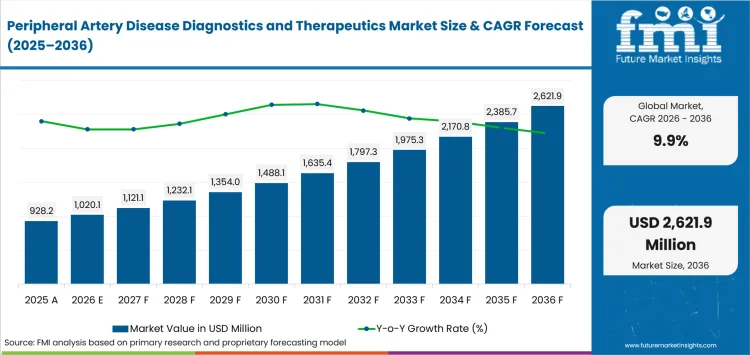
- Market Size (2026)
- USD 1020.1 Mn
- Forecast (2036)
- USD 2621.9 Mn
- CAGR (2026 to 2036)
- 9.9%
How big is Peripheral Artery Disease Diagnostics and Therapeutics Market size?
USD 1020.1 million in 2026 and USD 2621.9 million by 2036 at a 9.9% CAGR.
The peripheral artery disease diagnostics and therapeutics market is expected to rise from USD 1020.1 million in 2026 to USD 2621.9 million by 2036, registering a 9.9% CAGR during the forecast period. Medical teams carefully classify the different ways peripheral artery disease appears in patients. Each specific presentation helps guide doctors toward the most effective testing and treatment strategies. In May 2024, American Heart Association guidance defined 4 distinct clinical subsets for lower-extremity peripheral artery disease. Such clear clinical groupings help direct diagnostic assessments toward an explicit medical or procedural decision.
Regional care priorities strongly influence how healthcare networks invest in their vascular services. Providers in the United States and Germany emphasize guideline records and treatment appropriateness during product evaluations. Programs in South Korea and Japan emphasize tertiary-center experience and procedure-specific outcomes. This circulatory condition continues to affect An extensive global patient population. In September 2025, Nature Reviews Disease Primers reported stating about 230 million people being affected worldwide. This extensive disease prevalence sustains long-term clinical demand across cardiovascular-risk reduction and ongoing follow-up care.
Key Takeaways of Peripheral Artery Disease Diagnostics and Therapeutics Market
- Demand for peripheral artery disease diagnostics and therapeutics is driven by vascular teams connecting diagnostic certainty with cardiovascular-risk management and limb-preservation care, with program decisions reflecting guideline alignment and documented disease severity across participating clinical departments.
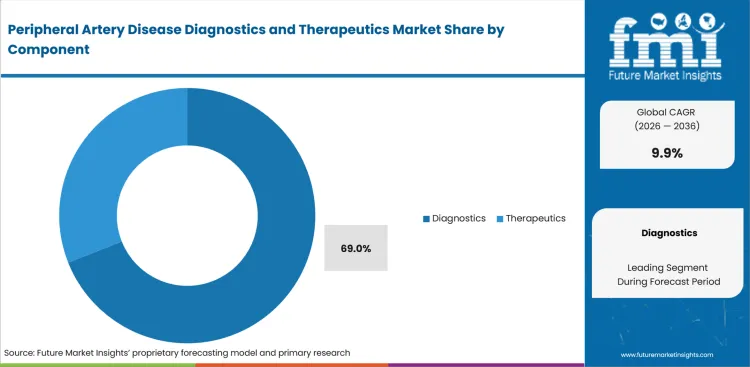
- By component, diagnostics holds the leading share at 69.0% in 2026, driven by testing requirements that precede treatment selection, with hemodynamic tests identifying reduced perfusion and anatomical imaging defining lesion location before medicine or revascularization planning begins.
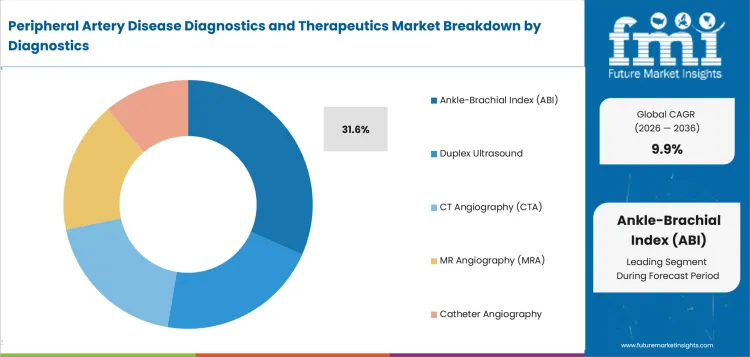
- Ankle-brachial index leads the diagnostics category at 31.6% share in 2026, attributable to prompt administration and low equipment intensity that direct clinicians toward advanced cardiovascular ultrasound or angiography equipment for subsequent lesion mapping.
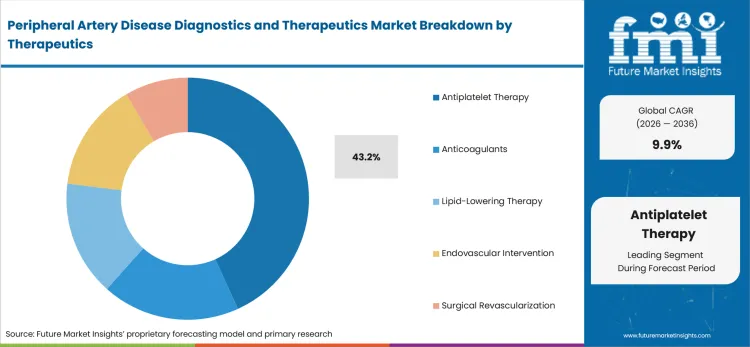
- Antiplatelet therapy leads the therapeutics category at 43.2% share in 2026, driven by routine cardiovascular-event prevention across symptomatic care and post-revascularization follow-up involving recurrent ischemic risk.
- Hospitals account for 34.0% end-user share in 2026, owing to their combination of vascular laboratories, angiography suites, and operating rooms that support complete multidisciplinary PAD management and intervention capacity.
- South Korea, the United States, and Germany record CAGRs of 12.3%, 11.6%, and 10.9% respectively through 2036, shaped by tertiary-center intervention capacity, extensive vascular-service access, and integrated angiology and vascular-surgery pathways.
- Competition centers on diagnostic imaging and peripheral intervention, with Philips, Abbott Laboratories, Johnson & Johnson MedTech, and Medtronic differentiating through vascular imaging technologies, intravascular lithotripsy for calcified lesions, peripheral intervention portfolios, and dependable technical assistance across provider networks.
Analyst Perspective
"Clinical adoption in peripheral artery disease management is increasingly guided by coordinated care rather than individual interventions. Healthcare providers are prioritizing solutions supported by robust clinical evidence, accurate diagnosis, and seamless integration across vascular care pathways. Companies that strengthen physician education, multidisciplinary collaboration, and real-world clinical outcomes will be better positioned to expand adoption."
- Anurag Sharma, Principal Consultant for Healthcare at Future Market Insights
Source: Future Market Insights analysis, 2026.
How is Peripheral Artery Disease Diagnostics and Therapeutics Market segmented?
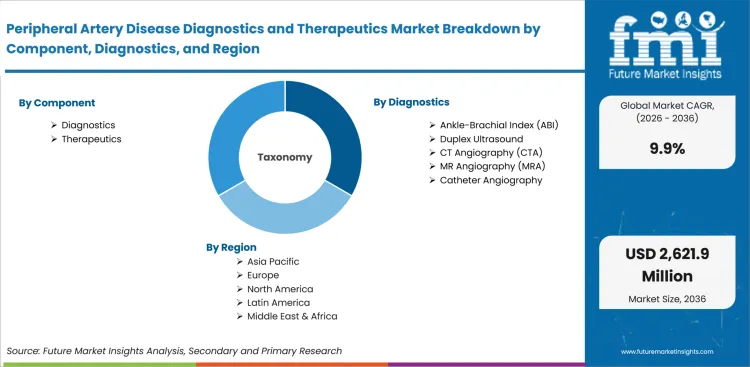
The peripheral artery disease diagnostics and therapeutics industry is segmented by component, diagnostics, therapeutics, end user, and region.
The peripheral artery disease diagnostics and therapeutics market is segmented by component, diagnostics, therapeutics, end user, and region. Component coverage includes diagnostics and therapeutics across established vascular-care pathways. Diagnostics coverage includes ankle-brachial index and duplex ultrasound followed by CT angiography, MR angiography, and catheter angiography. Therapeutics coverage addresses antiplatelet therapy and anticoagulants with lipid-lowering therapy, endovascular intervention, and surgical revascularization. End-user coverage spans hospitals and cardiology clinics with vascular surgery centers and ambulatory surgical centers. Regional coverage includes North America and Europe together with East Asia and South Asia and Pacific. Latin America and Middle East and Africa complete geographic analysis across developing vascular-care systems.
Why does diagnostics shape component selection?
Dias and colleagues reported 15 studies covering 9,067 arteries in February 2025, comparing duplex ultrasound with arteriography. Clinical evidence places diagnostic assessment at care entry since treatment selection follows documented obstruction and symptom severity. Hemodynamic tests identify reduced perfusion and anatomical imaging defines lesion location for medicine or revascularization planning. Therapeutic products enter vascular pathways following confirmed diagnoses and explicit treatment objectives established by multidisciplinary teams.
- In 2026, diagnostics is set to represent 69.0% share, driven by testing requirements preceding treatment selection. Hospital teams compare vascular imaging systems and hemodynamic tests across complete PAD pathways.
- Therapeutics addresses medical and procedural needs following documented disease severity. Treatment planning considers ischemic exposure and lesion anatomy during clinical review.
How does ankle-brachial index shape diagnostic selection?
Ankle-brachial index begins diagnostic review through a pressure comparison between upper and lower limbs across suspected PAD cases. Pan, Wang, and Huang reported AUC 0.924 for a composite diagnostic model in June 2025. Abnormal readings direct clinicians toward cardiovascular ultrasound for flow assessment or angiography equipment for lesion mapping. Resulting evidence connects symptom evaluation with a defined referral and treatment decision across vascular services.
- Ankle-brachial index is anticipated to secure 31.6% share in 2026, led by prompt administration and low equipment intensity. Vascular teams examine pressure results prior to requesting advanced anatomical imaging.
- Duplex ultrasound and angiographic methods provide distinct assessments across suspected arterial obstruction. Lesion location and planned intervention guide diagnostic selection among participating services.
Why does antiplatelet therapy shape therapeutic demand?
Antiplatelet therapy addresses cardiovascular-event exposure across symptomatic PAD care and post-revascularization follow-up involving recurrent ischemic risk. Anticoagulants extend medical management for selected patients carrying additional thrombotic exposure and documented bleeding considerations. Lipid-lowering treatment addresses atherosclerotic progression as endovascular therapy devices restore perfusion across flow-limiting lesions. Shahid and colleagues reported 12 studies comparing dual and single antiplatelet therapy following lower-extremity revascularization in October 2025.
- Based on therapeutic, antiplatelet therapy is forecast to garner 43.2% share in 2026 due to routine cardiovascular-event prevention across symptomatic care. Clinical teams examine ischemic exposure and bleeding history prior to medicine selection.
- Endovascular intervention and surgical revascularization address lesions producing severe symptoms or limb threat. Anatomical complexity and clinical urgency direct treatment assignment across vascular services.
Why do hospitals lead end-user demand?
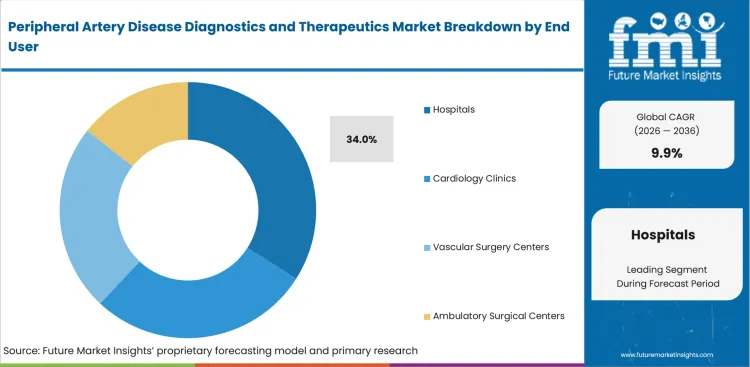
Hospitals combine vascular laboratories with angiography suites and operating rooms for complete peripheral artery disease management. Cardiology clinics and vascular surgery centers extend assessment across selected outpatient pathways serving referred patients. Shaikh and colleagues recorded safe same-day discharge in 92.8% of peripheral endovascular cases during December 2025. Recorded discharge performance connects patient selection with post-procedure monitoring and institutional capacity planning across established vascular services.
- By end-user, hospitals are projected to hold 34.0% share in 2026 owing to multidisciplinary vascular services and intervention capacity. Clinical committees evaluate products across diagnostic confirmation and follow-up protocols.
- Cardiology clinics and vascular surgery centers extend access across regional referral networks. Ambulatory surgical centers address suitable interventions based on patient stability and procedural requirements.
What are drivers, restraints, and opportunities in Peripheral Artery Disease Diagnostics and Therapeutics Market?
Screening needs and guideline-directed treatment encourage diagnostic and therapeutic evaluation. Procedure scrutiny and unequal clinical access delay routine use across selected provider settings.
- Driver: Vascular teams require objective disease identification among patients presenting with atypical symptoms or no leg pain. Earlier diagnosis enables cardiovascular-risk management and timely limb-preservation referral.
- Restraint: Reimbursement scrutiny and procedure-appropriateness review extend approval timelines for intervention technologies. Providers need defensible patient-selection records and complete clinical rationale for invasive treatment.
- Opportunity: Adjunct hemodynamic measurements improve assessment among patients affected by arterial calcification or unclear ABI findings. Expanded ultrasound assessment connects vascular laboratories with treatment and surveillance pathways.
Centers for Disease Control and Prevention reported up to 4 in 10 people with PAD experience no leg pain in May 2024. Limited symptom recognition increases objective-testing needs among older adults and people carrying diabetes or smoking exposure. Diagnostic pathways are projected to combine ABI screening with imaging assessment for uncertain presentations.
Capital and compliance exposure remain constraints for office-based peripheral vascular procedures. United States Department of Health and Human Services Office of Inspector General reported atherectomy represented 75% of office-based laboratory procedures in May 2026. Greater scrutiny favors technologies backed by transparent utilization criteria and complete clinical records.
Adjunct ultrasound measurements create an opportunity for patients affected by calcified vessels or uncertain pressure findings. Sommerset and colleagues reported AUC 0.79 for worst-case pedal acceleration time in March 2025. Clinical validation is anticipated to guide assessment across foot-level perfusion and limb-threat evaluation.
How are country CAGRs aligned in Peripheral Artery Disease Diagnostics and Therapeutics Market?
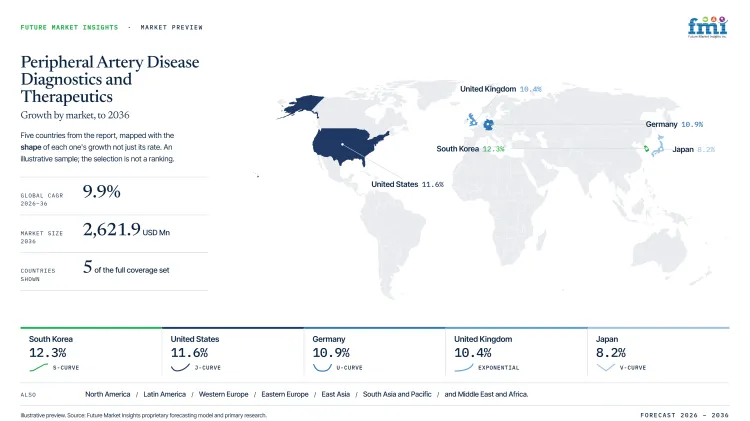
| Country or Market | CAGR |
|---|---|
| South Korea | 12.3% |
| United States | 11.6% |
| Germany | 10.9% |
| United Kingdom | 10.4% |
| Japan | 8.2% |
Source: Future Market Insights analysis, 2026.
How do country-level CAGRs compare in peripheral artery disease diagnostics and therapeutics market?
Country comparison shows a gradual step-down across profiled markets. South Korea occupies first position, followed by United States. Germany and United Kingdom form a closely grouped European tier. Japan completes comparison through established hospital-based vascular practice. A 4.1-point spread reflects different clinical capacity and payment conditions across profiled markets.
- South Korea leads comparison and establishes East Asia as first development cluster among markets shown.
- United States follows South Korea and maintains a limited gap from first position.
- Germany and United Kingdom form a comparable rate band through established vascular services.
- Japan completes disclosed comparison through nationwide endovascular experience and procedural monitoring.
- Profiled rates form a gradual downward slope instead of a sharp separation among national markets.
Markets carrying similar CAGRs present different entry conditions through provider concentration and payment structures. Full report coverage extends across North America, Latin America, Europe, East Asia, South Asia and Pacific, and Middle East and Africa.
Country-wise Analysis
- Peripheral artery disease diagnostics and therapeutics sector in South Korea is anticipated to rise at 12.3% CAGR between 2026 and 2036, reflecting concentrated tertiary vascular activity. Woo and colleagues examined 506 patients in a Korean multicenter registry published in May 2024, confirming structured evidence for claudication and chronic limb-threatening ischemia decisions. Registry-based case review gives manufacturers a clear framework for product comparison and adoption across high-volume vascular centers.
- American Heart Association News reported in May 2024 for 10 million to 12 million adults aged 40 years or older having PAD, indicating a broad testing and treatment population. Outpatient laboratories and hospital vascular teams convert this patient burden into recurring diagnostic assessment and revascularization activity. Sales in the United States are estimated to record 11.6% CAGR by 2036, aligned with extensive clinical access across multiple care settings.
- Integrated angiology and vascular-surgery pathways connect perfusion measurement with intervention planning, allowing suppliers to address procedure preparation and recovery monitoring within one system. Gerken and colleagues assessed 29 patients around lower-limb revascularization in July 2024, demonstrating how microvascular measurements document physiological changes after restored blood flow. Industry in Germany is projected to expand at 10.9% CAGR during the assessment period, backed by coordinated vascular departments apply evidence-led evaluation.
- Peripheral artery disease diagnostics and therapeutics market in the United Kingdom is forecast to increase at 10.4% CAGR from 2026 to 2036, driven by national audit coverage. Regional referral networks use audited procedure records to compare clinical performance and plan equipment or medicine requirements across vascular units. National Vascular Registry documented 16,618 lower-limb revascularization procedures during 2024 in its November 2025 report, showing substantial use of imaging and follow-up services.
- Nakahashi and colleagues analyzed 73,990 Japanese patients undergoing endovascular therapy in a registry published in February 2025, providing a large evidence base for bleeding-risk management. Demand in Japan is predicted to rise at 8.2% CAGR during the forecast period, helped by measured technology review across established hospital programs. Nationwide registry depth enables physicians to compare procedural outcomes and standardize post-intervention monitoring across participating vascular centers.
Who are notable companies in Peripheral Artery Disease Diagnostics and Therapeutics Market?
Philips, Abbott Laboratories, Johnson & Johnson MedTech, and Medtronic plc are the notable companies influencing this market.
Competition is anticipated to center on diagnostic precision and procedural performance. Hospital teams are likely to compare clinical evidence and education resources prior to product selection. Philips is expected to receive attention due to peripheral imaging and interpretation training. Abbott Laboratories is projected to address below-knee vessel treatment. Johnson & Johnson MedTech is estimated to address calcified peripheral lesions. Medtronic plc is anticipated to compete across revascularization and thrombus-removal procedures.
- Philips and Abbott Laboratories receive review attention through vascular imaging and peripheral intervention portfolios. Clinical teams assess image interpretation alongside vessel treatment across complete PAD pathways.
- Johnson & Johnson MedTech competes through calcium-modification systems for difficult peripheral lesions. Vascular programs compare lesion crossing with plaque modification across heavily calcified targets.
- Medtronic plc addresses peripheral intervention through revascularization and thrombus removal technologies. Clinical teams examine aspiration performance together with anatomical reach across complex arterial obstructions.
Competitive Benchmarking: Peripheral Artery Disease Diagnostics and Therapeutics Market
| Company | Portfolio Depth | Clinical Match | Service Support | Service Reach |
|---|---|---|---|---|
| Philips | High | High | High | United States and selected global markets |
| Abbott Laboratories | High | High | High | United States and selected global markets |
| Johnson & Johnson MedTech | High | High | High | United States and selected global markets |
| Medtronic plc | High | High | High | United States and selected global markets |
Source: Future Market Insights competitive analysis, 2026.
Key Developments in Peripheral Artery Disease Diagnostics and Therapeutics Market
- In March 2025, Johnson & Johnson MedTech announced United States launch of Shockwave Javelin Peripheral IVL Catheter for difficult-to-cross calcified lesions. Forward lithotripsy expands calcium modification across severely narrowed peripheral vessels.
- In August 2025, Abbott Laboratories announced European CE Mark for Esprit BTK Everolimus Eluting Resorbable Scaffold System. Drug delivery and scaffold resorption expand below-knee treatment options across limb-preservation services.
- In December 2025, Medtronic plc announced first commercial use of Liberant thrombectomy system. Mechanical aspiration expands catheter-based removal of fresh peripheral arterial or venous thrombi.
Key Players in Peripheral Artery Disease Diagnostics and Therapeutics Market
Vascular imaging and diagnostic company
- Philips
Peripheral therapeutic and intervention companies
- Abbott Laboratories
- Johnson & Johnson MedTech
- Medtronic plc
Peripheral Artery Disease Diagnostics and Therapeutics Market Report Scope
| Coverage field | Report scope |
|---|---|
| Market breakdown | Peripheral Artery Disease Diagnostics and Therapeutics Market breakdown by component, diagnostics, therapeutics, end user, and region |
| Market Definition | Peripheral artery disease diagnostics and therapeutics include testing systems, medicines, devices, and clinical services for disease identification, cardiovascular-risk reduction, limb preservation, and arterial revascularization. |
| Regions Covered | North America, Latin America, Western Europe, Eastern Europe, East Asia, South Asia and Pacific, and Middle East and Africa. |
| Countries Covered | South Korea, United States, Germany, United Kingdom, and Japan, with additional countries included across regional analysis. |
| Key Companies Profiled | Philips, Abbott Laboratories, Johnson & Johnson MedTech, and Medtronic plc |
| Forecast Period | 2026 to 2036 |
| Approach | Hybrid bottom-up and top-down methodology using segment share and country CAGR with diagnostic activity, procedure participation, clinical evidence, and company coverage |
Source: Future Market Insights analysis, 2026.
Peripheral Artery Disease Diagnostics and Therapeutics Market - Research Methodology
| Method | Approach |
|---|---|
| Primary Research | FMI analysts gathered input from manufacturers, service providers, technology developers, distributors, end users, sourcing teams, and subject-matter experts. Interviews examined purchasing decisions, product or service evaluation, adoption barriers, approval requirements, pricing considerations, and expectations for technical or commercial support. Respondents were also asked what evidence is required before a trial, pilot, or initial order develops into regular purchasing. |
| Desk Research | Desk research covered government statistics, regulatory publications, trade data, industry associations, technical literature, standards, company filings, product information, and official corporate announcements. Sources were reviewed for relevance, publication date, geographic coverage, and consistency with the defined market scope. Claims relating to performance, applications, approvals, capacity, investment, and commercial activity were retained only when supported by credible public evidence. |
| Market Sizing and Forecasting | The market model combined the baseline value with historical performance, segment structure, pricing and volume indicators, adoption levels, company participation, and country-level demand conditions. Forecast assumptions considered economic activity, investment trends, regulatory developments, technology adoption, purchasing cycles, supply availability, and barriers to wider market use. Segment and regional estimates were reconciled before the final market total was calculated. |
| Data Validation | Estimates were checked against multiple independent indicators, including public data, company activity, trade patterns, industry developments, and findings from primary interviews. Validation also tested whether products, services, applications, and company revenues fell within the defined market boundaries. Adjacent categories, unsupported claims, overlapping revenues, and activities without direct market relevance were excluded to reduce double counting and maintain consistency across segments and countries. |
Source: Future Market Insights analysis, 2026.
Peripheral Artery Disease Diagnostics and Therapeutics Market by Segments
Peripheral Artery Disease Diagnostics and Therapeutics Market segmented by Component:
- Diagnostics
- Therapeutics
Peripheral Artery Disease Diagnostics and Therapeutics Market segmented by Diagnostics:
- Ankle-Brachial Index
- Duplex Ultrasound
- CT Angiography
- MR Angiography
- Catheter Angiography
Peripheral Artery Disease Diagnostics and Therapeutics Market segmented by Therapeutics:
- Antiplatelet Therapy
- Anticoagulants
- Lipid-Lowering Therapy
- Endovascular Intervention
- Surgical Revascularization
Peripheral Artery Disease Diagnostics and Therapeutics Market segmented by End User:
- Hospitals
- Cardiology Clinics
- Vascular Surgery Centers
- Ambulatory Surgical Centers
Peripheral Artery Disease Diagnostics and Therapeutics Market segmented by Region:
- North America
- United States
- Canada
- Latin America
- Brazil
- Mexico
- Argentina
- Chile
- Western Europe
- Germany
- France
- United Kingdom
- Italy
- Spain
- Benelux
- Nordics
- Eastern Europe
- Poland
- Czech Republic
- Romania
- Hungary
- East Asia
- China
- Japan
- South Korea
- South Asia and Pacific
- India
- ASEAN
- Australia and New Zealand
- Middle East and Africa
- GCC Countries
- South Africa
- Türkiye
- Israel
Research Sources and Bibliography
- American Heart Association. (2024, May 14). 2024 guideline for the management of lower extremity peripheral artery disease: Top things to know.
- Aboyans, V., Canonico, M. E., Chastaingt, L., Anand, S. S., Brodmann, M., Couffinhal, T., Criqui, M. H., Debus, E. S., Mazzolai, L., McDermott, M. M., & Bonaca, M. P. (2025, September 18). Peripheral artery disease. Nature Reviews Disease Primers, 11, Article 68.
- Dias, S. V. M., Flumignan, R. L. G., Carvas, N., & Iared, W. (2025, February 14). Accuracy of duplex ultrasound in peripheral artery disease: A systematic review and meta-analysis. Jornal Vascular Brasileiro, 24, e20240033.
- Pan, X., Wang, N., & Huang, Y. (2025, June 12). A multicenter study on the diagnostic value of ankle brachial index combined with pulse volume wave parameters for peripheral arterial disease. Frontiers in Cardiovascular Medicine, 12, 1580971.
- Shahid, M. M., Mandal, D., Das, A., Kumar, P., Kumar, N., Mukhtar, A., Ejaz, H., Jaffar, M. S., Habib, M., Afzal, A., Khawar, M. M. H., & Rana, I. (2025, October 26). Dual versus single antiplatelet therapy following lower extremity revascularization in peripheral artery disease: A systematic review and meta-analysis. World Journal of Cardiology, 17(10), 111941.
- Shaikh, F. M., Cliffe, H., O’Mahony, C., Swali, A., & Papp, L. (2025, December 19). Same-day discharge following endovascular peripheral interventions. International Angiology, 44(6), 497-502.
- Centers for Disease Control and Prevention. (2024, May 15). About peripheral arterial disease (PAD).
- United States Department of Health and Human Services, Office of Inspector General. (2026, May 4). Utilization trends and Medicare Part B billing for office-based peripheral vascular procedures raise questions about program integrity.
- Sommerset, J., Teso, D., Mills, J. L., Sr., Sebastian, M., Kayssi, A., Leask, S., Rounsley, R., & Tehan, P. E. (2025, March 13). Diagnostic test accuracy of pedal acceleration time to identify peripheral artery disease. European Journal of Vascular and Endovascular Surgery, 69(6), 876-886.
- Woo, H. Y., Joh, J. H., Kang, J. M., Yoo, Y. S., Lee, T., Ahn, S., & Korean Society for Vascular Surgery Investigators. (2024, May 30). Comparison between intermittent claudication versus chronic limb-threatening ischemia in peripheral arterial disease: A retrospective multicenter cohort study. Annals of Surgical Treatment and Research, 106(6), 344-353.
- American Heart Association News. (2024, May 14). New roadmap to lower the risk of amputation in peripheral artery disease.
- Gerken, A. L. H., Sigl, M., Israel, E., Weiss, C., Reissfelder, C., & Schwenke, K. (2024, July 8). The effect of revascularization on lower limb circulation parameters in symptomatic peripheral arterial disease. Journal of Clinical Medicine, 13(13), 3991.
- National Vascular Registry. (2025, November). 2025 NVR State of the Nation Report. Royal College of Surgeons of England.
- Nakahashi, T., Takahara, M., Iida, O., Kohsaka, S., Soga, Y., Horie, K., Sakata, K., Takamura, M., Amano, T., & Kozuma, K. (2025, February 24). Cumulative impact of procedural and anatomical factors on in-hospital bleeding complications in endovascular therapy for lower-extremity artery disease: A nationwide registry study in Japan. Vascular Medicine, 30(2), 155-161.
- Johnson & Johnson MedTech. (2025, March 4). Shockwave Medical launches novel forward intravascular lithotripsy platform in U.S. to transform treatment of difficult-to-cross calcified lesions.
- Abbott Laboratories. (2025, August 25). Abbott’s dissolving stent receives CE Mark, pioneering a new era in peripheral vascular treatment.
- Medtronic plc. (2025, December 10). Medtronic announces successful early commercial use of Liberant thrombectomy system.
- Philips. (2026, March 3). Arterial IVUS Tutor app launched in the US to support IVUS training.
This bibliography is provided for reader reference and is not exhaustive. The full report contains complete reference list and detailed citations.
This Report Answers
- What segments influence sales across component and diagnostics with therapeutics and end user?
- How do vascular teams evaluate peripheral artery disease diagnostics prior to routine clinical use?
- How do country CAGRs differ across profiled markets with distinct provider capacity and payment structures?
- What companies compete through diagnostic imaging and peripheral intervention across vascular-care networks?
- How are forecasts validated through hybrid bottom-up and top-down analysis using independent indicators?
- What evidence do hospital committees examine prior to multisite product expansion across vascular services?
- How do diagnostic accuracy and lesion assessment influence treatment selection across PAD pathways?
- What limits return on investment for providers adding peripheral vascular technologies across clinical services?
- How do education records and clinical guidance influence hospital approval across multidisciplinary vascular teams?
- What company capabilities improve long-term clinical confidence and continuing product utilization across provider networks?
Frequently Asked Questions
How big is the Peripheral Artery Disease Diagnostics and Therapeutics Market in 2026?
The peripheral artery disease diagnostics and therapeutics market is valued at USD 1020.1 million in 2026 and is forecast to reach USD 2621.9 million by 2036. Growth reflects wider PAD screening, increasing use of vascular imaging, and expanding adoption of endovascular and medical therapies for cardiovascular-risk reduction and limb preservation.
What is the CAGR of the Peripheral Artery Disease Diagnostics and Therapeutics Market from 2026 to 2036?
The peripheral artery disease diagnostics and therapeutics market is projected to grow at a CAGR of 9.9% between 2026 and 2036, supported by greater disease awareness, improved diagnostic pathways, and broader use of minimally invasive vascular interventions alongside preventive medical therapy.
Which component leads the Peripheral Artery Disease Diagnostics and Therapeutics Market?
Diagnostics account for 69.0% of the peripheral artery disease diagnostics and therapeutics market by component in 2026, reflecting the importance of ankle-brachial index testing, duplex ultrasound, and angiographic imaging in confirming disease severity before treatment selection.
How much will the Peripheral Artery Disease Diagnostics and Therapeutics Market add between 2026 and 2036?
The peripheral artery disease diagnostics and therapeutics market is set to add USD 1601.8 million between 2026 and 2036, growing from USD 1,020.1 million to USD 2621.9 million as healthcare providers expand vascular screening, endovascular procedures, and long-term cardiovascular disease management.
Who are the leading companies in the Peripheral Artery Disease Diagnostics and Therapeutics Market?
Leading companies in the peripheral artery disease diagnostics and therapeutics market include Philips, Abbott Laboratories, Johnson & Johnson MedTech, and Medtronic plc, competing across vascular imaging, peripheral intervention, intravascular lithotripsy, thrombectomy, and endovascular treatment technologies.
Preview the report firsthand - request a free sample
Get SampleGet the brochure for pricing and purchase details.
Get PDFTable of Content
- Key Takeaways
- Market Size and CAGR
- Top Growth Driver
- Fastest Growing Segment
- Leading Region
- Key Companies
- Emerging Opportunities
- Executive Summary
- Global Market Outlook
- Demand-side Trends
- Supply-side Trends
- Technology Roadmap Analysis
- Analysis and Recommendations
- Analyst Perspective (What is happening? Why now? What should investors know?)
- Key Questions Answered
- How large is the market?
- What is the CAGR?
- What are key trends?
- Which region dominates?
- Who are the leaders?
- Market Overview
- Market Coverage / Taxonomy
- Market Definition / Scope / Limitations
- Research Methodology
- Chapter Orientation
- Analytical Lens and Working Hypotheses
- Market Structure, Signals, and Trend Drivers
- Benchmarking and Cross-market Comparability
- Market Sizing, Forecasting, and Opportunity Mapping
- Research Design and Evidence Framework
- Desk Research Programme (Secondary Evidence)
- Expert Input and Fieldwork (Primary Evidence)
- Tooling, Models, and Reference Databases
- Data Engineering and Model Build
- Quality Assurance and Audit Trail
- Market Background
- Market Dynamics (Drivers, Restraints, Opportunity, Trends)
- Scenario Forecast (Optimistic, Likely, Conservative)
- Impact Analysis
- AI Impact
- Sustainability Impact
- Regulatory Impact
- Technology Impact
- Consumer / Buyer Analysis
- Purchase Drivers
- Adoption Barriers
- Buyer Journey
- Opportunity Map Analysis
- Product Life Cycle Analysis
- Supply Chain Analysis
- Investment Feasibility Matrix
- Value Chain Analysis
- PESTLE and Porter's Analysis
- Regulatory Landscape
- Regional Parent Market Outlook
- Production and Consumption Statistics
- Import and Export Statistics
- Global Market Analysis and Forecast, 2021 to 2036
- Historical Market Size Value (USD Million) Analysis, 2021 to 2025
- Current and Future Market Size Value (USD Million) Projections, 2026 to 2036
- Y-o-Y Growth Trend Analysis
- Absolute $ Opportunity Analysis
- Global Market Pricing Analysis, 2021 to 2036
- Global Market Analysis and Forecast, By Component, 2021 to 2036
- Introduction / Key Findings
- Historical Market Size Value (USD Million) Analysis By Component, 2021 to 2025
- Current and Future Market Size Value (USD Million) Analysis and Forecast By Component, 2026 to 2036
- Diagnostics
- Therapeutics
- Diagnostics
- Y-o-Y Growth Trend Analysis By Component, 2021 to 2025
- Absolute $ Opportunity Analysis By Component, 2026 to 2036
- Global Market Analysis and Forecast, By Diagnostics, 2021 to 2036
- Introduction / Key Findings
- Historical Market Size Value (USD Million) Analysis By Diagnostics, 2021 to 2025
- Current and Future Market Size Value (USD Million) Analysis and Forecast By Diagnostics, 2026 to 2036
- Ankle-Brachial Index (ABI)
- Duplex Ultrasound
- CT Angiography (CTA)
- MR Angiography (MRA)
- Catheter Angiography
- Ankle-Brachial Index (ABI)
- Y-o-Y Growth Trend Analysis By Diagnostics, 2021 to 2025
- Absolute $ Opportunity Analysis By Diagnostics, 2026 to 2036
- Global Market Analysis and Forecast, By Therapeutics, 2021 to 2036
- Introduction / Key Findings
- Historical Market Size Value (USD Million) Analysis By Therapeutics, 2021 to 2025
- Current and Future Market Size Value (USD Million) Analysis and Forecast By Therapeutics, 2026 to 2036
- Antiplatelet Therapy
- Anticoagulants
- Lipid-Lowering Therapy
- Endovascular Intervention
- Surgical Revascularization
- Antiplatelet Therapy
- Y-o-Y Growth Trend Analysis By Therapeutics, 2021 to 2025
- Absolute $ Opportunity Analysis By Therapeutics, 2026 to 2036
- Global Market Analysis and Forecast, By End User, 2021 to 2036
- Introduction / Key Findings
- Historical Market Size Value (USD Million) Analysis By End User, 2021 to 2025
- Current and Future Market Size Value (USD Million) Analysis and Forecast By End User, 2026 to 2036
- Hospitals
- Cardiology Clinics
- Vascular Surgery Centers
- Ambulatory Surgical Centers
- Hospitals
- Y-o-Y Growth Trend Analysis By End User, 2021 to 2025
- Absolute $ Opportunity Analysis By End User, 2026 to 2036
- Global Market Analysis and Forecast, By Region, 2021 to 2036
- Introduction
- Historical Market Size Value (USD Million) Analysis By Region, 2021 to 2025
- Current Market Size Value (USD Million) Analysis and Forecast By Region, 2026 to 2036
- North America
- Latin America
- Western Europe
- Eastern Europe
- East Asia
- South Asia and Pacific
- Middle East & Africa
- Market Attractiveness Analysis By Region
- North America Market Analysis and Forecast, By Country, 2021 to 2036
- Historical Market Size Value (USD Million) Trend Analysis By Market Taxonomy, 2021 to 2025
- Market Size Value (USD Million) Forecast By Market Taxonomy, 2026 to 2036
- By Country
- USA
- Canada
- By Component
- By Diagnostics
- By Therapeutics
- By End User
- By Country
- Market Attractiveness Analysis
- By Country
- By Component
- By Diagnostics
- By Therapeutics
- By End User
- Key Takeaways
- Latin America Market Analysis and Forecast, By Country
- Historical Market Size Value (USD Million) Trend Analysis By Market Taxonomy, 2021 to 2025
- Market Size Value (USD Million) Forecast By Market Taxonomy, 2026 to 2036
- By Country
- Brazil
- Mexico
- Chile
- Rest of Latin America
- By Component
- By Diagnostics
- By Therapeutics
- By End User
- By Country
- Market Attractiveness Analysis
- By Country
- By Component
- By Diagnostics
- By Therapeutics
- By End User
- Key Takeaways
- Western Europe Market Analysis and Forecast, By Country
- Historical Market Size Value (USD Million) Trend Analysis By Market Taxonomy, 2021 to 2025
- Market Size Value (USD Million) Forecast By Market Taxonomy, 2026 to 2036
- By Country
- Germany
- UK
- Italy
- Spain
- France
- Nordic
- BENELUX
- Rest of Western Europe
- By Component
- By Diagnostics
- By Therapeutics
- By End User
- By Country
- Market Attractiveness Analysis
- By Country
- By Component
- By Diagnostics
- By Therapeutics
- By End User
- Key Takeaways
- Eastern Europe Market Analysis and Forecast, By Country
- Historical Market Size Value (USD Million) Trend Analysis By Market Taxonomy, 2021 to 2025
- Market Size Value (USD Million) Forecast By Market Taxonomy, 2026 to 2036
- By Country
- Russia
- Poland
- Hungary
- Balkan & Baltic
- Rest of Eastern Europe
- By Component
- By Diagnostics
- By Therapeutics
- By End User
- By Country
- Market Attractiveness Analysis
- By Country
- By Component
- By Diagnostics
- By Therapeutics
- By End User
- Key Takeaways
- East Asia Market Analysis and Forecast, By Country
- Historical Market Size Value (USD Million) Trend Analysis By Market Taxonomy, 2021 to 2025
- Market Size Value (USD Million) Forecast By Market Taxonomy, 2026 to 2036
- By Country
- China
- Japan
- South Korea
- By Component
- By Diagnostics
- By Therapeutics
- By End User
- By Country
- Market Attractiveness Analysis
- By Country
- By Component
- By Diagnostics
- By Therapeutics
- By End User
- Key Takeaways
- South Asia and Pacific Market Analysis and Forecast, By Country
- Historical Market Size Value (USD Million) Trend Analysis By Market Taxonomy, 2021 to 2025
- Market Size Value (USD Million) Forecast By Market Taxonomy, 2026 to 2036
- By Country
- India
- ASEAN
- Australia & New Zealand
- Rest of South Asia and Pacific
- By Component
- By Diagnostics
- By Therapeutics
- By End User
- By Country
- Market Attractiveness Analysis
- By Country
- By Component
- By Diagnostics
- By Therapeutics
- By End User
- Key Takeaways
- Middle East & Africa Market Analysis and Forecast, By Country
- Historical Market Size Value (USD Million) Trend Analysis By Market Taxonomy, 2021 to 2025
- Market Size Value (USD Million) Forecast By Market Taxonomy, 2026 to 2036
- By Country
- Kingdom of Saudi Arabia
- Other GCC Countries
- Türkiye
- South Africa
- Other African Union
- Rest of Middle East & Africa
- By Component
- By Diagnostics
- By Therapeutics
- By End User
- By Country
- Market Attractiveness Analysis
- By Country
- By Component
- By Diagnostics
- By Therapeutics
- By End User
- Key Takeaways
- Key Countries Market Analysis
- USA
- Pricing Analysis
- Market Share Analysis, 2025
- By Component
- By Diagnostics
- By Therapeutics
- By End User
- Canada
- Pricing Analysis
- Market Share Analysis, 2025
- By Component
- By Diagnostics
- By Therapeutics
- By End User
- Mexico
- Pricing Analysis
- Market Share Analysis, 2025
- By Component
- By Diagnostics
- By Therapeutics
- By End User
- Brazil
- Pricing Analysis
- Market Share Analysis, 2025
- By Component
- By Diagnostics
- By Therapeutics
- By End User
- Chile
- Pricing Analysis
- Market Share Analysis, 2025
- By Component
- By Diagnostics
- By Therapeutics
- By End User
- Germany
- Pricing Analysis
- Market Share Analysis, 2025
- By Component
- By Diagnostics
- By Therapeutics
- By End User
- UK
- Pricing Analysis
- Market Share Analysis, 2025
- By Component
- By Diagnostics
- By Therapeutics
- By End User
- Italy
- Pricing Analysis
- Market Share Analysis, 2025
- By Component
- By Diagnostics
- By Therapeutics
- By End User
- Spain
- Pricing Analysis
- Market Share Analysis, 2025
- By Component
- By Diagnostics
- By Therapeutics
- By End User
- France
- Pricing Analysis
- Market Share Analysis, 2025
- By Component
- By Diagnostics
- By Therapeutics
- By End User
- India
- Pricing Analysis
- Market Share Analysis, 2025
- By Component
- By Diagnostics
- By Therapeutics
- By End User
- ASEAN
- Pricing Analysis
- Market Share Analysis, 2025
- By Component
- By Diagnostics
- By Therapeutics
- By End User
- Australia & New Zealand
- Pricing Analysis
- Market Share Analysis, 2025
- By Component
- By Diagnostics
- By Therapeutics
- By End User
- China
- Pricing Analysis
- Market Share Analysis, 2025
- By Component
- By Diagnostics
- By Therapeutics
- By End User
- Japan
- Pricing Analysis
- Market Share Analysis, 2025
- By Component
- By Diagnostics
- By Therapeutics
- By End User
- South Korea
- Pricing Analysis
- Market Share Analysis, 2025
- By Component
- By Diagnostics
- By Therapeutics
- By End User
- Russia
- Pricing Analysis
- Market Share Analysis, 2025
- By Component
- By Diagnostics
- By Therapeutics
- By End User
- Poland
- Pricing Analysis
- Market Share Analysis, 2025
- By Component
- By Diagnostics
- By Therapeutics
- By End User
- Hungary
- Pricing Analysis
- Market Share Analysis, 2025
- By Component
- By Diagnostics
- By Therapeutics
- By End User
- Kingdom of Saudi Arabia
- Pricing Analysis
- Market Share Analysis, 2025
- By Component
- By Diagnostics
- By Therapeutics
- By End User
- Türkiye
- Pricing Analysis
- Market Share Analysis, 2025
- By Component
- By Diagnostics
- By Therapeutics
- By End User
- South Africa
- Pricing Analysis
- Market Share Analysis, 2025
- By Component
- By Diagnostics
- By Therapeutics
- By End User
- USA
- Market Structure Analysis
- Competition Dashboard
- Competition Benchmarking
- Market Share Analysis of Top Players
- By Regional
- By Component
- By Diagnostics
- By Therapeutics
- By End User
- Emerging Startups
- Innovation Benchmarking
- Competition Analysis
- Competition Deep Dive
- Review Required
- Overview
- Product Portfolio
- Profitability by Market Segments
- Sales Footprint
- Strategy Overview
- Marketing Strategy
- Product Strategy
- Channel Strategy
- Case Studies
- Success Stories
- Recent Developments
- Review Required
- Assumptions & Acronyms Used
- Competition Deep Dive


