

- Industry Size (2026):
- USD 0.8 Bn
- Forecast (2036):
- USD 2.5 Bn
- CAGR (2026 to 2036)
- 12.1%
Plant Microbiome Modulating Crop Protectant Market Forecast and Outlook 2026 to 2036
The global plant microbiome modulating crop protectant market is expected to grow significantly from USD 0.8 billion in 2026 to USD 2.5 billion by 2036, with a CAGR of 12.1%. Growth is driven by the increasing shift toward biological and microbiome-based solutions that improve plant health, resilience, and eco-friendly crop protection. Microbial consortia formulations, which hold a 31% market share, are leading this transformation by enhancing plant microbiomes, promoting natural pest resistance, and improving stress tolerance. The demand for microbiome-based protectants is also rising as growers seek alternatives to chemical pesticides and fertilizers, especially in light of growing concerns over soil health and resistance development.
Quick Stats for Plant Microbiome Modulating Crop Protectant Market
- Plant Microbiome Modulating Crop Protectant Market Value (2026): USD 0.8 billion
- Plant Microbiome Modulating Crop Protectant Market Forecast Value (2036): USD 2.5 billion
- Plant Microbiome Modulating Crop Protectant Market Forecast CAGR (2026–2036): 12.1%
- Leading Product Type in Plant Microbiome Modulating Crop Protectant Market: Microbial Consortia Formulations (31%)
- Key Growth Regions in Plant Microbiome Modulating Crop Protectant Market: Asia Pacific, North America, Latin America
- Top Players in Plant Microbiome Modulating Crop Protectant Market: Bayer CropScience, BASF SE, Syngenta Group, Corteva Agriscience, Novozymes (Chr. Hansen)
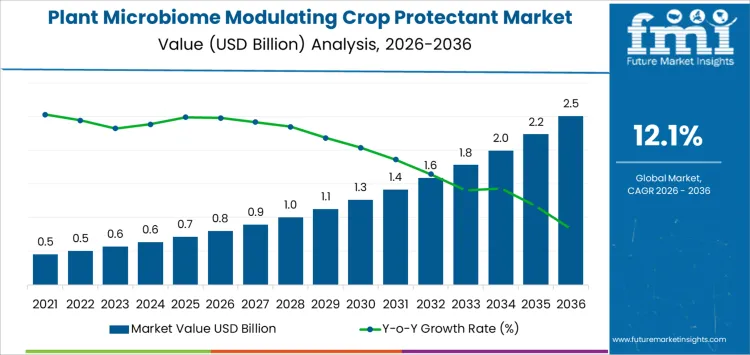
Key trends in the market include the development of multifunctional crop protectants that combine microbiome modulation with nutrient delivery and pest suppression, in response to the increasing emphasis on eco-friendly agriculture. Bio-based and low-toxicity formulations are gaining popularity, aligning with environmental regulations and the push for eco-friendly farming practices. Advancements in digital agronomy, such as microbiome profiling and data-driven application strategies, are improving the precision and effectiveness of these products. Seed treatment methods, which dominate the market with a 41% share, offer significant early-stage protection and long-term benefits for plant health, positioning them as a critical tool in climate-resilient agricultural practices
Plant Microbiome Modulating Crop Protectant Market Key Takeaways
| Metric | Value |
|---|---|
| Industry Value (2026) | USD 0.8 billion |
| Forecast Value (2036) | USD 2.5 billion |
| Forecast CAGR (2026–2036) | 12.1% |
How is the Global Plant Microbiome Modulating Crop Protectant Sector Advancing?
The global plant microbiome modulating crop protectant market is growing rapidly as agricultural stakeholders adopt biological and microbiome focused solutions to improve crop health and resilience. These crop protectants influence the plant’s microbiome the community of microorganisms associated with roots and foliage to enhance natural defense mechanisms, support nutrient uptake, and suppress pathogens. Traditional crop protection largely relied on chemical pesticides and fertilizers, but increasing concerns over environmental impact, soil health, and resistance development have driven interest in microbiome based approaches. By tuning beneficial microbial interactions, growers can improve plant performance while reducing reliance on harsh chemicals.
As research in plant microbiology and soil ecology advances, new formulations are enabling more precise modulation of microbial populations that support plant growth under stress conditions such as disease pressure, drought, and nutrient deficiencies. The market is attracting attention from growers across cereals, fruits, vegetables, and specialty crops who seek eco-friendly tools that align with regulatory trends favoring low impact solutions. Integrated pest and disease management strategies increasingly incorporate microbiome modulating protectants to enhance overall crop protection with a reduced environmental footprint.
Demand for plant microbiome modulating crop protectants is expected to accelerate as climate change and regulatory pressures intensify the need for innovative, eco friendly crop protection strategies. Continued investment in product development and field validation will expand efficacy and adoption across diverse crops and geographies. Challenges such as formulation complexity, variable soil and climate conditions, and grower education needs may influence adoption rates. Nevertheless, the strong focus on durability, soil health, and biological crop protection will continue to drive market expansion, positioning microbiome modulating solutions as a key part of next generation crop care.
What Is the Segment-Wise Analysis for the Global Plant Microbiome Modulating Crop Protectant Market?
The global plant microbiome modulating crop protectant market is segmented by product type and application method. Microbial consortia formulations lead the market with a 31% share due to their effectiveness in promoting plant health and resilience through a combination of beneficial microorganisms. Other key product types include beneficial bacteria-based protectants, fungal-based bioprotectants, microbiome activators & stimulants, and other specialized products. In terms of application methods, seed treatment holds the largest share at 41%, followed by soil application, foliar spray, and other application methods, highlighting the preference for preventive, efficient, and eco-friendly crop protection approaches.
How Do Microbial Consortia Formulations Lead the Global Plant Microbiome Modulating Crop Protectant Market?
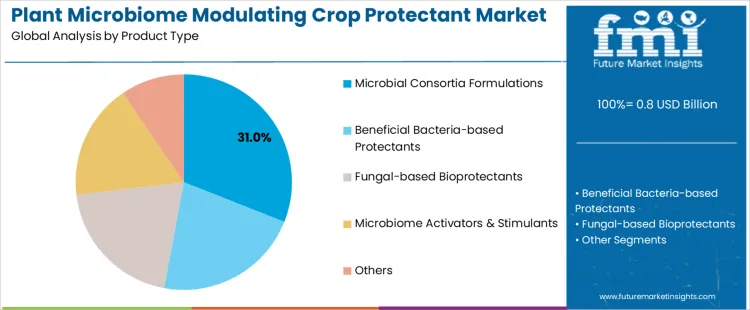
Microbial consortia formulations hold a 31% share in the global plant microbiome modulating crop protectant market due to their ability to combine multiple beneficial microorganisms, providing a broad range of protective benefits for crops. These formulations enhance the plant’s microbiome, promoting natural pest resistance, improving nutrient uptake, and increasing drought tolerance, which is critical for ensuring plant health and resilience. By leveraging the synergy between different microorganisms, microbial consortia offer more comprehensive protection compared to single microorganism treatments. As agriculture increasingly seeks eco-friendly solutions to replace chemical-based protectants, microbial consortia formulations are gaining popularity. Their versatility and effectiveness in various crop applications make them a dominant choice in the market, driving their leadership in the plant microbiome modulating sector.
Why Does Seed Treatment Hold the Largest Market Share in the Plant Microbiome Modulating Crop Protectant Market?
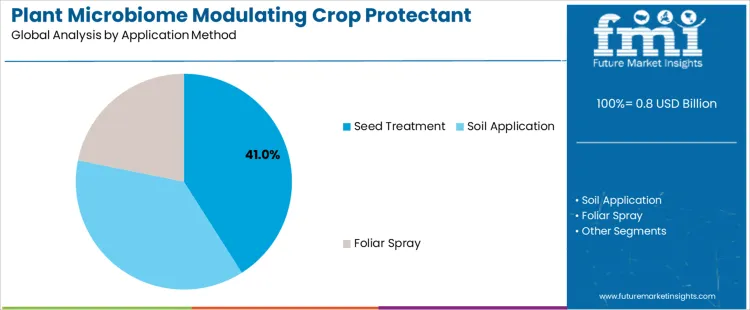
Seed treatment holds the largest share of 41% in the global plant microbiome modulating crop protectant market due to its preventative benefits and long-lasting impact on plant health. By applying microbiome-modulating products directly to seeds, farmers ensure early-stage protection that supports seed germination, root development, and overall plant resilience against diseases and environmental stress. This application method enables crops to establish a strong microbiome foundation right from the start, improving plant vitality throughout their growth cycle. Seed treatment is not only cost-effective and efficient but also aligns with eco-friendly farming practices, making it the preferred choice. The increasing adoption of this method for its environmental and economic benefits continues to drive its dominant position in the market.
What is Shaping the Plant Microbiome Modulating Crop Protectant Market?
The plant microbiome modulating crop protectant products enhance plant health by influencing the community of microbes associated with roots and foliage, improving resistance to stress, disease, and pests. As growers seek alternatives to conventional chemical pesticides, microbiome focused technologies are gaining traction. Scientific advances in soil and plant microbiome research, along with digital tools to monitor microbial responses, are driving development of tailored protectants that support yield, resilience, and environmental stewardship.
What Challenges Are Limiting Adoption of Plant Microbiome Modulating Crop Protectants?
Adoption is limited by variability in field performance across diverse soils, climates, and crop systems. Microbiome interactions are complex, and outcomes can differ from one environment to another, creating uncertainty for growers. Some producers remain cautious about replacing familiar chemical inputs with biological alternatives without extensive local data on efficacy and return on investment. Regulatory frameworks for biologicals vary by country, complicating product registration and market entry. Technical expertise is often needed to integrate microbiome protectants into existing crop programs, which can be a barrier in regions with limited agronomy support services.
What Key Trends Are Shaping the Plant Microbiome Modulating Crop Protectant Market?
Key trends include development of targeted microbial consortia and products that combine microbiome modulation with nutrient delivery or pest suppression. There is rising interest in data driven application strategies that use soil and plant microbiome profiling to tailor treatments. Improved formulation technologies enhance shelf life, field stability, and compatibility with standard equipment. Partnerships between biotech companies and large agribusinesses are accelerating product development and broader commercial adoption. Durability goals and regenerative agriculture practices are also encouraging the integration of microbiome based solutions into mainstream crop protection programs.
What is the Growth Outlook for the Plant Microbiome Modulating Crop Protectant Market by Country?
| Country | CAGR (%) |
|---|---|
| India | 14.2% |
| China | 12.5% |
| USA | 10.1% |
| Brazil | 11.4% |
| France | 9.3% |
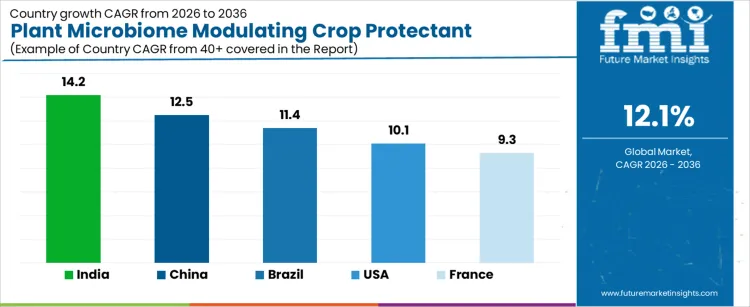
The plant microbiome modulating crop protectant market is expanding rapidly, with India leading at a 14.2% CAGR, driven by growing agricultural demand and increasing awareness of eco-friendly crop protection. China follows with 12.5%, supported by the country’s vast agricultural sector and adoption of innovative farming solutions. Brazil’s market grows at 11.4%, fueled by its large-scale farming operations and focus on improving crop resilience. The USA shows steady growth at 10.1%, driven by rising demand for biological and eco-friendly crop protection products. France’s market grows at 9.3%, as European agriculture increasingly adopts environmentally friendly alternatives to chemical pesticides.
Why is India Leading in the Plant Microbiome Modulating Crop Protectant Market?
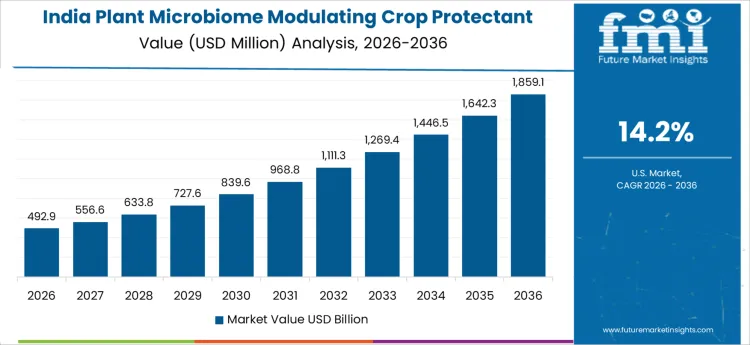
India’s plant microbiome modulating crop protectant market is growing at 14.2%, driven by the need for innovative solutions to address the challenges faced by the agricultural sector, including pests, diseases, and environmental stress. As India is heavily dependent on agriculture, the demand for eco-friendly and eco-friendly crop protection methods is increasing. Plant microbiome modulating technologies are becoming popular because they enhance soil health, improve plant resilience, and reduce reliance on chemical pesticides. The Indian government’s initiatives to promote eco-friendly farming practices, coupled with increasing consumer awareness of healthier food production methods, are also contributing to the rapid growth of this market. As India continues to prioritize agricultural productivity and durability, the market for plant microbiome modulating crop protectants is expected to expand rapidly.
What is Driving the Growth of the Plant Microbiome Modulating Crop Protectant Market in China?
China’s plant microbiome modulating crop protectant market is growing at 12.5%, driven by the country’s vast agricultural output and rising demand for eco-friendlier farming methods. With concerns over soil degradation and the overuse of chemical fertilizers and pesticides, China is increasingly adopting biological and eco-friendly solutions for crop protection. Plant microbiome modulating technologies offer a promising solution to enhance soil health, boost plant immunity, and reduce environmental impact. The government’s focus on improving agricultural productivity while reducing the use of harmful chemicals is accelerating the adoption of these protectants. As China continues to modernize its agriculture and address durability concerns, the demand for microbiome-based crop protectants is expected to grow steadily.
How is the Plant Microbiome Modulating Crop Protectant Market Expanding in Brazil?
Brazil’s plant microbiome modulating crop protectant market is growing at 11.4%, driven by the country’s large agricultural sector and the increasing need for eco-friendly farming practices. As Brazil remains one of the world’s largest producers of crops like soybeans, coffee, and sugarcane, there is a growing need for technologies that improve crop resilience and reduce dependency on chemical inputs. Plant microbiome modulating crop protectants offer a natural solution to enhance plant health, fight diseases, and improve soil fertility. With the growing demand for eco-friendly and eco-friendly agricultural solutions, Brazil’s market for these protectants is expected to continue expanding. As Brazil continues to prioritize agricultural innovation and durability, plant microbiome technologies will play a significant role in the country’s future farming practices.
What is Contributing to the Growth of the Plant Microbiome Modulating Crop Protectant Market in the USA?
The USA’s plant microbiome modulating crop protectant market is growing at 10.1%, supported by increasing demand for biological alternatives to chemical pesticides. As American farmers seek eco-friendlier methods to improve crop yield and combat pests, plant microbiome-based solutions are gaining popularity. These technologies enhance soil health, promote plant growth, and provide natural resistance to diseases and stress, offering an eco-friendlier option for crop protection. The USA’s regulatory focus on reducing chemical pesticide use, along with the growing preference for organic and eco-friendly agriculture, is further driving the adoption of plant microbiome modulating technologies. As the demand for biological crop protectants continues to rise, the market for these solutions in the USA is expected to grow steadily.
What is Driving the Growth of the Plant Microbiome Modulating Crop Protectant Market in France?
France’s plant microbiome modulating crop protectant market is growing at 9.3%, driven by increasing demand for eco-friendly agricultural practices and the adoption of biological crop protection solutions. As France embraces eco-friendlier farming methods, the use of plant microbiome modulating technologies is rising to address challenges such as soil degradation, plant diseases, and pest control. The country’s regulatory environment, which supports the reduction of chemical pesticide use, is also contributing to the market’s growth. French farmers are turning to these innovative solutions to improve crop resilience, enhance soil fertility, and reduce environmental impact. With the continued push toward durability in agriculture, the demand for plant microbiome modulating crop protectants in France is expected to rise steadily.
How Are Companies Competing in the Plant Microbiome Modulating Crop Protectant Market?
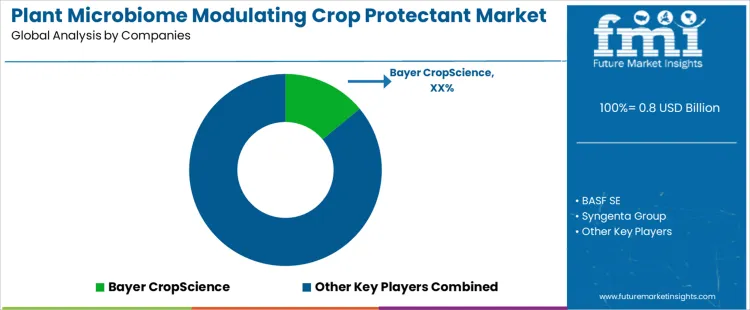
In the plant microbiome modulating crop protectant market Bayer CropScience, BASF SE, Syngenta Group, Corteva Agriscience, and Novozymes (Chr. Hansen) are positioned with product brochures that emphasize biological innovation and plant health benefits. Bayer CropScience materials highlight microbiome focused formulations that support root and foliar microbiota to enhance defense against stress. Efficacy data is presented alongside application guidance that supports integration with conventional crop protection programs. BASF SE brochures showcase solutions that are described with science backed modes of action targeting beneficial microbial communities. Technical summaries are provided to explain how performance advantages can translate into yield stability under varied environmental pressures.
Syngenta Group collateral positions microbiome modulators within broader plant health platforms, with field trial results emphasized to demonstrate consistency and crop specificity. Short case summaries and technical notes are included to help advisors understand performance nuances. Corteva Agriscience literature highlights proprietary approaches to microbiome modulation, supported by targeted research and compatibility charts that simplify adoption with existing inputs. Novozymes (Chr. Hansen) materials present enzyme and microbe based technologies engineered to interact with plant microbial ecosystems. These brochures focus on durability benefits and documented improvements in nutrient uptake, resilience, and soil health.
Key Players in Plant Microbiome Modulating Crop Protectant Market
- Bayer CropScience
- BASF SE
- Syngenta Group
- Corteva Agriscience
- Novozymes (Chr. Hansen)
Scope of Report
| Items | Values |
|---|---|
| Quantitative Units (2026) | USD billion |
| Product Type | Microbial Consortia Formulations, Beneficial Bacteria-based Protectants, Fungal-based Bioprotectants, Microbiome Activators & Stimulants, Others |
| Application Method | Seed Treatment, Soil Application, Foliar Spray |
| Regions Covered | Asia Pacific, Europe, North America, Latin America, Middle East & Africa |
| Countries Covered | USA, China, Japan, South Korea, India, Australia & New Zealand, ASEAN, Germany, UK, France, Italy, Spain, Nordic, BENELUX, Brazil, Chile, Mexico, Saudi Arabia, Other GCC Countries, Turkey, South Africa, Other African Union |
| Key Companies Profiled | Bayer CropScience, BASF SE, Syngenta Group, Corteva Agriscience, Novozymes (Chr. Hansen) |
| Additional Attributes | Dollar sales by product type, application method, and region; regional CAGR and growth outlook; distribution channels including seed suppliers, agrochemical distributors, and farm service providers; innovation trends in plant microbiome modulation; competitive positioning of global vs regional suppliers. |
Plant Microbiome Modulating Crop Protectant Market by Segments
Product Type:
- Microbial Consortia Formulations
- Beneficial Bacteria-based Protectants
- Fungal-based Bioprotectants
- Microbiome Activators & Stimulants
- Others
Application Method:
- Seed Treatment
- Soil Application
- Foliar Spray
Region:
- Asia Pacific
- China
- Japan
- South Korea
- India
- Australia & New Zealand
- ASEAN
- Rest of Asia Pacific
- Europe
- Germany
- United Kingdom
- France
- Italy
- Spain
- Nordic
- BENELUX
- Rest of Europe
- North America
- United States
- Canada
- Mexico
- Latin America
- Brazil
- Chile
- Rest of Latin America
- Middle East & Africa
- Kingdom of Saudi Arabia
- Other GCC Countries
- Turkey
- South Africa
- Other African Union
- Rest of Middle East & Africa
Frequently Asked Questions
How big is the plant microbiome modulating crop protectant market in 2026?
The global plant microbiome modulating crop protectant market is estimated to be valued at USD 0.8 billion in 2026.
What will be the size of plant microbiome modulating crop protectant market in 2036?
The market size for the plant microbiome modulating crop protectant market is projected to reach USD 2.5 billion by 2036.
How much will be the plant microbiome modulating crop protectant market growth between 2026 and 2036?
The plant microbiome modulating crop protectant market is expected to grow at a 12.1% CAGR between 2026 and 2036.
What are the key product types in the plant microbiome modulating crop protectant market?
The key product types in plant microbiome modulating crop protectant market are microbial consortia formulations, beneficial bacteria-based protectants, fungal-based bioprotectants, microbiome activators & stimulants and others.
Which application method segment to contribute significant share in the plant microbiome modulating crop protectant market in 2026?
In terms of application method, seed treatment segment to command 41.0% share in the plant microbiome modulating crop protectant market in 2026.
Preview the report firsthand - request a free sample
Get SampleGet the brochure for pricing and purchase details.
Get PDFTable of Content
- Executive Summary
- Global Market Outlook
- Demand-side Trends
- Supply-side Trends
- Technology Roadmap Analysis
- Analysis and Recommendations
- Market Overview
- Market Coverage / Taxonomy
- Market Definition / Scope / Limitations
- Market Background
- Market Dynamics
- Drivers
- Restraints
- Opportunity
- Trends
- Scenario Forecast
- Demand in Optimistic Scenario
- Demand in Likely Scenario
- Demand in Conservative Scenario
- Opportunity Map Analysis
- Product Life Cycle Analysis
- Supply Chain Analysis
- Investment Feasibility Matrix
- Value Chain Analysis
- PESTLE and Porter’s Analysis
- Regulatory Landscape
- Regional Parent Market Outlook
- Production and Consumption Statistics
- Import and Export Statistics
- Market Dynamics
- Global Market Analysis 2021 to 2025 and Forecast, 2026 to 2036
- Historical Market Size Value (USD Million) Analysis, 2021 to 2025
- Current and Future Market Size Value (USD Million) Projections, 2026 to 2036
- Y-o-Y Growth Trend Analysis
- Absolute $ Opportunity Analysis
- Global Market Pricing Analysis 2021 to 2025 and Forecast 2026 to 2036
- Global Market Analysis 2021 to 2025 and Forecast 2026 to 2036, By Product Type
- Introduction / Key Findings
- Historical Market Size Value (USD Million) Analysis By Product Type , 2021 to 2025
- Current and Future Market Size Value (USD Million) Analysis and Forecast By Product Type , 2026 to 2036
- Microbial Consortia Formulations
- Beneficial Bacteria-based Protectants
- Fungal-based Bioprotectants
- Microbiome Activators & Stimulants
- Others
- Y-o-Y Growth Trend Analysis By Product Type , 2021 to 2025
- Absolute $ Opportunity Analysis By Product Type , 2026 to 2036
- Global Market Analysis 2021 to 2025 and Forecast 2026 to 2036, By Application Method
- Introduction / Key Findings
- Historical Market Size Value (USD Million) Analysis By Application Method, 2021 to 2025
- Current and Future Market Size Value (USD Million) Analysis and Forecast By Application Method, 2026 to 2036
- Seed Treatment
- Soil Application
- Foliar Spray
- Y-o-Y Growth Trend Analysis By Application Method, 2021 to 2025
- Absolute $ Opportunity Analysis By Application Method, 2026 to 2036
- Global Market Analysis 2021 to 2025 and Forecast 2026 to 2036, By Region
- Introduction
- Historical Market Size Value (USD Million) Analysis By Region, 2021 to 2025
- Current Market Size Value (USD Million) Analysis and Forecast By Region, 2026 to 2036
- North America
- Latin America
- Western Europe
- Eastern Europe
- East Asia
- South Asia and Pacific
- Middle East & Africa
- Market Attractiveness Analysis By Region
- North America Market Analysis 2021 to 2025 and Forecast 2026 to 2036, By Country
- Historical Market Size Value (USD Million) Trend Analysis By Market Taxonomy, 2021 to 2025
- Market Size Value (USD Million) Forecast By Market Taxonomy, 2026 to 2036
- By Country
- USA
- Canada
- Mexico
- By Product Type
- By Application Method
- By Country
- Market Attractiveness Analysis
- By Country
- By Product Type
- By Application Method
- Key Takeaways
- Latin America Market Analysis 2021 to 2025 and Forecast 2026 to 2036, By Country
- Historical Market Size Value (USD Million) Trend Analysis By Market Taxonomy, 2021 to 2025
- Market Size Value (USD Million) Forecast By Market Taxonomy, 2026 to 2036
- By Country
- Brazil
- Chile
- Rest of Latin America
- By Product Type
- By Application Method
- By Country
- Market Attractiveness Analysis
- By Country
- By Product Type
- By Application Method
- Key Takeaways
- Western Europe Market Analysis 2021 to 2025 and Forecast 2026 to 2036, By Country
- Historical Market Size Value (USD Million) Trend Analysis By Market Taxonomy, 2021 to 2025
- Market Size Value (USD Million) Forecast By Market Taxonomy, 2026 to 2036
- By Country
- Germany
- UK
- Italy
- Spain
- France
- Nordic
- BENELUX
- Rest of Western Europe
- By Product Type
- By Application Method
- By Country
- Market Attractiveness Analysis
- By Country
- By Product Type
- By Application Method
- Key Takeaways
- Eastern Europe Market Analysis 2021 to 2025 and Forecast 2026 to 2036, By Country
- Historical Market Size Value (USD Million) Trend Analysis By Market Taxonomy, 2021 to 2025
- Market Size Value (USD Million) Forecast By Market Taxonomy, 2026 to 2036
- By Country
- Russia
- Poland
- Hungary
- Balkan & Baltic
- Rest of Eastern Europe
- By Product Type
- By Application Method
- By Country
- Market Attractiveness Analysis
- By Country
- By Product Type
- By Application Method
- Key Takeaways
- East Asia Market Analysis 2021 to 2025 and Forecast 2026 to 2036, By Country
- Historical Market Size Value (USD Million) Trend Analysis By Market Taxonomy, 2021 to 2025
- Market Size Value (USD Million) Forecast By Market Taxonomy, 2026 to 2036
- By Country
- China
- Japan
- South Korea
- By Product Type
- By Application Method
- By Country
- Market Attractiveness Analysis
- By Country
- By Product Type
- By Application Method
- Key Takeaways
- South Asia and Pacific Market Analysis 2021 to 2025 and Forecast 2026 to 2036, By Country
- Historical Market Size Value (USD Million) Trend Analysis By Market Taxonomy, 2021 to 2025
- Market Size Value (USD Million) Forecast By Market Taxonomy, 2026 to 2036
- By Country
- India
- ASEAN
- Australia & New Zealand
- Rest of South Asia and Pacific
- By Product Type
- By Application Method
- By Country
- Market Attractiveness Analysis
- By Country
- By Product Type
- By Application Method
- Key Takeaways
- Middle East & Africa Market Analysis 2021 to 2025 and Forecast 2026 to 2036, By Country
- Historical Market Size Value (USD Million) Trend Analysis By Market Taxonomy, 2021 to 2025
- Market Size Value (USD Million) Forecast By Market Taxonomy, 2026 to 2036
- By Country
- Kingdom of Saudi Arabia
- Other GCC Countries
- Turkiye
- South Africa
- Other African Union
- Rest of Middle East & Africa
- By Product Type
- By Application Method
- By Country
- Market Attractiveness Analysis
- By Country
- By Product Type
- By Application Method
- Key Takeaways
- Key Countries Market Analysis
- USA
- Pricing Analysis
- Market Share Analysis, 2025
- By Product Type
- By Application Method
- Canada
- Pricing Analysis
- Market Share Analysis, 2025
- By Product Type
- By Application Method
- Mexico
- Pricing Analysis
- Market Share Analysis, 2025
- By Product Type
- By Application Method
- Brazil
- Pricing Analysis
- Market Share Analysis, 2025
- By Product Type
- By Application Method
- Chile
- Pricing Analysis
- Market Share Analysis, 2025
- By Product Type
- By Application Method
- Germany
- Pricing Analysis
- Market Share Analysis, 2025
- By Product Type
- By Application Method
- UK
- Pricing Analysis
- Market Share Analysis, 2025
- By Product Type
- By Application Method
- Italy
- Pricing Analysis
- Market Share Analysis, 2025
- By Product Type
- By Application Method
- Spain
- Pricing Analysis
- Market Share Analysis, 2025
- By Product Type
- By Application Method
- France
- Pricing Analysis
- Market Share Analysis, 2025
- By Product Type
- By Application Method
- India
- Pricing Analysis
- Market Share Analysis, 2025
- By Product Type
- By Application Method
- ASEAN
- Pricing Analysis
- Market Share Analysis, 2025
- By Product Type
- By Application Method
- Australia & New Zealand
- Pricing Analysis
- Market Share Analysis, 2025
- By Product Type
- By Application Method
- China
- Pricing Analysis
- Market Share Analysis, 2025
- By Product Type
- By Application Method
- Japan
- Pricing Analysis
- Market Share Analysis, 2025
- By Product Type
- By Application Method
- South Korea
- Pricing Analysis
- Market Share Analysis, 2025
- By Product Type
- By Application Method
- Russia
- Pricing Analysis
- Market Share Analysis, 2025
- By Product Type
- By Application Method
- Poland
- Pricing Analysis
- Market Share Analysis, 2025
- By Product Type
- By Application Method
- Hungary
- Pricing Analysis
- Market Share Analysis, 2025
- By Product Type
- By Application Method
- Kingdom of Saudi Arabia
- Pricing Analysis
- Market Share Analysis, 2025
- By Product Type
- By Application Method
- Turkiye
- Pricing Analysis
- Market Share Analysis, 2025
- By Product Type
- By Application Method
- South Africa
- Pricing Analysis
- Market Share Analysis, 2025
- By Product Type
- By Application Method
- USA
- Market Structure Analysis
- Competition Dashboard
- Competition Benchmarking
- Market Share Analysis of Top Players
- By Regional
- By Product Type
- By Application Method
- Competition Analysis
- Competition Deep Dive
- Bayer CropScience
- Overview
- Product Portfolio
- Profitability by Market Segments (Product/Age /Sales Channel/Region)
- Sales Footprint
- Strategy Overview
- Marketing Strategy
- Product Strategy
- Channel Strategy
- BASF SE
- Syngenta Group
- Corteva Agriscience
- Novozymes (Chr. Hansen)
- Bayer CropScience
- Competition Deep Dive
- Assumptions & Acronyms Used
- Research Methodology


