

- Industry Size (2026)
- USD 1.1 Bn
- Forecast (2036)
- USD 2.2 Bn
- CAGR (2026 to 2036)
- 7.20%
Polymer Testing Services Market Forecast and Outlook 2026 to 2036
The global polymer testing services market is valued at USD 1.1 billion in 2026 and is expected to reach USD 2.2 billion by 2036 with a CAGR of 7.20%. Over the forecast period, the cost structure of polymer testing services will be influenced by the need for advanced testing technologies, the regulatory environment, and the growing demand for specialized testing across sectors like automotive, healthcare, and packaging. Companies offering comprehensive and high-precision testing services, particularly those with global lab networks and regulatory certifications, are likely to capture more value as they can command premium prices for their services.
Testing providers that focus on niche, high-margin segments, such as biodegradability testing and advanced polymer characterization, will also see higher margins. Pricing control will be crucial as increasing competition and technological advancements allow some players to offer more cost-effective solutions without sacrificing service quality. Value capture will be concentrated among players who can provide consistent, reliable, and comprehensive test results with quick turnaround times, as these factors increasingly influence client decision-making.
Quick Stats for Polymer Testing Services Market
- Polymer Testing Services Market Value (2026): USD 1.1 Billion
- Polymer Testing Services Market Forecast Value (2036): USD 2.2 Billion
- Polymer Testing Services Market Forecast CAGR 2026 to 2036: 7.20%
- Leading Polymer Type in Polymer Testing Services Market: Thermoplastics
- Key Growth Regions in Polymer Testing Services Market: Asia Pacific, North America
- Top Key Players in Polymer Testing Services Market: Intertek, SGS, Bureau Veritas, Element Materials Technology, UL Solutions

Polymer Testing Services Market Key Takeaways
| Metric | Value |
|---|---|
| Industry Value (2026) | USD 1.1 Billion |
| Forecast Value (2036) | USD 2.2 Billion |
| Forecast CAGR 2026 to 2036 | 7.20% |
How Is the Global Polymer Testing Services Market Advancing?
The global polymer testing services market is experiencing steady growth, driven by the increasing demand for high-quality polymer materials and the need to ensure they meet stringent regulatory and performance standards. Polymer testing services are essential for evaluating the physical, chemical, and mechanical properties of polymers used in various industries, including automotive, aerospace, packaging, medical devices, and consumer goods. These services help manufacturers assess the quality, durability, and safety of their polymer-based products before they are introduced to the market.
A key driver of this market is the growing demand for advanced and specialized polymer materials across industries such as automotive and healthcare. In the automotive industry, for instance, polymers are increasingly used for lightweight components to improve fuel efficiency and reduce emissions. Polymer testing services ensure that these materials meet the necessary performance and safety standards, especially in demanding applications such as engine components and interior parts. In the medical sector, the use of biocompatible polymers in devices such as implants, syringes, and catheters has increased, necessitating rigorous testing for safety and performance.
Technological advancements in polymer testing, such as the use of advanced analytical techniques like spectrometry, chromatography, and rheology, are contributing to the market’s growth. These innovations allow for more precise and detailed analysis of polymer materials, helping manufacturers develop new products with enhanced properties. As industries continue to prioritize the use of eco-friendly materials, polymer testing services are becoming crucial in ensuring that biodegradable and recyclable polymers meet the required standards. As the demand for high-performance, safe, and environmentally friendly polymers continues to rise, the polymer testing services market is expected to expand steadily over the coming years.
What is the Segment-Wise Analysis for the Polymer Testing Services Market?
The polymer testing services market is segmented by polymer type and end user. Thermoplastics lead the polymer type segment with a 46% share, followed by elastomers, thermosets, and other polymer types. Thermoplastics are widely used due to their versatility, ease of processing, and recyclability, making them a significant focus for polymer testing. In terms of end users, material producers hold the largest share at 30%, followed by automotive OEMs or Tier-1 suppliers, packaging & CPG (consumer packaged goods), and other users. The demand for high-quality, durable polymers across industries is driving the adoption of polymer testing services in these sectors.
Why Do Thermoplastics Lead the Polymer Testing Services Market?

Thermoplastics lead the polymer testing services market with a 46% share due to their widespread use in industries ranging from automotive to packaging. These polymers can be easily molded, melted, and recycled, which makes them ideal for mass production of consumer products. The growing demand for lightweight, durable, and cost-effective materials in industries like automotive, electronics, and packaging has increased the need for polymer testing services focused on thermoplastics. Testing ensures that these materials meet performance, durability, and safety standards, making thermoplastics the dominant polymer type in the market. As renewability concerns rise, the recyclability of thermoplastics continues to drive their adoption and the need for testing services.
How Do Material Producers Contribute to the Polymer Testing Services Market?

Material producers account for 30% of the end-user segment in the polymer testing services market. These producers are responsible for manufacturing polymers used across a wide range of industries, including automotive, packaging, and consumer goods. Material producers rely on polymer testing services to ensure that their products meet industry standards for quality, durability, and safety. With increasing regulations around product performance, particularly for materials used in critical applications such as automotive parts or packaging, the demand for comprehensive polymer testing has grown. Material producers play a crucial role in driving the market as they seek to improve the performance and reliability of their polymer products through rigorous testing.
What Are the Key Dynamics for the Polymer Testing Services Market?
Polymer testing services help ensure polymers meet standards for strength, durability, and environmental resistance. As more advanced polymers are used in high-performance applications, there is an increasing need for testing services to evaluate properties like thermal stability, chemical resistance, and mechanical performance. The growing focus on renewability, coupled with the demand for eco-friendly polymers such as bioplastics, is also fueling the demand for polymer testing services to ensure safety and regulatory compliance.
How Are the Key Drivers Shaping the Polymer Testing Services Market?
Key drivers of the polymer testing services market include the expanding demand for polymers across various industries, particularly in automotive, electronics, medical devices, and packaging. As the complexity and performance requirements of polymer applications increase, companies require comprehensive testing services to meet industry standards. The push for eco-friendly polymers, including recyclable materials and bioplastics, is shaping the market. Stringent regulations in healthcare and food packaging sectors are further propelling the demand for testing services to ensure safety, quality, and compliance. Polymer testing helps verify properties such as strength, flexibility, and environmental impact, enabling better performance.
What Are the Restraints Impacting the Polymer Testing Services Market?
The polymer testing services market faces several challenges, including high testing costs and the complexity of evaluating a wide range of properties across different types of polymers. Specialized equipment and skilled personnel are required, which increases operational expenses for testing service providers. The slow adoption of new testing technologies in some industries limits market growth. Inconsistent global regulations and the lack of standardized testing protocols for polymer materials can also create barriers. The time-consuming nature of certain polymer testing procedures may lead to delays in product development, increasing costs and slowing down innovation in polymer-based products.
What is the Growth Outlook for the Polymer Testing Services Market by Country?

| Country | CAGR (%) |
|---|---|
| China | 8.4% |
| Brazil | 7.9% |
| USA | 7.0% |
| South Korea | 6.7% |
| Japan | 6.0% |
The polymer testing services market is expanding across key regions. China leads at 8.4%, driven by industrial growth, rising demand for high-quality polymers, and regulatory requirements. Brazil follows at 7.9%, fueled by the modernization of manufacturing industries and growing demand for performance and eco-friendly polymers. The USA grows at 7.0%, supported by regulatory standards and a focus on high-performance materials across sectors like automotive and healthcare. South Korea’s market expands at 6.7%, driven by its advanced manufacturing sectors and focus on renewability. Japan grows at 6.0%, supported by stringent quality standards, technological innovation, and demand for eco-friendly polymers.
What is Driving the Growth of the Polymer Testing Services Market in China?
China’s polymer testing services market is growing at 8.4%, driven by rapid industrialization, increasing production of polymers in various sectors, and a growing demand for high-quality, reliable materials. The rise in manufacturing activities, particularly in the automotive, construction, and electronics industries, has led to an increased need for polymer testing services to ensure the durability, performance, and safety of polymer-based materials. China’s push for higher quality standards and regulatory requirements for product safety further contributes to the adoption of polymer testing services. As industries increasingly focus on environmental impact, there is also a growing demand for testing services to assess the eco-friendly properties of polymers, further driving market growth in China.
How is the Polymer Testing Services Market Expanding in Brazil?
Brazil’s polymer testing services market is growing at 7.9%, supported by the expanding manufacturing sectors, particularly in automotive, packaging, and construction industries. As Brazil’s industrial base continues to modernize, there is an increasing need for high-performance polymer materials to meet industry standards. The country’s growing focus on quality control and regulatory compliance in manufacturing is further driving the demand for polymer testing services. The rise in demand for eco-friendly and eco-friendly polymers, coupled with growing consumer awareness, is pushing Brazilian manufacturers to test and ensure that their materials meet environmental standards. Brazil’s infrastructure projects and the increasing adoption of advanced manufacturing technologies are contributing to steady market growth.
How is the Polymer Testing Services Market Expanding in the USA?
The polymer testing services market in the USA is growing at 7.0%, driven by increasing demand for high-quality polymer materials across various industries, including automotive, healthcare, packaging, and consumer goods. The USA automotive sector, which relies heavily on polymers for lightweight, durable components, is a significant driver for testing services. Stringent regulations for material safety, especially in food packaging and healthcare applications, are pushing manufacturers to adopt polymer testing services. The USA’s strong commitment to research and development in advanced polymer materials, including eco-friendly and recyclable polymers, is further fueling market growth. As industries increasingly focus on product performance, durability, and environmental impact, the demand for polymer testing services will continue to rise in the USA.
What is Driving the Growth of the Polymer Testing Services Market in South Korea?
South Korea’s polymer testing services market is growing at 6.7%, driven by the country’s advanced manufacturing sector, particularly in electronics, automotive, and packaging industries. South Korea is a global leader in electronics and automotive manufacturing, where polymers are widely used for lightweight and durable components. The demand for high-performance polymers, coupled with the country’s strict regulatory environment and quality control standards, is contributing to the market growth. The rising focus on eco-friendly polymers in South Korea is pushing companies to test and ensure that their materials meet environmental standards. South Korea’s continued investment in innovation and technology is expected to fuel the demand for polymer testing services in the coming years.
How is the Polymer Testing Services Market Expanding in Japan?
Japan’s polymer testing services market is growing at 6.0%, supported by its well-established manufacturing sector, including automotive, electronics, and packaging industries. Japan is known for its high standards of quality, and the demand for polymer testing services is driven by the need to ensure that materials meet stringent safety, performance, and regulatory requirements. As the country’s industries continue to prioritize renewability, there is a growing demand for testing services to assess the eco-friendly properties of polymers, especially in packaging and automotive applications. Japan’s focus on advanced materials and technology innovation in polymer-based products is contributing to market growth. As industries continue to evolve and demand for high-performance polymers rises, the need for reliable polymer testing services will continue to grow in Japan.
How Are Companies Competing in the Polymer Testing Services Market?
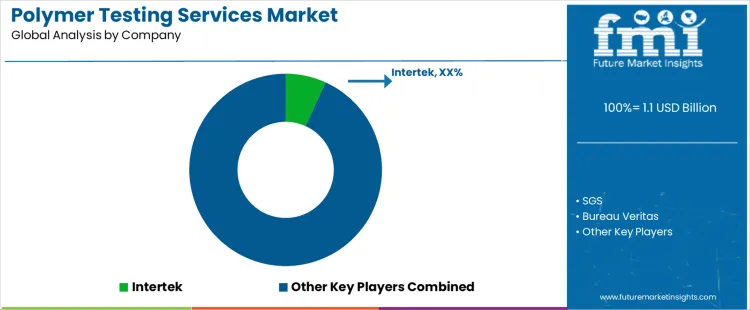
Competition in the Polymer Testing Services Market is driven by analytical precision, wide test scope, regulatory alignment, global lab networks, and fast turnaround. Intertek positions itself with a strong reputation in polymers and plastics testing, offering mechanical, thermal, chemical, and aging analyses that help manufacturers validate performance and compliance. Its service materials emphasize certified methods and global coverage, appealing to brands that need consistent results across markets. SGS competes by combining polymer characterization with materials certification and failure analysis, with brochures highlighting standard compliance (ASTM, ISO) and tailored test packages that support product development and risk mitigation.
Bureau Veritas and Element Materials Technology differentiate through multidisciplinary labs that integrate polymer testing with environmental and electrical evaluations, marketed for end to end quality assurance. Their collateral stresses accredited procedures, detailed reporting, and consultancy support that help clients interpret results and improve formulations. UL Solutions and Eurofins add value with specialized polymer test suites, including migration studies and functional performance tests, and their documentation often highlights global standard readiness and traceable methods for regulated sectors like food contact and medical devices.
Regional and specialty service providers such as ALS Limited, TÜV Rheinland, Mérieux NutriSciences, and Applus+ compete by offering localized labs with targeted expertise in areas ranging from chemical resistance and additive quantification to durability and flammability tests. Their materials emphasize rapid turnaround, customizable test plans, and regulatory guidance. Across all vendors, service literature underscores accuracy, method accreditation, broad polymer test coverage, and actionable insights as key differentiators that help manufacturers ensure product reliability, safety, and market readiness.
Key Players in Polymer Testing Services Market
- Intertek
- SGS
- Bureau Veritas
- Element Materials Technology
- UL Solutions
- Eurofins
- ALS Limited
- TÜV Rheinland
- Mérieux NutriSciences
- Applus+
Scope of Report
| Attributes | Description |
|---|---|
| Quantitative Unit (2026) | USD Billion |
| Polymer Type | Thermoplastics, Elastomers, Thermosets, Other |
| End User | Material Producers, Automotive OEMs or Tier-1, Packaging & CPG, Other |
| Regions Covered | Asia Pacific, Europe, North America, Latin America, Middle East & Africa |
| Countries Covered | China, Japan, South Korea, India, Australia & New Zealand, ASEAN, Germany, United Kingdom, France, Italy, Spain, Nordic, BENELUX, United States, Canada, Mexico, Brazil, Chile, Turkey, South Africa, Other GCC Countries |
| Key Companies Profiled | Intertek, SGS, Bureau Veritas, Element Materials Technology, UL Solutions, Eurofins, ALS Limited, TÜV Rheinland, Mérieux NutriSciences, Applus+ |
| Additional Attributes | Dollar sales by polymer type, end user, and region; regional CAGR and growth outlook for the polymer testing services market. |
Polymer Testing Services Market by Key Segments
Polymer Type
- Thermoplastics
- Elastomers
- Thermosets
- Other
End User
- Material Producers
- Automotive OEMs or Tier-1
- Packaging & CPG
- Other
Region
- Asia Pacific
- China
- Japan
- South Korea
- India
- Australia & New Zealand
- ASEAN
- Rest of Asia Pacific
- Europe
- Germany
- United Kingdom
- France
- Italy
- Spain
- Nordic
- BENELUX
- Rest of Europe
- North America
- United States
- Canada
- Mexico
- Latin America
- Brazil
- Chile
- Rest of Latin America
- Middle East & Africa
- Kingdom of Saudi Arabia
- Other GCC Countries
- Turkey
- South Africa
- Other African Union
- Rest of Middle East & Africa
Bibliography
- International Organization for Standardization (ISO). (2024). Plastics — Test methods for mechanical, thermal, and chemical characterization (latest revisions). International Organization for Standardization.
- European Commission, Joint Research Centre (JRC). (2025). Reference methods for polymer characterization, durability testing, and material performance assessment. Publications Office of the European Union.
- U.S. National Institute of Standards and Technology (NIST). (2024). Measurement science for polymer materials, performance testing, and quality assurance. National Institute of Standards and Technology.
- Organisation for Economic Co‑operation and Development (OECD). (2024). Polymer material testing, safety evaluation, and regulatory compliance frameworks. OECD Environment, Health and Safety Programme.
- European Chemicals Agency (ECHA). (2024). Testing requirements and evaluation of polymer properties under REACH and sustainability regulations. European Chemicals Agency.
Frequently Asked Questions
How big is the polymer testing services market in 2026?
The global polymer testing services market is estimated to be valued at USD 1.1 billion in 2026.
What will be the size of polymer testing services market in 2036?
The market size for the polymer testing services market is projected to reach USD 2.2 billion by 2036.
How much will be the polymer testing services market growth between 2026 and 2036?
The polymer testing services market is expected to grow at a 7.2% CAGR between 2026 and 2036.
What are the key product types in the polymer testing services market?
The key product types in polymer testing services market are thermoplastics, elastomers, thermosets and other.
Which end user segment to contribute significant share in the polymer testing services market in 2026?
In terms of end user, material producers segment to command 30.0% share in the polymer testing services market in 2026.
Preview the report firsthand - request a free sample
Get SampleGet the brochure for pricing and purchase details.
Get PDFTable of Content
- Executive Summary
- Global Market Outlook
- Demand-side Trends
- Supply-side Trends
- Technology Roadmap Analysis
- Analysis and Recommendations
- Market Overview
- Market Coverage / Taxonomy
- Market Definition / Scope / Limitations
- Market Background
- Market Dynamics
- Drivers
- Restraints
- Opportunity
- Trends
- Scenario Forecast
- Demand in Optimistic Scenario
- Demand in Likely Scenario
- Demand in Conservative Scenario
- Opportunity Map Analysis
- Product Life Cycle Analysis
- Supply Chain Analysis
- Investment Feasibility Matrix
- Value Chain Analysis
- PESTLE and Porter’s Analysis
- Regulatory Landscape
- Regional Parent Market Outlook
- Production and Consumption Statistics
- Import and Export Statistics
- Market Dynamics
- Global Market Analysis 2021 to 2025 and Forecast, 2026 to 2036
- Historical Market Size Value (USD Million) Analysis, 2021 to 2025
- Current and Future Market Size Value (USD Million) Projections, 2026 to 2036
- Y-o-Y Growth Trend Analysis
- Absolute $ Opportunity Analysis
- Global Market Pricing Analysis 2021 to 2025 and Forecast 2026 to 2036
- Global Market Analysis 2021 to 2025 and Forecast 2026 to 2036, By Polymer Type
- Introduction / Key Findings
- Historical Market Size Value (USD Million) Analysis By Polymer Type , 2021 to 2025
- Current and Future Market Size Value (USD Million) Analysis and Forecast By Polymer Type , 2026 to 2036
- Thermoplastics
- Elastomers
- Thermosets
- Other
- Thermoplastics
- Y-o-Y Growth Trend Analysis By Polymer Type , 2021 to 2025
- Absolute $ Opportunity Analysis By Polymer Type , 2026 to 2036
- Global Market Analysis 2021 to 2025 and Forecast 2026 to 2036, By End User
- Introduction / Key Findings
- Historical Market Size Value (USD Million) Analysis By End User, 2021 to 2025
- Current and Future Market Size Value (USD Million) Analysis and Forecast By End User, 2026 to 2036
- Material Producers
- Automotive OEMs or Tier-1
- Packaging & CPG
- Other
- Material Producers
- Y-o-Y Growth Trend Analysis By End User, 2021 to 2025
- Absolute $ Opportunity Analysis By End User, 2026 to 2036
- Global Market Analysis 2021 to 2025 and Forecast 2026 to 2036, By Region
- Introduction
- Historical Market Size Value (USD Million) Analysis By Region, 2021 to 2025
- Current Market Size Value (USD Million) Analysis and Forecast By Region, 2026 to 2036
- North America
- Latin America
- Western Europe
- Eastern Europe
- East Asia
- South Asia and Pacific
- Middle East & Africa
- Market Attractiveness Analysis By Region
- North America Market Analysis 2021 to 2025 and Forecast 2026 to 2036, By Country
- Historical Market Size Value (USD Million) Trend Analysis By Market Taxonomy, 2021 to 2025
- Market Size Value (USD Million) Forecast By Market Taxonomy, 2026 to 2036
- By Country
- USA
- Canada
- Mexico
- By Polymer Type
- By End User
- By Country
- Market Attractiveness Analysis
- By Country
- By Polymer Type
- By End User
- Key Takeaways
- Latin America Market Analysis 2021 to 2025 and Forecast 2026 to 2036, By Country
- Historical Market Size Value (USD Million) Trend Analysis By Market Taxonomy, 2021 to 2025
- Market Size Value (USD Million) Forecast By Market Taxonomy, 2026 to 2036
- By Country
- Brazil
- Chile
- Rest of Latin America
- By Polymer Type
- By End User
- By Country
- Market Attractiveness Analysis
- By Country
- By Polymer Type
- By End User
- Key Takeaways
- Western Europe Market Analysis 2021 to 2025 and Forecast 2026 to 2036, By Country
- Historical Market Size Value (USD Million) Trend Analysis By Market Taxonomy, 2021 to 2025
- Market Size Value (USD Million) Forecast By Market Taxonomy, 2026 to 2036
- By Country
- Germany
- UK
- Italy
- Spain
- France
- Nordic
- BENELUX
- Rest of Western Europe
- By Polymer Type
- By End User
- By Country
- Market Attractiveness Analysis
- By Country
- By Polymer Type
- By End User
- Key Takeaways
- Eastern Europe Market Analysis 2021 to 2025 and Forecast 2026 to 2036, By Country
- Historical Market Size Value (USD Million) Trend Analysis By Market Taxonomy, 2021 to 2025
- Market Size Value (USD Million) Forecast By Market Taxonomy, 2026 to 2036
- By Country
- Russia
- Poland
- Hungary
- Balkan & Baltic
- Rest of Eastern Europe
- By Polymer Type
- By End User
- By Country
- Market Attractiveness Analysis
- By Country
- By Polymer Type
- By End User
- Key Takeaways
- East Asia Market Analysis 2021 to 2025 and Forecast 2026 to 2036, By Country
- Historical Market Size Value (USD Million) Trend Analysis By Market Taxonomy, 2021 to 2025
- Market Size Value (USD Million) Forecast By Market Taxonomy, 2026 to 2036
- By Country
- China
- Japan
- South Korea
- By Polymer Type
- By End User
- By Country
- Market Attractiveness Analysis
- By Country
- By Polymer Type
- By End User
- Key Takeaways
- South Asia and Pacific Market Analysis 2021 to 2025 and Forecast 2026 to 2036, By Country
- Historical Market Size Value (USD Million) Trend Analysis By Market Taxonomy, 2021 to 2025
- Market Size Value (USD Million) Forecast By Market Taxonomy, 2026 to 2036
- By Country
- India
- ASEAN
- Australia & New Zealand
- Rest of South Asia and Pacific
- By Polymer Type
- By End User
- By Country
- Market Attractiveness Analysis
- By Country
- By Polymer Type
- By End User
- Key Takeaways
- Middle East & Africa Market Analysis 2021 to 2025 and Forecast 2026 to 2036, By Country
- Historical Market Size Value (USD Million) Trend Analysis By Market Taxonomy, 2021 to 2025
- Market Size Value (USD Million) Forecast By Market Taxonomy, 2026 to 2036
- By Country
- Kingdom of Saudi Arabia
- Other GCC Countries
- Turkiye
- South Africa
- Other African Union
- Rest of Middle East & Africa
- By Polymer Type
- By End User
- By Country
- Market Attractiveness Analysis
- By Country
- By Polymer Type
- By End User
- Key Takeaways
- Key Countries Market Analysis
- USA
- Pricing Analysis
- Market Share Analysis, 2025
- By Polymer Type
- By End User
- Canada
- Pricing Analysis
- Market Share Analysis, 2025
- By Polymer Type
- By End User
- Mexico
- Pricing Analysis
- Market Share Analysis, 2025
- By Polymer Type
- By End User
- Brazil
- Pricing Analysis
- Market Share Analysis, 2025
- By Polymer Type
- By End User
- Chile
- Pricing Analysis
- Market Share Analysis, 2025
- By Polymer Type
- By End User
- Germany
- Pricing Analysis
- Market Share Analysis, 2025
- By Polymer Type
- By End User
- UK
- Pricing Analysis
- Market Share Analysis, 2025
- By Polymer Type
- By End User
- Italy
- Pricing Analysis
- Market Share Analysis, 2025
- By Polymer Type
- By End User
- Spain
- Pricing Analysis
- Market Share Analysis, 2025
- By Polymer Type
- By End User
- France
- Pricing Analysis
- Market Share Analysis, 2025
- By Polymer Type
- By End User
- India
- Pricing Analysis
- Market Share Analysis, 2025
- By Polymer Type
- By End User
- ASEAN
- Pricing Analysis
- Market Share Analysis, 2025
- By Polymer Type
- By End User
- Australia & New Zealand
- Pricing Analysis
- Market Share Analysis, 2025
- By Polymer Type
- By End User
- China
- Pricing Analysis
- Market Share Analysis, 2025
- By Polymer Type
- By End User
- Japan
- Pricing Analysis
- Market Share Analysis, 2025
- By Polymer Type
- By End User
- South Korea
- Pricing Analysis
- Market Share Analysis, 2025
- By Polymer Type
- By End User
- Russia
- Pricing Analysis
- Market Share Analysis, 2025
- By Polymer Type
- By End User
- Poland
- Pricing Analysis
- Market Share Analysis, 2025
- By Polymer Type
- By End User
- Hungary
- Pricing Analysis
- Market Share Analysis, 2025
- By Polymer Type
- By End User
- Kingdom of Saudi Arabia
- Pricing Analysis
- Market Share Analysis, 2025
- By Polymer Type
- By End User
- Turkiye
- Pricing Analysis
- Market Share Analysis, 2025
- By Polymer Type
- By End User
- South Africa
- Pricing Analysis
- Market Share Analysis, 2025
- By Polymer Type
- By End User
- USA
- Market Structure Analysis
- Competition Dashboard
- Competition Benchmarking
- Market Share Analysis of Top Players
- By Regional
- By Polymer Type
- By End User
- Competition Analysis
- Competition Deep Dive
- Intertek
- Overview
- Product Portfolio
- Profitability by Market Segments (Product/Age /Sales Channel/Region)
- Sales Footprint
- Strategy Overview
- Marketing Strategy
- Product Strategy
- Channel Strategy
- SGS
- Bureau Veritas
- Element Materials Technology
- UL Solutions
- Eurofins
- ALS Limited
- TÜV Rheinland
- Mérieux NutriSciences
- Applus+
- Intertek
- Competition Deep Dive
- Assumptions & Acronyms Used
- Research Methodology


