

- Industry Size (2026)
- USD 2.2 Bn
- Forecast (2036)
- USD 4.1 Bn
- CAGR (2026 to 2036)
- 6.50%
Sensory Testing Services Market Forecast and Outlook 2026 to 2036
The global sensory testing services market is projected to grow from USD 2.2 billion in 2026 to USD 4.1 billion by 2036, reflecting a CAGR of 6.50%. The market is being driven by an increasing demand for understanding consumer preferences and enhancing product development across various sectors, including food & beverage, cosmetics, pharmaceuticals, and consumer goods. Sensory testing, which evaluates a product's sensory characteristics such as taste, smell, touch, and appearance, plays a crucial role in determining market acceptance and consumer satisfaction.
As companies focus on improving the quality and differentiation of their products, reliable and accurate sensory testing services are becoming indispensable. The rise in consumer demand for personalized and high-quality products, coupled with technological advancements in sensory evaluation methods, including AI and VR/AR integration, is expected to fuel steady market growth. As industries continue to prioritize consumer satisfaction, the sensory testing services market will expand significantly in the coming years.
Quick Stats for Sensory Testing Services Market
- Sensory Testing Services Market Value (2026): USD 2.2 Billion
- Sensory Testing Services Market Forecast Value (2036): USD 4.1 Billion
- Sensory Testing Services Market Forecast CAGR 2026 to 2036: 6.50%
- Leading Test Type in Sensory Testing Services Market: Flavor & Taste Panels
- Key Growth Regions in Sensory Testing Services Market: Asia Pacific, North America, Europe
- Top Key Players in Sensory Testing Services Market: NielsenIQ, Ipsos, Kantar, SGS, Eurofins
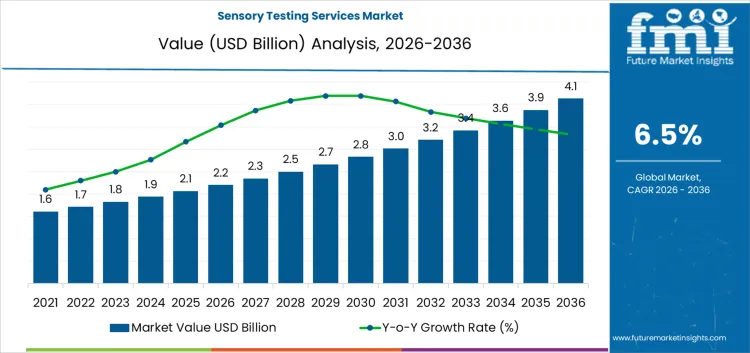
Key Takeaways, Market Size, and Forecast
| Metric | Value |
|---|---|
| Market Size (2026) | USD 2.2 Billion |
| Market Size (2036) | USD 4.1 Billion |
| CAGR (2026–2036) | 6.5% |
| Leading Application | Food & Beverage |
| Food & Beverage Share | 36.0% |
| Leading Test Type | Flavor & Taste Panels |
| Flavor & Taste Panels Share | 34.0% |
Sensory Testing Services Market Key Takeaways
| Metric | Value |
|---|---|
| Industry Value (2026) | USD 2.2 Billion |
| Forecast Value (2036) | USD 4.1 Billion |
| Forecast CAGR 2026 to 2036 | 6.50% |
How Is the Global Sensory Testing Services Market Advancing?
The global sensory testing services market is witnessing steady growth, driven by the increasing demand for understanding consumer preferences and improving product development across industries such as food and beverage, cosmetics, pharmaceuticals, and consumer goods. Sensory testing involves evaluating a product's sensory characteristics, such as taste, smell, touch, and visual appeal, which are crucial for assessing its market acceptance and consumer satisfaction. As companies seek to create products that resonate with consumers, the need for reliable and accurate sensory testing services is rising.
A significant driver of the market is the growing focus on product innovation and quality assurance in consumer-facing industries. In sectors like food and beverage, sensory testing helps manufacturers fine-tune their products to meet the taste preferences and sensory expectations of their target market. Similarly, in the cosmetics industry, sensory testing plays a key role in evaluating the sensory attributes of skincare products, fragrances, and personal care items. As consumer preferences become more sophisticated, the demand for sensory testing services that provide detailed insights into product performance is increasing.
Technological advancements are also contributing to the market's growth. Innovations in sensory evaluation methods, including the integration of artificial intelligence (AI) and machine learning (ML) in sensory analysis, are making testing faster, more accurate, and cost-effective. The use of virtual and augmented reality (VR/AR) in sensory testing is allowing companies to simulate consumer experiences and refine products before they hit the market. As industries continue to prioritize consumer satisfaction and product quality, the sensory testing services market is expected to expand steadily, playing a vital role in shaping future product development.
What Is the Segment-Wise Analysis for the Sensory Testing Services Market?
The sensory testing services market is segmented by end-use sector and test type. Food & beverage leads the end-use sector segment with a 36% share, followed by personal care & cosmetics, CPG (non-food), and other sectors. In terms of test type, flavor & taste panels dominate with a 34% share, followed by odor or aroma evaluation, texture or mouthfeel, and other types of sensory tests. The increasing demand for high-quality, consistent products in industries like food, beverage, and personal care is driving the growth of sensory testing services, which ensure that products meet consumer preferences and expectations.
Why Does the Food & Beverage Sector Lead the Sensory Testing Services Market?
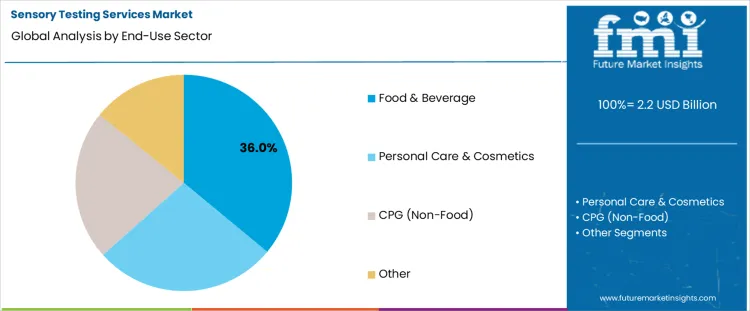
The food & beverage sector holds the largest share of the sensory testing services market at 36%, driven by the critical need for quality control and consumer satisfaction. Sensory testing in this sector primarily involves assessing flavor, texture, and aroma to ensure that products meet the desired taste profiles and quality standards. As consumer preferences for new, unique, and high-quality products continue to rise, food and beverage companies increasingly rely on sensory testing services to develop and improve their products. Sensory testing helps identify product flaws early in development, ensuring that the final product appeals to target markets, further cementing its dominance in the market.
How Do Flavor & Taste Panels Contribute to the Sensory Testing Services Market?

Flavor & taste panels account for 34% of the test type segment in the sensory testing services market. These panels are essential for evaluating the taste and flavor profile of food and beverage products, helping manufacturers understand how consumers perceive different flavors and make adjustments as needed. Flavor testing plays a significant role in product development, particularly for new or reformulated products. As the demand for more personalized and differentiated food and beverage experiences grows, the importance of flavor & taste panels continues to rise. These panels provide valuable insights that guide the creation of products that satisfy consumer preferences and meet industry standards.
What Are the Key Dynamics for the Sensory Testing Services Market?
The sensory testing services market is driven by the growing need for businesses to understand consumer preferences and improve product quality, particularly in the food and beverage, cosmetics, and pharmaceuticals industries. Sensory testing, which evaluates the five senses (taste, smell, sight, touch, and hearing), helps companies refine their products to meet consumer expectations. The market is expanding as companies seek to create products that deliver superior sensory experiences and differentiate themselves in highly competitive markets. Increasing consumer demand for personalized and high-quality products and the need for regulatory compliance are further fueling the demand for sensory testing services.
How Are the Key Drivers Shaping the Sensory Testing Services Market?
Key drivers for the sensory testing services market include the increasing focus on consumer-driven product development and the demand for improved quality control across various industries. Companies are increasingly utilizing sensory testing to enhance product innovation, ensuring that products meet consumer expectations in taste, texture, appearance, and fragrance. The food and beverage industry, in particular, is heavily investing in sensory testing to stay competitive by developing unique and appealing products. Regulatory pressures requiring quality assurance and compliance with consumer safety standards in industries such as cosmetics and pharmaceuticals are pushing market growth.
What Are the Restraints Impacting the Sensory Testing Services Market?
The sensory testing services market faces challenges such as high costs associated with conducting sensory evaluations, particularly for small businesses or startups. Sensory testing can be resource-intensive, requiring specialized facilities, trained panelists, and time-consuming procedures, which can increase operational costs. Another restraint is the variability in human sensory perception, which can lead to inconsistent results, making standardization of testing difficult. The limited availability of skilled personnel for sensory evaluation, particularly in developing markets, can restrict market expansion. The need for stringent regulatory standards and compliance can also add complexity to the testing process.
What is the Growth Outlook for the Sensory Testing Services Market by Country?
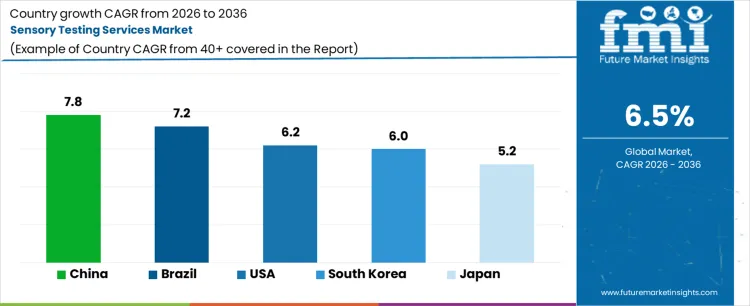
| Country | CAGR (%) |
|---|---|
| China | 7.8% |
| Brazil | 7.2% |
| USA | 6.2% |
| South Korea | 6.0% |
| Japan | 5.2% |
The sensory testing services market is growing across key regions. China leads at 7.8%, driven by the expanding food, beverage, and consumer goods industries, as well as a growing middle class and changing consumer preferences. Brazil follows at 7.2%, supported by the demand for high-quality food products and evolving consumer tastes. The USA grows at 6.2%, fueled by increasing demand for personalized products, especially in the food and beverage sector. South Korea’s market expands at 6.0%, driven by its focus on innovation and high standards in food, beverage, and cosmetics industries. Japan grows at 5.2%, supported by a strong emphasis on quality and technological advancements in sensory testing across multiple sectors.
What is Driving the Growth of the Sensory Testing Services Market in China?
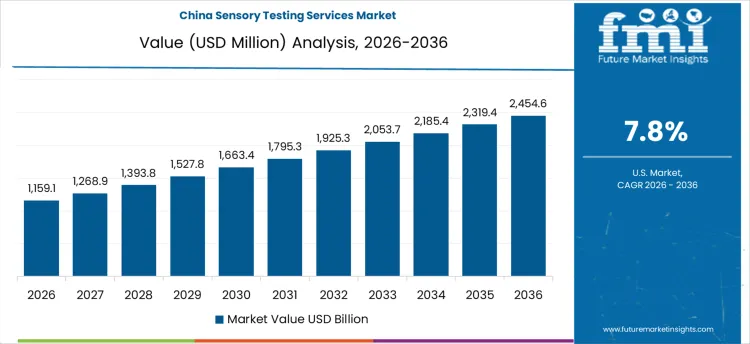
China’s sensory testing services market is growing at 7.8%, driven by the expanding food, beverage, and consumer goods industries. As China’s middle class grows and consumer preferences shift toward high-quality, innovative products, companies are increasingly turning to sensory testing to ensure their products meet consumer expectations. Sensory testing is essential in evaluating product taste, texture, smell, and appearance, helping businesses improve customer satisfaction and brand loyalty. The rise of e-commerce and increased globalization in the food and beverage sector is pushing the demand for reliable sensory testing to meet diverse consumer tastes and preferences across different regions. The government’s emphasis on food safety and quality further fuels the growth of this market.
How is the Sensory Testing Services Market Expanding in Brazil?
Brazil’s sensory testing services market is growing at 7.2%, supported by the increasing demand for high-quality food, beverage, and consumer products. As Brazil’s population grows and becomes more affluent, there is a rising preference for premium, flavorful, and healthy products, prompting companies to invest in sensory testing to understand consumer preferences. The food and beverage industry, one of Brazil’s largest sectors, relies on sensory testing to refine product formulations, ensuring they meet local and international standards. The increasing popularity of new product innovations and changing consumer behavior is fueling the demand for accurate sensory testing. Brazil’s growing middle class and a rising interest in diverse food experiences contribute significantly to the market’s expansion.
How is the Sensory Testing Services Market Expanding in the USA?
The sensory testing services market in the USA is growing at 6.2%, driven by consumer demand for high-quality and personalized products. As the U.S. food and beverage industry expands, companies are increasingly relying on sensory testing to evaluate taste, texture, aroma, and appearance to ensure product quality and customer satisfaction. The rise of healthier, organic, and functional foods is further fueling the need for sensory testing to meet consumer preferences for better-tasting and more nutritious products. Industries such as cosmetics, pharmaceuticals, and consumer goods are also investing in sensory testing to improve their product offerings. With increasing competition and consumer demand for more personalized and innovative products, the USA’s market for sensory testing services is expected to continue growing.
What is Driving the Growth of the Sensory Testing Services Market in South Korea?
South Korea’s sensory testing services market is growing at 6.0%, driven by the country’s rapidly expanding food, beverage, and cosmetics sectors. South Korea is known for its advanced consumer trends and high demand for innovative, high-quality products. The country’s food and beverage industry increasingly relies on sensory testing to create products that appeal to local tastes and preferences, ensuring that they meet the high standards of South Korean consumers. The increasing popularity of health-conscious and functional foods is further contributing to the growth of the sensory testing market. South Korea’s focus on technology and innovation in product development supports the increasing adoption of sensory testing services, particularly in the cosmetics and skincare industries, to meet consumer expectations.
How is the Sensory Testing Services Market Expanding in Japan?
Japan’s sensory testing services market is growing at 5.2%, driven by the country's focus on high-quality, innovative products across various sectors, particularly food, beverages, and cosmetics. Japan has a strong tradition of valuing sensory characteristics in food and consumer products, and as the market becomes more competitive, companies are turning to sensory testing to better understand consumer preferences. The rising demand for premium, health-conscious, and functional products in Japan is further fueling the growth of sensory testing services. Japan’s emphasis on product quality and innovation, combined with the country’s technological advancements in sensory analysis, contributes to the market’s steady expansion. As consumer preferences evolve and demand for personalized products increases, the need for sensory testing will continue to grow in Japan.
How Are Companies Competing in the Sensory Testing Services Market?

Competition in the sensory testing services market is driven by methodological rigor, panel expertise, global reach, data analytics capability, and industry-specific application support. NielsenIQ positions its sensory services with strong consumer insights and longitudinal trend data, and its materials emphasize large-scale panel access and granular preference segmentation that help food and beverage brands align products with target tastes. Ipsos competes with robust sensory methodologies integrated with behavioral analytics, with brochures stressing cross-cultural validity and advanced statistical interpretation that support confident product decisions. Kantar differentiates through a blend of sensory outcomes and brand strategy insights, marketed for holistic understanding of consumer experiences that inform innovation and positioning.
Testing and quality assurance providers such as SGS, Eurofins, and Intertek add value by offering multidisciplinary sensory and analytical testing that pair sensory panels with chemical analysis, shelf-life evaluation, and regulatory support. Their documentation underscores standardized sensory protocols, certified panelists, and linkage to safety/compliance test frameworks. Mérieux NutriSciences and Bureau Veritas further differentiate with specialized sensory labs that serve highly regulated segments such as infant nutrition and pharmaceuticals, highlighting data integrity and ISO-aligned processes.
Digital and agile insight platforms such as Toluna and Zappi compete by delivering rapid sensory feedback using online or hybrid panels, emphasizing speed, scalability, and integration with product development cycles. Across all vendors, service materials highlight methodological quality, actionable insights, reliable reporting, and application flexibility as key differentiators that help brands refine sensory profiles and meet evolving consumer preferences.
Key Players in Sensory Testing Services Market
- NielsenIQ
- Ipsos
- Kantar
- SGS
- Eurofins
- Intertek
- Mérieux NutriSciences
- Bureau Veritas
- Toluna
- Zappi
Scope of Report
| Attributes | Description |
|---|---|
| Quantitative Unit (2026) | USD Billion |
| End-Use Sector | Food & Beverage, Personal Care & Cosmetics, CPG (Non-Food), Other |
| Test Type | Flavor & Taste Panels, Odor or Aroma Evaluation, Texture or Mouthfeel, Other |
| Regions Covered | Asia Pacific, Europe, North America, Latin America, Middle East & Africa |
| Countries Covered | China, Japan, South Korea, India, Australia & New Zealand, ASEAN, Germany, United Kingdom, France, Italy, Spain, Nordic, BENELUX, United States, Canada, Mexico, Brazil, Chile, Turkey, South Africa, Other GCC Countries |
| Key Companies Profiled | NielsenIQ, Ipsos, Kantar, SGS, Eurofins, Intertek, Mérieux NutriSciences, Bureau Veritas, Toluna, Zappi |
| Additional Attributes | Dollar sales by end-use sector, test type, and region; regional CAGR and growth outlook for the sensory testing services market. |
Sensory Testing Services Market by Key Segments
By End-Use Sector:
- Food & Beverage
- Personal Care & Cosmetics
- CPG (Non-Food)
- Other
By Test Type:
- Flavor & Taste Panels
- Odor or Aroma Evaluation
- Texture or Mouthfeel
- Other
By Region:
- Asia Pacific
- China
- Japan
- South Korea
- India
- Australia & New Zealand
- ASEAN
- Rest of Asia Pacific
- Europe
- Germany
- United Kingdom
- France
- Italy
- Spain
- Nordic
- BENELUX
- Rest of Europe
- North America
- United States
- Canada
- Mexico
- Latin America
- Brazil
- Chile
- Rest of Latin America
- Middle East & Africa
- Kingdom of Saudi Arabia
- Other GCC Countries
- Turkey
- South Africa
- Other African Union
- Rest of Middle East & Africa
Bibliography
- NielsenIQ. (2023). Consumer insights and sensory testing services for the food and beverage industry, focusing on preference segmentation and innovation alignment. NielsenIQ.
- Ipsos. (2023). Robust sensory testing methodologies integrated with behavioral analytics for cross-cultural validity in product development. Ipsos.
- Kantar. (2023). Sensory outcomes and brand strategy insights to help align product innovation with consumer experiences. Kantar Group.
- SGS. (2023). Multidisciplinary sensory and analytical testing services combining sensory panels with chemical analysis and regulatory support. SGS SA.
Frequently Asked Questions
How big is the sensory testing services market in 2026?
The global sensory testing services market is estimated to be valued at USD 2.2 billion in 2026.
What will be the size of sensory testing services market in 2036?
The market size for the sensory testing services market is projected to reach USD 4.1 billion by 2036.
How much will be the sensory testing services market growth between 2026 and 2036?
The sensory testing services market is expected to grow at a 6.5% CAGR between 2026 and 2036.
What are the key product types in the sensory testing services market?
The key product types in sensory testing services market are food & beverage, personal care & cosmetics, cpg (non-food) and other.
Which test type segment to contribute significant share in the sensory testing services market in 2026?
In terms of test type, flavor & taste panels segment to command 34.0% share in the sensory testing services market in 2026.
Preview the report firsthand - request a free sample
Get SampleGet the brochure for pricing and purchase details.
Get PDFTable of Content
- Executive Summary
- Global Market Outlook
- Demand-side Trends
- Supply-side Trends
- Technology Roadmap Analysis
- Analysis and Recommendations
- Market Overview
- Market Coverage / Taxonomy
- Market Definition / Scope / Limitations
- Market Background
- Market Dynamics
- Drivers
- Restraints
- Opportunity
- Trends
- Scenario Forecast
- Demand in Optimistic Scenario
- Demand in Likely Scenario
- Demand in Conservative Scenario
- Opportunity Map Analysis
- Product Life Cycle Analysis
- Supply Chain Analysis
- Investment Feasibility Matrix
- Value Chain Analysis
- PESTLE and Porter’s Analysis
- Regulatory Landscape
- Regional Parent Market Outlook
- Production and Consumption Statistics
- Import and Export Statistics
- Market Dynamics
- Global Market Analysis 2021 to 2025 and Forecast, 2026 to 2036
- Historical Market Size Value (USD Million) Analysis, 2021 to 2025
- Current and Future Market Size Value (USD Million) Projections, 2026 to 2036
- Y-o-Y Growth Trend Analysis
- Absolute $ Opportunity Analysis
- Global Market Pricing Analysis 2021 to 2025 and Forecast 2026 to 2036
- Global Market Analysis 2021 to 2025 and Forecast 2026 to 2036, By End-Use Sector
- Introduction / Key Findings
- Historical Market Size Value (USD Million) Analysis By End-Use Sector , 2021 to 2025
- Current and Future Market Size Value (USD Million) Analysis and Forecast By End-Use Sector , 2026 to 2036
- Food & Beverage
- Personal Care & Cosmetics
- CPG (Non-Food)
- Other
- Food & Beverage
- Y-o-Y Growth Trend Analysis By End-Use Sector , 2021 to 2025
- Absolute $ Opportunity Analysis By End-Use Sector , 2026 to 2036
- Global Market Analysis 2021 to 2025 and Forecast 2026 to 2036, By Test Type
- Introduction / Key Findings
- Historical Market Size Value (USD Million) Analysis By Test Type, 2021 to 2025
- Current and Future Market Size Value (USD Million) Analysis and Forecast By Test Type, 2026 to 2036
- Flavor & Taste Panels
- Odor or Aroma Evaluation
- Texture or Mouthfeel
- Other
- Flavor & Taste Panels
- Y-o-Y Growth Trend Analysis By Test Type, 2021 to 2025
- Absolute $ Opportunity Analysis By Test Type, 2026 to 2036
- Global Market Analysis 2021 to 2025 and Forecast 2026 to 2036, By Region
- Introduction
- Historical Market Size Value (USD Million) Analysis By Region, 2021 to 2025
- Current Market Size Value (USD Million) Analysis and Forecast By Region, 2026 to 2036
- North America
- Latin America
- Western Europe
- Eastern Europe
- East Asia
- South Asia and Pacific
- Middle East & Africa
- Market Attractiveness Analysis By Region
- North America Market Analysis 2021 to 2025 and Forecast 2026 to 2036, By Country
- Historical Market Size Value (USD Million) Trend Analysis By Market Taxonomy, 2021 to 2025
- Market Size Value (USD Million) Forecast By Market Taxonomy, 2026 to 2036
- By Country
- USA
- Canada
- Mexico
- By End-Use Sector
- By Test Type
- By Country
- Market Attractiveness Analysis
- By Country
- By End-Use Sector
- By Test Type
- Key Takeaways
- Latin America Market Analysis 2021 to 2025 and Forecast 2026 to 2036, By Country
- Historical Market Size Value (USD Million) Trend Analysis By Market Taxonomy, 2021 to 2025
- Market Size Value (USD Million) Forecast By Market Taxonomy, 2026 to 2036
- By Country
- Brazil
- Chile
- Rest of Latin America
- By End-Use Sector
- By Test Type
- By Country
- Market Attractiveness Analysis
- By Country
- By End-Use Sector
- By Test Type
- Key Takeaways
- Western Europe Market Analysis 2021 to 2025 and Forecast 2026 to 2036, By Country
- Historical Market Size Value (USD Million) Trend Analysis By Market Taxonomy, 2021 to 2025
- Market Size Value (USD Million) Forecast By Market Taxonomy, 2026 to 2036
- By Country
- Germany
- UK
- Italy
- Spain
- France
- Nordic
- BENELUX
- Rest of Western Europe
- By End-Use Sector
- By Test Type
- By Country
- Market Attractiveness Analysis
- By Country
- By End-Use Sector
- By Test Type
- Key Takeaways
- Eastern Europe Market Analysis 2021 to 2025 and Forecast 2026 to 2036, By Country
- Historical Market Size Value (USD Million) Trend Analysis By Market Taxonomy, 2021 to 2025
- Market Size Value (USD Million) Forecast By Market Taxonomy, 2026 to 2036
- By Country
- Russia
- Poland
- Hungary
- Balkan & Baltic
- Rest of Eastern Europe
- By End-Use Sector
- By Test Type
- By Country
- Market Attractiveness Analysis
- By Country
- By End-Use Sector
- By Test Type
- Key Takeaways
- East Asia Market Analysis 2021 to 2025 and Forecast 2026 to 2036, By Country
- Historical Market Size Value (USD Million) Trend Analysis By Market Taxonomy, 2021 to 2025
- Market Size Value (USD Million) Forecast By Market Taxonomy, 2026 to 2036
- By Country
- China
- Japan
- South Korea
- By End-Use Sector
- By Test Type
- By Country
- Market Attractiveness Analysis
- By Country
- By End-Use Sector
- By Test Type
- Key Takeaways
- South Asia and Pacific Market Analysis 2021 to 2025 and Forecast 2026 to 2036, By Country
- Historical Market Size Value (USD Million) Trend Analysis By Market Taxonomy, 2021 to 2025
- Market Size Value (USD Million) Forecast By Market Taxonomy, 2026 to 2036
- By Country
- India
- ASEAN
- Australia & New Zealand
- Rest of South Asia and Pacific
- By End-Use Sector
- By Test Type
- By Country
- Market Attractiveness Analysis
- By Country
- By End-Use Sector
- By Test Type
- Key Takeaways
- Middle East & Africa Market Analysis 2021 to 2025 and Forecast 2026 to 2036, By Country
- Historical Market Size Value (USD Million) Trend Analysis By Market Taxonomy, 2021 to 2025
- Market Size Value (USD Million) Forecast By Market Taxonomy, 2026 to 2036
- By Country
- Kingdom of Saudi Arabia
- Other GCC Countries
- Turkiye
- South Africa
- Other African Union
- Rest of Middle East & Africa
- By End-Use Sector
- By Test Type
- By Country
- Market Attractiveness Analysis
- By Country
- By End-Use Sector
- By Test Type
- Key Takeaways
- Key Countries Market Analysis
- USA
- Pricing Analysis
- Market Share Analysis, 2025
- By End-Use Sector
- By Test Type
- Canada
- Pricing Analysis
- Market Share Analysis, 2025
- By End-Use Sector
- By Test Type
- Mexico
- Pricing Analysis
- Market Share Analysis, 2025
- By End-Use Sector
- By Test Type
- Brazil
- Pricing Analysis
- Market Share Analysis, 2025
- By End-Use Sector
- By Test Type
- Chile
- Pricing Analysis
- Market Share Analysis, 2025
- By End-Use Sector
- By Test Type
- Germany
- Pricing Analysis
- Market Share Analysis, 2025
- By End-Use Sector
- By Test Type
- UK
- Pricing Analysis
- Market Share Analysis, 2025
- By End-Use Sector
- By Test Type
- Italy
- Pricing Analysis
- Market Share Analysis, 2025
- By End-Use Sector
- By Test Type
- Spain
- Pricing Analysis
- Market Share Analysis, 2025
- By End-Use Sector
- By Test Type
- France
- Pricing Analysis
- Market Share Analysis, 2025
- By End-Use Sector
- By Test Type
- India
- Pricing Analysis
- Market Share Analysis, 2025
- By End-Use Sector
- By Test Type
- ASEAN
- Pricing Analysis
- Market Share Analysis, 2025
- By End-Use Sector
- By Test Type
- Australia & New Zealand
- Pricing Analysis
- Market Share Analysis, 2025
- By End-Use Sector
- By Test Type
- China
- Pricing Analysis
- Market Share Analysis, 2025
- By End-Use Sector
- By Test Type
- Japan
- Pricing Analysis
- Market Share Analysis, 2025
- By End-Use Sector
- By Test Type
- South Korea
- Pricing Analysis
- Market Share Analysis, 2025
- By End-Use Sector
- By Test Type
- Russia
- Pricing Analysis
- Market Share Analysis, 2025
- By End-Use Sector
- By Test Type
- Poland
- Pricing Analysis
- Market Share Analysis, 2025
- By End-Use Sector
- By Test Type
- Hungary
- Pricing Analysis
- Market Share Analysis, 2025
- By End-Use Sector
- By Test Type
- Kingdom of Saudi Arabia
- Pricing Analysis
- Market Share Analysis, 2025
- By End-Use Sector
- By Test Type
- Turkiye
- Pricing Analysis
- Market Share Analysis, 2025
- By End-Use Sector
- By Test Type
- South Africa
- Pricing Analysis
- Market Share Analysis, 2025
- By End-Use Sector
- By Test Type
- USA
- Market Structure Analysis
- Competition Dashboard
- Competition Benchmarking
- Market Share Analysis of Top Players
- By Regional
- By End-Use Sector
- By Test Type
- Competition Analysis
- Competition Deep Dive
- NielsenIQ
- Overview
- Product Portfolio
- Profitability by Market Segments (Product/Age /Sales Channel/Region)
- Sales Footprint
- Strategy Overview
- Marketing Strategy
- Product Strategy
- Channel Strategy
- Ipsos
- Kantar
- SGS
- Eurofins
- Intertek
- Mérieux NutriSciences
- Bureau Veritas
- Toluna
- Zappi
- NielsenIQ
- Competition Deep Dive
- Assumptions & Acronyms Used
- Research Methodology


