

- Industry Size (2026)
- USD 2.2 Bn
- Forecast (2036)
- USD 4.9 Bn
- CAGR (2026 to 2036)
- 8.3%
Precision Rice Pest Insecticides Market Forecast and Outlook 2026 to 2036
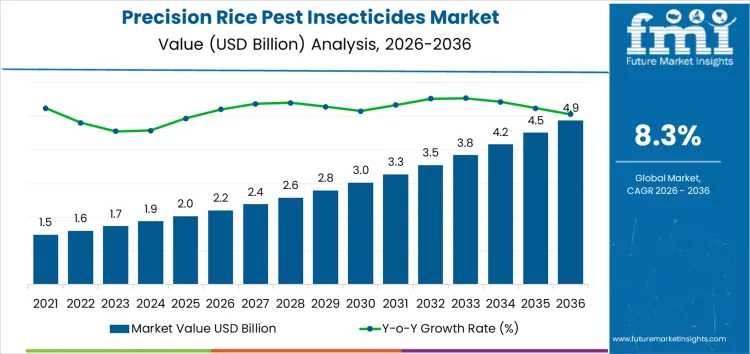
The precision rice pest insecticides market is valued at USD 2.2 billion in 2026 and is projected to reach USD 4.9 billion by 2036, reflecting a CAGR of 8.3%. Production is concentrated among specialized agrochemical manufacturers focusing on rice-specific pest control solutions. Regional regulatory oversight and distribution control influence availability and timing for major rice-producing regions. Supply reliability is affected by raw material sourcing, pest resistance management, and seasonal planting cycles. Smaller operators encounter constraints in achieving consistent supply and certification for multiple regions.
Market performance depends on integration with high-acreage rice programs and alignment with agronomic practices. Adoption varies according to local pest pressure, climate, and regulatory frameworks. Margin concentration favors suppliers offering validated, multi-season insecticides with technical guidance. Fragmentation persists in regional and niche producers, while established companies secure concentrated value through production control, regulatory compliance, and consistent efficacy rather than raw output volume.
Quick Stats of the Precision Rice Pest Insecticides Market
- Precision Rice Pest Insecticides Market Value (2026): USD 2.2 billion
- Precision Rice Pest Insecticides Forecast Value (2036): USD 4.9 billion
- Precision Rice Pest Insecticides Forecast CAGR 2026 to 2036: 8.3%
- Precision Rice Pest Insecticides Leading Pest Type: Stem Borers (31.8% share)
- Precision Rice Pest Insecticides Leading Insecticide Type: Neonicotinoids (35.2% share)
- Precision Rice Pest Insecticides Key Growth Regions: India, China, Indonesia, Vietnam, Thailand
- Precision Rice Pest Insecticides Top Players: BASF SE, Syngenta Group, Bayer CropScience, Corteva Agriscience, FMC Corporation
What is the Growth Forecast for Precision Rice Pest Insecticides Market through 2036?
Between 2026 and 2031, the precision rice pest insecticides market is projected to grow from USD 2.2 billion to USD 3.0 billion, generating an absolute increase of USD 0.8 billion. The market is in the early adoption phase, driven by rising adoption of neonicotinoids, pyrethroids, organophosphates, and biological insecticides across stem borers, brown planthopper, leaf folders, and rice water weevil. Volume contributes approximately 68% of growth due to expanded rice acreage, increased pest incidence, and adoption of precision application methods. Price growth accounts for 32%, supported by premium formulations, targeted delivery systems, and differentiated efficacy. Value capture favors suppliers providing effective, safe, and scalable pest control solutions.
From 2031 to 2036, the market is expected to expand from USD 3.0 billion to USD 4.9 billion, adding USD 1.9 billion. The market enters the early majority phase, with adoption accelerating through increased awareness of precision pest management, regulatory support, and integrated pest management programs. Volume remains the dominant driver, contributing roughly 66% of growth due to higher adoption of precision insecticides and improved application technologies. Price growth contributes 34%, supported by advanced formulations, specialized delivery systems, and premium insecticide products. Leading companies include BASF SE, Syngenta Group, Bayer CropScience, Corteva Agriscience, and FMC Corporation.
Precision Rice Pest Insecticides Market Key Takeaways
| Metric | Value |
|---|---|
| Market Value (2026) | USD 2.2 billion |
| Forecast Value (2036) | USD 4.9 billion |
| Forecast CAGR 2026 to 2036 | 8.30% |
What Is Driving Demand for Precision Rice Pest Insecticides?
Precision rice pest insecticides are increasingly adopted to target insect pests efficiently while minimizing crop damage and environmental impact. Historically, broad-spectrum insecticides were applied uniformly, leading to overuse, pest resistance, and non-target effects. Modern precision formulations and application technologies allow targeted delivery, controlled dosing, and selective pest control to protect yields in paddy cultivation. Farmers, agricultural cooperatives, and crop consultants prioritize efficacy, safety, and regulatory compliance. Early adoption focused on high-value rice-growing regions, while current demand spans major rice-producing countries responding to yield optimization, resistance management, and sustainability goals. Insecticide selectivity, application timing, and field monitoring systems influence procurement and operational strategies.
Rising pest pressure, demand for sustainable rice production, and regulatory oversight are shaping growth in precision rice pest insecticides. Compared with conventional treatments, contemporary solutions emphasize targeted action, reduced chemical usage, and integration with digital monitoring and precision agriculture tools. Cost considerations include formulation development, application technology, and logistics, concentrating margins among suppliers capable of delivering reliable, compliant products. Farmers adopt precision insecticides to protect yield, reduce environmental impact, and maintain long-term soil and ecosystem health. By 2036, precision rice pest insecticides are expected to be widely implemented in rice cultivation, supporting productivity, resistance management, and sustainable farming practices globally.
What Factors Are Shaping the Demand for Precision Rice Pest Insecticides in Terms of Pest Type and Insecticide Type?
The demand for precision rice pest insecticides is segmented by pest type and insecticide type. Pest types include stem borers, brown planthoppers, leaf folders, rice water weevils, and other targeted insects. Insecticide types include neonicotinoids, pyrethroids, organophosphates, biologicals such as Bt, and other specialized products. Adoption is influenced by pest resistance, crop stage vulnerability, and regulatory compliance. Uptake is driven by yield protection, operational efficiency, and sustainable pest management. Pest and insecticide selection depends on regional infestation patterns, rice variety, and agronomic practices, ensuring effective control, reduced crop loss, and safe application in precision rice farming systems.
Why Are Stem Borers Leading the Pest Type Segment in Precision Rice Insecticides?
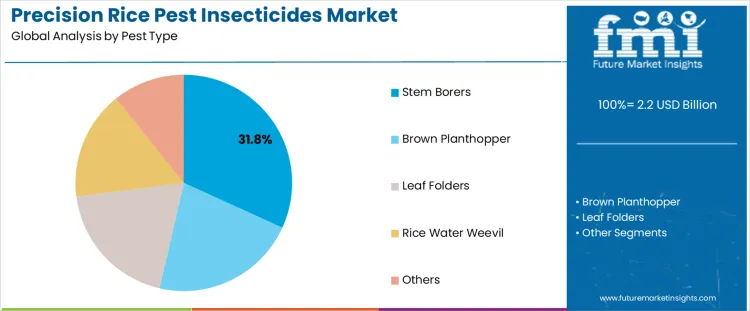
Stem borers account for approximately 32% of total pest type demand, making them the leading category. These pests tunnel into rice stems, causing severe yield losses and affecting grain quality. Adoption is driven by high infestation rates in major rice-growing regions and vulnerability during vegetative growth stages. Farmers implement targeted insecticide programs to protect stems, reduce crop damage, and optimize productivity. Monitoring pest populations, timing applications, and selecting appropriate control measures ensure consistent protection. The segment leads because stem borers represent the most economically significant pest, requiring precise management to maintain yield and quality in precision rice cultivation.
Operational factors further support adoption. Pest life cycles, local climatic conditions, and rice growth stages are considered for optimal intervention. Application techniques are designed for uniform coverage while minimizing environmental impact. The segment leads because controlling stem borers effectively ensures operational efficiency, maximizes yield, and aligns with integrated pest management practices.
Why Are Neonicotinoids Representing the Largest Insecticide Type Segment in Rice Pest Control?
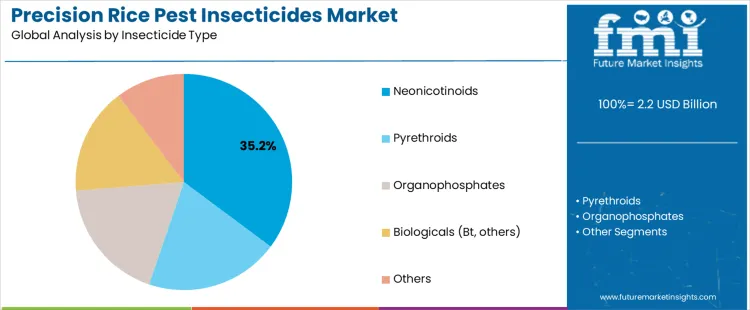
Neonicotinoids account for approximately 35.2% of total insecticide type demand, making them the largest category. These systemic insecticides provide effective control of sap-feeding pests such as stem borers and planthoppers by interfering with insect nervous systems. Adoption is driven by high efficacy, residual activity, and compatibility with foliar and seed treatments. Farmers use neonicotinoids to reduce crop damage, improve yield stability, and integrate with sustainable pest management practices. Maintenance includes monitoring application rates, environmental exposure, and resistance development to maintain long-term effectiveness.
Operational and functional factors influence adoption. Neonicotinoids must perform under varying temperature, rainfall, and rice growth conditions while minimizing non-target effects. Proper calibration ensures uniform coverage and precise application timing. The segment leads because neonicotinoids combine operational reliability, consistent pest control, and integration with precision farming systems, maximizing crop protection and efficiency.
How Are Precision Insecticides Protecting Rice Crops Efficiently?
Precision rice pest insecticides are increasingly adopted to control stem borers, planthoppers, and leaf-feeding insects while minimizing environmental impact. Adoption is strongest in regions with high rice production, integrated pest management programs, and government support for sustainable agriculture. Insecticides are selected for targeted action, crop safety, and resistance management. Growth is driven by yield protection, regulatory compliance, and operational efficiency. Investment focuses on formulation effectiveness, application precision, and environmental safety. Farmers prioritize products that reduce crop damage, maintain productivity, and comply with regional agricultural standards.
Why Are Regional Pest Prevalence and Agricultural Policies Driving Demand?
Demand is shaped by local insect population dynamics, rice variety susceptibility, and government programs promoting safe pesticide use. Farmers adopt precision insecticides to ensure consistent yields and meet quality standards while limiting chemical exposure. Products with selective targeting, rapid action, and residual protection gain preference. Adoption is concentrated in regions with dense rice cultivation and high pest pressure. Crop protection, regulatory compliance, and yield assurance drive procurement rather than cost. Suppliers providing validated, environmentally safe formulations gain competitive advantage among rice growers and distributors.
What Factors Limit Broader Deployment of Precision Rice Insecticides?
High product costs, application complexity, and field variability restrict adoption. Environmental conditions, pest resistance, and timing of application affect efficacy. Compliance with regulatory and safety standards adds operational complexity. Small-scale farms or regions with limited access to extension services may face adoption challenges. These factors concentrate early use among large-scale rice producers, commercial farming operations, and areas with technical support infrastructure, limiting penetration in smaller or resource-constrained farming regions.
How Are Technological Advances and Collaboration Shaping Market Growth?
Innovations include micro-encapsulated formulations, targeted delivery systems, and improved resistance management strategies. Collaboration between agrochemical manufacturers, research institutions, and regional agricultural services ensures efficacy validation, regulatory compliance, and optimized application techniques. Pilot studies assess pest control, crop safety, and environmental impact before full-scale deployment. Quality monitoring, traceability, and field performance evaluation maintain reliability. Focus is on crop protection, precision application, and regulatory adherence rather than cost or volume. Collaborative initiatives enable broader adoption of precision rice pest insecticides, safeguarding yields and supporting sustainable rice cultivation.
What is the Demand for Precision Rice Pest Insecticides by Country?
| Country | CAGR (%) |
|---|---|
| India | 9.6% |
| China | 8.9% |
| Indonesia | 8.7% |
| Vietnam | 8.4% |
| Thailand | 7.9% |
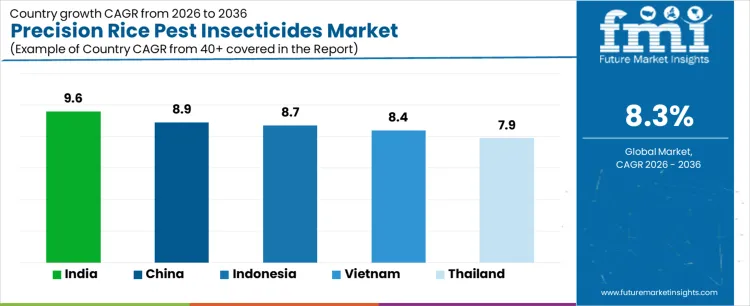
Demand for precision rice pest insecticides is rising as rice producers adopt targeted solutions to control pests, enhance yield, and reduce crop losses. India leads with a 9.6% CAGR, driven by high rice cultivation areas, frequent pest outbreaks, and adoption of precision agriculture techniques. China follows at 8.9%, supported by large-scale production, integrated pest management programs, and regulatory support. Indonesia records 8.7% growth, shaped by rising rice production and adoption of targeted insecticide formulations. Vietnam grows at 8.4%, driven by increasing export-oriented rice farming and pest management practices. Thailand shows 7.9% CAGR, reflecting steady adoption of precision pest control methods and demand for sustainable rice cultivation.
How Is India Experiencing Growth in the Precision Rice Pest Insecticides Market?
India is experiencing growth at a CAGR of 9.6%, supported by adoption of precision pest insecticides in rice cultivation to enhance yield, reduce crop losses, and manage insect resistance effectively. Farmers and agri-input suppliers are deploying insecticides optimized for local pest species, environmental conditions, and rice varieties. Demand is concentrated in major rice-growing states such as West Bengal, Uttar Pradesh, Punjab, and Andhra Pradesh. Investments focus on product efficacy, safety, and regulatory compliance rather than expansion of cultivation area. Growth reflects increasing adoption of precision agriculture techniques, government support for crop protection, and efforts to improve rice productivity under diverse climatic conditions.
- Precision pest insecticides drive adoption.
- Applications target insect control in rice crops.
- Major rice-growing states concentrate demand.
- Product efficacy and regulatory compliance guide investment.
How Is China Witnessing Adoption with Advanced Crop Protection Programs?
China is witnessing growth at a CAGR of 8.9%, fueled by adoption of precision rice pest insecticides to control major insect pests and maintain high yields under variable environmental conditions. Farmers and suppliers are deploying products optimized for efficacy, crop safety, and environmental compatibility. Demand is concentrated in key rice-producing provinces such as Jiangsu, Hunan, and Heilongjiang. Investments prioritize product performance, regulatory adherence, and application precision rather than area expansion. Growth reflects government initiatives for sustainable agriculture, increased adoption of advanced crop protection technologies, and climate-resilient farming practices.
- Advanced crop protection drives adoption.
- Insecticides ensure effective pest control in rice fields.
- Key rice-producing provinces concentrate demand.
- Product performance and application precision guide investment.
How Is Indonesia Experiencing Growth with Integrated Pest Management Practices?
Indonesia is experiencing growth at a CAGR of 8.7%, supported by adoption of precision rice pest insecticides to manage insect populations and minimize crop losses. Farmers and agri-input suppliers are implementing products designed for high efficacy, environmental safety, and compatibility with local rice varieties. Demand is concentrated in Java, Sumatra, and Sulawesi, the major rice-producing regions. Investments focus on product effectiveness, regulatory compliance, and application precision rather than cultivation area expansion. Growth reflects increasing adoption of integrated pest management, government support for sustainable agriculture, and rising use of precision agrochemical solutions.
- Integrated pest management drives adoption.
- Insecticides target key rice pests.
- Major rice-producing regions concentrate demand.
- Product effectiveness and regulatory compliance guide investment.
How Is Vietnam Witnessing Expansion with Climate-Resilient Pest Control?
Vietnam is witnessing growth at a CAGR of 8.4%, fueled by adoption of precision insecticides in rice cultivation to protect yields from pest damage under varying climatic conditions. Farmers and suppliers are deploying products optimized for efficacy, environmental compatibility, and rice crop safety. Demand is concentrated in Mekong Delta and Red River Delta regions. Investments prioritize product performance, application precision, and regulatory compliance rather than large-scale area expansion. Growth reflects government initiatives for climate-smart agriculture, adoption of precision pest control technologies, and increasing focus on rice yield sustainability.
- Climate-resilient pest control drives adoption.
- Insecticides are applied for effective pest management.
- Key rice-growing deltas concentrate demand.
- Product performance and application precision guide investment.
How Is Thailand Experiencing Moderate Growth with Sustainable Crop Protection?
Thailand is experiencing growth at a CAGR of 7.9%, supported by adoption of precision rice pest insecticides to manage insect populations and improve rice productivity. Farmers and suppliers are using products designed for high efficacy, crop safety, and environmental compatibility. Demand is concentrated in major rice-growing regions such as Central Plains, Northeastern, and Northern provinces. Investments focus on product effectiveness, application accuracy, and regulatory compliance rather than area expansion. Growth reflects sustainable crop protection practices, government support for rice farming, and rising adoption of precision agrochemical technologies to ensure high-quality yields.
- Sustainable crop protection drives adoption.
- Insecticides target rice pests effectively.
- Key rice-growing regions concentrate demand.
- Product effectiveness and application accuracy guide investment.
Who Competes in the Precision Rice Pest Insecticides Market and What Defines Their Approaches?
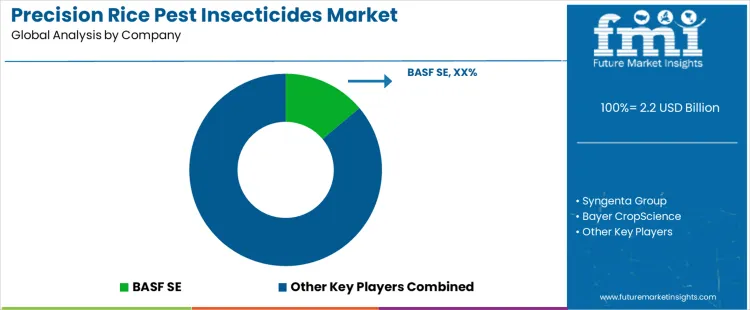
Competition in the precision rice pest insecticides market is determined by formulation effectiveness against key pests, crop safety, resistance management, and support for integrated pest management practices. BASF SE provides insecticide products engineered to target rice pests while safeguarding plant health at sensitive growth stages. Syngenta Group offers chemistry platforms designed to control diverse rice pest populations, calibrated for localized pest pressure. Bayer CropScience focuses on active ingredients combined with application guidance to support timing and efficacy across growing environments. Corteva Agriscience competes with targeted insecticide solutions aligned with resistance management strategies that address recurring pest challenges. FMC Corporation develops insecticides emphasising crop safety and activity against resistant pest strains under variable field conditions.
Other market players supply regional or specialty insecticide blends tailored to specific rice pest’s endemic to local ecosystems. Differences in active ingredient mode of action, spectrum of pest control, and regulatory registrations influence competitive positions. Companies that combine effective pest suppression with documented crop safety profiles and agronomic advisory support strengthen their appeal to rice growers. Precision targeting of pest life cycles, minimisation of non target effects, and compatibility with integrated pest management practices shape supplier relevance in addressing evolving pest pressures in rice cultivation.
Key Players in the Precision Rice Pest Insecticides Market
- BASF SE
- Syngenta Group
- Bayer CropScience
- Corteva Agriscience
- FMC Corporation
- Others
Scope of the Report
| Items | Values |
|---|---|
| Quantitative Units (2026) | USD billion |
| Pest Type | Stem Borers, Brown Planthopper, Leaf Folders, Rice Water Weevil, Others |
| Insecticide Type | Neonicotinoids, Pyrethroids, Organophosphates, Biologicals (Bt, others), Others |
| Formulation Type | Liquid Formulations, Emulsifiable Concentrates, Water-Dispersible Granules, Others |
| Region | Asia Pacific, Europe, North America, Latin America, Middle East & Africa |
| Key Countries Covered | China, Japan, South Korea, India, Australia & New Zealand, Germany, United Kingdom, France, Italy, Spain, Nordic, BENELUX, United States, Canada, Mexico, Brazil, Chile, Kingdom of Saudi Arabia, Other GCC Countries, Turkey, South Africa, Other African Union |
| Key Companies Profiled | BASF SE, Syngenta Group, Bayer CropScience, Corteva Agriscience, FMC Corporation, Others |
| Additional Attributes | Dollar sales by pest type, insecticide type, and formulation type; regional CAGR, volume and value growth projections; adoption in precision rice cultivation programs; compliance with integrated pest management practices; distribution network and technical support for multi-region coverage |
Precision Rice Pest Insecticides Market Segmentation
Pest Type:
- Stem Borers
- Brown Planthopper
- Leaf Folders
- Rice Water Weevil
- Others
Insecticide Type:
- Neonicotinoids
- Pyrethroids
- Organophosphates
- Biologicals (Bt, others)
- Others
Formulation Type:
- Liquid Formulations
- Emulsifiable Concentrates
- Water-Dispersible Granules
- Others
Region:
- Asia Pacific
- China
- Japan
- South Korea
- India
- Australia & New Zealand
- ASEAN
- Rest of Asia Pacific
- Europe
- Germany
- United Kingdom
- France
- Italy
- Spain
- Nordic
- BENELUX
- Rest of Europe
- North America
- United States
- Canada
- Mexico
- Latin America
- Brazil
- Chile
- Rest of Latin America
- Middle East & Africa
- Kingdom of Saudi Arabia
- Other GCC Countries
- Turkey
- South Africa
- Other African Union
- Rest of Middle East & Africa
Bibliography
- Food and Agriculture Organization of the United Nations. (2024). Integrated pest management and precision pesticide application in rice‑based cropping systems. FAO Plant Production and Protection Division.
- International Rice Research Institute. (2024). Precision pest management strategies for sustainable rice production. IRRI Publications.
- Organisation for Economic Co-operation and Development. (2024). Precision agriculture, pesticide efficiency, and environmental risk mitigation. OECD Environment, Health and Safety Programme.
- United States Department of Agriculture. (2024). Precision rice pest management and targeted insecticide delivery systems. USDA Agricultural Research Service.
- United Nations Environment Programme. (2025). Sustainable pesticide use and precision application technologies in staple crop systems. UNEP Chemicals and Health Branch.
Frequently Asked Questions
How big is the precision rice pest insecticides market in 2026?
The global precision rice pest insecticides market is estimated to be valued at USD 2.2 billion in 2026.
What will be the size of precision rice pest insecticides market in 2036?
The market size for the precision rice pest insecticides market is projected to reach USD 4.9 billion by 2036.
How much will be the precision rice pest insecticides market growth between 2026 and 2036?
The precision rice pest insecticides market is expected to grow at a 8.3% CAGR between 2026 and 2036.
What are the key product types in the precision rice pest insecticides market?
The key product types in precision rice pest insecticides market are stem borers, brown planthopper, leaf folders, rice water weevil and others.
Which insecticide type segment to contribute significant share in the precision rice pest insecticides market in 2026?
In terms of insecticide type, neonicotinoids segment to command 35.2% share in the precision rice pest insecticides market in 2026.
Preview the report firsthand - request a free sample
Get SampleGet the brochure for pricing and purchase details.
Get PDFTable of Content
- Executive Summary
- Global Market Outlook
- Demand-side Trends
- Supply-side Trends
- Technology Roadmap Analysis
- Analysis and Recommendations
- Market Overview
- Market Coverage / Taxonomy
- Market Definition / Scope / Limitations
- Market Background
- Market Dynamics
- Drivers
- Restraints
- Opportunity
- Trends
- Scenario Forecast
- Demand in Optimistic Scenario
- Demand in Likely Scenario
- Demand in Conservative Scenario
- Opportunity Map Analysis
- Product Life Cycle Analysis
- Supply Chain Analysis
- Investment Feasibility Matrix
- Value Chain Analysis
- PESTLE and Porter’s Analysis
- Regulatory Landscape
- Regional Parent Market Outlook
- Production and Consumption Statistics
- Import and Export Statistics
- Market Dynamics
- Global Market Analysis 2021 to 2025 and Forecast, 2026 to 2036
- Historical Market Size Value (USD Million) Analysis, 2021 to 2025
- Current and Future Market Size Value (USD Million) Projections, 2026 to 2036
- Y-o-Y Growth Trend Analysis
- Absolute $ Opportunity Analysis
- Global Market Pricing Analysis 2021 to 2025 and Forecast 2026 to 2036
- Global Market Analysis 2021 to 2025 and Forecast 2026 to 2036, By Pest Type
- Introduction / Key Findings
- Historical Market Size Value (USD Million) Analysis By Pest Type , 2021 to 2025
- Current and Future Market Size Value (USD Million) Analysis and Forecast By Pest Type , 2026 to 2036
- Stem Borers
- Brown Planthopper
- Leaf Folders
- Rice Water Weevil
- Others
- Stem Borers
- Y-o-Y Growth Trend Analysis By Pest Type , 2021 to 2025
- Absolute $ Opportunity Analysis By Pest Type , 2026 to 2036
- Global Market Analysis 2021 to 2025 and Forecast 2026 to 2036, By Insecticide Type
- Introduction / Key Findings
- Historical Market Size Value (USD Million) Analysis By Insecticide Type, 2021 to 2025
- Current and Future Market Size Value (USD Million) Analysis and Forecast By Insecticide Type, 2026 to 2036
- Neonicotinoids
- Pyrethroids
- Organophosphates
- Biologicals (Bt, others)
- Others
- Neonicotinoids
- Y-o-Y Growth Trend Analysis By Insecticide Type, 2021 to 2025
- Absolute $ Opportunity Analysis By Insecticide Type, 2026 to 2036
- Global Market Analysis 2021 to 2025 and Forecast 2026 to 2036, By Formulation Type
- Introduction / Key Findings
- Historical Market Size Value (USD Million) Analysis By Formulation Type, 2021 to 2025
- Current and Future Market Size Value (USD Million) Analysis and Forecast By Formulation Type, 2026 to 2036
- Liquid Formulations
- Emulsifiable Concentrates
- Water-Dispersible Granules
- Others
- Liquid Formulations
- Y-o-Y Growth Trend Analysis By Formulation Type, 2021 to 2025
- Absolute $ Opportunity Analysis By Formulation Type, 2026 to 2036
- Global Market Analysis 2021 to 2025 and Forecast 2026 to 2036, By Region
- Introduction
- Historical Market Size Value (USD Million) Analysis By Region, 2021 to 2025
- Current Market Size Value (USD Million) Analysis and Forecast By Region, 2026 to 2036
- North America
- Latin America
- Western Europe
- Eastern Europe
- East Asia
- South Asia and Pacific
- Middle East & Africa
- Market Attractiveness Analysis By Region
- North America Market Analysis 2021 to 2025 and Forecast 2026 to 2036, By Country
- Historical Market Size Value (USD Million) Trend Analysis By Market Taxonomy, 2021 to 2025
- Market Size Value (USD Million) Forecast By Market Taxonomy, 2026 to 2036
- By Country
- USA
- Canada
- Mexico
- By Pest Type
- By Insecticide Type
- By Formulation Type
- By Country
- Market Attractiveness Analysis
- By Country
- By Pest Type
- By Insecticide Type
- By Formulation Type
- Key Takeaways
- Latin America Market Analysis 2021 to 2025 and Forecast 2026 to 2036, By Country
- Historical Market Size Value (USD Million) Trend Analysis By Market Taxonomy, 2021 to 2025
- Market Size Value (USD Million) Forecast By Market Taxonomy, 2026 to 2036
- By Country
- Brazil
- Chile
- Rest of Latin America
- By Pest Type
- By Insecticide Type
- By Formulation Type
- By Country
- Market Attractiveness Analysis
- By Country
- By Pest Type
- By Insecticide Type
- By Formulation Type
- Key Takeaways
- Western Europe Market Analysis 2021 to 2025 and Forecast 2026 to 2036, By Country
- Historical Market Size Value (USD Million) Trend Analysis By Market Taxonomy, 2021 to 2025
- Market Size Value (USD Million) Forecast By Market Taxonomy, 2026 to 2036
- By Country
- Germany
- UK
- Italy
- Spain
- France
- Nordic
- BENELUX
- Rest of Western Europe
- By Pest Type
- By Insecticide Type
- By Formulation Type
- By Country
- Market Attractiveness Analysis
- By Country
- By Pest Type
- By Insecticide Type
- By Formulation Type
- Key Takeaways
- Eastern Europe Market Analysis 2021 to 2025 and Forecast 2026 to 2036, By Country
- Historical Market Size Value (USD Million) Trend Analysis By Market Taxonomy, 2021 to 2025
- Market Size Value (USD Million) Forecast By Market Taxonomy, 2026 to 2036
- By Country
- Russia
- Poland
- Hungary
- Balkan & Baltic
- Rest of Eastern Europe
- By Pest Type
- By Insecticide Type
- By Formulation Type
- By Country
- Market Attractiveness Analysis
- By Country
- By Pest Type
- By Insecticide Type
- By Formulation Type
- Key Takeaways
- East Asia Market Analysis 2021 to 2025 and Forecast 2026 to 2036, By Country
- Historical Market Size Value (USD Million) Trend Analysis By Market Taxonomy, 2021 to 2025
- Market Size Value (USD Million) Forecast By Market Taxonomy, 2026 to 2036
- By Country
- China
- Japan
- South Korea
- By Pest Type
- By Insecticide Type
- By Formulation Type
- By Country
- Market Attractiveness Analysis
- By Country
- By Pest Type
- By Insecticide Type
- By Formulation Type
- Key Takeaways
- South Asia and Pacific Market Analysis 2021 to 2025 and Forecast 2026 to 2036, By Country
- Historical Market Size Value (USD Million) Trend Analysis By Market Taxonomy, 2021 to 2025
- Market Size Value (USD Million) Forecast By Market Taxonomy, 2026 to 2036
- By Country
- India
- ASEAN
- Australia & New Zealand
- Rest of South Asia and Pacific
- By Pest Type
- By Insecticide Type
- By Formulation Type
- By Country
- Market Attractiveness Analysis
- By Country
- By Pest Type
- By Insecticide Type
- By Formulation Type
- Key Takeaways
- Middle East & Africa Market Analysis 2021 to 2025 and Forecast 2026 to 2036, By Country
- Historical Market Size Value (USD Million) Trend Analysis By Market Taxonomy, 2021 to 2025
- Market Size Value (USD Million) Forecast By Market Taxonomy, 2026 to 2036
- By Country
- Kingdom of Saudi Arabia
- Other GCC Countries
- Turkiye
- South Africa
- Other African Union
- Rest of Middle East & Africa
- By Pest Type
- By Insecticide Type
- By Formulation Type
- By Country
- Market Attractiveness Analysis
- By Country
- By Pest Type
- By Insecticide Type
- By Formulation Type
- Key Takeaways
- Key Countries Market Analysis
- USA
- Pricing Analysis
- Market Share Analysis, 2025
- By Pest Type
- By Insecticide Type
- By Formulation Type
- Canada
- Pricing Analysis
- Market Share Analysis, 2025
- By Pest Type
- By Insecticide Type
- By Formulation Type
- Mexico
- Pricing Analysis
- Market Share Analysis, 2025
- By Pest Type
- By Insecticide Type
- By Formulation Type
- Brazil
- Pricing Analysis
- Market Share Analysis, 2025
- By Pest Type
- By Insecticide Type
- By Formulation Type
- Chile
- Pricing Analysis
- Market Share Analysis, 2025
- By Pest Type
- By Insecticide Type
- By Formulation Type
- Germany
- Pricing Analysis
- Market Share Analysis, 2025
- By Pest Type
- By Insecticide Type
- By Formulation Type
- UK
- Pricing Analysis
- Market Share Analysis, 2025
- By Pest Type
- By Insecticide Type
- By Formulation Type
- Italy
- Pricing Analysis
- Market Share Analysis, 2025
- By Pest Type
- By Insecticide Type
- By Formulation Type
- Spain
- Pricing Analysis
- Market Share Analysis, 2025
- By Pest Type
- By Insecticide Type
- By Formulation Type
- France
- Pricing Analysis
- Market Share Analysis, 2025
- By Pest Type
- By Insecticide Type
- By Formulation Type
- India
- Pricing Analysis
- Market Share Analysis, 2025
- By Pest Type
- By Insecticide Type
- By Formulation Type
- ASEAN
- Pricing Analysis
- Market Share Analysis, 2025
- By Pest Type
- By Insecticide Type
- By Formulation Type
- Australia & New Zealand
- Pricing Analysis
- Market Share Analysis, 2025
- By Pest Type
- By Insecticide Type
- By Formulation Type
- China
- Pricing Analysis
- Market Share Analysis, 2025
- By Pest Type
- By Insecticide Type
- By Formulation Type
- Japan
- Pricing Analysis
- Market Share Analysis, 2025
- By Pest Type
- By Insecticide Type
- By Formulation Type
- South Korea
- Pricing Analysis
- Market Share Analysis, 2025
- By Pest Type
- By Insecticide Type
- By Formulation Type
- Russia
- Pricing Analysis
- Market Share Analysis, 2025
- By Pest Type
- By Insecticide Type
- By Formulation Type
- Poland
- Pricing Analysis
- Market Share Analysis, 2025
- By Pest Type
- By Insecticide Type
- By Formulation Type
- Hungary
- Pricing Analysis
- Market Share Analysis, 2025
- By Pest Type
- By Insecticide Type
- By Formulation Type
- Kingdom of Saudi Arabia
- Pricing Analysis
- Market Share Analysis, 2025
- By Pest Type
- By Insecticide Type
- By Formulation Type
- Turkiye
- Pricing Analysis
- Market Share Analysis, 2025
- By Pest Type
- By Insecticide Type
- By Formulation Type
- South Africa
- Pricing Analysis
- Market Share Analysis, 2025
- By Pest Type
- By Insecticide Type
- By Formulation Type
- USA
- Market Structure Analysis
- Competition Dashboard
- Competition Benchmarking
- Market Share Analysis of Top Players
- By Regional
- By Pest Type
- By Insecticide Type
- By Formulation Type
- Competition Analysis
- Competition Deep Dive
- BASF SE
- Overview
- Product Portfolio
- Profitability by Market Segments (Product/Age /Sales Channel/Region)
- Sales Footprint
- Strategy Overview
- Marketing Strategy
- Product Strategy
- Channel Strategy
- Syngenta Group
- Bayer CropScience
- Corteva Agriscience
- FMC Corporation
- Others
- BASF SE
- Competition Deep Dive
- Assumptions & Acronyms Used
- Research Methodology


