

- Industry Size (2026)
- USD 367.6 Mn
- Forecast (2036)
- USD 1436.2 Mn
- CAGR (2026 to 2036)
- 14.6%
Public EV Charging Queue and Reservation Hardware Market Forecast and Outlook 2026 to 2036
The public EV charging queue and reservation hardware market is projected to reach USD 1,436.2 million by 2036, growing at a CAGR of 14.6% from its 2026 value of USD 367.6 million. Positioned within the broader EV charging infrastructure ecosystem, this market plays a pivotal role in enhancing the user experience by optimizing access to public charging stations. It addresses key challenges such as congestion and wait times, influencing customer satisfaction and adoption rates. As EV adoption grows, this segment's influence expands, positioning it as an integral part of the evolving charging network.
The competitive weight of this market is increasingly centered on technological innovation and seamless integration with existing charging infrastructure. Players that can effectively align their solutions with the growing demand for accessible, efficient, and reliable public charging stations will gain a competitive advantage. Long-term growth will be shaped by how well suppliers adapt to regional demand and regulatory requirements.
Quick Stats for the Public EV Charging Queue and Reservation Hardware Market
- Public EV Charging Queue and Reservation Hardware Market Value (2026): USD 367.6 million
- Public EV Charging Queue and Reservation Hardware Market Forecast Value (2036): USD 1,436.2 million
- Public EV Charging Queue and Reservation Hardware Market Global Forecast CAGR 2026 to 2036: 14.6%
- Public EV Charging Queue and Reservation Hardware Market Leading Segment: Charging Network Operators (62%)
- Key Growth Regions in Public EV Charging Queue and Reservation Hardware Market: India
- Top Players in Public EV Charging Queue and Reservation Hardware Market: ABB, Siemens, Schneider Electric, Delta Electronics, Alfen, ChargePoint, EVBox, Tritium, Kempower, Ekoenergetyka
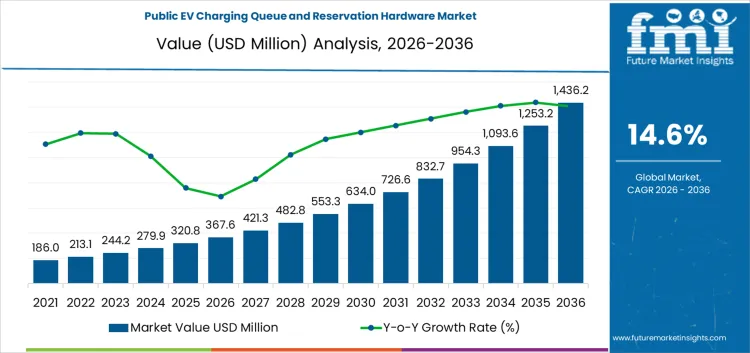
What is the Inflection Point Mapping for the Public EV Charging Queue and Reservation Hardware Market through 2036?
The inflection point mapping of the public EV charging queue and reservation hardware market suggests a shift from gradual growth to accelerated growth as the market matures. Initially, from 2026 to 2028, the market will experience steady growth, rising from USD 367.6 million to USD 486.9 million. This early phase of growth is driven by the increasing adoption of EVs and the early stages of expanding charging infrastructure, with demand for queue and reservation hardware rising in parallel.
The inflection point is expected to occur around 2029, when the market will reach USD 563.5 million. This marks the transition from a period of steady, incremental growth to a more accelerated phase of market expansion. The inflection point occurs as the need for more robust and efficient public charging infrastructure becomes more urgent due to a higher volume of EVs and more public charging stations being deployed.
From 2029 to 2036, the market will experience rapid growth, with the value rising from USD 654.7 million in 2030 to USD 1,436.2 million by 2036. This acceleration reflects the broader adoption of EVs, the increasing pressure to improve public charging infrastructure, and the development of advanced queue and reservation systems to handle growing demand. The market will stabilize after reaching saturation in the mid-2030s, with continued growth driven by upgrades and replacements in existing infrastructure.
Public EV Charging Queue and Reservation Hardware Market Key Takeaways
| Metric | Value |
|---|---|
| Industry Sales Value (2026) | USD 367.6 million |
| Industry Forecast Value (2036) | USD 1,436.2 million |
| Industry Forecast CAGR 2026 to 2036 | 14.6% |
What Is Driving the Public EV Charging Queue and Reservation Hardware Market?
Historically, the public EV charging queue and reservation hardware market developed as early electric vehicle charging infrastructure struggled to manage increasing demand at limited charging points. In the initial phase of EV adoption, many public charging locations operated on a first-come, first-served basis, with little to no mechanisms for drivers to signal intent, reserve time-slots, or manage vehicle queues. This often resulted in congestion, idle cables occupying charging bays after completion, and driver frustration at urban, highway rest stop, and workplace stations.
Early responses included simple signage, informal driver coordination, and basic timestamp systems, but these lacked automation or integration with networked station data. Operators and EV drivers soon recognized that unmanaged queues not only deterred potential EV adoption but also reduced station utilization efficiency. These insights encouraged the development of dedicated hardware accessories and upgrades such as indicator lights, dedicated bay signage, mechanical plugs with occupancy sensors, and dock-mounted timers that helped signal charger availability. This formative stage established the need for purpose-built solutions that could better manage access in high-use public spaces and inform the next generation of smart queue and reservation systems.
Future demand for public EV charging queue and reservation hardware is expected to be shaped by continued uptake of electric vehicles, expansion of public and commercial charging networks, and rising expectations for convenience and reliability in EV travel. Growth will be driven by the need to reduce congestion at stations during peak travel times, particularly at urban hubs and along long-distance corridors where EV drivers plan routes around limited infrastructure. Hardware systems that integrate occupancy sensors, LED status indicators, real-time display panels, and RFID or QR-based access control will enable drivers to identify available chargers and hold time slots efficiently, reducing idle time and improving throughput.
Expansion of reservation capabilities, either at kiosks or integrated into charging equipment, will allow drivers to schedule charging sessions and minimize wait times, supporting seamless multi-vehicle use in commercial parking lots and transit centers. Operators will also adopt hardware that feeds status information back to cloud-based station management platforms, enabling dynamic pricing, idle penalties, and automated enforcement of reservations. Barriers include the cost of retrofitting existing charging stations, interoperability challenges across different hardware brands, and the need for standardized communication protocols between reservation systems and charger networks. Long-term market expansion will depend on demonstrable improvements in user experience, reduced queue times, and alignment between hardware solutions and the digital ecosystems that coordinate charging demand and station availability across growing EV charging networks.
What are the Key Segments in the Public EV Charging Queue and Reservation Hardware Market?
The public EV charging queue and reservation hardware market is segmented by connectivity and sales channels. Connectivity types include cellular-connected, ethernet or wired, Wi-Fi or short-range, and others, with cellular-connected holding the largest share at 52%. Sales channels include charging network operators, infrastructure EPCs (Engineering, Procurement, and Construction), municipal procurement, and others, with charging network operators representing the largest share at 62%. The market is driven by the growing need for efficient management of public EV charging stations, where hardware solutions for queue management and reservations help optimize the charging process, reduce wait times, and improve user experience. The increasing adoption of electric vehicles (EVs) and the expansion of charging infrastructure are key factors driving market growth. Key regions driving this market include North America, Europe, and Asia Pacific, where EV adoption and public charging infrastructure are accelerating.
What is Driving Growth in the Cellular-Connected Connectivity Segment?
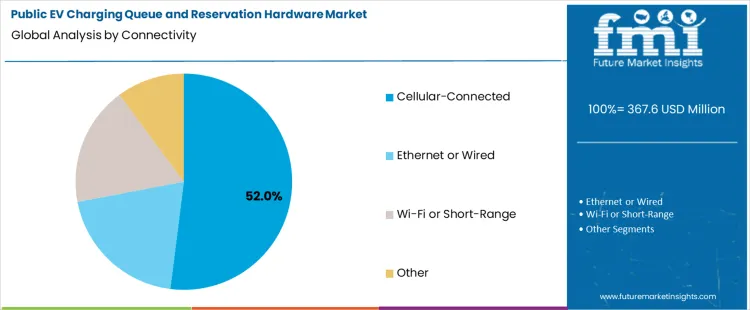
Cellular-connected is the leading connectivity segment in the Public EV Charging Queue and Reservation Hardware market, accounting for 52% of the market share. This growth is driven by the widespread availability of cellular networks, which provide reliable and flexible connectivity for managing EV charging queues and reservations in public spaces. Cellular-connected systems allow real-time data transmission and remote monitoring, which are crucial for optimizing charging station performance, managing customer flow, and preventing congestion at busy charging locations. Additionally, cellular connectivity enables seamless integration with mobile apps, allowing EV drivers to reserve charging slots, check availability, and receive notifications, enhancing the user experience. The growing deployment of 5G networks further strengthens the appeal of cellular-connected solutions, offering faster communication speeds and improved reliability. As public EV charging infrastructure expands globally, especially in regions like North America and Europe, the demand for cellular-connected queue management and reservation hardware is expected to continue to grow.
What is Driving the Demand for Charging Network Operators in the Sales Channel Segment?
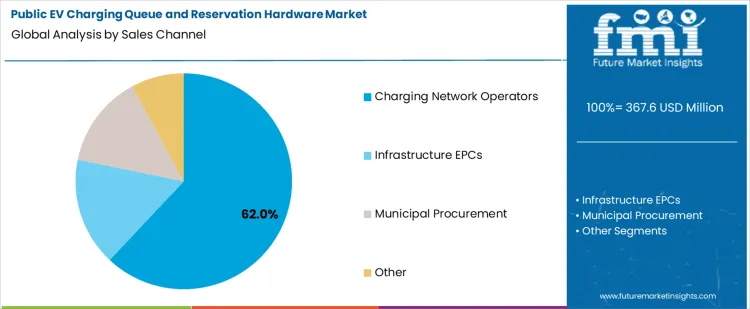
Charging network operators are the dominant sales channel in the Public EV Charging Queue and Reservation Hardware market, holding 62% of the market share. This growth is driven by the role of charging network operators in establishing and managing large-scale networks of EV charging stations, where queue management and reservation systems are essential for ensuring smooth operations. These operators are responsible for overseeing the infrastructure, maintenance, and user interfaces of charging stations, making them the key decision-makers when it comes to adopting hardware solutions for queue and reservation management. The increasing number of public and semi-public EV charging stations, along with the growing demand for reliable and efficient charging solutions, is driving the adoption of hardware that can manage charging queues, reservations, and availability. As EV adoption continues to rise, particularly in regions with large-scale charging network deployments like North America, Europe, and parts of Asia Pacific, charging network operators are expected to lead the market in terms of hardware integration and system management. The demand for enhanced customer experience and streamlined charging operations will continue to support the growth of this segment.
What are the Key Dynamics in the Public EV Charging Queue and Reservation Hardware Market?
The public EV charging queue and reservation hardware market is experiencing significant growth due to the rising demand for electric vehicles (EVs) and the corresponding need for efficient and user-friendly charging infrastructure. As EV adoption increases, the number of charging stations and their availability has become a critical factor in ensuring a smooth transition to electric mobility. Queue management and reservation systems help optimize the use of public charging stations by allowing users to reserve charging slots in advance, reducing wait times and improving the overall charging experience. The growth of the market is driven by advancements in digital technologies, the need for improved customer satisfaction, and the expansion of EV charging infrastructure in urban areas and along highways. Additionally, government policies and incentives supporting the growth of public EV charging networks are contributing to the increased installation of queue and reservation hardware at charging stations.
What are the Key Drivers of Growth in the Public EV Charging Queue and Reservation Hardware Market?
Several factors are driving the growth of the public EV charging queue and reservation hardware market. The primary driver is the increasing adoption of electric vehicles, which is placing more demand on public charging infrastructure. As the number of EVs on the road continues to rise, charging stations are becoming busier, making it necessary to implement effective queue and reservation systems to manage demand and reduce waiting times. The growing focus on providing a seamless charging experience for EV owners, especially in high-traffic locations such as urban centers and highways, is further boosting market growth. Additionally, government regulations and incentives aimed at expanding the EV charging network are promoting the installation of advanced queue management and reservation systems. The integration of smart technologies, such as mobile apps and online platforms for easy reservation and payment, is also contributing to the market’s expansion. The development of interoperable charging platforms that allow users to reserve spots across different networks is another key factor driving the adoption of these systems.
What are the Key Restraints in the Public EV Charging Queue and Reservation Hardware Market?
Despite the market’s potential, several challenges exist. One key restraint is the high cost of installing and maintaining reservation and queue management systems at public charging stations, particularly for smaller operators or in regions with limited budgets for infrastructure development. The cost of hardware, software, and integration with existing charging networks may deter some charging station owners from adopting these systems. Another challenge is the complexity of developing universal reservation platforms that work seamlessly across different EV charging networks and geographic locations. Standardization is a concern, as different charging stations may use proprietary systems, making it difficult for users to reserve charging slots across multiple networks. Additionally, consumer adoption of reservation systems may be hindered by concerns over the reliability and availability of charging spots, especially if users are uncertain whether they will be able to access their reserved slot at the designated time. Moreover, while queue management systems are designed to optimize charging availability, they rely on robust digital infrastructure, which may be lacking in some regions, especially in rural or less-developed areas.
What are the Key Trends in the Public EV Charging Queue and Reservation Hardware Market?
Key trends in the public EV charging queue and reservation hardware market include the growing adoption of smart technologies and mobile apps for managing reservations. More EV charging stations are integrating digital platforms that allow users to easily reserve a charging slot, track real-time availability, and make payments via their smartphones. Another trend is the development of more flexible and scalable queue management systems that can accommodate different types of vehicles, charging speeds, and user preferences. This flexibility is becoming increasingly important as the EV market diversifies, with new models and charging standards emerging. The trend toward interoperability across charging networks is also gaining momentum, as charging station operators seek to create a seamless experience for users who want to reserve and charge their EVs across different networks. Additionally, there is a growing emphasis on sustainability, with some charging station operators integrating energy management and grid optimization features into reservation systems, enabling users to charge their EVs during off-peak hours when electricity demand is lower. As EV adoption accelerates, these trends will continue to shape the development of the public EV charging queue and reservation hardware market.
What is the Country-Wise Analysis of the Public EV Charging Queue and Reservation Hardware Market?
The public EV charging queue and reservation hardware market is growing as the adoption of electric vehicles (EVs) increases globally. Public charging infrastructure is a critical component of the EV ecosystem, and efficient queue management and reservation systems are essential for providing seamless charging experiences to users. These systems help reduce waiting times, optimize charging station usage, and enhance user convenience. With the rise in EV adoption and government initiatives supporting clean energy transportation, countries like India, China, the USA, Germany, and the UK are seeing significant demand for hardware that supports these systems. The growth is driven by the increasing need for efficient, organized, and scalable public charging solutions to meet the needs of a growing EV fleet.
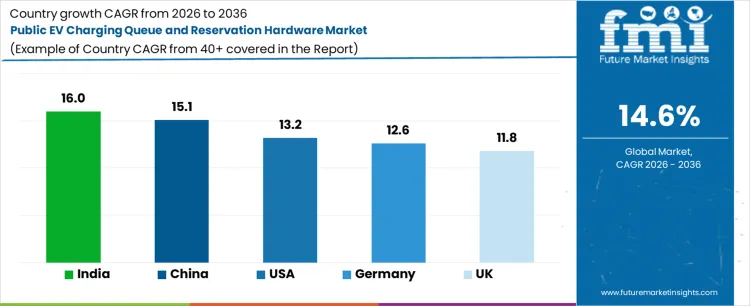
| Country | CAGR (%) |
|---|---|
| India | 16 |
| China | 15.1 |
| USA | 13.2 |
| Germany | 12.6 |
| UK | 11.8 |
What is Driving the Growth of the Public EV Charging Queue and Reservation Hardware Market in India?
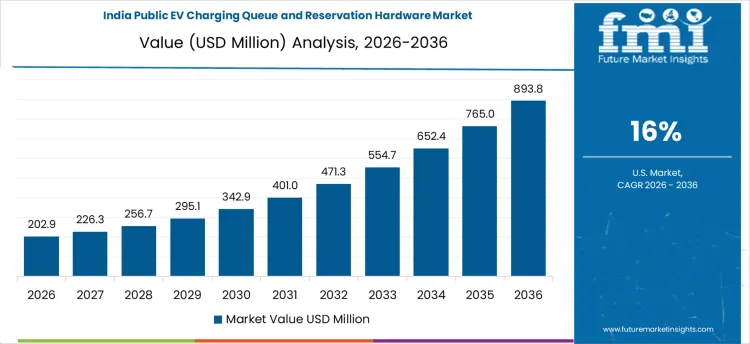
India’s public EV charging queue and reservation hardware market is growing at a CAGR of 16%, the highest among the countries analyzed. India is rapidly adopting electric vehicles, and the government’s focus on developing EV infrastructure is contributing to this growth. With the increasing number of electric vehicles on the road, there is a growing demand for efficient charging solutions, particularly in urban areas where public charging stations are often crowded. Queue and reservation systems are essential for managing high demand and ensuring that users can access charging stations without delays. The Indian government’s push towards clean energy, the rise in EV sales, and the expanding EV infrastructure are all driving the need for public EV charging hardware that optimizes charging station usage and enhances the overall user experience.
How is the Public EV Charging Queue and Reservation Hardware Market Performing in China?
China’s public EV charging queue and reservation hardware market is growing at a CAGR of 15.1%. As the world’s largest EV market, China is witnessing rapid expansion in its EV fleet, leading to increased demand for efficient public charging solutions. The country’s government has been heavily investing in the development of EV infrastructure to support the growing number of electric vehicles, and this includes implementing queue and reservation systems to streamline charging processes. With public charging stations becoming more common and the need for seamless EV charging experiences rising, China’s market for queue and reservation hardware is expanding rapidly. The country’s focus on sustainability and clean energy transportation is further supporting the adoption of such systems to manage the growing demand for EV charging.
What Factors are Shaping the Public EV Charging Queue and Reservation Hardware Market in the USA?
The public EV charging queue and reservation hardware market in the USA is growing at a CAGR of 13.2%. The rise in electric vehicle adoption, coupled with significant government incentives and a shift toward cleaner energy transportation, is driving the demand for public charging infrastructure in the USA. As the EV market grows, the need for efficient queue management and reservation systems becomes crucial to avoid long waiting times at charging stations. With an expanding network of public charging stations, the demand for hardware that helps streamline the charging process and improves user convenience is increasing. The USA’s commitment to enhancing its EV infrastructure and reducing carbon emissions is expected to continue driving growth in this market, as consumers increasingly rely on public charging stations to power their vehicles.
How is the Public EV Charging Queue and Reservation Hardware Market Evolving in Germany?
Germany’s public EV charging queue and reservation hardware market is growing at a CAGR of 12.6%. As one of Europe’s largest EV markets, Germany is seeing rising demand for efficient public charging solutions. With government initiatives aimed at boosting EV adoption and sustainability, there is a growing need for well-managed public charging infrastructure. Queue management and reservation systems are critical for enhancing the user experience and ensuring that charging stations are used efficiently, particularly in high-demand areas. Germany’s focus on developing a robust EV infrastructure and its leadership in green technology are contributing to the market’s growth. As the number of electric vehicles on the road continues to increase, the demand for queue and reservation hardware is expected to rise steadily.
What is Contributing to the Growth of the Public EV Charging Queue and Reservation Hardware Market in the UK?
The public EV charging queue and reservation hardware market in the UK is growing at a CAGR of 11.8%. The UK is experiencing significant growth in electric vehicle adoption, driven by government incentives and a push for sustainable transportation. As the number of EVs on the road increases, the demand for efficient public charging solutions, including queue management and reservation systems, is rising. These systems help minimize waiting times and optimize the use of public charging stations. The UK government’s commitment to reducing carbon emissions and expanding the EV charging network is driving the need for reliable and scalable charging solutions. As the EV market continues to mature in the UK, the demand for public EV charging queue and reservation hardware is expected to grow steadily.
What is the Competitive Landscape for the Public EV Charging Queue and Reservation Hardware Market?
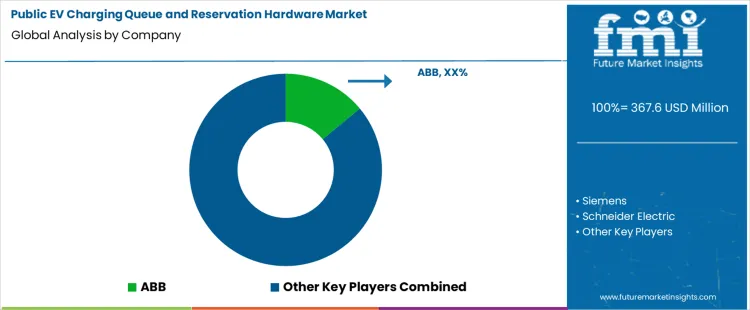
The public EV charging queue and reservation hardware market is expanding as electric vehicle (EV) adoption accelerates, particularly in urban areas with high traffic. ABB leads the market with its advanced queue management and reservation systems, enabling users to book charging spots in advance and minimize wait times at public charging stations. ABB's solutions are designed for seamless integration with its global network of EV chargers, enhancing efficiency and the user experience. Siemens, a key competitor, offers intelligent charging solutions that integrate reservation and queue management features, optimizing station use and improving customer satisfaction. Schneider Electric follows closely, providing smart and scalable systems that enhance public charging infrastructure by focusing on energy efficiency and smooth user interactions. Delta Electronics offers efficient queue management hardware, focusing on scalability and integration with existing infrastructure, ensuring long-term usability and flexibility. Alfen, a growing player, provides smart charging stations with integrated queue management, helping operators manage resources more effectively. ChargePoint, a significant name in the EV charging sector, is expanding its services to include reservation systems, allowing users to book charging spots and minimize downtime. EVBox and Tritium offer similar solutions, incorporating reservation and queue management capabilities into their charging infrastructure. Kempower and Ekoenergetyka are also active in the market, offering specialized reservation systems to improve operational efficiency and optimize the flow of vehicles at public charging stations.
To maintain their competitive edge, companies in the public EV charging queue and reservation hardware market focus on innovation, seamless user experiences, and integration with existing EV infrastructure. ABB continues to enhance its hardware and software solutions, ensuring efficient, real-time reservation and queue management across its global network. Siemens is improving the scalability of its charging systems, enabling seamless energy distribution and enhancing reservation features. Schneider Electric focuses on energy-efficient systems that ensure smoother charging sessions while reducing wait times. Delta Electronics prioritizes flexible, scalable solutions, ensuring that queue management and reservation systems integrate well with various charging station setups. ChargePoint, EVBox, and Tritium continue to innovate with real-time updates and mobile app integration, enhancing user convenience. Alfen, Kempower, and Ekoenergetyka are also refining their systems, offering tailored solutions that address the specific needs of various regions. These companies’ strategies ensure they remain leaders in the growing public EV charging queue and reservation hardware market, which plays a crucial role in optimizing the global EV charging infrastructure.
Key Players of the Public EV Charging Queue and Reservation Hardware Market
- ABB
- Siemens
- Schneider Electric
- Delta Electronics
- Alfen
- ChargePoint
- EVBox
- Tritium
- Kempower
- Ekoenergetyka
Scope of the Report
| Items | Values |
|---|---|
| Quantitative Units (2026) | USD Million |
| Hardware Type | Queue Display Units, Reservation Kiosks or Terminals, Barrier or Access Control Units, Other |
| Site Type | Highway DC Hubs, Urban Public Chargers, Fleet Depots, Other |
| Connectivity | Cellular-Connected, Ethernet or Wired, Wi-Fi or Short-Range, Other |
| Sales Channel | Charging Network Operators, Infrastructure EPCs, Municipal Procurement, Other |
| Companies | ABB, Siemens, Schneider Electric, Delta Electronics, Alfen, ChargePoint, EVBox, Tritium, Kempower, Ekoenergetyka |
| Regions Covered | North America, Latin America, Western Europe, Eastern Europe, South Asia and Pacific, East Asia, Middle East & Africa |
| Countries Covered | United States, Canada, Mexico, Brazil, Argentina, Germany, France, United Kingdom, Italy, Spain, Netherlands, China, India, Japan, South Korea, ANZ, GCC Countries, South Africa |
| Additional Attributes | Dollar by sales by hardware type, site type, connectivity, and sales channel. Includes market trends towards convenience, cost-effectiveness, regulatory compliance, and the role of queue and reservation hardware in improving public EV charging infrastructure. |
Public EV Charging Queue and Reservation Hardware Market Segmentation
Hardware Type
- Queue Display Units
- Reservation Kiosks or Terminals
- Barrier or Access Control Units
- Other
Site Type
- Highway DC Hubs
- Urban Public Chargers
- Fleet Depots
- Other
Connectivity
- Cellular-Connected
- Ethernet or Wired
- Wi-Fi or Short-Range
- Other
Sales Channel
- Charging Network Operators
- Infrastructure EPCs
- Municipal Procurement
- Other
Region
- Asia Pacific
- China
- Japan
- India
- Australia & New Zealand
- ASEAN
- Rest of Asia Pacific
- Europe
- Germany
- United Kingdom
- France
- Italy
- Spain
- Nordic
- BENELUX
- Rest of Europe
- North America
- United States
- Canada
- Mexico
- Latin America
- Brazil
- Argentina
- Rest of Latin America
- Middle East & Africa
- Kingdom of Saudi Arabia
- Other GCC Countries
- South Africa
- Rest of Middle East & Africa
Bibliography
- International Electrotechnical Commission. (2024). IEC 61851-1: Electric vehicle conductive charging system-General requirements. International Electrotechnical Commission.
- International Organization for Standardization. (2023). ISO 15118-20: Road vehicles-Vehicle-to-grid communication interface-Part 20: 2nd generation network and application protocols. International Organization for Standardization.
- United Nations Economic Commission for Europe. (2023). UN Regulation No. 100-Uniform provisions concerning the approval of vehicles with regard to electric powertrain safety. UNECE.
- European Committee for Standardization. (2023). EN 61851-24: Electric vehicle conductive charging system-Digital communication between a d.c. EV charging station and an electric vehicle for control of d.c. charging. CEN.
- International Energy Agency. (2024). Public charging infrastructure, interoperability, and smart queue management systems for electric mobility. International Energy Agency.
Frequently Asked Questions
How big is the public ev charging queue and reservation hardware market in 2026?
The global public ev charging queue and reservation hardware market is estimated to be valued at USD 367.6 million in 2026.
What will be the size of public ev charging queue and reservation hardware market in 2036?
The market size for the public ev charging queue and reservation hardware market is projected to reach USD 1,436.2 million by 2036.
How much will be the public ev charging queue and reservation hardware market growth between 2026 and 2036?
The public ev charging queue and reservation hardware market is expected to grow at a 14.6% CAGR between 2026 and 2036.
What are the key product types in the public ev charging queue and reservation hardware market?
The key product types in public ev charging queue and reservation hardware market are queue display units, reservation kiosks or terminals, barrier or access control units and other.
Which site type segment to contribute significant share in the public ev charging queue and reservation hardware market in 2026?
In terms of site type, highway dc hubs segment to command 44.0% share in the public ev charging queue and reservation hardware market in 2026.
Preview the report firsthand - request a free sample
Get SampleGet the brochure for pricing and purchase details.
Get PDFTable of Content
- Executive Summary
- Global Market Outlook
- Demand-side Trends
- Supply-side Trends
- Technology Roadmap Analysis
- Analysis and Recommendations
- Market Overview
- Market Coverage / Taxonomy
- Market Definition / Scope / Limitations
- Market Background
- Market Dynamics
- Drivers
- Restraints
- Opportunity
- Trends
- Scenario Forecast
- Demand in Optimistic Scenario
- Demand in Likely Scenario
- Demand in Conservative Scenario
- Opportunity Map Analysis
- Product Life Cycle Analysis
- Supply Chain Analysis
- Investment Feasibility Matrix
- Value Chain Analysis
- PESTLE and Porter’s Analysis
- Regulatory Landscape
- Regional Parent Market Outlook
- Production and Consumption Statistics
- Import and Export Statistics
- Market Dynamics
- Global Market Analysis 2021 to 2025 and Forecast, 2026 to 2036
- Historical Market Size Value (USD Million) Analysis, 2021 to 2025
- Current and Future Market Size Value (USD Million) Projections, 2026 to 2036
- Y-o-Y Growth Trend Analysis
- Absolute $ Opportunity Analysis
- Global Market Pricing Analysis 2021 to 2025 and Forecast 2026 to 2036
- Global Market Analysis 2021 to 2025 and Forecast 2026 to 2036, By Hardware Type
- Introduction / Key Findings
- Historical Market Size Value (USD Million) Analysis By Hardware Type , 2021 to 2025
- Current and Future Market Size Value (USD Million) Analysis and Forecast By Hardware Type , 2026 to 2036
- Queue Display Value (USD Million)s
- Reservation Kiosks or Terminals
- Barrier or Access Control Value (USD Million)s
- Other
- Queue Display Value (USD Million)s
- Y-o-Y Growth Trend Analysis By Hardware Type , 2021 to 2025
- Absolute $ Opportunity Analysis By Hardware Type , 2026 to 2036
- Global Market Analysis 2021 to 2025 and Forecast 2026 to 2036, By Site Type
- Introduction / Key Findings
- Historical Market Size Value (USD Million) Analysis By Site Type, 2021 to 2025
- Current and Future Market Size Value (USD Million) Analysis and Forecast By Site Type, 2026 to 2036
- Highway DC Hubs
- Urban Public Chargers
- Fleet Depots
- Other
- Highway DC Hubs
- Y-o-Y Growth Trend Analysis By Site Type, 2021 to 2025
- Absolute $ Opportunity Analysis By Site Type, 2026 to 2036
- Global Market Analysis 2021 to 2025 and Forecast 2026 to 2036, By Connectivity
- Introduction / Key Findings
- Historical Market Size Value (USD Million) Analysis By Connectivity, 2021 to 2025
- Current and Future Market Size Value (USD Million) Analysis and Forecast By Connectivity, 2026 to 2036
- Cellular-Connected
- Ethernet or Wired
- Wi-Fi or Short-Range
- Other
- Cellular-Connected
- Y-o-Y Growth Trend Analysis By Connectivity, 2021 to 2025
- Absolute $ Opportunity Analysis By Connectivity, 2026 to 2036
- Global Market Analysis 2021 to 2025 and Forecast 2026 to 2036, By Sales Channel
- Introduction / Key Findings
- Historical Market Size Value (USD Million) Analysis By Sales Channel, 2021 to 2025
- Current and Future Market Size Value (USD Million) Analysis and Forecast By Sales Channel, 2026 to 2036
- Charging Network Operators
- Infrastructure EPCs
- Municipal Procurement
- Other
- Charging Network Operators
- Y-o-Y Growth Trend Analysis By Sales Channel, 2021 to 2025
- Absolute $ Opportunity Analysis By Sales Channel, 2026 to 2036
- Global Market Analysis 2021 to 2025 and Forecast 2026 to 2036, By Region
- Introduction
- Historical Market Size Value (USD Million) Analysis By Region, 2021 to 2025
- Current Market Size Value (USD Million) Analysis and Forecast By Region, 2026 to 2036
- North America
- Latin America
- Western Europe
- Eastern Europe
- East Asia
- South Asia and Pacific
- Middle East & Africa
- Market Attractiveness Analysis By Region
- North America Market Analysis 2021 to 2025 and Forecast 2026 to 2036, By Country
- Historical Market Size Value (USD Million) Trend Analysis By Market Taxonomy, 2021 to 2025
- Market Size Value (USD Million) Forecast By Market Taxonomy, 2026 to 2036
- By Country
- USA
- Canada
- Mexico
- By Hardware Type
- By Site Type
- By Connectivity
- By Sales Channel
- By Country
- Market Attractiveness Analysis
- By Country
- By Hardware Type
- By Site Type
- By Connectivity
- By Sales Channel
- Key Takeaways
- Latin America Market Analysis 2021 to 2025 and Forecast 2026 to 2036, By Country
- Historical Market Size Value (USD Million) Trend Analysis By Market Taxonomy, 2021 to 2025
- Market Size Value (USD Million) Forecast By Market Taxonomy, 2026 to 2036
- By Country
- Brazil
- Chile
- Rest of Latin America
- By Hardware Type
- By Site Type
- By Connectivity
- By Sales Channel
- By Country
- Market Attractiveness Analysis
- By Country
- By Hardware Type
- By Site Type
- By Connectivity
- By Sales Channel
- Key Takeaways
- Western Europe Market Analysis 2021 to 2025 and Forecast 2026 to 2036, By Country
- Historical Market Size Value (USD Million) Trend Analysis By Market Taxonomy, 2021 to 2025
- Market Size Value (USD Million) Forecast By Market Taxonomy, 2026 to 2036
- By Country
- Germany
- UK
- Italy
- Spain
- France
- Nordic
- BENELUX
- Rest of Western Europe
- By Hardware Type
- By Site Type
- By Connectivity
- By Sales Channel
- By Country
- Market Attractiveness Analysis
- By Country
- By Hardware Type
- By Site Type
- By Connectivity
- By Sales Channel
- Key Takeaways
- Eastern Europe Market Analysis 2021 to 2025 and Forecast 2026 to 2036, By Country
- Historical Market Size Value (USD Million) Trend Analysis By Market Taxonomy, 2021 to 2025
- Market Size Value (USD Million) Forecast By Market Taxonomy, 2026 to 2036
- By Country
- Russia
- Poland
- Hungary
- Balkan & Baltic
- Rest of Eastern Europe
- By Hardware Type
- By Site Type
- By Connectivity
- By Sales Channel
- By Country
- Market Attractiveness Analysis
- By Country
- By Hardware Type
- By Site Type
- By Connectivity
- By Sales Channel
- Key Takeaways
- East Asia Market Analysis 2021 to 2025 and Forecast 2026 to 2036, By Country
- Historical Market Size Value (USD Million) Trend Analysis By Market Taxonomy, 2021 to 2025
- Market Size Value (USD Million) Forecast By Market Taxonomy, 2026 to 2036
- By Country
- China
- Japan
- South Korea
- By Hardware Type
- By Site Type
- By Connectivity
- By Sales Channel
- By Country
- Market Attractiveness Analysis
- By Country
- By Hardware Type
- By Site Type
- By Connectivity
- By Sales Channel
- Key Takeaways
- South Asia and Pacific Market Analysis 2021 to 2025 and Forecast 2026 to 2036, By Country
- Historical Market Size Value (USD Million) Trend Analysis By Market Taxonomy, 2021 to 2025
- Market Size Value (USD Million) Forecast By Market Taxonomy, 2026 to 2036
- By Country
- India
- ASEAN
- Australia & New Zealand
- Rest of South Asia and Pacific
- By Hardware Type
- By Site Type
- By Connectivity
- By Sales Channel
- By Country
- Market Attractiveness Analysis
- By Country
- By Hardware Type
- By Site Type
- By Connectivity
- By Sales Channel
- Key Takeaways
- Middle East & Africa Market Analysis 2021 to 2025 and Forecast 2026 to 2036, By Country
- Historical Market Size Value (USD Million) Trend Analysis By Market Taxonomy, 2021 to 2025
- Market Size Value (USD Million) Forecast By Market Taxonomy, 2026 to 2036
- By Country
- Kingdom of Saudi Arabia
- Other GCC Countries
- Turkiye
- South Africa
- Other African Union
- Rest of Middle East & Africa
- By Hardware Type
- By Site Type
- By Connectivity
- By Sales Channel
- By Country
- Market Attractiveness Analysis
- By Country
- By Hardware Type
- By Site Type
- By Connectivity
- By Sales Channel
- Key Takeaways
- Key Countries Market Analysis
- USA
- Pricing Analysis
- Market Share Analysis, 2025
- By Hardware Type
- By Site Type
- By Connectivity
- By Sales Channel
- Canada
- Pricing Analysis
- Market Share Analysis, 2025
- By Hardware Type
- By Site Type
- By Connectivity
- By Sales Channel
- Mexico
- Pricing Analysis
- Market Share Analysis, 2025
- By Hardware Type
- By Site Type
- By Connectivity
- By Sales Channel
- Brazil
- Pricing Analysis
- Market Share Analysis, 2025
- By Hardware Type
- By Site Type
- By Connectivity
- By Sales Channel
- Chile
- Pricing Analysis
- Market Share Analysis, 2025
- By Hardware Type
- By Site Type
- By Connectivity
- By Sales Channel
- Germany
- Pricing Analysis
- Market Share Analysis, 2025
- By Hardware Type
- By Site Type
- By Connectivity
- By Sales Channel
- UK
- Pricing Analysis
- Market Share Analysis, 2025
- By Hardware Type
- By Site Type
- By Connectivity
- By Sales Channel
- Italy
- Pricing Analysis
- Market Share Analysis, 2025
- By Hardware Type
- By Site Type
- By Connectivity
- By Sales Channel
- Spain
- Pricing Analysis
- Market Share Analysis, 2025
- By Hardware Type
- By Site Type
- By Connectivity
- By Sales Channel
- France
- Pricing Analysis
- Market Share Analysis, 2025
- By Hardware Type
- By Site Type
- By Connectivity
- By Sales Channel
- India
- Pricing Analysis
- Market Share Analysis, 2025
- By Hardware Type
- By Site Type
- By Connectivity
- By Sales Channel
- ASEAN
- Pricing Analysis
- Market Share Analysis, 2025
- By Hardware Type
- By Site Type
- By Connectivity
- By Sales Channel
- Australia & New Zealand
- Pricing Analysis
- Market Share Analysis, 2025
- By Hardware Type
- By Site Type
- By Connectivity
- By Sales Channel
- China
- Pricing Analysis
- Market Share Analysis, 2025
- By Hardware Type
- By Site Type
- By Connectivity
- By Sales Channel
- Japan
- Pricing Analysis
- Market Share Analysis, 2025
- By Hardware Type
- By Site Type
- By Connectivity
- By Sales Channel
- South Korea
- Pricing Analysis
- Market Share Analysis, 2025
- By Hardware Type
- By Site Type
- By Connectivity
- By Sales Channel
- Russia
- Pricing Analysis
- Market Share Analysis, 2025
- By Hardware Type
- By Site Type
- By Connectivity
- By Sales Channel
- Poland
- Pricing Analysis
- Market Share Analysis, 2025
- By Hardware Type
- By Site Type
- By Connectivity
- By Sales Channel
- Hungary
- Pricing Analysis
- Market Share Analysis, 2025
- By Hardware Type
- By Site Type
- By Connectivity
- By Sales Channel
- Kingdom of Saudi Arabia
- Pricing Analysis
- Market Share Analysis, 2025
- By Hardware Type
- By Site Type
- By Connectivity
- By Sales Channel
- Turkiye
- Pricing Analysis
- Market Share Analysis, 2025
- By Hardware Type
- By Site Type
- By Connectivity
- By Sales Channel
- South Africa
- Pricing Analysis
- Market Share Analysis, 2025
- By Hardware Type
- By Site Type
- By Connectivity
- By Sales Channel
- USA
- Market Structure Analysis
- Competition Dashboard
- Competition Benchmarking
- Market Share Analysis of Top Players
- By Regional
- By Hardware Type
- By Site Type
- By Connectivity
- By Sales Channel
- Competition Analysis
- Competition Deep Dive
- ABB
- Overview
- Product Portfolio
- Profitability by Market Segments (Product/Age /Sales Channel/Region)
- Sales Footprint
- Strategy Overview
- Marketing Strategy
- Product Strategy
- Channel Strategy
- Siemens
- Schneider Electric
- Delta Electronics
- Alfen
- ChargePoint
- EVBox
- Tritium
- Kempower
- Ekoenergetyka
- ABB
- Competition Deep Dive
- Assumptions & Acronyms Used
- Research Methodology


