

- Industry Size (2026)
- USD 52.4 Mn
- Forecast (2036)
- USD 235.2 Mn
- CAGR (2026 to 2036)
- 16.2%
Rain-Event Resilient Fertilizer Timing Toolkit Market Forecast and Outlook 2026 to 2036
The rain-event resilient fertilizer timing toolkit market is projected to grow from USD 52.4 million in 2026 to USD 235.2 million by 2036, reflecting a compound annual growth rate (CAGR) of 16.2%. Procurement priorities will be shaped by the need for tools that optimize fertilizer application, minimizing waste and improving crop yields in the face of unpredictable weather patterns. Buyer risk aversion will lead many to favor established suppliers with a track record of delivering reliable, weather-resistant solutions.
Vendor lock-in is likely, as long-term relationships are formed around proven toolkits that integrate seamlessly into existing farming systems. Switching costs will be a significant consideration, as changes to fertilizer timing strategies often involve retraining staff, adjusting operational workflows, and potential delays in product effectiveness. As the market matures, companies able to demonstrate both technological innovation and cost efficiency will capture the most value, positioning themselves as trusted partners in the evolving agricultural landscape.
Quick Stats of the Rain-Event Resilient Fertilizer Timing Toolkit Market
- Rain-Event Resilient Fertilizer Timing Toolkit Market Value (2026): USD 52.4 million
- Rain-Event Resilient Fertilizer Timing Toolkit Market Forecast Value (2036): USD 235.2 million
- Rain-Event Resilient Fertilizer Timing Toolkit Market Global Forecast CAGR (2026-2036): 16.2%
- Rain-Event Resilient Fertilizer Timing Toolkit Market Leading Segment: Sales Channel (Ag-Retailers) 60%
- Key Growth Regions in Rain-Event Resilient Fertilizer Timing Toolkit Market: India
- Top Players in Rain-Event Resilient Fertilizer Timing Toolkit Market: Corteva, Bayer, Nutrien, Syngenta, Yara International, Trimble
What is the Growth Forecast for the Rain-Event Resilient Fertilizer Timing Toolkit Market through 2036?
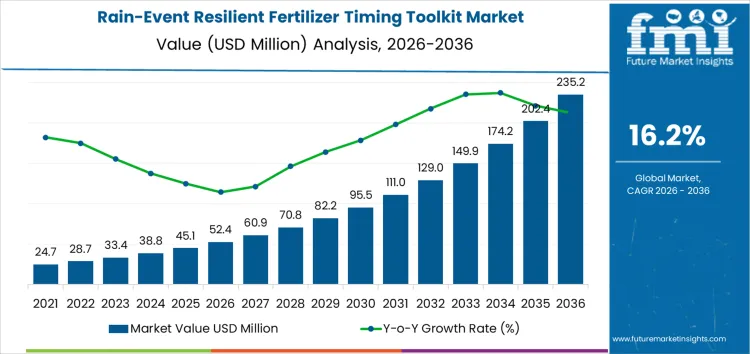
The compound absolute growth analysis for the rain-event resilient fertilizer timing toolkit market reveals substantial growth over the forecast period, driven by increasing adoption of these tools by farmers aiming to optimize fertilizer use and reduce environmental impact. From 2026 to 2031, the market will grow from USD 52.4 million to USD 112.9 million, reflecting an increase of USD 60.5 million over the first five years. This phase will be characterized by the early-stage adoption of rain-event resilient technologies, fueled by the rising awareness of the environmental consequences of improper fertilizer application timing, as well as the need to enhance fertilizer efficiency.
From 2031 to 2036, the market will continue to grow, expanding from USD 112.9 million in 2031 to USD 235.2 million in 2036, representing an absolute growth of USD 121 million. This phase will be marked by more widespread adoption as these toolkits become standard practice for farmers seeking to comply with environmental regulations and improve crop productivity. As technological advancements in weather forecasting and nutrient application continue, the market will experience steady and predictable growth. The compound absolute growth analysis indicates that the rain-event resilient fertilizer timing toolkit market will see a substantial increase in value, driven by both early adoption and widespread integration of the technology in the coming years.
Rain-Event Resilient Fertilizer Timing Toolkit Market Key Takeaways
| Metric | Value |
|---|---|
| Industry Sales Value (2026) | USD 52.4 million |
| Industry Forecast Value (2036) | USD 235.2 million |
| Industry Forecast CAGR (2026-2036) | 16.2% |
What Is Driving the Demand for Rain-Event Resilient Fertilizer Timing Toolkit Market?
Historical demand for fertilizer timing strategies has been shaped by long-standing agricultural practice that links nutrient application with crop growth stages and seasonal conditions. Effective timing of fertilizer is recognised as critical to maximise plant uptake and reduce nutrient losses through leaching, runoff, and volatilisation, especially when rainfall patterns are uncertain. Established agronomy guidance recommends split application of nitrogen fertilizers based on soil moisture and crop needs to limit losses, and advises avoiding nutrient application immediately before heavy rain to reduce the risk of runoff into water bodies. Research on nutrient management emphasises that weather-driven nutrient loss is a major challenge for efficient fertilisation, prompting development of decision support tools and management practice guidance that integrate soil, crop, and climatic data to refine application timing and enhance nutrient use efficiency. These early approaches laid the groundwork for services that consider rain-event risks in timing decisions rather than relying solely on static calendars or traditional schedules.
Future demand for rain-event resilient fertilizer timing toolkits is expected to grow as climate variability and extreme weather events increasingly influence agricultural nutrient management. Climate change has altered precipitation patterns and increased frequency and intensity of heavy rainfall events, affecting both crop water availability and the risk of nutrient loss post-application. Nutrient management strategies that account for these shifting patterns require timing guidance that is responsive to real-time weather forecasts and soil moisture conditions to reduce environmental losses and maintain agronomic performance. Digital agriculture and precision nutrient management innovations that integrate climatic data, real-time forecasts, and soil sensors are advancing the ability to advise on optimal fertilizer application timing that minimises nitrogen and phosphorus losses under variable rainfall. Adoption is also supported by regulatory emphasis on reducing nutrient runoff and water quality impacts, and by farmer interest in practices that protect fertilizer investment amid unpredictable rain events. Challenges include data integration across platforms and ensuring that toolkit recommendations are accessible to diverse farming operations with varying levels of technology adoption.
What are the Leading Segments in the Global Rain-Event Resilient Fertilizer Timing Toolkit Market?
The global rain-event resilient fertilizer timing toolkit market is segmented by form and sales channel. Among forms, granular fertilizers lead the market, capturing 45% of the share, followed by liquid, powder, and suspension forms. Granular fertilizers are favored for their ease of application and slow-release properties, which make them ideal for use in rain-event resilient strategies. On the sales channel side, ag-retailers dominate, holding 60% of the share, followed by direct-to-farmer, online marketplaces, and cooperatives. Ag-retailers lead the market due to their extensive distribution networks and ability to provide specialized advice and products to large-scale farming operations.
What Drives the Growth of Granular Fertilizers in the Rain-Event Resilient Fertilizer Timing Toolkit Market?
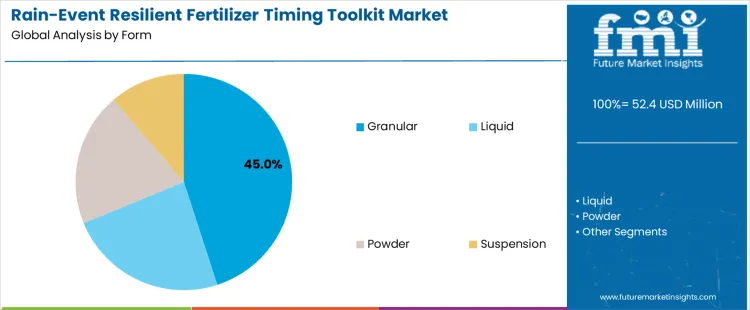
Granular fertilizers are the leading form in the rain-event resilient fertilizer timing toolkit market, holding 45% of the share. This growth is primarily driven by the controlled-release nature of granular fertilizers, which makes them well-suited for rain-event resilience. Granular products gradually release nutrients over time, reducing the risk of nutrient leaching and runoff during heavy rainfall. This slow-release feature helps ensure that crops receive consistent nutrition, even in unpredictable weather patterns. As the agricultural industry faces more erratic rainfall events due to climate change, granular fertilizers provide an effective solution to optimize nutrient use and minimize waste. Furthermore, granular fertilizers are compatible with existing farm equipment, making them easier to apply across a variety of farming operations. The need for rain-event resilient nutrient management practices that protect both crop yields and the environment is driving the demand for granular fertilizers in this market, ensuring their continued dominance.
What is Driving the Demand for Ag-Retailers in the Rain-Event Resilient Fertilizer Timing Toolkit Market?
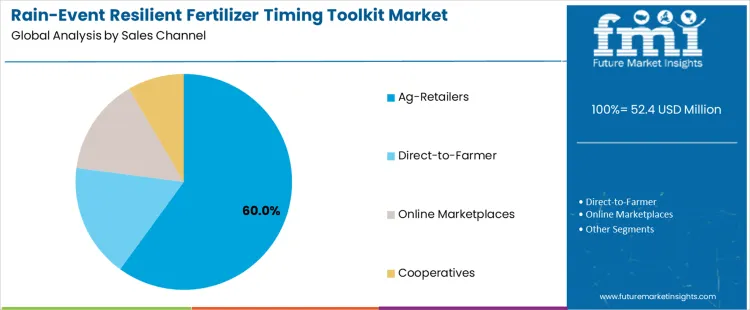
Ag-retailers are the leading sales channel in the rain-event resilient fertilizer timing toolkit market, capturing 60% of the share. This demand is driven by ag-retailers' established relationships with farmers and their ability to offer tailored nutrient management solutions. Ag-retailers provide valuable expertise in timing fertilizer applications to maximize efficiency, especially in the face of unpredictable rain events. They help farmers implement strategies that reduce nutrient losses during heavy rainfall, such as offering rain-event resilient fertilizers that remain effective even under wet conditions. Ag-retailers also have the ability to deliver specialized products and provide technical support to ensure optimal fertilizer use in varying environmental conditions. As farmers increasingly seek to mitigate the impact of climate change on crop productivity, ag-retailers will continue to be the primary source for rain-event resilient fertilizer timing tools, making them a key player in the market. Their strong distribution networks and expertise ensure that they remain at the forefront of this evolving sector.
What are the Key Dynamics in the Rain-Event Resilient Fertilizer Timing Toolkit Market?
The rain-event resilient fertilizer timing toolkit market covers digital and advisory products that help farmers plan fertilizer applications around rainfall events to reduce nutrient loss. These toolkits combine weather forecasts, soil moisture data, and nutrient models to identify windows for application that align with crop uptake and minimize leaching and runoff. Adoption reflects interaction between agronomic practice, risk management, and environmental protection standards. Growers and advisors assess these services based on forecast accuracy, ease of use, and integration with existing farm systems. Regulatory emphasis on water quality and nutrient management reporting shapes demand for tools that link timing decisions with outcomes.
What are the Main Drivers Supporting Growth in This Market?
Growth in this market is supported by increased attention to nutrient runoff and soil conservation. Regulatory standards for surface water quality are encouraging practices that reduce fertilizer loss linked to storm events. Advances in weather prediction technology and data analytics are improving toolkit performance and relevance to local conditions. Farm managers seeking to protect crop investment and reduce reapplication costs are adopting timing tools. Demand from agricultural advisers and service providers for decision support systems that complement soil testing and crop monitoring is rising. Integration of mobile platforms with field data improves accessibility for users.
What Restraints Are Limiting Market Expansion?
Market expansion is limited by variability in weather patterns and uncertainties in forecast models that can affect user confidence. Smaller farms may face cost barriers for subscription-based services or require training to interpret complex data outputs. Differences in regional weather station density and data quality can reduce toolkit effectiveness in some areas. Integration with existing farm management software may be constrained where legacy systems do not support open data standards. Requirements for agronomic expertise to interpret recommendations can restrict uptake among users seeking turnkey solutions.
What Emerging Trends Are Shaping the Future of This Market?
Emerging trends include greater use of machine learning to refine rain-event predictions and link them with soil nutrient dynamics. Toolkits that combine satellite and ground sensor data are increasing coverage and resolution for field-level recommendations. Partnerships between meteorological services, agronomy firms, and technology providers are expanding data access and analytical capability. There is growing integration of these timing tools with nutrient management plans and compliance reporting frameworks. Advisory models that tie forecast-based recommendations with economic outcomes for growers are aiding decision making and adoption.
What is the Country-Wise Analysis of the Rain-Event Resilient Fertilizer Timing Toolkit Market?
The rain-event resilient fertilizer timing toolkit market is witnessing significant growth due to the increasing need for efficient fertilizer application in the face of unpredictable weather patterns. These toolkits are designed to optimize fertilizer application schedules by considering weather forecasts, specifically rain events, which can affect nutrient runoff and fertilizer efficiency. As the agriculture sector faces growing challenges related to climate change, including more frequent and intense rainfall, these timing toolkits offer a solution to minimize fertilizer loss and improve nutrient use efficiency. Developed markets like the USA and Germany are seeing steady demand for these toolkits due to their focus on precision agriculture and sustainability. Emerging markets like India and Japan are also experiencing growth, driven by the need to optimize fertilizer use, reduce environmental impact, and improve crop productivity. As global agricultural practices continue to adapt to climate change, the market for rain-event resilient fertilizer timing toolkits is expected to expand significantly.
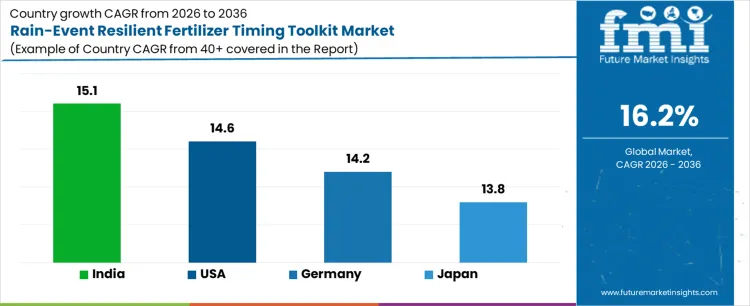
| Country | CAGR (2026 to 2036) |
|---|---|
| USA | 14.6% |
| Germany | 14.2% |
| Japan | 13.8% |
| India | 15.1% |
What is the Growth Outlook for the Rain-Event Resilient Fertilizer Timing Toolkit Market in the USA?
The rain-event resilient fertilizer timing toolkit market in the USA is projected to grow steadily, with a projected CAGR of 14.6% from 2026 to 2036. As the U.S. agricultural sector increasingly embraces precision farming and sustainable practices, the demand for tools that optimize fertilizer application is on the rise. Unpredictable weather patterns, particularly heavy rainfall, can result in nutrient runoff and inefficient fertilizer use, leading to both economic and environmental losses. These toolkits, which provide real-time weather data and recommendations for optimal fertilizer timing, are gaining traction as a solution to this issue. U.S. farmers are increasingly adopting these technologies to reduce fertilizer waste, improve crop yields, and minimize environmental impact. With continued government support for sustainable farming practices and the growing adoption of digital farming technologies, the market for rain-event resilient fertilizer timing toolkits in the USA is expected to experience steady growth.
What is the Market Outlook for the Rain-Event Resilient Fertilizer Timing Toolkit Market in Germany?
Germany is expected to see steady growth in the rain-event resilient fertilizer timing toolkit market, with a projected CAGR of 14.2% from 2026 to 2036. Germany has long been at the forefront of sustainable farming practices and precision agriculture, and the adoption of technologies that optimize fertilizer use is gaining momentum. German farmers are increasingly focusing on reducing nutrient runoff and improving fertilizer efficiency to minimize environmental impact. With stricter environmental regulations and a growing emphasis on sustainability, rain-event resilient fertilizer timing toolkits are becoming essential tools for farmers looking to optimize their fertilizer application schedules. The German government’s commitment to promoting sustainable agriculture and reducing nutrient pollution from farming will further drive the demand for these toolkits. As sustainability remains a priority in Germany’s agricultural sector, the market for rain-event resilient fertilizer timing toolkits is expected to grow steadily.
What is the Growth Forecast for the Rain-Event Resilient Fertilizer Timing Toolkit Market in Japan?
Japan is projected to experience steady growth in the rain-event resilient fertilizer timing toolkit market, with a projected CAGR of 13.8% from 2026 to 2036. Japan’s agricultural sector is increasingly focusing on sustainability and resource efficiency, and the need for precise fertilizer application has become a key concern. With the challenges posed by unpredictable weather patterns, particularly heavy rain, Japan is adopting advanced technologies to optimize fertilizer use. Rain-event resilient fertilizer timing toolkits are gaining popularity as they provide farmers with real-time data and recommendations on the best times to apply fertilizers, thus minimizing nutrient loss due to runoff. Japan’s government support for sustainable agriculture and environmental conservation further enhances the adoption of these tools. As climate change continues to affect weather patterns, the demand for these timing toolkits is expected to grow steadily in Japan.
What is the Market Outlook for the Rain-Event Resilient Fertilizer Timing Toolkit Market in India?
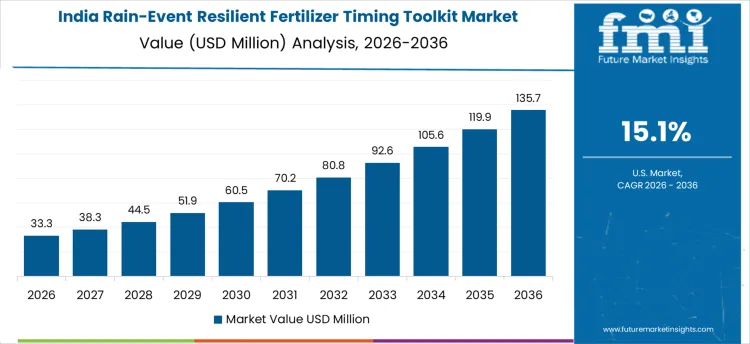
India is expected to experience the highest growth in the rain-event resilient fertilizer timing toolkit market, with a projected CAGR of 15.1% from 2026 to 2036. India, with its large agricultural base, faces significant challenges related to nutrient runoff, soil degradation, and the efficient use of fertilizers. The increasing unpredictability of rainfall patterns exacerbates these challenges, making fertilizer application timing critical for maximizing efficiency and minimizing environmental impact. Rain-event resilient fertilizer timing toolkits offer a solution by helping farmers schedule fertilizer applications based on weather forecasts and soil conditions. With the government’s growing focus on sustainable farming practices and the increasing demand for efficient agricultural solutions, the market for these toolkits is expected to expand rapidly in India. As India continues to prioritize sustainable agriculture and improve resource efficiency, the adoption of rain-event resilient fertilizer timing toolkits is likely to increase, contributing to higher productivity and reduced environmental impact.
What are the Growth Prospects for the Rain-Event Resilient Fertilizer Timing Toolkit Market Globally?
Globally, the rain-event resilient fertilizer timing toolkit market is set to expand significantly, driven by the growing need for precision farming and sustainable agricultural practices. As climate change leads to increasingly unpredictable weather patterns, the ability to optimize fertilizer use and reduce nutrient runoff becomes critical for maintaining soil health and protecting water resources. Rain-event resilient fertilizer timing toolkits provide farmers with the data they need to adjust fertilizer application schedules, minimizing waste and improving crop productivity. With growing government support for sustainable agriculture and the increasing adoption of digital farming technologies worldwide, the market for these toolkits is expected to experience significant growth across both developed and emerging economies. As global efforts to reduce agricultural environmental impacts continue, the demand for these precision tools will play a key role in shaping the future of sustainable agriculture.
What is the Competitive Landscape for the Rain-Event Resilient Fertilizer Timing Toolkit Market?
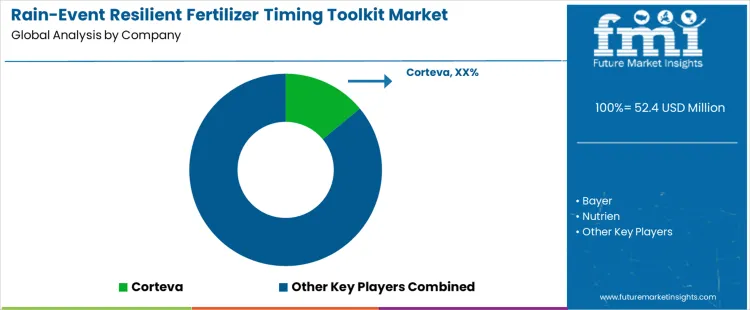
The rain-event resilient fertilizer timing toolkit market is growing as the agricultural industry increasingly seeks solutions that optimize fertilizer application and minimize nutrient loss during unpredictable weather events, such as rainfall. Corteva leads the market with its innovative toolkit, offering solutions that help farmers adjust fertilizer application timing in response to rain events, ensuring optimal nutrient absorption and minimizing waste. Their focus on precision agriculture, sustainability, and efficiency has positioned them as a dominant player in the market. Bayer, Nutrien, and Syngenta are key competitors, each providing advanced tools and technologies to help farmers optimize fertilizer timing and reduce environmental impact. Bayer offers digital solutions that improve fertilizer application precision, while Nutrien and Syngenta focus on providing tools that help farmers make real-time decisions based on weather conditions and soil health.
Yara International and Trimble further contribute to the competitive landscape with their own rain-event resilient solutions. Yara International specializes in nutrient management technologies that ensure fertilizers are applied efficiently even in variable weather conditions, while Trimble provides precision farming technologies that help farmers adjust fertilizer timing based on weather forecasts and soil conditions. These companies compete by focusing on product innovation, sustainability, and the growing demand for precision agriculture tools that improve nutrient use efficiency and reduce environmental impact. As the agricultural industry increasingly focuses on sustainability and optimizing fertilizer use, the market for rain-event resilient fertilizer timing toolkits is expected to grow, driving further competition and innovation in the sector.
Key Players of Rain-Event Resilient Fertilizer Timing Toolkit Market
- Corteva
- Bayer
- Nutrien
- Syngenta
- Yara International
- Trimble
Scope of the Report
| Items | Values |
|---|---|
| Quantitative Units (2026) | USD million |
| Crop | Cereals, Oilseeds, Fruits, Vegetables |
| Form | Granular, Liquid, Powder, Suspension |
| Sales Channel | Ag Retailers, Direct to Farmer, Online Marketplaces, Cooperatives |
| Companies | Corteva, Bayer, Nutrien, Syngenta, Yara International, Trimble |
| Regions Covered | North America, Latin America, Western Europe, Eastern Europe, South Asia & Pacific, East Asia, Middle East & Africa |
| Countries Covered | United States, Canada, Mexico, Brazil, Argentina, Germany, France, United Kingdom, Italy, Spain, Netherlands, China, India, Japan, South Korea, ANZ, GCC Countries, South Africa |
| Additional Attributes | Dollar by sales by crop, form, sales channel, and region. Includes analysis of market trends in rain-event-resilient fertilizer timing toolkits, performance of timing strategies in mitigating nutrient loss during variable weather events, formulation and advisory cost factors, regulatory and environmental considerations affecting adoption, integration with weather and soil moisture data systems, user demand among farming segments, market share and competitive positioning of key companies, innovations in timing toolkit technologies and decision support tools, and evaluation of impact on nutrient use efficiency, crop yield outcomes, and resilience to rainfall variability. |
Rain-Event Resilient Fertilizer Timing Toolkit Market Segmentation
Crop
- Cereals
- Oilseeds
- Fruits
- Vegetables
Form
- Granular
- Liquid
- Powder
- Suspension
Sales Channel
- Ag-Retailers
- Direct-to-Farmer
- Online Marketplaces
- Cooperatives
Region
- Asia Pacific
- China
- Japan
- South Korea
- India
- Australia & New Zealand
- ASEAN
- Rest of Asia Pacific
- Europe
- Germany
- United Kingdom
- France
- Italy
- Spain
- Nordic
- BENELUX
- Rest of Europe
- North America
- United States
- Canada
- Mexico
- Latin America
- Brazil
- Chile
- Rest of Latin America
- Middle East & Africa
- Kingdom of Saudi Arabia
- Other GCC Countries
- Turkey
- South Africa
- Other African Union
- Rest of Middle East & Africa
Frequently Asked Questions
How big is the rain-event resilient fertilizer timing toolkit market in 2026?
The global rain-event resilient fertilizer timing toolkit market is estimated to be valued at USD 52.4 million in 2026.
What will be the size of rain-event resilient fertilizer timing toolkit market in 2036?
The market size for the rain-event resilient fertilizer timing toolkit market is projected to reach USD 235.2 million by 2036.
How much will be the rain-event resilient fertilizer timing toolkit market growth between 2026 and 2036?
The rain-event resilient fertilizer timing toolkit market is expected to grow at a 16.2% CAGR between 2026 and 2036.
What are the key crop types in the rain-event resilient fertilizer timing toolkit market?
The key crop types in rain-event resilient fertilizer timing toolkit market are cereals, oilseeds, fruits and veg.
Which form segment will contribute significant share in the rain-event resilient fertilizer timing toolkit market in 2026?
In terms of form, granular segment to command 45.0% share in the rain-event resilient fertilizer timing toolkit market in 2026.
Preview the report firsthand - request a free sample
Get SampleGet the brochure for pricing and purchase details.
Get PDFTable of Content
- Executive Summary
- Global Market Outlook
- Demand-side Trends
- Supply-side Trends
- Technology Roadmap Analysis
- Analysis and Recommendations
- Market Overview
- Market Coverage / Taxonomy
- Market Definition / Scope / Limitations
- Market Background
- Market Dynamics
- Drivers
- Restraints
- Opportunity
- Trends
- Scenario Forecast
- Demand in Optimistic Scenario
- Demand in Likely Scenario
- Demand in Conservative Scenario
- Opportunity Map Analysis
- Product Life Cycle Analysis
- Supply Chain Analysis
- Investment Feasibility Matrix
- Value Chain Analysis
- PESTLE and Porter’s Analysis
- Regulatory Landscape
- Regional Parent Market Outlook
- Production and Consumption Statistics
- Import and Export Statistics
- Market Dynamics
- Global Market Analysis 2021 to 2025 and Forecast, 2026 to 2036
- Historical Market Size Value (USD Million) Analysis, 2021 to 2025
- Current and Future Market Size Value (USD Million) Projections, 2026 to 2036
- Y-o-Y Growth Trend Analysis
- Absolute $ Opportunity Analysis
- Global Market Pricing Analysis 2021 to 2025 and Forecast 2026 to 2036
- Global Market Analysis 2021 to 2025 and Forecast 2026 to 2036, By Crop
- Introduction / Key Findings
- Historical Market Size Value (USD Million) Analysis By Crop , 2021 to 2025
- Current and Future Market Size Value (USD Million) Analysis and Forecast By Crop , 2026 to 2036
- Cereals
- Oilseeds
- Fruits
- Veg
- Cereals
- Y-o-Y Growth Trend Analysis By Crop , 2021 to 2025
- Absolute $ Opportunity Analysis By Crop , 2026 to 2036
- Global Market Analysis 2021 to 2025 and Forecast 2026 to 2036, By Form
- Introduction / Key Findings
- Historical Market Size Value (USD Million) Analysis By Form, 2021 to 2025
- Current and Future Market Size Value (USD Million) Analysis and Forecast By Form, 2026 to 2036
- Granular
- Liquid
- Powder
- Suspension
- Granular
- Y-o-Y Growth Trend Analysis By Form, 2021 to 2025
- Absolute $ Opportunity Analysis By Form, 2026 to 2036
- Global Market Analysis 2021 to 2025 and Forecast 2026 to 2036, By Sales Channel
- Introduction / Key Findings
- Historical Market Size Value (USD Million) Analysis By Sales Channel, 2021 to 2025
- Current and Future Market Size Value (USD Million) Analysis and Forecast By Sales Channel, 2026 to 2036
- Ag-Retailers
- Direct-to-Farmer
- Online Marketplaces
- Cooperatives
- Ag-Retailers
- Y-o-Y Growth Trend Analysis By Sales Channel, 2021 to 2025
- Absolute $ Opportunity Analysis By Sales Channel, 2026 to 2036
- Global Market Analysis 2021 to 2025 and Forecast 2026 to 2036, By Region
- Introduction
- Historical Market Size Value (USD Million) Analysis By Region, 2021 to 2025
- Current Market Size Value (USD Million) Analysis and Forecast By Region, 2026 to 2036
- North America
- Latin America
- Western Europe
- Eastern Europe
- East Asia
- South Asia and Pacific
- Middle East & Africa
- Market Attractiveness Analysis By Region
- North America Market Analysis 2021 to 2025 and Forecast 2026 to 2036, By Country
- Historical Market Size Value (USD Million) Trend Analysis By Market Taxonomy, 2021 to 2025
- Market Size Value (USD Million) Forecast By Market Taxonomy, 2026 to 2036
- By Country
- USA
- Canada
- Mexico
- By Crop
- By Form
- By Sales Channel
- By Country
- Market Attractiveness Analysis
- By Country
- By Crop
- By Form
- By Sales Channel
- Key Takeaways
- Latin America Market Analysis 2021 to 2025 and Forecast 2026 to 2036, By Country
- Historical Market Size Value (USD Million) Trend Analysis By Market Taxonomy, 2021 to 2025
- Market Size Value (USD Million) Forecast By Market Taxonomy, 2026 to 2036
- By Country
- Brazil
- Chile
- Rest of Latin America
- By Crop
- By Form
- By Sales Channel
- By Country
- Market Attractiveness Analysis
- By Country
- By Crop
- By Form
- By Sales Channel
- Key Takeaways
- Western Europe Market Analysis 2021 to 2025 and Forecast 2026 to 2036, By Country
- Historical Market Size Value (USD Million) Trend Analysis By Market Taxonomy, 2021 to 2025
- Market Size Value (USD Million) Forecast By Market Taxonomy, 2026 to 2036
- By Country
- Germany
- UK
- Italy
- Spain
- France
- Nordic
- BENELUX
- Rest of Western Europe
- By Crop
- By Form
- By Sales Channel
- By Country
- Market Attractiveness Analysis
- By Country
- By Crop
- By Form
- By Sales Channel
- Key Takeaways
- Eastern Europe Market Analysis 2021 to 2025 and Forecast 2026 to 2036, By Country
- Historical Market Size Value (USD Million) Trend Analysis By Market Taxonomy, 2021 to 2025
- Market Size Value (USD Million) Forecast By Market Taxonomy, 2026 to 2036
- By Country
- Russia
- Poland
- Hungary
- Balkan & Baltic
- Rest of Eastern Europe
- By Crop
- By Form
- By Sales Channel
- By Country
- Market Attractiveness Analysis
- By Country
- By Crop
- By Form
- By Sales Channel
- Key Takeaways
- East Asia Market Analysis 2021 to 2025 and Forecast 2026 to 2036, By Country
- Historical Market Size Value (USD Million) Trend Analysis By Market Taxonomy, 2021 to 2025
- Market Size Value (USD Million) Forecast By Market Taxonomy, 2026 to 2036
- By Country
- China
- Japan
- South Korea
- By Crop
- By Form
- By Sales Channel
- By Country
- Market Attractiveness Analysis
- By Country
- By Crop
- By Form
- By Sales Channel
- Key Takeaways
- South Asia and Pacific Market Analysis 2021 to 2025 and Forecast 2026 to 2036, By Country
- Historical Market Size Value (USD Million) Trend Analysis By Market Taxonomy, 2021 to 2025
- Market Size Value (USD Million) Forecast By Market Taxonomy, 2026 to 2036
- By Country
- India
- ASEAN
- Australia & New Zealand
- Rest of South Asia and Pacific
- By Crop
- By Form
- By Sales Channel
- By Country
- Market Attractiveness Analysis
- By Country
- By Crop
- By Form
- By Sales Channel
- Key Takeaways
- Middle East & Africa Market Analysis 2021 to 2025 and Forecast 2026 to 2036, By Country
- Historical Market Size Value (USD Million) Trend Analysis By Market Taxonomy, 2021 to 2025
- Market Size Value (USD Million) Forecast By Market Taxonomy, 2026 to 2036
- By Country
- Kingdom of Saudi Arabia
- Other GCC Countries
- Turkiye
- South Africa
- Other African Union
- Rest of Middle East & Africa
- By Crop
- By Form
- By Sales Channel
- By Country
- Market Attractiveness Analysis
- By Country
- By Crop
- By Form
- By Sales Channel
- Key Takeaways
- Key Countries Market Analysis
- USA
- Pricing Analysis
- Market Share Analysis, 2025
- By Crop
- By Form
- By Sales Channel
- Canada
- Pricing Analysis
- Market Share Analysis, 2025
- By Crop
- By Form
- By Sales Channel
- Mexico
- Pricing Analysis
- Market Share Analysis, 2025
- By Crop
- By Form
- By Sales Channel
- Brazil
- Pricing Analysis
- Market Share Analysis, 2025
- By Crop
- By Form
- By Sales Channel
- Chile
- Pricing Analysis
- Market Share Analysis, 2025
- By Crop
- By Form
- By Sales Channel
- Germany
- Pricing Analysis
- Market Share Analysis, 2025
- By Crop
- By Form
- By Sales Channel
- UK
- Pricing Analysis
- Market Share Analysis, 2025
- By Crop
- By Form
- By Sales Channel
- Italy
- Pricing Analysis
- Market Share Analysis, 2025
- By Crop
- By Form
- By Sales Channel
- Spain
- Pricing Analysis
- Market Share Analysis, 2025
- By Crop
- By Form
- By Sales Channel
- France
- Pricing Analysis
- Market Share Analysis, 2025
- By Crop
- By Form
- By Sales Channel
- India
- Pricing Analysis
- Market Share Analysis, 2025
- By Crop
- By Form
- By Sales Channel
- ASEAN
- Pricing Analysis
- Market Share Analysis, 2025
- By Crop
- By Form
- By Sales Channel
- Australia & New Zealand
- Pricing Analysis
- Market Share Analysis, 2025
- By Crop
- By Form
- By Sales Channel
- China
- Pricing Analysis
- Market Share Analysis, 2025
- By Crop
- By Form
- By Sales Channel
- Japan
- Pricing Analysis
- Market Share Analysis, 2025
- By Crop
- By Form
- By Sales Channel
- South Korea
- Pricing Analysis
- Market Share Analysis, 2025
- By Crop
- By Form
- By Sales Channel
- Russia
- Pricing Analysis
- Market Share Analysis, 2025
- By Crop
- By Form
- By Sales Channel
- Poland
- Pricing Analysis
- Market Share Analysis, 2025
- By Crop
- By Form
- By Sales Channel
- Hungary
- Pricing Analysis
- Market Share Analysis, 2025
- By Crop
- By Form
- By Sales Channel
- Kingdom of Saudi Arabia
- Pricing Analysis
- Market Share Analysis, 2025
- By Crop
- By Form
- By Sales Channel
- Turkiye
- Pricing Analysis
- Market Share Analysis, 2025
- By Crop
- By Form
- By Sales Channel
- South Africa
- Pricing Analysis
- Market Share Analysis, 2025
- By Crop
- By Form
- By Sales Channel
- USA
- Market Structure Analysis
- Competition Dashboard
- Competition Benchmarking
- Market Share Analysis of Top Players
- By Regional
- By Crop
- By Form
- By Sales Channel
- Competition Analysis
- Competition Deep Dive
- Corteva
- Overview
- Product Portfolio
- Profitability by Market Segments (Product/Age /Sales Channel/Region)
- Sales Footprint
- Strategy Overview
- Marketing Strategy
- Product Strategy
- Channel Strategy
- Bayer
- Nutrien
- Syngenta
- Yara International
- Trimble
- Corteva
- Competition Deep Dive
- Assumptions & Acronyms Used
- Research Methodology


