

- Industry Size (2026)
- USD 820 Mn
- Forecast (2036)
- USD 2833.2 Mn
- CAGR (2026 to 2036)
- 13.20%
Real-Time Transport Capacity Trading Platforms Market Forecast and Outlook 2026 to 2036
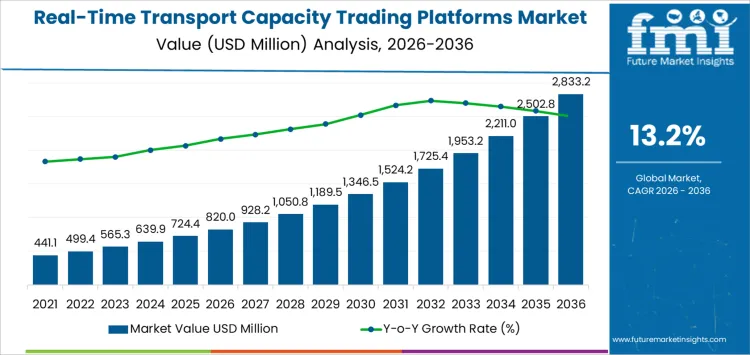
The market for real-time transport capacity trading platforms is expected to grow from USD 820 million in 2026 to USD 2,833.2 million by 2036, reflecting a compound annual growth rate (CAGR) of 13.2%. These platforms enable real-time trading of transport capacity, helping logistics companies and shippers optimize supply chain operations by improving access to available transport services and reducing empty miles. The growth of this market is driven by the increasing complexity of global supply chains, the rise of e-commerce, and the need for businesses to improve operational efficiency and flexibility in transport management. As the logistics industry seeks to reduce costs and improve capacity utilization, real-time capacity trading platforms are becoming increasingly important.
The demand is further fueled by advancements in digital platforms, increased access to data analytics, and the adoption of technology-driven solutions in transport logistics. As more companies prioritize sustainability and cost reduction, these platforms enable greater visibility, optimization, and flexibility in transport planning, helping businesses efficiently manage their transport needs. The global push towards reducing emissions in the logistics sector and improving operational transparency is expected to continue driving the market for real-time transport capacity trading platforms over the next decade.
Quick Stats for Real-Time Transport Capacity Trading Platforms Market
- Real-Time Transport Capacity Trading Platforms Market Value (2026): USD 820 million
- Real-Time Transport Capacity Trading Platforms Market Forecast Value (2036): USD 2,833.2 million
- Real-Time Transport Capacity Trading Platforms Market Global Forecast CAGR (2026 to 2036): 13.20%
- Top Application by Share in Real-Time Transport Capacity Trading Platforms Market: E-Commerce & Retail Logistics (45%)
- Key Growth Regions in Real-Time Transport Capacity Trading Platforms Market: India, China, USA, Brazil, Germany
- Top Players in Real-Time Transport Capacity Trading Platforms Market: Convoy, Uber Freight, project44, Flexport, Loadsmart
What is the Growth Forecast for the Real-Time Transport Capacity Trading Platforms Market through 2036?
The saturation point analysis for the real-time transport capacity trading platforms market indicates steady growth throughout the forecast period, with some acceleration in the mid-to-late years as adoption becomes more widespread. Starting at USD 820 million in 2026, the market grows gradually to USD 926.35 million in 2027 and USD 1,046.95 million in 2028, reflecting early-stage adoption as businesses begin leveraging these platforms to streamline transport planning.
From 2028 to 2030, the market experiences continued growth, reaching USD 1,183.48 million in 2029 and USD 1,338.95 million in 2030. This period reflects growing recognition of the benefits of real-time capacity trading, such as cost savings and improved efficiency. From 2030 to 2035, the market sees a more pronounced acceleration, with values reaching USD 1,515.59 million in 2031, USD 1,716.15 million in 2032, and USD 1,943.87 million in 2033.
By 2035, the market is projected to reach USD 2,497.83 million, with the final value of USD 2,833.2 million expected in 2036. The saturation point analysis suggests that while the market experiences gradual growth in the early years, the pace of expansion accelerates in the latter part of the forecast period as real-time transport capacity trading platforms become more integrated into supply chain operations and logistics management strategies. The market is expected to stabilize at a high growth rate by 2036 as the technology matures and adoption becomes widespread across industries.
Real-Time Transport Capacity Trading Platforms Market Key Takeaways
| Metric | Value |
|---|---|
| Industry Sales Value (2026) | USD 820 million |
| Industry Forecast Value (2036) | USD 2,833.2 million |
| Industry Forecast CAGR (2026-2036) | 13.2% |
What Is Driving the Demand for Real Time Transport Capacity Trading Platforms Globally?
The global demand for real time transport capacity trading platforms is driven by growing volatility in freight demand and the need to optimise under utilised transport assets. Shippers, carriers, and third party logistics providers face fluctuating shipment volumes due to e commerce growth, seasonal peaks, and unpredictable demand patterns. Traditional contractual transport arrangements can leave capacity unused or create bottlenecks, increasing cost and transit times. Real time capacity trading platforms enable dynamic matching of available transport capacity with demand by allowing carriers to offer unused space and shippers to find capacity on short notice. These platforms use digital marketplaces, real time data, and algorithmic matching to reduce empty miles, improve load factors, and deliver cost efficiencies in road, rail, air, and intermodal freight networks. Carriers benefit from improved utilisation of their fleets, while shippers gain flexibility to secure capacity without locking into long term contracts. The shift toward digital freight interactions and demand for responsive logistics has made real time capacity trading increasingly relevant across regions such as North America, Europe, and Asia Pacific.
Future demand for real time transport capacity trading platforms is expected to grow as supply chains prioritise resilience, flexibility, and cost control. Continued investment in digital freight networks, enhanced visibility tools, and predictive analytics will improve the accuracy and responsiveness of capacity matching, expanding the appeal of these platforms. As volatility in freight flows persists and service expectations tighten, on demand access to transport capacity will become more valuable to shippers and carriers alike. Integration with transportation management systems and enterprise resource planning tools will support broader adoption by enabling seamless booking, tracking, and performance measurement. Sustainability goals and pressure to reduce emissions may further reinforce trading platforms, as better capacity utilisation lowers empty miles and fuel use. The market will expand as logistics stakeholders embrace digital solutions that offer agility and efficiency in increasingly complex transport networks.
What Are the Key Segments in Real-Time Transport Capacity Trading Platforms Market?
The real-time transport capacity trading platforms market is segmented by service type and application. Electric truck routing optimization leads the service type segment with 38% of the market share, optimizing routes for efficient fleet operations. E-commerce & retail logistics dominate the application segment with 45%, driven by the need for real-time, flexible transport solutions. The market is growing as companies look to improve fleet efficiency, reduce costs, and meet sustainability goals through dynamic transport capacity trading.
Which Service Type Drives Real-Time Transport Capacity Trading Platforms Market Demand Globally?
Electric truck routing optimization leads the service type segment, accounting for 38% of the market share. This service ensures that electric truck fleets follow the most efficient routes, taking into account real-time data on battery life, traffic conditions, and available charging stations. It helps improve fleet efficiency and ensures timely deliveries, even with the operational limitations of electric vehicles. As the adoption of electric trucks grows, so does the demand for effective routing optimization solutions that can overcome the challenges unique to electric transportation, such as limited battery range and the need for strategic charging stops. By integrating these systems with real-time transport capacity trading platforms, businesses can enhance fleet management, reduce idle times, and increase the overall efficiency of their logistics operations.

By Application, Which Segment Leads the Real-time Transport Capacity Trading Platforms Market?
The e-commerce & retail logistics segment accounts for 45% share. For carriers and individual vehicle owners, they minimize empty return trips by providing a dynamic marketplace to fill unused space, optimizing asset utilization and boosting revenue. The real-time digital matching eliminates traditional, time-consuming brokerage processes, slashing administrative costs and reducing delays for all parties.
Ultimately, these platforms create a transparent, agile, and efficient ecosystem. They provide shippers with competitive pricing and reliability while offering transporters higher earnings and consistent loads. This symbiotic, data-driven marketplace is indispensable for modern, just-in-time supply chains, making it a foundational tool for the industry's growth and resilience.

What are the Key Drivers of the Global Real Time Transport Capacity Trading Platforms Market?
The global real time transport capacity trading platforms market is expanding as shippers, carriers and logistics providers seek greater flexibility and efficiency in moving goods. These platforms enable dynamic buying, selling and allocation of unused transport capacity across road, rail, sea and air networks, supporting rapid response to demand fluctuations. Growth is being driven by rising e commerce volumes and pressure to optimise asset utilisation while controlling cost. Technology advancements in digital marketplaces provide transparency and connectivity across stakeholders. Adoption of these platforms reflects a shift toward agile logistics operations that balance capacity and demand in close to real time across diverse supply chain environments worldwide.
What are the Key Drivers for the Global Real Time Transport Capacity Trading Platforms Market?
Growing demand for flexible logistics solutions is encouraging adoption of real time capacity trading platforms that match unused transport space with shipment demand. Expansion of e commerce and omni channel fulfilment requires agile network responses to unexpected volume changes. Carriers seek platforms that improve utilisation and reduce empty miles, while shippers value options that shorten transit times and avoid costly delays. Technology improvements in connectivity, data analytics and digital transaction processing support reliable matching and execution. Interest in collaborative logistics and shared transport services drives integration of trading platforms within broader supply chain ecosystems as providers and users prioritise cost savings, resilience and operational visibility.
What are the Restraints for the Global Real Time Transport Capacity Trading Platforms Market?
One restraint is the complexity of integrating real time trading platforms with existing transportation management systems and legacy planning tools. Inconsistent data quality and limited interoperability among systems can reduce effectiveness of automated matching and decision support. Smaller carriers and shippers may face barriers due to cost and technical skills required to adopt and maintain digital trading tools. Concerns about data security, competitive sensitivity and transparency may limit willingness among some stakeholders to join shared marketplaces. Regulatory differences across regions affecting contracts, transactions and liability create additional challenges. Adoption may be uneven where infrastructure or digital maturity is limited, slowing expansion in parts of the global market.
What is the Key Trends in the Global Real Time Transport Capacity Trading Platforms Market?
A key trend is integration of artificial intelligence and predictive analytics into capacity trading platforms to enhance matching accuracy and forecast demand patterns. Providers are embedding machine learning models that account for historic performance, traffic conditions and seasonal variation to recommend optimal matches. Real time telematics and Internet of Things data are being used to improve visibility of asset location and status, enabling dynamic responses to capacity changes. Open platform architectures that connect multiple logistics partners and support cross border trading are gaining interest. Collaboration between technology vendors, logistics operators and regulatory bodies is influencing development of standardized protocols that improve platform interoperability and user experience across regions.
What is the Country-Wise Outlook for Real-Time Transport Capacity Trading Platforms?
The Real-Time Transport Capacity Trading Platforms market is experiencing substantial growth, driven by the increasing demand for more efficient, flexible, and cost-effective logistics solutions. Countries like India, China, and the USA are at the forefront of this growth, fueled by the rapid expansion of e-commerce, increasing logistics demands, and the growing emphasis on digital transformation in the transportation sector. These platforms allow businesses to trade transport capacity in real-time, helping to optimize routes, reduce costs, and improve operational efficiency. As the logistics sector continues to evolve with technological advancements, the demand for real-time capacity trading platforms is expected to grow significantly across these regions.
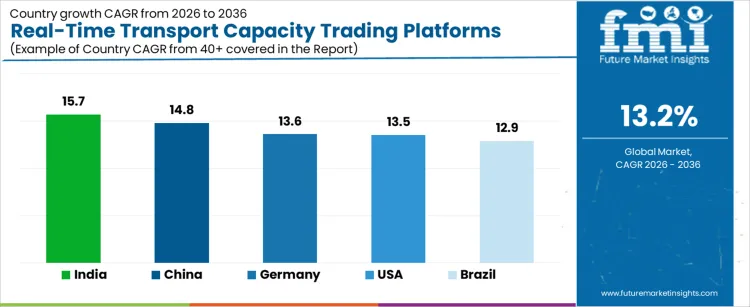
| Country | CAGR (2026-2036) |
|---|---|
| India | 15.7% |
| China | 14.8% |
| USA | 13.5% |
| Brazil | 12.9% |
| Germany | 13.6% |
What is Driving the Growth of Real-Time Transport Capacity Trading Platforms in India?
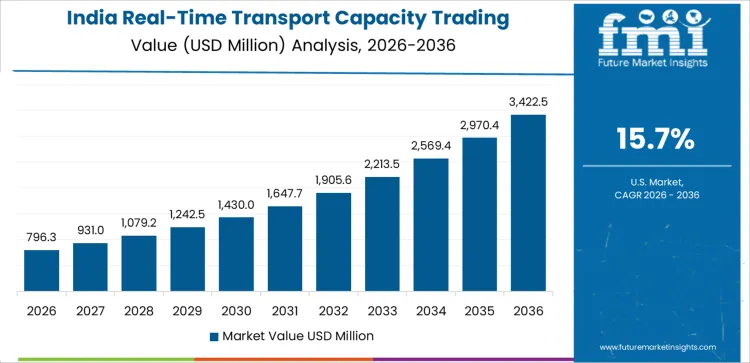
India’s Real-Time Transport Capacity Trading Platforms market is projected to grow at a CAGR of 15.7%. The country’s rapidly expanding e-commerce sector, combined with the need for more efficient logistics solutions, is driving the adoption of real-time transport capacity trading platforms. These platforms provide a flexible and cost-effective solution by enabling businesses to buy and sell transport capacity in real-time, optimizing routes and reducing logistics costs. As India’s logistics infrastructure modernizes and digital solutions become more integrated, the demand for these platforms is expected to rise significantly. The government’s focus on improving supply chain efficiency and infrastructure further supports the growth of the market.
What is Contributing to the Growth of Real-Time Transport Capacity Trading Platforms in China?
China’s Real-Time Transport Capacity Trading Platforms market is expected to grow at a CAGR of 14.8%. As China’s e-commerce sector continues to grow and the logistics industry expands to meet increasing demand, the need for more dynamic and efficient transportation solutions becomes critical. Real-time transport capacity trading platforms offer a way for businesses to optimize their logistics operations by allowing them to trade transport capacity based on real-time needs. The Chinese government’s focus on improving logistics infrastructure and embracing digital technologies in the supply chain supports the growth of these platforms. With the rise of demand for quick deliveries and flexible logistics, the market is poised for strong growth in China.
What is Driving the Real-Time Transport Capacity Trading Platforms Market Growth in the USA?
The USA’s Real-Time Transport Capacity Trading Platforms market is projected to grow at a CAGR of 13.5%. The growing need for operational efficiency and cost reduction in logistics operations, particularly within the e-commerce and retail sectors, is driving the adoption of real-time transport capacity trading platforms. These platforms help businesses optimize their supply chains by allowing them to manage and trade transport capacity dynamically. With the increasing push towards digital transformation and automation in logistics, real-time platforms are becoming essential tools for managing capacity, reducing waste, and improving the speed and flexibility of deliveries. As the logistics industry becomes more interconnected, the demand for these platforms is expected to rise significantly in the USA.
What is Influencing the Growth of Real-Time Transport Capacity Trading Platforms in Brazil?
Brazil’s Real-Time Transport Capacity Trading Platforms market is projected to grow at a CAGR of 12.9%. The expansion of e-commerce and the need for more efficient and sustainable logistics solutions are key drivers of this market in Brazil. Real-time transport capacity trading platforms allow businesses to optimize their logistics operations by reducing costs, improving delivery times, and increasing operational flexibility. As Brazil continues to modernize its logistics infrastructure and adopt more digital solutions, the demand for these platforms is expected to rise. The increasing focus on improving supply chain efficiency and reducing environmental impact further supports the growth of real-time capacity trading solutions in Brazil.
What is Contributing to the Growth of Real-Time Transport Capacity Trading Platforms in Germany?
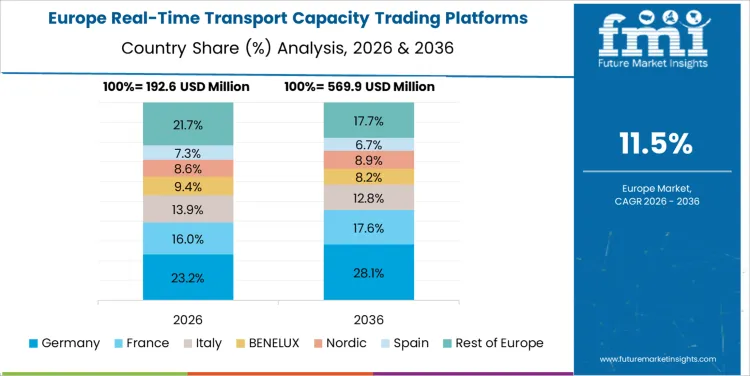
Germany’s Real-Time Transport Capacity Trading Platforms market is expected to grow at a CAGR of 13.6%. As Europe’s leading logistics hub, Germany is increasingly focusing on digital solutions to improve the efficiency and sustainability of its transportation networks. Real-time transport capacity trading platforms help optimize supply chain operations by allowing companies to trade available transport capacity, improving route efficiency and reducing costs. Germany’s strong e-commerce sector, along with its commitment to reducing carbon emissions and improving supply chain operations, is driving the adoption of these platforms. As businesses in Germany seek more flexible and cost-effective logistics solutions, the market for real-time transport capacity trading platforms is expected to see continued growth.
What is the Competitive Landscape for the Real Time Transport Capacity Trading Platforms Market?
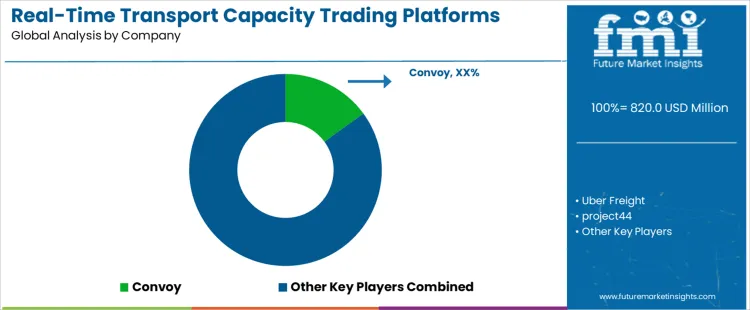
Global demand for real time transport capacity trading platforms is rising as shippers, carriers and brokers seek more dynamic, efficient ways to match freight demand with available transport resources. Traditional freight markets often suffer from inefficiencies such as empty miles, unused capacity and static pricing. Real time trading platforms address these challenges by enabling automated, data driven matching of available trucks, trailers and lanes with freight, improving utilisation and reducing costs. Growth in e commerce, seasonal demand fluctuations, driver shortages and pressure to improve delivery performance all support adoption of real time capacity exchanges. Carriers benefit from better load fill rates and predictable business, while shippers gain access to broader capacity pools with transparent pricing and performance metrics. This trend is evident across major logistics regions including North America, Europe and Asia Pacific as digital freight technologies become core to modern supply chain strategies.
Several digital freight and logistics technology firms compete to lead this expanding segment. Convoy is recognised as a leading platform with strong adoption of real time load matching, efficient pricing algorithms and a broad carrier network. Other key competitors include Uber Freight, which leverages its global footprint and strong carrier ecosystem to offer dynamic capacity trading; project44, which focuses on real time visibility and connects transport data with marketplace functions; Flexport, which integrates freight forwarding with capacity matching and predictive insights; and Loadsmart, known for automated pricing, instant booking and optimisation tools. Competition among these providers centers on the quality of real time data, speed and accuracy of matching algorithms, carrier network reach, ease of integration with shippers’ transportation management systems, and ability to scale across modes and geographies. Platforms that combine intuitive user experience, robust analytics, seamless system integration and strong carrier participation are best positioned to capture growth as demand for dynamic transport capacity trading accelerates globally.
Key Players of the Real-Time Transport Capacity Trading Platforms Market
- Convoy
- Uber Freight
- project 44
- Flexport
- Loadsmart
Scope of the Report
| Items | Values |
|---|---|
| Quantitative Units (2026) | USD Million |
| Service Type | Electric Truck Routing Optimization, Charging Coordination Platforms, Real-Time Fleet Management & Dispatch, Analytics & Performance Dashboards |
| Application | E-Commerce & Retail Logistics, Third-Party Logistics (3PL), Courier & Postal Services, Cold Chain & Perishables |
| Companies | Convoy, Uber Freight, project44, Flexport, Loadsmart |
| Regions Covered | North America, Latin America, Western Europe, Eastern Europe, South Asia and Pacific, East Asia, Middle East & Africa |
| Countries Covered | United States, Canada, Mexico, Brazil, Argentina, Germany, France, United Kingdom, Italy, Spain, Netherlands, China, India, Japan, South Korea, ANZ, GCC Countries, South Africa |
| Additional Attributes | Dollar by sales by service type, application, and region. Includes market trends in real-time transport capacity trading platforms, performance in logistics and supply chain management for various sectors, demand for real-time fleet management and optimization, cost-effectiveness, sustainability practices, regulatory compliance, market share and competitive positioning of key companies, and the role of transport capacity trading in optimizing logistics operations, improving efficiency, and enhancing flexibility in the transportation sector. |
Key Segments in the Real-Time Transport Capacity Trading Platforms Market
Service Type:
- Electric Truck Routing Optimization
- Charging Coordination Platforms
- Real Time Fleet Management & Dispatch
- Analytics & Performance Dashboards
Application:
- E Commerce & Retail Logistics
- Third Party Logistics (3PL)
- Courier & Postal Services
- Cold Chain & Perishables
Region:
- Asia Pacific
- China
- India
- Japan
- South Korea
- ASEAN
- Rest of Asia Pacific
- Europe
- Germany
- United Kingdom
- France
- Italy
- Spain
- Nordic
- BENELUX
- Rest of Europe
- North America
- United States
- Canada
- Mexico
- Latin America
- Brazil
- Chile
- Rest of Latin America
- Middle East & Africa
- Kingdom of Saudi Arabia
- Other GCC Countries
- Turkey
- South Africa
- Other African Union
- Rest of Middle East & Africa
Frequently Asked Questions
How big is the real-time transport capacity trading platforms market in 2026?
The global real-time transport capacity trading platforms market is estimated to be valued at USD 820.0 million in 2026.
What will be the size of real-time transport capacity trading platforms market in 2036?
The market size for the real-time transport capacity trading platforms market is projected to reach USD 2,833.2 million by 2036.
How much will be the real-time transport capacity trading platforms market growth between 2026 and 2036?
The real-time transport capacity trading platforms market is expected to grow at a 13.2% CAGR between 2026 and 2036.
What are the key product types in the real-time transport capacity trading platforms market?
The key product types in real-time transport capacity trading platforms market are electric truck routing optimization, charging coordination platforms, real‑time fleet management & dispatch and analytics & performance dashboards.
Which application segment to contribute significant share in the real-time transport capacity trading platforms market in 2026?
In terms of application, e‑commerce & retail logistics segment to command 45.0% share in the real-time transport capacity trading platforms market in 2026.
Preview the report firsthand - request a free sample
Get SampleGet the brochure for pricing and purchase details.
Get PDFTable of Content
- Executive Summary
- Global Market Outlook
- Demand-side Trends
- Supply-side Trends
- Technology Roadmap Analysis
- Analysis and Recommendations
- Market Overview
- Market Coverage / Taxonomy
- Market Definition / Scope / Limitations
- Market Background
- Market Dynamics
- Drivers
- Restraints
- Opportunity
- Trends
- Scenario Forecast
- Demand in Optimistic Scenario
- Demand in Likely Scenario
- Demand in Conservative Scenario
- Opportunity Map Analysis
- Product Life Cycle Analysis
- Supply Chain Analysis
- Investment Feasibility Matrix
- Value Chain Analysis
- PESTLE and Porter’s Analysis
- Regulatory Landscape
- Regional Parent Market Outlook
- Production and Consumption Statistics
- Import and Export Statistics
- Market Dynamics
- Global Market Analysis 2021 to 2025 and Forecast, 2026 to 2036
- Historical Market Size Value (USD Million) Analysis, 2021 to 2025
- Current and Future Market Size Value (USD Million) Projections, 2026 to 2036
- Y-o-Y Growth Trend Analysis
- Absolute $ Opportunity Analysis
- Global Market Pricing Analysis 2021 to 2025 and Forecast 2026 to 2036
- Global Market Analysis 2021 to 2025 and Forecast 2026 to 2036, By Service Type
- Introduction / Key Findings
- Historical Market Size Value (USD Million) Analysis By Service Type , 2021 to 2025
- Current and Future Market Size Value (USD Million) Analysis and Forecast By Service Type , 2026 to 2036
- Electric Truck Routing Optimization
- Charging Coordination Platforms
- Real‑Time Fleet Management & Dispatch
- Analytics & Performance Dashboards
- Y-o-Y Growth Trend Analysis By Service Type , 2021 to 2025
- Absolute $ Opportunity Analysis By Service Type , 2026 to 2036
- Global Market Analysis 2021 to 2025 and Forecast 2026 to 2036, By Application
- Introduction / Key Findings
- Historical Market Size Value (USD Million) Analysis By Application, 2021 to 2025
- Current and Future Market Size Value (USD Million) Analysis and Forecast By Application, 2026 to 2036
- E‑Commerce & Retail Logistics
- Third‑Party Logistics (3PL)
- Courier & Postal Services
- Cold Chain & Perishables
- Y-o-Y Growth Trend Analysis By Application, 2021 to 2025
- Absolute $ Opportunity Analysis By Application, 2026 to 2036
- Global Market Analysis 2021 to 2025 and Forecast 2026 to 2036, By Region
- Introduction
- Historical Market Size Value (USD Million) Analysis By Region, 2021 to 2025
- Current Market Size Value (USD Million) Analysis and Forecast By Region, 2026 to 2036
- North America
- Latin America
- Western Europe
- Eastern Europe
- East Asia
- South Asia and Pacific
- Middle East & Africa
- Market Attractiveness Analysis By Region
- North America Market Analysis 2021 to 2025 and Forecast 2026 to 2036, By Country
- Historical Market Size Value (USD Million) Trend Analysis By Market Taxonomy, 2021 to 2025
- Market Size Value (USD Million) Forecast By Market Taxonomy, 2026 to 2036
- By Country
- USA
- Canada
- Mexico
- By Service Type
- By Application
- By Country
- Market Attractiveness Analysis
- By Country
- By Service Type
- By Application
- Key Takeaways
- Latin America Market Analysis 2021 to 2025 and Forecast 2026 to 2036, By Country
- Historical Market Size Value (USD Million) Trend Analysis By Market Taxonomy, 2021 to 2025
- Market Size Value (USD Million) Forecast By Market Taxonomy, 2026 to 2036
- By Country
- Brazil
- Chile
- Rest of Latin America
- By Service Type
- By Application
- By Country
- Market Attractiveness Analysis
- By Country
- By Service Type
- By Application
- Key Takeaways
- Western Europe Market Analysis 2021 to 2025 and Forecast 2026 to 2036, By Country
- Historical Market Size Value (USD Million) Trend Analysis By Market Taxonomy, 2021 to 2025
- Market Size Value (USD Million) Forecast By Market Taxonomy, 2026 to 2036
- By Country
- Germany
- UK
- Italy
- Spain
- France
- Nordic
- BENELUX
- Rest of Western Europe
- By Service Type
- By Application
- By Country
- Market Attractiveness Analysis
- By Country
- By Service Type
- By Application
- Key Takeaways
- Eastern Europe Market Analysis 2021 to 2025 and Forecast 2026 to 2036, By Country
- Historical Market Size Value (USD Million) Trend Analysis By Market Taxonomy, 2021 to 2025
- Market Size Value (USD Million) Forecast By Market Taxonomy, 2026 to 2036
- By Country
- Russia
- Poland
- Hungary
- Balkan & Baltic
- Rest of Eastern Europe
- By Service Type
- By Application
- By Country
- Market Attractiveness Analysis
- By Country
- By Service Type
- By Application
- Key Takeaways
- East Asia Market Analysis 2021 to 2025 and Forecast 2026 to 2036, By Country
- Historical Market Size Value (USD Million) Trend Analysis By Market Taxonomy, 2021 to 2025
- Market Size Value (USD Million) Forecast By Market Taxonomy, 2026 to 2036
- By Country
- China
- Japan
- South Korea
- By Service Type
- By Application
- By Country
- Market Attractiveness Analysis
- By Country
- By Service Type
- By Application
- Key Takeaways
- South Asia and Pacific Market Analysis 2021 to 2025 and Forecast 2026 to 2036, By Country
- Historical Market Size Value (USD Million) Trend Analysis By Market Taxonomy, 2021 to 2025
- Market Size Value (USD Million) Forecast By Market Taxonomy, 2026 to 2036
- By Country
- India
- ASEAN
- Australia & New Zealand
- Rest of South Asia and Pacific
- By Service Type
- By Application
- By Country
- Market Attractiveness Analysis
- By Country
- By Service Type
- By Application
- Key Takeaways
- Middle East & Africa Market Analysis 2021 to 2025 and Forecast 2026 to 2036, By Country
- Historical Market Size Value (USD Million) Trend Analysis By Market Taxonomy, 2021 to 2025
- Market Size Value (USD Million) Forecast By Market Taxonomy, 2026 to 2036
- By Country
- Kingdom of Saudi Arabia
- Other GCC Countries
- Turkiye
- South Africa
- Other African Union
- Rest of Middle East & Africa
- By Service Type
- By Application
- By Country
- Market Attractiveness Analysis
- By Country
- By Service Type
- By Application
- Key Takeaways
- Key Countries Market Analysis
- USA
- Pricing Analysis
- Market Share Analysis, 2025
- By Service Type
- By Application
- Canada
- Pricing Analysis
- Market Share Analysis, 2025
- By Service Type
- By Application
- Mexico
- Pricing Analysis
- Market Share Analysis, 2025
- By Service Type
- By Application
- Brazil
- Pricing Analysis
- Market Share Analysis, 2025
- By Service Type
- By Application
- Chile
- Pricing Analysis
- Market Share Analysis, 2025
- By Service Type
- By Application
- Germany
- Pricing Analysis
- Market Share Analysis, 2025
- By Service Type
- By Application
- UK
- Pricing Analysis
- Market Share Analysis, 2025
- By Service Type
- By Application
- Italy
- Pricing Analysis
- Market Share Analysis, 2025
- By Service Type
- By Application
- Spain
- Pricing Analysis
- Market Share Analysis, 2025
- By Service Type
- By Application
- France
- Pricing Analysis
- Market Share Analysis, 2025
- By Service Type
- By Application
- India
- Pricing Analysis
- Market Share Analysis, 2025
- By Service Type
- By Application
- ASEAN
- Pricing Analysis
- Market Share Analysis, 2025
- By Service Type
- By Application
- Australia & New Zealand
- Pricing Analysis
- Market Share Analysis, 2025
- By Service Type
- By Application
- China
- Pricing Analysis
- Market Share Analysis, 2025
- By Service Type
- By Application
- Japan
- Pricing Analysis
- Market Share Analysis, 2025
- By Service Type
- By Application
- South Korea
- Pricing Analysis
- Market Share Analysis, 2025
- By Service Type
- By Application
- Russia
- Pricing Analysis
- Market Share Analysis, 2025
- By Service Type
- By Application
- Poland
- Pricing Analysis
- Market Share Analysis, 2025
- By Service Type
- By Application
- Hungary
- Pricing Analysis
- Market Share Analysis, 2025
- By Service Type
- By Application
- Kingdom of Saudi Arabia
- Pricing Analysis
- Market Share Analysis, 2025
- By Service Type
- By Application
- Turkiye
- Pricing Analysis
- Market Share Analysis, 2025
- By Service Type
- By Application
- South Africa
- Pricing Analysis
- Market Share Analysis, 2025
- By Service Type
- By Application
- USA
- Market Structure Analysis
- Competition Dashboard
- Competition Benchmarking
- Market Share Analysis of Top Players
- By Regional
- By Service Type
- By Application
- Competition Analysis
- Competition Deep Dive
- Convoy
- Overview
- Product Portfolio
- Profitability by Market Segments (Product/Age /Sales Channel/Region)
- Sales Footprint
- Strategy Overview
- Marketing Strategy
- Product Strategy
- Channel Strategy
- Uber Freight
- project44
- Flexport
- Loadsmart
- Convoy
- Competition Deep Dive
- Assumptions & Acronyms Used
- Research Methodology


