

- Industry Size (2026)
- USD 0.6 Bn
- Forecast (2036)
- USD 2.1 Bn
- CAGR (2026 to 2036)
- 13.3%
Air Cargo Capacity and Allotment Marketplace Platforms Market Size, Market Forecast, and Outlook By FMI
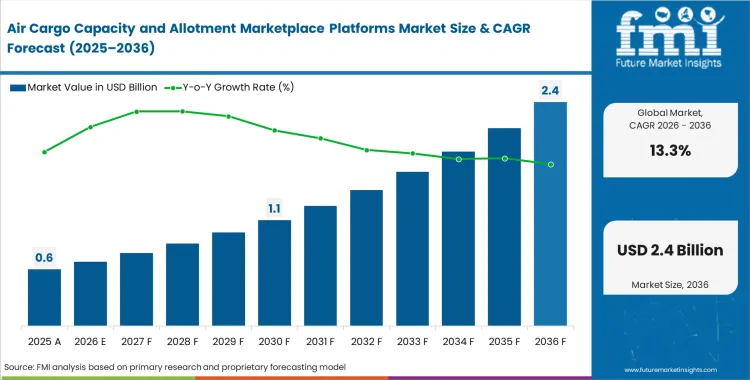
The air cargo capacity and allotment marketplace platforms market was valued at USD 0.5 billion in 2025. Industry outlook is expected to exceed valuation USD 0.6 billion in 2026 at an estimated CAGR of 13.3% during the forecast period. Continuous investment drives total revenue expansion to USD 2.1 billion through 2036 as airlines mandate API-based dynamic pricing to replace static interline rate sheets.
Procurement directors at global freight forwarders face a shrinking window to secure guaranteed space during peak manufacturing cycles. Operating entirely on static rate sheets costs forwarders critical high-yield shipments when capacity tightens unexpectedly. Airline revenue managers enforce real-time dynamic pricing across air cargo inventory. This pricing shift forces forwarders to adopt digital air freight booking software to see available capacity. FMI analysis notes an unusual commercial consequence. Early platform adopters use API connectivity to bypass general sales agents entirely. These forwarders absorb the margin that agents historically claimed.
Summary of Air Cargo Capacity and Allotment Marketplace Platforms Market
- The market is estimated at USD 0.52 billion in 2025.
- The market is projected to reach USD 2.06 billion by 2036.
- The market is expected to grow at a CAGR of 13.3% from 2026 to 2036.
- The forecast period represents an incremental opportunity of USD 1.47 billion.
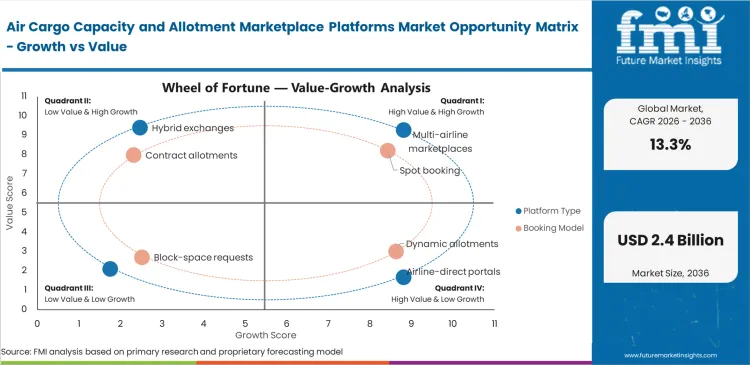
- Multi-airline marketplaces lead by platform type with a 41.0% share.
- Spot booking dominates by booking model with a 46.0% share.
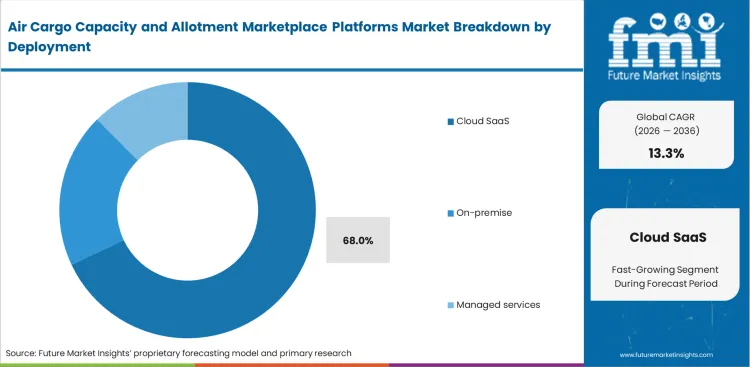
- Cloud SaaS leads by deployment with a 68.0% share.
- Freight forwarders lead by end user with a 57.0% share.
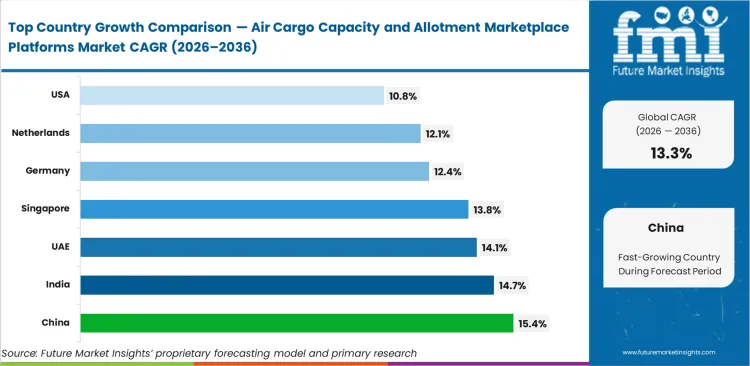
- China (15.4%), India (14.7%), and UAE (14.1%) are among the fastest-growing markets.
- Key companies in the market include Freightos WebCargo, cargo.one, CargoAi, CargoBooking, Freightify, Awery, and Kale Logistics Solutions.
Airline commercial teams are driving a lasting behavioral shift by linking volume-based loyalty incentives directly to API-driven booking targets. This transition is being actively enforced by carriers, who are progressively restricting capacity on legacy distribution channels to accelerate the adoption of digital booking interfaces. Forwarders failing to integrate a cargo booking API provider lose access to preferred routing options before peak season even begins.
China leads at is estimated to hold 15.4% CAGR, as cross‑border e‑commerce forces carriers to expose live capacity data directly to tier‑one forwarders, while India tracks closely at is anticipated to capture 14.7% CAGR as aggressive airport privatization drives the need for unified digital community systems. The United Arab Emirates follows, at is set to accelerate at 14.1% CAGR, supported by state‑backed carriers digitizing transshipment allotment visibility across global hub networks, with Singapore expected to record 13.8% CAGR through mandatory trade data exchange integration for logistics operators.
Germany stands at is estimated to hold 12.4% CAGR as mid‑sized forwarders replace manual space requests with aggregated dashboard views, while the Netherlands is anticipated to capture 12.1% CAGR due to strict slot coordination requirements forcing precise allotment management. The United States closes the set at is poised to garner 10.8% CAGR, reflecting structural friction from legacy airline mainframes that continue to delay full API‑based distribution.
Segmental Analysis
Air Cargo Capacity and Allotment Marketplace Platforms Market Analysis by Platform Type
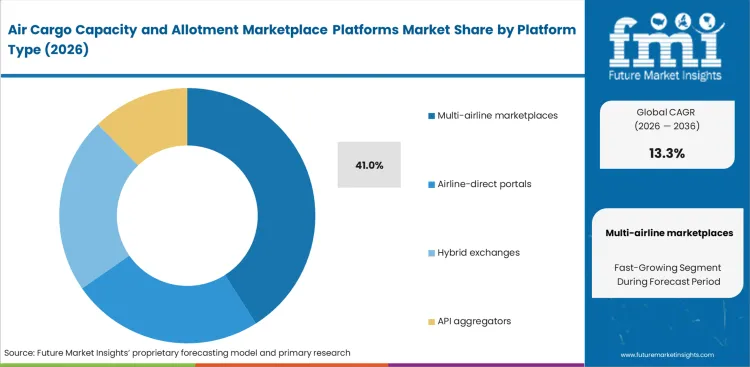
Forwarder procurement teams are increasingly unwilling to manage separate logins across dozens of airline portals. The shift toward consolidating carrier pricing within a single interface explains why multi-airline marketplaces are estimated to account for a 41.0% share in 2026. A closer look at cargo.one vs webcargo highlights how forwarders depend on these aggregated platforms to instantly benchmark spot rates against contracted allotments. Access to real-time capacity across competing alliances enables operators to identify and act on pricing inefficiencies, particularly on secondary routes. Airlines continue to withhold their most time-critical express capacity from multi-carrier platforms, reserving premium space for direct channels. Forwarders that rely solely on freight management systems for capacity visibility risk losing access to guaranteed uplift during periods of peak disruption. Delays in direct API integration leave mid-sized agents fully dependent on how aggregators allocate available capacity.
- Quote validation constraint: Airline revenue managers configure host systems to reject bookings that fall outside internal yield thresholds. As a result, procurement teams encounter unexpected cancellations when marketplace rates no longer align with live carrier inventory.
- Channel cannibalization: Airlines face margin pressure when discounted spot rates are displayed alongside contracted allotments. To protect yield integrity, commercial teams must enforce strict controls over customer-specific pricing visibility.
- Integration lag: Linking legacy airline systems with modern marketplace architectures requires significant middleware investment. Regional carriers in particular face challenges in exposing real-time capacity, limiting their ability to participate fully in aggregator-driven volume flows.
Air Cargo Capacity and Allotment Marketplace Platforms Market Analysis by Booking Model
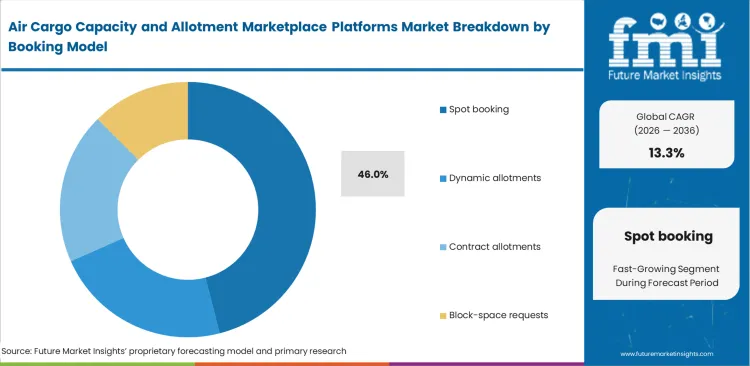
Volatile manufacturing output is forcing logistics planners to move away from rigid long-term space contracts. Immediate shipment requirements now dictate procurement decisions, with route managers turning to spot booking vs allotment booking air cargo to secure capacity only once purchase orders are confirmed. Comparing spot versus allotment structures has become central to air cargo planning, particularly as on-demand uplift helps avoid the cost burden of unused contracted space during softer demand cycles, with spot booking anticipated to account for a 46.0% share in 2026.
This shift introduces a structural trade-off. While spot booking offers operational flexibility, it also shifts pricing control back to airline revenue managers during periods of constrained capacity. Procurement teams that move entirely away from baseline allotments often face sharp rate escalations when key trade lanes tighten. Exclusive reliance on spot capacity exposes forwarders to margin pressure, particularly during fourth-quarter peaks. Route optimization increasingly depends on robust freight management software to navigate and absorb these pricing fluctuations.
- Yield optimization: Carrier pricing systems dynamically adjust spot rates based on available volume and proximity to departure. This allows revenue managers to extract higher margins from time-sensitive shipments.
- Space hoarding risk: Forwarders sometimes book spot capacity in advance to hedge against sudden demand. Airlines counter this through strict cancellation policies and upfront payment requirements.
- Allotment baseline: Leading forwarders continue to maintain minimum contracted space to ensure routing stability. Spot booking is used selectively as an overflow solution rather than a full substitute for secured allotments.
Air Cargo Capacity and Allotment Marketplace Platforms Market Analysis by Deployment
Removing the need for local server infrastructure has lowered a key entry barrier for independent logistics providers. Firms no longer need to commit to heavy upfront IT investments, allowing mid-sized forwarders to adopt web-based booking platforms with minimal internal resources. IT directors are increasingly assessing the ROI of air cargo booking platform adoption, particularly as deployment no longer requires dedicated server maintenance teams. Browser-based access enables routing teams to secure capacity from virtually any location, supporting more distributed and responsive operations.
This shift toward simplified deployment models continues to accelerate adoption across the forwarding landscape, with cloud SaaS expected to account for a 68.0% share in 2026. This dominance introduces a less visible structural risk. Centralized cloud models raise concerns around data sovereignty, as regulators begin to classify cross-border freight transport management data as sensitive trade intelligence. This evolving regulatory stance places pressure on SaaS providers that rely on globally centralized servers. Forwarders that do not verify local data residency compliance risk exposure to regulatory audits and, in some cases, platform access restrictions.
- Rapid provisioning: Vendor teams can onboard new branches onto cloud platforms within hours, allowing operations managers to bypass lengthy internal IT integration cycles.
- API synchronization: Cloud-native systems support continuous data exchange required for real-time rate visibility, avoiding the latency challenges associated with legacy on-premise environments.
- Security protocol: Centralized platforms standardize cybersecurity practices across users, with compliance teams relying on provider-level encryption rather than auditing fragmented internal networks.
Air Cargo Capacity and Allotment Marketplace Platforms Market Analysis by End User
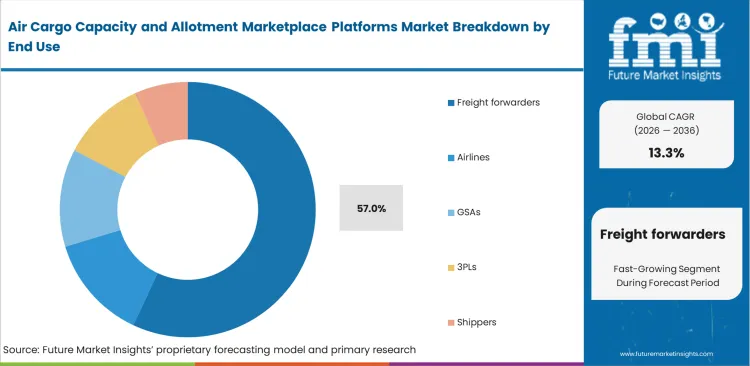
Manual quoting through email is no longer aligned with the speed requirements of modern supply chains. The shift away from phone-based rate negotiations is accelerating the adoption of digital booking workflows, with freight forwarders anticipated to hold a 57.0% share in 2026. Routing supervisors now execute bookings directly through integrated platforms, using the best air cargo booking software for freight forwarders. Instant confirmation enables forwarders to commit to delivery timelines with greater certainty, strengthening service reliability for shippers.
While forwarders generate the majority of platform volume, the same systems are gradually eroding their traditional information advantage. As pricing and capacity become fully visible, margins tied to rate arbitrage begin to compress, shifting competition toward execution capabilities such as handling efficiency and network strength. Sourcing teams that treat these digital logistics marketplaces only as faster quoting tools risk being displaced by shippers who access the same systems directly.
- Consolidation leverage: Large forwarders aggregate smaller shipments to meet airline minimum load requirements, using digital tools to optimize how consolidated cargo is allocated across aircraft capacity.
- Agent disintermediation: Airlines increasingly use direct booking channels to capture higher-margin shipments, reducing reliance on forwarders and putting pressure on traditional sales relationships.
- Customs integration: Booking platforms automatically transmit shipment data to customs systems, minimizing manual entry errors and reducing the likelihood of inspection delays at terminals.
Air Cargo Capacity and Allotment Marketplace Platforms Market Analysis by Function
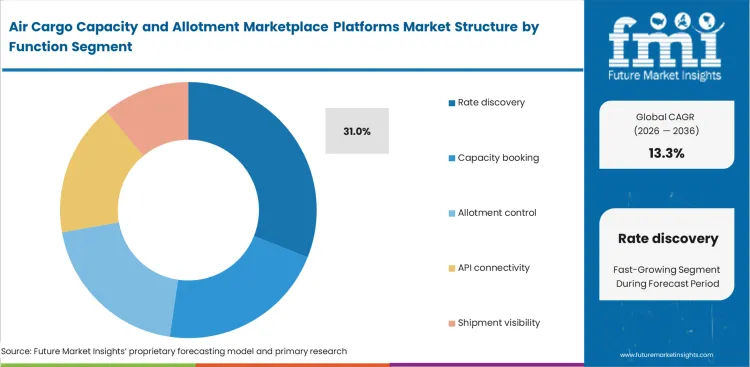
Pricing analysts must establish accurate baseline carrier costs before quoting complex, multi-leg shipments. This requires running high volumes of automated searches each day to reflect current market conditions. Logistics coordinators rely on pricing via air cargo rate management tools and construct competitive proposals for shippers. Cross-checking these rates against actual market levels helps prevent underquoting and protects margins from being eroded at execution. As shipment structures become more dynamic, the role of continuous rate validation has become central to commercial decision-making. A narrow focus on rate discovery often overlooks a critical operational constraint.
The lowest available rate holds little value if corresponding capacity cannot be secured, with rate discovery expected to account for a 31.0% share in 2026. Many platforms expand perceived carrier coverage by aggregating publicly available rates without integrating confirmed booking functionality. Forwarders that depend on such non-executable rate engines risk losing business when quoted capacity fails to materialize. In practice, effective execution increasingly depends on systems that combine pricing visibility with verified shipment movement and booking confirmation.
- Dynamic benchmarking: Algorithm-driven tools enable forwarders to track rate fluctuations across specific trade lanes over time, supporting stronger positioning during annual carrier negotiations.
- Surcharge transparency: Digital platforms incorporate fuel, security, and other accessorial charges directly into quoted rates, reducing discrepancies during invoicing and protecting margins.
- Route optimization: Advanced systems recommend alternative routing options when direct services exceed cost thresholds, allowing planners to balance transit time against pricing constraints based on shipper priorities.
Air Cargo Capacity and Allotment Marketplace Platforms Market Drivers, Restraints, and Opportunities
Major e-commerce brands force their logistics partners to provide exact flight confirmation details before releasing factory inventory. Guaranteeing this specific uplift requires forwarder routing managers to secure instantaneous booking codes from airline systems. The cross-border e-commerce impact on air cargo booking software accelerates this shift away from email requests that miss critical weekend departures. Airline yield algorithms update connected logistics capacity parameters constantly. Rates quoted at noon frequently become invalid by two o'clock. Forwarders adopt direct API platforms to participate in these shortened procurement cycles. Failing to connect digitally means losing entire e-commerce accounts to technologically capable competitors.
The persistence of legacy airline mainframe systems creates severe structural friction against true marketplace functionality. IT directors at older carriers cannot easily expose live inventory data to external cloud platforms. Outdated architectures force airlines to use batch updates. Capacity shown on marketplaces diverges from the actual physical space available. Operations managers face problems with manual air cargo booking alongside rejected digital rates. Middleware solutions attempt to bridge this gap. Translation latency permanently limits the reliability of digital capacity promises.
Opportunities in the Air Cargo Capacity and Allotment Marketplace Platforms Market
- GSA digital transition: General sales agents face existential threats from direct booking platforms. Transitioning their role to manage API integrations for regional airlines secures their future relevance.
- Specialized cargo modules: Standard platforms struggle to handle temperature-controlled requirements. Building dedicated validation modules for pharmaceutical shipments captures a premium margin from specialized forwarders.
- AI predictive modeling: Airlines generate massive datasets from digital booking interactions. Deploying AI in air cargo booking platforms to forecast peak demand allows revenue managers to adjust spot pricing proactively before capacity constraints hit.
Regional Analysis
Based on regional analysis, air cargo capacity and allotment marketplace platforms market is segmented into North America, Latin America, Europe, Asia Pacific, and Middle East and Africa across 40 plus countries.
.webp "Top Country Growth Comparison Air Cargo Capacity And Allotment Marketplace Platforms Market Cagr (2026 2036)")
| Country | CAGR (2026 to 2036) |
|---|---|
| China | 15.4% |
| India | 14.7% |
| United Arab Emirates | 14.1% |
| Singapore | 13.8% |
| Germany | 12.4% |
| Netherlands | 12.1% |
| United States | 10.8% |
Source: Future Market Insights (FMI) analysis, based on proprietary forecasting model and primary research
Asia Pacific Air Cargo Capacity and Allotment Marketplace Platforms Market Analysis
Volatility in export manufacturing is pushing Asian logistics hubs toward algorithm-driven capacity matching to avoid severe congestion. Forwarding managers across the region require real-time visibility into transpacific uplift to keep high-velocity supply chains, particularly in consumer electronics, running without disruption. The scale of cross-border e-commerce flows has effectively outgrown manual quoting processes, making traditional methods increasingly unworkable. Static spreadsheets quickly translate into cargo pileups at major outbound gateways. Purchasing teams are left with little choice but to secure capacity through digital channels or risk shipments remaining stranded on airport tarmacs for extended periods.
- China: Cross‑border e‑commerce leaders in China are reshaping air cargo distribution by compelling airlines to expose real‑time capacity availability directly to tier‑one forwarders. This mandatory transparency allows delivery windows to be contractually protected rather than negotiated case by case. The digital air cargo booking and airline inventory integration segment in China is anticipated to hold a 15.4% CAGR, driven by routing supervisors who now programmatically avoid saturated mega‑hubs in favor of secondary gateways. The long‑term direction signals a tightly fused ecosystem where factory production planning feeds directly into airline capacity management systems, removing human intervention from booking decisions almost entirely.
- India: India’s airport privatization program has injected real commercial urgency into how outbound air capacity is allocated and controlled. India digital air cargo capacity management sector is estimated to capture a 14.7% CAGR, as export volumes continue to strain infrastructure and push gateway operators toward unified digital community platforms that link airlines, ground handlers, and forwarders within a single operational workflow. This momentum is most visible on Europe‑bound trade lanes, where space shortages are structural rather than seasonal. Early movers that secure guaranteed allotments through electronic portals are already locking in rate stability and long‑term shipper commitments advantages that late entrants will find increasingly difficult to reclaim.
- Singapore: Singapore’s regulatory mandate for standardized trade data exchange has rendered manual capacity procurement obsolete. All licensed logistics operators are now required to transact through interoperable digital systems, fundamentally altering how air cargo space is sourced, priced, and confirmed. This regulatory reset has allowed planners to exploit Singapore’s transshipment density, assembling complex multi‑carrier routings as a deliberate network strategy. The digital capacity procurement and transshipment optimization industry in country is estimated to hold a 13.8% CAGR, reinforcing a permanent operating environment where phone calls, emails, and manual slot requests no longer function as fallback options.
FMI’s report includes Japan, South Korea, and Australia, where regional carriers increasingly require electronic air waybills as a prerequisite to access spot pricing inventory, pushing forwarders toward more sophisticated visibility architectures. In Vietnam, where rapid expansion in electronics and high‑value manufacturing exports is accelerating the adoption of end‑to‑end digital documentation and booking linkages with airlines.
Middle East and Africa Air Cargo Capacity and Allotment Marketplace Platforms Market Analysis
State-backed carriers expanding internationally are placing greater emphasis on digital tools to optimize yield across complex, multi-leg networks. Revenue managers depend on advanced distribution systems to align inbound Asian volumes with outbound European connections efficiently. These transshipment-heavy networks derive significant operational value from precise visibility into allotted capacity. Attempting to manage such interconnected flows manually introduces a high probability of misrouting and inefficiencies. IT teams are prioritizing air cargo capacity distribution software to maintain control over increasingly complex hub operations.
- United Arab Emirates: Major Middle Eastern carriers headquartered in the UAE are redefining transshipment strategy by publishing live allotment visibility across their hub‑to‑hub networks. Operations teams now adjust belly capacity in near real time, prioritizing yield on downstream connections rather than static origin‑destination planning. The airline‑owned digital cargo distribution platforms operating out of the UAE are expected to capture a 14.1% CAGR, reflecting how aggressively these carriers are enforcing API‑only access. Global forwarders increasingly have no choice but to integrate directly into proprietary systems, setting competitive norms that ripple well beyond the region.
FMI’s report includes South Africa, Saudi Arabia, and Kenya, where African perishables exporters are increasingly turning to specialized digital booking portals to secure temperature‑controlled air cargo capacity directly from carriers. Egypt, where expanding pharmaceutical and fresh produce exports are accelerating demand for digitally managed cold‑chain air freight solutions linking manufacturing zones to European gateways.
Europe Air Cargo Capacity and Allotment Marketplace Platforms Market Analysis
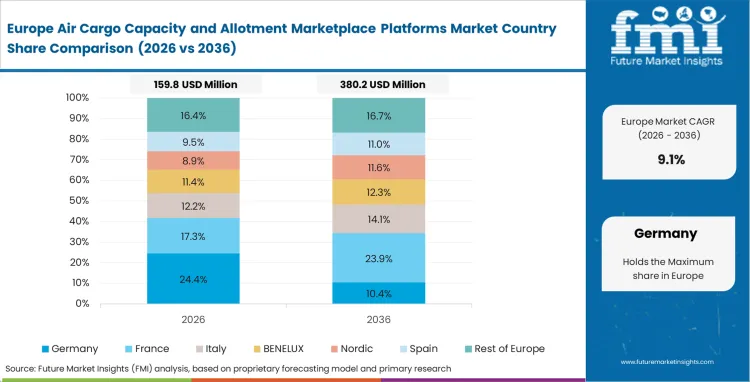
Tight environmental regulations and limited airport slots are forcing European hubs to manage cargo throughput with far greater discipline. Logistics coordinators cannot afford speculative bookings within constrained flight schedules where unused space directly impacts network efficiency. Stringent customs data requirements are also accelerating the shift toward digital platforms. Manual submission of waybill information increases the likelihood of regulatory scrutiny and operational delays. Compliance teams rely on digital booking systems to ensure shipment data is accurate and fully aligned with physical cargo before arrival at the airport.
- Germany: In Germany, the pressure is felt most acutely by mid‑sized forwarders competing against multinational logistics firms with superior buying power.
Manual space requests have become commercially unviable, particularly on automotive and industrial parts lanes where margins are thin and delivery precision is non‑negotiable. Replacing email‑based requests with aggregated digital dashboards has positioned the country’s forwarder‑centric booking platform segment as estimated to hold a 12.4% CAGR. This shift is less about technological ambition and more about commercial survival: local agents remain viable only if they can quote, secure, and confirm space at the same speed as their global competitors. - Netherlands: Strict slot coordination rules at Dutch gateways have elevated capacity planning from a purely operational task to a regulatory obligation. Misaligned allotments now translate directly into terminal congestion penalties, forcing forwarders to forecast uplift with unprecedented accuracy. The Netherlands’ digital air cargo exchange segment is expected to hold a 12.1% CAGR, evolving into an active marketplace where guaranteed space is traded dynamically as shipper volumes fluctuate. In this tightly regulated environment, forwarders that rebalance commitments through digital exchanges avoid cancellation charges while maintaining consistent service levels across Europe’s most capacity‑constrained airports.
FMI’s report includes the United Kingdom, France, and Italy, where established legacy forwarders face mounting pressure to modernize proprietary routing engines to keep pace with cloud‑native competitors. The report also covers Poland, where its expanding role as a pan‑European manufacturing and distribution hub is accelerating demand for digitally optimized air cargo routing and capacity visibility.
North America Air Cargo Capacity and Allotment Marketplace Platforms Market Analysis
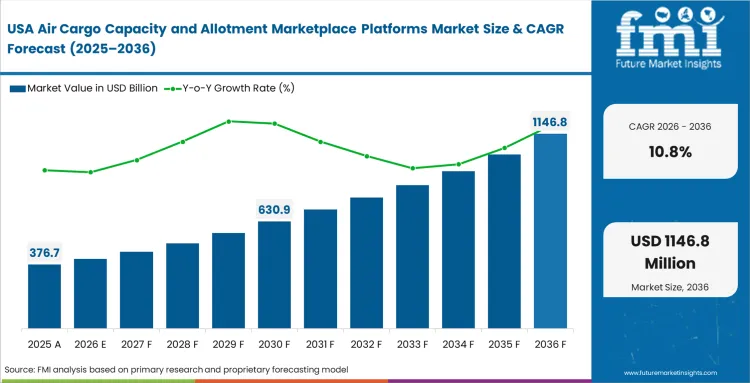
Consolidated passenger airline networks dominate belly cargo capacity, creating structural resistance to third-party distribution platforms. Revenue managers at these carriers continue to steer forwarders toward proprietary booking systems to retain control over pricing and customer relationships. This approach has led to a fragmented digital environment for domestic logistics operators. Procurement teams must navigate multiple disconnected carrier portals to compare transcontinental options effectively. Aggregator platforms often provide only partial visibility, as several major airlines limit their participation or withhold full pricing and capacity data.
- United States: USA airlines remain constrained by legacy mainframe architectures that were never designed for open, multi‑carrier distribution. The domestic airline digitization and marketplace connectivity segment is expected to capture a 10.8% CAGR, even as technical debt continues to slow direct API connectivity and keep forwarders dependent on middleware that translates modern booking logic into outdated systems. Forwarders are increasingly unwilling to navigate individual airline portals, and that resistance is creating tangible commercial pressure. While modernization remains incremental rather than transformative, the trajectory is unmistakable, aggregation is becoming unavoidable, and reluctance is slowly yielding to necessity.
FMI’s report includes Canada and Mexico, where cross‑border manufacturing integrations require unified digital platforms to manage tight factory‑to‑airport transit windows.
It also covers Vietnam, where export‑led manufacturing growth is driving forwarders to adopt digital capacity procurement to support electronics and apparel flows into North American and European markets.
Competitive Aligners for Market Players
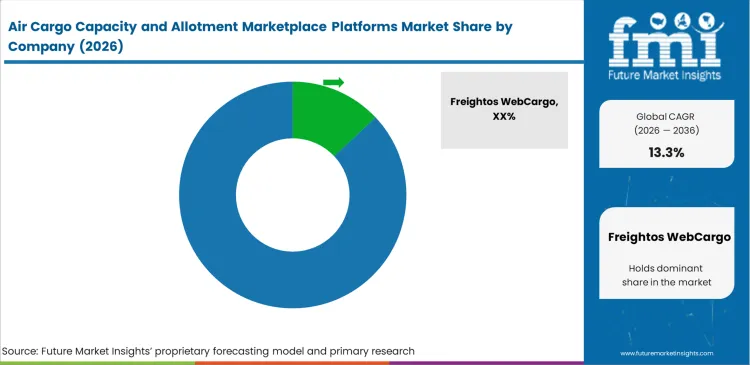
Airlines intentionally distribute capacity across multiple digital channels to avoid overdependence on any single aggregator. Procurement leaders select platforms primarily based on the reliability of live booking confirmations rather than interface design. When comparing systems such as CargoAi vs WebCargo, API stability consistently outweighs visual usability. Aggregators that secure exclusive distribution agreements with regional carriers are able to capture dedicated forwarding volumes on those specific trade lanes. Assessing the key players in air cargo marketplace platforms increasingly depends on identifying which platforms maintain direct, active integrations with airline host systems.
Renowned marketplace operators benefit from extensive historical routing data that newer entrants cannot easily replicate. These platforms leverage large transaction datasets to train forecasting models, enabling more accurate pricing insights alongside standard rate discovery. New air cargo booking software vendors focused solely on transactional booking tools because they face structural limitations due to the absence of mature middleware capabilities. Building reliable API connections with supply chain analytics software, some of which are decades old, requires specialized engineering expertise that acts as a significant barrier to entry.
Major global forwarders are limiting their dependence on open marketplaces by developing proprietary digital quoting systems. Many deploy dedicated airline allotment management software to create private booking environments for their own customers. This shift is pushing public aggregators to reposition themselves as white-label technology providers in order to retain enterprise clients. Running standalone marketplaces becomes increasingly challenging as major forwarders seek to control the end-customer interface. Decision-makers evaluating how to choose an air cargo booking platform must weigh the trade-off between participating in public marketplaces and adopting private, customizable solutions.
Key Players in the Air Cargo Capacity and Allotment Marketplace Platforms Market
- Freightos WebCargo
- cargo.one
- CargoAi
- CargoBooking
- Freightify
- Awery
- Kale Logistics Solutions
Scope of the Report
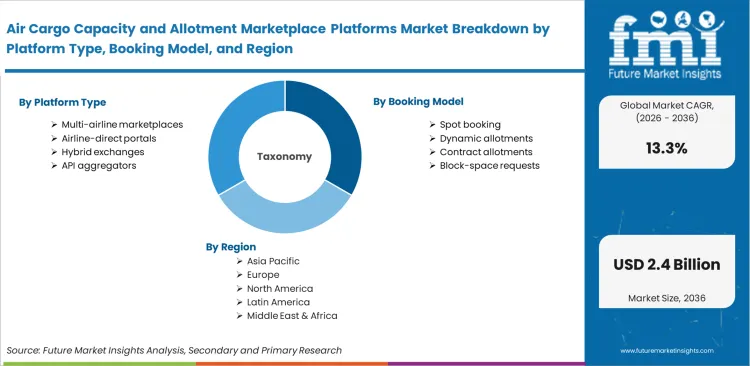
| Metric | Value |
|---|---|
| Quantitative Units | USD 0.6 Billion to USD 2.1 Billion, at a CAGR of 13.3% |
| Market Definition | These platforms act as digital transaction layers where forwarders discover, compare, and secure air freight capacity from airline inventory systems via real-time API connections. |
| Segmentation | Platform Type, Booking Model, Deployment, End User, and Function |
| Regions Covered | North America, Latin America, Europe, Asia Pacific, Middle East and Africa |
| Countries Covered | China, India, United Arab Emirates, Singapore, Germany, Netherlands, United States |
| Key Companies Profiled | Freightos WebCargo, cargo.one, CargoAi, CargoBooking, Freightify, Awery, Kale Logistics Solutions |
| Forecast Period | 2026 to 2036 |
| Approach | Electronic booking transaction volumes processed through major cargo hubs. |
Source: Future Market Insights (FMI) analysis, based on proprietary forecasting model and primary research
Air Cargo Capacity and Allotment Marketplace Platforms Market Analysis by Segments
Platform Type
- Multi-airline marketplaces
- Airline-direct portals
- Hybrid exchanges
- API aggregators
Booking Model
- Spot booking
- Dynamic allotments
- Contract allotments
- Block-space requests
Deployment
- Cloud SaaS
- On-premise
- Managed services
End User
- Freight forwarders
- Airlines
- GSAs
- 3PLs
- Shippers
Function
- Rate discovery
- Capacity booking
- Allotment control
- API connectivity
- Shipment visibility
Region
- North America
- United States
- Canada
- Latin America
- Brazil
- Mexico
- Europe
- Germany
- United Kingdom
- France
- Italy
- Spain
- Russia
- Netherlands
- Asia Pacific
- China
- India
- Japan
- South Korea
- Australia
- Singapore
- Middle East and Africa
- GCC Countries
- South Africa
- Israel
Bibliography
- Bossong, P., Heinbach, C., & Hübner, A. (2025). Adoption drivers and barriers of digital freight transport platforms in logistics ecosystems. Electronic Markets.
- Du, C., He, Y., & Xu, J. (2025). Dynamic pricing for air cargo revenue management. Journal of Air Transport Management.
- International Air Transport Association. (2026, January 29). Global air cargo demand achieved record volume in 2025. IATA.
- Jurgelāne-Kaldava, I., & Kaldavs, M. (2025). Digitalization of Air Cargo Supply Chains: A Case Study of Latvia. Systems.
- The International Air Cargo Association. (2025, March). TIACA Air Cargo Sustainability Insight Report 5th edition. TIACA.
- İlgün Ayhan, D., & colleagues. (2025). An Integrated Capacity Allocation and Dynamic Pricing Model for Air Cargo Revenue Management. Applied Sciences.
This bibliography is provided for reader reference. The full FMI report contains the complete reference list with primary source documentation.
This Report Addresses
- Multi-airline marketplace consolidation requirements for global forwarders.
- Real-time spot booking API integration metrics.
- Cloud SaaS data sovereignty implications for logistics providers.
- Direct airline booking portal margin capture mechanisms.
- Algorithmic rate discovery validation constraints.
- E-commerce volumetric capacity allocation triggers.
- Transshipment allotment visibility across Middle Eastern hubs.
- Proprietary forwarding software development trends among logistics giants.
Frequently Asked Questions
What is the projected air cargo booking platform size in 2026?
The industry value is expected to reach USD 0.6 Billion in 2026. This initial growth phase relies heavily on major airlines enforcing API-based dynamic pricing over traditional manual rate sheets.
What is the anticipated air cargo booking platform CAGR?
The sector is forecast to expand at a 13.3% CAGR from 2026 to 2036. This sustained rate reflects the mandatory transition of tier-two forwarders onto digital portals to remain competitive.
What defines the air cargo platform segmentation approach?
Segmentation separates platform types, deployment models, and end-user adoption patterns. This allows detailed tracking of how multi-airline hubs compete against direct airline portals across specific logistics regions.
How does the one record impact on air cargo booking platforms alter demand?
The ONE Record standard forces logistics providers to adopt software capable of unified data exchange. Platforms integrating this standard capture enterprise forwarders seeking compliance with emerging international customs mandates.
Which vendors offer the best air cargo allotment management platform?
Top-tier logistics giants actively build proprietary digital quoting engines instead of relying on public aggregators. Large forwarders maintain enough purchasing power to force direct API connections with carriers directly.
What defines an air cargo booking API provider?
These providers supply the technical connective tissue linking airline inventory mainframes with forwarder management dashboards. Their middleware enables real-time rate validation and instant capacity confirmation across multiple global gateways.
What limits multi-airline marketplace adoption among top-tier forwarders?
Enterprise forwarders bypass third-party platform fees by developing internal software. They leverage massive freight volumes to establish exclusive direct connections with airline host systems.
Why do airlines reject aggregator bookings dynamically?
Revenue managers configure airline host systems to reject aggregator bookings that violate internal yield thresholds. Airlines deliberately withhold their highest-priority express capacity from multi-carrier aggregators to reserve premium space for direct channels.
How does cloud deployment affect data sovereignty?
Centralized SaaS models expose forwarding firms to national regulatory scrutiny regarding cross-border trade intelligence. National regulators increasingly view cargo capacity data as sensitive information, forcing providers to establish localized server architectures.
What creates structural friction against pure API distribution?
Legacy airline mainframes lack modern middleware capabilities necessary to expose live inventory data externally. Outdated architectures force airlines to use batch updates, meaning capacity shown on marketplaces often diverges from actual physical space available.
Why is spot booking becoming dominant?
Volatile manufacturing output forces logistics planners to abandon rigid long-term space contracts. Route managers purchase uplift on demand to eliminate financial penalties associated with empty contracted space during slow production weeks.
How do carriers cannibalize forwarding margins?
Airlines use direct booking portals to capture high-margin cargo from mid-tier shippers directly. Forwarding sales directors lose accounts when carriers offer better rates through proprietary digital interfaces rather than traditional agent networks.
What role do customs data requirements play in adoption?
Compliance officers demand digital booking platforms to ensure all volumetric data perfectly matches physical freight before terminal arrival. Sending manual waybill data invites immediate regulatory audits and terminal delays at heavily congested gateways.
Why is China growing at 15.4%?
Massive export volumes driven by cross-border e-commerce giants force carriers to expose live capacity data directly to tier-one forwarders. Algorithmic capacity matching prevents catastrophic freight bottlenecks at primary Asian departure hubs.
What differentiates Middle Eastern platform usage?
Mega-carriers operating out of the United Arab Emirates require precise allotment visibility to manage complex transshipment networks. Operations directors allocate belly capacity dynamically across thousands of connecting flights to maximize network yield.
How do European slot constraints impact digital booking?
Strict slot coordination forces precise allotment management to prevent terminal congestion. Capacity planners utilize digital exchanges to trade guaranteed space dynamically when shipper volumes fluctuate without incurring airline cancellation penalties.
What protects incumbent marketplace operators from new entrants?
Established platforms possess deep middleware libraries required to translate legacy airline mainframe data. Establishing functional API connections to twenty-year-old cargo management systems requires highly specialized engineering knowledge that acts as a profound barrier.
Why do rate discovery engines lose client trust?
Many platforms artificially inflate carrier counts by scraping public rates without integrating booking capabilities. Relying on non-bookable rate discovery causes forwarding agents to lose critical client contracts when promised space evaporates during execution.
How do loyalty incentives accelerate API integration?
Major cargo carriers tie volume-based financial incentives directly to API booking milestones. This structural shift makes manual capacity requests economically unviable for forwarders operating on thin margins.
What function do General Sales Agents serve digitally?
GSAs transition from manual capacity peddlers to API integration consultants for regional airlines. Managing digital capacity allocation protects their relevance as direct platform booking threatens traditional agent disintermediation.
Why does North America experience software fragmentation?
Consolidated passenger airline networks control majority belly cargo capacity and prefer pushing forwarders into proprietary portals. Purchasing directors navigate multiple disconnected systems because major domestic airlines refuse full participation in third-party aggregators.
How do predictive algorithms benefit revenue managers?
Airlines train AI models on millions of past platform transactions to forecast peak demand accurately. Revenue managers adjust spot pricing proactively before physical capacity constraints hit specific trade lanes.
What risk exists in speculative space hoarding?
Forwarders attempt to book spot capacity speculatively to protect against sudden shipper requests. Airline systems counter this behavior by enforcing strict cancellation penalties and immediate payment terms on digital portals.
How do platforms enable route optimization?
Advanced rate discovery tools suggest alternative transit hubs when direct flights exceed target price ceilings. Planners automatically sacrifice transit speed for cost efficiency based on specific shipper parameters embedded in platform logic.
Preview the report firsthand - request a free sample
Get SampleGet the brochure for pricing and purchase details.
Get PDFTable of Content
- Executive Summary
- Global Market Outlook
- Demand-side Trends
- Supply-side Trends
- Technology Roadmap Analysis
- Analysis and Recommendations
- Market Overview
- Market Coverage / Taxonomy
- Market Definition / Scope / Limitations
- Research Methodology
- Chapter Orientation
- Analytical Lens and Working Hypotheses
- Market Structure, Signals, and Trend Drivers
- Benchmarking and Cross-market Comparability
- Market Sizing, Forecasting, and Opportunity Mapping
- Research Design and Evidence Framework
- Desk Research Programme (Secondary Evidence)
- Company Annual and Sustainability Reports
- Peer-reviewed Journals and Academic Literature
- Corporate Websites, Product Literature, and Technical Notes
- Earnings Decks and Investor Briefings
- Statutory Filings and Regulatory Disclosures
- Technical White Papers and Standards Notes
- Trade Journals, Industry Magazines, and Analyst Briefs
- Conference Proceedings, Webinars, and Seminar Materials
- Government Statistics Portals and Public Data Releases
- Press Releases and Reputable Media Coverage
- Specialist Newsletters and Curated Briefings
- Sector Databases and Reference Repositories
- FMI Internal Proprietary Databases and Historical Market Datasets
- Subscription Datasets and Paid Sources
- Social Channels, Communities, and Digital Listening Inputs
- Additional Desk Sources
- Expert Input and Fieldwork (Primary Evidence)
- Primary Modes
- Qualitative Interviews and Expert Elicitation
- Quantitative Surveys and Structured Data Capture
- Blended Approach
- Why Primary Evidence is Used
- Field Techniques
- Interviews
- Surveys
- Focus Groups
- Observational and In-context Research
- Social and Community Interactions
- Stakeholder Universe Engaged
- C-suite Leaders
- Board Members
- Presidents and Vice Presidents
- R&D and Innovation Heads
- Technical Specialists
- Domain Subject-matter Experts
- Scientists
- Physicians and Other Healthcare Professionals
- Governance, Ethics, and Data Stewardship
- Research Ethics
- Data Integrity and Handling
- Primary Modes
- Tooling, Models, and Reference Databases
- Desk Research Programme (Secondary Evidence)
- Data Engineering and Model Build
- Data Acquisition and Ingestion
- Cleaning, Normalisation, and Verification
- Synthesis, Triangulation, and Analysis
- Quality Assurance and Audit Trail
- Market Background
- Market Dynamics
- Drivers
- Restraints
- Opportunity
- Trends
- Scenario Forecast
- Demand in Optimistic Scenario
- Demand in Likely Scenario
- Demand in Conservative Scenario
- Opportunity Map Analysis
- Product Life Cycle Analysis
- Supply Chain Analysis
- Investment Feasibility Matrix
- Value Chain Analysis
- PESTLE and Porter’s Analysis
- Regulatory Landscape
- Regional Parent Market Outlook
- Production and Consumption Statistics
- Import and Export Statistics
- Market Dynamics
- Global Market Analysis 2021 to 2025 and Forecast, 2026 to 2036
- Historical Market Size Value (USD Million) Analysis, 2021 to 2025
- Current and Future Market Size Value (USD Million) Projections, 2026 to 2036
- Y-o-Y Growth Trend Analysis
- Absolute $ Opportunity Analysis
- Global Market Pricing Analysis 2021 to 2025 and Forecast 2026 to 2036
- Global Market Analysis 2021 to 2025 and Forecast 2026 to 2036, By Platform Type
- Introduction / Key Findings
- Historical Market Size Value (USD Million) Analysis By Platform Type , 2021 to 2025
- Current and Future Market Size Value (USD Million) Analysis and Forecast By Platform Type , 2026 to 2036
- Multi-airline marketplaces
- Airline-direct portals
- Hybrid exchanges
- API aggregators
- Multi-airline marketplaces
- Y-o-Y Growth Trend Analysis By Platform Type , 2021 to 2025
- Absolute $ Opportunity Analysis By Platform Type , 2026 to 2036
- Global Market Analysis 2021 to 2025 and Forecast 2026 to 2036, By Booking Model
- Introduction / Key Findings
- Historical Market Size Value (USD Million) Analysis By Booking Model, 2021 to 2025
- Current and Future Market Size Value (USD Million) Analysis and Forecast By Booking Model, 2026 to 2036
- Spot booking
- Dynamic allotments
- Contract allotments
- Block-space requests
- Spot booking
- Y-o-Y Growth Trend Analysis By Booking Model, 2021 to 2025
- Absolute $ Opportunity Analysis By Booking Model, 2026 to 2036
- Global Market Analysis 2021 to 2025 and Forecast 2026 to 2036, By Deployment
- Introduction / Key Findings
- Historical Market Size Value (USD Million) Analysis By Deployment, 2021 to 2025
- Current and Future Market Size Value (USD Million) Analysis and Forecast By Deployment, 2026 to 2036
- Cloud SaaS
- On-premise
- Managed services
- Cloud SaaS
- Y-o-Y Growth Trend Analysis By Deployment, 2021 to 2025
- Absolute $ Opportunity Analysis By Deployment, 2026 to 2036
- Global Market Analysis 2021 to 2025 and Forecast 2026 to 2036, By End Use
- Introduction / Key Findings
- Historical Market Size Value (USD Million) Analysis By End Use, 2021 to 2025
- Current and Future Market Size Value (USD Million) Analysis and Forecast By End Use, 2026 to 2036
- Freight forwarders
- Airlines
- GSAs
- 3PLs
- Shippers
- Freight forwarders
- Y-o-Y Growth Trend Analysis By End Use, 2021 to 2025
- Absolute $ Opportunity Analysis By End Use, 2026 to 2036
- Global Market Analysis 2021 to 2025 and Forecast 2026 to 2036, By Function
- Introduction / Key Findings
- Historical Market Size Value (USD Million) Analysis By Function, 2021 to 2025
- Current and Future Market Size Value (USD Million) Analysis and Forecast By Function, 2026 to 2036
- Rate discovery
- Capacity booking
- Allotment control
- API connectivity
- Shipment visibility
- Rate discovery
- Y-o-Y Growth Trend Analysis By Function, 2021 to 2025
- Absolute $ Opportunity Analysis By Function, 2026 to 2036
- Global Market Analysis 2021 to 2025 and Forecast 2026 to 2036, By Region
- Introduction
- Historical Market Size Value (USD Million) Analysis By Region, 2021 to 2025
- Current Market Size Value (USD Million) Analysis and Forecast By Region, 2026 to 2036
- North America
- Latin America
- Western Europe
- Eastern Europe
- East Asia
- South Asia and Pacific
- Middle East & Africa
- Market Attractiveness Analysis By Region
- North America Market Analysis 2021 to 2025 and Forecast 2026 to 2036, By Country
- Historical Market Size Value (USD Million) Trend Analysis By Market Taxonomy, 2021 to 2025
- Market Size Value (USD Million) Forecast By Market Taxonomy, 2026 to 2036
- By Country
- USA
- Canada
- Mexico
- By Platform Type
- By Booking Model
- By Deployment
- By End Use
- By Function
- By Country
- Market Attractiveness Analysis
- By Country
- By Platform Type
- By Booking Model
- By Deployment
- By End Use
- By Function
- Key Takeaways
- Latin America Market Analysis 2021 to 2025 and Forecast 2026 to 2036, By Country
- Historical Market Size Value (USD Million) Trend Analysis By Market Taxonomy, 2021 to 2025
- Market Size Value (USD Million) Forecast By Market Taxonomy, 2026 to 2036
- By Country
- Brazil
- Chile
- Rest of Latin America
- By Platform Type
- By Booking Model
- By Deployment
- By End Use
- By Function
- By Country
- Market Attractiveness Analysis
- By Country
- By Platform Type
- By Booking Model
- By Deployment
- By End Use
- By Function
- Key Takeaways
- Western Europe Market Analysis 2021 to 2025 and Forecast 2026 to 2036, By Country
- Historical Market Size Value (USD Million) Trend Analysis By Market Taxonomy, 2021 to 2025
- Market Size Value (USD Million) Forecast By Market Taxonomy, 2026 to 2036
- By Country
- Germany
- UK
- Italy
- Spain
- France
- Nordic
- BENELUX
- Rest of Western Europe
- By Platform Type
- By Booking Model
- By Deployment
- By End Use
- By Function
- By Country
- Market Attractiveness Analysis
- By Country
- By Platform Type
- By Booking Model
- By Deployment
- By End Use
- By Function
- Key Takeaways
- Eastern Europe Market Analysis 2021 to 2025 and Forecast 2026 to 2036, By Country
- Historical Market Size Value (USD Million) Trend Analysis By Market Taxonomy, 2021 to 2025
- Market Size Value (USD Million) Forecast By Market Taxonomy, 2026 to 2036
- By Country
- Russia
- Poland
- Hungary
- Balkan & Baltic
- Rest of Eastern Europe
- By Platform Type
- By Booking Model
- By Deployment
- By End Use
- By Function
- By Country
- Market Attractiveness Analysis
- By Country
- By Platform Type
- By Booking Model
- By Deployment
- By End Use
- By Function
- Key Takeaways
- East Asia Market Analysis 2021 to 2025 and Forecast 2026 to 2036, By Country
- Historical Market Size Value (USD Million) Trend Analysis By Market Taxonomy, 2021 to 2025
- Market Size Value (USD Million) Forecast By Market Taxonomy, 2026 to 2036
- By Country
- China
- Japan
- South Korea
- By Platform Type
- By Booking Model
- By Deployment
- By End Use
- By Function
- By Country
- Market Attractiveness Analysis
- By Country
- By Platform Type
- By Booking Model
- By Deployment
- By End Use
- By Function
- Key Takeaways
- South Asia and Pacific Market Analysis 2021 to 2025 and Forecast 2026 to 2036, By Country
- Historical Market Size Value (USD Million) Trend Analysis By Market Taxonomy, 2021 to 2025
- Market Size Value (USD Million) Forecast By Market Taxonomy, 2026 to 2036
- By Country
- India
- ASEAN
- Australia & New Zealand
- Rest of South Asia and Pacific
- By Platform Type
- By Booking Model
- By Deployment
- By End Use
- By Function
- By Country
- Market Attractiveness Analysis
- By Country
- By Platform Type
- By Booking Model
- By Deployment
- By End Use
- By Function
- Key Takeaways
- Middle East & Africa Market Analysis 2021 to 2025 and Forecast 2026 to 2036, By Country
- Historical Market Size Value (USD Million) Trend Analysis By Market Taxonomy, 2021 to 2025
- Market Size Value (USD Million) Forecast By Market Taxonomy, 2026 to 2036
- By Country
- Kingdom of Saudi Arabia
- Other GCC Countries
- Turkiye
- South Africa
- Other African Union
- Rest of Middle East & Africa
- By Platform Type
- By Booking Model
- By Deployment
- By End Use
- By Function
- By Country
- Market Attractiveness Analysis
- By Country
- By Platform Type
- By Booking Model
- By Deployment
- By End Use
- By Function
- Key Takeaways
- Key Countries Market Analysis
- USA
- Pricing Analysis
- Market Share Analysis, 2025
- By Platform Type
- By Booking Model
- By Deployment
- By End Use
- By Function
- Canada
- Pricing Analysis
- Market Share Analysis, 2025
- By Platform Type
- By Booking Model
- By Deployment
- By End Use
- By Function
- Mexico
- Pricing Analysis
- Market Share Analysis, 2025
- By Platform Type
- By Booking Model
- By Deployment
- By End Use
- By Function
- Brazil
- Pricing Analysis
- Market Share Analysis, 2025
- By Platform Type
- By Booking Model
- By Deployment
- By End Use
- By Function
- Chile
- Pricing Analysis
- Market Share Analysis, 2025
- By Platform Type
- By Booking Model
- By Deployment
- By End Use
- By Function
- Germany
- Pricing Analysis
- Market Share Analysis, 2025
- By Platform Type
- By Booking Model
- By Deployment
- By End Use
- By Function
- UK
- Pricing Analysis
- Market Share Analysis, 2025
- By Platform Type
- By Booking Model
- By Deployment
- By End Use
- By Function
- Italy
- Pricing Analysis
- Market Share Analysis, 2025
- By Platform Type
- By Booking Model
- By Deployment
- By End Use
- By Function
- Spain
- Pricing Analysis
- Market Share Analysis, 2025
- By Platform Type
- By Booking Model
- By Deployment
- By End Use
- By Function
- France
- Pricing Analysis
- Market Share Analysis, 2025
- By Platform Type
- By Booking Model
- By Deployment
- By End Use
- By Function
- India
- Pricing Analysis
- Market Share Analysis, 2025
- By Platform Type
- By Booking Model
- By Deployment
- By End Use
- By Function
- ASEAN
- Pricing Analysis
- Market Share Analysis, 2025
- By Platform Type
- By Booking Model
- By Deployment
- By End Use
- By Function
- Australia & New Zealand
- Pricing Analysis
- Market Share Analysis, 2025
- By Platform Type
- By Booking Model
- By Deployment
- By End Use
- By Function
- China
- Pricing Analysis
- Market Share Analysis, 2025
- By Platform Type
- By Booking Model
- By Deployment
- By End Use
- By Function
- Japan
- Pricing Analysis
- Market Share Analysis, 2025
- By Platform Type
- By Booking Model
- By Deployment
- By End Use
- By Function
- South Korea
- Pricing Analysis
- Market Share Analysis, 2025
- By Platform Type
- By Booking Model
- By Deployment
- By End Use
- By Function
- Russia
- Pricing Analysis
- Market Share Analysis, 2025
- By Platform Type
- By Booking Model
- By Deployment
- By End Use
- By Function
- Poland
- Pricing Analysis
- Market Share Analysis, 2025
- By Platform Type
- By Booking Model
- By Deployment
- By End Use
- By Function
- Hungary
- Pricing Analysis
- Market Share Analysis, 2025
- By Platform Type
- By Booking Model
- By Deployment
- By End Use
- By Function
- Kingdom of Saudi Arabia
- Pricing Analysis
- Market Share Analysis, 2025
- By Platform Type
- By Booking Model
- By Deployment
- By End Use
- By Function
- Turkiye
- Pricing Analysis
- Market Share Analysis, 2025
- By Platform Type
- By Booking Model
- By Deployment
- By End Use
- By Function
- South Africa
- Pricing Analysis
- Market Share Analysis, 2025
- By Platform Type
- By Booking Model
- By Deployment
- By End Use
- By Function
- USA
- Market Structure Analysis
- Competition Dashboard
- Competition Benchmarking
- Market Share Analysis of Top Players
- By Regional
- By Platform Type
- By Booking Model
- By Deployment
- By End Use
- By Function
- Competition Analysis
- Competition Deep Dive
- Freightos WebCargo
- Overview
- Product Portfolio
- Profitability by Market Segments (Product/Age /Sales Channel/Region)
- Sales Footprint
- Strategy Overview
- Marketing Strategy
- Product Strategy
- Channel Strategy
- cargo.one
- CargoAi
- CargoBooking
- Freightify
- Awery
- Kale Logistics Solutions
- Freightos WebCargo
- Competition Deep Dive
- Assumptions & Acronyms Used


