

- Industry Size (2026)
- USD 2.2 Bn
- Forecast (2036)
- USD 6.8 Bn
- CAGR (2026 to 2036)
- 11.9%
Recycling Systems for Coffee Capsule Aluminum and Plastic Components Market Forecast and Outlook 2026 to 2036
The global market for recycling systems targeting coffee capsule aluminum and plastic components, valued at USD 2.2 billion in 2026, is expected to expand to USD 6.8 billion by 2036, growing at a CAGR of approximately 11.9%. The demand for efficient recycling solutions is increasing, driven by growing environmental awareness and regulatory pressures to manage waste more effectively, especially in the coffee capsule segment.
Aluminum recycling systems, which comprise 52% of the market share, are the dominant component type due to the material's high recyclability and economic value. Mechanical recycling systems, accounting for 38% of the market in terms of system type, are key for processing and converting used coffee capsule materials into reusable components. This market's expansion is supported by rising consumer demand for environmentally responsible packaging and increased efforts from the coffee industry to incorporate recyclable materials into their products.
Quick Stats for Recycling Systems for Coffee Capsule Aluminum and Plastic Components Market
- Recycling Systems for Coffee Capsule Aluminum and Plastic Components Market Value (2026): USD 2.2 billion
- Recycling Systems for Coffee Capsule Aluminum and Plastic Components Market Forecast Value (2036): USD 6.8 billion
- Recycling Systems for Coffee Capsule Aluminum and Plastic Components Market Global Forecast CAGR (2026-2036): 11.9%
- Top Segment by Share in Recycling Systems for Coffee Capsule Aluminum and Plastic Components Market: Aluminum recycling systems (~52%)
- Key Growth Regions in Recycling Systems for Coffee Capsule Aluminum and Plastic Components Market: China, India, USA, UK, Japan, South Korea
- Top Players in Recycling Systems for Coffee Capsule Aluminum and Plastic Components Market: Nespresso / Nestlé, TOMRA, ALPLA Group, TerraCycle
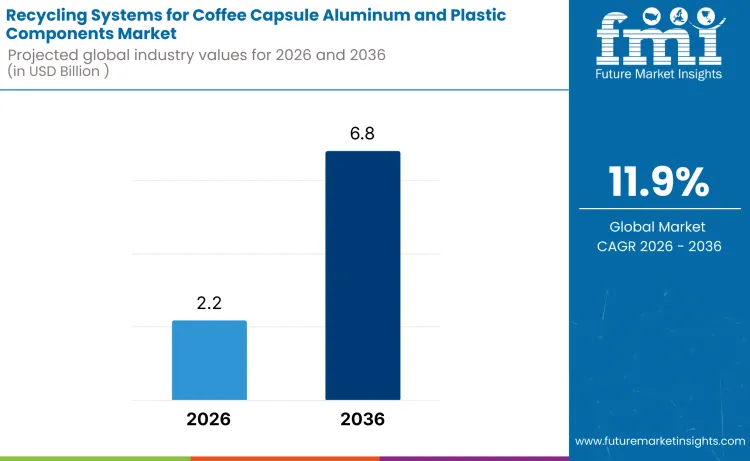
Recycling Systems for Coffee Capsule Aluminum and Plastic Components Market Key Takeaways
| Metric | Value |
|---|---|
| Industry Sales Value (2026) | USD 2.2 billion |
| Industry Forecast Value (2036) | USD 6.8 billion |
| Industry Forecast CAGR (2026-2036) | 11.9% |
What Are the Key Segments in Recycling Systems for Coffee Capsule Aluminum and Plastic Components Market?
The recycling systems for coffee capsule aluminum and plastic components market is evolving as sustainability concerns increase. Mechanical recycling systems represent 38% of the market, offering a standard approach to recycling. Advanced mixed-material recycling systems hold 34%, providing innovative solutions for complex materials. Collection and reverse vending infrastructure accounts for 28%, facilitating the efficient retrieval of used capsules. For components, aluminum recycling systems make up 52%, while plastic recycling systems account for 48% of the market, driven by the need to address both material types efficiently.
Which System Type Drives Recycling Systems for Coffee Capsule Aluminum and Plastic Components Demand Globally?
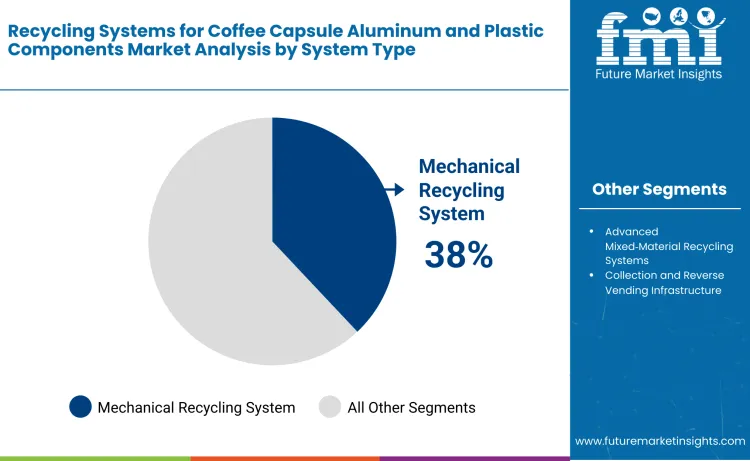
Mechanical recycling systems lead the market, with an estimated 38% share. These systems use traditional processes like shredding, melting, and remolding to recycle coffee capsule components, mainly focusing on aluminum and plastic. Mechanical recycling is the most widely adopted method due to its simplicity, lower cost, and efficiency, especially for materials like aluminum. These systems are well-suited for large-scale operations, offering a direct way to reuse materials without significant chemical alteration. While mechanical recycling remains the dominant method, its limitations, especially in processing mixed materials, are driving the development of more advanced systems. The demand for mechanical recycling systems is growing, supported by the increasing volume of coffee capsule waste and the need for cost-effective, scalable solutions in recycling operations.
Which Component Type Drives Recycling Systems for Coffee Capsule Aluminum and Plastic Components Demand Globally?
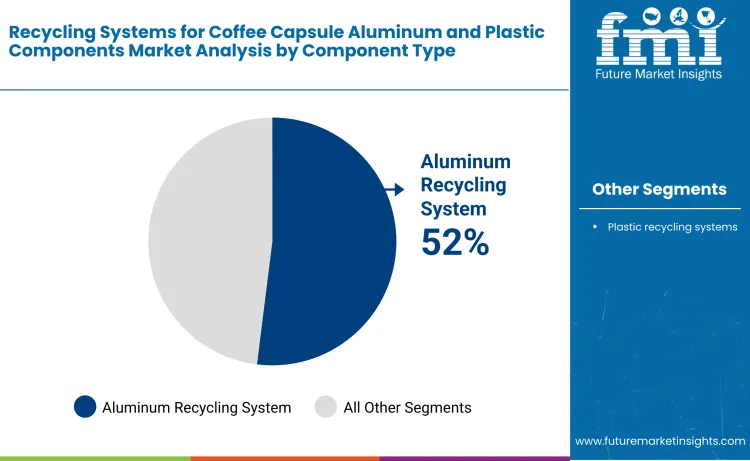
Aluminum recycling systems dominate the market with 52% of the share. Aluminum is highly recyclable, and systems designed specifically for aluminum components are in high demand due to its economic value and recyclability. Coffee capsules made from aluminum are easy to process and recycle using mechanical systems, which contribute to the high demand for specialized aluminum recycling solutions. Aluminum's durability and the widespread use of aluminum capsules in the coffee industry drive the growth of this segment. On the other hand, plastic recycling systems, with 48% of the market share, are essential for addressing the growing use of plastic in coffee capsules. Recycling plastic components from capsules is more challenging due to their complexity and material composition, but technological advancements in plastic recycling are contributing to the growth of this segment as well. The balance between aluminum and plastic recycling is expected to continue evolving as both materials become integral to sustainability efforts in the coffee capsule market.
What is the Summary of the Global Recycling Systems for Coffee Capsule Aluminum and Plastic Components Market?
The global market for recycling systems serving coffee capsule aluminum and plastic components is growing as beverage producers, waste managers and regulators seek better solutions for post‑consumer collection and material recovery. Coffee capsule use has expanded across retail and foodservice sectors, creating large volumes of spent capsules that require effective recycling infrastructure. Systems that separate, sort and process aluminum and plastic components are being implemented in regions with strong waste policies and corporate recovery commitments. Growth reflects rising focus on circular materials, reduced landfill waste, and efficient recovery of high‑value feedstocks.
What are the Key Drivers for the Global Recycling Systems for Coffee Capsule Aluminum and Plastic Components Market?
Growth drivers include increasing environmental regulations that mandate collection and recycling targets for packaging materials used in coffee capsules. Producers facing extended producer responsibility obligations are investing in recycling systems that can handle mixed material streams and recover aluminum and plastic efficiently. Rising consumer awareness about waste reduction and demand for sustainable packaging practices support establishment of dedicated recycling infrastructure. Partnerships between coffee brands, waste management firms, and local authorities help scale collection networks. Technology improvements that enhance separation, cleaning and reprocessing of materials make recycling systems more effective and economically viable.
What are the Restraints for the Global Recycling Systems for Coffee Capsule Aluminum and Plastic Components Market?
One restraint is the complexity of sorting and processing coffee capsules containing mixed aluminum and plastic materials. Efficient separation technologies require investment and specialized equipment that may raise operational costs. In regions with limited recycling infrastructure or weak policy enforcement, collection rates remain low, reducing supply of feedstock for recycling systems. High cost of establishing dedicated collection programs and educating consumers can limit expansion. Market participants may also face challenges in developing stable end‑markets for recycled materials if commodity prices for virgin resin or metal are low, affecting overall economics of recycling operations.
What is the Demand for Recycling Systems for Coffee Capsule Aluminum and Plastic Components in Key Countries?
The Recycling Systems for Coffee Capsule Aluminum and Plastic Components market is seeing strong growth across various countries, each with unique drivers. Factors such as consumer awareness, government policies, and the growing need for sustainable packaging are influencing the market's expansion. Several countries, including China, India, and the USA, are leading the market, demonstrating notable CAGRs. Understanding country-specific trends is essential for assessing the global growth of the recycling systems market. The varied demand across regions highlights the different factors at play, making it important to identify key drivers and market conditions for each.
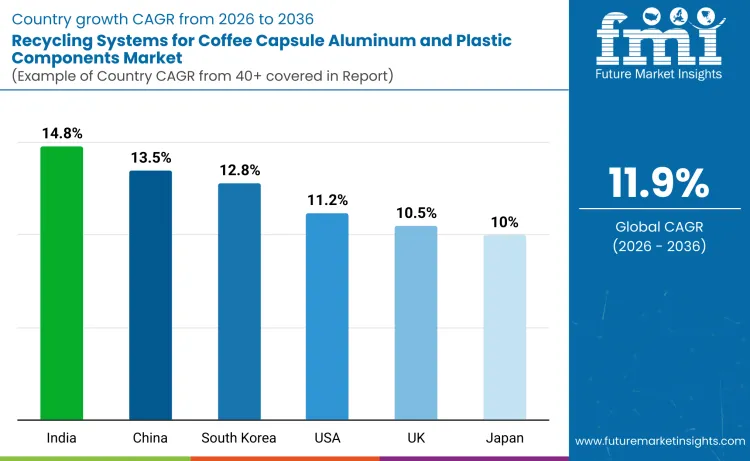
| Country | Estimated CAGR (2026-2036) |
|---|---|
| China | 13.5 |
| India | 14.8 |
| USA | 11.2 |
| UK | 10.5 |
| Japan | 10.0 |
| South Korea | 12.8 |
What is Driving the Recycling Systems Market Growth in China?
China is witnessing significant growth in the Recycling Systems for Coffee Capsule Aluminum and Plastic Components market, with a robust CAGR of 13.5%. This growth is largely attributed to the country’s focus on enhancing its recycling infrastructure and policies aimed at promoting sustainability. China's government has introduced various initiatives to improve waste management systems, which have positively impacted the recycling sector. Additionally, the rising consumer demand for environmentally responsible products and packaging is pushing companies to adopt more sustainable solutions, further supporting the demand for recycling systems. As the market matures, continued investments in technology and innovation are expected to drive future growth in China.
What Are the Key Drivers of Recycling Systems Market Growth in India?
India's Recycling Systems for Coffee Capsule Aluminum and Plastic Components market is projected to grow at an impressive CAGR of 14.8%. Several factors contribute to this growth, including increased consumer awareness about environmental issues and the government’s efforts to promote recycling. India is focusing on waste management improvements, particularly in urban areas, which is creating a favorable environment for recycling systems. The growing demand for sustainable packaging solutions in various sectors, including food and beverage, further boosts market growth. As India’s recycling infrastructure expands and technologies improve, the country is poised to continue its strong growth trajectory in the coming years.
What is Influencing the Recycling Systems Market in the USA?
The USA’s Recycling Systems for Coffee Capsule Aluminum and Plastic Components market is expected to grow at a CAGR of 11.2%. A key factor driving this growth is the increasing push for sustainability across industries, particularly in packaging. US consumers are more conscious about recycling, and companies are responding with more sustainable product offerings, especially in the food and beverage sector. Government initiatives promoting recycling and waste reduction are also supporting the market. The demand for advanced recycling technologies and systems is expected to rise as the country moves toward more efficient waste management practices, ensuring steady growth in the market.
What is the Outlook for Recycling Systems Market Growth in the UK?
The UK market for Recycling Systems for Coffee Capsule Aluminum and Plastic Components is anticipated to grow at a CAGR of 10.5%. This growth is driven by the UK’s strong regulatory focus on sustainability and waste management. The government’s initiatives, such as extended producer responsibility schemes, have pushed businesses to adopt more sustainable practices, including recycling. Additionally, growing consumer demand for environmentally-friendly products is leading to higher adoption of recycling systems in the packaging sector. As recycling technologies improve and consumer demand for sustainable solutions rises, the UK market is expected to continue expanding steadily.
How is the Recycling Systems Market Evolving in Japan?
Japan’s Recycling Systems for Coffee Capsule Aluminum and Plastic Components market is expected to grow at a CAGR of 10.0%. Japan is known for its efficient waste management systems and its strong commitment to sustainability. The government has implemented various policies to enhance recycling infrastructure, creating a favorable environment for market growth. As Japanese consumers increasingly prioritize environmentally-conscious choices, the demand for recycling systems in the coffee capsule sector is also growing. Additionally, Japanese companies are focusing on technological innovation to streamline recycling processes, ensuring that the market will maintain steady growth throughout the forecast period.
What is the Competitive Landscape for the Recycling Systems for Coffee Capsule Aluminum and Plastic Components Market?
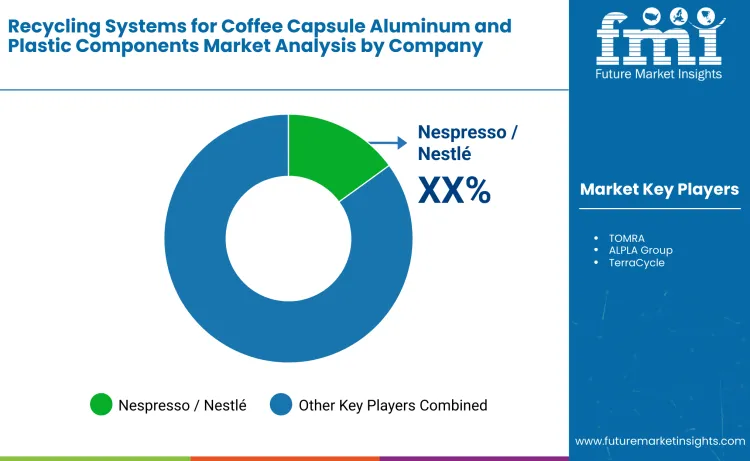
Global demand for recycling systems that handle coffee capsule aluminum and plastic components is increasing as coffee consumption rises and sustainability commitments strengthen. Single‑serve coffee capsules are widely used by consumers worldwide, especially in Europe, North America and parts of Asia Pacific. These capsules often combine aluminum or plastic with organic residues, creating challenges for traditional recycling streams. As environmental awareness grows and regulatory pressures on packaging waste intensify, brands, waste managers and municipalities seek efficient recycling systems that can separate materials, recover valuable metals and polymers, and minimise landfill impact. Consumers and corporate sustainability programs further push adoption of closed‑loop and take‑back recycling solutions that demonstrate reduction of environmental footprint and support circular‑economy goals.
On the supply side, a small group of organisations and system providers compete to deliver effective recycling systems and infrastructure. Nespresso / Nestlé is recognised as a key player, having pioneered many global capsule recycling initiatives and collection schemes that focus on material recovery and reuse. Other prominent participants include TOMRA, ALPLA Group, and TerraCycle, each offering distinct approaches to coffee capsule recycling. TOMRA specialises in advanced sorting and reverse‑vending systems used by recycling facilities and collection networks. ALPLA Group provides material recycling, reprocessing technologies and packaging solutions that help integrate recycled aluminum and plastics back into manufacturing. TerraCycle offers take‑back and collection programmes focused on hard‑to‑recycle waste streams, including coffee capsules, with systems that support consumer participation and closed‑loop recovery. Competition among these players focuses on collection network reach, processing efficiency, material recovery rates, cost effectiveness and integration with local recycling infrastructure. Providers that combine strong logistical networks, proven recovery technologies and partnerships with brands and municipalities are best positioned to capture growth as demand for sustainable, scalable coffee capsule recycling systems expands worldwide.
Key Players
- Nespresso / Nestlé
- TOMRA
- ALPLA Group
- TerraCycle
Scope of the Report
| Items | Values |
|---|---|
| Quantitative Units (2026) | USD Billion |
| System Type | Mechanical recycling systems, Advanced mixed-material recycling systems, Collection and reverse vending infrastructure |
| Component Type | Aluminum recycling systems, Plastic recycling systems |
| Companies | Nespresso / Nestlé, TOMRA, ALPLA Group, TerraCycle |
| Regions Covered | North America, Latin America, Western Europe, Eastern Europe, South Asia and Pacific, East Asia, Middle East & Africa |
| Countries Covered | United States, Canada, Mexico, Brazil, Argentina, Germany, France, United Kingdom, Italy, Spain, Netherlands, China, India, Japan, South Korea, ANZ, GCC Countries, South Africa |
| Additional Attributes | Dollar by sales by system type, component type, and region. Includes market trends in mechanical and advanced mixed-material recycling systems, impact of reverse vending infrastructure on recycling rates, performance in recycling aluminum and plastic from coffee capsules, cost-effectiveness, sustainability practices, regulatory compliance, market share and competitive positioning of key companies, and the role of these recycling systems in improving circular economy practices and reducing environmental impact across the coffee industry. |
Key Segments in the Recycling Systems for Coffee Capsule Aluminum and Plastic Components Market
By System Type:
- Mechanical recycling systems
- Advanced mixed‑material recycling systems
- Collection and reverse vending infrastructure
By Component Type:
- Aluminum recycling systems
- Plastic recycling systems
By Region:
- Asia Pacific
- China
- India
- Japan
- South Korea
- ASEAN
- Rest of Asia Pacific
- Europe
- Germany
- United Kingdom
- France
- Italy
- Spain
- Nordic
- BENELUX
- Rest of Europe
- North America
- United States
- Canada
- Mexico
- Latin America
- Brazil
- Chile
- Rest of Latin America
- Middle East & Africa
- Kingdom of Saudi Arabia
- Other GCC Countries
- Turkey
- South Africa
- Other African Union
- Rest of Middle East & Africa
Frequently Asked Questions
How big is the Recycling Systems for Coffee Capsule Aluminum and Plastic Components market?
The market is valued at USD 2.2 billion in 2026 and is expected to grow at a CAGR of approximately 11.9%, reaching USD 6.8 billion by 2036.
What is the growth outlook for the Recycling Systems for Coffee Capsule Aluminum and Plastic Components market?
The market is projected to grow at a CAGR of approximately 11.9% from 2026 to 2036.
Which region is expected to experience the fastest growth in the Recycling Systems for Coffee Capsule Aluminum and Plastic Components market?
China is expected to lead with an estimated growth rate of 13.5%, driven by increasing focus on sustainability and the recycling of coffee capsule components.
What are the key applications of Recycling Systems for Coffee Capsule Aluminum and Plastic Components?
These recycling systems are primarily used for aluminum and plastic recycling from coffee capsules, with aluminum recycling systems accounting for approximately 52% of the market share.
Who are the major players in the Recycling Systems for Coffee Capsule Aluminum and Plastic Components market?
Key players include Nespresso / Nestlé, TOMRA, ALPLA Group, and TerraCycle.
Preview the report firsthand - request a free sample
Get SampleGet the brochure for pricing and purchase details.
Get PDFTable of Content
- Executive Summary
- Recycling Systems for Coffee Capsule Aluminum and Plastic Components Market Overview
- Global Market Size and Value Analysis, 2020 to 2026
- Global Market Forecast and Growth Outlook, 2026 to 2036
- Industry Structure and Value Chain Assessment
- Coffee Capsule Recycling Ecosystem and Material Flow Analysis
- Market Dynamics and Industry Fundamentals
- Key Market Drivers
- Market Restraints and Operational Challenges
- Opportunities in Circular Packaging and Post-Consumer Waste Recovery
- Regulatory Landscape and Extended Producer Responsibility Frameworks
- Market Segmentation Analysis by System Type
- Mechanical Recycling Systems
- Advanced Mixed-Material Recycling Systems
- Collection and Reverse Vending Infrastructure
- Market Segmentation Analysis by Component Type
- Aluminum Recycling Systems
- Plastic Recycling Systems
- Market Segmentation Analysis by End-Use Application
- Single-Serve Coffee Capsule Recycling Programs
- Commercial and Institutional Coffee Waste Streams
- Post-Consumer Collection and Take-Back Systems
- Regional Market Analysis
- North America Market Analysis
- Latin America Market Analysis
- Western Europe Market Analysis
- Eastern Europe Market Analysis
- South Asia and Pacific Market Analysis
- East Asia Market Analysis
- Middle East and Africa Market Analysis
- Country-Level Market Analysis
- United States
- Canada
- Mexico
- Brazil
- Argentina
- Germany
- France
- United Kingdom
- Italy
- Spain
- Netherlands
- China
- India
- Japan
- South Korea
- ANZ
- GCC Countries
- South Africa
- Competitive Landscape Analysis
- Global Competitive Structure
- Market Share Analysis of Leading Recycling System Providers
- Technology Differentiation and Collection Network Strategies
- Strategic Partnerships, Brand Programs, and Infrastructure Investments
- Company Profiles
- Scope of the Report
- Research Methodology
- Assumptions and Acronyms


