

- Industry Size (2026)
- USD 666.5 Mn
- Forecast (2036)
- USD 1373.7 Mn
- CAGR (2026 to 2036)
- 7.50%
Residue Analysis Services for Cosmetics Market Forecast and Outlook 2026 to 2036
The global residue analysis services for cosmetics market is projected to grow from USD 666.5 million in 2026 to USD 1,373.7 million by 2036, reflecting a CAGR of 7.50%. This growth is fueled by the increasing demand for high-quality, safe cosmetic products, as consumers become more aware of the potential risks posed by harmful chemicals, allergens, and heavy metals in cosmetics. Regulatory bodies worldwide are tightening safety standards for cosmetics, pushing manufacturers to invest in residue analysis testing to ensure compliance with these regulations.
Furthermore, the rising trend for clean beauty products, natural ingredients, and transparency is driving the need for residue testing services to verify that cosmetics meet consumer expectations for safety and quality. As technological advancements in testing methods, such as mass spectrometry and HPLC, continue to improve, the market for residue analysis services is set for steady expansion, supporting the industry's efforts to ensure product integrity and meet regulatory requirements.
Quick Stats for Residue Analysis Services for Cosmetics Market
- Residue Analysis Services for Cosmetics Market Value (2026): USD 666.5 Million
- Residue Analysis Services for Cosmetics Market Forecast Value (2036): USD 1,373.7 Million
- Residue Analysis Services for Cosmetics Market Forecast CAGR 2026 to 2036: 7.50%
- Leading Residue Category in Residue Analysis Services for Cosmetics Market: Preservatives & Allergens
- Key Growth Regions in Residue Analysis Services for Cosmetics Market: Asia Pacific, North America, Europe
- Top Key Players in Residue Analysis Services for Cosmetics Market: Eurofins, SGS, Intertek, Bureau Veritas, ALS Limited
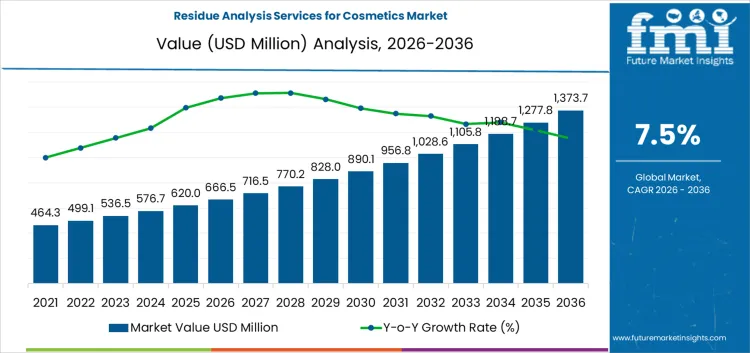
Residue Analysis Services for Cosmetics Market Key Takeaways
| Metric | Value |
|---|---|
| Industry Value (2026) | USD 666.5 Million |
| Forecast Value (2036) | USD 1,373.7 Million |
| Forecast CAGR 2026 to 2036 | 7.50% |
How is the Global Residue Analysis Services for Cosmetics Market Advancing?
The global residue analysis services for cosmetics market is experiencing steady growth, driven by the increasing demand for safe and high-quality cosmetic products. Residue analysis services are critical for ensuring that cosmetics are free from harmful levels of chemical residues, heavy metals, pesticides, and other contaminants that could pose health risks to consumers. As regulatory bodies around the world tighten safety standards for cosmetics, manufacturers are increasingly turning to residue analysis testing to ensure compliance with these regulations and to maintain consumer trust.
A major driver of market growth is the rising consumer awareness of the potential risks associated with harmful ingredients in cosmetic products. As consumers become more conscious of the ingredients in their personal care products, they demand safer and cleaner options. This trend is prompting cosmetic manufacturers to invest in comprehensive testing services to verify the safety and quality of their products. The growing demand for natural and organic cosmetics is further fueling the need for residue analysis, as these products are often marketed as free from synthetic chemicals and contaminants.
Technological advancements in residue testing, such as mass spectrometry, high-performance liquid chromatography (HPLC), and inductively coupled plasma mass spectrometry (ICP-MS), are enhancing the accuracy and sensitivity of these tests. These innovations allow for the detection of even trace amounts of contaminants, providing manufacturers with reliable data to ensure the safety and integrity of their products. As the demand for safe and high-quality cosmetics continues to rise, the residue analysis services market for cosmetics is expected to grow steadily, driven by both regulatory requirements and consumer preferences for safer products.
What Is the Segment-Wise Analysis for the Residue Analysis Services for Cosmetics Market?
The residue analysis services for cosmetics market is segmented by residue category and service model. Preservatives & allergens lead the residue category segment with a 30% share, followed by heavy metals, solvents & VOCs, microbiology, and other residue types. Preservatives and allergens are critical concerns in cosmetics, as they can lead to skin reactions and allergies. In terms of service model, routine compliance leads with a 44% share, followed by new product release, investigations or claims, and other models. The growing need for safety and regulatory compliance in the cosmetics industry is driving the demand for residue analysis services, particularly for preservatives, heavy metals, and microbiological testing.
Why Do Preservatives & Allergens Lead the Residue Analysis Services for Cosmetics Market?
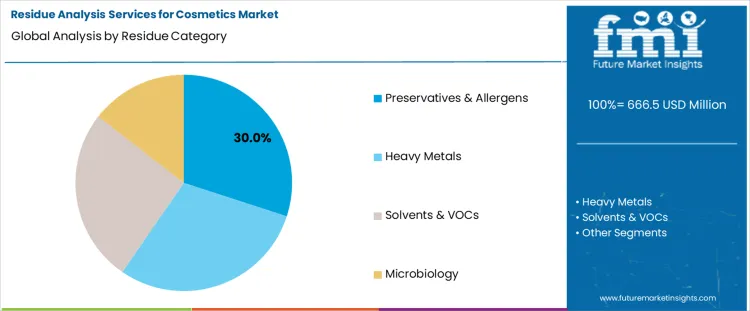
Preservatives & allergens lead the residue analysis services for cosmetics market with a 30% share due to the increasing concern over the safety of cosmetic products and their ingredients. Preservatives are essential in preventing microbial growth and extending the shelf life of products, while allergens can cause adverse reactions in sensitive individuals. As consumers become more aware of the ingredients in their personal care products, there is a growing demand for testing services that can detect and quantify preservatives and allergens. Regulatory agencies also require cosmetic manufacturers to ensure their products are free from harmful levels of allergens and preservatives, which drives the dominance of this category in the market.
How Does Routine Compliance Contribute to the Residue Analysis Services for Cosmetics Market?
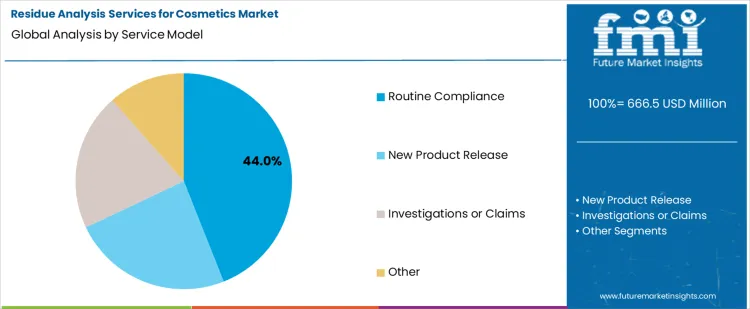
Routine compliance accounts for 44% of the service model segment in the residue analysis services for cosmetics market. Cosmetic manufacturers must ensure their products consistently meet safety and regulatory standards, which is where routine compliance testing plays a critical role. This service involves regular, scheduled testing of products to verify that they are free from harmful residues, such as heavy metals, allergens, and preservatives, and comply with local and international regulations. Routine compliance testing helps manufacturers maintain product safety, meet regulatory requirements, and avoid costly product recalls. The growing regulatory environment in the cosmetics industry continues to drive the demand for routine compliance services, making it a dominant model in the market.
What Are the Key Dynamics for the Residue Analysis Services for Cosmetics Market?
The residue analysis services for cosmetics market is driven by the increasing demand for safe, high-quality cosmetic products that meet regulatory standards. With rising concerns about health risks posed by harmful chemicals, consumers are demanding greater transparency regarding the ingredients and contaminants in their cosmetics. Regulatory bodies worldwide are tightening laws on cosmetic product safety, pushing manufacturers to ensure that their products are free from harmful residues, such as heavy metals, pesticides, and preservatives. The growing trend for clean beauty products and natural ingredients is also driving the market for residue analysis services in the cosmetics industry.
How Are the Key Drivers Shaping the Residue Analysis Services for Cosmetics Market?
The key drivers for the residue analysis services for cosmetics market include the rising focus on consumer safety, stricter regulatory standards, and increasing consumer demand for transparency. Regulatory agencies, such as the FDA and European Medicines Agency, are enforcing more stringent safety tests, encouraging manufacturers to adopt residue analysis testing to ensure compliance. Growing concerns about the long-term health effects of chemical residues in cosmetics are also driving the market. The clean beauty movement and the increasing preference for organic and non-toxic cosmetics are pushing companies to ensure their products are free from harmful residues.
What Are the Key Trends Shaping the Residue Analysis Services for Cosmetics Market?
Key trends in the residue analysis services for cosmetics market include the growing adoption of advanced analytical technologies such as mass spectrometry and chromatography to provide more accurate and efficient residue detection. There is a significant shift towards clean and sustainable beauty products, driving the demand for residue testing services to verify claims of natural, non-toxic ingredients. The increasing integration of digital tools for real-time tracking and reporting of residue analysis results is another trend. The rise of e-commerce and international trade of cosmetic products is pushing manufacturers to ensure compliance with diverse global standards for residue testing.
What is the Growth Outlook for the Residue Analysis Services for Cosmetics Market by Country?
| Country | CAGR (%) |
|---|---|
| China | 8.8% |
| Brazil | 8.2% |
| USA | 7.2% |
| South Korea | 6.8% |
| Japan | 6.1% |
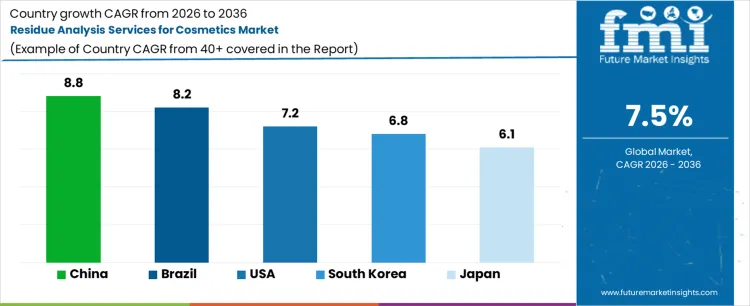
The residue analysis services for cosmetics market is growing steadily across key regions. China leads at 8.8%, driven by rapid industry expansion, increasing regulatory standards, and rising consumer awareness of product safety. Brazil follows at 8.2%, supported by growing demand for higher-quality cosmetics and a focus on environmental sustainability. The USA grows at 7.2%, fueled by stringent regulatory requirements and increasing consumer concern for safety and transparency in beauty products. South Korea’s market expands at 6.8%, driven by the country’s innovation in cosmetics and a strong emphasis on high product quality. Japan grows at 6.1%, supported by strict regulations and a focus on safety and quality in cosmetics.
What is Driving the Growth of the Residue Analysis Services for Cosmetics Market in China?
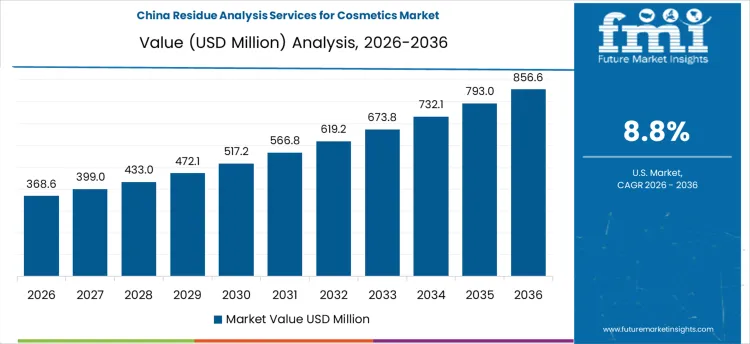
China’s residue analysis services for cosmetics market is growing at 8.8%, driven by the rapid expansion of its cosmetics and personal care industry. As China’s middle class continues to grow and consumer preferences shift toward high-quality, safe products, there is an increasing demand for residue analysis services to ensure cosmetic products are free from harmful chemicals, pesticides, and contaminants. Stricter government regulations on cosmetics safety and quality control are also contributing to market growth. With rising awareness of product safety, particularly in the skincare and beauty segments, China’s cosmetic manufacturers and retailers are adopting advanced residue testing services to meet both domestic and international safety standards, ensuring the continued growth of the market.
How is the Residue Analysis Services for Cosmetics Market Expanding in Brazil?
Brazil’s residue analysis services for cosmetics market is growing at 8.2%, supported by the expanding personal care and beauty industry, coupled with increasing regulatory pressures on product safety and environmental concerns. As Brazilian consumers demand higher-quality cosmetics and more transparency regarding ingredient safety, manufacturers are increasingly relying on residue analysis testing to ensure their products are free of harmful contaminants. The rise in cosmetic product innovation, especially in natural and organic beauty products, is further driving the demand for testing services to confirm the absence of harmful residues. Brazil’s growing focus on consumer health, regulatory compliance, and environmental sustainability will continue to boost the need for residue analysis services in the cosmetics industry.
How is the Residue Analysis Services for Cosmetics Market Expanding in the USA?
The residue analysis services for cosmetics market in the USA is growing at 7.2%, driven by stringent regulatory standards and the increasing focus on consumer safety and environmental concerns. As the U.S. cosmetic industry expands, particularly with the rise of organic and natural beauty products, there is growing demand for testing services to ensure products are free from harmful chemicals, pesticides, and other contaminants. The U.S. government’s regulatory agencies, such as the FDA, enforce strict rules on cosmetic ingredients, pushing manufacturers to invest in residue analysis to comply with safety standards. As consumer awareness about product safety and ingredient transparency rises, the demand for residue analysis services in the cosmetics sector will continue to grow.
What is Driving the Growth of the Residue Analysis Services for Cosmetics Market in South Korea?
South Korea’s residue analysis services for cosmetics market is growing at 6.8%, fueled by the country’s advanced cosmetic industry and focus on high product quality and consumer safety. Known for its booming K-beauty industry, South Korea has become a global leader in cosmetic innovation, leading to an increased need for rigorous testing to ensure the safety and quality of cosmetic products. As consumers demand more eco-friendly and natural cosmetics, there is growing adoption of residue analysis services to guarantee that products are free of harmful chemicals and contaminants. The government’s strict regulatory standards and emphasis on safety and sustainability further drive the market’s expansion in South Korea.
How is the Residue Analysis Services for Cosmetics Market Expanding in Japan?
Japan’s residue analysis services for cosmetics market is growing at 6.1%, supported by the country’s long-standing commitment to quality control and safety in its cosmetic industry. Japan’s cosmetics sector is highly regulated, and the demand for residue analysis services is rising as manufacturers and consumers become more conscious of product safety, especially concerning harmful chemicals, preservatives, and contaminants. The growing popularity of natural, organic, and sustainable beauty products is further contributing to the market growth, as residue analysis ensures that these products meet safety standards. Japan’s regulatory environment and focus on high-quality manufacturing in the cosmetics sector are key drivers for the demand for residue analysis services.
How Are Companies Competing in the Residue Analysis Services for Cosmetics Market?
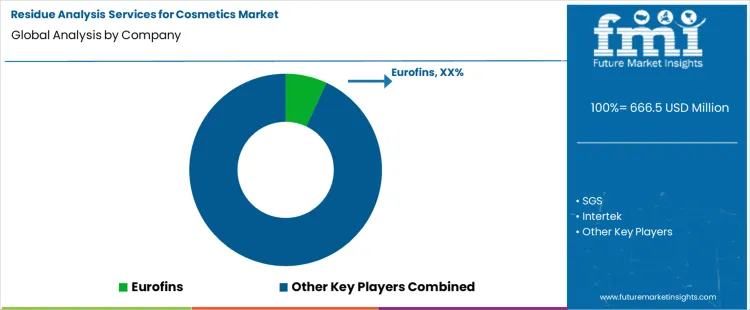
Competition in the Residue Analysis Services for Cosmetics Market is driven by analytical accuracy, regulatory compliance, test portfolio breadth, rapid turnaround, and global laboratory reach. Eurofins positions itself with comprehensive residue screening capabilities that cover traces of impurities, contaminants, and banned substances, and its service materials emphasize method accreditation and regulatory alignment with global cosmetics standards. SGS competes with a wide network of accredited labs and standardized workflows that support reliable quantification, with collateral highlighting consistent reporting and multi matrix analysis across creams, serums, and fragrances.
Intertek and Bureau Veritas differentiate through integrated testing solutions that pair residue analysis with stability, ingredient verification, and safety evaluations, marketed for end to end quality assurance. Their documentation focuses on certified procedures, customizable test packages, and regulatory guidance support. ALS Limited and Mérieux NutriSciences add value with specialized analytical services and consultative interpretation, stressing detection limits, method flexibility, and application in safety dossiers.
Element Materials Technology and UL Solutions compete by offering residue testing within broader conformity and product integrity programs, with materials emphasizing traceability, quality systems, and compliance documentation. EMSL Analytical brings a high capability analytical platform that supports detailed chemical profiling and rapid turnaround, while TÜV Rheinland rounds out the field with globally recognized testing and certification expertise. Across all vendors, service literature underscores precision in detection, regulatory alignment, transparent reporting, and broad test capability as key differentiators that help cosmetic brands ensure product safety and market access.
Key Players in Residue Analysis Services for Cosmetics Market
- Eurofins
- SGS
- Intertek
- Bureau Veritas
- ALS Limited
- Mérieux NutriSciences
- Element Materials Technology
- UL Solutions
- EMSL Analytical
- TÜV Rheinland
Scope of Report
| Attributes | Description |
|---|---|
| Quantitative Unit (2026) | USD Million |
| Residue Category | Preservatives & Allergens, Heavy Metals, Solvents & VOCs, Microbiology |
| Service Model | Routine Compliance, New Product Release, Investigations or Claims, Other |
| Regions Covered | Asia Pacific, Europe, North America, Latin America, Middle East & Africa |
| Countries Covered | China, Japan, South Korea, India, Australia & New Zealand, ASEAN, Germany, United Kingdom, France, Italy, Spain, Nordic, BENELUX, United States, Canada, Mexico, Brazil, Chile, Turkey, South Africa, Other GCC Countries |
| Key Companies Profiled | Eurofins, SGS, Intertek, Bureau Veritas, ALS Limited, Mérieux NutriSciences, Element Materials Technology, UL Solutions, EMSL Analytical, TÜV Rheinland |
| Additional Attributes | Dollar sales by residue category, service model, and region; regional CAGR and growth outlook for the residue analysis services in cosmetics market. |
Residue Analysis Services for Cosmetics Market by Key Players
By Residue Category:
- Preservatives & Allergens
- Heavy Metals
- Solvents & VOCs
- Microbiology
By Service Model:
- Routine Compliance
- New Product Release
- Investigations or Claims
- Other
By Region:
- Asia Pacific
- China
- Japan
- South Korea
- India
- Australia & New Zealand
- ASEAN
- Rest of Asia Pacific
- Europe
- Germany
- United Kingdom
- France
- Italy
- Spain
- Nordic
- BENELUX
- Rest of Europe
- North America
- United States
- Canada
- Mexico
- Latin America
- Brazil
- Chile
- Rest of Latin America
- Middle East & Africa
- Kingdom of Saudi Arabia
- Other GCC Countries
- Turkey
- South Africa
- Other African Union
- Rest of Middle East & Africa
Bibliography
- Eurofins. (2023). Comprehensive residue screening capabilities for cosmetic products, ensuring safety through advanced impurity and contaminant analysis. Eurofins Scientific.
- SGS. (2023). Accredited global lab network offering residue analysis for cosmetic products, with standardized workflows and multi-matrix analysis. SGS SA.
Frequently Asked Questions
How big is the residue analysis services for cosmetics market in 2026?
The global residue analysis services for cosmetics market is estimated to be valued at USD 666.5 million in 2026.
What will be the size of residue analysis services for cosmetics market in 2036?
The market size for the residue analysis services for cosmetics market is projected to reach USD 1,373.7 million by 2036.
How much will be the residue analysis services for cosmetics market growth between 2026 and 2036?
The residue analysis services for cosmetics market is expected to grow at a 7.5% CAGR between 2026 and 2036.
What are the key product types in the residue analysis services for cosmetics market?
The key product types in residue analysis services for cosmetics market are preservatives & allergens, heavy metals, solvents & vocs and microbiology.
Which service model segment to contribute significant share in the residue analysis services for cosmetics market in 2026?
In terms of service model, routine compliance segment to command 44.0% share in the residue analysis services for cosmetics market in 2026.
Preview the report firsthand - request a free sample
Get SampleGet the brochure for pricing and purchase details.
Get PDFTable of Content
- Executive Summary
- Global Market Outlook
- Demand-side Trends
- Supply-side Trends
- Technology Roadmap Analysis
- Analysis and Recommendations
- Market Overview
- Market Coverage / Taxonomy
- Market Definition / Scope / Limitations
- Market Background
- Market Dynamics
- Drivers
- Restraints
- Opportunity
- Trends
- Scenario Forecast
- Demand in Optimistic Scenario
- Demand in Likely Scenario
- Demand in Conservative Scenario
- Opportunity Map Analysis
- Product Life Cycle Analysis
- Supply Chain Analysis
- Investment Feasibility Matrix
- Value Chain Analysis
- PESTLE and Porter’s Analysis
- Regulatory Landscape
- Regional Parent Market Outlook
- Production and Consumption Statistics
- Import and Export Statistics
- Market Dynamics
- Global Market Analysis 2021 to 2025 and Forecast, 2026 to 2036
- Historical Market Size Value (USD Million) Analysis, 2021 to 2025
- Current and Future Market Size Value (USD Million) Projections, 2026 to 2036
- Y-o-Y Growth Trend Analysis
- Absolute $ Opportunity Analysis
- Global Market Pricing Analysis 2021 to 2025 and Forecast 2026 to 2036
- Global Market Analysis 2021 to 2025 and Forecast 2026 to 2036, By Residue Category
- Introduction / Key Findings
- Historical Market Size Value (USD Million) Analysis By Residue Category , 2021 to 2025
- Current and Future Market Size Value (USD Million) Analysis and Forecast By Residue Category , 2026 to 2036
- Preservatives & Allergens
- Heavy Metals
- Solvents & VOCs
- Microbiology
- Preservatives & Allergens
- Y-o-Y Growth Trend Analysis By Residue Category , 2021 to 2025
- Absolute $ Opportunity Analysis By Residue Category , 2026 to 2036
- Global Market Analysis 2021 to 2025 and Forecast 2026 to 2036, By Service Model
- Introduction / Key Findings
- Historical Market Size Value (USD Million) Analysis By Service Model, 2021 to 2025
- Current and Future Market Size Value (USD Million) Analysis and Forecast By Service Model, 2026 to 2036
- Routine Compliance
- New Product Release
- Investigations or Claims
- Other
- Routine Compliance
- Y-o-Y Growth Trend Analysis By Service Model, 2021 to 2025
- Absolute $ Opportunity Analysis By Service Model, 2026 to 2036
- Global Market Analysis 2021 to 2025 and Forecast 2026 to 2036, By Region
- Introduction
- Historical Market Size Value (USD Million) Analysis By Region, 2021 to 2025
- Current Market Size Value (USD Million) Analysis and Forecast By Region, 2026 to 2036
- North America
- Latin America
- Western Europe
- Eastern Europe
- East Asia
- South Asia and Pacific
- Middle East & Africa
- Market Attractiveness Analysis By Region
- North America Market Analysis 2021 to 2025 and Forecast 2026 to 2036, By Country
- Historical Market Size Value (USD Million) Trend Analysis By Market Taxonomy, 2021 to 2025
- Market Size Value (USD Million) Forecast By Market Taxonomy, 2026 to 2036
- By Country
- USA
- Canada
- Mexico
- By Residue Category
- By Service Model
- By Country
- Market Attractiveness Analysis
- By Country
- By Residue Category
- By Service Model
- Key Takeaways
- Latin America Market Analysis 2021 to 2025 and Forecast 2026 to 2036, By Country
- Historical Market Size Value (USD Million) Trend Analysis By Market Taxonomy, 2021 to 2025
- Market Size Value (USD Million) Forecast By Market Taxonomy, 2026 to 2036
- By Country
- Brazil
- Chile
- Rest of Latin America
- By Residue Category
- By Service Model
- By Country
- Market Attractiveness Analysis
- By Country
- By Residue Category
- By Service Model
- Key Takeaways
- Western Europe Market Analysis 2021 to 2025 and Forecast 2026 to 2036, By Country
- Historical Market Size Value (USD Million) Trend Analysis By Market Taxonomy, 2021 to 2025
- Market Size Value (USD Million) Forecast By Market Taxonomy, 2026 to 2036
- By Country
- Germany
- UK
- Italy
- Spain
- France
- Nordic
- BENELUX
- Rest of Western Europe
- By Residue Category
- By Service Model
- By Country
- Market Attractiveness Analysis
- By Country
- By Residue Category
- By Service Model
- Key Takeaways
- Eastern Europe Market Analysis 2021 to 2025 and Forecast 2026 to 2036, By Country
- Historical Market Size Value (USD Million) Trend Analysis By Market Taxonomy, 2021 to 2025
- Market Size Value (USD Million) Forecast By Market Taxonomy, 2026 to 2036
- By Country
- Russia
- Poland
- Hungary
- Balkan & Baltic
- Rest of Eastern Europe
- By Residue Category
- By Service Model
- By Country
- Market Attractiveness Analysis
- By Country
- By Residue Category
- By Service Model
- Key Takeaways
- East Asia Market Analysis 2021 to 2025 and Forecast 2026 to 2036, By Country
- Historical Market Size Value (USD Million) Trend Analysis By Market Taxonomy, 2021 to 2025
- Market Size Value (USD Million) Forecast By Market Taxonomy, 2026 to 2036
- By Country
- China
- Japan
- South Korea
- By Residue Category
- By Service Model
- By Country
- Market Attractiveness Analysis
- By Country
- By Residue Category
- By Service Model
- Key Takeaways
- South Asia and Pacific Market Analysis 2021 to 2025 and Forecast 2026 to 2036, By Country
- Historical Market Size Value (USD Million) Trend Analysis By Market Taxonomy, 2021 to 2025
- Market Size Value (USD Million) Forecast By Market Taxonomy, 2026 to 2036
- By Country
- India
- ASEAN
- Australia & New Zealand
- Rest of South Asia and Pacific
- By Residue Category
- By Service Model
- By Country
- Market Attractiveness Analysis
- By Country
- By Residue Category
- By Service Model
- Key Takeaways
- Middle East & Africa Market Analysis 2021 to 2025 and Forecast 2026 to 2036, By Country
- Historical Market Size Value (USD Million) Trend Analysis By Market Taxonomy, 2021 to 2025
- Market Size Value (USD Million) Forecast By Market Taxonomy, 2026 to 2036
- By Country
- Kingdom of Saudi Arabia
- Other GCC Countries
- Turkiye
- South Africa
- Other African Union
- Rest of Middle East & Africa
- By Residue Category
- By Service Model
- By Country
- Market Attractiveness Analysis
- By Country
- By Residue Category
- By Service Model
- Key Takeaways
- Key Countries Market Analysis
- USA
- Pricing Analysis
- Market Share Analysis, 2025
- By Residue Category
- By Service Model
- Canada
- Pricing Analysis
- Market Share Analysis, 2025
- By Residue Category
- By Service Model
- Mexico
- Pricing Analysis
- Market Share Analysis, 2025
- By Residue Category
- By Service Model
- Brazil
- Pricing Analysis
- Market Share Analysis, 2025
- By Residue Category
- By Service Model
- Chile
- Pricing Analysis
- Market Share Analysis, 2025
- By Residue Category
- By Service Model
- Germany
- Pricing Analysis
- Market Share Analysis, 2025
- By Residue Category
- By Service Model
- UK
- Pricing Analysis
- Market Share Analysis, 2025
- By Residue Category
- By Service Model
- Italy
- Pricing Analysis
- Market Share Analysis, 2025
- By Residue Category
- By Service Model
- Spain
- Pricing Analysis
- Market Share Analysis, 2025
- By Residue Category
- By Service Model
- France
- Pricing Analysis
- Market Share Analysis, 2025
- By Residue Category
- By Service Model
- India
- Pricing Analysis
- Market Share Analysis, 2025
- By Residue Category
- By Service Model
- ASEAN
- Pricing Analysis
- Market Share Analysis, 2025
- By Residue Category
- By Service Model
- Australia & New Zealand
- Pricing Analysis
- Market Share Analysis, 2025
- By Residue Category
- By Service Model
- China
- Pricing Analysis
- Market Share Analysis, 2025
- By Residue Category
- By Service Model
- Japan
- Pricing Analysis
- Market Share Analysis, 2025
- By Residue Category
- By Service Model
- South Korea
- Pricing Analysis
- Market Share Analysis, 2025
- By Residue Category
- By Service Model
- Russia
- Pricing Analysis
- Market Share Analysis, 2025
- By Residue Category
- By Service Model
- Poland
- Pricing Analysis
- Market Share Analysis, 2025
- By Residue Category
- By Service Model
- Hungary
- Pricing Analysis
- Market Share Analysis, 2025
- By Residue Category
- By Service Model
- Kingdom of Saudi Arabia
- Pricing Analysis
- Market Share Analysis, 2025
- By Residue Category
- By Service Model
- Turkiye
- Pricing Analysis
- Market Share Analysis, 2025
- By Residue Category
- By Service Model
- South Africa
- Pricing Analysis
- Market Share Analysis, 2025
- By Residue Category
- By Service Model
- USA
- Market Structure Analysis
- Competition Dashboard
- Competition Benchmarking
- Market Share Analysis of Top Players
- By Regional
- By Residue Category
- By Service Model
- Competition Analysis
- Competition Deep Dive
- Eurofins
- Overview
- Product Portfolio
- Profitability by Market Segments (Product/Age /Sales Channel/Region)
- Sales Footprint
- Strategy Overview
- Marketing Strategy
- Product Strategy
- Channel Strategy
- SGS
- Intertek
- Bureau Veritas
- ALS Limited
- Mérieux NutriSciences
- Element Materials Technology
- UL Solutions
- EMSL Analytical
- TÜV Rheinland
- Eurofins
- Competition Deep Dive
- Assumptions & Acronyms Used
- Research Methodology


