

- Industry Size (2026)
- USD 1.5 Bn
- Forecast (2036)
- USD 3.5 Bn
- CAGR (2026 to 2036)
- 8.7%
Returnable Chemical and Industrial Bulk Packaging Systems Market Forecast and Outlook 2026 to 2036
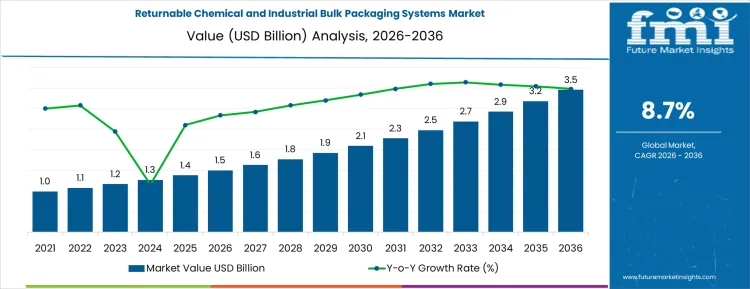
The returnable chemical and industrial bulk packaging systems market is expected to grow from USD 1.5 billion in 2026 to USD 3.5 billion by 2036, reflecting a compound annual growth rate (CAGR) of 8.7%. These packaging systems, designed for the safe and efficient transport of bulk chemicals and industrial materials, are gaining popularity due to their cost-effectiveness and sustainability. Returnable packaging solutions reduce waste by enabling containers to be reused across multiple trips, supporting the circular economy. As industries increasingly prioritize sustainability, these packaging systems are being adopted to meet both regulatory requirements and environmental goals, particularly in industries like chemicals, pharmaceuticals, and logistics.
The market growth is also driven by the increasing demand for safer, more efficient bulk transportation and storage solutions. Returnable chemical and industrial bulk packaging systems offer several advantages, including reduced packaging costs, enhanced safety features, and the ability to handle hazardous materials more securely. The ongoing shift toward more sustainable practices, along with advancements in materials technology, is expected to further drive the adoption of returnable packaging systems over the next decade.
Quick Stats of the Returnable Chemical and Industrial Bulk Packaging Systems Market
- Returnable Chemical and Industrial Bulk Packaging Systems Market Value (2026): USD 1.5 billion
- Returnable Chemical and Industrial Bulk Packaging Systems Market Forecast Value (2036): USD 3.5 billion
- Returnable Chemical and Industrial Bulk Packaging Systems Market Global Forecast CAGR (2026-2036): 8.7%
- Returnable Chemical and Industrial Bulk Packaging Systems Market Leading Segment: Technology (Pooling, tracking & reconditioning) 50%
- Key Growth Regions in Returnable Chemical and Industrial Bulk Packaging Systems Market: China
- Top Players in Returnable Chemical and Industrial Bulk Packaging Systems Market: Schütz, Greif, China National Packaging Corp, Time Technoplast, Mauser Packaging Solutions, Schoeller Allibert
What is the Growth Forecast for the Returnable Chemical and Industrial Bulk Packaging Systems Market through 2036?
The contribution of volume vs price growth analysis for the returnable chemical and industrial bulk packaging systems market shows a steady increase in both volume and price over the forecast period. Starting at USD 1.5 billion in 2026, the market grows to USD 1.6 billion in 2027 and USD 1.7 billion in 2028, reflecting gradual growth driven by increased adoption of returnable systems for transporting chemicals and industrial materials. These early years of the forecast show consistent volume growth as industries look to meet sustainability goals and reduce overall packaging costs, aided by regulatory pressures and environmental considerations.
From 2028 to 2030, the market continues its upward trajectory, reaching USD 1.9 billion in 2029 and USD 2.1 billion in 2030, with both volume growth and incremental price increases reflecting the rising adoption of higher-quality returnable packaging systems. Between 2030 and 2035, the market sees further acceleration, reaching USD 2.2 billion in 2031, USD 2.4 billion in 2032, and USD 2.6 billion in 2033. The final phase of growth, from 2033 to 2036, sees continued price growth alongside volume increases, reaching USD 2.9 billion by 2035 and USD 3.5 billion by 2036, as industries expand the use of returnable packaging across more applications, with improvements in technology and materials driving both value and volume.
Returnable Chemical and Industrial Bulk Packaging Systems Market Key Takeaways
| Metric | Value |
|---|---|
| Industry Sales Value (2026) | USD 1.5 billion |
| Industry Forecast Value (2036) | USD 3.5 billion |
| Industry Forecast CAGR (2026-2036) | 8.7% |
What Is Driving the Demand for the Returnable Chemical and Industrial Bulk Packaging Systems Market Globally?
The global demand for returnable chemical and industrial bulk packaging systems is driven by increasing focus on cost efficiency, regulatory compliance, and environmental sustainability in industrial supply chains. Traditional single use drums, intermediate bulk containers (IBCs), and pallets generate significant waste and recurring procurement costs, particularly for large volume chemicals, lubricants, adhesives, and industrial intermediates. Returnable systems offer a way to reduce material consumption and handling expenses by cycling durable containers through cleaning, inspection, and redeployment. Regulatory frameworks in Europe, Asia Pacific, and other regions increasingly prioritise waste reduction and producer responsibility, encouraging companies to adopt reuse models that minimise disposal obligations and lower total cost of ownership. In addition, customers and business partners have heightened expectations for demonstrable sustainability performance, making closed loop packaging a competitive differentiator for chemical manufacturers and industrial goods suppliers. Industrial operators value returnable bulk systems because they improve workplace safety through robust design standards, reduce risk of contamination, and can be integrated with enterprise resource planning and logistics systems that track asset utilisation and location.
Future demand for returnable chemical and industrial bulk packaging systems is expected to grow as organisations seek to build more resilient, circular supply chains and achieve carbon reduction targets. Advances in materials and design are improving the durability, stackability, and compatibility of returnable containers with automation and mechanised handling equipment, which supports broader adoption in sectors such as chemicals, automotive components, pharmaceuticals, and food ingredients. Expansion of reverse logistics infrastructure - including collection networks, cleaning centres, and tracking technologies such as RFID and IoT sensors - will enhance visibility and reduce loss or idle time of high value packaging assets. Evolving sustainability standards and extended producer responsibility schemes will further reinforce reuse models as part of environmental, social, and governance (ESG) strategies. As global demand for industrial goods increases and customers prioritise both performance and environmental credentials, returnable bulk packaging systems that balance operational efficiency with circularity will be increasingly preferred across manufacturing and distribution ecosystems. The pace of adoption will depend on clarity of regulatory incentives, cost benefit outcomes compared with single use alternatives, and the ability of service providers to offer scalable, interoperable reuse solutions across regions and industrial sectors.
What is the Segment Analysis for the Returnable Chemical and Industrial Bulk Packaging Systems Market?
The returnable chemical and industrial bulk packaging systems market is driven by key segments based on packaging formats and materials. Returnable IBCs, drums, and totes dominate the packaging formats, representing 45% of the market share, followed by reconditioned IBCs, returnable drums & tanks, and reusable drums. In terms of materials, HDPE IBCs with steel frames lead, comprising 50% of the market, followed by other materials like HDPE + steel and steel & composite. The market is growing due to the increasing demand for cost-effective, sustainable packaging solutions. Returnable packaging systems offer significant savings, reduce waste, and meet regulatory requirements. As industries focus on reducing environmental impact, the adoption of returnable packaging is expected to increase, driving further growth in the market.
What is Driving Growth in the Returnable IBCs, Drums & Totes Segment of the Returnable Bulk Packaging Market?
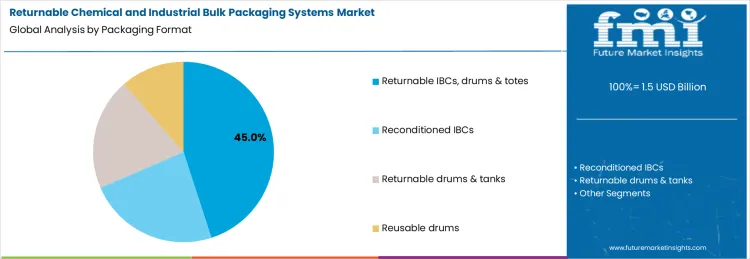
The returnable IBCs, drums, and totes segment is the largest packaging format in the returnable chemical and industrial bulk packaging systems market, comprising 45% of the market share. This growth is primarily driven by the widespread use of these packaging formats in the chemical, pharmaceutical, and food industries, where large quantities of liquids and chemicals need to be transported and stored safely. Returnable IBCs and drums offer significant cost savings by eliminating the need for single-use packaging, while also reducing environmental impact. Their durability and reusability make them ideal for industries that need packaging solutions capable of withstanding the stresses of transport and handling. These packaging formats are particularly beneficial for bulk chemical storage, where the safety and integrity of the contents are of utmost importance. Furthermore, the ability to reuse IBCs, drums, and totes multiple times leads to reduced waste and improved operational efficiency. As companies increasingly focus on sustainability and cost reduction, returnable packaging solutions continue to gain traction in industrial sectors, further driving the market growth in this segment.
What is Contributing to the Growth of HDPE IBCs, Steel Frames in the Material Segment?
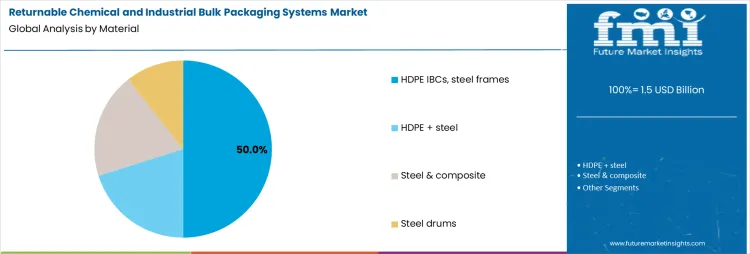
HDPE IBCs (Intermediate Bulk Containers) with steel frames dominate the material segment in the returnable chemical and industrial bulk packaging systems market, comprising 50% of the market share. This growth is driven by the versatility and strength of HDPE combined with the durability of steel frames. HDPE is known for its chemical resistance, making it ideal for storing and transporting a wide range of chemicals, liquids, and industrial materials. The addition of steel frames provides structural support, ensuring that the IBCs are sturdy and capable of withstanding rough handling during transport. These materials are widely used in industries such as chemicals, pharmaceuticals, and food, where safe, efficient bulk packaging solutions are required. HDPE IBCs with steel frames are also highly reusable, reducing waste and improving the sustainability of packaging systems. As companies continue to prioritize sustainability and operational efficiency, the demand for HDPE IBCs with steel frames is expected to remain strong, driving growth in the material segment. Advancements in material technologies are improving the performance and lifespan of these packaging systems, further supporting their adoption across industries.
What is the Key Dynamics of the Global Returnable Chemical and Industrial Bulk Packaging Systems Market?
The global returnable chemical and industrial bulk packaging systems market is growing as manufacturers, distributors and end users seek reusable, robust containers that reduce waste and handling cost. These systems include intermediate bulk containers (IBCs), returnable tote tanks and collapsible bulk units designed for hazardous and non hazardous liquids, powders and granules. Growth reflects pressure to enhance sustainability, comply with environmental regulations and improve supply chain efficiency. Adoption spans chemicals, coatings, lubricants, pharmaceuticals and food processing sectors where repeat use and safe handling are priorities across regional and global operations.
What are the Key Drivers for the Global Returnable Chemical and Industrial Bulk Packaging Systems Market?
One key driver is increasing focus on total cost of ownership, with returnable systems lowering expenditure on single use packaging and disposal. Companies targeting circular operations invest in durable bulk packaging to capture value over multiple cycles while reducing waste streams. Regulatory emphasis on reducing packaging waste and managing hazardous materials safely encourages use of engineered, returnable containers. Demand for secure, certified systems that meet transport and handling standards supports uptake. Expansion of industrial production, global trade and bulk distribution networks elevates need for reliable, reusable solutions that help streamline inbound and outbound movements.
What are the Restraints for the Global Returnable Chemical and Industrial Bulk Packaging Systems Market?
A restraint is the upfront investment required for durable returnable systems compared with single use alternatives, which may deter adoption among smaller firms. Implementation of returnable packaging involves logistics planning for reverse flows, cleaning, inspection and maintenance that add operational complexity. Infrastructure requirements for storage, tracking and handling can be barriers where facilities are constrained. Variability in regional regulations for chemical containment, cleaning and reuse protocols creates planning challenges for global operators. Stakeholders may hesitate if supply chain partners lack readiness to manage return cycles effectively.
What is the Key Trends in the Global Returnable Chemical and Industrial Bulk Packaging Systems Market?
A key trend is integration of digital tracking and identification hardware such as RFID, QR tags and IoT sensors that enable real time visibility of bulk packaging across networks. Data platforms help manage location, condition and return status, improving utilization and reducing loss. Service models that bundle packaging with cleaning, inspection, repair and logistics support are gaining traction, lowering barriers for users. Material innovations focus on lightweight, impact resistant polymers and hybrid structures that extend service life. Collaboration among producers, logistics providers and industrial buyers is increasing to standardize formats and support shared reuse pools that improve circularity and operational efficiency.
What is the Country-Wise Analysis of the Returnable Chemical and Industrial Bulk Packaging Systems Market?
The returnable chemical and industrial bulk packaging systems market is expected to grow steadily across key regions, driven by increasing demand for sustainable and efficient packaging solutions in the chemical and industrial sectors. These systems, which focus on reusability and reducing waste, align with growing regulatory pressures to minimize packaging waste and improve sustainability. The chemical and industrial industries are adopting returnable packaging solutions to reduce costs and meet environmental goals, especially in regions with strong regulatory frameworks. High-growth markets like China and India are seeing rapid industrialization, urbanization, and growing environmental awareness, driving demand for such packaging solutions. Meanwhile, in developed markets like the USA and Germany, growth is fueled by increasing regulatory requirements and a rising focus on sustainability and cost efficiency.
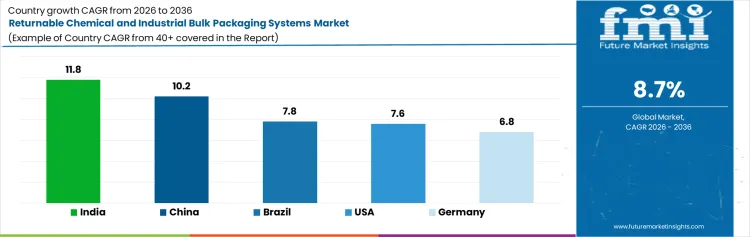
| Country | CAGR (2026-2036) |
|---|---|
| USA | 7.6% |
| Germany | 6.8% |
| China | 10.2% |
| India | 11.8% |
| Brazil | 7.8% |
What is the Growth Outlook for the Returnable Chemical and Industrial Bulk Packaging Systems Market in the USA?
The returnable chemical and industrial bulk packaging systems market in the United States is expected to grow at a moderate pace, with a projected CAGR of 7.6%. The U.S. is a leader in the chemical and industrial sectors, and the demand for returnable packaging systems is driven by the need for cost-effective and sustainable solutions. As companies look for ways to reduce waste, improve logistics efficiency, and comply with environmental regulations, returnable bulk packaging systems are becoming increasingly attractive. Additionally, the U.S. is seeing a shift towards more sustainable practices, which is accelerating the adoption of returnable chemical and industrial packaging systems. This trend is expected to continue, with steady market growth in the coming years.
What is the Market Outlook for the Returnable Chemical and Industrial Bulk Packaging Systems Market in Germany?
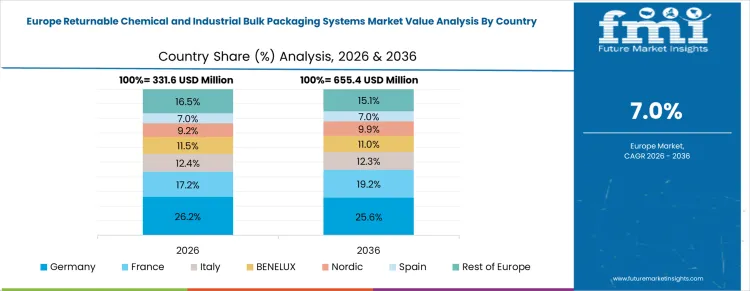
The market for returnable chemical and industrial bulk packaging systems in Germany is projected to grow at a moderate rate, with a projected CAGR of 6.8%. Germany’s well-developed industrial base and strong regulatory environment, particularly around sustainability and waste reduction, are key drivers of demand for returnable packaging solutions. The chemical and industrial sectors in Germany are increasingly adopting reusable packaging to meet both environmental goals and cost reduction targets. With the country’s commitment to sustainability, businesses are motivated to transition to circular packaging solutions, further supporting market growth. Germany’s packaging industry is expected to continue to prioritize sustainability, and as such, the demand for returnable bulk packaging systems is projected to rise steadily.
What is the Growth Forecast for the Returnable Chemical and Industrial Bulk Packaging Systems Market in China?
The returnable chemical and industrial bulk packaging systems market in China is expected to grow rapidly, with a projected CAGR of 10.2%. China’s large-scale industrial and chemical sectors, combined with increasing environmental regulations, are driving the demand for returnable packaging solutions. The country’s focus on sustainability and reducing plastic waste is contributing to the growing adoption of reusable packaging. Additionally, China’s rapid industrialization and expanding middle class are pushing the demand for more efficient and eco-friendly packaging solutions in the chemical and industrial sectors. As China continues to improve its waste management practices and invest in sustainable technologies, the market for returnable packaging is expected to see robust growth.
What is the Market Outlook for the Returnable Chemical and Industrial Bulk Packaging Systems Market in India?
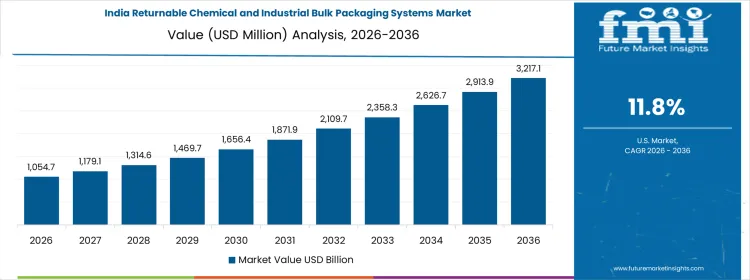
The returnable chemical and industrial bulk packaging systems market in India is projected to grow at the highest rate globally, with a CAGR of 11.8%. India’s expanding industrial base, particularly in the chemical and manufacturing sectors, is contributing to the increasing demand for sustainable and cost-effective packaging solutions. As the Indian government focuses on waste reduction and sustainability, businesses are adopting returnable packaging systems to comply with regulatory standards and reduce environmental impact. With rapid urbanization, increased industrial activity, and a growing awareness of sustainability, India is set to experience significant growth in the returnable chemical and industrial bulk packaging systems market. This shift is expected to be particularly strong in industries that handle bulk chemicals and raw materials.
What are the Growth Prospects for the Returnable Chemical and Industrial Bulk Packaging Systems Market in Brazil?
The returnable chemical and industrial bulk packaging systems market in Brazil is expected to grow at a moderate pace, with a projected CAGR of 7.8%. Brazil’s manufacturing and chemical industries are gradually adopting more sustainable packaging solutions to meet growing consumer demand for eco-friendly products and comply with increasing environmental regulations. While the adoption of returnable bulk packaging systems in Brazil has been slower compared to other regions, the trend is expected to accelerate as the government pushes for more sustainable practices. As Brazilian companies in the chemical and industrial sectors aim to reduce packaging waste and improve logistics efficiency, the demand for returnable packaging systems is expected to grow steadily over the coming years.
What is the Competitive Landscape for the Returnable Chemical and Industrial Bulk Packaging Systems Market?
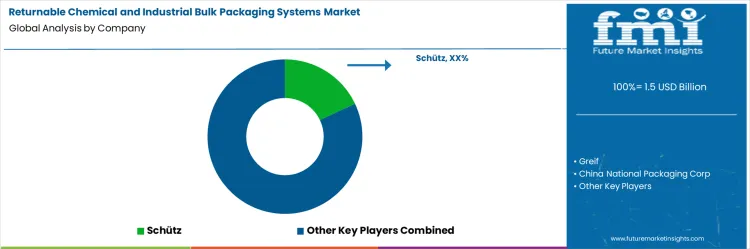
The returnable chemical and industrial bulk packaging systems market is growing as industries seek sustainable, efficient packaging solutions for chemical and industrial products. Schütz leads the market with its advanced returnable bulk packaging systems, offering high-quality, reusable containers designed to improve logistics and reduce environmental impact. Their focus on product durability, sustainability, and cost-effectiveness has positioned them as a market leader. Greif, China National Packaging Corp, and Time Technoplast are key competitors, providing innovative packaging solutions for the chemical and industrial sectors. Greif focuses on producing durable, returnable packaging systems for bulk chemicals, while China National Packaging Corp and Time Technoplast offer cost-effective, high-performance solutions suited for various industrial applications.
Mauser Packaging Solutions and Schoeller Allibert contribute further to the competitive landscape by offering specialized bulk packaging systems for chemicals and industrial products. Mauser Packaging Solutions provides returnable packaging systems that emphasize safety, sustainability, and efficiency. Schoeller Allibert offers a wide range of returnable packaging solutions designed for durability and reuse, meeting the demands of both the chemical and industrial sectors. These companies compete through innovations in packaging design, sustainability, and the ability to reduce the overall environmental footprint of industrial packaging systems.
Key Players of the Returnable Chemical and Industrial Bulk Packaging Systems Market
- Schütz
- Greif
- China National Packaging Corp
- Time Technoplast
- Mauser Packaging Solutions
- Schoeller Allibert
Scope of the Report
| Items | Values |
|---|---|
| Quantitative Units (2026) | USD Billion |
| End-use / Application | Chemicals & Specialty Chemicals, Industrial Intermediates, Bulk Chemicals & Exports, Agrochemicals & Pharma Inputs, Petrochemicals, High-Purity Chemicals |
| Packaging Format / Type | Returnable IBCs, Drums & Totes, Reconditioned IBCs, Returnable Drums & Tanks, Reusable Drums, Others |
| Material | HDPE IBCs, Steel Frames, HDPE + Steel, Steel & Composite, Steel Drums, Others |
| Technology | Pooling, Tracking & Reconditioning, Closed-Loop IBC Lifecycle Management, RFID-Enabled Asset Tracking, Cost-Efficient Reconditioning |
| Companies | Schütz, Greif, China National Packaging Corp, Time Technoplast, Mauser Packaging Solutions, Schoeller Allibert |
| Regions Covered | North America, Latin America, Western Europe, Eastern Europe, South Asia and Pacific, East Asia, Middle East & Africa |
| Countries Covered | United States, Canada, Mexico, Brazil, Argentina, Germany, France, United Kingdom, Italy, Spain, Netherlands, China, India, Japan, South Korea, ANZ, GCC Countries, South Africa |
| Additional Attributes | Dollar by sales by end-use/application, packaging format/type, material, technology, and region. Includes market trends in returnable chemical and industrial bulk packaging systems, focusing on IBCs, drums, and totes. Highlights the role of pooling, tracking, reconditioning, and RFID-enabled asset tracking in chemicals, petrochemicals, and high-purity chemical packaging. Focus on cost-efficient reconditioning, sustainability, regulatory compliance, market share, and competitive positioning of key companies in the bulk packaging sector. |
Returnable Chemical and Industrial Bulk Packaging Systems Market Segmentation
End-use / Application:
- Chemicals & specialty chemicals
- Industrial intermediates
- Bulk chemicals & exports
- Agrochemicals & pharma inputs
- Petrochemicals
- High-purity chemicals
Packaging Format / Type:
- Returnable IBCs, drums & totes
- Reconditioned IBCs
- Returnable drums & tanks
- Reusable drums
- Others
Material:
- HDPE IBCs, steel frames
- HDPE + steel
- Steel & composite
- Steel drums
- Others
Technology:
- Pooling, tracking & reconditioning
- Closed-loop IBC lifecycle management
- RFID-enabled asset tracking
- Cost-efficient reconditioning
- Others
Region:
- Asia Pacific
- China
- Japan
- South Korea
- India
- Australia & New Zealand
- ASEAN
- Rest of Asia Pacific
- Europe
- Germany
- United Kingdom
- France
- Italy
- Spain
- Nordic
- BENELUX
- Rest of Europe
- North America
- United States
- Canada
- Mexico
- Latin America
- Brazil
- Chile
- Rest of Latin America
- Middle East & Africa
- Kingdom of Saudi Arabia
- Other GCC Countries
- Turkey
- South Africa
- Other African Union
- Rest of Middle East & Africa
Frequently Asked Questions
How big is the returnable chemical and industrial bulk packaging systems market in 2026?
The global returnable chemical and industrial bulk packaging systems market is estimated to be valued at USD 1.5 billion in 2026.
What will be the size of returnable chemical and industrial bulk packaging systems market in 2036?
The market size for the returnable chemical and industrial bulk packaging systems market is projected to reach USD 3.5 billion by 2036.
How much will be the returnable chemical and industrial bulk packaging systems market growth between 2026 and 2036?
The returnable chemical and industrial bulk packaging systems market is expected to grow at a 8.7% CAGR between 2026 and 2036.
What are the key product types in the returnable chemical and industrial bulk packaging systems market?
The key product types in returnable chemical and industrial bulk packaging systems market are chemicals & specialty chemicals, industrial intermediates, bulk chemicals & exports, agrochemicals & pharma inputs, petrochemicals and high-purity chemicals.
Which packaging format segment to contribute significant share in the returnable chemical and industrial bulk packaging systems market in 2026?
In terms of packaging format, returnable ibcs, drums & totes segment to command 45.0% share in the returnable chemical and industrial bulk packaging systems market in 2026.
Preview the report firsthand - request a free sample
Get SampleGet the brochure for pricing and purchase details.
Get PDFTable of Content
- Executive Summary
- Global Market Outlook
- Demand-side Trends
- Supply-side Trends
- Technology Roadmap Analysis
- Analysis and Recommendations
- Market Overview
- Market Coverage / Taxonomy
- Market Definition / Scope / Limitations
- Market Background
- Market Dynamics
- Drivers
- Restraints
- Opportunity
- Trends
- Scenario Forecast
- Demand in Optimistic Scenario
- Demand in Likely Scenario
- Demand in Conservative Scenario
- Opportunity Map Analysis
- Product Life Cycle Analysis
- Supply Chain Analysis
- Investment Feasibility Matrix
- Value Chain Analysis
- PESTLE and Porter’s Analysis
- Regulatory Landscape
- Regional Parent Market Outlook
- Production and Consumption Statistics
- Import and Export Statistics
- Market Dynamics
- Global Market Analysis 2021 to 2025 and Forecast, 2026 to 2036
- Historical Market Size Value (USD Million) Analysis, 2021 to 2025
- Current and Future Market Size Value (USD Million) Projections, 2026 to 2036
- Y-o-Y Growth Trend Analysis
- Absolute $ Opportunity Analysis
- Global Market Pricing Analysis 2021 to 2025 and Forecast 2026 to 2036
- Global Market Analysis 2021 to 2025 and Forecast 2026 to 2036, By End-use
- Introduction / Key Findings
- Historical Market Size Value (USD Million) Analysis By End-use , 2021 to 2025
- Current and Future Market Size Value (USD Million) Analysis and Forecast By End-use , 2026 to 2036
- Chemicals & specialty chemicals
- Industrial intermediates
- Bulk chemicals & exports
- Agrochemicals & pharma inputs
- Petrochemicals
- High-purity chemicals
- Y-o-Y Growth Trend Analysis By End-use , 2021 to 2025
- Absolute $ Opportunity Analysis By End-use , 2026 to 2036
- Global Market Analysis 2021 to 2025 and Forecast 2026 to 2036, By Packaging Format
- Introduction / Key Findings
- Historical Market Size Value (USD Million) Analysis By Packaging Format, 2021 to 2025
- Current and Future Market Size Value (USD Million) Analysis and Forecast By Packaging Format, 2026 to 2036
- Returnable IBCs, drums & totes
- Reconditioned IBCs
- Returnable drums & tanks
- Reusable drums
- Y-o-Y Growth Trend Analysis By Packaging Format, 2021 to 2025
- Absolute $ Opportunity Analysis By Packaging Format, 2026 to 2036
- Global Market Analysis 2021 to 2025 and Forecast 2026 to 2036, By Material
- Introduction / Key Findings
- Historical Market Size Value (USD Million) Analysis By Material, 2021 to 2025
- Current and Future Market Size Value (USD Million) Analysis and Forecast By Material, 2026 to 2036
- HDPE IBCs, steel frames
- HDPE + steel
- Steel & composite
- Steel drums
- Y-o-Y Growth Trend Analysis By Material, 2021 to 2025
- Absolute $ Opportunity Analysis By Material, 2026 to 2036
- Global Market Analysis 2021 to 2025 and Forecast 2026 to 2036, By Technology
- Introduction / Key Findings
- Historical Market Size Value (USD Million) Analysis By Technology, 2021 to 2025
- Current and Future Market Size Value (USD Million) Analysis and Forecast By Technology, 2026 to 2036
- Pooling, tracking & reconditioning
- Closed-loop IBC lifecycle management
- RFID-enabled asset tracking
- Cost-efficient reconditioning
- Y-o-Y Growth Trend Analysis By Technology, 2021 to 2025
- Absolute $ Opportunity Analysis By Technology, 2026 to 2036
- Global Market Analysis 2021 to 2025 and Forecast 2026 to 2036, By Region
- Introduction
- Historical Market Size Value (USD Million) Analysis By Region, 2021 to 2025
- Current Market Size Value (USD Million) Analysis and Forecast By Region, 2026 to 2036
- North America
- Latin America
- Western Europe
- Eastern Europe
- East Asia
- South Asia and Pacific
- Middle East & Africa
- Market Attractiveness Analysis By Region
- North America Market Analysis 2021 to 2025 and Forecast 2026 to 2036, By Country
- Historical Market Size Value (USD Million) Trend Analysis By Market Taxonomy, 2021 to 2025
- Market Size Value (USD Million) Forecast By Market Taxonomy, 2026 to 2036
- By Country
- USA
- Canada
- Mexico
- By End-use
- By Packaging Format
- By Material
- By Technology
- By Country
- Market Attractiveness Analysis
- By Country
- By End-use
- By Packaging Format
- By Material
- By Technology
- Key Takeaways
- Latin America Market Analysis 2021 to 2025 and Forecast 2026 to 2036, By Country
- Historical Market Size Value (USD Million) Trend Analysis By Market Taxonomy, 2021 to 2025
- Market Size Value (USD Million) Forecast By Market Taxonomy, 2026 to 2036
- By Country
- Brazil
- Chile
- Rest of Latin America
- By End-use
- By Packaging Format
- By Material
- By Technology
- By Country
- Market Attractiveness Analysis
- By Country
- By End-use
- By Packaging Format
- By Material
- By Technology
- Key Takeaways
- Western Europe Market Analysis 2021 to 2025 and Forecast 2026 to 2036, By Country
- Historical Market Size Value (USD Million) Trend Analysis By Market Taxonomy, 2021 to 2025
- Market Size Value (USD Million) Forecast By Market Taxonomy, 2026 to 2036
- By Country
- Germany
- UK
- Italy
- Spain
- France
- Nordic
- BENELUX
- Rest of Western Europe
- By End-use
- By Packaging Format
- By Material
- By Technology
- By Country
- Market Attractiveness Analysis
- By Country
- By End-use
- By Packaging Format
- By Material
- By Technology
- Key Takeaways
- Eastern Europe Market Analysis 2021 to 2025 and Forecast 2026 to 2036, By Country
- Historical Market Size Value (USD Million) Trend Analysis By Market Taxonomy, 2021 to 2025
- Market Size Value (USD Million) Forecast By Market Taxonomy, 2026 to 2036
- By Country
- Russia
- Poland
- Hungary
- Balkan & Baltic
- Rest of Eastern Europe
- By End-use
- By Packaging Format
- By Material
- By Technology
- By Country
- Market Attractiveness Analysis
- By Country
- By End-use
- By Packaging Format
- By Material
- By Technology
- Key Takeaways
- East Asia Market Analysis 2021 to 2025 and Forecast 2026 to 2036, By Country
- Historical Market Size Value (USD Million) Trend Analysis By Market Taxonomy, 2021 to 2025
- Market Size Value (USD Million) Forecast By Market Taxonomy, 2026 to 2036
- By Country
- China
- Japan
- South Korea
- By End-use
- By Packaging Format
- By Material
- By Technology
- By Country
- Market Attractiveness Analysis
- By Country
- By End-use
- By Packaging Format
- By Material
- By Technology
- Key Takeaways
- South Asia and Pacific Market Analysis 2021 to 2025 and Forecast 2026 to 2036, By Country
- Historical Market Size Value (USD Million) Trend Analysis By Market Taxonomy, 2021 to 2025
- Market Size Value (USD Million) Forecast By Market Taxonomy, 2026 to 2036
- By Country
- India
- ASEAN
- Australia & New Zealand
- Rest of South Asia and Pacific
- By End-use
- By Packaging Format
- By Material
- By Technology
- By Country
- Market Attractiveness Analysis
- By Country
- By End-use
- By Packaging Format
- By Material
- By Technology
- Key Takeaways
- Middle East & Africa Market Analysis 2021 to 2025 and Forecast 2026 to 2036, By Country
- Historical Market Size Value (USD Million) Trend Analysis By Market Taxonomy, 2021 to 2025
- Market Size Value (USD Million) Forecast By Market Taxonomy, 2026 to 2036
- By Country
- Kingdom of Saudi Arabia
- Other GCC Countries
- Turkiye
- South Africa
- Other African Union
- Rest of Middle East & Africa
- By End-use
- By Packaging Format
- By Material
- By Technology
- By Country
- Market Attractiveness Analysis
- By Country
- By End-use
- By Packaging Format
- By Material
- By Technology
- Key Takeaways
- Key Countries Market Analysis
- USA
- Pricing Analysis
- Market Share Analysis, 2025
- By End-use
- By Packaging Format
- By Material
- By Technology
- Canada
- Pricing Analysis
- Market Share Analysis, 2025
- By End-use
- By Packaging Format
- By Material
- By Technology
- Mexico
- Pricing Analysis
- Market Share Analysis, 2025
- By End-use
- By Packaging Format
- By Material
- By Technology
- Brazil
- Pricing Analysis
- Market Share Analysis, 2025
- By End-use
- By Packaging Format
- By Material
- By Technology
- Chile
- Pricing Analysis
- Market Share Analysis, 2025
- By End-use
- By Packaging Format
- By Material
- By Technology
- Germany
- Pricing Analysis
- Market Share Analysis, 2025
- By End-use
- By Packaging Format
- By Material
- By Technology
- UK
- Pricing Analysis
- Market Share Analysis, 2025
- By End-use
- By Packaging Format
- By Material
- By Technology
- Italy
- Pricing Analysis
- Market Share Analysis, 2025
- By End-use
- By Packaging Format
- By Material
- By Technology
- Spain
- Pricing Analysis
- Market Share Analysis, 2025
- By End-use
- By Packaging Format
- By Material
- By Technology
- France
- Pricing Analysis
- Market Share Analysis, 2025
- By End-use
- By Packaging Format
- By Material
- By Technology
- India
- Pricing Analysis
- Market Share Analysis, 2025
- By End-use
- By Packaging Format
- By Material
- By Technology
- ASEAN
- Pricing Analysis
- Market Share Analysis, 2025
- By End-use
- By Packaging Format
- By Material
- By Technology
- Australia & New Zealand
- Pricing Analysis
- Market Share Analysis, 2025
- By End-use
- By Packaging Format
- By Material
- By Technology
- China
- Pricing Analysis
- Market Share Analysis, 2025
- By End-use
- By Packaging Format
- By Material
- By Technology
- Japan
- Pricing Analysis
- Market Share Analysis, 2025
- By End-use
- By Packaging Format
- By Material
- By Technology
- South Korea
- Pricing Analysis
- Market Share Analysis, 2025
- By End-use
- By Packaging Format
- By Material
- By Technology
- Russia
- Pricing Analysis
- Market Share Analysis, 2025
- By End-use
- By Packaging Format
- By Material
- By Technology
- Poland
- Pricing Analysis
- Market Share Analysis, 2025
- By End-use
- By Packaging Format
- By Material
- By Technology
- Hungary
- Pricing Analysis
- Market Share Analysis, 2025
- By End-use
- By Packaging Format
- By Material
- By Technology
- Kingdom of Saudi Arabia
- Pricing Analysis
- Market Share Analysis, 2025
- By End-use
- By Packaging Format
- By Material
- By Technology
- Turkiye
- Pricing Analysis
- Market Share Analysis, 2025
- By End-use
- By Packaging Format
- By Material
- By Technology
- South Africa
- Pricing Analysis
- Market Share Analysis, 2025
- By End-use
- By Packaging Format
- By Material
- By Technology
- USA
- Market Structure Analysis
- Competition Dashboard
- Competition Benchmarking
- Market Share Analysis of Top Players
- By Regional
- By End-use
- By Packaging Format
- By Material
- By Technology
- Competition Analysis
- Competition Deep Dive
- Schütz
- Overview
- Product Portfolio
- Profitability by Market Segments (Product/Age /Sales Channel/Region)
- Sales Footprint
- Strategy Overview
- Marketing Strategy
- Product Strategy
- Channel Strategy
- Greif
- China National Packaging Corp
- Time Technoplast
- Mauser Packaging Solutions
- Schoeller Allibert
- Schütz
- Competition Deep Dive
- Assumptions & Acronyms Used
- Research Methodology


