

- Industry Size (2026)
- USD 1.4 Bn
- Forecast (2036)
- USD 2.9 Bn
- CAGR (2026 to 2036)
- 7.3%
Safety Cabinets Market Forecast and Outlook 2026 to 2036
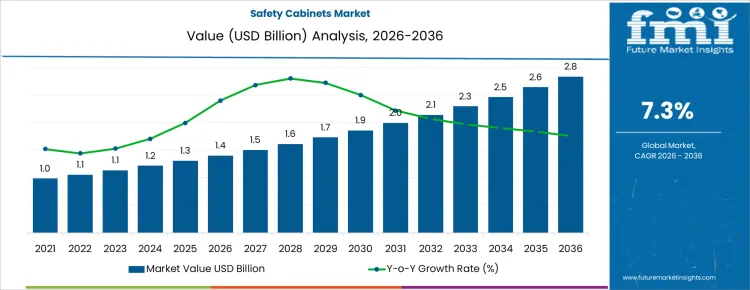
The global safety cabinets market is expected to grow from USD 1.4 billion in 2026 to USD 2.9 billion by 2036, with a CAGR of 7.3%. This growth is driven by the rising emphasis on regulatory compliance, workplace safety, and the secure storage of hazardous materials. Safety cabinets are essential for industries dealing with flammable, combustible, and corrosive substances, such as chemicals, pharmaceuticals, and manufacturing. The need for safe storage solutions in industries handling volatile materials is critical for preventing accidents, spills, and environmental hazards. Safety cabinets, with features like fire-retardant construction, ventilated storage, and spill containment trays, are becoming increasingly adopted to meet stringent safety regulations and ensure operational efficiency. The market is also being propelled by the growing focus on environmental health and safety (EHS) programs, alongside the demand for custom solutions to meet specific industry needs.
Quick Stats for Safety Cabinets Market
- Safety Cabinets Market Value (2026): USD 1.4 billion
- Safety Cabinets Market Forecast Value (2036): USD 2.9 billion
- Safety Cabinets Market Forecast CAGR: 7.3%
- Leading End-Use in Safety Cabinets Market: Chemical & flammable storage
- Top Cabinet Type in Safety Cabinets Market: Flammable & corrosive cabinets
- Key Growth Regions in Safety Cabinets Market: Asia Pacific
- Key Players in Safety Cabinets Market: Justrite, Eagle Manufacturing, Denios, Jiangsu Safety Tech, Godrej Storage, Koken
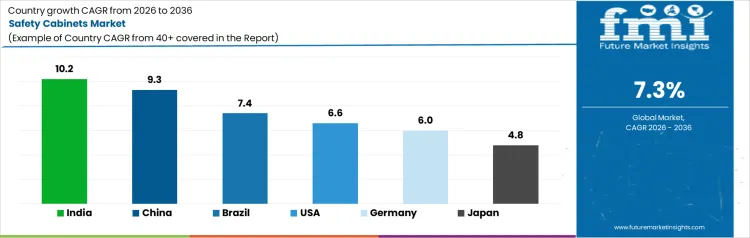
India is leading the market with a 10.2% CAGR, driven by rapid industrialization, particularly in chemicals, pharmaceuticals, and automotive sectors. The country’s expanding manufacturing base and tightening safety regulations further boost the demand for safety cabinets. China follows with a 9.3% growth rate, fueled by its massive industrial production and the increasing need for safe storage in chemicals and manufacturing. The USA market grows at 6.6%, backed by stringent safety regulations across industries. Germany’s market grows steadily at 6%, supported by high regulatory standards and workplace safety. Brazil also sees growth at 7.4%, driven by industrial development and rising safety awareness.
Safety Cabinets Market Key Takeaways
| Metric | Value |
|---|---|
| Industry Value (2026) | USD 1.4 billion |
| Forecast Value (2036) | USD 2.9 billion |
| Forecast CAGR (2026 to 2036) | 7.3% |
How is the Global Safety Cabinets Sector Advancing?
The global safety cabinets market is growing steadily as industries worldwide prioritize safe storage and handling of hazardous materials. Safety cabinets are specialized storage solutions designed to contain flammable, combustible, and corrosive substances securely, reducing the risk of fires, spills, and chemical exposure. Historically, many facilities relied on basic shelving or improvised storage, which posed safety and regulatory compliance issues. With increasing emphasis on worker protection and environmental standards, businesses are increasingly adopting certified safety cabinets that meet stringent codes and reduce operational risk.
Demand for safety cabinets is particularly strong in industries such as chemicals, pharmaceuticals, manufacturing, laboratories, and oil and gas, where hazardous liquids and reactive substances are routinely used. These cabinets offer advanced features such as ventilated storage, spill containment trays, fire retardant construction, and lockable doors to enhance protection. Innovations in materials and design have improved cabinet durability, ease of installation, and adaptability to different facility layouts. Modular and customizable options allow companies to tailor storage solutions to specific regulatory requirements and space constraints.
Organizations are investing more in environmental health and safety (EHS) programs that prioritize compliant storage infrastructure. Challenges such as balancing upfront costs with budget limitations and ensuring correct cabinet selection and placement across varied operations may influence adoption rates. Nonetheless, the growing focus on safe chemical management and regulatory compliance will continue to drive demand for safety cabinets worldwide.
What is the Segment-Wise Analysis for the Global Safety Cabinets Market?
The global safety cabinets market is segmented by end-use and cabinet type. Chemical & flammable storage leads with a 42% share, followed by industrial & lab use, manufacturing plants, and pharma & R&D labs. In terms of cabinet type, flammable & corrosive cabinets hold the largest share at 45%, followed by ventilated safety cabinets, chemical storage cabinets, and compact safety cabinets. The increasing need for secure storage of hazardous materials, particularly in industries like chemicals, pharmaceuticals, and manufacturing, drives demand for specialized safety cabinets across various sectors.
How Do Chemical & Flammable Storage Lead the Global Safety Cabinets Market?
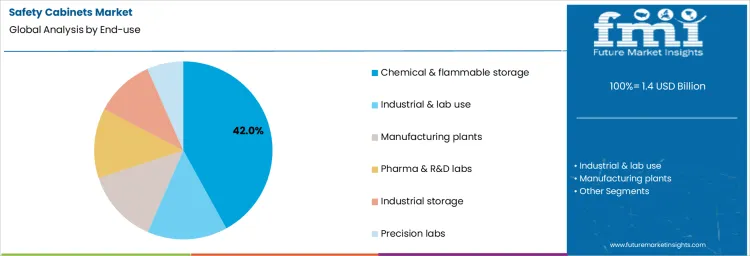
Chemical & flammable storage leads the global safety cabinets market with a 42% share due to the increasing need for secure storage solutions in industries handling volatile and hazardous materials. These industries, including chemical manufacturing, pharmaceuticals, and research labs, require specialized cabinets to store flammable liquids, chemicals, and solvents safely. Such cabinets are essential for preventing accidents, spills, and fires. The growing focus on workplace safety regulations and compliance with safety standards further drives the demand. Chemical & flammable storage cabinets ensure that businesses meet safety requirements while maintaining operational efficiency, establishing them as the dominant segment in the market.
Why Do Flammable & Corrosive Cabinets Hold the Largest Market Share in the Global Safety Cabinets Market?
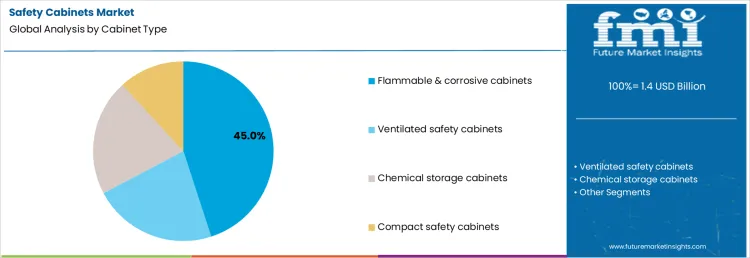
Flammable & corrosive cabinets hold the largest share of 45% in the global safety cabinets market due to their vital role in storing highly reactive and dangerous materials. These cabinets are designed to offer superior protection for industries managing flammable liquids and corrosive chemicals, ensuring safe storage and preventing accidents. Their ability to minimize risks and maintain regulatory compliance in industries like chemicals, pharmaceuticals, and manufacturing has cemented their dominance in the market. The increasing focus on protecting employees and the environment further boosts the demand for these specialized cabinets.
What are the Key Dynamics for the Safety Cabinets Market?
The safety cabinets market is growing as industries strengthen hazardous material storage and workplace safety. Safety cabinets provide secure containment for flammable, corrosive, and toxic substances, helping facilities comply with stringent regulatory standards and reduce accident risks. Growth in manufacturing, chemicals, pharmaceuticals, and laboratories increases demand for reliable storage solutions. Rising environmental awareness and corporate safety commitments also boost adoption. As supply chains expand and facilities emphasize risk mitigation, the need for certified, durable safety cabinets continue to rise globally.
What Are the Key Drivers for the Safety Cabinets Market?
The safety cabinets market is primarily driven by strict regulatory requirements and workplace safety standards that mandate secure storage of hazardous materials. Agencies like OSHA, NFPA, EPA, REACH, and local fire codes enforce containment protocols to prevent fires, spills, and chemical exposures. Industries including chemicals, pharmaceuticals, automotive, and laboratories increasingly invest in safety infrastructure to avoid fines, liability, and operational disruptions. Rising awareness of employee health and environmental protection reinforces demand. Growth in industrial production and expanding facilities worldwide contribute to increased adoption of certified safety cabinets.
What Key Trends Are Shaping the Safety Cabinets Market?
Key trends include the rise of modular and configurable safety cabinet systems that adapt to evolving storage needs and facility layouts. Manufacturers are incorporating smart features such as RFID/electronic labeling, inventory tracking, and sensor alerts for temperature, humidity, and door status to enhance compliance and monitoring. There is increased demand for environmentally friendly and recyclable materials without sacrificing fire and corrosion resistance. Growth in automation and digital maintenance records supports predictive inspection schedules. Suppliers are offering turnkey solutions including installation, training, and compliance documentation to help customers meet stringent safety and audit requirements.
What is the Growth Outlook for the Safety Cabinets Market by Country?
| Country | CAGR (%) |
|---|---|
| USA | 6.6% |
| Germany | 6% |
| China | 9.3% |
| India | 10.2% |
| Brazil | 7.4% |
| Japan | 4.8% |
The safety cabinets market is experiencing strong growth, with India leading at a 10.2% CAGR, driven by increasing industrialization and growing regulatory requirements for safe storage solutions. China follows with 9.3%, supported by its expanding manufacturing and chemical industries. The USA’s market grows at 6.6%, fueled by stringent safety regulations across various sectors. Germany’s market grows at 6%, driven by high regulatory standards and a focus on workplace safety. Brazil’s market grows at 7.4%, with a growing industrial sector needing safe storage for hazardous materials. Japan’s market grows at 4.8%, driven by safety regulations and the country’s strong industrial base. As safety regulations become stricter worldwide, the demand for safety cabinets is expected to continue rising across these regions.
Why is India Leading in the Safety Cabinets Market?
India’s safety cabinets market is growing at 10.2%, driven by rapid industrialization and increasing demand for safe storage solutions. As India’s manufacturing and chemical industries expand, the need for cabinets that comply with safety and environmental regulations is rising. Safety cabinets are essential in safely storing hazardous chemicals, flammable materials, and other dangerous substances. With the government emphasizing workplace safety and regulations becoming more stringent, businesses are turning to safety cabinets to meet compliance standards. The growing awareness of workplace safety and the need to protect workers and the environment is further fueling the demand for safety cabinets. As industries continue to expand and modernize, the market for safety cabinets in India is expected to keep growing, positioning the country as a leader in the segment.
What is Driving the Growth of the Safety Cabinets Market in China?
China’s safety cabinets market is growing at 9.3%, driven by the country’s massive industrial base and rising regulatory requirements in sectors such as chemicals, manufacturing, and pharmaceuticals. As China continues to expand its industrial and manufacturing capabilities, the demand for safe storage solutions for hazardous materials is growing. Safety cabinets play a crucial role in preventing accidents, spills, and environmental contamination, particularly in industries that handle flammable, toxic, or corrosive substances. The Chinese government’s increasing focus on environmental protection and workplace safety is accelerating the adoption of safety cabinets. As the country modernizes its industrial infrastructure and continues to prioritize safety regulations, the demand for safety cabinets is expected to continue to rise steadily.
How is the Safety Cabinets Market Expanding in the USA?
The USA’s safety cabinets market is growing at 6.6%, driven by stringent safety regulations across multiple industries. The need for safe storage solutions is increasing in sectors such as chemicals, pharmaceuticals, and manufacturing, where hazardous materials are commonly handled. Safety cabinets are essential for ensuring compliance with local and federal regulations that govern the storage of chemicals and flammable substances. As industries place greater emphasis on workplace safety and environmental protection, the adoption of safety cabinets is rising. With regulatory standards becoming more stringent, businesses are increasingly turning to safety cabinets to meet compliance requirements. The market is expected to continue expanding as the focus on workplace safety and compliance grows.
What is Contributing to the Growth of the Safety Cabinets Market in Germany?
Germany’s safety cabinets market is growing at 6%, supported by the country’s rigorous environmental and safety regulations. As a global leader in industrial manufacturing and chemicals, Germany requires high-quality safety cabinets to store hazardous materials and meet stringent compliance standards. Safety cabinets are essential for preventing spills, accidents, and ensuring that workers are protected from exposure to dangerous substances. With Germany’s emphasis on environmental sustainability and safety in industrial practices, the demand for safety cabinets is increasing. Germany’s well-established industrial sectors, particularly in automotive and chemical production, further drive the demand for secure and compliant storage solutions. As regulations continue to tighten, Germany’s market for safety cabinets is expected to expand steadily.
What is Driving the Growth of the Safety Cabinets Market in Brazil?
Brazil’s safety cabinets market is growing at 7.4%, driven by the country’s expanding industrial and manufacturing sectors. With the growth of industries such as chemicals, pharmaceuticals, and agriculture, the need for safe storage of hazardous materials is rising. Safety cabinets are essential in these sectors to prevent accidents, protect workers, and comply with environmental regulations. Brazil’s increasing focus on workplace safety, coupled with government regulations promoting the safe storage of chemicals and flammable materials, is fueling the demand for safety cabinets. As Brazil’s industrial activities continue to grow, the market for safety cabinets is expected to expand, supported by a heightened focus on safety and compliance in the workplace.
What is Contributing to the Growth of the Safety Cabinets Market in Japan?
Japan’s safety cabinets market is growing at 4.8%, supported by the country’s strong industrial base and adherence to stringent safety regulations. Japan, a global leader in electronics, automotive, and chemicals, requires safe storage solutions for hazardous materials to meet compliance standards and prevent accidents. Safety cabinets are increasingly being used in various industries, especially in laboratories, manufacturing facilities, and chemical plants. With Japan’s continued focus on environmental protection, workplace safety, and regulatory compliance, the demand for safety cabinets is rising. Although the growth rate is lower than in other regions, Japan’s strong regulatory framework ensures a steady demand for these safety solutions, contributing to the continued growth of the market.
How Are Companies Competing in the Safety Cabinets Market?
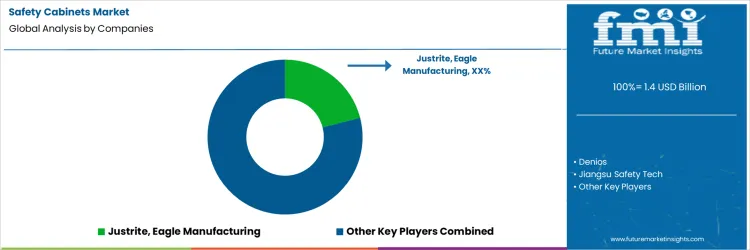
In the safety cabinets market Justrite, Eagle Manufacturing, Denios, Jiangsu Safety Tech, Godrej Storage, local OEMs, and Koken compete with product brochures that emphasize secure storage, compliance with fire and chemical codes, and workplace safety. Justrite materials present a broad range of flammable, corrosive, and hazardous chemical cabinets designed to meet OSHA and NFPA standards. Brochures detail capacities, door features, and labelling guidance, helping safety officers select cabinets that fit facility layouts and regulatory requirements. Eagle Manufacturing collateral focuses on heavy duty steel construction with customizable shelving, spill containment options, and clear specification charts that support selection for industrial and laboratory environments.
Denios brochures showcase engineered safety cabinets with integrated vents, reinforced doors, and compliance documentation. Visuals and concise performance summaries aid facility managers in planning installation and layout. Jiangsu Safety Tech materials highlight cost competitive cabinet solutions with material grades and configuration options suited for local markets, featuring clear usage guidance. Godrej Storage literature presents robust storage cabinets aligned with regional fire safety codes, emphasizing ergonomic design and ease of access for hazardous liquids. Local OEMs are featured with customizable sizes and rapid production options that appeal to companies needing tailored solutions or short lead times.
Koken collateral describes premium safety cabinets with attention to detail in construction, corrosion resistance, and modular accessories. Product briefs include installation notes and load bearing specs. Across all firm’s product brochures stress compliance, durability, and ease of maintenance.
Key Players in Safety Cabinets Market
- Justrite, Eagle Manufacturing
- Denios
- Jiangsu Safety Tech
- Godrej Storage
- Local OEMs
- Koken
Scope for Report
| Items | Values |
|---|---|
| Quantitative Units (2026) | USD billion |
| End-use Application | Chemical & flammable storage, Industrial & lab use, Manufacturing plants, Pharma & R&D labs, Industrial storage, Precision labs |
| Cabinet Type | Flammable & corrosive cabinets, Ventilated safety cabinets, Chemical storage cabinets, Compact safety cabinets |
| Regions Covered | Asia Pacific, Europe, North America, Latin America, Middle East & Africa |
| Countries Covered | USA, China, Japan, South Korea, India, Australia & New Zealand, ASEAN, Germany, UK, France, Italy, Spain, Nordic, BENELUX, Brazil, Chile, Mexico, Saudi Arabia, Other GCC Countries, Turkey, South Africa, Other African Union |
| Key Companies Profiled | Justrite, Eagle Manufacturing, Denios, Jiangsu Safety Tech, Godrej Storage, Koken |
| Additional Attributes | Dollar sales by end-use, cabinet type, and region; regional CAGR and growth outlook; distribution channels including logistics providers; regulatory framework and compliance certifications; market positioning of global vs regional suppliers. |
Safety Cabinets Market by Segments
End-use
- Chemical & flammable storage
- Industrial & lab use
- Manufacturing plants
- Pharma & R&D labs
- Industrial storage
- Precision labs
Cabinet Type
- Flammable & corrosive cabinets
- Ventilated safety cabinets
- Chemical storage cabinets
- Compact safety cabinets
Region:
- Asia Pacific
- China
- Japan
- South Korea
- India
- Australia & New Zealand
- ASEAN
- Rest of Asia Pacific
- Europe
- Germany
- United Kingdom
- France
- Italy
- Spain
- Nordic
- BENELUX
- Rest of Europe
- North America
- United States
- Canada
- Mexico
- Latin America
- Brazil
- Chile
- Rest of Latin America
- Middle East & Africa
- Kingdom of Saudi Arabia
- Other GCC Countries
- Turkey
- South Africa
- Other African Union
- Rest of Middle East & Africa
Frequently Asked Questions
How big is the safety cabinets market in 2026?
The global safety cabinets market is estimated to be valued at USD 1.4 billion in 2026.
What will be the size of safety cabinets market in 2036?
The market size for the safety cabinets market is projected to reach USD 2.8 billion by 2036.
How much will be the safety cabinets market growth between 2026 and 2036?
The safety cabinets market is expected to grow at a 7.3% CAGR between 2026 and 2036.
What are the key product types in the safety cabinets market?
The key product types in safety cabinets market are chemical & flammable storage, industrial & lab use, manufacturing plants, pharma & r&d labs, industrial storage and precision labs.
Which cabinet type segment to contribute significant share in the safety cabinets market in 2026?
In terms of cabinet type, flammable & corrosive cabinets segment to command 45.0% share in the safety cabinets market in 2026.
Preview the report firsthand - request a free sample
Get SampleGet the brochure for pricing and purchase details.
Get PDFTable of Content
- Executive Summary
- Global Market Outlook
- Demand-side Trends
- Supply-side Trends
- Technology Roadmap Analysis
- Analysis and Recommendations
- Market Overview
- Market Coverage / Taxonomy
- Market Definition / Scope / Limitations
- Market Background
- Market Dynamics
- Drivers
- Restraints
- Opportunity
- Trends
- Scenario Forecast
- Demand in Optimistic Scenario
- Demand in Likely Scenario
- Demand in Conservative Scenario
- Opportunity Map Analysis
- Product Life Cycle Analysis
- Supply Chain Analysis
- Investment Feasibility Matrix
- Value Chain Analysis
- PESTLE and Porter’s Analysis
- Regulatory Landscape
- Regional Parent Market Outlook
- Production and Consumption Statistics
- Import and Export Statistics
- Market Dynamics
- Global Market Analysis 2021 to 2025 and Forecast, 2026 to 2036
- Historical Market Size Value (USD Million) Analysis, 2021 to 2025
- Current and Future Market Size Value (USD Million) Projections, 2026 to 2036
- Y-o-Y Growth Trend Analysis
- Absolute $ Opportunity Analysis
- Global Market Pricing Analysis 2021 to 2025 and Forecast 2026 to 2036
- Global Market Analysis 2021 to 2025 and Forecast 2026 to 2036, By End-use
- Introduction / Key Findings
- Historical Market Size Value (USD Million) Analysis By End-use , 2021 to 2025
- Current and Future Market Size Value (USD Million) Analysis and Forecast By End-use , 2026 to 2036
- Chemical & flammable storage
- Industrial & lab use
- Manufacturing plants
- Pharma & R&D labs
- Industrial storage
- Precision labs
- Y-o-Y Growth Trend Analysis By End-use , 2021 to 2025
- Absolute $ Opportunity Analysis By End-use , 2026 to 2036
- Global Market Analysis 2021 to 2025 and Forecast 2026 to 2036, By Cabinet Type
- Introduction / Key Findings
- Historical Market Size Value (USD Million) Analysis By Cabinet Type, 2021 to 2025
- Current and Future Market Size Value (USD Million) Analysis and Forecast By Cabinet Type, 2026 to 2036
- Flammable & corrosive cabinets
- Ventilated safety cabinets
- Chemical storage cabinets
- Compact safety cabinets
- Y-o-Y Growth Trend Analysis By Cabinet Type, 2021 to 2025
- Absolute $ Opportunity Analysis By Cabinet Type, 2026 to 2036
- Global Market Analysis 2021 to 2025 and Forecast 2026 to 2036, By Region
- Introduction
- Historical Market Size Value (USD Million) Analysis By Region, 2021 to 2025
- Current Market Size Value (USD Million) Analysis and Forecast By Region, 2026 to 2036
- North America
- Latin America
- Western Europe
- Eastern Europe
- East Asia
- South Asia and Pacific
- Middle East & Africa
- Market Attractiveness Analysis By Region
- North America Market Analysis 2021 to 2025 and Forecast 2026 to 2036, By Country
- Historical Market Size Value (USD Million) Trend Analysis By Market Taxonomy, 2021 to 2025
- Market Size Value (USD Million) Forecast By Market Taxonomy, 2026 to 2036
- By Country
- USA
- Canada
- Mexico
- By End-use
- By Cabinet Type
- By Country
- Market Attractiveness Analysis
- By Country
- By End-use
- By Cabinet Type
- Key Takeaways
- Latin America Market Analysis 2021 to 2025 and Forecast 2026 to 2036, By Country
- Historical Market Size Value (USD Million) Trend Analysis By Market Taxonomy, 2021 to 2025
- Market Size Value (USD Million) Forecast By Market Taxonomy, 2026 to 2036
- By Country
- Brazil
- Chile
- Rest of Latin America
- By End-use
- By Cabinet Type
- By Country
- Market Attractiveness Analysis
- By Country
- By End-use
- By Cabinet Type
- Key Takeaways
- Western Europe Market Analysis 2021 to 2025 and Forecast 2026 to 2036, By Country
- Historical Market Size Value (USD Million) Trend Analysis By Market Taxonomy, 2021 to 2025
- Market Size Value (USD Million) Forecast By Market Taxonomy, 2026 to 2036
- By Country
- Germany
- UK
- Italy
- Spain
- France
- Nordic
- BENELUX
- Rest of Western Europe
- By End-use
- By Cabinet Type
- By Country
- Market Attractiveness Analysis
- By Country
- By End-use
- By Cabinet Type
- Key Takeaways
- Eastern Europe Market Analysis 2021 to 2025 and Forecast 2026 to 2036, By Country
- Historical Market Size Value (USD Million) Trend Analysis By Market Taxonomy, 2021 to 2025
- Market Size Value (USD Million) Forecast By Market Taxonomy, 2026 to 2036
- By Country
- Russia
- Poland
- Hungary
- Balkan & Baltic
- Rest of Eastern Europe
- By End-use
- By Cabinet Type
- By Country
- Market Attractiveness Analysis
- By Country
- By End-use
- By Cabinet Type
- Key Takeaways
- East Asia Market Analysis 2021 to 2025 and Forecast 2026 to 2036, By Country
- Historical Market Size Value (USD Million) Trend Analysis By Market Taxonomy, 2021 to 2025
- Market Size Value (USD Million) Forecast By Market Taxonomy, 2026 to 2036
- By Country
- China
- Japan
- South Korea
- By End-use
- By Cabinet Type
- By Country
- Market Attractiveness Analysis
- By Country
- By End-use
- By Cabinet Type
- Key Takeaways
- South Asia and Pacific Market Analysis 2021 to 2025 and Forecast 2026 to 2036, By Country
- Historical Market Size Value (USD Million) Trend Analysis By Market Taxonomy, 2021 to 2025
- Market Size Value (USD Million) Forecast By Market Taxonomy, 2026 to 2036
- By Country
- India
- ASEAN
- Australia & New Zealand
- Rest of South Asia and Pacific
- By End-use
- By Cabinet Type
- By Country
- Market Attractiveness Analysis
- By Country
- By End-use
- By Cabinet Type
- Key Takeaways
- Middle East & Africa Market Analysis 2021 to 2025 and Forecast 2026 to 2036, By Country
- Historical Market Size Value (USD Million) Trend Analysis By Market Taxonomy, 2021 to 2025
- Market Size Value (USD Million) Forecast By Market Taxonomy, 2026 to 2036
- By Country
- Kingdom of Saudi Arabia
- Other GCC Countries
- Turkiye
- South Africa
- Other African Union
- Rest of Middle East & Africa
- By End-use
- By Cabinet Type
- By Country
- Market Attractiveness Analysis
- By Country
- By End-use
- By Cabinet Type
- Key Takeaways
- Key Countries Market Analysis
- USA
- Pricing Analysis
- Market Share Analysis, 2025
- By End-use
- By Cabinet Type
- Canada
- Pricing Analysis
- Market Share Analysis, 2025
- By End-use
- By Cabinet Type
- Mexico
- Pricing Analysis
- Market Share Analysis, 2025
- By End-use
- By Cabinet Type
- Brazil
- Pricing Analysis
- Market Share Analysis, 2025
- By End-use
- By Cabinet Type
- Chile
- Pricing Analysis
- Market Share Analysis, 2025
- By End-use
- By Cabinet Type
- Germany
- Pricing Analysis
- Market Share Analysis, 2025
- By End-use
- By Cabinet Type
- UK
- Pricing Analysis
- Market Share Analysis, 2025
- By End-use
- By Cabinet Type
- Italy
- Pricing Analysis
- Market Share Analysis, 2025
- By End-use
- By Cabinet Type
- Spain
- Pricing Analysis
- Market Share Analysis, 2025
- By End-use
- By Cabinet Type
- France
- Pricing Analysis
- Market Share Analysis, 2025
- By End-use
- By Cabinet Type
- India
- Pricing Analysis
- Market Share Analysis, 2025
- By End-use
- By Cabinet Type
- ASEAN
- Pricing Analysis
- Market Share Analysis, 2025
- By End-use
- By Cabinet Type
- Australia & New Zealand
- Pricing Analysis
- Market Share Analysis, 2025
- By End-use
- By Cabinet Type
- China
- Pricing Analysis
- Market Share Analysis, 2025
- By End-use
- By Cabinet Type
- Japan
- Pricing Analysis
- Market Share Analysis, 2025
- By End-use
- By Cabinet Type
- South Korea
- Pricing Analysis
- Market Share Analysis, 2025
- By End-use
- By Cabinet Type
- Russia
- Pricing Analysis
- Market Share Analysis, 2025
- By End-use
- By Cabinet Type
- Poland
- Pricing Analysis
- Market Share Analysis, 2025
- By End-use
- By Cabinet Type
- Hungary
- Pricing Analysis
- Market Share Analysis, 2025
- By End-use
- By Cabinet Type
- Kingdom of Saudi Arabia
- Pricing Analysis
- Market Share Analysis, 2025
- By End-use
- By Cabinet Type
- Turkiye
- Pricing Analysis
- Market Share Analysis, 2025
- By End-use
- By Cabinet Type
- South Africa
- Pricing Analysis
- Market Share Analysis, 2025
- By End-use
- By Cabinet Type
- USA
- Market Structure Analysis
- Competition Dashboard
- Competition Benchmarking
- Market Share Analysis of Top Players
- By Regional
- By End-use
- By Cabinet Type
- Competition Analysis
- Competition Deep Dive
- Justrite, Eagle Manufacturing
- Overview
- Product Portfolio
- Profitability by Market Segments (Product/Age /Sales Channel/Region)
- Sales Footprint
- Strategy Overview
- Marketing Strategy
- Product Strategy
- Channel Strategy
- Denios
- Jiangsu Safety Tech
- Godrej Storage
- Local OEMs
- Koken
- Justrite, Eagle Manufacturing
- Competition Deep Dive
- Assumptions & Acronyms Used
- Research Methodology


