

- Industry Size (2026)
- USD 3.5 Bn
- Forecast (2036)
- USD 8.2 Bn
- CAGR (2026 to 2036)
- 8.90%
Single-Use Syringe Polymers Market Forecast and Outlook 2026 to 2036
The global single-use syringe polymers market is valued at USD 3.5 billion in 2026 and is projected to reach USD 8.2 billion by 2036, growing at a CAGR of 8.90%. The dominance of major players such as Becton, Dickinson & Company and Terumo Corporation helps them defend pricing power through established brand reputation, consistent product quality, and strong regulatory compliance. Entry barriers are high due to the need for specialized polymer formulations, stringent medical device standards, and significant capital investment in manufacturing technology.
These barriers limit new entrants, while the high degree of regulatory oversight further consolidates market control among dominant players. Despite these factors, fragmentation persists due to the wide range of polymer types and niche applications catering to local market needs. As regulatory standards tighten and consumer demand for standardized, high-quality syringes rises, the market is likely to experience further consolidation, with leading players capturing more market share over the long term.
Quick Stats for Single-Use Syringe Polymers Market
- Single-Use Syringe Polymers Market Value (2026): USD 3.5 Billion
- Single-Use Syringe Polymers Market Forecast Value (2036): USD 8.2 Billion
- Single-Use Syringe Polymers Market Forecast CAGR 2026 to 2036: 8.90%
- Leading Polymer Type in Single-Use Syringe Polymers Market: Polypropylene (PP)
- Key Growth Regions in Single-Use Syringe Polymers Market: Asia Pacific, North America
- Top Key Players in Single-Use Syringe Polymers Market: Becton, Dickinson & Company, Terumo Corporation, Nipro Medical Corporation, B. Braun Melsungen AG, Smiths Medical
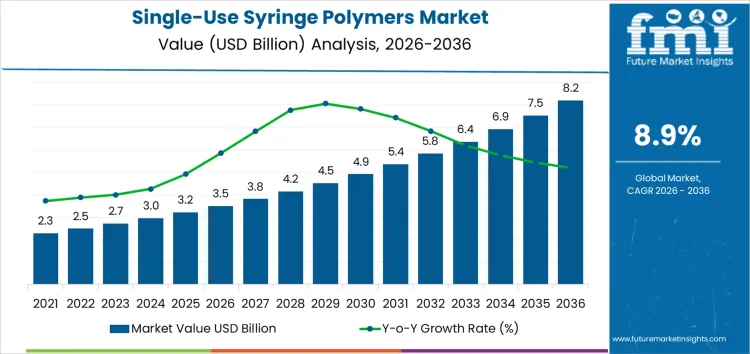
Single-Use Syringe Polymers Market Key Takeaways
| Metric | Value |
|---|---|
| Industry Value (2026) | USD 3.5 Billion |
| Forecast Value (2036) | USD 8.2 Billion |
| Forecast CAGR 2026 to 2036 | 8.90% |
How Is the Global Single-Use Syringe Polymers Market Advancing?
The global single-use syringe polymers market is experiencing robust growth, driven by the increasing demand for disposable syringes in the healthcare industry. Single-use syringes, made primarily from polymers such as polypropylene and polyethylene, are widely used for administering vaccines, injectable medications, and other medical treatments. These syringes are gaining popularity due to their hygiene, safety, and cost-effectiveness, which have made them the preferred choice in both hospitals and clinics worldwide.
A major driver of the market is the rising demand for disposable medical devices in response to the growing focus on infection control and patient safety. Single-use syringes help minimize the risk of cross-contamination and the spread of diseases, making them essential in medical settings. The global health crisis, including the COVID-19 pandemic, has significantly increased the demand for syringes, particularly for vaccination programs, further boosting market growth. The rise in chronic diseases and the growing number of medical procedures that require injections also contribute to the expansion of this market.
Technological advancements in polymer materials and manufacturing techniques are also contributing to the market's growth. Innovations in polymer formulations are improving the strength, durability, and safety of single-use syringes, while reducing the risk of breakage or leakage. As the demand for more efficient, cost-effective, and environmentally responsible medical devices rises, the market for single-use syringe polymers is expected to continue expanding. The increasing use of polymer-based medical devices in emerging markets, combined with advancements in production technologies, is set to fuel market growth in the coming years.
What Is the Segment-Wise Analysis for the Single-Use Syringe Polymers Market?
The single-use syringe polymers market is segmented by polymer type and application. Polypropylene (PP) leads the polymer type segment with a 48% share, followed by polyethylene (PE), polycarbonate (PC), styrene ethylene butylene styrene (SEBS), and other polymers. PP is preferred for single-use syringes due to its excellent chemical resistance, mechanical properties, and cost-effectiveness. In terms of application, the medical & healthcare sector holds the largest share at 61%, followed by pharmaceutical packaging, research & diagnostic labs, and other applications.
Why Does Polypropylene (PP) Lead the Single-Use Syringe Polymers Market?
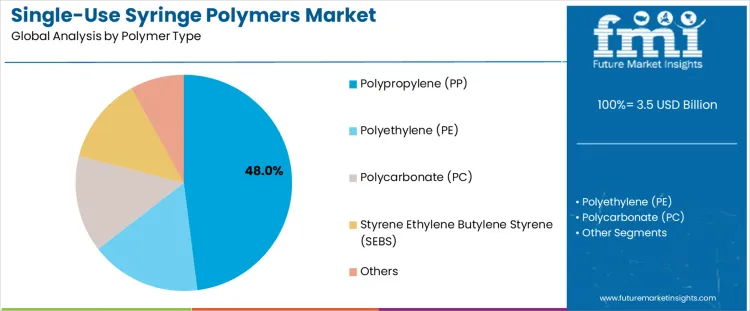
Polypropylene (PP) leads the single-use syringe polymers market with a 48% share due to its ideal properties for medical applications. PP is chemically resistant, lightweight, and cost-effective, making it a preferred choice for single-use syringes. PP can be easily sterilized, ensuring that syringes remain safe for medical use. The polymer's mechanical strength and durability also make it suitable for manufacturing syringes that can withstand high-pressure injection and other functional requirements. As the demand for affordable and safe medical devices continues to rise globally, PP remains the dominant polymer in the single-use syringe market due to its combination of performance and affordability.
How Does the Medical & Healthcare Sector Contribute to the Single-Use Syringe Polymers Market?
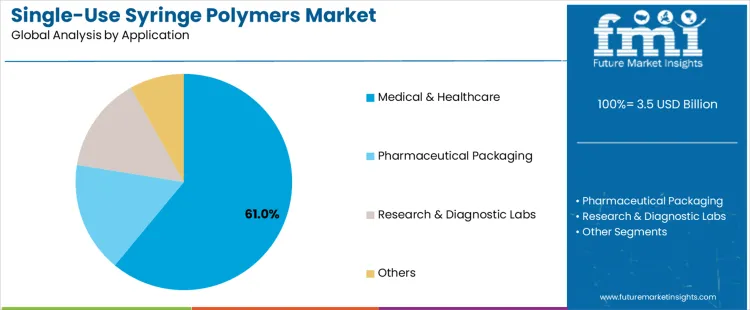
The medical & healthcare sector accounts for 61% of the application segment in the single-use syringe polymers market. Single-use syringes are critical components in the medical field for the safe and precise delivery of injectable medications, vaccines, and fluids. The growing demand for injectable treatments, especially in vaccination programs and chronic disease management, drives the need for high-quality, reliable syringes. With increasing concerns about cross-contamination and the need for cost-effective, disposable devices, the medical & healthcare sector remains the largest contributor to the market. The use of polymers like polypropylene ensures that single-use syringes meet strict safety and hygiene standards, further fueling the demand for these products in the healthcare industry.
What Are the Key Dynamics for the Single-Use Syringe Polymers Market?
The single-use syringe polymers market is driven by the growing demand for safe, hygienic, and efficient drug delivery systems, particularly in the healthcare and pharmaceutical industries. The increasing prevalence of chronic diseases, along with the rising need for vaccinations and biologics, is pushing the demand for disposable syringe solutions. Single-use syringes, made from biocompatible polymers like polypropylene and polyethylene, ensure safety and prevent cross-contamination. The increasing focus on reducing healthcare-associated infections and the growing preference for self-administration of drugs are contributing to the growth of the single-use syringe polymers market.
How Are the Key Drivers Shaping the Single-Use Syringe Polymers Market?
The key drivers for the single-use syringe polymers market include the growing need for safe, sterile, and cost-effective drug delivery systems, driven by the expansion of the global healthcare sector. The increasing use of biologics, insulin, and vaccines, which often require precise and secure injection methods, is fueling demand for single-use syringes. The emphasis on patient safety and the prevention of needle-stick injuries is pushing healthcare providers toward adopting disposable syringes made from reliable polymers. Regulatory requirements for safe drug delivery systems and growing awareness about infection control are further accelerating market growth.
What Are the Key Trends Shaping the Single-Use Syringe Polymers Market?
Key trends in the single-use syringe polymers market include the increasing adoption of advanced, high-performance polymers that offer better strength, flexibility, and chemical resistance for safer and more efficient drug delivery. The rise of needle-free injection technologies is also influencing the market, creating new opportunities for polymer-based syringes. There is a growing focus on eco-friendly solutions, with manufacturers exploring biodegradable or recyclable polymers to reduce the environmental impact of plastic waste. The trend towards personalized medicine, where single-use syringes are used for specific, patient-tailored treatments, is also contributing to market growth.
What is the Growth Outlook for the Single-Use Syringe Polymers Market by Country?
| Country | CAGR (%) |
|---|---|
| India | 11.2% |
| China | 10.4% |
| USA | 9.1% |
| Germany | 8.3% |
| Japan | 7.8% |
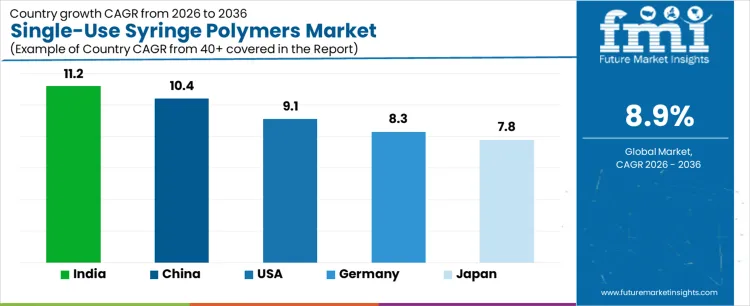
The single-use syringe polymers market is expanding across key regions, with India leading at 11.2%, driven by the growing demand for disposable syringes in the healthcare sector. China follows at 10.4%, supported by its large healthcare industry and focus on infection control. The USA grows at 9.1%, driven by a strong healthcare infrastructure and the rising need for safe, disposable syringes. Germany’s market expands at 8.3%, fueled by high standards of hygiene, safety regulations, and the rise in preventive healthcare practices. Japan grows at 7.8%, supported by its aging population and increased demand for medical devices ensuring safety and convenience.
What is Driving the Growth of the Single-Use Syringe Polymers Market in India?
India’s single-use syringe polymers market is growing at 11.2%, driven by the expanding healthcare and pharmaceutical sectors. The demand for disposable syringes is growing due to their safety, cost-effectiveness, and ease of use, especially in vaccination programs, drug administration, and diagnostic procedures. With India’s large population and a growing middle class, there is an increasing focus on ensuring the availability of safe and hygienic medical devices. The rising need for vaccination and healthcare accessibility in rural and urban areas is contributing to market growth. Government initiatives to improve healthcare infrastructure, combined with rising awareness of hygiene and safety in medical practices, further drive the adoption of polymer syringes. The increasing prevalence of diseases and a push for environmentally friendly, disposable medical devices are expected to maintain strong growth in the single-use syringe polymers market in India.
How is the Single-Use Syringe Polymers Market Expanding in China?
China’s single-use syringe polymers market is growing at 10.4%, driven by the expansion of the healthcare and pharmaceutical sectors. The adoption of polymer-based syringes is increasing as they are safer, more cost-effective, and lighter than glass syringes, making them a preferred choice for various applications. The rapid urbanization and growth of the population, coupled with government-driven healthcare reforms, are creating a surge in demand for healthcare products, particularly single-use medical devices like syringes. China’s focus on improving its healthcare infrastructure and the rise in preventive healthcare practices such as immunization programs are major contributors. The demand for disposable syringes for drug administration and vaccines is further accelerating growth. As China strives for higher safety standards and eco-friendlier practices, the market for single-use syringe polymers is expected to continue expanding rapidly.
How is the Single-Use Syringe Polymers Market Expanding in the USA?
The single-use syringe polymers market in the USA is growing at 9.1%, supported by the need for safe, hygienic, and cost-effective medical devices. The USA’s healthcare sector, with its strong regulatory frameworks and focus on patient safety, has pushed for the adoption of disposable syringes to prevent needle-stick injuries and reduce cross-contamination risks. The growing need for vaccination and injectable medications in hospitals, clinics, and other healthcare settings is driving the demand for single-use syringes. There is a rise in public health initiatives aimed at improving the efficiency of healthcare delivery, further driving the market. The adoption of polymer-based syringes, which are lighter, more affordable, and more versatile than glass alternatives, has enhanced their appeal. As regulatory pressures and consumer demand for environmentally friendly products increase, the USA’s market for single-use syringe polymers will continue to grow.
What is Driving the Growth of the Single-Use Syringe Polymers Market in Germany?
Germany’s single-use syringe polymers market is growing at 8.3%, supported by its robust healthcare system and focus on quality and patient safety. The country’s aging population and increased healthcare spending are driving the demand for medical devices like single-use syringes, especially in the pharmaceutical and vaccine distribution sectors. Germany’s strict safety and quality regulations for medical devices further contribute to the market’s growth, with a particular emphasis on preventing infections through the use of disposable syringes. The demand for eco-friendlier, eco-friendly medical solutions is pushing the adoption of polymer syringes, which are lighter, cost-effective, and easier to dispose of compared to glass alternatives. As Germany continues to innovate in healthcare and expand its focus on preventive care, the demand for single-use polymer syringes will remain strong, ensuring continued market growth.
How is the Single-Use Syringe Polymers Market Expanding in Japan?
Japan’s single-use syringe polymers market is growing at 7.8%, driven by an aging population and a focus on improving healthcare standards. As the demand for healthcare services continues to rise, especially in geriatric care, there is an increasing need for safe and hygienic medical devices, including single-use syringes. Japan’s healthcare system emphasizes high-quality, efficient care, and disposable syringes offer a practical solution to reduce cross-contamination and improve safety. The growing prevalence of chronic diseases and the expansion of vaccination programs further boost the demand for polymer syringes. Japan’s commitment to sustainability is promoting the adoption of environmentally friendly, cost-effective alternatives to glass syringes. As Japan continues to prioritize patient safety, healthcare access, and sustainability, the market for single-use syringe polymers is expected to grow, supported by continued technological advancements and the adoption of new medical innovations.
How Are Companies Competing in the Single Use Syringe Polymers Market?
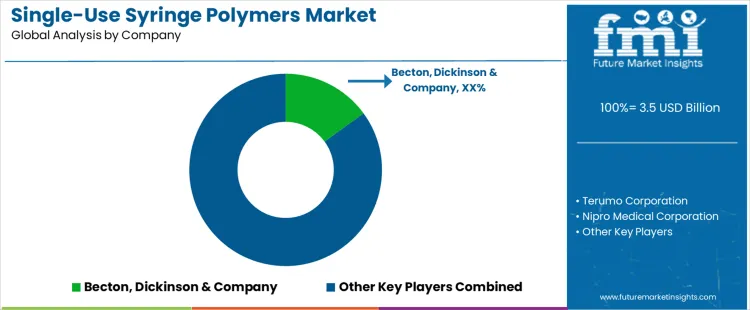
Competition in the Single Use Syringe Polymers Market is driven by material quality, biocompatibility, manufacturing precision, regulatory compliance, and process reliability. Becton, Dickinson & Company positions its polymer systems with a strong reputation for consistent dimensional accuracy and low extractable, and its product materials emphasize high clarity polypropylene and polycarbonate grades that support safe and smooth plunger movement while meeting stringent medical standards. Terumo Corporation competes by offering advanced polymer formulations engineered for minimal friction and secure sealing, with collateral highlighting robust manufacturing controls and global regulatory alignment that help healthcare providers trust performance in critical settings.
Nitro Medical Corporation and B. Braun Melsungen AG differentiate through multi layer syringe polymer systems designed to optimize barrier properties and mechanical strength, with documentation stressing precise molding and consistent performance under stress. Their product materials often highlight ISO and FDA compliance to support broad global market access. Smiths Medical adds value with tailored polymer blends that balance rigidity, chemical resistance, and surface finish, its literature focusing on ease of injection and patient comfort as key outcomes driven by material choice.
Others in the market compete by offering specialty polymer grades and custom compounding services that help smaller OEMs meet niche performance criteria or local regulatory requirements. Across all vendors, product materials emphasize biocompatibility, processing consistency, dimensional stability, and alignment with global medical device standards as core differentiators that help manufacturers deliver safe, reliable single use syringe products.
Single-Use Syringe Polymers Market
- Becton, Dickinson & Company
- Terumo Corporation
- Nipro Medical Corporation
- B. Braun Melsungen AG
- Smiths Medical
- Others
Scope of Report
| Attributes | Description |
|---|---|
| Quantitative Unit (2026) | USD Billion |
| Polymer Type | Polypropylene (PP), Polyethylene (PE), Polycarbonate (PC), Styrene Ethylene Butylene Styrene (SEBS), Others |
| Application | Medical & Healthcare, Pharmaceutical Packaging, Research & Diagnostic Labs, Other |
| Regions Covered | Asia Pacific, Europe, North America, Latin America, Middle East & Africa |
| Countries Covered | China, Japan, South Korea, India, Australia & New Zealand, ASEAN, Germany, United Kingdom, France, Italy, Spain, Nordic, BENELUX, United States, Canada, Mexico, Brazil, Chile, Turkey, South Africa, Other GCC Countries |
| Key Companies Profiled | Becton, Dickinson & Company, Terumo Corporation, Nipro Medical Corporation, B. Braun Melsungen AG, Smiths Medical, Others |
| Additional Attributes | Dollar sales by polymer type, application, and region; regional CAGR and growth outlook for the single-use syringe polymers market. |
Segmentation For Single-Use Syringe Polymers Market
Polymer Type
- Polypropylene (PP)
- Polyethylene (PE)
- Polycarbonate (PC)
- Styrene Ethylene Butylene Styrene (SEBS)
- Others
Application
- Medical & Healthcare
- Pharmaceutical Packaging
- Research & Diagnostic Labs
- Others
Region
- Asia Pacific
- China
- Japan
- South Korea
- India
- Australia & New Zealand
- ASEAN
- Rest of Asia Pacific
- Europe
- Germany
- United Kingdom
- France
- Italy
- Spain
- Nordic
- BENELUX
- Rest of Europe
- North America
- United States
- Canada
- Mexico
- Latin America
- Brazil
- Chile
- Rest of Latin America
- Middle East & Africa
- Kingdom of Saudi Arabia
- Other GCC Countries
- Turkey
- South Africa
- Other African Union
- Rest of Middle East & Africa
Bibliography
- World Health Organization (WHO). (2024). WHO guideline on injection safety, single‑use medical devices, and disposable syringes. World Health Organization.
- International Organization for Standardization (ISO). (2024). Sterile single‑use syringes and polymer medical devices — Safety and performance requirements (latest revisions). International Organization for Standardization.
- U.S. Food and Drug Administration (FDA). (2024). Guidance for disposable medical devices: Material selection and polymer safety. U.S. Department of Health and Human Services.
- European Commission, Joint Research Centre (JRC). (2025). Polymer materials for medical devices: Performance, safety, and sustainability assessment. Publications Office of the European Union.
- Organisation for Economic Co‑operation and Development (OECD). (2024). Plastics in healthcare: Polymer use, safety frameworks, and waste management. OECD Environment, Health and Safety Programme.
Frequently Asked Questions
How big is the single-use syringe polymers market in 2026?
The global single-use syringe polymers market is estimated to be valued at USD 3.5 billion in 2026.
What will be the size of single-use syringe polymers market in 2036?
The market size for the single-use syringe polymers market is projected to reach USD 8.2 billion by 2036.
How much will be the single-use syringe polymers market growth between 2026 and 2036?
The single-use syringe polymers market is expected to grow at a 8.9% CAGR between 2026 and 2036.
What are the key product types in the single-use syringe polymers market?
The key product types in single-use syringe polymers market are polypropylene (pp), polyethylene (pe), polycarbonate (pc), styrene ethylene butylene styrene (sebs) and others.
Which application segment to contribute significant share in the single-use syringe polymers market in 2026?
In terms of application, medical & healthcare segment to command 61.0% share in the single-use syringe polymers market in 2026.
Preview the report firsthand - request a free sample
Get SampleGet the brochure for pricing and purchase details.
Get PDFTable of Content
- Executive Summary
- Global Market Outlook
- Demand-side Trends
- Supply-side Trends
- Technology Roadmap Analysis
- Analysis and Recommendations
- Market Overview
- Market Coverage / Taxonomy
- Market Definition / Scope / Limitations
- Market Background
- Market Dynamics
- Drivers
- Restraints
- Opportunity
- Trends
- Scenario Forecast
- Demand in Optimistic Scenario
- Demand in Likely Scenario
- Demand in Conservative Scenario
- Opportunity Map Analysis
- Product Life Cycle Analysis
- Supply Chain Analysis
- Investment Feasibility Matrix
- Value Chain Analysis
- PESTLE and Porter’s Analysis
- Regulatory Landscape
- Regional Parent Market Outlook
- Production and Consumption Statistics
- Import and Export Statistics
- Market Dynamics
- Global Market Analysis 2021 to 2025 and Forecast, 2026 to 2036
- Historical Market Size Value (USD Million) Analysis, 2021 to 2025
- Current and Future Market Size Value (USD Million) Projections, 2026 to 2036
- Y-o-Y Growth Trend Analysis
- Absolute $ Opportunity Analysis
- Global Market Pricing Analysis 2021 to 2025 and Forecast 2026 to 2036
- Global Market Analysis 2021 to 2025 and Forecast 2026 to 2036, By Polymer Type
- Introduction / Key Findings
- Historical Market Size Value (USD Million) Analysis By Polymer Type , 2021 to 2025
- Current and Future Market Size Value (USD Million) Analysis and Forecast By Polymer Type , 2026 to 2036
- Polypropylene (PP)
- Polyethylene (PE)
- Polycarbonate (PC)
- Styrene Ethylene Butylene Styrene (SEBS)
- Others
- Polypropylene (PP)
- Y-o-Y Growth Trend Analysis By Polymer Type , 2021 to 2025
- Absolute $ Opportunity Analysis By Polymer Type , 2026 to 2036
- Global Market Analysis 2021 to 2025 and Forecast 2026 to 2036, By Application
- Introduction / Key Findings
- Historical Market Size Value (USD Million) Analysis By Application, 2021 to 2025
- Current and Future Market Size Value (USD Million) Analysis and Forecast By Application, 2026 to 2036
- Medical & Healthcare
- Pharmaceutical Packaging
- Research & Diagnostic Labs
- Others
- Medical & Healthcare
- Y-o-Y Growth Trend Analysis By Application, 2021 to 2025
- Absolute $ Opportunity Analysis By Application, 2026 to 2036
- Global Market Analysis 2021 to 2025 and Forecast 2026 to 2036, By Region
- Introduction
- Historical Market Size Value (USD Million) Analysis By Region, 2021 to 2025
- Current Market Size Value (USD Million) Analysis and Forecast By Region, 2026 to 2036
- North America
- Latin America
- Western Europe
- Eastern Europe
- East Asia
- South Asia and Pacific
- Middle East & Africa
- Market Attractiveness Analysis By Region
- North America Market Analysis 2021 to 2025 and Forecast 2026 to 2036, By Country
- Historical Market Size Value (USD Million) Trend Analysis By Market Taxonomy, 2021 to 2025
- Market Size Value (USD Million) Forecast By Market Taxonomy, 2026 to 2036
- By Country
- USA
- Canada
- Mexico
- By Polymer Type
- By Application
- By Country
- Market Attractiveness Analysis
- By Country
- By Polymer Type
- By Application
- Key Takeaways
- Latin America Market Analysis 2021 to 2025 and Forecast 2026 to 2036, By Country
- Historical Market Size Value (USD Million) Trend Analysis By Market Taxonomy, 2021 to 2025
- Market Size Value (USD Million) Forecast By Market Taxonomy, 2026 to 2036
- By Country
- Brazil
- Chile
- Rest of Latin America
- By Polymer Type
- By Application
- By Country
- Market Attractiveness Analysis
- By Country
- By Polymer Type
- By Application
- Key Takeaways
- Western Europe Market Analysis 2021 to 2025 and Forecast 2026 to 2036, By Country
- Historical Market Size Value (USD Million) Trend Analysis By Market Taxonomy, 2021 to 2025
- Market Size Value (USD Million) Forecast By Market Taxonomy, 2026 to 2036
- By Country
- Germany
- UK
- Italy
- Spain
- France
- Nordic
- BENELUX
- Rest of Western Europe
- By Polymer Type
- By Application
- By Country
- Market Attractiveness Analysis
- By Country
- By Polymer Type
- By Application
- Key Takeaways
- Eastern Europe Market Analysis 2021 to 2025 and Forecast 2026 to 2036, By Country
- Historical Market Size Value (USD Million) Trend Analysis By Market Taxonomy, 2021 to 2025
- Market Size Value (USD Million) Forecast By Market Taxonomy, 2026 to 2036
- By Country
- Russia
- Poland
- Hungary
- Balkan & Baltic
- Rest of Eastern Europe
- By Polymer Type
- By Application
- By Country
- Market Attractiveness Analysis
- By Country
- By Polymer Type
- By Application
- Key Takeaways
- East Asia Market Analysis 2021 to 2025 and Forecast 2026 to 2036, By Country
- Historical Market Size Value (USD Million) Trend Analysis By Market Taxonomy, 2021 to 2025
- Market Size Value (USD Million) Forecast By Market Taxonomy, 2026 to 2036
- By Country
- China
- Japan
- South Korea
- By Polymer Type
- By Application
- By Country
- Market Attractiveness Analysis
- By Country
- By Polymer Type
- By Application
- Key Takeaways
- South Asia and Pacific Market Analysis 2021 to 2025 and Forecast 2026 to 2036, By Country
- Historical Market Size Value (USD Million) Trend Analysis By Market Taxonomy, 2021 to 2025
- Market Size Value (USD Million) Forecast By Market Taxonomy, 2026 to 2036
- By Country
- India
- ASEAN
- Australia & New Zealand
- Rest of South Asia and Pacific
- By Polymer Type
- By Application
- By Country
- Market Attractiveness Analysis
- By Country
- By Polymer Type
- By Application
- Key Takeaways
- Middle East & Africa Market Analysis 2021 to 2025 and Forecast 2026 to 2036, By Country
- Historical Market Size Value (USD Million) Trend Analysis By Market Taxonomy, 2021 to 2025
- Market Size Value (USD Million) Forecast By Market Taxonomy, 2026 to 2036
- By Country
- Kingdom of Saudi Arabia
- Other GCC Countries
- Turkiye
- South Africa
- Other African Union
- Rest of Middle East & Africa
- By Polymer Type
- By Application
- By Country
- Market Attractiveness Analysis
- By Country
- By Polymer Type
- By Application
- Key Takeaways
- Key Countries Market Analysis
- USA
- Pricing Analysis
- Market Share Analysis, 2025
- By Polymer Type
- By Application
- Canada
- Pricing Analysis
- Market Share Analysis, 2025
- By Polymer Type
- By Application
- Mexico
- Pricing Analysis
- Market Share Analysis, 2025
- By Polymer Type
- By Application
- Brazil
- Pricing Analysis
- Market Share Analysis, 2025
- By Polymer Type
- By Application
- Chile
- Pricing Analysis
- Market Share Analysis, 2025
- By Polymer Type
- By Application
- Germany
- Pricing Analysis
- Market Share Analysis, 2025
- By Polymer Type
- By Application
- UK
- Pricing Analysis
- Market Share Analysis, 2025
- By Polymer Type
- By Application
- Italy
- Pricing Analysis
- Market Share Analysis, 2025
- By Polymer Type
- By Application
- Spain
- Pricing Analysis
- Market Share Analysis, 2025
- By Polymer Type
- By Application
- France
- Pricing Analysis
- Market Share Analysis, 2025
- By Polymer Type
- By Application
- India
- Pricing Analysis
- Market Share Analysis, 2025
- By Polymer Type
- By Application
- ASEAN
- Pricing Analysis
- Market Share Analysis, 2025
- By Polymer Type
- By Application
- Australia & New Zealand
- Pricing Analysis
- Market Share Analysis, 2025
- By Polymer Type
- By Application
- China
- Pricing Analysis
- Market Share Analysis, 2025
- By Polymer Type
- By Application
- Japan
- Pricing Analysis
- Market Share Analysis, 2025
- By Polymer Type
- By Application
- South Korea
- Pricing Analysis
- Market Share Analysis, 2025
- By Polymer Type
- By Application
- Russia
- Pricing Analysis
- Market Share Analysis, 2025
- By Polymer Type
- By Application
- Poland
- Pricing Analysis
- Market Share Analysis, 2025
- By Polymer Type
- By Application
- Hungary
- Pricing Analysis
- Market Share Analysis, 2025
- By Polymer Type
- By Application
- Kingdom of Saudi Arabia
- Pricing Analysis
- Market Share Analysis, 2025
- By Polymer Type
- By Application
- Turkiye
- Pricing Analysis
- Market Share Analysis, 2025
- By Polymer Type
- By Application
- South Africa
- Pricing Analysis
- Market Share Analysis, 2025
- By Polymer Type
- By Application
- USA
- Market Structure Analysis
- Competition Dashboard
- Competition Benchmarking
- Market Share Analysis of Top Players
- By Regional
- By Polymer Type
- By Application
- Competition Analysis
- Competition Deep Dive
- Becton, Dickinson & Company
- Overview
- Product Portfolio
- Profitability by Market Segments (Product/Age /Sales Channel/Region)
- Sales Footprint
- Strategy Overview
- Marketing Strategy
- Product Strategy
- Channel Strategy
- Terumo Corporation
- Nipro Medical Corporation
- B. Braun Melsungen AG
- Smiths Medical
- Others
- Becton, Dickinson & Company
- Competition Deep Dive
- Assumptions & Acronyms Used
- Research Methodology


