

- Industry Size (2026)
- USD 49.5 Bn
- Forecast (2036)
- USD 82.1 Bn
- CAGR (2026 to 2036)
- 5.2%
Socks Market Forecast and Outlook 2026 to 2036
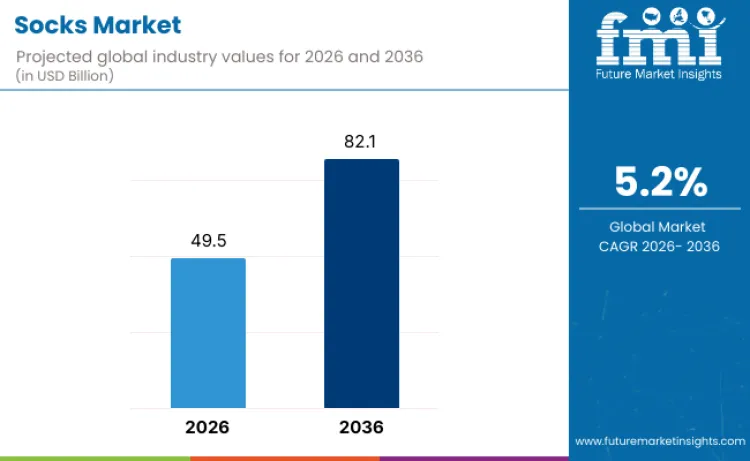
The socks industry is expected to reach a valuation of USD 49.5 billion in 2026, supported by rising participation in sports and fitness activities and increasing consumer awareness of foot comfort and health across age groups. Revenue from sock sales is projected to grow at a steady CAGR of 5.2% through 2036, pushing the overall industry value to over USD 82.1 billion by the end of the forecast period, as per FMI’s estimates. Shifting demographics toward wellness-focused lifestyles and growing engagement in athletic and recreational sports continue to act as the key drivers strengthening this growth outlook.
Production facilities are directing considerable resources toward yarn innovation, targeting enhanced moisture control through advanced fiber engineering while maintaining breathability standards. Manufacturing strategists now transition from conventional knitting approaches toward specialized performance constructions, transforming foot comfort expectations throughout global markets. These progressive developments encourage hosiery manufacturers to establish comprehensive sock collections employing superior cushioning technologies.
Heightened recognition of foot hygiene protocols and diabetic care requirements are substantially driving sector advancement. Textile specialists prioritize antimicrobial treatment integration, employing targeted fiber treatments of copper-infused materials to deliver health-conscious wearing solutions. Investigation into compression therapy benefits within everyday sock usage is generating demand for medically-informed products, building trust among healthcare practitioners regarding therapeutic footwear recommendations.
Quick Stats for Socks Market
- Socks Industry Value (2026): USD 49.5 Billion
- Socks Industry Forecast Value (2036): USD 82.1 Billion
- Socks Industry Forecast CAGR: 5.2%
- Socks Industry Leading Product: Athletic (42.8%)
- Socks Industry Key Growth Regions: China, India, Germany
- Socks Industry Key Players: Nike, H&M Sport, Inditex, Zalando, Dick's Sporting Goods
Investigators are integrating cushioning science with arch support technologies to enhance comfort characteristics. Development of cotton-blend systems is accelerating, addressing durability concerns in high-wear applications. Attention centers on holistic foot wellness strategies that incorporate multiple performance attributes. Manufacturing improvements in circular knitting allow producers to achieve targeted padding zones with precision, optimizing comfort distribution while minimizing production complexity. These developments prove essential in establishing future landscapes where sock performance meets diverse functional requirements.
Socks Market Key Takeaways
| Metric | Value |
|---|---|
| Industry Size (2026) | USD 49.5 Billion |
| Industry Value (2036) | USD 82.1 Billion |
| CAGR (2026-2036) | 5.2% |
Source: FMI analysis based on primary research and proprietary forecasting model
What Drivers Are Accelerating Athletic Sock Adoption?
Movement toward comprehensive fitness integration is functioning as a substantial catalyst for expanded acceptance of sport-specific hosiery solutions. Contemporary advances in athletic sock engineering have enhanced training protocols by sustaining moisture management capabilities during intensive exercise periods successfully. This performance methodology attracts fitness enthusiasts seeking dependable foot protection without traditional cotton limitations, and FMI is of the opinion that this shift reinforces long-term demand for athletic hosiery. Research achievements in cushioning technology integration within athletic designs have broadened application potential among endurance sport categories.
Educational initiatives emphasizing the biomechanical advantages of specialized athletic construction are generating podiatrist endorsements. Sports equipment manufacturers are leveraging these developments by launching advanced sock variants in performance-validated compositions for competitive athlete segments. Implementing graduated compression features into athletic production frameworks is establishing industry standards, ensuring optimal blood circulation support without restricting natural foot movement.
Industry performance indicators demonstrate the financial impact of these athletic sock innovations. Gross margin percentages for premium athletic socks typically achieve 45-60% ranges, reflecting consumer willingness to invest in performance-driven products.
Sales volume growth rates for specialized athletic hosiery consistently exceed 12-15% annually, significantly outpacing traditional sock categories. Sell-through rates for athletic socks maintain 75-85% efficiency levels, indicating strong retail demand and minimal inventory stagnation. Inventory turnover ratios in athletic sock segments frequently reach 8-10 cycles annually, demonstrating rapid market acceptance and consistent replenishment needs.
Customer acquisition costs for athletic sock brands average 20% of first-year customer value, reflecting effective targeted marketing strategies. Repeat purchase rates for athletic hosiery achieve 35-50% within 90-day periods, substantially higher than casual sock categories. Return and complaint rates for quality athletic socks remain below 1%, indicating superior product satisfaction and manufacturing consistency.
How Is the Socks Market Segmented Across Key Categories?
International markets divide systematically to accommodate varied requirements of the footwear accessory industry, structuring sectors through product classification, length specifications, material composition, and consumer demographics. This organizational framework enables stakeholders to recognize targeted applications, including heightened athletic sock demand in fitness segments or preference for ankle-length designs in casual markets.
Through comprehensive segment analysis, manufacturers can adapt production lines to satisfy distinct requirements of professional athletes compared to everyday consumers. Market categorization also demonstrates evolution from basic commodity sock trading toward performance-specific product engineering. Industry progression makes detailed segmentation crucial for comprehending purchasing behaviors and quality expectations, ensuring development corresponds with changing consumer foot care standards.
Why Do Athletic Products Maintain Dominance?
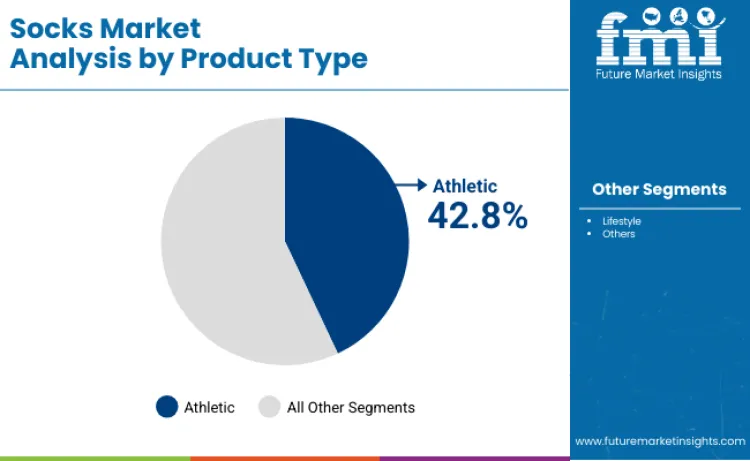
Athletic socks secure 42.8% of product share in 2026, driven by widespread fitness culture adoption across multiple age demographics and superior performance characteristics. Market leadership stems from established manufacturing processes delivering consistent moisture-wicking specifications throughout seasonal variations. This segment profits from ongoing construction enhancements, including targeted cushioning technology eliminating pressure point discomfort.
Investigation focused on athletic sock compression mapping is revitalizing interest among sports equipment companies. Essential function in training regimen formulations reinforces market position, as these products provide targeted support at optimal thickness levels. As fitness guidelines emphasize comfort-first methodologies, demand for performance-calibrated athletic sock supplies anticipates sustained growth.
Why Are Ankle Length Applications the Preferred Choice?

Ankle length commands 39.6% share of sector in 2026, demonstrating consumer preference for versatile wearing solutions with style adaptability. Market control connects to superior compatibility with diverse footwear types compared to traditional length alternatives in contemporary fashion environments. Consumers depend on ankle-length designs to ensure seamless integration underneath various shoe categories.
These specifications prove essential for delivering consistent aesthetic profiles to mainstream footwear channels, establishing priority status among casual wear brands. Continuous pursuit of versatility innovation ensures products designed for multi-seasonal wear maintain primary selection status. High demand volumes require agile manufacturing capacity, supporting sustained revenue generation for hosiery producers.
Why Does Cotton Lead Material Categories?
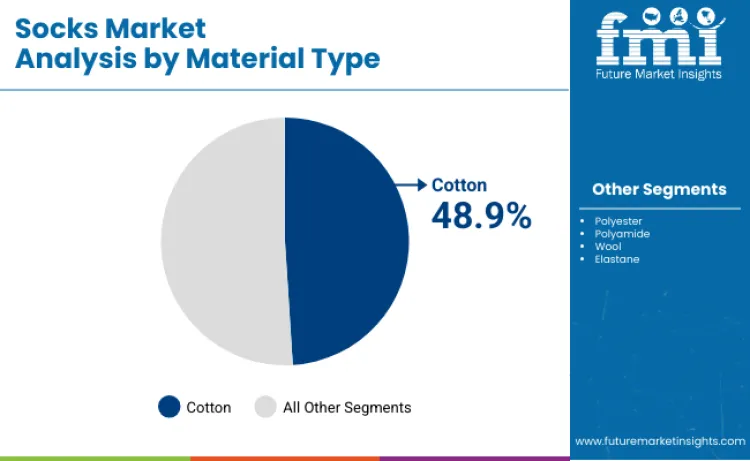
Cotton maintains 48.9% of material share in 2026, reflecting widespread textile manufacturer preference requiring reliable comfort performance. Leadership follows technical specifications recommending cotton integration across diverse sock categories for breathability optimization. Textile engineers favor these materials for their predictable processing behavior and proven comfort profiles.
Application in moisture absorption development generates continuous volume increases among comfort-focused companies. Compatibility with various knitting processes enables production flexibility across different manufacturing configurations. Manufacturers concentrating on cotton-based formulations for these high-comfort applications establish valuable partnerships with retail distribution networks.
Market Dynamics
How Will Health Awareness Impact Sock Selection?
Health consciousness evolution is reshaping purchasing decisions by requiring medically-informed hosiery alternatives. As preventive foot care trends advance, consumers seek products with verified therapeutic profiles for extended wearing periods. Movement toward educated sock selection generates demand for transparent labeling addressing multiple health considerations simultaneously. Manufacturers neglecting to position products as wellness-beneficial face reduced visibility among health-focused consumers, as per FMI’s estimates. Access to podiatric research options for circulation enhancement drives complementary product consumption patterns. Emergence of personalized health monitoring stimulates innovation, with companies distinguishing offerings through medical professional validation.
How Will Retail Technology Integration Transform Distribution?
Advanced retail systems are revolutionizing sock distribution by enabling precision inventory management systems. Integration with point-of-sale technology allows real-time stock monitoring throughout retail cycles. Quality tracking protocols are standardizing sock specifications, with retail managers implementing specific criteria through digital platforms. Distribution equipment networks are expanding considerably, offering enhanced logistics capabilities compared to traditional wholesale systems. Retail applications featuring demand forecasting and trend analysis create sustained efficiency improvements with sock distribution programs.
How Will Fashion Evolution Affect Market Growth?
Shifting fashion paradigms are generating both opportunities and challenges for sock manufacturers. Elevated style standards require higher design investments while improving consumer confidence in product aesthetics. Fashion approvals from style authorities enable companies to promote specific design benefits, distinguishing products in competitive markets. International coordination of fashion trends facilitates global market expansion for established designs. Style evidence requirements are intensifying, compelling manufacturers to invest in trend research validating fashion relevance.
How Will the Socks Industry Evolve in Major Nations?
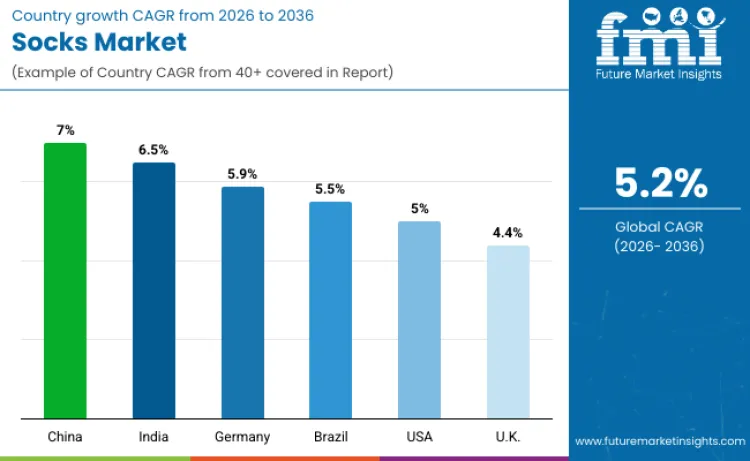
Global framework for sock manufacturing is distinguished by diverse production environments, shaped by textile capabilities and consumer preference patterns. Developed markets emphasize technology-enhanced construction and premium-grade manufacturing, while emerging economies concentrate on competitive pricing and fundamental sock functionality. Asia-Pacific region is developing as rapid expansion center due to increasing footwear consumption and growing textile industries. North American markets shift toward specialized performance wear and technical construction formulations. Government programs in developing countries supporting textile advancement ensure continued demand for modern manufacturing across all population segments.
| Country | CAGR (2026 to 2036) |
|---|---|
| China | 7.0% |
| India | 6.5% |
| Germany | 5.9% |
| Brazil | 5.5% |
| USA | 5.0% |
| U.K. | 4.4% |
Source: FMI analysis based on primary research and proprietary forecasting model
Why is the Socks Industry in China Growing?
Sales of socks in China are positioned to advance at 7.0% CAGR through 2036. Growth is supported by accelerating urbanization and expanding textile manufacturing among industrial sectors. Advancement is driven by government modernization initiatives emphasizing advanced knitting technology and quality improvement programs. Increasing disposable incomes promote premium sock adoption per capita among quality-conscious textile manufacturers. Establishment of major international brands creating local production facilities optimizes manufacturing supply chains and reduces import dependencies. Focus on traditional textile innovation with performance-oriented construction remains the primary driver, sustaining China's position as essential growth engine for sock applications.
Why is the Socks Sector in India Expanding?
Demand for socks in India is expected to increase at 6.5% CAGR during assessment period. Programs emphasizing health promotion and active lifestyle adoption foster supportive environment for performance sock acceptance. Growing investment in textile manufacturing infrastructure establishes production channels for performance-constructed products. Expanding middle-class population requiring affordable health options encourages domestic companies to create cost-effective sock solutions. Development is reinforced by government policies promoting textile technology programs, accelerating sock uptake across urban centers and driving sector expansion through enhanced product accessibility.
Why is the Socks Industry in Germany Showing Potential?
Socks industry in Germany is prepared to expand at 5.9% CAGR. Growth is primarily attributed to increasing recognition of foot health benefits among active populations. Government emphasis on wellness initiatives addressing sedentary lifestyle promotes consumers to adopt specialized hosiery strategies. Growing partnerships between local textile companies and international fiber suppliers guarantee availability of high-quality sock materials. Economic stability combined with expanding health emphasis draws significant investment in performance sock products. Robust manufacturing framework ensuring construction quality and performance continues driving consumer confidence in sock consumption.
Why is the Socks Industry in Brazil Growing?
Sales of socks in Brazil are set to advance at 5.5% CAGR. Growth is supported by developing sports culture recognizing consumer demand for comfortable athletic hosiery. Expansion is driven by increasing wellness awareness promoting consumers toward performance-based sock measures. Widespread acceptance of active lifestyle and fitness participation establishes steady demand for specialized sock products. High standards of textile manufacturing and quality supervision encourage brands to invest in proven sock formulations. Emphasis on comfort-based fashion and athletic validation continues as primary driver, maintaining Brazil's position as innovation adopter in sock applications.
Why is the Socks Sector in USA Expanding?
Revenue from socks in USA is positioned to grow at 5.0% CAGR. Expansion is supported by established textile industry recognition of performance sock benefits. Growth is driven by increasing health consciousness promoting awareness of comfort-related hosiery advantages among consumer populations. Moderate acceptance of technical athletic wear and performance socks drives revenue generation in fitness-focused market segments. Presence of established textile companies ensures high-quality construction standards and manufacturing compliance. Focus on evidence-based performance guidelines and comfort validation continues as primary driver, maintaining USA position as quality-focused market for socks.
What is the Competitive Outlook for the Socks Market?
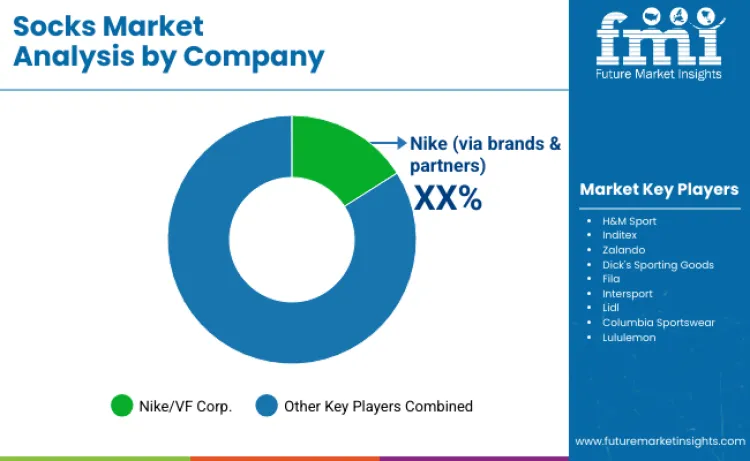
Market participants are increasingly emphasizing construction innovation as a fundamental strategy to distinguish their sock solutions and reinforce brand positioning. Major enterprises such as Nike and H&M Sport are increasing investments in knitting technology and establishing collaborations with textile engineering institutions to enhance sock formulations and improve wearing performance. A significant trend involves developing integrated construction platforms, designed to balance comfort expectations with functional requirements such as arch support, moisture management, and cost effectiveness.
Companies are constructing strategic partnerships with leading retail and sports chains to ensure broader integration of these sock products across mainstream athletic categories. Innovation continues as a major competitive focus, with providers investigating advanced knitting techniques to improve durability, elastic recovery, and washing performance. Consolidation activity remains moderate, led by specialty textile firms acquiring manufacturing assets to improve quality control and strengthen supply chain resilience. Nike continues maintaining a strong share, supported by comprehensive technical capabilities and a well-established global distribution network.
Key Players in Socks Market
- Nike (via brands & partners)
- H&M Sport
- Inditex
- Zalando
- Dick's Sporting Goods
- Fila
- Intersport
- Lidl
- Columbia Sportswear
- Lululemon
Scope of Report
| Items | Values |
|---|---|
| Quantitative Units | USD Billion |
| Product Segments | Athletic; Lifestyle; Others |
| Sock Length Categories | Ankle; Over-the-calf; Mid-calf |
| Material Categories | Cotton; Polyester; Polyamide; Wool; Elastane |
| End Use Categories | Men; Women; Kids |
| Distribution Channel Types | Retail; E-commerce; DTC |
| Regions Covered | North America, Europe, East Asia, South Asia, Latin America, Middle East & Africa |
| Key Countries | China, India, Germany, Brazil, USA, U.K. |
| Key Companies Profiled | Nike; H&M Sport; Inditex; Zalando; Dick's Sporting Goods; Fila; Intersport; Lidl; Columbia Sportswear; Lululemon |
| Additional Attributes | Dollar sales measured for socks used in athletic performance and lifestyle applications, specified by construction type (athletic, lifestyle, others), length specification (ankle, over-the-calf, mid-calf), material composition (cotton, polyester, polyamide, wool), end-user preference (men, women, kids), distribution model (retail vs. e-commerce), and compliance alignment with evolving comfort standards and performance regulations. |
Socks Market by Segments
Product
- Athletic
- Lifestyle
- Others
Socks Length
- Ankle
- Over-the-calf
- Mid-calf
Material
- Cotton
- Polyester
- Polyamide
- Wool
- Elastane
End Use
- Men
- Women
- Kids
Distribution Channel
- Retail
- E-commerce
- DTC
Bibliography
- American Textile Manufacturers Institute. (2024). Advanced sock construction technologies in performance hosiery: Manufacturing standards, quality frameworks, and material selection practices.
- International Hosiery Manufacturers Association. (2024). Global sock production trends, fiber innovation, and market positioning strategies across athletic and lifestyle segments.
- International Textile Manufacturers Federation. (2024). Knitted textile applications in apparel and hosiery: Technology adoption, productivity benchmarks, and regional manufacturing trends.
- World Federation of the Sporting Goods Industry. (2024). Athletic accessories and performance wear practices: Consumer demand drivers, retail dynamics, and product performance expectations.
Preview the report firsthand - request a free sample
Get SampleGet the brochure for pricing and purchase details.
Get PDFTable of Content
- Executive Summary
- Global Market Outlook
- Demand-side Trends
- Supply-side Trends
- Technology Roadmap Analysis
- Analysis and Recommendations
- Market Overview
- Market Coverage / Taxonomy
- Market Definition / Scope / Limitations
- Market Background
- Market Dynamics
- Drivers
- Restraints
- Opportunity
- Trends
- Scenario Forecast
- Demand in Optimistic Scenario
- Demand in Likely Scenario
- Demand in Conservative Scenario
- Opportunity Map Analysis
- Product Life Cycle Analysis
- Supply Chain Analysis
- Investment Feasibility Matrix
- Value Chain Analysis
- PESTLE and Porter’s Analysis
- Regulatory Landscape
- Regional Parent Market Outlook
- Production and Consumption Statistics
- Import and Export Statistics
- Market Dynamics
- Global Market Analysis 2020 to 2025 and Forecast, 2026 to 2036
- Historical Market Size Value (USD Million) Analysis, 2020 to 2025
- Current and Future Market Size Value (USD Million) Projections, 2026 to 2036
- Y-o-Y Growth Trend Analysis
- Absolute $ Opportunity Analysis
- Global Market Pricing Analysis 2020 to 2025 and Forecast 2026 to 2036
- Global Market Analysis 2020 to 2025 and Forecast 2026 to 2036, By Product
- Introduction / Key Findings
- Historical Market Size Value (USD Million) Analysis By Product, 2020 to 2025
- Current and Future Market Size Value (USD Million) Analysis and Forecast By Product, 2026 to 2036
- Athletic
- Lifestyle
- Others
- Y-o-Y Growth Trend Analysis By Product, 2020 to 2025
- Absolute $ Opportunity Analysis By Product, 2026 to 2036
- Global Market Analysis 2020 to 2025 and Forecast 2026 to 2036, By Socks Length
- Introduction / Key Findings
- Historical Market Size Value (USD Million) Analysis By Socks Length, 2020 to 2025
- Current and Future Market Size Value (USD Million) Analysis and Forecast By Socks Length, 2026 to 2036
- Ankle
- Over-the-calf
- Mid-calf
- Y-o-Y Growth Trend Analysis By Socks Length, 2020 to 2025
- Absolute $ Opportunity Analysis By Socks Length, 2026 to 2036
- Global Market Analysis 2020 to 2025 and Forecast 2026 to 2036, By Material
- Introduction / Key Findings
- Historical Market Size Value (USD Million) Analysis By Material, 2020 to 2025
- Current and Future Market Size Value (USD Million) Analysis and Forecast By Material, 2026 to 2036
- Cotton
- Polyester
- Polyamide
- Wool
- Elastane
- Y-o-Y Growth Trend Analysis By Material, 2020 to 2025
- Absolute $ Opportunity Analysis By Material, 2026 to 2036
- Global Market Analysis 2020 to 2025 and Forecast 2026 to 2036, By End Use
- Introduction / Key Findings
- Historical Market Size Value (USD Million) Analysis By End Use, 2020 to 2025
- Current and Future Market Size Value (USD Million) Analysis and Forecast By End Use, 2026 to 2036
- Men
- Women
- Kids
- Y-o-Y Growth Trend Analysis By End Use, 2020 to 2025
- Absolute $ Opportunity Analysis By End Use, 2026 to 2036
- Global Market Analysis 2020 to 2025 and Forecast 2026 to 2036, By Distribution Channel
- Introduction / Key Findings
- Historical Market Size Value (USD Million) Analysis By Distribution Channel, 2020 to 2025
- Current and Future Market Size Value (USD Million) Analysis and Forecast By Distribution Channel, 2026 to 2036
- Retail
- E-commerce
- DTC
- Y-o-Y Growth Trend Analysis By Distribution Channel, 2020 to 2025
- Absolute $ Opportunity Analysis By Distribution Channel, 2026 to 2036
- Market Structure Analysis
- Competition Dashboard
- Competition Benchmarking
- Market Share Analysis of Top Players
- By Regional
- By Product
- By Socks Length
- By Material
- By End Use
- By Distribution Channel
- Competition Analysis
- Competition Deep Dive
- Nike (via brands & partners)
- Overview
- Product Portfolio
- Profitability by Market Segments (Product/Material/Sales Channel/Region)
- Sales Footprint
- Strategy Overview
- Marketing Strategy
- Product Strategy
- Channel Strategy
- H&M Sport
- Inditex
- Zalando
- Dick's Sporting Goods
- Fila
- Intersport
- Lidl
- Columbia Sportswear
- Lululemon
- Nike (via brands & partners)
- Competition Deep Dive
- Assumptions & Acronyms Used
- Research Methodology


