

- Industry Size (2026)
- USD 35.2 Mn
- Forecast (2036)
- USD 52 Mn
- CAGR (2026 to 2036)
- 4%
Demand for Caramel Malt in South Korea Forecast and Outlook 2026 to 2036
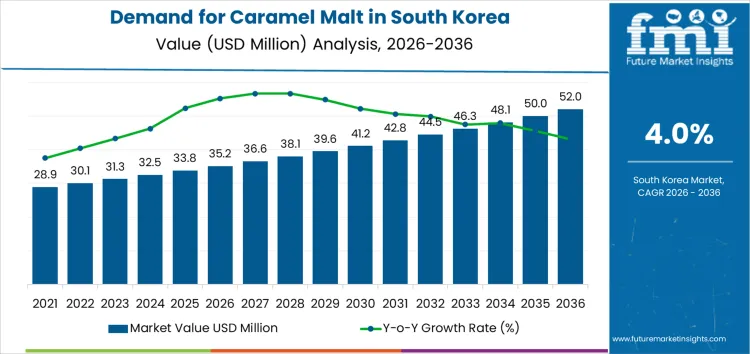
The demand for caramel malt in South Korea is expected to reach USD 35.2 million in 2026 and grow to USD 52 million by 2036, reflecting a 4% CAGR. Commercial realities in this space are shaped by tight pricing discipline, as fluctuations in raw material costs and competitive pressures drive suppliers to balance margin preservation with market share retention. Buyer leverage is increasingly prominent, particularly among large-scale beverage and food producers, who demand consistency and cost efficiency from their suppliers.
Volume predictability remains a challenge, as demand for caramel malt is closely tied to seasonal product cycles and fluctuations in consumer preferences, making it difficult for suppliers to forecast with certainty. As the market matures, vendors will need to adopt flexible strategies that cater to both large, steady orders and smaller, more volatile demand from niche players. Long-term growth will depend on suppliers' ability to manage these dynamics effectively.
Quick Stats for the Demand for Caramel Malt in South Korea
- Caramel Malt in South Korea Value (2026): USD 35.2 million
- Caramel Malt in South Korea Forecast Value (2036): USD 52 million
- Caramel Malt in South Korea Forecast CAGR (2026 to 2036): 4%
- Caramel Malt in South Korea Leading Segment: Beer (62%)
- Key Growth Regions of Caramel Malt in South Korea: Jeju (leading CAGR ~4.8%)
- Top Players of Caramel Malt in South Korea: Bairds Malt Limited, Weyermann, Castle Malting, Thomas Fawcett Malting, Great Western Malting
What is the Growth Forecast for the Demand for Caramel Malt in South Korea through 2036?
The seasonality or cyclicality detection for caramel malt in South Korea shows a relatively stable growth pattern with slight seasonal variations linked to industry-specific demand cycles. Over the first five years of the forecast period (2026-2030), demand will rise steadily, driven by continuous growth in the brewing and food sectors. Early-stage growth is expected to be supported by the continued popularity of craft beer and the increasing demand for caramel malt in confectionery and bakery products. These seasonal cycles, tied to beverage consumption and the holiday season when confectionery products are in high demand, are expected to create minor spikes in the market throughout the year.
As the market matures, growth will continue at a steady rate, though cyclicality may become more evident, with higher consumption in peak seasons (such as during holiday periods) and relatively lower demand during off-seasons. By 2036, the demand for caramel malt will reach USD 52 million, with the market showing consistent growth over the forecast period, underpinned by ongoing demand for caramel malt in brewing, food, and beverage applications. While seasonality will influence short-term demand, the overall trend remains one of steady expansion, driven by long-term growth in the industry.
Key Takeaways for Demand for Caramel Malt in South Korea
| Metric | Value |
|---|---|
| Industry Sales Value (2026) | USD 35.2 million |
| Industry Forecast Value (2036) | USD 52 million |
| Industry Forecast CAGR (2026 to 2036) | 4% |
Why is the Demand for Caramel Malt Growing in South Korea?
Demand for caramel malt in South Korea is increasing as brewers and food processors seek ingredients that contribute distinct colour, flavour, and functional properties. Caramel malt provides rich amber hues and sweet, toasty characteristics that complement a wide range of beer styles, especially craft ales and lagers that are gaining traction among consumers. South Korean microbreweries specify caramel malt to achieve desired sensory profiles while maintaining process consistency and fermentability. Beyond brewing, food manufacturers use caramel malt in snacks, baked goods, and confectionery to enhance colour and contribute nuanced sweetness without relying solely on refined sugars. Procurement teams evaluate malt attributes such as colour grade, diastatic power, and moisture content to ensure performance in maceration and baking processes. These technical criteria influence ingredient selection, as consistent raw material quality supports production schedules and final product standards in both beverage and food sectors.
Looking ahead, several factors are likely to support continued growth in demand for caramel malt in South Korea. The expansion of craft beer culture and greater consumer interest in diverse beer flavours create enduring opportunities for specialty malts that enable brewers to differentiate products. Domestic and imported beer portfolios increasingly feature styles that benefit from caramel malt’s balancing sweetness and body, reinforcing its role in formulation strategies. In the broader food sector, product developers respond to demand for clean label and familiar ingredient lists, and caramel malt aligns with formulations that avoid artificial colourants while contributing sensory appeal. Growth in artisanal and small batch food production, including premium breads and snack bars, further sustains interest in malt based ingredients. Ingredient supply considerations, including stable sourcing and quality control, influence procurement as manufacturers seek to integrate caramel malt into diverse product lines with predictable performance. Together, these dynamics shape how caramel malt is valued and purchased within South Korea’s beverage and food manufacturing landscape.
What Shapes the Demand for Caramel Malt in South Korea?
The demand for caramel malt in South Korea is driven by two main factors: drying method and application. Kilned caramel malt holds the largest share at 57%, while beer accounts for the majority of the application segment at 62%. These segments dominate the market, reflecting caramel malt's essential role in beverage production and its growing use in food processing for flavor and color enhancement.
Why Does Kilned Caramel Malt Lead the Market?
Kilned caramel malt leads the caramel malt market in South Korea, accounting for 57% of demand, due to its robust flavor profile and versatility in a wide range of applications. The kilning process imparts a rich, toasted flavor and deep amber color to the malt, making it the preferred choice in brewing, particularly for beer. It is essential in producing traditional and craft beers, where malt color and flavor are key to achieving the desired taste profile.
In addition to beer, kilned caramel malt is used in various food products, where it adds a unique caramelized flavor and enhances color in baked goods, sauces, and confectionery. The consistency and stability provided by kilned caramel malt make it ideal for large-scale production, supporting its dominance in the South Korean market. As South Korea continues to see growth in craft beer production and premium food products, the demand for kilned caramel malt is expected to remain strong due to its essential role in flavoring and color enhancement.
Why Does Beer Lead the Application Demand for Caramel Malt?
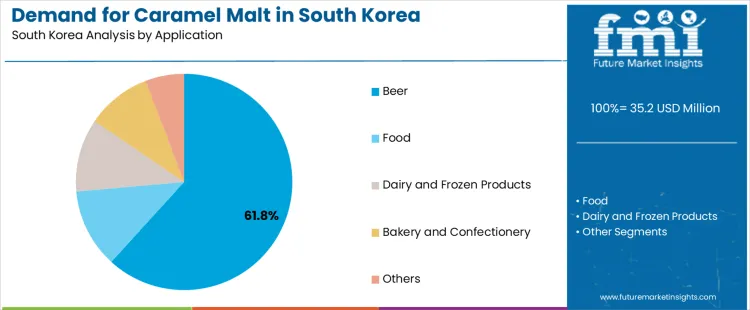
Beer is the leading application for caramel malt in South Korea, accounting for 62% of the total demand. Caramel malt, particularly kilned varieties, plays a crucial role in beer production by contributing to the beer's color, mouthfeel, and flavor complexity. In South Korea, beer remains a staple of the alcoholic beverage market, with both mainstream brands and craft breweries increasingly relying on caramel malt to create unique brews.
As craft beer continues to gain popularity, there is a growing demand for specialty malts like caramel malt, which offer brewers greater control over the sensory qualities of their beers. Caramel malt imparts a distinctive sweetness and color depth, which are crucial for achieving specific beer styles such as amber ales, stouts, and porters. The rise of premium and craft beer segments in South Korea is expected to drive the continued demand for caramel malt in the brewing industry. As beer producers focus on innovation and flavor differentiation, the use of caramel malt will remain a key ingredient in shaping the unique characteristics of beer offerings in the market.
What Is the Current Demand for Caramel Malt in South Korea?
Demand for caramel malt in South Korea is driven by its role as a key ingredient in beer production and select bakery products. Caramel malt contributes colour, body, and flavour complexity in brewing, supporting craft and mainstream beer formulation alike. Procurement by breweries, malt houses, and ingredient distributors reflects activity in the alcoholic beverage sector and related food processing where specialty malts are specified. Demand patterns also align with consumer preferences for diverse beer styles and products that incorporate malt-driven sensory profiles. Overall uptake remains linked to beverage production volumes and innovation in flavor-led products.
What Factors Are Driving Demand for Caramel Malt in South Korea?
Several factors influence demand for caramel malt in South Korea. Expansion of the craft beer segment encourages brewers to specify a range of specialty malts, including caramel variants that deliver distinct sweetness, colour, and body. Growth in microbreweries and brewpubs increases the range of beer styles produced, reinforcing need for varied malt profiles. Mainstream breweries also use caramel malt to balance bitterness and extend shelf appeal in certain lager and ale formulations. Consumer curiosity about flavour diversity and sensory experiences in alcoholic beverages reinforces brewer interest in ingredient versatility. Distribution channels that support domestic and export sales of malt-forward beers shape procurement decisions for caramel malt.
What Are the Constraints on Demand for Caramel Malt in South Korea?
Despite ongoing uptake, constraints temper demand for caramel malt in South Korea. The relative cost of specialty malts compared with base malts can limit their use, especially among smaller brewing operations with tight cost margins. Fluctuations in barley and grain markets, influenced by global crop yields and logistics costs, affect raw material pricing and can delay purchasing decisions. Competition from imported malted barley and contract brewing arrangements may reduce reliance on locally sourced specialty malts. Regulatory requirements around alcohol production and labelling can drive formulation standardization, which may slow experimentation with diverse specialty malts in some segments.
What Trends Are Emerging in South Korea’s Caramel Malt Market?
Emerging trends in South Korea’s caramel malt market reflect evolving brewing and food formulation practices. There is rising interest in distinct beer styles that emphasize malt character, such as amber ales and porters, which support use of caramel malt for flavour complexity and rich colour. Craft brewers are experimenting with blended malt profiles that combine caramel, roasted, and base malts to achieve unique sensory outcomes. Collaboration between breweries and ingredient suppliers is fostering access to consistent, high-quality caramel malts tailored to specific flavour targets. Outside brewing, food processors are exploring malt-derived ingredients in bakery and snack formulations where natural sweetness and Maillard reaction attributes enhance product appeal. Sustainability considerations in raw material sourcing and traceability are influencing procurement strategies among conscientious brewers and manufacturers.
What is the Regional Outlook for the Demand for Caramel Malt in South Korea?
The demand for caramel malt in South Korea is largely driven by the growing beverage and food industries, especially in sectors such as brewing, confectionery, and bakery. Jeju leads the demand growth, driven by its expanding tourism and hospitality sectors that contribute to increased demand for caramel malt in beverages and food products. South Gyeongsang and South Jeolla follow with steady demand, supported by their strong food processing industries. North Jeolla, while showing moderate growth, benefits from its growing beverage and food manufacturing base. As the trend toward more natural and artisanal food products rises, caramel malt, known for its rich flavor and color, continues to gain popularity across these regions.
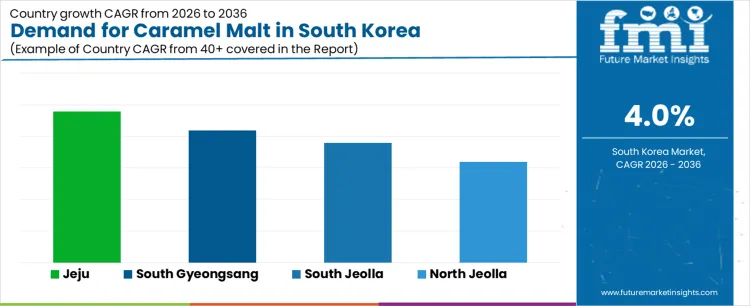
| Province | CAGR (2026–2036) |
|---|---|
| South Gyeongsang | 4.2% |
| North Jeolla | 3.2% |
| South Jeolla | 3.8% |
| Jeju | 4.8% |
What drives the demand for Caramel Malt in South Gyeongsang?
South Gyeongsang is projected to experience a CAGR of 4.2% in the demand for caramel malt from 2026 to 2036. The region’s strong presence in food processing, brewing, and beverage manufacturing sectors significantly contributes to this demand. Caramel malt is widely used in the production of beer, soft drinks, baked goods, and confectionery, all of which are key industries in South Gyeongsang. As the province continues to expand its brewing industry and diversify food and beverage production, the need for high-quality caramel malt increases. Additionally, the region’s growing focus on premium food products and artisanal beverages further drives the demand for this ingredient. With the increasing consumer preference for natural and flavorful food products, caramel malt’s demand is expected to remain strong.
What influences the growth of Caramel Malt demand in North Jeolla?
North Jeolla is expected to see a steady CAGR of 3.2% in caramel malt demand from 2026 to 2036. The region’s food and beverage manufacturing sector, particularly in the production of beer, baked goods, and snacks, is a major driver of demand. Caramel malt is essential for its coloring and flavor-enhancing properties, making it a critical ingredient in North Jeolla’s food production. The rising trend of health-conscious consumers seeking natural and high-quality ingredients in their food products is driving the use of caramel malt in beverages and food products. North Jeolla’s growing agricultural and food processing base also contributes to the demand for caramel malt as it is used in various food applications. As the region’s food and beverage industry continues to grow, the use of caramel malt will increase steadily.
What drives the demand for Caramel Malt in South Jeolla?
South Jeolla’s demand for caramel malt is projected to grow at a CAGR of 3.8% from 2026 to 2036. The region’s expanding food processing industry, particularly in the production of bakery goods, dairy products, and beverages, plays a significant role in this demand. Caramel malt is widely used in the production of baked goods, sauces, and flavored beverages, making it an essential ingredient in the food industry. South Jeolla’s commitment to producing high-quality, natural food products aligns with the growing trend of using caramel malt in a variety of applications. As the region focuses on meeting consumer preferences for healthier, natural, and more flavorful products, the demand for caramel malt is expected to grow steadily. Additionally, South Jeolla’s increasing role in the beverage sector further boosts the need for this ingredient.
Why is Jeju projected to have the highest demand growth for Caramel Malt?
Jeju is projected to experience the highest demand growth for caramel malt, with a CAGR of 4.8% from 2026 to 2036. The island’s thriving tourism sector and growing food and beverage industries are key drivers of this growth. As Jeju continues to expand its hospitality industry and cater to health-conscious consumers, the demand for natural, high-quality ingredients like caramel malt rises. The growing popularity of artisanal products, including craft beer, specialty beverages, and gourmet baked goods, contributes to the increasing demand for caramel malt in Jeju. Additionally, the region’s focus on premium, locally produced food products, combined with the rising tourism-driven demand for unique food experiences, accelerates the adoption of caramel malt. Jeju’s emphasis on sustainable food practices and premium offerings makes it the fastest-growing region for caramel malt in South Korea.
How are Competitors Differentiating in the Caramel Malt Market in South Korea?
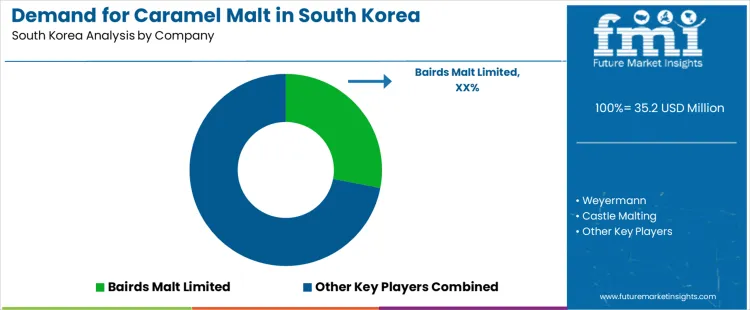
The demand for caramel malt in South Korea is driven by its growing use in the brewing and food industries, where it provides rich color, flavor, and texture to a variety of products. Bairds Malt Limited, the leading player, stands out by offering high-quality caramel malts that are known for their deep color and sweet flavor profile, making them ideal for brewing and confectionery applications. They focus on providing customizable caramel malts to meet the specific needs of South Korean craft brewers and food manufacturers. Weyermann competes by offering a diverse range of caramel malts with varying degrees of color intensity and flavor, giving brewers and food manufacturers the flexibility to tailor their products to different taste profiles and visual effects. Their focus on innovation and consistency has earned them a strong reputation in the South Korean market.
Castle Malting differentiates itself by producing premium caramel malts that are made using traditional methods, ensuring rich, authentic flavors that appeal to both craft brewers and food producers looking for high-quality ingredients. Thomas Fawcett Malting offers caramel malts with a strong emphasis on natural processes and traditional malting techniques, appealing to customers who value artisanal craftsmanship and quality. Great Western Malting provides caramel malts with a focus on meeting the specific requirements of large-scale breweries and food manufacturers, offering reliable quality at scale while maintaining consistent flavor profiles. These companies leverage product brochures to highlight the unique characteristics of their caramel malts, such as color, flavor, and application versatility, helping South Korean manufacturers make informed decisions for their brewing and food production needs.
Key Players of the Demand for Caramel Malt in South Korea
- Bairds Malt Limited
- Weyermann
- Castle Malting
- Thomas Fawcett Malting
- Great Western Malting
Scope of the Report
| Items | Values |
|---|---|
| Quantitative Units (2026) | USD Million |
| Colour | Light, Medium, Dark, Very Dark |
| Source | Wheat, Rye, Others |
| Drying | Kilned Caramel malt, Roasted |
| Application | Beer, Food, Dairy and Frozen Products, Bakery and Confectionery, Others |
| End Use | Microbreweries, Large Breweries, Regional Breweries, Brewpubs, Home Brewers |
| Flavor | Candy Like, Caramel, Toffee, Raisiny, Slight Burnt Sugar |
| Companies | Bairds Malt Limited, Weyermann, Castle Malting, Thomas Fawcett Malting, Great Western Malting |
| Region Covered | South Korea |
| Provinces Covered | South Gyeongsang, North Jeolla, South Jeolla, Jeju |
| Additional Attributes | Dollar sales by colour, source, drying, application, end use, and flavor. The demand for caramel malt is driven by the growing craft beer industry, with microbreweries and regional breweries using light to medium coloured malts for diverse beer styles. Additionally, applications in food, dairy, and bakery sectors support growth, with distinct flavors like toffee and raisiny gaining popularity. |
Demand for Caramel Malt in South Korea
Colour:
- Light
- Medium
- Dark
- Very Dark
Source:
- Wheat
- Rye
- Others
Drying:
- Kilned Caramel Malt
- Roasted
- Other
Application:
- Beer
- Food
- Dairy and Frozen Products
- Bakery and Confectionery
- Others
End Use:
- Microbreweries
- Large Breweries
- Regional Breweries
- Brewpubs
- Home Brewers
- Other
Flavor:
- Candy Like
- Caramel
- Toffee
- Raisiny
- Slight Burnt Sugar
- Other
Provinces:
- South Gyeongsang
- North Jeolla
- South Jeolla
- Jeju
Bibliography
- Korean Ministry of Agriculture, Food and Rural Affairs. (2024). Annual agricultural production and barley cultivation report 2023–2024. Government of South Korea.
- Park, J., Chung, H.-J., Park, H. Y., Park, H. J., & Oh, S.-K. (2023). Comparative analysis of malt quality and starch characteristics of South Korean barley cultivars. Journal of Cereal Science, 110, Article 104935.
- Korea Agro-Fisheries & Food Trade Corporation. (2024). Domestic beer and malt ingredient utilization trends report. aT Center, Government of South Korea.
Frequently Asked Questions
How big is the demand for caramel malt in south korea in 2026?
The demand for caramel malt in south korea is estimated to be valued at USD 35.2 million in 2026.
What will be the size of caramel malt in south korea in 2036?
The market size for the caramel malt in south korea is projected to reach USD 52.0 million by 2036.
How much will be the demand for caramel malt in south korea growth between 2026 and 2036?
The demand for caramel malt in south korea is expected to grow at a 4.0% CAGR between 2026 and 2036.
What are the key product types in the caramel malt in south korea?
The key product types in caramel malt in south korea are light, medium, dark and very dark.
Which source segment is expected to contribute significant share in the caramel malt in south korea in 2026?
In terms of source, wheat segment is expected to command 47.4% share in the caramel malt in south korea in 2026.
Preview the report firsthand - request a free sample
Get SampleGet the brochure for pricing and purchase details.
Get PDFTable of Content
- Executive Summary
- South Korea Market Outlook
- Demand-side Trends
- Supply-side Trends
- Technology Roadmap Analysis
- Analysis and Recommendations
- Market Overview
- Market Coverage / Taxonomy
- Market Definition / Scope / Limitations
- Market Background
- Market Dynamics
- Drivers
- Restraints
- Opportunity
- Trends
- Scenario Forecast
- Demand in Optimistic Scenario
- Demand in Likely Scenario
- Demand in Conservative Scenario
- Opportunity Map Analysis
- Product Life Cycle Analysis
- Supply Chain Analysis
- Investment Feasibility Matrix
- Value Chain Analysis
- PESTLE and Porter’s Analysis
- Regulatory Landscape
- Regional Parent Market Outlook
- Production and Consumption Statistics
- Import and Export Statistics
- Market Dynamics
- South Korea Market Analysis 2021 to 2025 and Forecast, 2026 to 2036
- Historical Market Size Value (USD Million) Analysis, 2021 to 2025
- Current and Future Market Size Value (USD Million) Projections, 2026 to 2036
- Y-o-Y Growth Trend Analysis
- Absolute $ Opportunity Analysis
- South Korea Market Pricing Analysis 2021 to 2025 and Forecast 2026 to 2036
- South Korea Market Analysis 2021 to 2025 and Forecast 2026 to 2036, By Colour
- Introduction / Key Findings
- Historical Market Size Value (USD Million) Analysis By Colour , 2021 to 2025
- Current and Future Market Size Value (USD Million) Analysis and Forecast By Colour , 2026 to 2036
- Light
- Medium
- Dark
- Very Dark
- Light
- Y-o-Y Growth Trend Analysis By Colour , 2021 to 2025
- Absolute $ Opportunity Analysis By Colour , 2026 to 2036
- South Korea Market Analysis 2021 to 2025 and Forecast 2026 to 2036, By Source
- Introduction / Key Findings
- Historical Market Size Value (USD Million) Analysis By Source, 2021 to 2025
- Current and Future Market Size Value (USD Million) Analysis and Forecast By Source, 2026 to 2036
- Wheat
- Rye
- Others
- Wheat
- Y-o-Y Growth Trend Analysis By Source, 2021 to 2025
- Absolute $ Opportunity Analysis By Source, 2026 to 2036
- South Korea Market Analysis 2021 to 2025 and Forecast 2026 to 2036, By Drying
- Introduction / Key Findings
- Historical Market Size Value (USD Million) Analysis By Drying, 2021 to 2025
- Current and Future Market Size Value (USD Million) Analysis and Forecast By Drying, 2026 to 2036
- Kilned Caramel malt
- Roasted
- Kilned Caramel malt
- Y-o-Y Growth Trend Analysis By Drying, 2021 to 2025
- Absolute $ Opportunity Analysis By Drying, 2026 to 2036
- South Korea Market Analysis 2021 to 2025 and Forecast 2026 to 2036, By Application
- Introduction / Key Findings
- Historical Market Size Value (USD Million) Analysis By Application, 2021 to 2025
- Current and Future Market Size Value (USD Million) Analysis and Forecast By Application, 2026 to 2036
- Beer
- Food
- Dairy and Frozen Products
- Bakery and Confectionery
- Others
- Beer
- Y-o-Y Growth Trend Analysis By Application, 2021 to 2025
- Absolute $ Opportunity Analysis By Application, 2026 to 2036
- South Korea Market Analysis 2021 to 2025 and Forecast 2026 to 2036, By End Use
- Introduction / Key Findings
- Historical Market Size Value (USD Million) Analysis By End Use, 2021 to 2025
- Current and Future Market Size Value (USD Million) Analysis and Forecast By End Use, 2026 to 2036
- Microbreweries
- Large Breweries
- Regional Breweries
- Brewpubs
- Home Brewers
- Microbreweries
- Y-o-Y Growth Trend Analysis By End Use, 2021 to 2025
- Absolute $ Opportunity Analysis By End Use, 2026 to 2036
- South Korea Market Analysis 2021 to 2025 and Forecast 2026 to 2036, By Flavor
- Introduction / Key Findings
- Historical Market Size Value (USD Million) Analysis By Flavor, 2021 to 2025
- Current and Future Market Size Value (USD Million) Analysis and Forecast By Flavor, 2026 to 2036
- Candy Like
- Caramel
- Toffee
- Raisiny
- Slight Burnt Sugar
- Candy Like
- Y-o-Y Growth Trend Analysis By Flavor, 2021 to 2025
- Absolute $ Opportunity Analysis By Flavor, 2026 to 2036
- Market Structure Analysis
- Competition Dashboard
- Competition Benchmarking
- Market Share Analysis of Top Players
- By Regional
- By Colour
- By Source
- By Drying
- By Application
- By End Use
- By Flavor
- Competition Analysis
- Competition Deep Dive
- Bairds Malt Limited
- Overview
- Product Portfolio
- Profitability by Market Segments (Product/Age /Sales Channel/Region)
- Sales Footprint
- Strategy Overview
- Marketing Strategy
- Product Strategy
- Channel Strategy
- Weyermann
- Castle Malting
- Thomas Fawcett Malting
- Great Western Malting
- Bairds Malt Limited
- Competition Deep Dive
- Assumptions & Acronyms Used
- Research Methodology


