

- Industry Size (2026)
- USD 125.8 Mn
- Forecast (2036)
- USD 207.5 Mn
- CAGR (2026 to 2036)
- 5.1%
Demand for Endometriosis Treatment in South Korea Forecast and Outlook 2026 to 2036
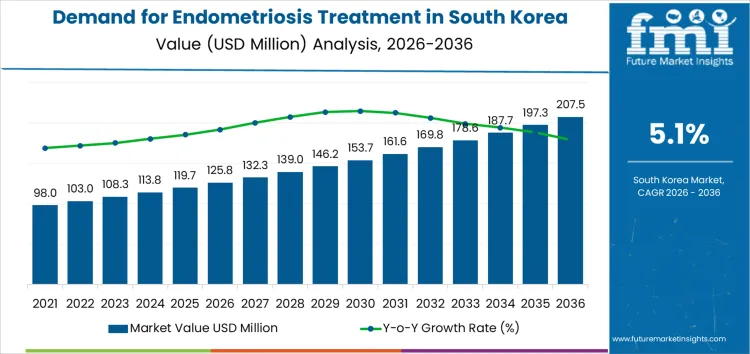
The demand for endometriosis treatment in South Korea is projected to reach USD 207.5 million by 2036, growing at a CAGR of 5.1% from USD 125.8 million in 2026. While the market holds promising upside, it faces significant execution risks. The complexity of treatment options, along with a need for specialized medical expertise, can slow adoption and complicate patient access. Adoption friction is further exacerbated by gaps in awareness and delayed diagnosis, which may deter early treatment and influence market penetration.
Economic sensitivity remains a key constraint, as healthcare spending is often subject to broader economic cycles, potentially limiting growth during downturns. At the same time, regulatory hurdles and market fragmentation contribute to slow, yet steady, advancements. Despite these challenges, the market is expected to experience gradual expansion as medical solutions evolve and patient access improves, provided stakeholders manage the risks associated with broader healthcare trends effectively.
Quick Stats for the Demand for Endometriosis Treatment in South Korea
- Endometriosis Treatment in South Korea Value (2026): USD 125.8 million
- Endometriosis Treatment in South Korea Forecast Value (2036): USD 207.5 million
- Endometriosis Treatment in South Korea Forecast CAGR (2026 to 2036): 5.1%
- Endometriosis Treatment in South Korea Leading Segment: Hormonal Therapy (65%)
- Key Growth Regions of Endometriosis Treatment in South Korea: Jeju (leading CAGR ~6.2%)
- Top Players of Endometriosis Treatment in South Korea: AbbVie Inc., Bayer AG, AstraZeneca, Pfizer Inc., Teva Pharmaceutical Industries Ltd.
What is the Growth Forecast for the Endometriosis Treatment Market in South Korea through 2036?
The endometriosis treatment market in South Korea is projected to grow consistently from 2026 to 2036. Starting at USD 125.8 million in 2026, the market is expected to increase to USD 132.3 million in 2027. By 2028, the market value will reach USD 139.0 million, followed by USD 146.2 million in 2029. The market will continue to grow, reaching USD 153.7 million in 2030 and USD 161.6 million in 2031.
In the following years, the demand for endometriosis treatments will continue to rise, with the market projected to reach USD 169.8 million in 2032 and USD 178.6 million in 2033. By 2034, the market value will increase to USD 187.7 million, and it will continue to grow, reaching USD 197.3 million in 2035. By 2036, the market is projected to reach USD 207.5 million. The 10-year growth comparison reflects steady progress, with the most rapid growth occurring between 2026 and 2030, driven by increasing awareness, treatment advancements, and patient access to better care.
Key Takeaways for Demand for Endometriosis Treatment in South Korea
| Metric | Value |
|---|---|
| Industry Sales Value (2026) | USD 125.8 million |
| Industry Forecast Value (2036) | USD 207.5 million |
| Industry Forecast CAGR (2026 to 2036) | 5.1% |
Why is the Demand for Endometriosis Treatment Growing in South Korea?
Demand for endometriosis treatment in South Korea has increased as clinical recognition of the condition improves and more women seek specialised care. Endometriosis, a chronic condition in which tissue similar to the uterine lining grows outside the uterus, often causes pain, irregular bleeding, and infertility. Historically, cases were under-diagnosed or misattributed to general menstrual discomfort, but enhanced diagnostic protocols and greater awareness among healthcare providers and patients have raised detection rates. South Korean hospitals and women’s health clinics have expanded their service offerings to include laparoscopic surgery, hormone therapy, and pain management tailored to endometriosis, reflecting an uptick in referrals from primary care physicians. A larger number of reproductive-age women present with symptoms that warrant investigation, prompting earlier clinical intervention. Increased use of imaging technologies and minimally invasive diagnostic procedures has helped reduce the time between symptom onset and definitive diagnosis, supporting more timely treatment planning. Clinicians specialising in gynecologic surgery now prioritise evidence-based treatment pathways that align with global guidelines, thereby increasing procedural volumes in established centres of excellence.
Looking forward, demand for endometriosis treatment in South Korea is expected to continue rising as patient expectations and treatment options evolve. Pharmaceutical suppliers that provide advanced hormone modulators and pain-relief therapies tailored to endometriosis management may find expanding opportunities, particularly when supported by local clinical evidence and practitioner education. Manufacturers of surgical systems and tools for minimally invasive procedures can benefit from ongoing adoption of laparoscopy and robotic-assisted techniques that reduce recovery time and improve surgical precision. Diagnostic device makers that offer enhanced imaging and biomarker platforms may see increased interest, as early detection remains a clinical priority. Healthcare providers may invest in multidisciplinary care models that integrate pain specialists, reproductive endocrinologists, and pelvic health physiotherapists, creating demand for coordinated treatment solutions rather than isolated interventions. Engagement with patient advocacy groups and professional societies to disseminate treatment protocols and outcomes data will assist suppliers in positioning products and services within South Korea’s women’s health landscape.
What Are the Key Segments in Demand for Endometriosis Treatment in South Korea?
The demand for endometriosis treatment in South Korea is influenced by treatment type and distribution channel. The main treatment types include hormonal therapy and pain management, with hormonal therapy leading the market at 65%. Distribution channels for these treatments include hospital pharmacies, e-commerce, retail pharmacies, and drug stores, with hospital pharmacies holding the largest share at 45%. As awareness of endometriosis increases, there is growing demand for both pharmaceutical solutions and accessible pain management options.
How Does Treatment Type Influence Demand for Endometriosis Treatment in South Korea?
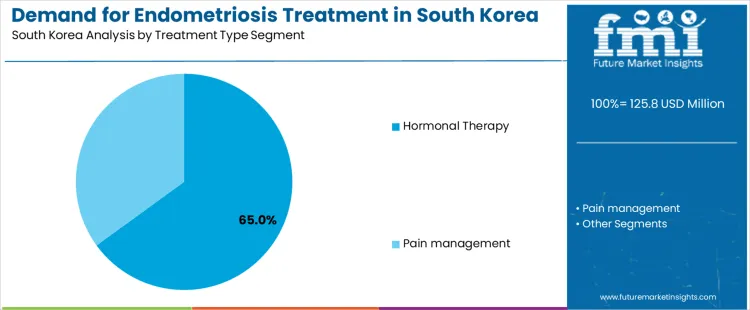
The demand for endometriosis treatment in South Korea is primarily driven by hormonal therapy, which accounts for 65% of the market. Hormonal therapy is commonly prescribed to manage the hormonal imbalances associated with endometriosis, aiming to reduce the growth of endometrial tissue and alleviate symptoms. This treatment is highly effective in reducing pain, controlling menstruation cycles, and preventing the progression of the disease. Due to its widespread use and proven efficacy, hormonal therapy remains the cornerstone of endometriosis management.
The hormonal therapy segment is further supported by the availability of various options, including birth control pills, progestin therapy, and GnRH agonists, which offer tailored solutions depending on the patient’s specific needs and medical history. Pain management, while a smaller segment compared to hormonal therapy, is an essential aspect of treatment. Patients with endometriosis often experience chronic pain, making pain management an integral part of their care. Over-the-counter and prescription pain relievers, as well as alternative therapies, play a critical role in alleviating the debilitating symptoms associated with the condition. As the demand for comprehensive care approaches increases, the demand for combined treatments, including both hormonal therapy and effective pain management, continues to rise.
What Is the Demand for Endometriosis Treatment by Distribution Channel in South Korea?
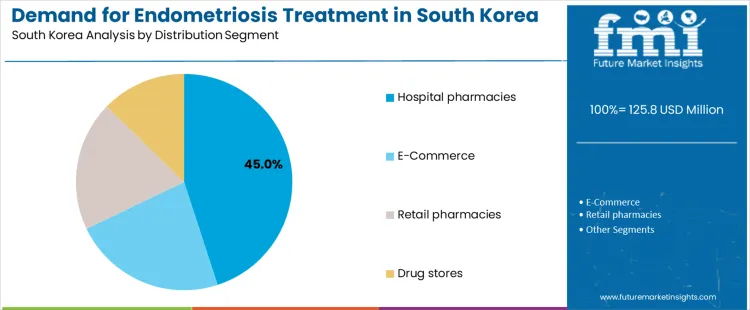
In South Korea, the distribution of endometriosis treatments is dominated by hospital pharmacies, which account for 45% of the market. Hospital pharmacies are the primary point of access for patients undergoing treatment for endometriosis, as these pharmacies are closely integrated with the healthcare providers managing the condition. They offer a full range of prescription medications, including hormonal therapies and pain management options, with the benefit of professional medical guidance. Hospital pharmacies are essential for ensuring that patients receive appropriate treatments tailored to their specific needs, including guidance on managing side effects and monitoring treatment effectiveness.
E-commerce is becoming an increasingly important distribution channel for endometriosis treatments, offering convenience and accessibility for patients who may prefer to shop from home. E-commerce platforms provide a broad range of over-the-counter pain management options, including non-prescription drugs, supplements, and alternative treatments. Retail pharmacies and drug stores also play a significant role in the distribution of endometriosis treatments, offering patients easy access to medications and over-the-counter solutions for pain relief. These distribution channels are particularly popular for pain management products, such as pain relievers, heating pads, and anti-inflammatory medications. As the demand for endometriosis treatments continues to grow, there is an increasing shift towards more accessible and varied distribution channels, providing patients with greater convenience and flexibility in managing their condition.
What are the Key Dynamics in the Demand for Endometriosis Treatment in South Korea?
Demand for endometriosis treatment in South Korea is influenced by clinical prevalence, healthcare delivery structures, and patient care pathways. Endometriosis affects women of reproductive age, presenting symptoms that range from chronic pain to infertility. Diagnostic laparoscopy and hormonal or surgical interventions form core components of the treatment landscape. South Korea’s universal health insurance scheme shapes patient access to diagnostics and therapies, while specialist gynecologists and women’s health clinics serve as primary care points. Procurement by hospitals and clinics of pharmaceuticals, minimally invasive surgical tools, and diagnostic equipment reflects treatment volume and practice standards. Trends in women’s health awareness and routine check-ups also affect demand patterns.
What are the Drivers of Demand for Endometriosis Treatment in South Korea?
A principal driver is increased clinical recognition of endometriosis through expanded screening and patient education. Awareness campaigns by medical societies and patient support groups encourage women with pelvic pain or menstrual irregularities to seek specialist assessment. Growth in minimally invasive surgical centers and adoption of laparoscopy for both diagnosis and treatment expands procedural availability. Hormonal therapies, including gonadotropin-releasing hormone analogues and progestin-based regimens, remain key therapeutic options, driving pharmaceutical procurement. Urbanization and higher health service utilization among working women contribute to regular gynecological visits, which increases detection rates. Insurers incorporating coverage for certain treatments further influence patient decisions and facility adoption.
What are the Restraints on Demand for Endometriosis Treatment in South Korea?
Restraints include delayed diagnosis due to symptom normalization and limited awareness among general practitioners, which can extend the timeline to specialist care. Some patients may defer consultation due to work commitments or misconceptions about menstrual pain, affecting early treatment uptake. Surgical interventions, while effective, require specialized training and facility resources that are concentrated in major urban hospitals, creating geographic access disparities. Cost considerations for advanced procedures, including robotic surgery or assisted reproductive treatments linked to endometriosis-associated infertility, may limit uptake among price-sensitive segments despite insurance subsidies. Variations in clinical practice patterns among providers can also lead to inconsistent treatment pathways.
What Key Trends Affect Demand for Endometriosis Treatment in South Korea?
An emerging trend is the integration of multidisciplinary care models that combine gynecology, pain management, and reproductive endocrinology to tailor treatment plans. Diagnostic innovations, such as enhanced imaging protocols and biomarker research, aim to reduce time to definitive diagnosis and increase intervention accuracy. Patient preference for fertility-preserving options influences treatment selection and supports demand for conservative surgical techniques. Digital health tools, including symptom tracking apps and teleconsultation services, improve follow-up engagement and adherence to long-term hormonal therapies. Research collaborations and clinical registries focused on endometriosis outcomes strengthen evidence bases, guiding both clinical decision-making and product development strategies for pharmaceutical and medical device suppliers.
What is the Regional Demand Outlook for Endometriosis Treatment in South Korea?
The demand for endometriosis treatment in South Korea is growing across regions, driven by increased awareness of the condition, advancements in medical treatments, and a focus on women’s health. South Gyeongsang, with a projected CAGR of 5.4%, shows strong demand, supported by its advanced healthcare infrastructure and growing investments in gynecological care. North Jeolla, with a growth rate of 4.1%, demonstrates moderate demand, influenced by regional healthcare development and rising awareness of endometriosis. South Jeolla, with a CAGR of 4.9%, is seeing steady demand as local healthcare providers focus on improving treatment options for women. Jeju, with the highest growth rate of 6.2%, stands out for its increasing focus on specialized healthcare services and growing demand for endometriosis treatment. These regional trends highlight significant opportunities for suppliers of medical devices, pharmaceuticals, and specialized healthcare services targeting endometriosis treatment in South Korea.
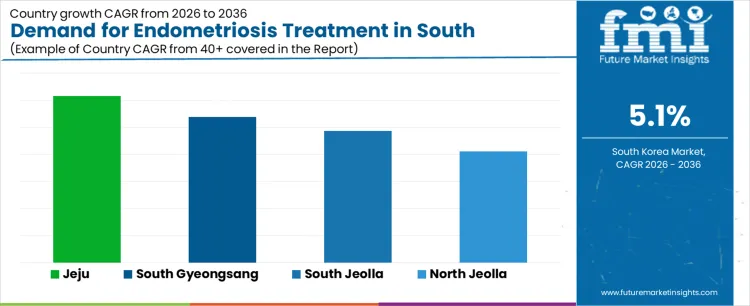
| Region | CAGR (2026 to 2036) |
|---|---|
| South Gyeongsang | 5.4% |
| North Jeolla | 4.1% |
| South Jeolla | 4.9% |
| Jeju | 6.2% |
How Can Healthcare Providers Capitalize on the Demand in South Gyeongsang for Endometriosis Treatment?
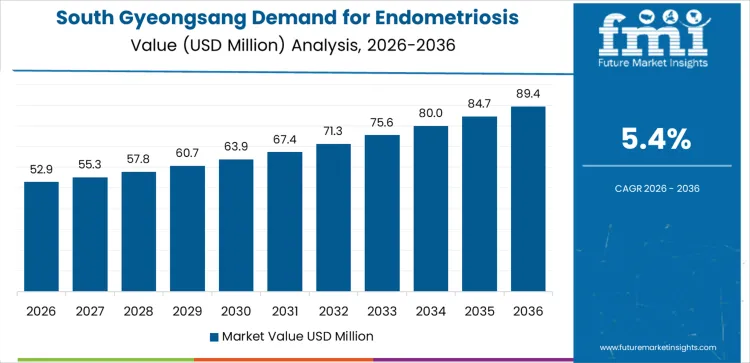
South Gyeongsang, with a projected CAGR of 5.4%, represents a significant market for endometriosis treatment providers. The region’s advanced medical infrastructure and growing focus on women’s health make it an attractive market for endometriosis-related treatments. Healthcare providers should focus on offering comprehensive treatment options, including advanced diagnostic tools, minimally invasive surgeries, and hormonal therapies. Collaboration with local gynecologists and hospitals can help increase awareness and access to treatment for patients suffering from endometriosis. As South Gyeongsang continues to enhance its healthcare services, the demand for specialized care for endometriosis will likely rise, creating long-term growth opportunities for medical suppliers and treatment providers.
What Factors Are Driving Endometriosis Treatment Demand in North Jeolla?
North Jeolla, with a CAGR of 4.1%, is experiencing moderate demand for endometriosis treatments. The region’s healthcare industry is growing, with increasing attention on women’s health and chronic conditions such as endometriosis. As awareness of the disease rises, so does the demand for effective treatments. Manufacturers of medical devices and pharmaceuticals targeting North Jeolla should focus on providing affordable and accessible treatment options, particularly for patients in rural areas who may face challenges accessing specialized care. Regional healthcare expansion, coupled with increasing awareness and education on endometriosis, presents an opportunity for companies to cater to this emerging market.
What is the Growth Outlook for Endometriosis Treatment in South Jeolla?
South Jeolla, with a projected CAGR of 4.9%, is witnessing steady demand for endometriosis treatments, driven by growing awareness and access to specialized care. The region’s healthcare services are expanding, and more women are seeking effective solutions for endometriosis. Providers can capitalize on this demand by offering a range of treatment options, from hormone therapies to surgical interventions. As local healthcare systems continue to improve, South Jeolla’s market for endometriosis treatment is expected to grow steadily. Companies that provide advanced, minimally invasive treatment options will likely see increasing demand as more women seek reliable, effective solutions to manage their condition.
Why is Jeju Leading the Demand for Endometriosis Treatment?
Jeju, with the highest projected CAGR of 6.2%, is seeing significant growth in demand for endometriosis treatments. This increase can be attributed to the region’s growing focus on women’s health services and the rising awareness of endometriosis. Jeju’s healthcare infrastructure is rapidly expanding, with more women seeking specialized treatments for conditions like endometriosis. As awareness campaigns continue and access to treatment improves, Jeju is emerging as a key region for endometriosis care. Healthcare providers and suppliers can seize this opportunity by focusing on providing cutting-edge diagnostic tools, hormonal treatments, and surgical interventions. Jeju’s unique focus on wellness and healthcare services creates a dynamic environment for the growth of endometriosis treatment services in the region.
What is the Competitive Landscape for Endometriosis Treatment Demand in South Korea?
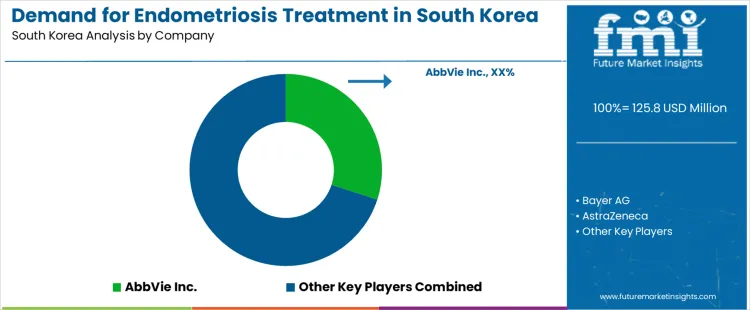
Demand for endometriosis treatment in South Korea is influenced by rising clinical diagnosis rates, expanded access to specialised gynaecological care, and growing emphasis on long-term quality-of-life outcomes. Endometriosis therapies are procured by hospitals, women’s health clinics, and outpatient care networks that prioritise clinical efficacy, safety profiles, and documented long-term outcomes. Clinical buyers evaluate products on measures such as pain reduction, lesion suppression, and hormonal management characteristics. Treatment protocols are shaped by local clinical guidelines and medical insurance coverage policies that affect prescribing patterns. Demand spans hormonal therapies, pain management regimens, and surgical support adjuncts, with requirements for products that can be integrated into multi-modal care pathways. Real-world evidence and post-market safety data have increasing influence on treatment selection, and procurement teams often require comprehensive dossiers that include comparative clinical trial outcomes and tolerability data. South Korean clinicians also consider patient adherence factors, route of administration, and anticipated follow-up needs when recommending treatment options.
Competition among key suppliers in South Korea’s endometriosis treatment space is driven by evidence-based product positioning, detailed clinical documentation, and support programmes for healthcare professionals. AbbVie Inc. is recognised as a leading supplier, with technical brochures outlining mechanism of action, clinical outcome metrics, and dosing considerations that assist formulary committees and gynaecology specialists. Bayer AG materials present treatment options with specification tables on efficacy endpoints, safety information, and patient management guidelines relevant to hospital pharmacy directors. AstraZeneca documentation focuses on products with defined target populations and clinical performance indicators that support prescribing decisions in specialist practices. Pfizer Inc. literature details therapeutic profiles, pharmacokinetic summaries, and comparative data that help procurement teams assess product suitability against clinical and operational criteria. Teva Pharmaceutical Industries Ltd. brochures describe treatment alternatives and supportive care options with specification data on administration regimens and documented tolerability. These supplier materials typically include clinical evidence summaries, product characteristic charts, and prescribing considerations that inform South Korean healthcare systems, specialist clinics, and pharmaceutical buyers when comparing offerings against treatment effectiveness and patient care requirements.
Key Players of the Demand for Endometriosis Treatment in South Korea
- AbbVie Inc.
- Bayer AG
- AstraZeneca
- Pfizer Inc.
- Teva Pharmaceutical Industries Ltd.
Scope of the Report
| Items | Values |
|---|---|
| Quantitative Units (2026) | USD Million |
| Drug Type Segment | Oral Contraceptives, Progestins, NSAIDs, GnRH Analogues, LNR-IUDs |
| Treatment Type Segment | Hormonal Therapy, Pain Management |
| Distribution Segment | Hospital Pharmacies, E-Commerce, Retail Pharmacies, Drug Stores |
| Companies | AbbVie Inc., Bayer AG, AstraZeneca, Pfizer Inc., Teva Pharmaceutical Industries Ltd. |
| Region Covered | South Korea |
| Provinces Covered | South Gyeongsang, North Jeolla, South Jeolla, Jeju |
| Additional Attributes | Dollar sales by drug type, treatment type, and distribution channel. Demand is supported by rising diagnosis rates, broader use of hormonal therapies, and increasing accessibility of treatment options through e-commerce and retail pharmacies. |
Key Segments of Demand for Endometriosis Treatment in South Korea
Drug Type Segment
- Oral Contraceptives
- Progestins
- NSAIDs
- GnRH Analogues
- LNR-IUDs
- Other
Treatment Type Segment
- Hormonal Therapy
- Pain Management
- Other
Distribution Segment
- Hospital Pharmacies
- E-Commerce
- Retail Pharmacies
- Drug Stores
- Other
Provinces
- South Gyeongsang
- North Jeolla
- South Jeolla
- Jeju
Bibliography
- World Health Organization. (2024). Endometriosis. World Health Organization.
- Korean Society of Obstetrics and Gynecology. (2024). Clinical guidelines for the diagnosis and management of endometriosis. Obstetrics & Gynecology Science.
- Chung, Y. S., Shim, J. E., Baek, J. K., Choi, E., Kim, H., Yun, B. H., & Seo, S. K. (2024). Gene expression profiling of dienogest treatment in ovarian endometriosis. Yonsei Medical Journal, 65(4), 310–320.
- International Federation of Gynecology and Obstetrics. (2024). Improving diagnosis and management of endometriosis in Asia–Pacific regions. International Journal of Gynecology & Obstetrics.
Frequently Asked Questions
How big is the demand for endometriosis treatment in south korea in 2026?
The demand for endometriosis treatment in south korea is estimated to be valued at USD 125.8 million in 2026.
What will be the size of endometriosis treatment in south korea in 2036?
The market size for the endometriosis treatment in south korea is projected to reach USD 207.5 million by 2036.
How much will be the demand for endometriosis treatment in south korea growth between 2026 and 2036?
The demand for endometriosis treatment in south korea is expected to grow at a 5.1% CAGR between 2026 and 2036.
What are the key product types in the endometriosis treatment in south korea?
The key product types in endometriosis treatment in south korea are oral contraceptives, progestins, nsaids, gnrh analogues and lnr-iuds.
Which treatment type segment segment is expected to contribute significant share in the endometriosis treatment in south korea in 2026?
In terms of treatment type segment, hormonal therapy segment is expected to command 65.0% share in the endometriosis treatment in south korea in 2026.
Preview the report firsthand - request a free sample
Get SampleGet the brochure for pricing and purchase details.
Get PDFTable of Content
- Executive Summary
- South Korea Market Outlook
- Demand-side Trends
- Supply-side Trends
- Technology Roadmap Analysis
- Analysis and Recommendations
- Market Overview
- Market Coverage / Taxonomy
- Market Definition / Scope / Limitations
- Market Background
- Market Dynamics
- Drivers
- Restraints
- Opportunity
- Trends
- Scenario Forecast
- Demand in Optimistic Scenario
- Demand in Likely Scenario
- Demand in Conservative Scenario
- Opportunity Map Analysis
- Product Life Cycle Analysis
- Supply Chain Analysis
- Investment Feasibility Matrix
- Value Chain Analysis
- PESTLE and Porter’s Analysis
- Regulatory Landscape
- Regional Parent Market Outlook
- Production and Consumption Statistics
- Import and Export Statistics
- Market Dynamics
- South Korea Market Analysis 2021 to 2025 and Forecast, 2026 to 2036
- Historical Market Size Value (USD Million) Analysis, 2021 to 2025
- Current and Future Market Size Value (USD Million) Projections, 2026 to 2036
- Y-o-Y Growth Trend Analysis
- Absolute $ Opportunity Analysis
- South Korea Market Pricing Analysis 2021 to 2025 and Forecast 2026 to 2036
- South Korea Market Analysis 2021 to 2025 and Forecast 2026 to 2036, By Drug Type Segment
- Introduction / Key Findings
- Historical Market Size Value (USD Million) Analysis By Drug Type Segment, 2021 to 2025
- Current and Future Market Size Value (USD Million) Analysis and Forecast By Drug Type Segment, 2026 to 2036
- Oral Contraceptives
- Progestins
- NSAIDs
- GnRH analogues
- LNR-IUDs
- Oral Contraceptives
- Y-o-Y Growth Trend Analysis By Drug Type Segment, 2021 to 2025
- Absolute $ Opportunity Analysis By Drug Type Segment, 2026 to 2036
- South Korea Market Analysis 2021 to 2025 and Forecast 2026 to 2036, By Treatment Type Segment
- Introduction / Key Findings
- Historical Market Size Value (USD Million) Analysis By Treatment Type Segment, 2021 to 2025
- Current and Future Market Size Value (USD Million) Analysis and Forecast By Treatment Type Segment, 2026 to 2036
- Hormonal Therapy
- Pain management
- Hormonal Therapy
- Y-o-Y Growth Trend Analysis By Treatment Type Segment, 2021 to 2025
- Absolute $ Opportunity Analysis By Treatment Type Segment, 2026 to 2036
- South Korea Market Analysis 2021 to 2025 and Forecast 2026 to 2036, By Distribution Segment
- Introduction / Key Findings
- Historical Market Size Value (USD Million) Analysis By Distribution Segment, 2021 to 2025
- Current and Future Market Size Value (USD Million) Analysis and Forecast By Distribution Segment, 2026 to 2036
- Hospital pharmacies
- E-Commerce
- Retail pharmacies
- Drug stores
- Hospital pharmacies
- Y-o-Y Growth Trend Analysis By Distribution Segment, 2021 to 2025
- Absolute $ Opportunity Analysis By Distribution Segment, 2026 to 2036
- Market Structure Analysis
- Competition Dashboard
- Competition Benchmarking
- Market Share Analysis of Top Players
- By Regional
- By Drug Type Segment
- By Treatment Type Segment
- By Distribution Segment
- Competition Analysis
- Competition Deep Dive
- AbbVie Inc.
- Overview
- Product Portfolio
- Profitability by Market Segments (Product/Age /Sales Channel/Region)
- Sales Footprint
- Strategy Overview
- Marketing Strategy
- Product Strategy
- Channel Strategy
- Bayer AG
- AstraZeneca
- Pfizer Inc.
- Teva Pharmaceutical Industries Ltd.
- AbbVie Inc.
- Competition Deep Dive
- Assumptions & Acronyms Used
- Research Methodology


