

- Industry Size (2026)
- USD 770.4 Mn
- Forecast (2036)
- USD 1515.5 Mn
- CAGR (2026 to 2036)
- 7%
Soybean Nematode Control Insecticides Market Forecast and Outlook 2026 to 2036
The global Soybean Nematode Control Insecticides Market is projected to grow from USD 770.4 million in 2026 to USD 1,515.5 billion by 2036, with a compound annual growth rate (CAGR) of 7%. This growth is driven by the increasing prevalence of nematode infestations, which can significantly damage soybean crops by disrupting their root systems, leading to reduced crop yield and quality. As global demand for soybeans rises, particularly in major producing regions like North and South America, Asia, and parts of Europe, effective pest control solutions are becoming more critical.
Nematode control insecticides are essential for managing these infestations, ensuring higher crop productivity and quality. Technological advancements in insecticide formulations, which improve efficacy and minimize environmental impact, are contributing to the market's growth. The growing emphasis on sustainable farming practices and integrated pest management is expected to further drive the demand for specialized insecticides for soybean nematode control.
Quick Stats for Soybean Nematode Control Insecticides Market
- Soybean Nematode Control Insecticides Market Value (2026): USD 770.4 Million
- Soybean Nematode Control Insecticides Market Forecast Value (2036): USD 1,515.5 Million
- Soybean Nematode Control Insecticides Market Forecast CAGR 2026 to 2036: 7%
- Leading Product Type in Soybean Nematode Control Insecticides Market: Chemical Nematicides
- Key Growth Regions in Soybean Nematode Control Insecticides Market: North America, Latin America, Asia Pacific
- Top Key Players in Soybean Nematode Control Insecticides Market: Syngenta Group, Bayer CropScience, Corteva Agriscience, BASF SE, UPL Limited
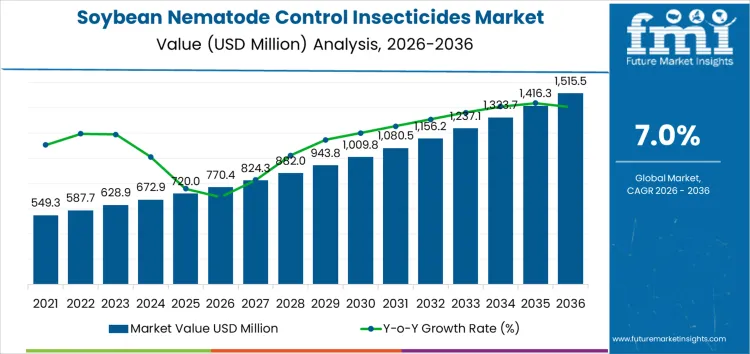
Soybean Nematode Control Insecticides Market Key Takeaways
| Metric | Value |
|---|---|
| Industry Value (2026) | USD 770.4 Million |
| Forecast Value (2036) | USD 1,515.5 Million |
| Forecast CAGR 2026 to 2036 | 7% |
How Is the Global Soybean Nematode Control Insecticides Market Advancing?
The global soybean nematode control insecticides market is witnessing steady growth, driven by the increasing prevalence of nematode infestations in soybean crops and the growing demand for effective pest management solutions. Nematodes, microscopic worms that attack plant roots, pose a significant threat to soybean crops, resulting in reduced yields and quality. As global soybean production continues to rise, particularly in regions such as North America, South America, and Asia, the demand for effective nematode control solutions, including insecticides, is growing rapidly.
A key driver of market growth is the need for sustainable and cost-effective solutions to protect soybean crops from nematode damage. Nematodes can cause significant losses to crops by disrupting root systems and reducing nutrient absorption, leading to poor crop growth and lower yields. Soybean farmers are increasingly turning to nematode control insecticides to mitigate these risks, as these products help reduce nematode populations and prevent further damage to the crops. Additionally, the growing awareness of the economic impact of nematodes on soybean farming is encouraging farmers to adopt more effective pest control measures.
Technological advancements in insecticide formulations and the development of targeted solutions for nematode control are also contributing to the market’s expansion. New insecticides are being designed with improved efficacy and environmental safety, addressing concerns over the use of chemical treatments in agriculture. As the demand for higher crop yields and improved pest management strategies continues to rise, the soybean nematode control insecticides market is expected to grow steadily, supporting the global agricultural industry in its efforts to ensure food security and sustainable crop production.
What Is the Segment-Wise Analysis for the Soybean Nematode Control Insecticides Market?
The soybean nematode control insecticides market is segmented by product type and application method. Chemical nematicides lead the product type segment with a 46% share, followed by biological insecticides or nematicides, seed-applied insecticide treatments, integrated combination products, and other types. Chemical nematicides are widely used for controlling nematode infestations in soybeans due to their broad-spectrum efficacy. In terms of application method, seed treatment accounts for 44% of the market, followed by soil application, in-furrow application, and foliar (indirect or IPM). The growing focus on integrated pest management (IPM) and sustainable agriculture is influencing the adoption of various nematode control methods.
Why Do Chemical Nematicides Lead the Soybean Nematode Control Insecticides Market?
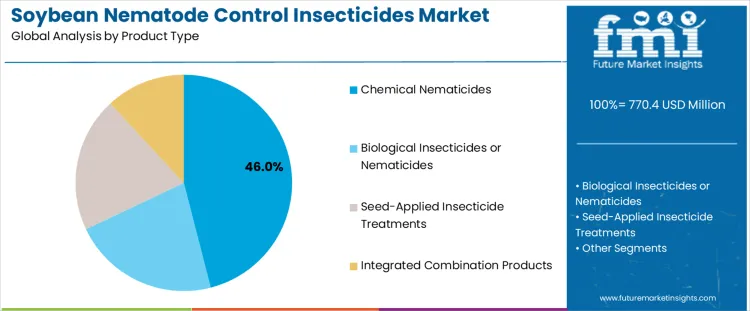
Chemical nematicides lead the soybean nematode control insecticides market with a 46% share due to their broad-spectrum efficacy in controlling nematodes, which are among the most damaging pests to soybean crops. Chemical nematicides offer quick and effective control, reducing yield losses caused by nematode infestations. They are widely adopted because of their ability to target a variety of nematode species and their relatively lower cost compared to biological alternatives. Despite growing interest in sustainable farming, chemical nematicides remain a dominant solution in nematode control, particularly in large-scale soybean farming, where immediate pest control is essential for maximizing yields.
How Does the Seed Treatment Application Method Contribute to the Soybean Nematode Control Insecticides Market?
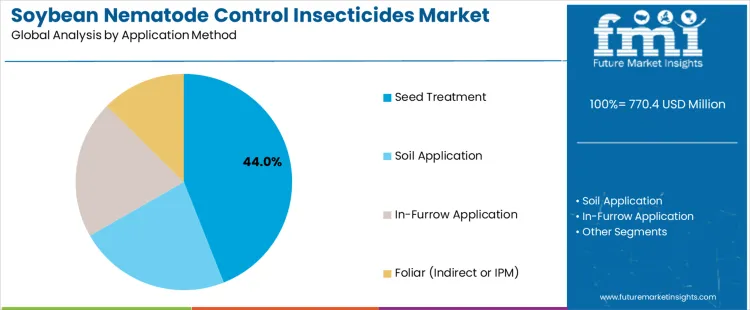
The seed treatment application method accounts for 44% of the application method segment in the soybean nematode control insecticides market. Seed treatments involve applying insecticides or nematicides directly to seeds before planting, providing early protection against nematode infestations and other soil-borne pests. This method ensures that nematode control begins from the moment the seed is planted, enhancing crop establishment and improving overall yield potential. Seed treatments are highly effective in soybean crops, offering a targeted and eco-friendly way to control nematodes without affecting the entire soil ecosystem. As the demand for more sustainable and precise pest management practices rises, seed treatment remains a key method for nematode control.
What Are the Key Dynamics for the Soybean Nematode Control Insecticides Market?
The soybean nematode control insecticides market is driven by the growing need to protect soybean crops from nematode infestations, which can cause significant yield losses. Nematodes are microscopic worms that attack the roots of soybean plants, leading to stunted growth, reduced nutrient uptake, and ultimately lower crop productivity. Insecticides formulated specifically for nematode control are essential in managing this pest. The increasing global demand for soybeans as a food, animal feed, and biofuel source is fueling the need for effective pest management strategies, including the use of nematode control insecticides.
Why Is the Soybean Nematode Control Insecticides Market Growing?
The market for soybean nematode control insecticides is growing due to the rising global demand for soybeans, coupled with the increasing prevalence of nematode infestations that threaten crop yields. Nematodes are one of the most damaging pests for soybean production, particularly in regions with intensive farming. As farmers seek to ensure high-quality and high-yield soybean crops, the adoption of specialized nematode control insecticides is growing. Advancements in insecticide formulations that target specific nematode species, improving efficacy and reducing environmental impact, are driving market growth in both developed and developing countries.
How Are the Key Drivers Shaping the Soybean Nematode Control Insecticides Market?
Key drivers for the soybean nematode control insecticides market include the increasing frequency of nematode infestations due to factors like climate change and monoculture farming practices. As farmers face the threat of crop losses, there is a growing demand for effective pest control solutions. The development of more targeted and environmentally friendly nematode control insecticides is shaping the market by providing better solutions with fewer side effects on non-target organisms. Government incentives and agricultural programs promoting higher yields and pest management solutions are supporting the adoption of nematode control insecticides in soybean farming.
What is the Growth Outlook for the Soybean Nematode Control Insecticides Market by Country?
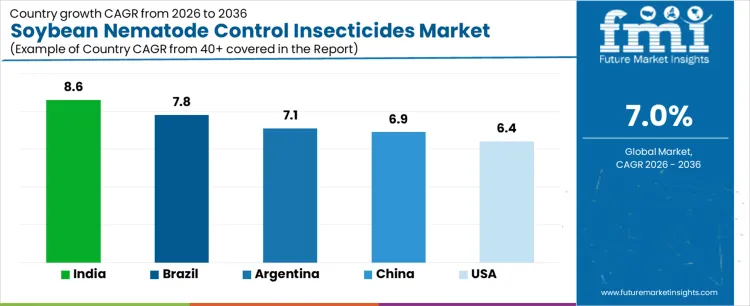
| Country | CAGR (2026 to 2036) |
|---|---|
| India | 8.6% |
| Brazil | 7.8% |
| Argentina | 7.1% |
| China | 6.9% |
| USA | 6.4% |
The soybean nematode control insecticides market is expanding globally, with India leading at 8.6%, driven by the increasing adoption of pest management solutions in the country’s growing soybean production sector. Brazil follows at 7.8%, fueled by its position as a global soybean producer and the need for effective pest control. Argentina’s market grows at 7.1%, supported by its focus on sustainable agricultural practices and pest management. China expands at 6.9%, driven by its growing demand for soybeans and the need to tackle nematode infestations. The United States grows at 6.4%, supported by its large-scale soybean farming industry and the need for effective pest management.
What is Driving the Growth of the Soybean Nematode Control Insecticides Market in India?
India’s soybean nematode control insecticides market is growing at 8.6%, driven by the increasing demand for higher crop yields and the growing prevalence of soybean nematode infestations, which can significantly impact crop quality and quantity. Soybean is a major crop in India, and farmers are increasingly adopting nematode control insecticides to protect their crops and improve productivity. With the rise in agricultural exports and the push for sustainable farming practices, India is adopting more advanced pest management solutions. The government’s focus on enhancing agricultural productivity and addressing pest challenges further accelerates the use of nematode control insecticides, making this market a critical segment of the country’s agricultural industry.
How is the Soybean Nematode Control Insecticides Market Expanding in Brazil?
Brazil’s soybean nematode control insecticides market is growing at 7.8%, fueled by the country’s role as one of the world’s largest producers and exporters of soybeans. Soybean nematodes pose a significant threat to crop yield and quality, making pest control a priority for Brazilian farmers. The increasing adoption of chemical and biological nematode control insecticides, along with the push for sustainable agriculture, is driving market growth. As Brazil continues to expand its soybean production to meet global demand, managing pest outbreaks effectively becomes crucial for maintaining high yields. The country's agricultural policies and support for modern pest management technologies further contribute to the market’s expansion.
How is the Soybean Nematode Control Insecticides Market Expanding in Argentina?
Argentina’s soybean nematode control insecticides market is growing at 7.1%, supported by the country’s significant soybean production and its need to combat nematode infestations that can damage crops. Soybean is a vital crop in Argentina, and the agricultural sector is investing in effective pest management solutions, including nematode control insecticides, to ensure optimal crop health and yield. The country’s agricultural practices are evolving, with a stronger focus on integrated pest management (IPM) techniques that combine chemical and biological control methods. As Argentina continues to focus on maximizing agricultural output while maintaining sustainability, the demand for nematode control insecticides is expected to grow, contributing to the overall expansion of the market.
What is Driving the Growth of the Soybean Nematode Control Insecticides Market in China?
China’s soybean nematode control insecticides market is growing at 6.9%, driven by the increasing demand for soybean as a key agricultural product and the need to manage pest outbreaks effectively. Nematodes are a significant threat to soybean crops, and China’s growing focus on improving crop yield and quality is driving the demand for pest control solutions. With advancements in biotechnology and the adoption of integrated pest management (IPM) strategies, China’s agricultural sector is increasingly relying on effective nematode control insecticides. Government policies aimed at improving agricultural productivity and reducing pesticide use are further accelerating the adoption of more sustainable pest management solutions, supporting market growth.
How is the Soybean Nematode Control Insecticides Market Expanding in the United States?
The soybean nematode control insecticides market in the United States is growing at 6.4%, driven by the country’s large-scale soybean production and the need to protect crops from nematode damage. Soybean nematodes are a major pest in USA agriculture, and effective pest management is crucial to maintaining high crop yields. As USA farmers seek to reduce crop losses and optimize production, the adoption of nematode control insecticides has become increasingly common. The growing emphasis on sustainability and integrated pest management (IPM) techniques is further driving the market. Advancements in research and development of more efficient, eco-friendly pest control solutions are expected to contribute to the continued growth of the market.
How Are Companies Competing in the Soybean Nematode Control Insecticides Market?
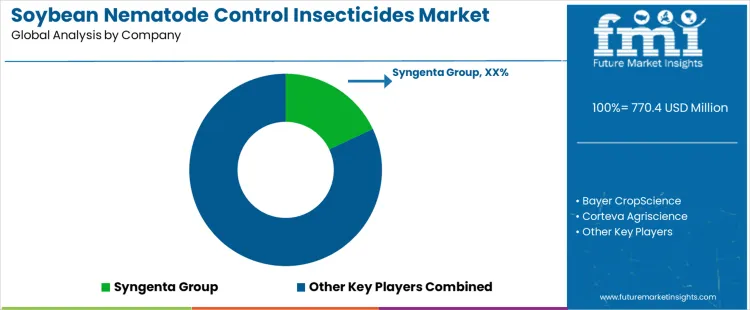
Competition in the Soybean Nematode Control Insecticides Market is driven by efficacy against key nematode species, crop safety, formulation innovation, regulatory alignment, and integrated pest management (IPM) support. Syngenta Group positions its offerings with broad spectrum nematicidal activity and advanced formulation platforms that improve soil distribution and uptake. Product materials emphasize consistent field performance data and application guidance that help growers integrate nematode control with overall soybean protection plans.
Bayer CropScience competes with trait enhanced and chemistry paired solutions designed to manage both root knot and cyst nematodes. Its brochures highlight efficacy across environments and compatibility with other crop protection inputs, backed by regulatory compliance support that helps producers meet requirements in diverse markets. Corteva Agriscience differentiates through innovative nematicidal chemistries and seed treatment systems that aim to deliver early season protection and improved stand establishment; its documentation focuses on yield preservation metrics and application best practices.
BASF SE brings next generation nematicide formulations that balance potency and crop tolerance, marketed with data on residual activity and reduced phytotoxicity. UPL Limited and others compete by offering regional and cost effective nematode control products, with collateral stressing local pest pressure responses, label clarity, and easy integration into soybean crop programs.
Key Players in Soybean Nematode Control Insecticides Market
- Syngenta Group
- Bayer CropScience
- Corteva Agriscience
- BASF SE
- UPL Limited
- Others
Scope of Report
| Attributes | Description |
|---|---|
| Quantitative Unit (2026) | USD Million |
| Product Type | Chemical Nematicides, Biological Insecticides or Nematicides, Seed-Applied Insecticide Treatments, Integrated Combination Products |
| Application Method | Seed Treatment, Soil Application, In-Furrow Application, Foliar (Indirect or IPM) |
| Regions Covered | Asia Pacific, Europe, North America, Latin America, Middle East & Africa |
| Countries Covered | China, Japan, South Korea, India, Australia & New Zealand, ASEAN, Germany, United Kingdom, France, Italy, Spain, Nordic, BENELUX, United States, Canada, Mexico, Brazil, Chile, Turkey, South Africa, Other GCC Countries |
| Key Companies Profiled | Syngenta Group, Bayer CropScience, Corteva Agriscience, BASF SE, UPL Limited, Others |
| Additional Attributes | Dollar sales by product type, application method, and region; regional CAGR and growth outlook for the soybean nematode control insecticides market. |
Soybean Nematode Control Insecticides Market by Key Segments
Product Type
- Chemical Nematicides
- Biological Insecticides or Nematicides
- Seed-Applied Insecticide Treatments
- Integrated Combination Products
Application Method
- Seed Treatment
- Soil Application
- In-Furrow Application
- Foliar (Indirect or IPM)
Region
- Asia Pacific
- China
- Japan
- South Korea
- India
- Australia & New Zealand
- ASEAN
- Rest of Asia Pacific
- Europe
- Germany
- United Kingdom
- France
- Italy
- Spain
- Nordic
- BENELUX
- Rest of Europe
- North America
- United States
- Canada
- Mexico
- Latin America
- Brazil
- Chile
- Rest of Latin America
- Middle East & Africa
- Kingdom of Saudi Arabia
- Other GCC Countries
- Turkey
- South Africa
- Other African Union
- Rest of Middle East & Africa
Bibliography
- Food and Agriculture Organization of the United Nations (FAO). (2024). Integrated nematode management in soybean production systems. FAO Plant Production and Protection Division.
- United States Department of Agriculture (USDA). (2024). Soybean cyst nematode management and chemical control strategies. USDA Agricultural Research Service.
- European Food Safety Authority (EFSA). (2024). Risk assessment of nematicides and application methods in legume crops. EFSA Journal.
- International Plant Protection Convention (IPPC). (2024). Phytosanitary approaches to nematode management in soybean and legume crops. FAO on behalf of the IPPC Secretariat.
- Organisation for Economic Co‑operation and Development (OECD). (2024). Pesticide use, nematode control, and integrated pest management in field crops. OECD Environment, Health and Safety Programme.
Frequently Asked Questions
How big is the soybean nematode control insecticides market in 2026?
The global soybean nematode control insecticides market is estimated to be valued at USD 770.4 million in 2026.
What will be the size of soybean nematode control insecticides market in 2036?
The market size for the soybean nematode control insecticides market is projected to reach USD 1,515.5 million by 2036.
How much will be the soybean nematode control insecticides market growth between 2026 and 2036?
The soybean nematode control insecticides market is expected to grow at a 7.0% CAGR between 2026 and 2036.
What are the key product types in the soybean nematode control insecticides market?
The key product types in soybean nematode control insecticides market are chemical nematicides, biological insecticides or nematicides, seed-applied insecticide treatments and integrated combination products.
Which application method segment to contribute significant share in the soybean nematode control insecticides market in 2026?
In terms of application method, seed treatment segment to command 44.0% share in the soybean nematode control insecticides market in 2026.
Preview the report firsthand - request a free sample
Get SampleGet the brochure for pricing and purchase details.
Get PDFTable of Content
- Executive Summary
- Global Market Outlook
- Demand-side Trends
- Supply-side Trends
- Technology Roadmap Analysis
- Analysis and Recommendations
- Market Overview
- Market Coverage / Taxonomy
- Market Definition / Scope / Limitations
- Market Background
- Market Dynamics
- Drivers
- Restraints
- Opportunity
- Trends
- Scenario Forecast
- Demand in Optimistic Scenario
- Demand in Likely Scenario
- Demand in Conservative Scenario
- Opportunity Map Analysis
- Product Life Cycle Analysis
- Supply Chain Analysis
- Investment Feasibility Matrix
- Value Chain Analysis
- PESTLE and Porter’s Analysis
- Regulatory Landscape
- Regional Parent Market Outlook
- Production and Consumption Statistics
- Import and Export Statistics
- Market Dynamics
- Global Market Analysis 2021 to 2025 and Forecast, 2026 to 2036
- Historical Market Size Value (USD Million) Analysis, 2021 to 2025
- Current and Future Market Size Value (USD Million) Projections, 2026 to 2036
- Y-o-Y Growth Trend Analysis
- Absolute $ Opportunity Analysis
- Global Market Pricing Analysis 2021 to 2025 and Forecast 2026 to 2036
- Global Market Analysis 2021 to 2025 and Forecast 2026 to 2036, By Product Type
- Introduction / Key Findings
- Historical Market Size Value (USD Million) Analysis By Product Type , 2021 to 2025
- Current and Future Market Size Value (USD Million) Analysis and Forecast By Product Type , 2026 to 2036
- Chemical Nematicides
- Biological Insecticides or Nematicides
- Seed-Applied Insecticide Treatments
- Integrated Combination Products
- Chemical Nematicides
- Y-o-Y Growth Trend Analysis By Product Type , 2021 to 2025
- Absolute $ Opportunity Analysis By Product Type , 2026 to 2036
- Global Market Analysis 2021 to 2025 and Forecast 2026 to 2036, By Application Method
- Introduction / Key Findings
- Historical Market Size Value (USD Million) Analysis By Application Method, 2021 to 2025
- Current and Future Market Size Value (USD Million) Analysis and Forecast By Application Method, 2026 to 2036
- Seed Treatment
- Soil Application
- In-Furrow Application
- Foliar (Indirect or IPM)
- Seed Treatment
- Y-o-Y Growth Trend Analysis By Application Method, 2021 to 2025
- Absolute $ Opportunity Analysis By Application Method, 2026 to 2036
- Global Market Analysis 2021 to 2025 and Forecast 2026 to 2036, By Region
- Introduction
- Historical Market Size Value (USD Million) Analysis By Region, 2021 to 2025
- Current Market Size Value (USD Million) Analysis and Forecast By Region, 2026 to 2036
- North America
- Latin America
- Western Europe
- Eastern Europe
- East Asia
- South Asia and Pacific
- Middle East & Africa
- Market Attractiveness Analysis By Region
- North America Market Analysis 2021 to 2025 and Forecast 2026 to 2036, By Country
- Historical Market Size Value (USD Million) Trend Analysis By Market Taxonomy, 2021 to 2025
- Market Size Value (USD Million) Forecast By Market Taxonomy, 2026 to 2036
- By Country
- USA
- Canada
- Mexico
- By Product Type
- By Application Method
- By Country
- Market Attractiveness Analysis
- By Country
- By Product Type
- By Application Method
- Key Takeaways
- Latin America Market Analysis 2021 to 2025 and Forecast 2026 to 2036, By Country
- Historical Market Size Value (USD Million) Trend Analysis By Market Taxonomy, 2021 to 2025
- Market Size Value (USD Million) Forecast By Market Taxonomy, 2026 to 2036
- By Country
- Brazil
- Chile
- Rest of Latin America
- By Product Type
- By Application Method
- By Country
- Market Attractiveness Analysis
- By Country
- By Product Type
- By Application Method
- Key Takeaways
- Western Europe Market Analysis 2021 to 2025 and Forecast 2026 to 2036, By Country
- Historical Market Size Value (USD Million) Trend Analysis By Market Taxonomy, 2021 to 2025
- Market Size Value (USD Million) Forecast By Market Taxonomy, 2026 to 2036
- By Country
- Germany
- UK
- Italy
- Spain
- France
- Nordic
- BENELUX
- Rest of Western Europe
- By Product Type
- By Application Method
- By Country
- Market Attractiveness Analysis
- By Country
- By Product Type
- By Application Method
- Key Takeaways
- Eastern Europe Market Analysis 2021 to 2025 and Forecast 2026 to 2036, By Country
- Historical Market Size Value (USD Million) Trend Analysis By Market Taxonomy, 2021 to 2025
- Market Size Value (USD Million) Forecast By Market Taxonomy, 2026 to 2036
- By Country
- Russia
- Poland
- Hungary
- Balkan & Baltic
- Rest of Eastern Europe
- By Product Type
- By Application Method
- By Country
- Market Attractiveness Analysis
- By Country
- By Product Type
- By Application Method
- Key Takeaways
- East Asia Market Analysis 2021 to 2025 and Forecast 2026 to 2036, By Country
- Historical Market Size Value (USD Million) Trend Analysis By Market Taxonomy, 2021 to 2025
- Market Size Value (USD Million) Forecast By Market Taxonomy, 2026 to 2036
- By Country
- China
- Japan
- South Korea
- By Product Type
- By Application Method
- By Country
- Market Attractiveness Analysis
- By Country
- By Product Type
- By Application Method
- Key Takeaways
- South Asia and Pacific Market Analysis 2021 to 2025 and Forecast 2026 to 2036, By Country
- Historical Market Size Value (USD Million) Trend Analysis By Market Taxonomy, 2021 to 2025
- Market Size Value (USD Million) Forecast By Market Taxonomy, 2026 to 2036
- By Country
- India
- ASEAN
- Australia & New Zealand
- Rest of South Asia and Pacific
- By Product Type
- By Application Method
- By Country
- Market Attractiveness Analysis
- By Country
- By Product Type
- By Application Method
- Key Takeaways
- Middle East & Africa Market Analysis 2021 to 2025 and Forecast 2026 to 2036, By Country
- Historical Market Size Value (USD Million) Trend Analysis By Market Taxonomy, 2021 to 2025
- Market Size Value (USD Million) Forecast By Market Taxonomy, 2026 to 2036
- By Country
- Kingdom of Saudi Arabia
- Other GCC Countries
- Turkiye
- South Africa
- Other African Union
- Rest of Middle East & Africa
- By Product Type
- By Application Method
- By Country
- Market Attractiveness Analysis
- By Country
- By Product Type
- By Application Method
- Key Takeaways
- Key Countries Market Analysis
- USA
- Pricing Analysis
- Market Share Analysis, 2025
- By Product Type
- By Application Method
- Canada
- Pricing Analysis
- Market Share Analysis, 2025
- By Product Type
- By Application Method
- Mexico
- Pricing Analysis
- Market Share Analysis, 2025
- By Product Type
- By Application Method
- Brazil
- Pricing Analysis
- Market Share Analysis, 2025
- By Product Type
- By Application Method
- Chile
- Pricing Analysis
- Market Share Analysis, 2025
- By Product Type
- By Application Method
- Germany
- Pricing Analysis
- Market Share Analysis, 2025
- By Product Type
- By Application Method
- UK
- Pricing Analysis
- Market Share Analysis, 2025
- By Product Type
- By Application Method
- Italy
- Pricing Analysis
- Market Share Analysis, 2025
- By Product Type
- By Application Method
- Spain
- Pricing Analysis
- Market Share Analysis, 2025
- By Product Type
- By Application Method
- France
- Pricing Analysis
- Market Share Analysis, 2025
- By Product Type
- By Application Method
- India
- Pricing Analysis
- Market Share Analysis, 2025
- By Product Type
- By Application Method
- ASEAN
- Pricing Analysis
- Market Share Analysis, 2025
- By Product Type
- By Application Method
- Australia & New Zealand
- Pricing Analysis
- Market Share Analysis, 2025
- By Product Type
- By Application Method
- China
- Pricing Analysis
- Market Share Analysis, 2025
- By Product Type
- By Application Method
- Japan
- Pricing Analysis
- Market Share Analysis, 2025
- By Product Type
- By Application Method
- South Korea
- Pricing Analysis
- Market Share Analysis, 2025
- By Product Type
- By Application Method
- Russia
- Pricing Analysis
- Market Share Analysis, 2025
- By Product Type
- By Application Method
- Poland
- Pricing Analysis
- Market Share Analysis, 2025
- By Product Type
- By Application Method
- Hungary
- Pricing Analysis
- Market Share Analysis, 2025
- By Product Type
- By Application Method
- Kingdom of Saudi Arabia
- Pricing Analysis
- Market Share Analysis, 2025
- By Product Type
- By Application Method
- Turkiye
- Pricing Analysis
- Market Share Analysis, 2025
- By Product Type
- By Application Method
- South Africa
- Pricing Analysis
- Market Share Analysis, 2025
- By Product Type
- By Application Method
- USA
- Market Structure Analysis
- Competition Dashboard
- Competition Benchmarking
- Market Share Analysis of Top Players
- By Regional
- By Product Type
- By Application Method
- Competition Analysis
- Competition Deep Dive
- Syngenta Group
- Overview
- Product Portfolio
- Profitability by Market Segments (Product/Age /Sales Channel/Region)
- Sales Footprint
- Strategy Overview
- Marketing Strategy
- Product Strategy
- Channel Strategy
- Bayer CropScience
- Corteva Agriscience
- BASF SE
- UPL Limited
- Others
- Syngenta Group
- Competition Deep Dive
- Assumptions & Acronyms Used
- Research Methodology


