

- Market Size (2026)
- USD 5.00 Bn
- Forecast (2036)
- USD 6.74 Bn
- CAGR (2026 to 2036)
- 14.5%
System on Module Market Size, Market Forecast and Outlook By FMI
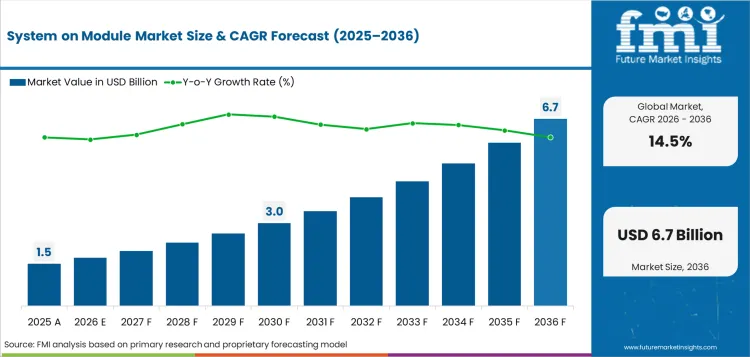
The system on module market was valued at USD 1.5 billion in 2025. The market is set to reach USD 1.7 billion by 2026-end and grow at a CAGR of 14.5% between 2026-2036 to reach USD 6.7 billion by 2036. ARM Architecture will dominate with a 48.7% share, while Industrial Automation will lead with a 32.9% share.
Summary of the System on Module Market
- Demand and Growth Drivers
- Accelerating deployment of edge computing infrastructure across manufacturing, logistics, and smart city projects is supporting demand for compact, processor integrated modules.
- Growing adoption of industrial IoT platforms is shifting procurement toward standardized compute modules that reduce development timelines for embedded system designers.
- Miniaturization of processing architectures and power management components is expanding the range of form factors available for high performance embedded applications.
- Product and Segment View
- ARM Architecture is expected to hold 48.7% of the Product segment in 2026, supported by broad based commercial demand and established supply chain infrastructure.
- Industrial Sector is expected to account for 36.7% of the End User segment, reflecting concentrated procurement from core end use categories.
- COMExpress holds 41.6% share in the Standard segment, driven by functional and logistical advantages in commercial distribution.
- Geography and Competitive Outlook
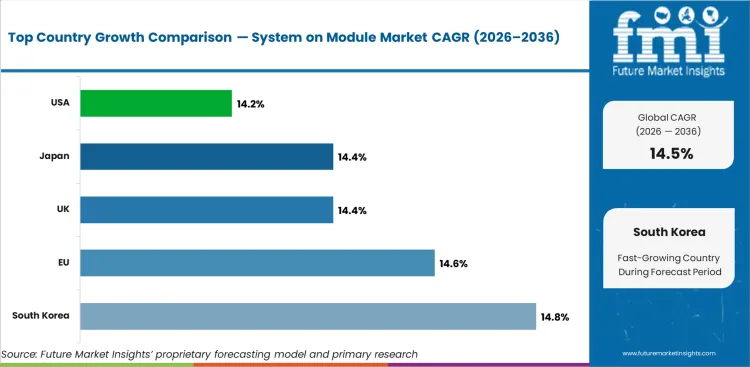
- South Korea is expected to lead global growth at 14.8% CAGR through 2036, supported by scale of domestic production and rising quality standards in the sector.
- EU at 14.6% reflects sustained procurement activity and regulatory conditions that favor adoption of compliant product formulations.
- Companies that combine production scale, regulatory compliance, and multi regional distribution capabilities are likely to consolidate market position over the forecast period.
- Analyst Opinion
- Nikhil Kaitwade, Principal Consultant at FMI says, 'The shift toward edge computing and industrial IoT is compressing product development cycles for embedded system designers. Module suppliers that can deliver pre validated, standards compliant compute platforms with long term component availability guarantees will capture the largest share of design wins across automotive, industrial, and smart infrastructure verticals.'
- The system on module market is transitioning from fragmented procurement patterns toward more structured supply chain relationships between producers and end users.
- Adoption is increasing due to convergence of regulatory compliance requirements and commercial performance benchmarks that favor established product categories.
- Demand is further supported by the need for cost effective, quality assured solutions that meet evolving industry standards across North America, Europe, and East Asia.
Key Takeaways, Market Size, and Forecast
- The system on module market was valued at USD 1.53 billion in 2025.
- By 2036, the System on Module Market is expected to be worth USD 6.74 billion.
- From 2026 to 2036, the market is projected to expand at a CAGR of 14.5%.
- The market is projected to create an incremental opportunity of USD 5.00 billion between 2026 and 2036.
- In 2026, ARM Architecture is expected to account for 48.7% of the Product, driven by scalability advantages in embedded computing and edge deployment applications.
- South Korea (14.8%) and EU (14.6%) are two of the fastest growing markets in the world.
System on Module Market Definition
The system on module market includes compact, integrated computing modules that combine processor, memory, storage, and connectivity components on a single board designed for embedded system applications. These modules follow standardized form factors and are used by system designers to reduce development time and cost in industrial automation, medical devices, telecommunications, and defense applications.
System on Module Market Inclusions
Market scope covers all commercially traded system on module products categorized by Product, Application, Standard, Processor Type, End User, Form Factor. Revenue sizing spans the 2026 to 2036 forecast period and includes modules based on ARM, x86, and other processor architectures sold through direct and distribution channels.
System on Module Market Exclusions
The scope does not include single board computers designed for consumer hobbyist applications, complete embedded systems sold as finished products, or custom ASIC designs that do not conform to standard module form factors.
System on Module Market Research Methodology
- Primary Research: FMI analysts conducted interviews with manufacturers, industry specialists, and supply chain participants across key markets.
- Desk Research: Combined industry databases, regulatory filings, trade association publications, and manufacturer disclosures.
- Market Sizing and Forecasting: Bottom up aggregation across product segments, applications, and regional markets with adoption curve modeling.
- Data Validation: Cross checked quarterly against production statistics, trade data, and manufacturer reported figures.
Why is the System on Module Market Growing?
- The deployment of Industrial IoT is fueling ongoing demand for standardized compute modules that can slash embedded system development cycles for equipment makers and system integrators from months to weeks.
- Demand for high performance modules with integrated AI acceleration capabilities is driven by Edge Computing requirements across manufacturing, logistics and smart infrastructure.
- South Korea is the largest growth market at 14.8% CAGR, driven by a highly concentrated electronics manufacturing base and government investments in smart factory and autonomous systems infrastructure.
The system on module market is growing as embedded system designers in industrial, medical and telecommunications industries are adopting modular computing architectures to shorten time to market and total development costs. ARM architecture modules account for 48.7% of the product segment, reflecting the increasing demand for power efficient, thermally manageable processing platforms for edge and IoT applications. Multi core processors had the largest market share based on processor type segment of 53.8% owing to computational requirements of real time data processing and machine vision applications.
The main deployment categories are factory floor controllers, robotic systems and predictive maintenance platforms. Industrial Automation accounts for 32.9% of application demand. COMExpress still holds the leading position with 41.6%, but newer form factors are catching on in space constrained applications. The industrial sector at 36.7% of end-user demand is complemented by growing adoption in healthcare devices, defense systems and transportation infrastructure.
The technical distinction between standard catalog modules and application specific configurations is reflected in the system pricing on the module market. The long term availability guarantees and pre certified regulatory compliance of modules with wider temperature ranges command premium pricing, especially in medical and defense applications. The semiconductor shortage has caused disruptions and changed procurement criteria, with supply chain reliability (continuity of component sourcing and predictability of lead time) now taking center stage.
Market Segmentation Analysis
- ARM Architecture holds 48.7% of the Product segment, supported by established commercial demand and wide ranging applicability across end use categories.
- Industrial Sector accounts for 36.7% of the End User segment, reflecting concentrated procurement from core industrial and commercial buyers.
- COMExpress at 41.6% of the Standard segment reflects functional and logistical preferences in commercial distribution and end use handling.
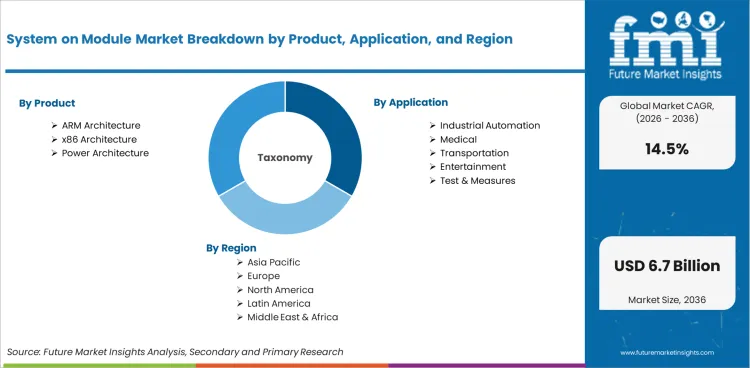
The system on module market is segmented by Product, Application, Standard, Processor Type, End User, Form Factor. ARM Architecture maintains the largest share within the Product classification, reflecting long established procurement patterns and broad commercial applicability.
Insights into the ARM Architecture Product
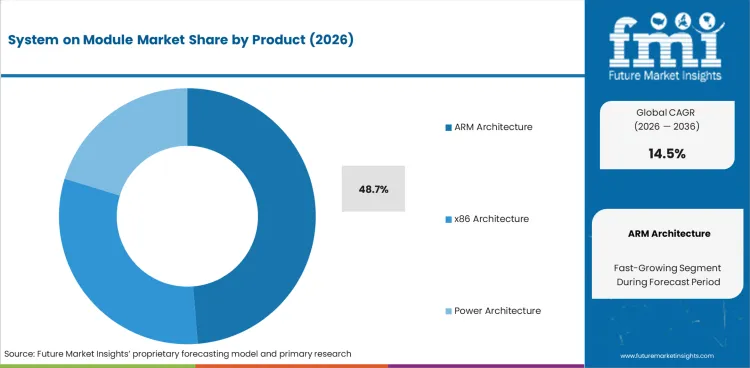
In 2026, ARM Architecture is expected to account for 48.7% of the Product segment. Sustained commercial demand from established end use categories drives this, where arm architecture has proven consistent performance and cost effectiveness. Technical specifications, application requirements, and pricing tiers differentiate sub segments within this category, catering to both commodity and premium market positions. Procurement patterns show that buyers prioritize supply reliability, regulatory compliance, and consistent product quality when choosing within this segment. Companies with vertically integrated production capabilities and established quality certification maintain stronger competitive positions in institutional and contract based sales channels.
Insights into the Industrial Sector End User
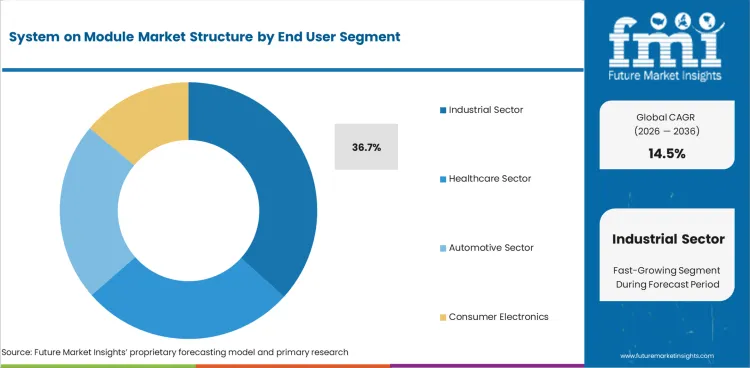
The Industrial Sector accounts for 36.7% of the End User segment, and is the largest end use category by revenue. Growth in this segment is driven by expanding addressable markets and increasing adoption of standardized products that address evolving industry requirements. Commercial buyers in this segment consider total cost of ownership, performance consistency and availability of technical support when making purchasing decisions. The trend toward longer term supply agreements and preferred vendor relationships is concentrating spend among manufacturers that have proven scale and reliability.
System on Module Market Drivers, Restraints, and Opportunities
- Quality standards and compliance certification requirements in regulatory frameworks are creating a structured demand for products meeting changing industry specifications.
- Manufacturers in commodity grade product tiers are at risk of margin compression from the volatility of input costs and supply chain concentration.
- The expansion of end use applications into adjacent industries and emerging regional markets is generating incremental growth opportunities for companies with diversified product portfolios.
The system on module market is driven by a mix of regulatory mandates, changing end use needs and competitive dynamics that are different across product categories and geographic markets. Growth opportunities exist in segments where regulatory changes are driving new compliance requirements, and in regions where investment in infrastructure is expanding the addressable market base.
Regulatory Compliance and Quality Standardization
Demand is also affected by shifting regulatory regimes, which require products to meet safety, performance and environmental regulations. The regulatory tightening taking place across North America, Europe and East Asia is increasing the addressable market for certified products and erecting barriers for non compliant manufacturers. Companies with existing regulatory affairs capabilities and pre-certified product portfolios will experience shorter sales cycles and preferred vendor status.
Input Cost and Supply Chain Pressure
Volatility of raw material prices and concentration of supply in key input categories limit growth. Manufacturers with limited vertical integration are facing margin pressure when the cost of inputs rises faster than the pricing of the end product can be adjusted. Key raw material supply chains are geographically concentrated, which increases logistics costs and availability risk, particularly during periods of trade disruption or transportation constraints.
Application Expansion and Market Diversification
Adoption is increasing as core product applications expand into adjacent end use categories and new geographic markets. Organizations that have invested in application engineering and market development capabilities are capturing incremental revenue from segments that were historically underserved by standard product offerings. This diversification reduces revenue concentration risk and provides multiple growth vectors over the forecast period.
Technology and Formulation Advancement
Growth is the result of continuous investment in product development, process optimization, and manufacturing technology that improves performance, reduces cost, and enables new application configurations. Companies that maintain active R&D programs and convert technical capabilities into commercial product advantages are positioned to win premium pricing and preferred supplier status in technically demanding end use categories.
Analysis of System on Module Market By Key Countries
.webp "Top Country Growth Comparison System On Module Market Cagr (2026 2036)")
| Country | CAGR |
|---|---|
| USA | 14.2% |
| UK | 14.4% |
| EU | 14.6% |
| Japan | 14.4% |
| South Korea | 14.8% |
- South Korea will be the fastest growing market at a CAGR of 14.8% through 2036, owing to the size of its domestic production base and policy frameworks that support product adoption.
- EU at 14.6% indicates continuing demand on account of regulatory compliance requirements and established commercial procurement routes.
- USA (14.2%) - steady demand from established end use industries & continued investment in quality standards compliance.
The global system on module market is projected to grow at 14.5% CAGR from 2026 to 2036. The analysis covers more than 30 countries, with the following markets representing the primary demand centers.
Demand Outlook for System on Module Market in the United States
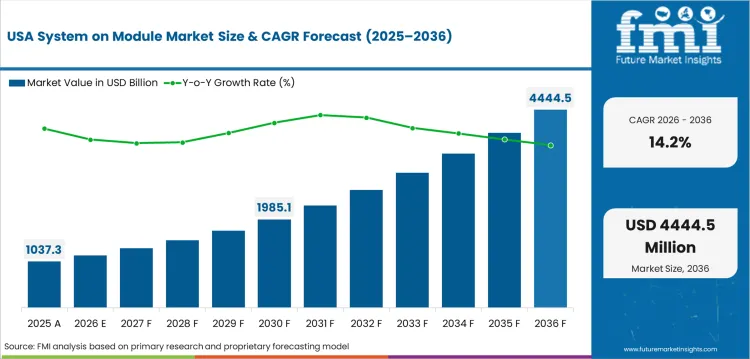
The United States is expected to grow at 14.2% CAGR through 2036. Concentrated defense electronics procurement, expanding edge computing deployment in industrial and logistics applications, and the depth of the embedded system design ecosystem sustain high volume module procurement from both domestic and international suppliers.
- Defense and aerospace embedded computing programs sustain premium module procurement.
- Edge computing deployment across logistics and manufacturing drives commercial module demand.
- Deep embedded system design ecosystem generates continuous new design win activity.
Future Outlook for System on Module Market in the United Kingdom
The United Kingdom is expected to grow at 14.4% CAGR through 2036. Defense electronics programs, medical device development clusters, and industrial automation investment provide diversified demand for embedded compute modules across multiple application verticals with distinct certification and performance requirements.
- Defense electronics programs drive demand for ruggedized, long lifecycle compute modules.
- Medical device development clusters require certified modules for regulatory compliant designs.
- Industrial automation investment sustains procurement for factory and process control applications.
Opportunity Analysis of System on Module Market in the European Union
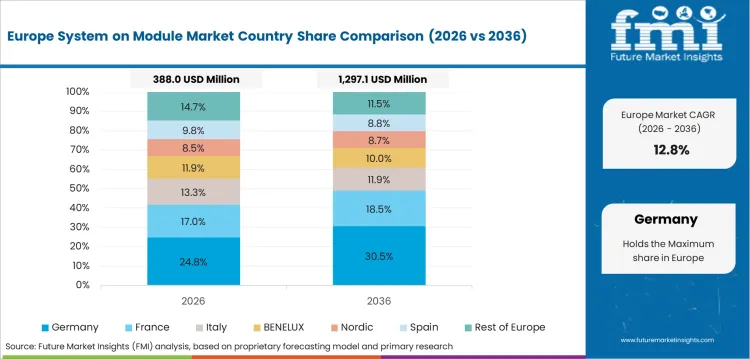
The European Union is expected to grow at a CAGR of 14.6% through 2036. Embedded computing modules are being bought to a broad spectrum of commercial and military specifications from a diverse procurement base that includes EU industrial digitalization initiatives, automotive electronics development based in Germany, and defense electronics modernization initiatives across the member states.
- Design wins in automobile electronics design in Germany lead to high volume module design wins.
- EU Industry 4.0 digitalization programs support purchasing of industrial IoT modules.
- Member state defense electronics modernization drives ruggedized modules demand.
In-depth Analysis of System on Module Market in Japan
Japan is expected to grow at 14.4% CAGR till 2036. Japan’s prominence in robotics manufacturing, innovation in medical electronics and its precision industrial equipment sector create a persistent need for high reliability embedded compute modules with extended temperature ratings and long-term component availability commitments.
- Leadership in robotics and factory automation drives demand for advanced embedded compute modules.
- Medical electronics used in therapeutic and diagnostic devices require certification of modules.
- Precision manufacturing equipment supports procurement of long lifecycle embedded platforms.
Sales Analysis of System on Module Market in South Korea
South Korea is projected to grow at 14.8% CAGR till 2036. Aggressive semiconductor manufacturing know-how, government smart factory initiatives and 5G telecommunications infrastructure rollout is driving strong demand for high performance compute modules in industrial, telecommunications and defense applications.
- Proximity to the semiconductor manufacturing ecosystem facilitates module manufacturing and testing.
- Government smart factory programs drive industrial IoT module deployments.
- 5G infrastructure deployment to propel demand for telecommunications edge computing module.
Competitive Landscape and Strategic Positioning
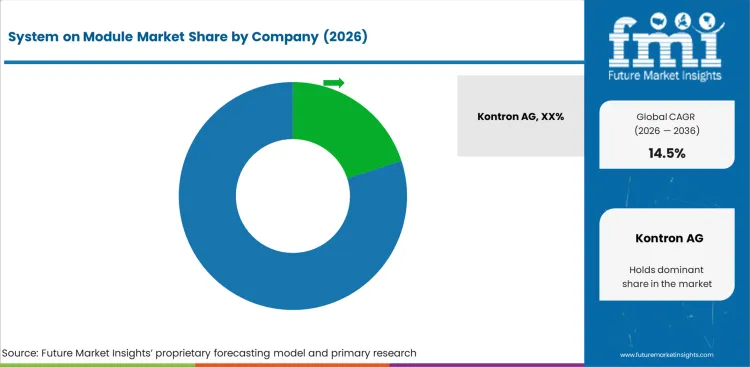
- Kontron AG has the strongest position due to integrated production capabilities, established customer relationships and broad product portfolio coverage
- Advantech Co., Ltd., Congatec AG, Aaeon Technology Inc. compete through regional specialization, application specific product development and targeted distribution strategies.
- Emerging players are targeting niche applications and technology differentiation to gain market presence against established incumbents.
Kontron AG has the best competitive position in terms of production scale, distribution reach and product portfolio breadth. It has existing relationships with large institutional customers and has brand recognition and regulatory compliance infrastructure in place across a number of geographic markets.
Advantech Co., Ltd., Congatec AG, Aaeon Technology Inc. compete on the basis of differentiated product offerings, regional market expertise, and application specific technical support. These companies target niches where specialized capabilities or local market knowledge provide competitive advantages over larger global players.
Entry barriers include regulatory certification requirements, capital intensive production infrastructure, established supply chain relationships and technical expertise to develop competitive product formulations. New entrants usually go after underserved niches or technology differentiated applications where there is limited incumbent presence.
Strategic priorities across the competitive landscape include optimizing production costs, expanding the regulatory portfolio, developing geographic markets and investing in next generation product capabilities to address evolving end use requirements.
Key Companies in the System on Module Market
Key global companies leading the system on module market include:
- Kontron AG, Advantech Co., Ltd., Congatec AG, Aaeon Technology Inc. maintain strong positions through integrated production capabilities, established distribution networks, and broad product portfolio coverage.
- Toradex AG, SolidRun Ltd., Variscite Ltd. compete through regional specialization, application specific expertise, and targeted market development strategies.
- Emcraft Systems, Critical Link, LLC, Other Key Players are establishing market presence through technology differentiation and niche application focus.
Competitive Benchmarking: System on Module Market
| Company | Product Range | Technology Integration | Application Support | Geographic Footprint |
|---|---|---|---|---|
| Kontron AG | High | High | Strong | Global |
| Advantech Co., Ltd. | High | High | Strong | Global |
| Congatec AG | High | High | Strong | Global |
| Aaeon Technology Inc. | Medium | High | Moderate | Global |
| Toradex AG | Medium | Medium | Moderate | Regional |
| SolidRun Ltd. | Medium | Medium | Moderate | Regional |
| Variscite Ltd. | Low | Medium | Low | Regional |
| Emcraft Systems | Low | Medium | Low | Niche |
| Critical Link, LLC | Low | Medium | Low | Niche |
| Other Key Players | Low | Medium | Low | Niche |
Source: Future Market Insights competitive analysis, 2026.
Key Developments in System on Module Market
- In 2025, Kontron AG expanded its embedded and edge AI solutions portfolio through collaboration with Qualcomm Technologies, strengthening applications in industrial automation, smart cities, and transportation sectors.
- In 2025, Advantech Co., Ltd. accelerated its Edge AI strategy by launching new AI-enabled System-on-Module and edge computing platforms while expanding ecosystem partnerships for industrial automation and robotics applications.
Key Players in the System on Module Market
Major Global Players
- Kontron AG
- Advantech Co., Ltd.
- Congatec AG
- Aaeon Technology Inc.
- Toradex AG
- SolidRun Ltd.
- Variscite Ltd.
Emerging Players/Startups
- Emcraft Systems
- Critical Link, LLC
- Other Key Players
Report Scope and Coverage
| Parameter | Details |
|---|---|
| Quantitative Units | USD 1.74 billion to USD 6.74 billion, at a CAGR of 14.5% |
| Market Definition | The system on module market encompasses commercially traded products and solutions categorized by Product, Application, Standard, Processor Type, End User, Form Factor. |
| Regions Covered | North America, Latin America, Europe, East Asia, South Asia and Pacific, Middle East and Africa |
| Countries Covered | USA, UK, EU, Japan, South Korea, 30 plus countries |
| Key Companies Profiled | Kontron AG, Advantech Co., Ltd., Congatec AG, Aaeon Technology Inc., Toradex AG, SolidRun Ltd., Variscite Ltd., Emcraft Systems, Critical Link, LLC, Other Key Players |
| Forecast Period | 2026 to 2036 |
| Approach | Hybrid bottom up and top down methodology starting with verified transaction data, projecting adoption velocity across segments and regions. |
Segmentation
System on Module Market Segmented by Product:
- ARM Architecture
- Cortex-A Series Modules
- Cortex-M Embedded Modules
- x86 Architecture
- Intel-Based SoMs
- AMD Embedded Modules
- Power Architecture
- PowerPC Based Modules
- Embedded Power ISA Modules
System on Module Market Segmented by Application:
- Industrial Automation
- Robotics & Control Systems
- Factory Automation
- Medical
- Diagnostic Equipment
- Patient Monitoring Systems
- Transportation
- In-Vehicle Infotainment
- Telematics Systems
- Entertainment
- Gaming Consoles
- Multimedia Devices
- Test & Measures
- Testing Equipment
- Measurement Devices
System on Module Market Segmented by Standard:
- COMExpress
- COMExpress Basic Modules
- COMExpress Compact Modules
- SMARC
- Low Power SMARC Modules
- IoT Focused SMARC Boards
- Qseven
- Compact Qseven Modules
- Embedded Qseven Solutions
System on Module Market Segmented by Processor Type:
- Multi-Core Processors
- Dual-Core SoMs
- Quad-Core & Octa-Core SoMs
- Single-Core Processors
- Low Power Embedded SoMs
- Basic Control Applications
System on Module Market Segmented by End User:
- Industrial Sector
- Manufacturing Companies
- Automation Solution Providers
- Healthcare Sector
- Medical Device Manufacturers
- Healthcare IT Providers
- Automotive Sector
- OEM Automotive Manufacturers
- Tier-1 Suppliers
- Consumer Electronics
- Device Manufacturers
- Smart Device Producers
System on Module Market Segmented by Form Factor:
- Standard Modules
- COM-Based Modules
- Standardized Embedded Boards
- Compact Modules
- Miniaturized SoMs
- Space-Constrained Applications
- Custom Modules
- Application-Specific Designs
- Customized Embedded Solutions
System on Module Market by Region:
- North America
- USA
- Canada
- Mexico
- Latin America
- Brazil
- Chile
- Rest of Latin America
- Western Europe
- Germany
- UK
- Italy
- Spain
- France
- Nordic
- BENELUX
- Rest of Western Europe
- Eastern Europe
- Russia
- Poland
- Hungary
- Balkan & Baltic
- Rest of Eastern Europe
- East Asia
- China
- Japan
- South Korea
- South Asia and Pacific
- India
- ASEAN
- Australia & New Zealand
- Rest of South Asia and Pacific
- Middle East & Africa
- Kingdom of Saudi Arabia
- Other GCC Countries
- Turkiye
- South Africa
- Other African Union
- Rest of Middle East & Africa
Research Sources and Bibliography
- 1. VITA Standards Organization. (2025). Embedded Computing Standards and Specifications. VITA.
- 2. International Electrotechnical Commission. (2025). IEC Standards for Embedded Computing Modules. IEC.
- 3. Semiconductor Industry Association. (2025). SIA Annual Semiconductor Market Report. SIA.
- 4. European Commission. (2024). EU Chips Act Implementation Report: Embedded Systems. EC.
- 5. USA Department of Commerce. (2025). Bureau of Industry and Security: Semiconductor Export Controls. DOC.
This bibliography is provided for reader reference. The full Future Market Insights report contains the complete reference list with publication dates, URLs, and supporting data for all cited works.
This Report Addresses
- Estimating the size of the market and revenue from 2026 to 2036.
- Segmentation by Product, Application, Standard, Processor Type, End User, Form Factor..
- Insights about more than 30 markets in the region.
- Analysis of technology, manufacturing, and supply chain dynamics.
- Assessment of the competitive landscape.
- Identification of investment opportunities across key segments and geographies.
- Supply chain and distribution channel analysis.
- Delivery of data in PDF and Excel formats.
Frequently Asked Questions
What is the global market demand for System on Module Market in 2026?
In 2026, the global system on module market is expected to be worth USD 1.74 billion.
How big will the System on Module Market be in 2036?
By 2036, the system on module market is expected to reach USD 6.74 billion.
How much is demand for System on Module Market expected to grow between 2026 and 2036?
Between 2026 and 2036, demand is expected to grow at a CAGR of 14.5%.
Which Product is expected to lead in the System on Module Market in 2026?
ARM Architecture is expected to account for 48.7% of the Product segment in 2026, reflecting established commercial demand and broad end use applicability.
What is causing demand to rise in South Korea in the System on Module Market?
South Korea is expected to grow at 14.8% CAGR through 2036, supported by domestic production scale, regulatory frameworks, and expanding end use applications.
What is causing demand to rise in EU in the System on Module Market?
EU is expected to grow at 14.6% CAGR through 2036, driven by established commercial procurement channels and supportive regulatory conditions.
What does this report mean by 'System on Module Market definition'?
The system on module market includes all commercially traded products and solutions categorized by Product, Application, Standard, Processor Type, End User, Form Factor.
How does FMI make the System on Module Market forecast and check it?
Forecasting models use a hybrid bottom up and top down approach, starting with verified transaction data and validating against industry production statistics and manufacturer disclosures.
Preview the report firsthand - request a free sample
Get SampleGet the brochure for pricing and purchase details.
Get PDFTable of Content
- Executive Summary
- Global Market Outlook
- Demand-side Trends
- Supply-side Trends
- Technology Roadmap Analysis
- Analysis and Recommendations
- Market Overview
- Market Coverage / Taxonomy
- Market Definition / Scope / Limitations
- Research Methodology
- Chapter Orientation
- Analytical Lens and Working Hypotheses
- Market Structure, Signals, and Trend Drivers
- Benchmarking and Cross-market Comparability
- Market Sizing, Forecasting, and Opportunity Mapping
- Research Design and Evidence Framework
- Desk Research Programme (Secondary Evidence)
- Company Annual and Sustainability Reports
- Peer-reviewed Journals and Academic Literature
- Corporate Websites, Product Literature, and Technical Notes
- Earnings Decks and Investor Briefings
- Statutory Filings and Regulatory Disclosures
- Technical White Papers and Standards Notes
- Trade Journals, Industry Magazines, and Analyst Briefs
- Conference Proceedings, Webinars, and Seminar Materials
- Government Statistics Portals and Public Data Releases
- Press Releases and Reputable Media Coverage
- Specialist Newsletters and Curated Briefings
- Sector Databases and Reference Repositories
- FMI Internal Proprietary Databases and Historical Market Datasets
- Subscription Datasets and Paid Sources
- Social Channels, Communities, and Digital Listening Inputs
- Additional Desk Sources
- Expert Input and Fieldwork (Primary Evidence)
- Primary Modes
- Qualitative Interviews and Expert Elicitation
- Quantitative Surveys and Structured Data Capture
- Blended Approach
- Why Primary Evidence is Used
- Field Techniques
- Interviews
- Surveys
- Focus Groups
- Observational and In-context Research
- Social and Community Interactions
- Stakeholder Universe Engaged
- C-suite Leaders
- Board Members
- Presidents and Vice Presidents
- R&D and Innovation Heads
- Technical Specialists
- Domain Subject-matter Experts
- Scientists
- Physicians and Other Healthcare Professionals
- Governance, Ethics, and Data Stewardship
- Research Ethics
- Data Integrity and Handling
- Primary Modes
- Tooling, Models, and Reference Databases
- Desk Research Programme (Secondary Evidence)
- Data Engineering and Model Build
- Data Acquisition and Ingestion
- Cleaning, Normalisation, and Verification
- Synthesis, Triangulation, and Analysis
- Quality Assurance and Audit Trail
- Market Background
- Market Dynamics
- Drivers
- Restraints
- Opportunity
- Trends
- Scenario Forecast
- Demand in Optimistic Scenario
- Demand in Likely Scenario
- Demand in Conservative Scenario
- Opportunity Map Analysis
- Product Life Cycle Analysis
- Supply Chain Analysis
- Investment Feasibility Matrix
- Value Chain Analysis
- PESTLE and Porter’s Analysis
- Regulatory Landscape
- Regional Parent Market Outlook
- Production and Consumption Statistics
- Import and Export Statistics
- Market Dynamics
- Global Market Analysis 2021 to 2025 and Forecast, 2026 to 2036
- Historical Market Size Value (USD Million) Analysis, 2021 to 2025
- Current and Future Market Size Value (USD Million) Projections, 2026 to 2036
- Y-o-Y Growth Trend Analysis
- Absolute $ Opportunity Analysis
- Global Market Pricing Analysis 2021 to 2025 and Forecast 2026 to 2036
- Global Market Analysis 2021 to 2025 and Forecast 2026 to 2036, By Product
- Introduction / Key Findings
- Historical Market Size Value (USD Million) Analysis By Product , 2021 to 2025
- Current and Future Market Size Value (USD Million) Analysis and Forecast By Product , 2026 to 2036
- ARM Architecture
- Cortex-A Series Modules
- Cortex-M Embedded Modules
- x86 Architecture
- Intel-Based SoMs
- AMD Embedded Modules
- Power Architecture
- PowerPC Based Modules
- Embedded Power ISA Modules
- ARM Architecture
- Y-o-Y Growth Trend Analysis By Product , 2021 to 2025
- Absolute $ Opportunity Analysis By Product , 2026 to 2036
- Global Market Analysis 2021 to 2025 and Forecast 2026 to 2036, By Application
- Introduction / Key Findings
- Historical Market Size Value (USD Million) Analysis By Application, 2021 to 2025
- Current and Future Market Size Value (USD Million) Analysis and Forecast By Application, 2026 to 2036
- Industrial Automation
- Robotics & Control Systems
- Factory Automation
- Medical
- Diagnostic Equipment
- Patient Monitoring Systems
- Transportation
- In-Vehicle Infotainment
- Telematics Systems
- Entertainment
- Gaming Consoles
- Multimedia Devices
- Test & Measures
- Testing Equipment
- Measurement Devices
- Industrial Automation
- Y-o-Y Growth Trend Analysis By Application, 2021 to 2025
- Absolute $ Opportunity Analysis By Application, 2026 to 2036
- Global Market Analysis 2021 to 2025 and Forecast 2026 to 2036, By Standard
- Introduction / Key Findings
- Historical Market Size Value (USD Million) Analysis By Standard, 2021 to 2025
- Current and Future Market Size Value (USD Million) Analysis and Forecast By Standard, 2026 to 2036
- COMExpress
- COMExpress Basic Modules
- COMExpress Compact Modules
- SMARC
- Low Power SMARC Modules
- IoT Focused SMARC Boards
- Qseven
- Compact Qseven Modules
- Embedded Qseven Solutions
- COMExpress
- Y-o-Y Growth Trend Analysis By Standard, 2021 to 2025
- Absolute $ Opportunity Analysis By Standard, 2026 to 2036
- Global Market Analysis 2021 to 2025 and Forecast 2026 to 2036, By Processor Type
- Introduction / Key Findings
- Historical Market Size Value (USD Million) Analysis By Processor Type, 2021 to 2025
- Current and Future Market Size Value (USD Million) Analysis and Forecast By Processor Type, 2026 to 2036
- Multi-Core Processors
- Dual-Core SoMs
- Quad-Core & Octa-Core SoMs
- Single-Core Processors
- Low Power Embedded SoMs
- Basic Control Applications
- Multi-Core Processors
- Y-o-Y Growth Trend Analysis By Processor Type, 2021 to 2025
- Absolute $ Opportunity Analysis By Processor Type, 2026 to 2036
- Global Market Analysis 2021 to 2025 and Forecast 2026 to 2036, By End User
- Introduction / Key Findings
- Historical Market Size Value (USD Million) Analysis By End User, 2021 to 2025
- Current and Future Market Size Value (USD Million) Analysis and Forecast By End User, 2026 to 2036
- Industrial Sector
- Manufacturing Companies
- Automation Solution Providers
- Healthcare Sector
- Medical Device Manufacturers
- Healthcare IT Providers
- Automotive Sector
- OEM Automotive Manufacturers
- Tier-1 Suppliers
- Consumer Electronics
- Device Manufacturers
- Smart Device Producers
- Industrial Sector
- Y-o-Y Growth Trend Analysis By End User, 2021 to 2025
- Absolute $ Opportunity Analysis By End User, 2026 to 2036
- Global Market Analysis 2021 to 2025 and Forecast 2026 to 2036, By Form Factor
- Introduction / Key Findings
- Historical Market Size Value (USD Million) Analysis By Form Factor, 2021 to 2025
- Current and Future Market Size Value (USD Million) Analysis and Forecast By Form Factor, 2026 to 2036
- Standard Modules
- COM-Based Modules
- Standardized Embedded Boards
- Compact Modules
- Miniaturized SoMs
- Space-Constrained Applications
- Custom Modules
- Application-Specific Designs
- Customized Embedded Solutions
- Standard Modules
- Y-o-Y Growth Trend Analysis By Form Factor, 2021 to 2025
- Absolute $ Opportunity Analysis By Form Factor, 2026 to 2036
- Global Market Analysis 2021 to 2025 and Forecast 2026 to 2036, By Region
- Introduction
- Historical Market Size Value (USD Million) Analysis By Region, 2021 to 2025
- Current Market Size Value (USD Million) Analysis and Forecast By Region, 2026 to 2036
- North America
- Latin America
- Western Europe
- Eastern Europe
- East Asia
- South Asia and Pacific
- Middle East & Africa
- Market Attractiveness Analysis By Region
- North America Market Analysis 2021 to 2025 and Forecast 2026 to 2036, By Country
- Historical Market Size Value (USD Million) Trend Analysis By Market Taxonomy, 2021 to 2025
- Market Size Value (USD Million) Forecast By Market Taxonomy, 2026 to 2036
- By Country
- USA
- Canada
- Mexico
- By Product
- By Application
- By Standard
- By Processor Type
- By End User
- By Form Factor
- By Country
- Market Attractiveness Analysis
- By Country
- By Product
- By Application
- By Standard
- By Processor Type
- By End User
- By Form Factor
- Key Takeaways
- Latin America Market Analysis 2021 to 2025 and Forecast 2026 to 2036, By Country
- Historical Market Size Value (USD Million) Trend Analysis By Market Taxonomy, 2021 to 2025
- Market Size Value (USD Million) Forecast By Market Taxonomy, 2026 to 2036
- By Country
- Brazil
- Chile
- Rest of Latin America
- By Product
- By Application
- By Standard
- By Processor Type
- By End User
- By Form Factor
- By Country
- Market Attractiveness Analysis
- By Country
- By Product
- By Application
- By Standard
- By Processor Type
- By End User
- By Form Factor
- Key Takeaways
- Western Europe Market Analysis 2021 to 2025 and Forecast 2026 to 2036, By Country
- Historical Market Size Value (USD Million) Trend Analysis By Market Taxonomy, 2021 to 2025
- Market Size Value (USD Million) Forecast By Market Taxonomy, 2026 to 2036
- By Country
- Germany
- UK
- Italy
- Spain
- France
- Nordic
- BENELUX
- Rest of Western Europe
- By Product
- By Application
- By Standard
- By Processor Type
- By End User
- By Form Factor
- By Country
- Market Attractiveness Analysis
- By Country
- By Product
- By Application
- By Standard
- By Processor Type
- By End User
- By Form Factor
- Key Takeaways
- Eastern Europe Market Analysis 2021 to 2025 and Forecast 2026 to 2036, By Country
- Historical Market Size Value (USD Million) Trend Analysis By Market Taxonomy, 2021 to 2025
- Market Size Value (USD Million) Forecast By Market Taxonomy, 2026 to 2036
- By Country
- Russia
- Poland
- Hungary
- Balkan & Baltic
- Rest of Eastern Europe
- By Product
- By Application
- By Standard
- By Processor Type
- By End User
- By Form Factor
- By Country
- Market Attractiveness Analysis
- By Country
- By Product
- By Application
- By Standard
- By Processor Type
- By End User
- By Form Factor
- Key Takeaways
- East Asia Market Analysis 2021 to 2025 and Forecast 2026 to 2036, By Country
- Historical Market Size Value (USD Million) Trend Analysis By Market Taxonomy, 2021 to 2025
- Market Size Value (USD Million) Forecast By Market Taxonomy, 2026 to 2036
- By Country
- China
- Japan
- South Korea
- By Product
- By Application
- By Standard
- By Processor Type
- By End User
- By Form Factor
- By Country
- Market Attractiveness Analysis
- By Country
- By Product
- By Application
- By Standard
- By Processor Type
- By End User
- By Form Factor
- Key Takeaways
- South Asia and Pacific Market Analysis 2021 to 2025 and Forecast 2026 to 2036, By Country
- Historical Market Size Value (USD Million) Trend Analysis By Market Taxonomy, 2021 to 2025
- Market Size Value (USD Million) Forecast By Market Taxonomy, 2026 to 2036
- By Country
- India
- ASEAN
- Australia & New Zealand
- Rest of South Asia and Pacific
- By Product
- By Application
- By Standard
- By Processor Type
- By End User
- By Form Factor
- By Country
- Market Attractiveness Analysis
- By Country
- By Product
- By Application
- By Standard
- By Processor Type
- By End User
- By Form Factor
- Key Takeaways
- Middle East & Africa Market Analysis 2021 to 2025 and Forecast 2026 to 2036, By Country
- Historical Market Size Value (USD Million) Trend Analysis By Market Taxonomy, 2021 to 2025
- Market Size Value (USD Million) Forecast By Market Taxonomy, 2026 to 2036
- By Country
- Kingdom of Saudi Arabia
- Other GCC Countries
- Turkiye
- South Africa
- Other African Union
- Rest of Middle East & Africa
- By Product
- By Application
- By Standard
- By Processor Type
- By End User
- By Form Factor
- By Country
- Market Attractiveness Analysis
- By Country
- By Product
- By Application
- By Standard
- By Processor Type
- By End User
- By Form Factor
- Key Takeaways
- Key Countries Market Analysis
- USA
- Pricing Analysis
- Market Share Analysis, 2025
- By Product
- By Application
- By Standard
- By Processor Type
- By End User
- By Form Factor
- Canada
- Pricing Analysis
- Market Share Analysis, 2025
- By Product
- By Application
- By Standard
- By Processor Type
- By End User
- By Form Factor
- Mexico
- Pricing Analysis
- Market Share Analysis, 2025
- By Product
- By Application
- By Standard
- By Processor Type
- By End User
- By Form Factor
- Brazil
- Pricing Analysis
- Market Share Analysis, 2025
- By Product
- By Application
- By Standard
- By Processor Type
- By End User
- By Form Factor
- Chile
- Pricing Analysis
- Market Share Analysis, 2025
- By Product
- By Application
- By Standard
- By Processor Type
- By End User
- By Form Factor
- Germany
- Pricing Analysis
- Market Share Analysis, 2025
- By Product
- By Application
- By Standard
- By Processor Type
- By End User
- By Form Factor
- UK
- Pricing Analysis
- Market Share Analysis, 2025
- By Product
- By Application
- By Standard
- By Processor Type
- By End User
- By Form Factor
- Italy
- Pricing Analysis
- Market Share Analysis, 2025
- By Product
- By Application
- By Standard
- By Processor Type
- By End User
- By Form Factor
- Spain
- Pricing Analysis
- Market Share Analysis, 2025
- By Product
- By Application
- By Standard
- By Processor Type
- By End User
- By Form Factor
- France
- Pricing Analysis
- Market Share Analysis, 2025
- By Product
- By Application
- By Standard
- By Processor Type
- By End User
- By Form Factor
- India
- Pricing Analysis
- Market Share Analysis, 2025
- By Product
- By Application
- By Standard
- By Processor Type
- By End User
- By Form Factor
- ASEAN
- Pricing Analysis
- Market Share Analysis, 2025
- By Product
- By Application
- By Standard
- By Processor Type
- By End User
- By Form Factor
- Australia & New Zealand
- Pricing Analysis
- Market Share Analysis, 2025
- By Product
- By Application
- By Standard
- By Processor Type
- By End User
- By Form Factor
- China
- Pricing Analysis
- Market Share Analysis, 2025
- By Product
- By Application
- By Standard
- By Processor Type
- By End User
- By Form Factor
- Japan
- Pricing Analysis
- Market Share Analysis, 2025
- By Product
- By Application
- By Standard
- By Processor Type
- By End User
- By Form Factor
- South Korea
- Pricing Analysis
- Market Share Analysis, 2025
- By Product
- By Application
- By Standard
- By Processor Type
- By End User
- By Form Factor
- Russia
- Pricing Analysis
- Market Share Analysis, 2025
- By Product
- By Application
- By Standard
- By Processor Type
- By End User
- By Form Factor
- Poland
- Pricing Analysis
- Market Share Analysis, 2025
- By Product
- By Application
- By Standard
- By Processor Type
- By End User
- By Form Factor
- Hungary
- Pricing Analysis
- Market Share Analysis, 2025
- By Product
- By Application
- By Standard
- By Processor Type
- By End User
- By Form Factor
- Kingdom of Saudi Arabia
- Pricing Analysis
- Market Share Analysis, 2025
- By Product
- By Application
- By Standard
- By Processor Type
- By End User
- By Form Factor
- Turkiye
- Pricing Analysis
- Market Share Analysis, 2025
- By Product
- By Application
- By Standard
- By Processor Type
- By End User
- By Form Factor
- South Africa
- Pricing Analysis
- Market Share Analysis, 2025
- By Product
- By Application
- By Standard
- By Processor Type
- By End User
- By Form Factor
- USA
- Market Structure Analysis
- Competition Dashboard
- Competition Benchmarking
- Market Share Analysis of Top Players
- By Regional
- By Product
- By Application
- By Standard
- By Processor Type
- By End User
- By Form Factor
- Competition Analysis
- Competition Deep Dive
- Kontron AG
- Overview
- Product Portfolio
- Profitability by Market Segments (Product/Age /Sales Channel/Region)
- Sales Footprint
- Strategy Overview
- Marketing Strategy
- Product Strategy
- Channel Strategy
- Advantech Co., Ltd.
- Congatec AG
- Aaeon Technology Inc.
- Toradex AG
- SolidRun Ltd.
- Variscite Ltd.
- Emcraft Systems
- Critical Link, LLC
- Other Key Players
- Kontron AG
- Competition Deep Dive
- Assumptions & Acronyms Used


