

- Industry Size (2026)
- USD 560 Mn
- Forecast (2036)
- USD 1320 Mn
- CAGR (2026 to 2036)
- 9%
Tamper-Evidence & Anti-Counterfeit Packaging Features for High-Value DPP-Tagged Packs Market Forecast and Outlook 2026 to 2036
The tamper-evidence and anti-counterfeit packaging features for high-value DPP-tagged packs market is expected to grow from USD 560 million in 2026 to USD 1,320 million by 2036, reflecting a compound annual growth rate (CAGR) of 9%. As counterfeiting and product tampering continue to pose significant risks, particularly for high-value goods, the need for advanced packaging solutions is on the rise. DPP-tagged (Digital Packaging and Printing) packs that incorporate tamper-evidence and anti-counterfeit features are becoming increasingly critical in sectors such as pharmaceuticals, electronics, luxury goods, and food & beverages. These packaging solutions help protect against fraud, ensure product integrity, and comply with regulatory requirements for traceability.
The market's growth is supported by the increasing demand for secure and traceable packaging to combat the rising tide of counterfeit goods, particularly in industries where high-value products are targeted. Technological advancements in packaging, such as the integration of QR codes, RFID tags, and holographic elements, are further fueling the adoption of these solutions. As more companies and regulatory bodies recognize the importance of protecting consumers and brand integrity, the demand for tamper-evidence and anti-counterfeit packaging solutions is expected to continue growing over the next decade.
Quick Stats of the Tamper-Evidence & Anti-Counterfeit Packaging Features for High-Value DPP-Tagged Packs Market
- Tamper-Evidence & Anti-Counterfeit Packaging Features for High-Value DPP-Tagged Packs Market Value (2026): USD 560 million
- Tamper-Evidence & Anti-Counterfeit Packaging Features for High-Value DPP-Tagged Packs Market Forecast Value (2036): USD 1,320 million
- Tamper-Evidence & Anti-Counterfeit Packaging Features for High-Value DPP-Tagged Packs Market Global Forecast CAGR (2026 to 2035): 9%
- Tamper-Evidence & Anti-Counterfeit Packaging Features for High-Value DPP-Tagged Packs Market Leading Segment: Technology (Serialized holograms + microtext) 55%
- Key Growth Regions in Tamper-Evidence & Anti-Counterfeit Packaging Features for High-Value DPP-Tagged Packs Market: China
- Top Players in Tamper-Evidence & Anti-Counterfeit Packaging Features for High-Value DPP-Tagged Packs Market: Avery Dennison, Schreiner ProTech, Shenzhen Zhongcheng, UFlex Holography, Authentix, Toppan Security Printing, Invengo, Multi-Color Corp
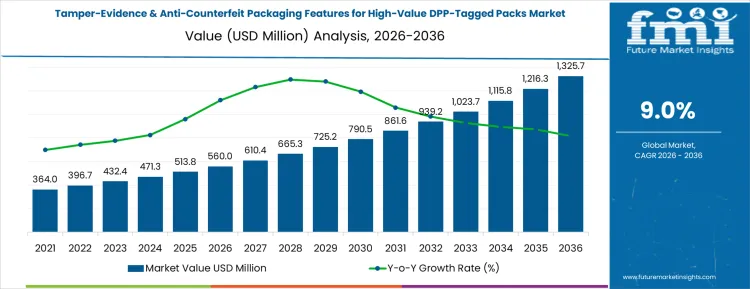
What is the Growth Forecast for the Tamper-Evidence & Anti-Counterfeit Packaging Features for High-Value DPP-Tagged Packs Market through 2036?
The growth rate volatility index for the tamper-evidence and anti-counterfeit packaging market shows a steady upward trend, with moderate fluctuations during the forecast period. Starting at USD 560 million in 2026, the market grows to USD 610.5 million in 2027 and USD 666.5 million in 2028. This steady early growth reflects the increasing adoption of tamper-evident and anti-counterfeit features in high-value packaging as industries begin to recognize the need for enhanced security measures.
From 2028 to 2030, the market continues to experience growth, reaching USD 728.5 million in 2029 and USD 797.2 million in 2030. This period indicates an acceleration in adoption, as more industries seek to integrate anti-counterfeit solutions into their packaging to address growing concerns about counterfeit goods. Between 2030 and 2035, the market shows a further acceleration, reaching USD 873.2 million in 2031, USD 957.2 million in 2032, and USD 1,050.2 million in 2033.
By 2035, the market is projected to reach USD 1,153 million, with the final market value of USD 1,320 million expected by 2036. The volatility index shows that while the market grows steadily over the years, there will be periods of accelerated growth as adoption of tamper-evident and anti-counterfeit packaging becomes more widespread. This growth is fueled by increased demand across various industries to protect their products and brand integrity in a highly competitive global market.
Tamper-Evidence & Anti-Counterfeit Packaging Features for High-Value DPP-Tagged Packs Market Key Takeaways
| Metric | Value |
|---|---|
| Industry Sales Value (2026) | USD 560 million |
| Industry Forecast Value (2036) | USD 1,320 million |
| Industry Forecast CAGR (2026 to 2036) | 9% |
What Is Driving the Demand for Tamper-Evidence & Anti-Counterfeit Packaging Features for High-Value DPP-Tagged Packs in the US and Globally?
The demand for tamper evidence and anti counterfeit packaging features for high value Digital Product Passport (DPP) tagged packs is driven by rising concerns about product integrity, safety, and supply chain transparency. High value goods such as pharmaceuticals, luxury products, electronics, and specialty chemicals face significant risk of tampering, diversion, and counterfeiting, which can harm consumers and damage brand trust. Governments and industry groups have introduced or are planning regulations that require secure, traceable packaging to support product authentication, provenance verification, and lifecycle data linked to DPP systems.
Packaging features such as tamper evident seals, holographic bands, breakable closures, secure labels, and anti counterfeit inks or tags help signal whether a pack has been opened or altered, while enabling scanning of the associated DPP record. Brand owners and retailers are specifying robust security features because they support compliance with anti counterfeit laws, reduce returns and fraud, and enhance consumer confidence. The combination of DPP tagging and tamper evidence strengthens both traceability and protection of high value products throughout distribution, storage, and last mile delivery.
Future demand for tamper evidence and anti counterfeit packaging features on DPP tagged packs is expected to grow as traceability frameworks and consumer expectations evolve. As DPP requirements mature in North America, Europe, and Asia Pacific, manufacturers will prioritise packaging solutions that integrate secure features with unique digital identifiers, enabling seamless verification at each touchpoint. Technological advances such as secure serialization, cryptographic tokens, and machine readable overt and covert features will make anti counterfeit packaging more effective and harder to replicate.
Growth of e commerce and global distribution networks increases the number of points where products are exposed to risk, reinforcing the value of integrated security packaging. Adoption will also be influenced by how well these features can be applied on high speed packaging lines without compromising efficiency or recyclability. As companies aim to meet regulatory obligations, protect brand equity, and provide consumers with verifiable product authenticity, demand for sophisticated tamper evidence and anti counterfeit packaging features combined with DPP tagging will continue to expand steadily worldwide.
What is the Segment Analysis for the Tamper-Evidence & Anti-Counterfeit Packaging Features for High-Value DPP-Tagged Packs Market?
The tamper-evidence and anti-counterfeit packaging features for high-value DPP-tagged packs market is driven by key segments based on end-use/application, packaging format/type, and material. In terms of end-use applications, pharma & nutraceuticals lead the market, accounting for 38% of the market share, followed by premium cosmetics, electronics & FMCG, OTC pharma, and food oils & beverages. Packaging formats such as tamper-evident seals, holograms, and frangible seals are widely adopted in these sectors to enhance product security and prevent counterfeiting. In terms of material, PET/foil laminates dominate the market with 45% of the share, followed by high-clarity films, PET labelstock, and foil/PE composites.
These materials are selected for their durability, ability to integrate advanced security features, and suitability for high-value products. The market is driven by increasing concerns about product safety, brand protection, and regulatory compliance. Industries, particularly pharmaceuticals and luxury goods, are adopting tamper-evident and anti-counterfeit solutions to safeguard against fraud and ensure consumer confidence. Regional demand in North America, Europe, and parts of Asia is also accelerating the adoption of these advanced packaging solutions, ensuring the market's continued growth.
What is Contributing to the Growth of Tamper-Evident Seals, Holograms in the Packaging Format Segment?
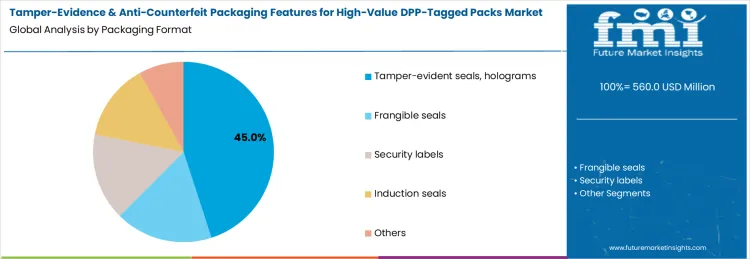
Tamper-evident seals and holograms represent the leading packaging format in the tamper-evidence and anti-counterfeit packaging features for high-value DPP-tagged packs market, comprising 45% of the market share. These security features are critical in providing clear, visible evidence of tampering, which is essential in sectors like pharmaceuticals, premium cosmetics, and electronics, where product integrity is paramount. Tamper-evident seals are designed to be damaged or altered if the package is tampered with, alerting both consumers and retailers to any potential risks.
Holograms are widely used as an anti-counterfeit measure due to their difficulty in replication, adding an extra layer of security. These packaging formats are particularly valuable in high-value or sensitive products, as they help to prevent counterfeiting and ensure authenticity. As counterfeit goods continue to pose a significant threat to industries like pharma and cosmetics, the demand for tamper-evident seals and holograms is growing. These packaging formats are also increasingly being integrated into smart packaging systems that allow for traceability and real-time monitoring of products, further enhancing security. The growing emphasis on brand protection, consumer safety, and regulatory compliance is expected to drive the continued adoption of tamper-evident seals and holograms in the market.
What is Contributing to the Growth of PET/Foil Laminates in the Material Segment?
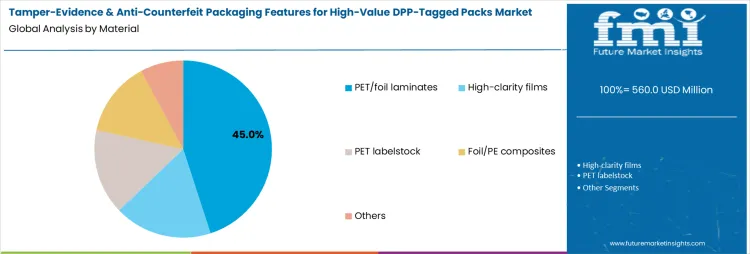
PET/foil laminates are the dominant material in the tamper-evidence and anti-counterfeit packaging features market for high-value DPP-tagged packs, accounting for 45% of the market share. This material is preferred for its combination of strength, flexibility, and ability to integrate advanced security features such as tamper-evident seals and holograms. PET/foil laminates offer excellent protection against moisture, light, and other environmental factors, which makes them ideal for packaging products that require an extra level of protection, such as pharmaceuticals, nutraceuticals, and premium cosmetics. The material's durability ensures that tamper-evident and anti-counterfeit features remain intact throughout the product's lifecycle, from manufacturing to consumer use.
Additionally, the visual appeal of PET/foil laminates, which can be used for high-quality printing and branding, adds value to premium products. As the demand for secure, long-lasting packaging continues to rise, particularly in industries dealing with high-value goods, PET/foil laminates are expected to remain a preferred choice. This material’s ability to support advanced security features while maintaining product integrity and enhancing the consumer experience positions it as a key driver of growth in the market.
What are the Key Dynamics of the Global Tamper-Evidence & Anti-Counterfeit Packaging Features for High-Value DPP-Tagged Packs Market?
The global tamper evidence and anti counterfeit packaging features for high value digital product passport (DPP) tagged packs market is growing as brands and regulators prioritise product integrity, safety and traceability. High value goods such as pharmaceuticals, luxury items, electronics and peri urban logistics benefit from packaging enhancements that signal unauthorised access and prevent fraud. DPP tagged systems link unique product identities to secure packaging elements, supporting authentication throughout the supply chain. Market growth aligns with efforts to protect consumers, reduce counterfeiting losses and support compliance with traceability requirements in key regions.
What are the Key Drivers for the Global Tamper Evidence & Anti Counterfeit Packaging Features for High Value DPP Tagged Packs Market?
Strong demand to protect high value products from diversion, theft and counterfeiting fuels investment in tamper evidence and anti counterfeit packaging features. Regulatory initiatives that require traceability and product passport integration encourage companies to adopt secure closures, seals, films and markers that work with DPP systems. Retailers and brand owners are focusing on consumer confidence and loss prevention, prompting use of visible and covert protection elements linked to digital identifiers. Increasing cross border trade and complex, multi touchpoint supply chains highlight the need for packaging that supports authentication and real time verification in logistics and retail networks worldwide.
What are the Restraints for the Global Tamper Evidence & Anti Counterfeit Packaging Features for High Value DPP Tagged Packs Market?
One restraint is the added cost of incorporating advanced tamper evidence and anti counterfeit elements that integrate with digital product passport frameworks, which may be challenging for small or mid scale brands with tight margins. Implementation requires alignment of printing, coding and packaging operations, which can involve capital investment and workflow adjustments. Lack of harmonized standards for DPP linkage and verification protocols across regions can slow adoption and require region specific design variations. Some supply chain partners may lack the technology or infrastructure to support secure scanning and data exchange, affecting end to end effectiveness.
What is the Key Trends in the Global Tamper Evidence & Anti Counterfeit Packaging Features for High Value DPP Tagged Packs Market?
A key trend is convergence of visible tamper indicators with covert authentication technologies, such as digital watermarks, microtext and RFID/NFC chips, that link directly to DPP systems for robust verification. Packaging solutions are being designed to work with mobile scanning apps and cloud platforms that allow stakeholders to confirm product authenticity at any point. Automated inspection and verification tools on production lines support quality assurance and speed integration. Collaboration across packaging suppliers, brand owners and technology providers is increasing to build interoperable, scalable solutions that meet evolving traceability and compliance needs for high value goods.
What are the Key Insights from the Tamper-Evidence & Anti-Counterfeit Packaging Features for High-Value DPP-Tagged Packs Market Analysis?
The market for tamper-evidence and anti-counterfeit packaging features for high-value DPP-tagged packs is projected to experience significant growth, driven by the increasing need for product security and consumer safety. As counterfeiting becomes more sophisticated, industries dealing with high-value goods, such as pharmaceuticals, luxury items, and electronics, are adopting enhanced packaging solutions to ensure product authenticity. DPP (Direct Print and Packaging) tagging is gaining popularity due to its ability to provide secure, traceable, and verifiable information about the product's origin and journey through the supply chain. This trend is expected to fuel demand for tamper-evident and anti-counterfeit features across regions. Countries like India and China are expected to see high growth rates, driven by rapidly expanding manufacturing and retail sectors. In more developed markets like the USA and Germany, the adoption is being supported by regulatory requirements and increasing consumer demand for secure packaging.
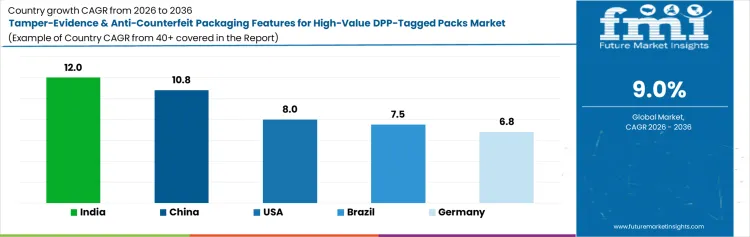
| Country | CAGR (2026-2036) |
|---|---|
| USA | 8% |
| Germany | 6.8% |
| China | 10.8% |
| India | 12% |
| Brazil | 7.5% |
What is the Growth Outlook for the Tamper-Evidence & Anti-Counterfeit Packaging Features for High-Value DPP-Tagged Packs Market in the USA?
The tamper-evidence and anti-counterfeit packaging features for high-value DPP-tagged packs market in the United States is expected to grow at a steady rate, with a projected CAGR of 8%. The USA has a strong manufacturing base and is home to industries that produce high-value goods, including pharmaceuticals, electronics, and luxury items, all of which face significant challenges related to counterfeiting and theft. With increasing regulatory pressures to protect consumers from counterfeit products, businesses are investing in more sophisticated anti-counterfeit technologies. Additionally, the rise in consumer demand for greater product security and transparency is expected to further drive the adoption of tamper-evident and anti-counterfeit packaging solutions. As the USA market continues to focus on enhancing supply chain security, the demand for DPP-tagged packaging solutions with tamper-evidence features is projected to grow steadily.
What is the Market Outlook for the Tamper-Evidence & Anti-Counterfeit Packaging Features for High-Value DPP-Tagged Packs Market in Germany?
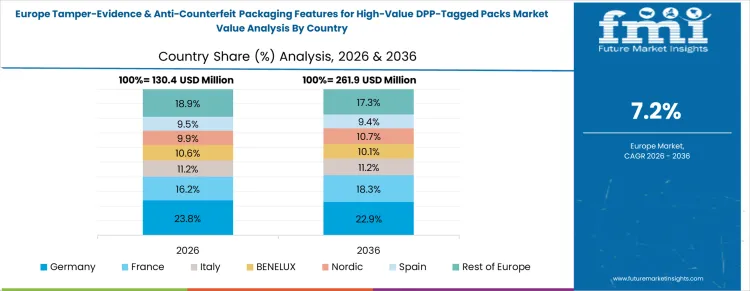
The tamper-evidence and anti-counterfeit packaging features for high-value DPP-tagged packs market in Germany is expected to grow at a moderate pace, with a projected CAGR of 6.8%. Germany’s strong regulatory environment and emphasis on product security are key factors driving the adoption of anti-counterfeit packaging solutions. The demand for tamper-evident packaging is particularly strong in industries such as pharmaceuticals, automotive, and luxury goods, where product integrity and consumer safety are of utmost importance. As German manufacturers focus on improving supply chain transparency and ensuring the authenticity of their products, the market for DPP-tagged packaging solutions is set to experience steady growth. Additionally, Germany’s highly developed logistics and manufacturing sectors continue to prioritize the integration of advanced packaging technologies, further contributing to market expansion.
What is the Growth Forecast for the Tamper-Evidence & Anti-Counterfeit Packaging Features for High-Value DPP-Tagged Packs Market in China?
The tamper-evidence and anti-counterfeit packaging features for high-value DPP-tagged packs market in China is expected to grow rapidly, with a projected CAGR of 10.8%. China’s vast manufacturing sector, coupled with growing concerns about product counterfeiting, particularly in the pharmaceutical, electronics, and luxury goods markets, is driving the demand for tamper-evident and anti-counterfeit packaging solutions. The country’s booming e-commerce industry and increasing consumer awareness about product authenticity are further accelerating the need for secure packaging. China’s focus on improving supply chain security and meeting global regulatory standards is also contributing to the rising adoption of DPP-tagged packaging. As Chinese businesses continue to invest in advanced packaging solutions to ensure the integrity of their products, the market for tamper-evident packaging is expected to experience substantial growth.
What is the Market Outlook for the Tamper-Evidence & Anti-Counterfeit Packaging Features for High-Value DPP-Tagged Packs Market in India?
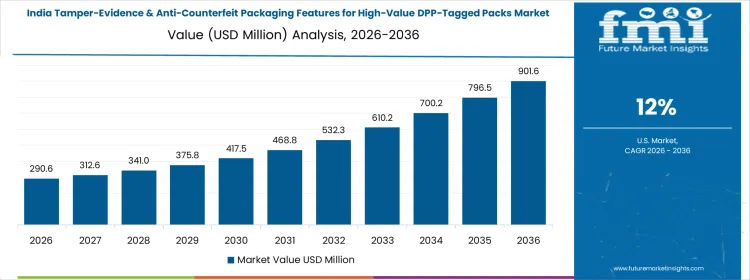
The tamper-evidence and anti-counterfeit packaging features for high-value DPP-tagged packs market in India is projected to grow at the highest rate, with a CAGR of 12%. India’s expanding manufacturing and retail sectors, along with increasing concerns about counterfeiting, particularly in the pharmaceutical and consumer goods markets, are driving the demand for anti-counterfeit packaging solutions. As regulatory pressures and consumer demand for product security grow, Indian businesses are increasingly adopting tamper-evident packaging technologies. The rising number of counterfeit incidents in high-value product categories, combined with India’s rapidly expanding e-commerce market, makes the country an attractive market for DPP-tagged packaging solutions. The need for better product traceability and authenticity, particularly in the food, pharmaceutical, and luxury goods sectors, will continue to fuel market growth.
What are the Growth Prospects for the Tamper-Evidence & Anti-Counterfeit Packaging Features for High-Value DPP-Tagged Packs Market in Brazil?
The tamper-evidence and anti-counterfeit packaging features for high-value DPP-tagged packs market in Brazil is expected to grow at a moderate pace, with a projected CAGR of 7.5%. Brazil's growing manufacturing and retail sectors, coupled with rising concerns about counterfeiting in industries like pharmaceuticals, food and beverages, and electronics, are driving demand for tamper-evident packaging solutions. However, the market in Brazil faces some challenges related to economic conditions and slower adoption of advanced packaging technologies compared to other regions. Nonetheless, as Brazilian businesses prioritize product security and compliance with evolving packaging regulations, the demand for anti-counterfeit and tamper-evident packaging is expected to steadily increase, particularly in sectors with high-value goods. The growth of e-commerce and the need for transparent supply chains will continue to support market development.
What is the Competitive Landscape for the Tamper-Evidence & Anti-Counterfeit Packaging Features for High-Value DPP-Tagged Packs Market?
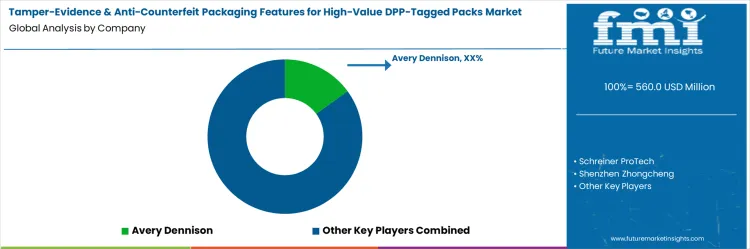
The tamper-evidence and anti-counterfeit packaging features for high-value DPP-tagged packs market is growing, driven by the increasing need for secure packaging solutions to protect high-value goods from fraud and tampering. Avery Dennison leads the market with its innovative solutions that combine tamper-evident technologies and anti-counterfeit features, helping to secure and authenticate DPP-tagged packaging. Their focus on product security and ease of integration into existing packaging systems has positioned them as a leader in this space. Schreiner ProTech, Shenzhen Zhongcheng, and UFlex Holography are key competitors, each offering specialized packaging solutions that integrate advanced tamper-evidence and anti-counterfeit technologies. Schreiner ProTech provides high-performance security labels, while Shenzhen Zhongcheng and UFlex Holography focus on incorporating advanced holography and security printing technologies into their packaging solutions.
Authentix, Toppan Security Printing, Invengo, and Multi-Color Corp add further competition with their own advanced anti-counterfeit and tamper-evidence technologies. Authentix specializes in authentication solutions that ensure product integrity across global supply chains, while Toppan Security Printing delivers high-security labels and tags to protect against counterfeiting. Invengo focuses on RFID-based solutions for product tracking and authentication, and Multi-Color Corp offers high-quality printed labels with integrated security features. These companies compete by focusing on providing innovative, secure packaging solutions that improve product protection, enhance traceability, and reduce counterfeiting risks for high-value DPP-tagged packs.
Key Players of the Tamper-Evidence & Anti-Counterfeit Packaging Features for High-Value DPP-Tagged Packs Market
- Avery Dennison
- Schreiner ProTech
- Shenzhen Zhongcheng
- UFlex Holography
- Authentix
- Toppan Security Printing
- Invengo
- Multi-Color Corp
Scope of the Report
| Items | Values |
|---|---|
| Quantitative Units (2026) | USD Million |
| End-use / Application | Pharma & Nutraceuticals, Premium Cosmetics, Electronics & FMCG, OTC Pharma, Food Oils & Beverages, Others |
| Packaging Format / Type | Tamper-Evident Seals, Holograms, Frangible Seals, Security Labels, Induction Seals, Others |
| Material | PET/Foil Laminates, High-Clarity Films, PET Labelstock, Foil/PE Composites, Others |
| Technology | Serialized Holograms + Microtext, UV-Reactive Inks & Lens Effects, QR/UID Anti-Counterfeit Tech, Digital Serialization |
| Companies | Avery Dennison, Schreiner ProTech, Shenzhen Zhongcheng, UFlex Holography, Authentix, Toppan Security Printing, Invengo, Multi-Color Corp |
| Regions Covered | North America, Latin America, Western Europe, Eastern Europe, South Asia and Pacific, East Asia, Middle East & Africa |
| Countries Covered | United States, Canada, Mexico, Brazil, Argentina, Germany, France, United Kingdom, Italy, Spain, Netherlands, China, India, Japan, South Korea, ANZ, GCC Countries, South Africa |
| Additional Attributes | Dollar by sales by end-use/application, packaging format/type, material, technology, and region. Includes market trends in tamper-evidence and anti-counterfeit packaging features, focusing on serialized holograms, frangible seals, security labels, and induction seals. Highlights the role of UV-reactive inks, QR/UID anti-counterfeit tech, and digital serialization in pharmaceuticals, cosmetics, FMCG, and food packaging. Focus on cost-effectiveness, regulatory compliance, market share, and competitive positioning of key companies in the anti-counterfeit packaging sector. |
Tamper-Evidence & Anti-Counterfeit Packaging Features for High-Value DPP-Tagged Packs Market Segmentation
End-use / Application:
- Pharma & nutraceuticals
- Premium cosmetics
- Electronics & FMCG
- OTC pharma
- Food oils & beverages
- Others
Packaging Format / Type:
- Tamper-evident seals, holograms
- Frangible seals
- Security labels
- Induction seals
- Others
Material:
- PET/foil laminates
- High-clarity films
- PET labelstock
- Foil/PE composites
- Others
Technology:
- Serialized holograms + microtext
- UV-reactive inks & lens effects
- QR/UID anti-counterfeit tech
- Digital serialization
- Others
Region:
- Asia Pacific
- China
- Japan
- South Korea
- India
- Australia & New Zealand
- ASEAN
- Rest of Asia Pacific
- Europe
- Germany
- United Kingdom
- France
- Italy
- Spain
- Nordic
- BENELUX
- Rest of Europe
- North America
- United States
- Canada
- Mexico
- Latin America
- Brazil
- Chile
- Rest of Latin America
- Middle East & Africa
- Kingdom of Saudi Arabia
- Other GCC Countries
- Turkey
- South Africa
- Other African Union
- Rest of Middle East & Africa
Bibliography
- United States Food and Drug Administration. (2023). Guidance for industry on anti-tampering packaging and product security features for high-value goods. FDA Regulatory and Guidance Publications.
- International Organization for Standardization. (2023). Standards for tamper-evident packaging and security features applicable to consumer products. ISO Standards Publications.
- European Commission. (2023). EU regulatory framework and technical guidance on anti-counterfeit packaging requirements and traceability systems. European Commission Technical and Regulatory Documents.
- Consumer Goods Forum. (2023). Best practices and industry guidelines on product authentication and anti-counterfeit packaging solutions. CGF Industry Publications.
Frequently Asked Questions
How big is the tamper-evidence & anti-counterfeit packaging features for high-value DPP-tagged packs market in 2026?
The global tamper-evidence & anti-counterfeit packaging features for high-value DPP-tagged packs market is estimated to be valued at USD 560.0 million in 2026.
What will be the size of tamper-evidence & anti-counterfeit packaging features for high-value DPP-tagged packs market in 2036?
The market size for the tamper-evidence & anti-counterfeit packaging features for high-value DPP-tagged packs market is projected to reach USD 1,325.7 million by 2036.
How much will be the tamper-evidence & anti-counterfeit packaging features for high-value DPP-tagged packs market growth between 2026 and 2036?
The tamper-evidence & anti-counterfeit packaging features for high-value DPP-tagged packs market is expected to grow at a 9.0% CAGR between 2026 and 2036.
What are the key product types in the tamper-evidence & anti-counterfeit packaging features for high-value DPP-tagged packs market?
The key product types in tamper-evidence & anti-counterfeit packaging features for high-value DPP-tagged packs market are pharma & nutraceuticals, premium cosmetics, electronics & fmcg, otc pharma, food oils & beverages and others.
Which packaging format segment to contribute significant share in the tamper-evidence & anti-counterfeit packaging features for high-value DPP-tagged packs market in 2026?
In terms of packaging format, tamper-evident seals, holograms segment to command 45.0% share in the tamper-evidence & anti-counterfeit packaging features for high-value DPP-tagged packs market in 2026.
Preview the report firsthand - request a free sample
Get SampleGet the brochure for pricing and purchase details.
Get PDFTable of Content
- Executive Summary
- Global Market Outlook
- Demand-side Trends
- Supply-side Trends
- Technology Roadmap Analysis
- Analysis and Recommendations
- Market Overview
- Market Coverage / Taxonomy
- Market Definition / Scope / Limitations
- Market Background
- Market Dynamics
- Drivers
- Restraints
- Opportunity
- Trends
- Scenario Forecast
- Demand in Optimistic Scenario
- Demand in Likely Scenario
- Demand in Conservative Scenario
- Opportunity Map Analysis
- Product Life Cycle Analysis
- Supply Chain Analysis
- Investment Feasibility Matrix
- Value Chain Analysis
- PESTLE and Porter’s Analysis
- Regulatory Landscape
- Regional Parent Market Outlook
- Production and Consumption Statistics
- Import and Export Statistics
- Market Dynamics
- Global Market Analysis 2021 to 2025 and Forecast, 2026 to 2036
- Historical Market Size Value (USD Million) Analysis, 2021 to 2025
- Current and Future Market Size Value (USD Million) Projections, 2026 to 2036
- Y-o-Y Growth Trend Analysis
- Absolute $ Opportunity Analysis
- Global Market Pricing Analysis 2021 to 2025 and Forecast 2026 to 2036
- Global Market Analysis 2021 to 2025 and Forecast 2026 to 2036, By End-use
- Introduction / Key Findings
- Historical Market Size Value (USD Million) Analysis By End-use , 2021 to 2025
- Current and Future Market Size Value (USD Million) Analysis and Forecast By End-use , 2026 to 2036
- Pharma & nutraceuticals
- Premium cosmetics
- Electronics & FMCG
- OTC pharma
- Food oils & beverages
- Others
- Y-o-Y Growth Trend Analysis By End-use , 2021 to 2025
- Absolute $ Opportunity Analysis By End-use , 2026 to 2036
- Global Market Analysis 2021 to 2025 and Forecast 2026 to 2036, By Packaging Format
- Introduction / Key Findings
- Historical Market Size Value (USD Million) Analysis By Packaging Format, 2021 to 2025
- Current and Future Market Size Value (USD Million) Analysis and Forecast By Packaging Format, 2026 to 2036
- Tamper-evident seals, holograms
- Frangible seals
- Security labels
- Induction seals
- Others
- Y-o-Y Growth Trend Analysis By Packaging Format, 2021 to 2025
- Absolute $ Opportunity Analysis By Packaging Format, 2026 to 2036
- Global Market Analysis 2021 to 2025 and Forecast 2026 to 2036, By Material
- Introduction / Key Findings
- Historical Market Size Value (USD Million) Analysis By Material, 2021 to 2025
- Current and Future Market Size Value (USD Million) Analysis and Forecast By Material, 2026 to 2036
- PET/foil laminates
- High-clarity films
- PET labelstock
- Foil/PE composites
- Others
- Y-o-Y Growth Trend Analysis By Material, 2021 to 2025
- Absolute $ Opportunity Analysis By Material, 2026 to 2036
- Global Market Analysis 2021 to 2025 and Forecast 2026 to 2036, By Technology
- Introduction / Key Findings
- Historical Market Size Value (USD Million) Analysis By Technology, 2021 to 2025
- Current and Future Market Size Value (USD Million) Analysis and Forecast By Technology, 2026 to 2036
- Serialized holograms + microtext
- UV-reactive inks & lens effects
- QR/UID anti-counterfeit tech
- Digital serialization
- Others
- Y-o-Y Growth Trend Analysis By Technology, 2021 to 2025
- Absolute $ Opportunity Analysis By Technology, 2026 to 2036
- Global Market Analysis 2021 to 2025 and Forecast 2026 to 2036, By Region
- Introduction
- Historical Market Size Value (USD Million) Analysis By Region, 2021 to 2025
- Current Market Size Value (USD Million) Analysis and Forecast By Region, 2026 to 2036
- North America
- Latin America
- Western Europe
- Eastern Europe
- East Asia
- South Asia and Pacific
- Middle East & Africa
- Market Attractiveness Analysis By Region
- North America Market Analysis 2021 to 2025 and Forecast 2026 to 2036, By Country
- Historical Market Size Value (USD Million) Trend Analysis By Market Taxonomy, 2021 to 2025
- Market Size Value (USD Million) Forecast By Market Taxonomy, 2026 to 2036
- By Country
- USA
- Canada
- Mexico
- By End-use
- By Packaging Format
- By Material
- By Technology
- By Country
- Market Attractiveness Analysis
- By Country
- By End-use
- By Packaging Format
- By Material
- By Technology
- Key Takeaways
- Latin America Market Analysis 2021 to 2025 and Forecast 2026 to 2036, By Country
- Historical Market Size Value (USD Million) Trend Analysis By Market Taxonomy, 2021 to 2025
- Market Size Value (USD Million) Forecast By Market Taxonomy, 2026 to 2036
- By Country
- Brazil
- Chile
- Rest of Latin America
- By End-use
- By Packaging Format
- By Material
- By Technology
- By Country
- Market Attractiveness Analysis
- By Country
- By End-use
- By Packaging Format
- By Material
- By Technology
- Key Takeaways
- Western Europe Market Analysis 2021 to 2025 and Forecast 2026 to 2036, By Country
- Historical Market Size Value (USD Million) Trend Analysis By Market Taxonomy, 2021 to 2025
- Market Size Value (USD Million) Forecast By Market Taxonomy, 2026 to 2036
- By Country
- Germany
- UK
- Italy
- Spain
- France
- Nordic
- BENELUX
- Rest of Western Europe
- By End-use
- By Packaging Format
- By Material
- By Technology
- By Country
- Market Attractiveness Analysis
- By Country
- By End-use
- By Packaging Format
- By Material
- By Technology
- Key Takeaways
- Eastern Europe Market Analysis 2021 to 2025 and Forecast 2026 to 2036, By Country
- Historical Market Size Value (USD Million) Trend Analysis By Market Taxonomy, 2021 to 2025
- Market Size Value (USD Million) Forecast By Market Taxonomy, 2026 to 2036
- By Country
- Russia
- Poland
- Hungary
- Balkan & Baltic
- Rest of Eastern Europe
- By End-use
- By Packaging Format
- By Material
- By Technology
- By Country
- Market Attractiveness Analysis
- By Country
- By End-use
- By Packaging Format
- By Material
- By Technology
- Key Takeaways
- East Asia Market Analysis 2021 to 2025 and Forecast 2026 to 2036, By Country
- Historical Market Size Value (USD Million) Trend Analysis By Market Taxonomy, 2021 to 2025
- Market Size Value (USD Million) Forecast By Market Taxonomy, 2026 to 2036
- By Country
- China
- Japan
- South Korea
- By End-use
- By Packaging Format
- By Material
- By Technology
- By Country
- Market Attractiveness Analysis
- By Country
- By End-use
- By Packaging Format
- By Material
- By Technology
- Key Takeaways
- South Asia and Pacific Market Analysis 2021 to 2025 and Forecast 2026 to 2036, By Country
- Historical Market Size Value (USD Million) Trend Analysis By Market Taxonomy, 2021 to 2025
- Market Size Value (USD Million) Forecast By Market Taxonomy, 2026 to 2036
- By Country
- India
- ASEAN
- Australia & New Zealand
- Rest of South Asia and Pacific
- By End-use
- By Packaging Format
- By Material
- By Technology
- By Country
- Market Attractiveness Analysis
- By Country
- By End-use
- By Packaging Format
- By Material
- By Technology
- Key Takeaways
- Middle East & Africa Market Analysis 2021 to 2025 and Forecast 2026 to 2036, By Country
- Historical Market Size Value (USD Million) Trend Analysis By Market Taxonomy, 2021 to 2025
- Market Size Value (USD Million) Forecast By Market Taxonomy, 2026 to 2036
- By Country
- Kingdom of Saudi Arabia
- Other GCC Countries
- Turkiye
- South Africa
- Other African Union
- Rest of Middle East & Africa
- By End-use
- By Packaging Format
- By Material
- By Technology
- By Country
- Market Attractiveness Analysis
- By Country
- By End-use
- By Packaging Format
- By Material
- By Technology
- Key Takeaways
- Key Countries Market Analysis
- USA
- Pricing Analysis
- Market Share Analysis, 2025
- By End-use
- By Packaging Format
- By Material
- By Technology
- Canada
- Pricing Analysis
- Market Share Analysis, 2025
- By End-use
- By Packaging Format
- By Material
- By Technology
- Mexico
- Pricing Analysis
- Market Share Analysis, 2025
- By End-use
- By Packaging Format
- By Material
- By Technology
- Brazil
- Pricing Analysis
- Market Share Analysis, 2025
- By End-use
- By Packaging Format
- By Material
- By Technology
- Chile
- Pricing Analysis
- Market Share Analysis, 2025
- By End-use
- By Packaging Format
- By Material
- By Technology
- Germany
- Pricing Analysis
- Market Share Analysis, 2025
- By End-use
- By Packaging Format
- By Material
- By Technology
- UK
- Pricing Analysis
- Market Share Analysis, 2025
- By End-use
- By Packaging Format
- By Material
- By Technology
- Italy
- Pricing Analysis
- Market Share Analysis, 2025
- By End-use
- By Packaging Format
- By Material
- By Technology
- Spain
- Pricing Analysis
- Market Share Analysis, 2025
- By End-use
- By Packaging Format
- By Material
- By Technology
- France
- Pricing Analysis
- Market Share Analysis, 2025
- By End-use
- By Packaging Format
- By Material
- By Technology
- India
- Pricing Analysis
- Market Share Analysis, 2025
- By End-use
- By Packaging Format
- By Material
- By Technology
- ASEAN
- Pricing Analysis
- Market Share Analysis, 2025
- By End-use
- By Packaging Format
- By Material
- By Technology
- Australia & New Zealand
- Pricing Analysis
- Market Share Analysis, 2025
- By End-use
- By Packaging Format
- By Material
- By Technology
- China
- Pricing Analysis
- Market Share Analysis, 2025
- By End-use
- By Packaging Format
- By Material
- By Technology
- Japan
- Pricing Analysis
- Market Share Analysis, 2025
- By End-use
- By Packaging Format
- By Material
- By Technology
- South Korea
- Pricing Analysis
- Market Share Analysis, 2025
- By End-use
- By Packaging Format
- By Material
- By Technology
- Russia
- Pricing Analysis
- Market Share Analysis, 2025
- By End-use
- By Packaging Format
- By Material
- By Technology
- Poland
- Pricing Analysis
- Market Share Analysis, 2025
- By End-use
- By Packaging Format
- By Material
- By Technology
- Hungary
- Pricing Analysis
- Market Share Analysis, 2025
- By End-use
- By Packaging Format
- By Material
- By Technology
- Kingdom of Saudi Arabia
- Pricing Analysis
- Market Share Analysis, 2025
- By End-use
- By Packaging Format
- By Material
- By Technology
- Turkiye
- Pricing Analysis
- Market Share Analysis, 2025
- By End-use
- By Packaging Format
- By Material
- By Technology
- South Africa
- Pricing Analysis
- Market Share Analysis, 2025
- By End-use
- By Packaging Format
- By Material
- By Technology
- USA
- Market Structure Analysis
- Competition Dashboard
- Competition Benchmarking
- Market Share Analysis of Top Players
- By Regional
- By End-use
- By Packaging Format
- By Material
- By Technology
- Competition Analysis
- Competition Deep Dive
- Avery Dennison
- Overview
- Product Portfolio
- Profitability by Market Segments (Product/Age /Sales Channel/Region)
- Sales Footprint
- Strategy Overview
- Marketing Strategy
- Product Strategy
- Channel Strategy
- Schreiner ProTech
- Shenzhen Zhongcheng
- UFlex Holography
- Authentix
- Toppan Security Printing
- Invengo
- Multi-Color Corp
- Avery Dennison
- Competition Deep Dive
- Assumptions & Acronyms Used
- Research Methodology


