

- Industry Size (2026)
- USD 115.3 Mn
- Forecast (2036)
- USD 232.5 Mn
- CAGR (2026 to 2036)
- 7.3%
Demand for Citrus Molasses in United Kingdom Forecast and Outlook 2026 to 2036
The citrus molasses market in the United Kingdom is expected to grow from USD 115.3 million in 2026 to USD 232.5 million by 2036, at a CAGR of 7.3%. This market’s expansion will be shaped by capital intensity, as investments in production facilities, technology, and raw material sourcing will be essential to meet increasing demand. The long-term nature of these investments means that return timelines will likely be extended, requiring careful capital allocation to balance immediate costs with future profitability. Investment selectivity will be crucial as players look to enter or expand in this space, focusing on high-margin applications like food, beverages, and pharmaceuticals. Investors will need to assess the operational risks associated with raw material price fluctuations and supply chain stability, as these factors could impact returns. Companies that demonstrate a clear strategy for managing production efficiency and securing sustainable supply chains will be better positioned to attract long-term capital.
Quick Stats for the Demand for Citrus Molasses in United Kingdom
- Citrus Molasses in United Kingdom Value (2026): USD 115.3 million
- Citrus Molasses in United Kingdom Forecast Value (2036): USD 232.5 million
- Citrus Molasses in United Kingdom Forecast CAGR (2026 to 2036): 7.3%
- Citrus Molasses in United Kingdom Leading Segment: Conventional (75.3% share)
- Key Growth Regions of Citrus Molasses in United Kingdom: England
- Top Players of Citrus Molasses in United Kingdom: Lemon Concentrate S.L., Louis Dreyfus Company B.V., Citrusuco S.A., Citromax Group, Sucocitrico Cutrale Ltd.
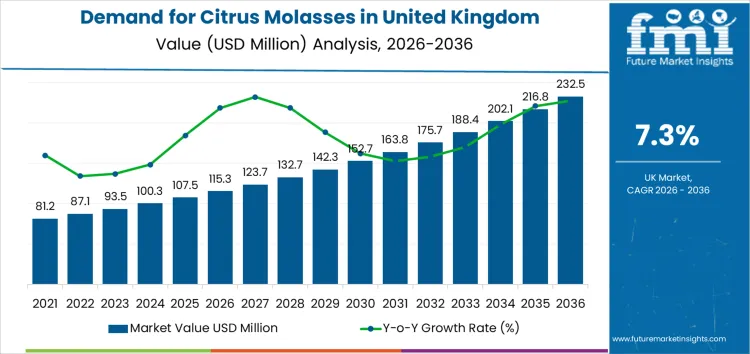
What is the Growth Forecast for Citrus Molasses in United Kingdom through 2036?
Demand for citrus molasses in the United Kingdom is expected to grow steadily through the forecast period, supported by rising adoption across food, beverage, and animal feed applications. As manufacturers continue to shift toward natural sweeteners and functional by-products, citrus molasses is gaining attention for its flavor profile, nutritional value, and suitability for clean-label formulations. Growth is further supported by increasing interest in circular food processing, where citrus-based residues are converted into value-added ingredients rather than discarded.
Absolute growth analysis suggests consistent, incremental expansion over time, with most gains coming from rising consumption volumes rather than sharp price-driven increases. Wider use in feed formulations and ingredient blends will remain a key contributor, while food and beverage use will strengthen as citrus molasses becomes more familiar to processors and consumers. Over the longer term, deeper integration into mainstream product development and continued demand for natural ingredients will support sustained growth. Overall, the outlook remains positive, driven by clean-label trends, broader application scope, and increasing preference for sustainable ingredient sourcing in the UK.
Key Takeaways for Demand for Citrus Molasses in United Kingdom
| Metric | Value |
|---|---|
| Industry Sales Value (2026) | USD 115.3 million |
| Industry Forecast Value (2036) | USD 232.5 million |
| Industry Forecast CAGR (2026 to 2036) | 7.3% |
Why is Demand for Citrus Molasses in United Kingdom Growing?
Demand for citrus molasses in the United Kingdom has risen as food and beverage manufacturers diversify ingredient portfolios and seek functional sweetening agents with distinct flavour profiles. Historically, citrus molasses was used primarily within regional food traditions and as a speciality syrup in niche applications. Over the past decade, UK product developers began incorporating citrus molasses into beverages, sauces, confectionery, and bakery formulations where its unique balance of sweetness and citrus notes adds differentiation. Beverage producers have trialled citrus molasses as an alternative or complement to conventional sugars in mixers, craft drinks, and fruit based drinks, while bakery and sweets manufacturers valued its contribution to colour, texture, and flavour layering. Ingredient buyers and formulation specialists found that citrus molasses can serve dual roles as a sweetener and flavour enhancer, reducing the need for separate additives. The rise of premium and craft products in the UK market increased interest in distinctive ingredients that support brand storytelling and sensory appeal.
Looking ahead, demand for citrus molasses in the United Kingdom is expected to continue evolving as companies target innovation and ingredient efficiency. Food manufacturers navigating clean label requirements and consumer demand for recognisable inputs may prefer citrus molasses to artificial flavourings and refined sugars. Suppliers capable of offering consistent quality and supply assurance will be positioned to support formulation pipelines that incorporate this ingredient across multiple product lines. Product development teams exploring plant based and natural ingredient trends could leverage citrus molasses for texture modification, moisture retention, and palatability in reduced sugar recipes. Retailers targeting differentiated products in the premium and health oriented segments may increase listings of goods that feature citrus molasses, stimulating procurement activity upstream. Regulatory environments related to sugar reduction and nutrient labelling will influence how citrus molasses is deployed, affecting specification decisions in formulation and marketing strategies for UK food and beverage companies.
What Are the Key Segments in the Demand for Citrus Molasses in the United Kingdom?
Demand for citrus molasses in the United Kingdom is primarily driven by nature and application. Conventional citrus molasses leads the nature segment with 75.3%, while animal feed dominates the application segment with 65%. Other applications, including pulp production and biofuel, also contribute to the industry. These trends reflect the versatile use of citrus molasses across various industries, with growing interest in sustainable alternatives and the expanding need for feed ingredients and bio-based products.
What Is the Nature Segment of Demand for Citrus Molasses in the United Kingdom?
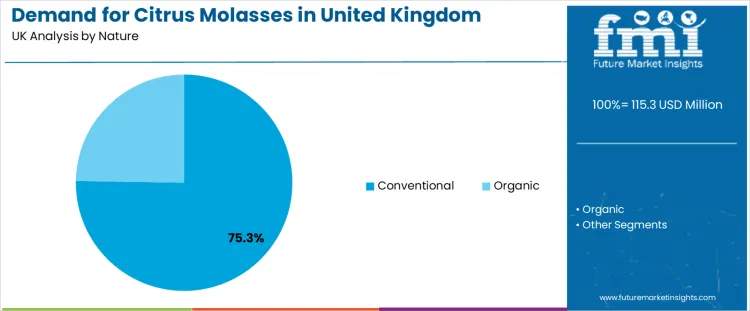
The nature segment for citrus molasses in the United Kingdom is primarily dominated by conventional citrus molasses, which accounts for 75.3% of the industry share. Conventional citrus molasses is widely used in industrial applications due to its cost-effectiveness and availability. It is a byproduct of citrus fruit processing, commonly utilized in industries such as animal feed, where it serves as a source of energy and nutrients for livestock. Conventional molasses is also employed in pulp production, where it helps in the manufacturing of paper and other fiber-based products. Its higher availability and lower production costs make conventional citrus molasses the preferred choice for large-scale applications, particularly in feed production.
Organic citrus molasses, while a smaller segment, is gaining traction as consumer preferences shift towards natural and sustainable products. Organic molasses is produced without the use of synthetic pesticides or fertilizers, making it a desirable option for companies focused on organic feed and biofuel production. The demand for organic citrus molasses is expected to grow in parallel with the increasing trend of organic farming and environmentally friendly practices. Although conventional citrus molasses continues to dominate the industry, the rising demand for organic products highlights the industry's shift toward sustainability and health-conscious production practices.
What Is the Application Segment of Demand for Citrus Molasses in the United Kingdom?
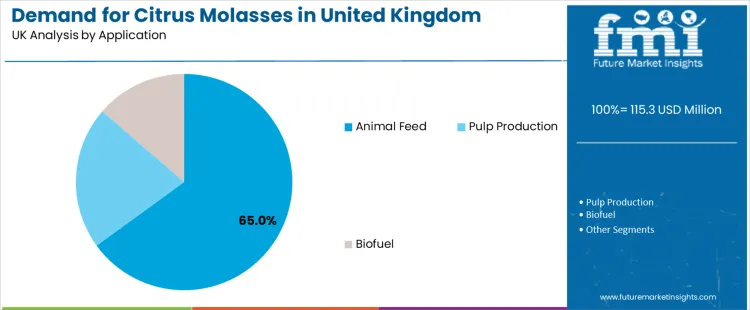
The application segment for citrus molasses in the United Kingdom is led by animal feed, which captures 65% of the industry share. Citrus molasses is a valuable ingredient in animal feed due to its high energy content, palatability, and nutrient-rich profile. It is commonly added to livestock feed formulations to enhance the nutritional value of the feed, particularly for ruminants, poultry, and swine. The growing demand for sustainable and cost-effective animal feed ingredients is driving the adoption of citrus molasses in the agricultural sector. As the demand for animal products increases, the use of citrus molasses in feed is expected to grow, particularly as farmers and feed manufacturers seek alternatives to traditional feed additives. Pulp production follows as another important application, with citrus molasses being used in the paper industry to improve the quality and yield of pulp.
Its ability to enhance the pulping process and serve as an organic binder makes it a valuable additive in pulp production. The demand for citrus molasses in the pulp industry is influenced by the growing focus on sustainable and bio-based production processes. Biofuel production also contributes to the application segment, as citrus molasses serves as a feedstock for bioethanol production. As the push for renewable energy sources increases, biofuels made from citrus molasses are expected to see higher demand, contributing to a more sustainable energy landscape. Overall, the demand for citrus molasses in animal feed, pulp production, and biofuel is expected to continue growing as industries seek more sustainable, cost-effective, and renewable alternatives.
What are the Key Dynamics in the Demand for Citrus Molasses in the United Kingdom?
Demand for citrus molasses in the United Kingdom is driven by its utility as a value added by product of citrus juice production, used across food ingredient, animal feed, and fermentation industries. Buyers in animal nutrition, sugar substitution, and industrial fermentation procure citrus molasses for its carbohydrate content and functional properties. Demand patterns reflect procurement cycles in citrus processing, global citrus supply dynamics, and formulation needs in downstream applications. Price competitiveness and consistency of quality influence sourcing decisions by manufacturers and formulators, while ingredient diversity in supply portfolios affects buyer preferences.
What are the Key Drivers for Citrus Molasses Demand in the United Kingdom?
Several factors underpin demand for citrus molasses in the United Kingdom. In animal nutrition, citrus molasses functions as an energy rich binder and palatability enhancer in feed rations, supporting demand from livestock and pet feed manufacturers. Food ingredient buyers incorporate citrus molasses in bakery, confectionery, and beverage formulations as a natural sweetening and flavouring component. The fermentation sector uses citrus molasses as a substrate for bioethanol and specialty fermentation processes, incentivising consistent supply. Sustainability concerns, including the valorisation of by products and waste reduction in citrus processing, drive interest in citrus molasses among manufacturers seeking circular economy ingredients.
What are the Restraints on Citrus Molasses Demand in the United Kingdom?
Despite its versatility, the industry for citrus molasses in the United Kingdom faces several restraints. Availability is dependent on global citrus production and juicing activity, which can fluctuate with seasonal harvest cycles, weather events, and agricultural yield variability in major producing regions. Price volatility in both citrus products and alternative carbohydrate sources such as beet and cane molasses influences competitive positioning, occasionally reducing uptake where cost incentives are marginal. Technical challenges in standardising molasses quality for specific applications, particularly in fermentation platforms requiring consistent carbohydrate profiles, can constrain adoption. Regulatory and labelling requirements for food and feed ingredients add compliance considerations for manufacturers.
What are the Key Trends in Citrus Molasses Demand in the United Kingdom?
Key trends shaping citrus molasses demand in the United Kingdom include greater emphasis on ingredient traceability and source transparency in supply chains, driven by retailer and consumer expectations for provenance. Animal feed formulators are increasing use of alternative carbohydrate sources like citrus molasses to diversify rations and enhance texture or moisture properties. Innovations in high value fermentation applications, including production of organic acids and specialty bio products, expand interest beyond traditional uses. Companies are also exploring blended carbohydrate ingredients that combine citrus molasses with other syrups to optimise functional performance and cost structures. Sustainable sourcing frameworks that align with environmental, social, and governance (ESG) priorities increasingly influence procurement decisions by major buyers.
What is the Country-Wise Demand for Citrus Molasses in the United Kingdom?
The country-wise demand for citrus molasses in the United Kingdom varies across its regions, with England leading the industry. The demand in England is driven by its large food and beverage industries, where citrus molasses is used as a flavoring agent, sweetener, and source of functional ingredients. Scotland, Wales, and Northern Ireland follow, with growing demand, supported by increasing consumer preference for natural, sustainable ingredients in food products. The expanding market for functional and health-focused foods, along with the growing adoption of citrus molasses in various sectors such as beverages, bakery, and confectionery, is expected to drive steady growth across all regions. While England remains the largest market, all regions are expected to experience growth, driven by increasing awareness of citrus molasses’ benefits and applications.
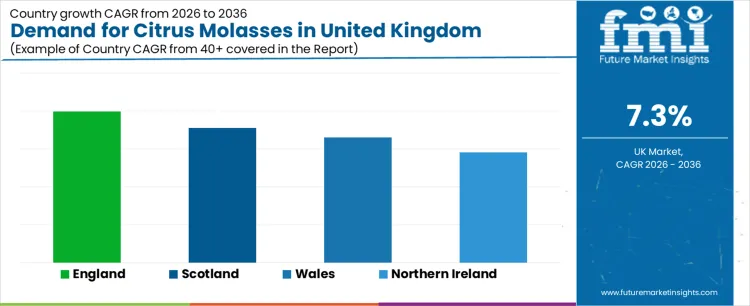
| Country | CAGR (2026 to 2036) |
|---|---|
| England | 8.0% |
| Scotland | 7.1% |
| Wales | 6.6% |
| Northern Ireland | 5.8% |
What is Driving the Demand for Citrus Molasses in England?
The demand for citrus molasses in England is projected to grow at a CAGR of 8.0% from 2026 to 2036. England’s large food and beverage sector is a major driver of this demand, as citrus molasses is increasingly used as a natural sweetener and flavoring agent in various products such as juices, beverages, bakery items, and confectionery. Citrus molasses is gaining popularity due to its unique flavor profile, which enhances the taste of both sweet and savory products. Additionally, the growing consumer demand for natural, sustainable ingredients and clean-label products is fueling the adoption of citrus molasses. As consumers continue to seek healthier alternatives to refined sugars, the food industry’s focus on functional ingredients is expected to further drive the demand for citrus molasses in England. The expanding use of citrus molasses in health-conscious foods, including energy bars, smoothies, and functional beverages, is also expected to support market growth.
How is the Demand for Citrus Molasses Performing in Scotland?
In Scotland, the demand for citrus molasses is expected to grow at a CAGR of 7.1% from 2026 to 2036. The demand is driven by Scotland’s growing food and beverage industry, where citrus molasses is used as a natural alternative to sugar and artificial sweeteners. As Scottish consumers continue to prioritize healthier eating habits, the demand for citrus molasses in the form of natural flavoring and functional ingredients is increasing. The growing market for plant-based and organic products in Scotland is also contributing to the rise in demand, as citrus molasses is seen as a clean-label ingredient. Furthermore, the increasing use of citrus molasses in dairy alternatives, snacks, and baked goods is supporting the growth in the Scottish market. The rise of local food manufacturers incorporating citrus molasses into their products and the ongoing trend toward sustainability and natural ingredients are expected to drive continued growth in the demand for citrus molasses in Scotland.
What Are the Growth Drivers for Citrus Molasses in Wales?
The demand for citrus molasses in Wales is projected to grow at a CAGR of 6.6% through 2036. The food and beverage industries in Wales are increasingly adopting citrus molasses as a natural sweetener and flavoring agent in response to consumer demand for healthier, more sustainable ingredients. As consumers look for alternatives to refined sugars, citrus molasses is gaining popularity due to its rich, natural flavor and nutritional benefits, including vitamins and minerals. The growing trend toward plant-based and organic foods in Wales, along with the increasing consumer focus on clean labels, is further driving the adoption of citrus molasses. Additionally, the use of citrus molasses in beverages, bakery products, and snacks is contributing to the growth in demand. As Welsh companies continue to innovate and expand their product offerings to meet the rising demand for natural, functional ingredients, the industry for citrus molasses in Wales is expected to see steady growth over the next decade.
What is the Outlook for Citrus Molasses Demand in Northern Ireland?
Northern Ireland’s demand for citrus molasses is expected to grow at a CAGR of 5.8% from 2026 to 2036. Although Northern Ireland represents the smallest market for citrus molasses in the United Kingdom, the demand is steadily increasing due to rising interest in natural, clean-label ingredients. The growing trend of consumers seeking healthier alternatives to sugar is contributing to the adoption of citrus molasses in food and beverages. In Northern Ireland, citrus molasses is being increasingly used in the production of beverages, snacks, and baked goods, where its unique flavor profile offers a natural, flavorful substitute for other sweeteners. Additionally, the growing awareness of sustainability and the increasing use of plant-based products are helping to drive the demand for citrus molasses in Northern Ireland. While the industry remains smaller than in other regions, steady growth is expected as the trend toward natural, functional ingredients continues to gain momentum in the food industry.
What is the Competitive Landscape for Demand for Citrus Molasses in the United Kingdom?
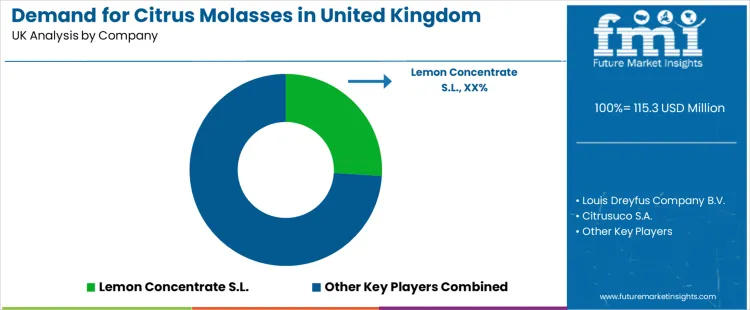
Demand for citrus molasses in the United Kingdom is shaped by requirements from beverage manufacturers, confectionery producers, bakery formulators, and ingredient distributors that specify sweetening systems with distinctive flavor and functional properties. Citrus molasses is assessed on documented sugar content, acidity profile, color grades, and processing stability. Buyers consult product brochures to compare measured Brix levels, recommended inclusion rates, and handling instructions.
Lemon Concentrate S.L. is recognized as a leading supplier, with technical literature that lists documented sensory profiles, documented functional performance in syrups and glazes, and documented storage condition notes used by formulation and procurement teams. Louis Dreyfus Company B.V. competes with documented batch analysis data, documented supply capacity figures, and documented quality assurance notes that support buyers during specification alignment with processing conditions. Ingredient managers examine these documented attributes to ensure that selected citrus molasses grades fit targeted product criteria.
Citrusuco S.A. supplies citrus molasses with documented nutritional data, documented viscosity ranges, and documented flavor descriptors that assist manufacturers in matching ingredient profiles to end product expectations. Citromax Group’s documentation includes measured pH values, documented sugar composition variants, and documented compliance with food safety frameworks, which are referenced in tender evaluations. Sucocitrico Cutrale Ltd. provides product sheets that list documented processing stability metrics and documented application guidance for buns, syrups, and beverage blends. In the United Kingdom, procurement cycles integrate documented technical data and documented supply terms to align purchases with production schedules and quality standards.
Buyers compare documented shelf life values, documented packaging formats, and documented logistics capabilities to ensure continuity of supply. Technical teams review documented functional performance under thermal and shear conditions relevant to their process equipment, anchoring material selection in measurable attributes. Competitive behaviour among suppliers is grounded in documented product specifications and documented supply commitments that support specification alignment, cost forecasting, and integration into finished formulations used across food and beverage sectors.
Key Players of the Demand for Citrus Molasses in United Kingdom
- Lemon Concentrate S.L.
- Louis Dreyfus Company B.V.
- Citrusuco S.A.
- Citromax Group
- Sucocitrico Cutrale Ltd.
Scope of the Report
| Items | Values |
|---|---|
| Quantitative Units (2026) | USD Million |
| Nature | Conventional, Organic |
| Sales Channel | B2B, B2C |
| Application | Animal Feed, Pulp Production, Biofuel |
| Companies | Lemon Concentrate S.L., Louis Dreyfus Company B.V., Citrusuco S.A., Citromax Group, Sucocitrico Cutrale Ltd. |
| Regions Covered | United Kingdom |
| Countries Covered | England, Scotland, Wales, Northern Ireland |
| Additional Attributes | Dollar by sales by nature, sales channel, application, and region. Includes market trends towards sustainability, cost-effectiveness, and the role of citrus molasses in animal feed, biofuel production, and other applications. |
Key Segments of Demand for Citrus Molasses in United Kingdom
Nature
- Conventional
- Organic
Sales Channel
- B2B
- B2C
Application
- Animal Feed
- Pulp Production
- Biofuel
Countries
- England
- Scotland
- Wales
- Northern Ireland
Bibliography
- Department for Environment, Food & Rural Affairs. (2024). Agri‑food by‑products, waste reduction strategies, and circular resource use in the United Kingdom. UK Government.
- Food Standards Agency. (2024). Food ingredients, additives, sweeteners, and processing aids: UK food safety and regulatory guidance. Food Standards Agency.
- Organisation for Economic Co-operation and Development. (2024). Circular bioeconomy pathways and valorisation of agri-food by‑products in OECD economies. OECD Publishing.
Frequently Asked Questions
How big is the demand for citrus molasses in United Kingdom in 2026?
The demand for citrus molasses in United Kingdom is estimated to be valued at USD 115.3 million in 2026.
What will be the size of citrus molasses in United Kingdom in 2036?
The market size for the citrus molasses in United Kingdom is projected to reach USD 232.5 million by 2036.
How much will be the demand for citrus molasses in United Kingdom growth between 2026 and 2036?
The demand for citrus molasses in United Kingdom is expected to grow at a 7.3% CAGR between 2026 and 2036.
What are the key product types in the citrus molasses in United Kingdom?
The key product types in citrus molasses in United Kingdom are conventional and organic.
Which sales channel segment is expected to contribute significant share in the citrus molasses in United Kingdom in 2026?
In terms of sales channel, the B2B segment is expected to command 70.0% share in the citrus molasses in United Kingdom in 2026.
Preview the report firsthand - request a free sample
Get SampleGet the brochure for pricing and purchase details.
Get PDFTable of Content
- Executive Summary
- UK Market Outlook
- Demand-side Trends
- Supply-side Trends
- Technology Roadmap Analysis
- Analysis and Recommendations
- Market Overview
- Market Coverage / Taxonomy
- Market Definition / Scope / Limitations
- Market Background
- Market Dynamics
- Drivers
- Restraints
- Opportunity
- Trends
- Scenario Forecast
- Demand in Optimistic Scenario
- Demand in Likely Scenario
- Demand in Conservative Scenario
- Opportunity Map Analysis
- Product Life Cycle Analysis
- Supply Chain Analysis
- Investment Feasibility Matrix
- Value Chain Analysis
- PESTLE and Porter’s Analysis
- Regulatory Landscape
- Regional Parent Market Outlook
- Production and Consumption Statistics
- Import and Export Statistics
- Market Dynamics
- UK Market Analysis 2021 to 2025 and Forecast, 2026 to 2036
- Historical Market Size Value (USD Million) Analysis, 2021 to 2025
- Current and Future Market Size Value (USD Million) Projections, 2026 to 2036
- Y-o-Y Growth Trend Analysis
- Absolute $ Opportunity Analysis
- UK Market Pricing Analysis 2021 to 2025 and Forecast 2026 to 2036
- UK Market Analysis 2021 to 2025 and Forecast 2026 to 2036, By Nature
- Introduction / Key Findings
- Historical Market Size Value (USD Million) Analysis By Nature , 2021 to 2025
- Current and Future Market Size Value (USD Million) Analysis and Forecast By Nature , 2026 to 2036
- Conventional
- Organic
- Conventional
- Y-o-Y Growth Trend Analysis By Nature , 2021 to 2025
- Absolute $ Opportunity Analysis By Nature , 2026 to 2036
- UK Market Analysis 2021 to 2025 and Forecast 2026 to 2036, By Sales Channel
- Introduction / Key Findings
- Historical Market Size Value (USD Million) Analysis By Sales Channel, 2021 to 2025
- Current and Future Market Size Value (USD Million) Analysis and Forecast By Sales Channel, 2026 to 2036
- B2B
- B2C
- B2B
- Y-o-Y Growth Trend Analysis By Sales Channel, 2021 to 2025
- Absolute $ Opportunity Analysis By Sales Channel, 2026 to 2036
- UK Market Analysis 2021 to 2025 and Forecast 2026 to 2036, By Application
- Introduction / Key Findings
- Historical Market Size Value (USD Million) Analysis By Application, 2021 to 2025
- Current and Future Market Size Value (USD Million) Analysis and Forecast By Application, 2026 to 2036
- Animal Feed
- Pulp Production
- Biofuel
- Animal Feed
- Y-o-Y Growth Trend Analysis By Application, 2021 to 2025
- Absolute $ Opportunity Analysis By Application, 2026 to 2036
- Market Structure Analysis
- Competition Dashboard
- Competition Benchmarking
- Market Share Analysis of Top Players
- By Regional
- By Nature
- By Sales Channel
- By Application
- Competition Analysis
- Competition Deep Dive
- Lemon Concentrate S.L.
- Overview
- Product Portfolio
- Profitability by Market Segments (Product/Age /Sales Channel/Region)
- Sales Footprint
- Strategy Overview
- Marketing Strategy
- Product Strategy
- Channel Strategy
- Louis Dreyfus Company B.V.
- Citrusuco S.A.
- Citromax Group
- Sucocitrico Cutrale Ltd.
- Lemon Concentrate S.L.
- Competition Deep Dive
- Assumptions & Acronyms Used
- Research Methodology


