

- Industry Size (2026)
- USD 133.7 Mn
- Forecast (2036)
- USD 241.9 Mn
- CAGR (2026 to 2036)
- 6.1%
Demand for Pea Grits in United Kingdom Forecast and Outlook 2026 to 2036
The pea grits market in the United Kingdom is expected to grow from USD 133.7 million in 2026 to USD 241.9 million by 2036, at a CAGR of 6.1%. The industry’s upside potential lies in the growing trend towards plant-based ingredients in food and nutrition. Execution risk is present, particularly in scaling up production to meet fluctuating demand. Adoption friction could emerge as some consumers or industries may be slow to embrace pea grits in favor of more established alternatives.
Additionally, the industry’s economic sensitivity should not be overlooked; fluctuations in raw material prices and shifts in consumer spending habits could impact growth. Companies will need to carefully balance cost control with product innovation to mitigate these constraints. With the right strategy, businesses can capture growth, but they must be mindful of market volatility and the risks associated with its niche status in the broader food ingredients sector.
Quick Stats for the Demand for Pea Grits in United Kingdom
- Pea Grits in United Kingdom Value (2026): USD 133.7 million
- Pea Grits in United Kingdom Forecast Value (2036): USD 241.9 million
- Pea Grits in United Kingdom Forecast CAGR (2026 to 2036): 6.1%
- Pea Grits in United Kingdom Leading Flavor Segment: Sweet (70% share)
- Key Growth Regions of Pea Grits in United Kingdom: England
- Top Players of Pea Grits in United Kingdom: Martino Rossi SpA, Avena Foods, Limited, Best Cooking Pulses, Inc., ADM, Ingredion
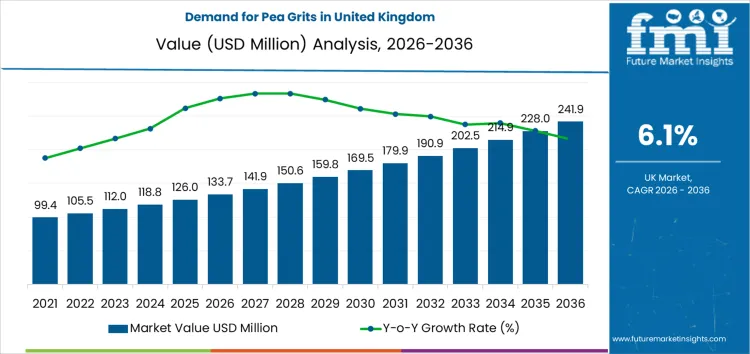
What is the Growth Forecast for Pea Grits in United Kingdom through 2036?
Demand for pea grits in the United Kingdom is expected to grow steadily through the forecast period, supported by rising consumer interest in plant-based foods and healthier eating habits. Food manufacturers are increasingly using pea-based ingredients in snacks, meat alternatives, bakery products, and ready meals, which is strengthening the long-term outlook for pea grits across both retail and foodservice channels.
Half-decade weighted growth analysis indicates consistent expansion, with stronger momentum in the early years as plant-based product development continues to accelerate. As pea grits gain wider acceptance for their nutritional benefits and functional performance in formulations, their use is expected to deepen across health-focused and sustainable product categories, supporting continued growth over the long term.
Key Takeaways for Demand for Pea Grits in United Kingdom
| Metric | Value |
|---|---|
| Industry Sales Value (2026) | USD 133.7 million |
| Industry Forecast Value (2036) | USD 241.9 million |
| Industry Forecast CAGR (2026 to 2036) | 6.1% |
Why is Demand for Pea Grits in United Kingdom Growing?
Demand for pea grits in the United Kingdom has increased from earlier levels as food manufacturers and ingredient suppliers expanded use of plant based protein and fibre sources. Historically, pea grits were used mainly in animal feed and specialised food products where their coarse texture and nutrient profile suited specific formulations. Over recent years, UK food and beverage producers began incorporating pea grits into a broader range of human food applications, including meat alternatives, snacks, and fortified cereals.
The shift reflects a broader change in product formulation driven by consumer interest in protein rich and plant derived ingredients that complement conventional recipes. Food processors found that pea grits provide functional benefits such as improved texture, bulk, and nutritional enhancement without relying on additives with limited consumer recognition. Increased availability of high quality pea grit supply from domestic and imported sources supported this uptake, enabling manufacturers to integrate the ingredient at scale. Demand from contract manufacturers and private label producers also contributed as product portfolios diversified to meet evolving retail and foodservice requirements.
Looking ahead, demand for pea grits in the United Kingdom is expected to continue rising as product developers and brands seek ingredients that align with evolving dietary patterns and operational needs. Growth will be supported by ongoing interest in plant based foods where pea grits serve both nutritional and functional roles. Foodservice operators may increase use of pea grits in prepared foods and menu items that emphasize protein and fibre content, reinforcing industry adoption.
Ingredient innovation and formulation research may expand the range of viable applications, including extruded snacks and textured components in composite foods. Regulatory frameworks for nutrition labelling and health claims could further influence how pea grit containing products are positioned in the industry. As consumer awareness of ingredient sources and dietary quality persists, demand for pea grits as a versatile ingredient in the UK food system is likely to remain on an upward trajectory.
What Are the Key Segments in the Demand for Pea Grits in the United Kingdom?
Demand for pea grits in the United Kingdom is driven by product type and flavor. Yellow pea grits dominate the product type segment with 65%, while sweet flavor leads the flavor segment at 70%. Green pea grits and savory flavor also contribute to the industry. These segments reflect the growing popularity of plant-based ingredients in food products and the diverse applications of pea grits in the food industry.
What Is the Product Type Segment of Demand for Pea Grits in the United Kingdom?
The product type segment for pea grits in the United Kingdom is led by yellow pea grits, which account for 65% of the industry share. Yellow pea grits are widely used in food processing due to their mild flavor, versatility, and nutritional benefits. They are commonly used in the production of plant-based snacks, breakfast cereals, and protein-rich food products, as well as in gluten-free formulations. The popularity of yellow pea grits is driven by the increasing demand for sustainable and plant-based ingredients that are rich in protein and fiber. Green pea grits follow as a smaller segment but are gaining traction in niche markets that focus on adding variety to plant-based offerings.
Green pea grits are used in similar applications as yellow pea grits, but they provide a slightly different flavor profile and color, making them ideal for use in certain food products where these attributes are desirable. The growth of the plant-based food market in the United Kingdom is expected to further drive demand for both yellow and green pea grits as consumers increasingly turn to legumes as an alternative to animal-based proteins. Yellow pea grits dominate the industry due to their established presence and broader acceptance in various food applications, but green pea grits are emerging as a viable alternative in specific product formulations.
What Is the Flavor Segment of Demand for Pea Grits in the United Kingdom?
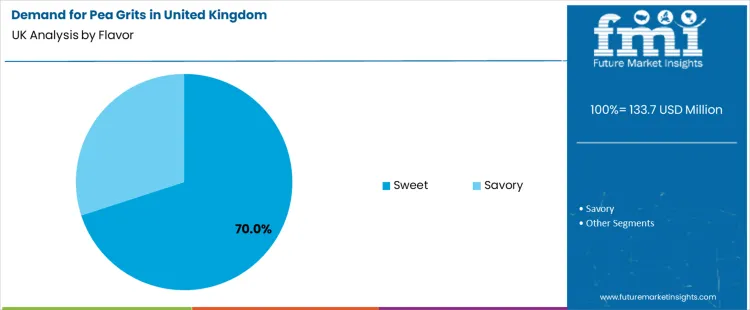
The flavor segment for pea grits in the United Kingdom is primarily led by sweet flavor, which captures 70% of the industry share. Sweet-flavored pea grits are widely used in the food industry for applications such as breakfast cereals, energy bars, baked goods, and snacks. Their mild, slightly sweet flavor makes them ideal for sweet snack products and desserts, as well as for creating plant-based alternatives to traditional sweet ingredients. The demand for sweet-flavored pea grits is driven by the increasing consumer interest in health-conscious and plant-based sweeteners, as well as the growing popularity of clean-label and natural products.
Savory-flavored pea grits, though representing a smaller portion of the industry, are also used in savory applications such as soups, stews, and savory snacks. These grits are valued for their ability to add texture and a subtle pea flavor to savory dishes, contributing to their use in plant-based meat alternatives and vegetarian recipes. As consumer demand for plant-based foods continues to rise in the United Kingdom, the popularity of both sweet and savory pea grits is expected to grow, with sweet flavor maintaining its dominance due to its broader applicability in the snack and dessert sectors. The flavor profile of pea grits plays a crucial role in determining their use in different food applications, with sweet-flavored variants currently leading the industry.
What are the Key Dynamics in the Demand for Pea Grits in the United Kingdom?
Demand for pea grits in the United Kingdom is connected to food processing trends and nutritional preferences. Pea grits are coarsely milled dried peas used in snacks, extruded foods, ready meals, soups, and plant based products. Their role as a source of protein and dietary fibre aligns with formulation needs for high protein, clean label products. Procurement levels respond to activity in food manufacturing, product reformulation, and changing consumer diets. Demand is also influenced by crop availability, import patterns, and seasonal agricultural cycles that affect raw material supply and pricing in food ingredient markets.
What are the Key Drivers for Pea Grits Demand in the United Kingdom?
Several factors support demand for pea grits in the United Kingdom. Growing interest in plant based diets and higher protein foods encourages food manufacturers to incorporate legume based ingredients that deliver nutritional value. Pea grits provide texture and nutritional attributes that suit snacks, cereal bars, and extruded products, reinforcing their use in product innovation. Cleaner ingredient lists and consumer preference for recognizable food components increase uptake in ready meals and healthy eating segments. Food formulators value pea grits for their functional properties in binding, bulking, and moisture management, supporting broader adoption in food processing operations.
What are the Restraints on Pea Grits Demand in the United Kingdom?
Despite positive indications, demand for pea grits in the United Kingdom faces restraints. Price variability for pulses, influenced by global crop yields and import costs, can affect procurement decisions for cost sensitive manufacturers. Technical challenges in formulation, including achieving desired texture and sensory properties in finished products, may limit use where alternatives perform better. Competition from other plant based ingredients, such as soy, wheat, and other pulse grits, can constrain demand when cost or functionality favours substitutes. Consumer segments focused on reduced carbohydrate intake may also limit demand in specific product categories.
What are the Key Trends in Pea Grits Demand in the United Kingdom?
Key trends influencing demand for pea grits in the United Kingdom include an upward shift toward plant based food innovation, where pulse ingredients are incorporated to boost protein content and fibre. Manufacturers are developing snacks and convenience foods that leverage the textural and nutritional qualities of pea grits. Clean label formulation remains important, with pea grits supporting ingredient lists perceived as simple and natural. Use of pea grits in extruded and bakery products reflects broader diversification of pulse based ingredient applications. Sustainability considerations in sourcing pulses and supporting local or regional supply chains are increasingly factored into ingredient procurement strategies.
What is the Country-Wise Demand for Pea Grits in the United Kingdom?
The country-wise demand for pea grits in the United Kingdom reflects varying growth trends across its regions. England leads the industry, driven by its strong food processing, snack, and plant-based product industries, where pea grits are used as a key ingredient. Scotland, Wales, and Northern Ireland follow with steady demand, supported by the rising popularity of plant-based and healthy food options. As consumers increasingly focus on nutritious, sustainable alternatives, the demand for pea grits is expected to rise across all regions. While England remains the dominant market, the other regions are also experiencing gradual growth, driven by the expanding demand for plant-based ingredients and functional foods.
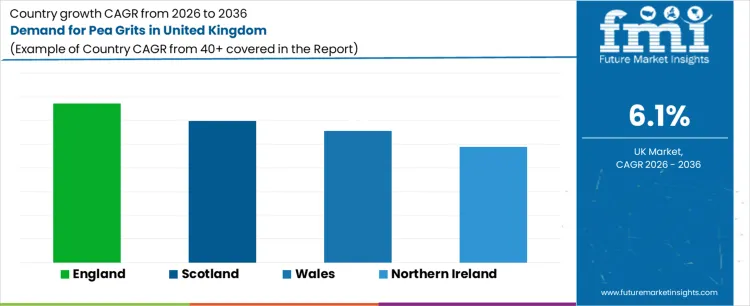
| Country | CAGR (2026 to 2036) |
|---|---|
| England | 6.7% |
| Scotland | 6.0% |
| Wales | 5.6% |
| Northern Ireland | 4.9% |
What is Driving the Demand for Pea Grits in England?
The demand for pea grits in England is projected to grow at a CAGR of 6.7% from 2026 to 2036. England’s large food processing, snack, and plant-based product industries are the key drivers of this demand. Pea grits are increasingly used in plant-based meat alternatives, snacks, and processed foods due to their nutritional profile and versatility. The growing shift towards plant-based diets, driven by health and environmental concerns, is fueling the demand for pea grits as a sustainable and high-protein ingredient. Additionally, the rising consumer demand for gluten-free and allergen-friendly products is further contributing to the growth of pea grits in the food industry. As England continues to embrace plant-based food trends, the demand for pea grits is expected to grow steadily, making it a key ingredient in the evolving food landscape.
How is the Demand for Pea Grits Performing in Scotland?
In Scotland, the demand for pea grits is expected to grow at a CAGR of 6.0% from 2026 to 2036. Scotland’s growing food and beverage industry, particularly in plant-based food production, is contributing to this increase in demand. As more Scottish consumers adopt plant-based diets and seek healthier, more sustainable food options, the demand for pea grits as a protein-rich ingredient is rising. Pea grits are used in the production of plant-based meat alternatives, soups, and other functional foods, which are becoming increasingly popular in Scotland. The growing focus on food innovation and the push for sustainable ingredients are further supporting the adoption of pea grits in Scottish food manufacturing. The shift towards plant-based eating habits in Scotland is expected to drive continued growth in the demand for pea grits in the coming years.
What Are the Growth Drivers for Pea Grits in Wales?
The demand for pea grits in Wales is projected to grow at a CAGR of 5.6% through 2036. The growing focus on health, sustainability, and plant-based foods is driving the demand for pea grits in the region. With an increasing number of Welsh consumers seeking plant-based protein sources, pea grits are becoming a popular ingredient in snacks, plant-based meat alternatives, and dairy substitutes. The expanding food processing sector in Wales, which is focusing on the development of healthier and more sustainable food products, is further contributing to the rise in demand. The need for gluten-free, allergen-friendly ingredients is also helping to drive the adoption of pea grits. As Wales continues to embrace healthier eating habits and sustainable food solutions, the demand for pea grits is expected to increase steadily, supporting growth in the region’s food and beverage industries.
What is the Outlook for Pea Grits Demand in Northern Ireland?
Northern Ireland’s demand for pea grits is expected to grow at a CAGR of 4.9% from 2026 to 2036. Although Northern Ireland represents the smallest market for pea grits in the United Kingdom, the demand is steadily increasing. The growing consumer shift toward plant-based diets and healthier food options is driving the adoption of pea grits in Northern Ireland. As more local food producers focus on creating plant-based meat alternatives, snacks, and other functional foods, the demand for pea grits is expected to rise. Additionally, Northern Ireland’s emphasis on sustainability and environmentally friendly food production practices is supporting the shift towards plant-based ingredients like pea grits. While the industry size remains smaller compared to other regions, the steady increase in plant-based product adoption and the growing focus on healthy eating will continue to drive the demand for pea grits in Northern Ireland.
What is the Competitive Landscape for Demand for Pea Grits in the United Kingdom?
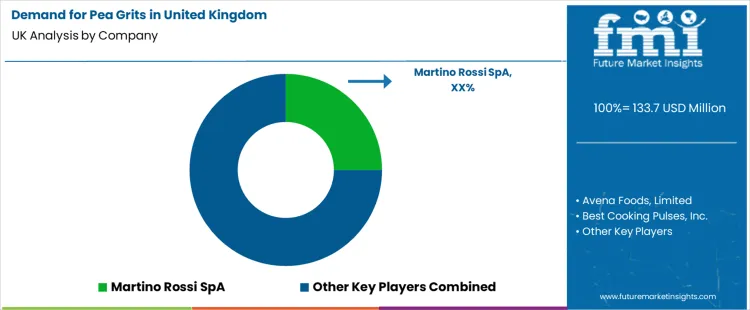
Demand for pea grits in the United Kingdom is shaped by requirements from food manufacturers, bakery sectors, snack producers, and plant based product developers. Pea grits are specified for texture enhancement, nutritional enrichment, and clean label positioning in formulations. Buyers consult product brochures to compare documented particle size distributions, protein content values, and recommended hydration performance for target applications. Martino Rossi SpA is positioned as a leading supplier, with brochures detailing grind grades, documented nutritional profiles, and handling guidelines that are referenced by formulation teams.
Documentation from Martino Rossi supports selection decisions where consistent functional performance is needed in bakery and extruded snack applications. Avena Foods, Limited participates with pea grit offerings supported by technical sheets listing documented functional attributes and recommended processing conditions, which assist manufacturers when aligning material selection with production parameters. Best Cooking Pulses, Inc. supplies pulses and processed fractions, with brochures that describe documented particle metrics and quality assurance data used by purchasing teams to verify compliance with specification criteria.
ADM’s documentation outlines standardized pea grit grades, documented protein levels, and processing notes that inform decisions across food segments. Ingredion provides ingredient systems that integrate pea grits with complementary functional starches, and its technical literature presents documented performance results under defined processing environments.
Procurement activity in the United Kingdom draws heavily on documented performance data and documented supply terms from these key suppliers. Demand patterns reflect scheduled production cycles in bakery and plant based lines where texture, nutritional contribution, and consistent supply matter. Buyers assess documented handling instructions, documented storage conditions, and documented compliance data during tender evaluations and contract negotiations.
Lead times, documented distribution capabilities, and minimum order terms are outlined in supplier brochures, informing supply planning. Technical teams review documented protein and fiber values to ensure alignment with formulation targets and labeling requirements. Competitive activity is grounded in documented specifications and documented quality standards provided by each company, forming the basis for selection decisions. Procurement professionals use these materials to align pea grit selection with processing needs, regulatory frameworks, and product performance objectives within the United Kingdom food industry.
Key Players of the Demand for Pea Grits in United Kingdom
- Martino Rossi SpA
- Avena Foods, Limited
- Best Cooking Pulses, Inc.
- ADM
- Ingredion
Scope of the Report
| Items | Values |
|---|---|
| Quantitative Units (2026) | USD Million |
| Product Type | Green Pea Grits, Yellow Pea Grits |
| End Use | Food Processing, Poultry Feeds, Food Services, Households, Others |
| Flavor | Sweet, Savory |
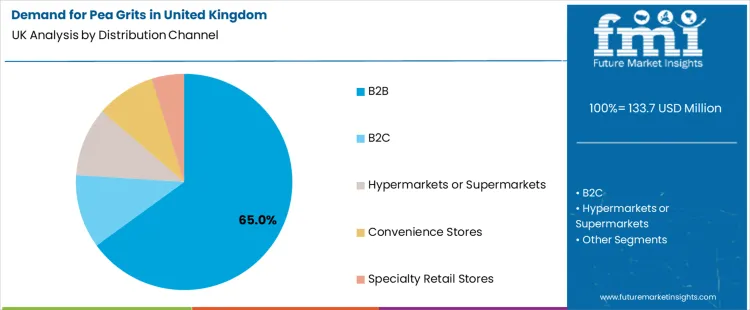
| Distribution Channel | B2B, B2C, Hypermarkets/Supermarkets, Convenience Stores, Specialty Retail Stores |
| Companies | Martino Rossi SpA, Avena Foods, Limited, Best Cooking Pulses, Inc., ADM, Ingredion |
| Regions Covered | United Kingdom |
| Countries Covered | England, Scotland, Wales, Northern Ireland |
| Additional Attributes | Dollar by sales by product type, end use, flavor, and distribution channel. Includes market trends towards sustainability, cost-effectiveness, and the role of pea grits in various food and feed applications. |
Demand for Pea Grits in United Kingdom
Product Type
- Green Pea Grits
- Yellow Pea Grits
End Use
- Food Processing
- Poultry Feeds
- Food Services
- Households
- Others
Flavor
- Sweet
- Savory
Distribution Channel
- B2B
- B2C
- Hypermarkets/Supermarkets
- Convenience Stores
- Specialty Retail Stores
Countries
- England
- Scotland
- Wales
- Northern Ireland
Bibliography
- Food Foundation. (2025). Bean facts 2025: Consumption patterns, nutritional value, and dietary guidance for the UK. The Food Foundation.
- United Kingdom. (2024). United Kingdom food security report 2024: Theme 1 — Global food availability and supply chain resilience. Government of the United Kingdom.
- Defra. (2025). Agriculture in the United Kingdom 2024. Department for Environment, Food & Rural Affairs.
Frequently Asked Questions
How big is the demand for pea grits in United Kingdom in 2026?
The demand for pea grits in United Kingdom is estimated to be valued at USD 133.7 million in 2026.
What will be the size of pea grits in United Kingdom in 2036?
The market size for the pea grits in United Kingdom is projected to reach USD 241.9 million by 2036.
How much will be the demand for pea grits in United Kingdom growth between 2026 and 2036?
The demand for pea grits in United Kingdom is expected to grow at a 6.1% CAGR between 2026 and 2036.
What are the key product types in the pea grits in United Kingdom?
The key product types in pea grits in United Kingdom are yellow pea grits and green pea grits.
Which end use segment is expected to contribute significant share in the pea grits in United Kingdom in 2026?
In terms of end use, food processing segment is expected to command 45.0% share in the pea grits in United Kingdom in 2026.
Preview the report firsthand - request a free sample
Get SampleGet the brochure for pricing and purchase details.
Get PDFTable of Content
- Executive Summary
- UK Market Outlook
- Demand-side Trends
- Supply-side Trends
- Technology Roadmap Analysis
- Analysis and Recommendations
- Market Overview
- Market Coverage / Taxonomy
- Market Definition / Scope / Limitations
- Market Background
- Market Dynamics
- Drivers
- Restraints
- Opportunity
- Trends
- Scenario Forecast
- Demand in Optimistic Scenario
- Demand in Likely Scenario
- Demand in Conservative Scenario
- Opportunity Map Analysis
- Product Life Cycle Analysis
- Supply Chain Analysis
- Investment Feasibility Matrix
- Value Chain Analysis
- PESTLE and Porter’s Analysis
- Regulatory Landscape
- Regional Parent Market Outlook
- Production and Consumption Statistics
- Import and Export Statistics
- Market Dynamics
- UK Market Analysis 2021 to 2025 and Forecast, 2026 to 2036
- Historical Market Size Value (USD Million) Analysis, 2021 to 2025
- Current and Future Market Size Value (USD Million) Projections, 2026 to 2036
- Y-o-Y Growth Trend Analysis
- Absolute $ Opportunity Analysis
- UK Market Pricing Analysis 2021 to 2025 and Forecast 2026 to 2036
- UK Market Analysis 2021 to 2025 and Forecast 2026 to 2036, By Product Type
- Introduction / Key Findings
- Historical Market Size Value (USD Million) Analysis By Product Type , 2021 to 2025
- Current and Future Market Size Value (USD Million) Analysis and Forecast By Product Type , 2026 to 2036
- Yellow Pea Grits
- Green Pea Grits
- Yellow Pea Grits
- Y-o-Y Growth Trend Analysis By Product Type , 2021 to 2025
- Absolute $ Opportunity Analysis By Product Type , 2026 to 2036
- UK Market Analysis 2021 to 2025 and Forecast 2026 to 2036, By End Use
- Introduction / Key Findings
- Historical Market Size Value (USD Million) Analysis By End Use, 2021 to 2025
- Current and Future Market Size Value (USD Million) Analysis and Forecast By End Use, 2026 to 2036
- Food Processing
- Poultry Feeds
- Food Services
- Households
- Others
- Food Processing
- Y-o-Y Growth Trend Analysis By End Use, 2021 to 2025
- Absolute $ Opportunity Analysis By End Use, 2026 to 2036
- UK Market Analysis 2021 to 2025 and Forecast 2026 to 2036, By Flavor
- Introduction / Key Findings
- Historical Market Size Value (USD Million) Analysis By Flavor, 2021 to 2025
- Current and Future Market Size Value (USD Million) Analysis and Forecast By Flavor, 2026 to 2036
- Sweet
- Savory
- Sweet
- Y-o-Y Growth Trend Analysis By Flavor, 2021 to 2025
- Absolute $ Opportunity Analysis By Flavor, 2026 to 2036
- UK Market Analysis 2021 to 2025 and Forecast 2026 to 2036, By Distribution Channel
- Introduction / Key Findings
- Historical Market Size Value (USD Million) Analysis By Distribution Channel, 2021 to 2025
- Current and Future Market Size Value (USD Million) Analysis and Forecast By Distribution Channel, 2026 to 2036
- B2B
- B2C
- Hypermarkets or Supermarkets
- Convenience Stores
- Specialty Retail Stores
- B2B
- Y-o-Y Growth Trend Analysis By Distribution Channel, 2021 to 2025
- Absolute $ Opportunity Analysis By Distribution Channel, 2026 to 2036
- Market Structure Analysis
- Competition Dashboard
- Competition Benchmarking
- Market Share Analysis of Top Players
- By Regional
- By Product Type
- By End Use
- By Flavor
- By Distribution Channel
- Competition Analysis
- Competition Deep Dive
- Martino Rossi SpA
- Overview
- Product Portfolio
- Profitability by Market Segments (Product/Age /Sales Channel/Region)
- Sales Footprint
- Strategy Overview
- Marketing Strategy
- Product Strategy
- Channel Strategy
- Avena Foods, Limited
- Best Cooking Pulses, Inc.
- ADM
- Ingredion
- Martino Rossi SpA
- Competition Deep Dive
- Assumptions & Acronyms Used
- Research Methodology


