

- Industry Size (2025)
- USD 1.3 Bn
- Forecast (2035)
- USD 1.8 Bn
- CAGR (2025 to 2035)
- 3.7%
Demand for Laminated Tubes in USA 2025 to 2035
The demand for laminated tubes in the USA is valued at USD 1.3 billion in 2025 and is forecasted to reach USD 1.8 billion by 2035, reflecting a CAGR of 3.7%. Demand is influenced by the consistent use of squeeze-tube packaging for personal care goods, oral care formulations, and topical pharmaceuticals. Manufacturers adopt laminated constructions to improve barrier performance, extend product stability, and maintain visual branding quality on store shelves. Growth in travel-friendly and single-use tube formats supports procurement across fast-moving consumer product lines.
Plastic barrier laminated tubes represent the leading category. These tubes provide enhanced protection against oxygen and moisture ingress, making them suitable for formulations containing active ingredients. Their lightweight structure, high-quality printability, and ability to integrate functional dispensing components reinforce widespread preference. Brands also adopt laminated solutions to support incremental material-use reduction while maintaining durability under consumer handling.
The West USA, South USA, and Northeast USA record the strongest utilization, supported by major oral-care production clusters, large personal-care brand operations, and strong distribution networks for pharmaceutical packaging. These regions maintain a high rate of packaging automation and multiproduct filling capabilities, contributing to recurring demand for laminated tube formats. Key suppliers include CCL Industries, Inc., Berry Global Group, Inc., Albéa S.A., Hoffmann Neopac AG, and Huhtamäki Oyj. Their strategies focus on advanced laminate structures, compatibility with recyclability protocols, and secure sealing technologies used in regulated consumer-health and personal-care product environments.
Quick Stats for USA Laminated Tubes Demand
- USA Laminated Tubes Sales Value (2025): USD 1.3 billion
- USA Laminated Tubes Forecast Value (2035): USD 1.8 billion
- USA Laminated Tubes Forecast CAGR (2025–2035): 3.7%
- Leading Category in USA Laminated Tubes Demand: Plastic Barrier Laminated (PBL) Tubes
- Key Growth Regions in USA Laminated Tubes Demand: West USA, South USA, Northeast USA
- Top Players in USA Laminated Tubes Demand: CCL Industries, Inc., Berry Global Group, Inc., Albéa S.A., Hoffmann Neopac AG, Huhtamäki Oyj
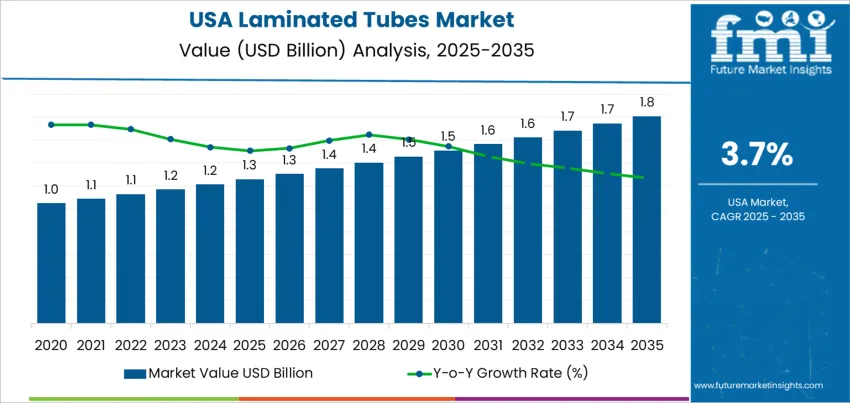
What is the Growth Forecast for Laminated Tubes Industry in USA through 2035?
Ten-year growth for demand for laminated tubes in the United States shows stronger expansion during the first half of the forecast period. Personal care and cosmetics products increase packaging upgrades as brands focus on barrier protection and premium surface finishes. This improves safety and shelf appeal for skincare and toothpaste products, which drives early momentum. Private-label penetration rises across retail channels, yielding additional gains in the early years.
During the second half, growth continues but moves at a slower pace. High penetration in oral care creates a mature category where replacement activity dominates. Cost sensitivity in mass-industry lines leads to competition from traditional plastic tubes and flexible pouches, which moderates acceleration. Incremental improvements in recyclability and downgauged structures still support procurement decisions but do not create large volume jumps.
The comparison indicates that the early period benefits from packaging modernization and category expansion, while the later period reflects steadier performance connected to established USAge patterns. Growth remains positive as brands maintain laminated structures to enhance barrier performance and visual branding across personal care products distributed through national retail networks.
USA Laminated Tubes Key Takeaways
| Metric | Value |
|---|---|
| USA Laminated Tubes Sales Value (2025) | USD 1.3 billion |
| USA Laminated Tubes Forecast Value (2035) | USD 1.8 billion |
| USA Laminated Tubes Forecast CAGR (2025-2035) | 3.7% |
Why is the Demand for Laminated Tubes in the USA Growing?
Demand for laminated tubes in the USA is increasing because personal care, pharmaceutical and household product manufacturers require packaging that offers barrier protection while remaining lightweight and visually appealing. Laminated structures prevent moisture, oxygen and light from affecting sensitive formulations such as toothpaste, topical medications and cosmetics, which supports long shelf life and precise dispensing. The popularity of travel sizes and single person households encourages brands to use tubes that provide controlled dosing and convenient portability.
E commerce growth reinforces the need for packaging that resists deformation during transport while maintaining product integrity. Digital and high definition printing on laminated tubes allows strong branding and compliance labeling within limited surface space, which benefits competitive categories in drugstores and supermarkets. Manufacturers value compatibility with existing filling lines and fast production changeovers for seasonal or promotional items. Constraints include competition from plastic and aluminum tubes that already have established supply networks. Sustainability pressure influences material selection, and companies review recyclability and resin content when planning new packaging lines. Cost comparisons may delay transitions for products that do not require high barrier properties.
Which Product Types, Cap Formats, and Tube Capacities Lead Demand for Laminated Tubes in the USA?
Demand for laminated tubes in the United States is driven by expanding personal care, oral care, and pharmaceutical product consumption, where hygiene, barrier strength, and branding quality are critical. Brands prefer packaging that protects formulations from oxygen, moisture, and contamination while offering premium shelf appeal. U.S. consumers show strong acceptance of squeezable, travel-compatible tubes supporting convenience and portability. Growth is also reinforced by sustainability initiatives and lightweight packaging trends across retail and e-commerce distribution networks.
By Product Type, Plastic Barrier Laminated (PBL) Tubes Dominate
Plastic Barrier Laminated tubes hold 65.0%, reflecting their flexibility, cost efficiency, and superior printability for cosmetics, oral care, and dermatological treatments. Their multi-layer construction offers strong resistance against leakage and deformation, aligning with transportation and storage needs across the United States. Aluminum Barrier Laminated tubes represent 35.0%, preferred in highly sensitive formulations requiring enhanced light, oxygen, and vapor protection such as medicated gels and premium skincare. Product type allocation reflects a balance between commercial affordability and barrier performance tailored to product sensitivity, shelf life requirements, and frequent consumer handling.
Key Points:
- PBL tubes support mass-market affordability and branding flexibility
- ABL tubes enable superior protection for complex formulations
- Selection depends on both barrier integrity and cost efficiency
By Cap Type, Stand-Up Caps Lead Demand
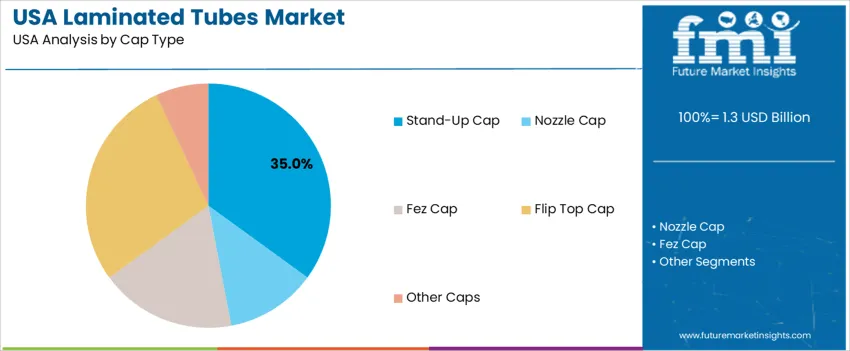
Stand-up caps account for 35.0%, enabling upright storage, spill prevention, and convenience-oriented dispensing for premium skincare and oral care products. Flip-top caps represent 28.0%, valued for one-hand USAbility, especially in shower and travel pack products. Fez caps hold 18.0%, used in toothpaste and pharmaceutical ointments where directional squeezing is required. Nozzle caps account for 12.0%, supporting precise application in adhesives and spot treatments. Other cap formats comprise 7.0%, serving niche industrial and specialty product lines. Cap selection emphasizes controlled dispensing, hygiene, and ergonomic handling aligned with consumer comfort.
Key Points:
- Stand-up caps improve convenience and product presentation
- Flip-top designs support fast access and everyday use
- Nozzle and fez caps address targeted application needs
By Capacity, Tubes Below 50 ml Lead Consumption
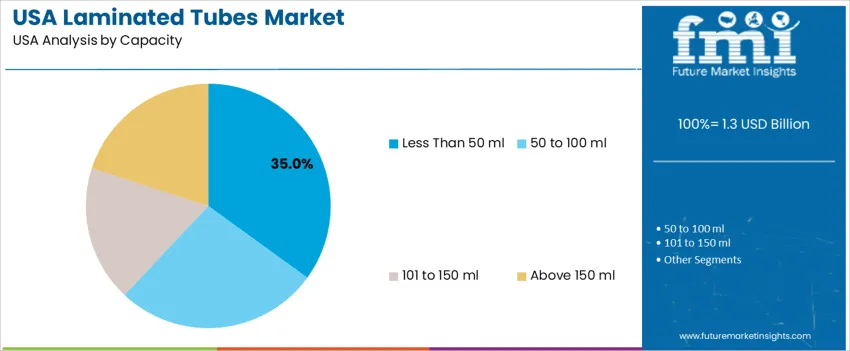
Tubes sized below 50 ml represent 35.0%, driven by travel-friendly skincare, sample packs, and compact medical preparations in U.S. retail and pharmacy channels. The 50–100 ml range holds 27.0%, widely used for oral care products and lotions purchased for routine household consumption. The 101–150 ml segment accounts for 18.0%, supporting body care products requiring higher dosage volumes. Tubes above 150 ml represent 20.0%, focused on value packs and mass-market personal hygiene formats. Capacity preferences align with portability, regulatory labeling space, and product dosing expectations across consumer categories.
Key Points:
- Small-sized tubes support portability and sampling behavior
- Mid-range capacities dominate oral and personal care consumption
- Large tubes address economic use in high-volume daily care
What are the Drivers, Restraints, and Key Trends of the Demand for Laminated Tubes in the USA?
Growth of cosmetic and personal care products, increased need for barrier protection in pharmaceuticals and expansion of travel-friendly packaging formats are driving demand.
In the United States, laminated tubes are widely used to package toothpaste, skincare creams, acne treatments and OTC ointments that require UV and oxygen protection to maintain ingredient stability. Beauty brands adopt laminated tubes for premium formulations where graphics and shelf appearance influence consumer choice in drugstores and specialty retailers. Pharmaceutical manufacturers rely on moisture-resistant tube structures to preserve potency in topical medications distributed through national pharmacy chains. Convenience-focused consumers prefer squeezable tubes for lotions and gels used at home, workplaces and during travel, supporting demand for multiple product sizes. Contract packaging providers expand laminated tube lines to serve private-label growth across mass retail channels. These performance and lifestyle factors sustain steady procurement.
Recycling challenges for multilayer laminates, price pressure in mass-market toiletries and competition from lightweight flexible pouches restrain demand.
Most laminated tubes combine plastic and aluminum layers that are difficult to separate for recycling in standard U.S. municipal systems, prompting retailers to evaluate alternatives that improve sustainability messaging. Large-volume toothpaste and body-care brands depend on cost-competitive packaging, which can limit adoption of newer laminates with higher material expense. Flexible pouches continue to replace tubes in some refills and travel formats due to lower weight and transport cost. Smaller beauty brands may avoid laminated structures when metal-free packaging aligns better with eco-marketing claims. These sustainability and pricing considerations create selective category growth.
Shift toward recyclable monomaterial laminates, increased customization through digital printing and rising demand in e-commerce-ready formats define key trends.
programs and corporate sustainability targets. High-resolution digital printing supports personalization, limited editions and faster design refreshes for beauty and OTC health products. Laminated tubes with improved drop resistance and tamper-evident sealing support parcel-shipping durability as online sales of skincare and oral-care products increase. Airless dispensing designs are gaining attention in premium skincare to protect active ingredients from oxidation. These developments indicate consistent, brand-driven demand for laminated tubes across the United States personal care and pharmaceutical packaging industry.
Analysis of the Demand for Laminated Tubes in the USA by Region
Demand for laminated tubes in the United States continues to increase as manufacturers of personal-care products, pharmaceuticals, and food pastes seek packaging that provides barrier protection, brandability, and ergonomic dispensing. Growth reflects consumer preference for lightweight tubes, supply-chain transitions from metal packaging, and investments in digital printing that support fast artwork changes for regional distribution models. Pharmaceutical filling lines adopt laminated tubes for topical treatments due to improved product-integrity performance. West USA leads with 4.3% CAGR, followed by South USA at 3.8%, Northeast USA at 3.4%, and Midwest USA at 3.0%. Expansion remains closely tied to filling-line modernization, resin availability, and specialist converter footprints across healthcare and cosmetics production clusters.
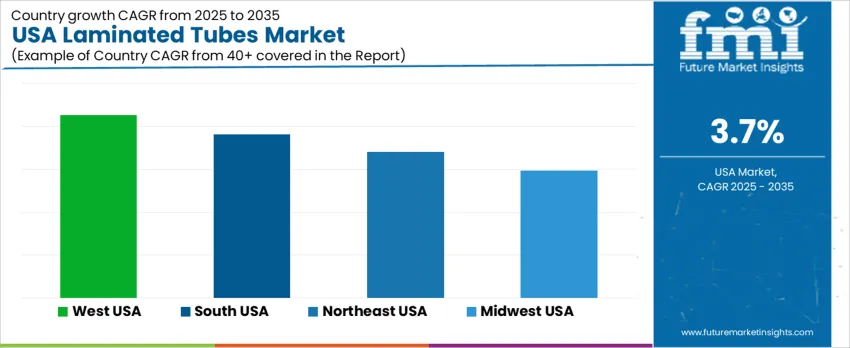
| Region | CAGR (2025-2035) |
|---|---|
| West USA | 4.3% |
| South USA | 3.8% |
| Northeast USA | 3.4% |
| Midwest USA | 3.0% |
How is the West USA shaping demand for laminated tubes?
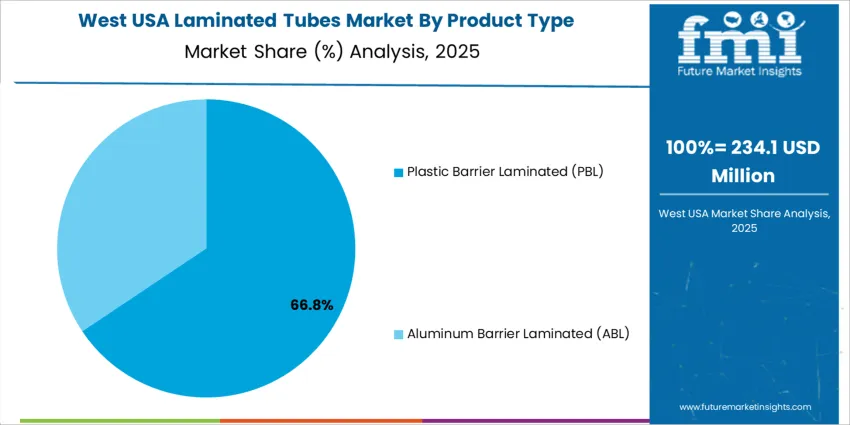
West USA achieves 4.3% CAGR, driven by major personal-care and cosmetic consumer brands based in California and Washington, where laminated tubes serve high-volume facial care, sunscreen, and beauty formulations. Regional converters adopt multi-layer structures that support improved oxygen and UV-barrier performance required in premium skin-care categories. Digital-printing capabilities enable rapid label customization for seasonal and limited-edition launches favored by direct-to-consumer brands. Pharmaceutical suppliers use laminated tubes for prescription and OTC topical products, requiring validated seal strength and precise dosing formats. Port-based logistics facilitate resin and laminate-sheet availability, supporting cost-efficient production scheduling. Buyers prioritize compatibility with existing high-speed filling systems and evaluate sustainability improvements such as reduced-foil structures and increased post-consumer resin incorporation.
- Cosmetic and skin-care packaging driving large-scale use
- Pharma tube adoption requiring validated sealing performance
- Digital printing supporting regional marketing flexibility
- Port logistics helping maintain stable laminate supply
How is the South USA contributing to demand growth?
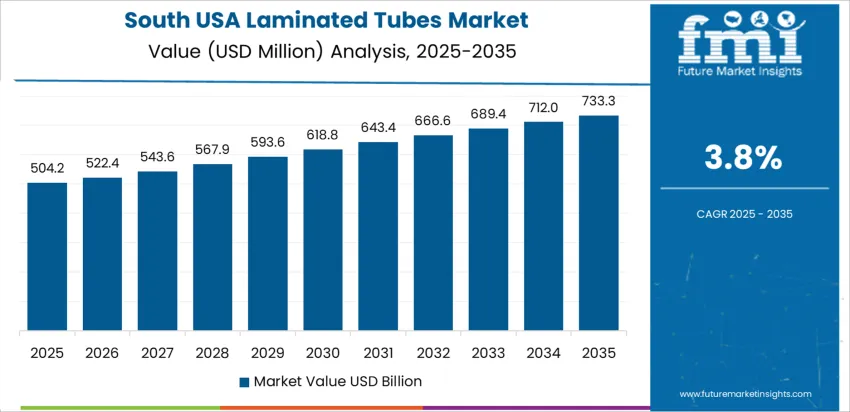
South USA posts 3.8% CAGR, supported by consumer-packaged-goods manufacturing across Texas, Georgia, and North Carolina, where household-care and personal-care tubes maintain steady procurement volume. Warm climates reinforce sunscreen and analgesic product demand, boosting seasonal filling activity. Large contract manufacturing facilities drive recurring laminate-tube orders aligned with major retail distribution agreements. Resin sourcing through Gulf Coast chemical hubs strengthens supply reliability for tube converters. Procurement reviews sealing efficiency, laminate durability, and tube-collar compatibility with established liquid and cream filling machines. E-commerce growth expands direct shipment of smaller-format tubes used for travel-sized and subscription-based products.
- Contract manufacturing supporting high annual output
- Climate-driven sun-care consumption aiding volume stability
- Resin supply proximity improving procurement flexibility
- E-commerce channels expanding small-format demand
How is the Northeast USA influencing laminated-tube requirements?
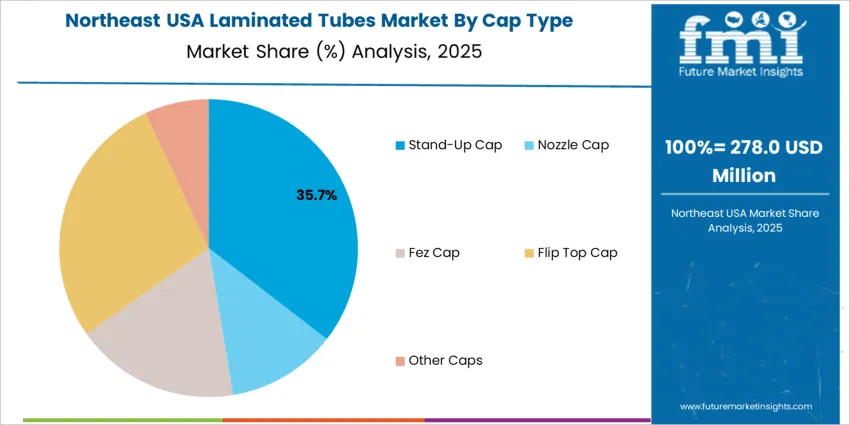
Northeast USA shows 3.4% CAGR, with concentration of pharmaceutical production in New Jersey and Pennsylvania shaping technical requirements for laminated tubes used in dermatology and wound-care treatments. Hospitals, pharmacies, and clinical distributors influence selection criteria around sterility compatibility and barrier consistency. Personal-care manufacturers located near major population centers rely on laminated tubes for premium moisturizers and treatment products sold in regional retail chains. Sustainable packaging mandates encourage interest in recyclable laminate structures. Production sites evaluate equipment changeovers that allow multi-SKU flexibility to serve dense industries with short replenishment cycles.
- Pharma production strengthening regulated tube demand
- Urban retail driving premium personal-care packaging
- Sustainability expectations guiding laminate selection
- Multi-SKU agility required for high-turnover distribution
How is the Midwest USA supporting laminated-tube adoption?
Midwest USA advances at 3.0% CAGR, driven by established household-care manufacturing hubs across Illinois, Wisconsin, and Ohio. Laminated tubes remain standard for adhesive gels, automotive pastes, and specific specialty-chemical products requiring controlled dispensing. Large supermarket distribution operations in the region support consistent tube movement into national retail networks. Cost-focused procurement favors laminated formats with durable barrier performance that extends product shelf life across multi-state logistics routes. Filling facilities maintain long-life equipment, creating demand for tubes compatible with legacy tooling and capping systems. Buyers assess resin-based sustainability enhancements only when material strength and sealing reliability match existing standards.
- Household and specialty-chemical packaging sustaining baseline demand
- Distribution centers driving consistent shipping volumes
- Legacy equipment compatibility influencing tube specification
- Durability and cost efficiency guiding procurement decisions
What does the competitive landscape for laminated-tube demand in the United States look like?
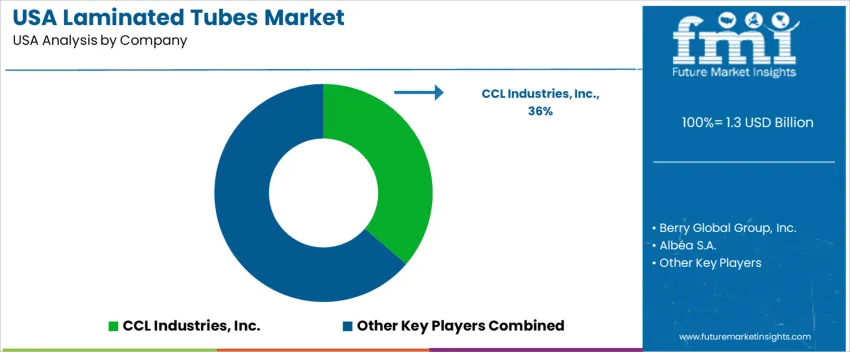
Laminated tubes in the United States are used in oral care, cosmetics, topical pharmaceuticals, and food-grade packaging. Demand is linked to brand differentiation through print quality, tactile finishes, and shelf-life protection for oxygen- and moisture-sensitive formulations. Procurement teams evaluate barrier performance, sealing reliability, and sustainability options such as reduced-plastic structures and compatibility with existing recycling streams. Consumer-facing brands prefer suppliers offering integrated design support and high-volume production capacity for nationwide retail distribution.
CCL Industries, Inc. holds an estimated 36.3% share. Its U.S. presence supports large oral-care brands with high-quality laminate structures and decoration effects adapted to premium personal-care lines. Berry Global Group, Inc. participates with tubes engineered for cosmetics and over-the-counter healthcare products, supplying major fill-finish operations domestically. Albéa S.A. delivers laminated tubes with strong print customization geared toward beauty, skincare, and specialized pharmaceuticals requiring premium barrier control.
Hoffmann Neopac AG contributes solutions for prescription-strength dermatology and child-resistant formats where dosing and durability must meet clinical packaging standards. Huhtamäki Oyj remains active in food-compatible laminated tubes and personal-care applications, supported by reliable manufacturing for regional contract packers. Competitive positioning in the United States depends on decoration fidelity, barrier-film innovation, cost-efficient scale, and alignment with sustainability targets adopted by major consumer goods companies.
Key Players in USA Laminated Tubes Demand
- CCL Industries, Inc.
- Berry Global Group, Inc.
- Albéa S.A.
- Hoffman Neopac AG
- Huhtamäki Oyj
Scope of the Report
| Items | Values |
|---|---|
| Quantitative Units | USD billion |
| Product Type | Plastic Barrier Laminated (PBL), Aluminum Barrier Laminated (ABL) |
| Cap Type | Stand-Up Cap, Nozzle Cap, Fez Cap, Flip Top Cap, Other Caps |
| Capacity | Less Than 50 ml, 50 to 100 ml, 101 to 150 ml, Above 150 ml |
| Neck Diameter | 13.5 mm, 16 mm, Other Customized Sizes |
| End Use | Cosmetics, Commercial, Pharmaceuticals, Oral Care, Home & Other Personal Care |
| Regions Covered | West USA, South USA, Northeast USA, Midwest USA |
| Key Companies Profiled | CCL Industries, Inc., Berry Global Group, Inc., Albéa S.A., Hoffman Neopac AG, Huhtamäki Oyj |
| Additional Attributes | Dollar sales by product type, cap type, and end-use sectors; demand traction in premium cosmetic and oral care packaging; shift toward recyclable and lightweight barrier film structures; customization trends in diameter, artwork printing, and sustainability claims; adoption driven by hygiene packaging formats in home care and pharmaceutical tubes; regional presence of personal care brands influencing order volumes; competition based on barrier performance, visual aesthetics, and supply chain reliability. |
USA Laminated Tubes Demand by Segments
Product Type:
- Plastic Barrier Laminated (PBL)
- Aluminum Barrier Laminated (ABL)
Cap Type:
- Stand-Up Cap
- Nozzle Cap
- Fez Cap
- Flip Top Cap
- Other Caps
Capacity:
- Less Than 50 ml
- 50 to 100 ml
- 101 to 150 ml
- Above 150 ml
Neck Diameter:
- 13.5 mm
- 16 mm
- Other Customized Sizes
End Use:
- Cosmetics
- Commercial
- Pharmaceuticals
- Oral Care
- Home & Other Personal Care
Region:
- West USA
- South USA
- Northeast USA
- Midwest USA
Frequently Asked Questions
How big is the demand for laminated tubes in USA in 2025?
The demand for laminated tubes in USA is estimated to be valued at USD 1.3 billion in 2025.
What will be the size of laminated tubes in USA in 2035?
The market size for the laminated tubes in USA is projected to reach USD 1.8 billion by 2035.
How much will be the demand for laminated tubes in USA growth between 2025 and 2035?
The demand for laminated tubes in USA is expected to grow at a 3.7% CAGR between 2025 and 2035.
What are the key product types in the laminated tubes in USA?
The key product types in laminated tubes in USA are plastic barrier laminated (pbl) and aluminum barrier laminated (abl).
Which cap type segment is expected to contribute significant share in the laminated tubes in USA in 2025?
In terms of cap type, stand-up cap segment is expected to command 35.0% share in the laminated tubes in USA in 2025.
Preview the report firsthand - request a free sample
Get SampleGet the brochure for pricing and purchase details.
Get PDFTable of Content
- Executive Summary
- USA Market Outlook
- Demand-side Trends
- Supply-side Trends
- Technology Roadmap Analysis
- Analysis and Recommendations
- Market Overview
- Market Coverage / Taxonomy
- Market Definition / Scope / Limitations
- Market Background
- Market Dynamics
- Drivers
- Restraints
- Opportunity
- Trends
- Scenario Forecast
- Demand in Optimistic Scenario
- Demand in Likely Scenario
- Demand in Conservative Scenario
- Opportunity Map Analysis
- Product Life Cycle Analysis
- Supply Chain Analysis
- Investment Feasibility Matrix
- Value Chain Analysis
- PESTLE and Porter’s Analysis
- Regulatory Landscape
- Regional Parent Market Outlook
- Production and Consumption Statistics
- Import and Export Statistics
- Market Dynamics
- USA Market Analysis 2020 to 2024 and Forecast, 2025 to 2035
- Historical Market Size Value (USD Million) Analysis, 2020 to 2024
- Current and Future Market Size Value (USD Million) Projections, 2025 to 2035
- Y-o-Y Growth Trend Analysis
- Absolute $ Opportunity Analysis
- USA Market Pricing Analysis 2020 to 2024 and Forecast 2025 to 2035
- USA Market Analysis 2020 to 2024 and Forecast 2025 to 2035, By Product Type
- Introduction / Key Findings
- Historical Market Size Value (USD Million) Analysis By Product Type , 2020 to 2024
- Current and Future Market Size Value (USD Million) Analysis and Forecast By Product Type , 2025 to 2035
- Plastic Barrier Laminated (PBL)
- Aluminum Barrier Laminated (ABL)
- Y-o-Y Growth Trend Analysis By Product Type , 2020 to 2024
- Absolute $ Opportunity Analysis By Product Type , 2025 to 2035
- USA Market Analysis 2020 to 2024 and Forecast 2025 to 2035, By Cap Type
- Introduction / Key Findings
- Historical Market Size Value (USD Million) Analysis By Cap Type, 2020 to 2024
- Current and Future Market Size Value (USD Million) Analysis and Forecast By Cap Type, 2025 to 2035
- Stand-Up Cap
- Nozzle Cap
- Fez Cap
- Flip Top Cap
- Other Caps
- Y-o-Y Growth Trend Analysis By Cap Type, 2020 to 2024
- Absolute $ Opportunity Analysis By Cap Type, 2025 to 2035
- USA Market Analysis 2020 to 2024 and Forecast 2025 to 2035, By Capacity
- Introduction / Key Findings
- Historical Market Size Value (USD Million) Analysis By Capacity, 2020 to 2024
- Current and Future Market Size Value (USD Million) Analysis and Forecast By Capacity, 2025 to 2035
- Less Than 50 ml
- 50 to 100 ml
- 101 to 150 ml
- Above 150 ml
- Y-o-Y Growth Trend Analysis By Capacity, 2020 to 2024
- Absolute $ Opportunity Analysis By Capacity, 2025 to 2035
- USA Market Analysis 2020 to 2024 and Forecast 2025 to 2035, By Neck Diameter
- Introduction / Key Findings
- Historical Market Size Value (USD Million) Analysis By Neck Diameter, 2020 to 2024
- Current and Future Market Size Value (USD Million) Analysis and Forecast By Neck Diameter, 2025 to 2035
- 13.5 mm
- 16 mm
- Other Customized Sizes
- Y-o-Y Growth Trend Analysis By Neck Diameter, 2020 to 2024
- Absolute $ Opportunity Analysis By Neck Diameter, 2025 to 2035
- USA Market Analysis 2020 to 2024 and Forecast 2025 to 2035, By End Use
- Introduction / Key Findings
- Historical Market Size Value (USD Million) Analysis By End Use, 2020 to 2024
- Current and Future Market Size Value (USD Million) Analysis and Forecast By End Use, 2025 to 2035
- Cosmetics
- Commercial
- Pharmaceuticals
- Oral Care
- Home & Other Personal Care
- Y-o-Y Growth Trend Analysis By End Use, 2020 to 2024
- Absolute $ Opportunity Analysis By End Use, 2025 to 2035
- Market Structure Analysis
- Competition Dashboard
- Competition Benchmarking
- Market Share Analysis of Top Players
- By Regional
- By Product Type
- By Cap Type
- By Capacity
- By Neck Diameter
- By End Use
- Competition Analysis
- Competition Deep Dive
- CCL Industries, Inc.
- Overview
- Product Portfolio
- Profitability by Market Segments (Product/Age /Sales Channel/Region)
- Sales Footprint
- Strategy Overview
- Marketing Strategy
- Product Strategy
- Channel Strategy
- Berry Global Group, Inc.
- Albéa S.A.
- Hoffman Neopac AG
- Huhtamäki Oyj
- CCL Industries, Inc.
- Competition Deep Dive
- Assumptions & Acronyms Used
- Research Methodology


