

- Industry Size (2025)
- USD 209.8 Mn
- Forecast (2035)
- USD 406.5 Mn
- CAGR (2025 to 2035)
- 6.8%
Demand for Magnetic Ablation Catheter in USA 2025 to 2035
The demand for magnetic ablation catheter in the USA is valued at USD 209.8 million in 2025 and is forecasted to reach USD 406.5 million by 2035, at a CAGR of 6.8%. Growth is driven by rising electrophysiology procedure volumes linked to atrial fibrillation, ventricular tachycardia, and other arrhythmias that require minimally invasive interventions. Magnetic ablation catheters are paired with external magnetic navigation systems to improve catheter stability and precision inside cardiac chambers. Their use reduces fluoroscopy exposure for patients and clinicians while enabling navigation in complex anatomies.
Magnetic navigation systems represent the leading product type. These systems support controlled catheter movements guided by real-time mapping data. Clinical adoption is supported by shorter recovery time, reduced complication rates, and improved procedural consistency. Hospitals and specialty cardiac centers continue upgrading to systems that integrate imaging, mapping, and robotic-assisted positioning.
Demand is highest in West USA, South USA, and Northeast USA. These regions have established cardiac care infrastructure, higher arrhythmia diagnosis rates, and wider reimbursement access for advanced ablation procedures. Training programs and electrophysiology labs in major metropolitan healthcare networks further reinforce uptake. Key suppliers include Medtronic plc, Abbott Laboratories, Boston Scientific Corporation, Biosense Webster Inc., and Biotronik SE & Co. KG. Their product strategies focus on improved steering control, compatibility with advanced mapping platforms, and enhancements in catheter tip sensing for reliable lesion creation in complex cardiac tissue.
Quick Stats for USA Magnetic Ablation Catheter Demand
- USA Magnetic Ablation Catheter Sales Value (2025): USD 209.8 million
- USA Magnetic Ablation Catheter Forecast Value (2035): USD 406.5 million
- USA Magnetic Ablation Catheter Forecast CAGR (2025–2035): 6.8%
- Leading Product Type in USA Magnetic Ablation Catheter Demand: Magnetic Navigation Systems
- Key Growth Regions in USA Magnetic Ablation Catheter Demand: West USA, South USA, Northeast USA
- Top Players in USA Magnetic Ablation Catheter Demand: Medtronic plc, Abbott Laboratories, Boston Scientific Corporation, Biosense Webster Inc., Biotronik SE & Co. KG
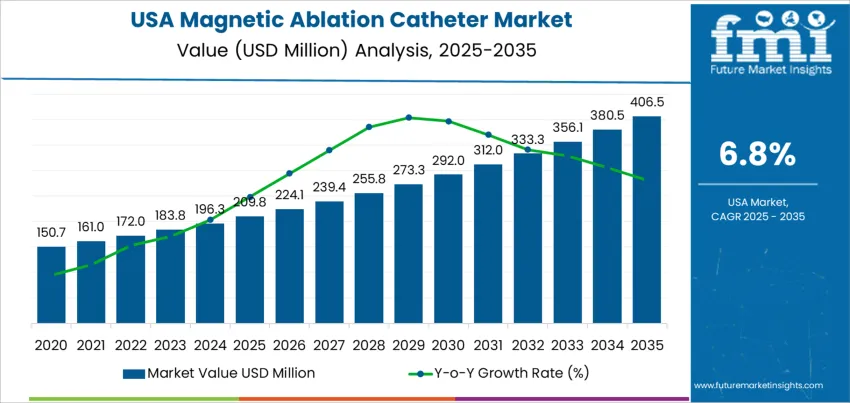
What is the Growth Forecast for Magnetic Ablation Catheter Industry in USA through 2035?
Demand for magnetic ablation catheters in the United States operates below saturation because adoption remains concentrated in specialized electrophysiology centers. Growth is supported by rising atrial fibrillation prevalence, an expanding elderly population, and higher procedure volumes in advanced cardiac care networks. Hospitals invest in magnetic-navigation systems to improve precision and reduce radiation exposure, which sustains capital-linked adoption of compatible catheter technologies.
Saturation pressures emerge slowly as these systems are expensive to maintain and require skilled operators. Many mid-sized hospitals continue relying on conventional ablation tools, limiting the overall penetration rate. Reimbursement factors also guide procurement decisions, since providers evaluate cost per procedure before upgrading equipment portfolios.
Replacement demand contributes stability where installed systems already exist, yet the number of centers capable of sustaining magnetic-based workflows grows at a measured pace. Product innovation such as improved navigation reliability and compatibility with integrated mapping platforms delays saturation by extending clinical value. The pattern indicates substantial headroom for future expansion in high-volume cardiac facilities while broader nationwide saturation remains distant due to infrastructure and cost constraints across the United States.
USA Magnetic Ablation Catheter Key Takeaways
| Metric | Value |
|---|---|
| USA Magnetic Ablation Catheter Sales Value (2025) | USD 209.8 million |
| USA Magnetic Ablation Catheter Forecast Value (2035) | USD 406.5 million |
| USA Magnetic Ablation Catheter Forecast CAGR (2025-2035) | 6.8% |
Why is the Demand for Magnetic Ablation Catheters in the USA Growing?
Demand for magnetic ablation catheters in the USA is increasing because more patients are being diagnosed with cardiac arrhythmias such as atrial fibrillation. These minimally invasive devices support targeted treatment by using magnetic guidance to position the catheter precisely inside the heart. Hospitals adopt magnetic navigation systems to improve accuracy, reduce tissue damage and lower the risk of complications during ablation.
Cardiologists prefer magnetic ablation when treating complex arrhythmic pathways because the catheter tip can be controlled with steady and consistent movement. As the number of outpatient cardiac centers grows, more facilities offer ablation as an early intervention option for patients who do not respond well to medication. The aging population and high prevalence of cardiovascular diseases continue to increase procedure volumes, which strengthens demand for advanced ablation tools. Constraints include high capital investment for magnetic control systems and longer learning curves for clinical teams. Smaller hospitals may continue relying on manual ablation techniques until procedure volumes justify new equipment. Reimbursement variation and cost sensitivity also influence purchasing decisions.
Which Product Types, Applications, and End Users Lead Demand for Magnetic Ablation Catheters in the USA?
Demand for magnetic ablation catheter technologies in the United States is expanding due to an increasing prevalence of cardiac arrhythmias, greater adoption of minimally invasive electrophysiology procedures, and continued hospital investment in advanced cardiac navigation systems. U.S. medical providers focus on precision-controlled ablation supported by magnetic guidance, helping reduce radiation exposure, improve catheter maneuverability, and enhance outcomes in complex arrhythmia cases. Industry growth is further reinforced by reimbursement support for cardiac ablation therapies and technology upgrades across cardiovascular care centers.
By Product Type, Magnetic Navigation Systems Lead Demand
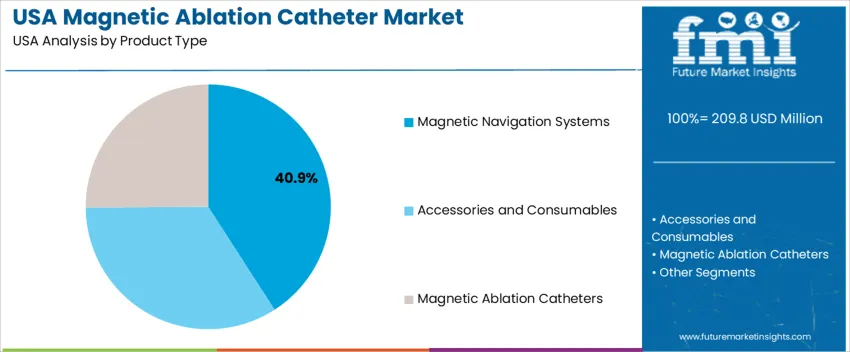
Magnetic navigation systems hold 40.9%, driven by their capability to provide precise and controlled catheter positioning during ablation procedures, especially in hard-to-reach cardiac tissue. Hospitals prioritize these systems to improve operator efficiency, reduce procedural complications, and lower reliance on fluoroscopy. Accessories and consumables represent 34.0%, reflecting recurring replacement cycles for single-use components such as catheters, mapping coils, and disposable magnetic devices used in EP procedures. Magnetic ablation catheters hold 25.1%, driven by rising ablation volumes but limited by higher procurement costs and system compatibility requirements. Product adoption aligns with improved safety standards, enhanced lesion accuracy, and reduced operator fatigue in complex arrhythmia therapies.
Key Points:
- Navigation systems dominate due to precision-controlled catheter movement
- Consumables contribute through high procedure frequency and replacement needs
- Magnetic ablation catheters grow with new system installations
By Application, Atrial Flutter Holds the Largest Share
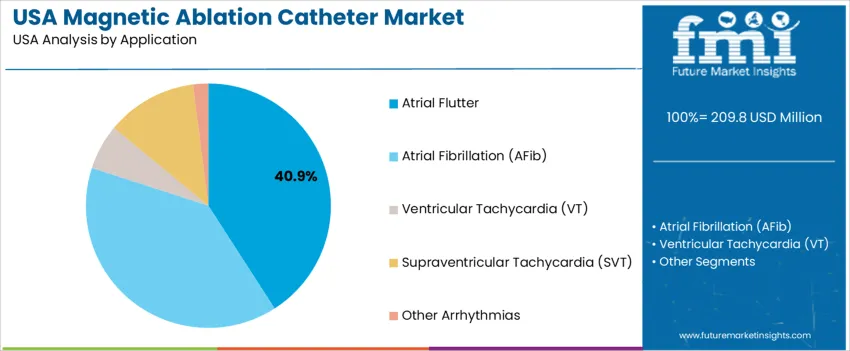
Atrial flutter accounts for 40.9%, supported by higher diagnosis rates and strong clinical success of catheter ablation as a preferred intervention. Atrial fibrillation follows at 39.1%, driven by a growing elderly population and early adoption of advanced magnetic-guided ablation for persistent AFib. Supraventricular tachycardia accounts for 12.0%, representing non-life-threatening but frequent procedures requiring reliable navigation. Ventricular tachycardia holds 6.0%, limited by complex treatment pathways and selective cases requiring specialized EP support. Other arrhythmias account for 2.0%, representing less prevalent indications. Application distribution reflects the procedural mix in U.S. electrophysiology practices and prioritization of ablation for high-burden rhythm disorders.
Key Points:
- AFib and atrial flutter are major clinical drivers in the U.S. electrophysiology landscape
- SVT procedures add steady volumes in EP labs
- VT remains niche, requiring advanced expertise and risk-mitigation strategies
By End User, Hospitals Drive the Majority of Procedures
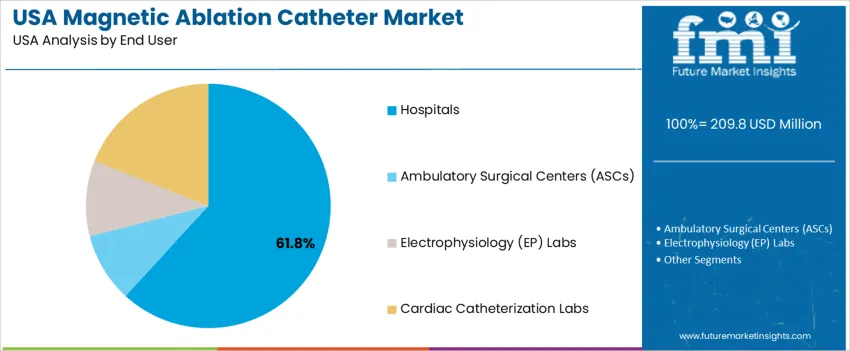
Hospitals represent 61.8%, acting as primary cardiac care providers equipped with advanced electrophysiology suites and trained specialists. Cardiac catheterization labs hold 19.0%, contributing significantly through integration with EP procedures in larger hospital networks. Electrophysiology labs account for 10.0%, reflecting growing installations in cardiovascular institutes and academic centers. Ambulatory surgical centers (ASCs) represent 9.2%, limited to lower-risk arrhythmia cases due to regulatory and monitoring requirements. End-user distribution supports the strong concentration of magnetic ablation procedures in high-infrastructure hospital environments across the United States.
Key Points:
- Hospitals lead due to advanced EP capabilities and high-volume patient intake
- Cath labs increasingly support integrated cardiac interventions
- ASC use remains selective, primarily for stable arrhythmia cases
What are the Drivers, Restraints, and Key Trends of the Demand for Magnetic Ablation Catheters in the USA?
Growth of atrial fibrillation treatment demand, expansion of electrophysiology lab capabilities and rising adoption of remote-navigation systems drive demand.
In the United States, the number of patients diagnosed with atrial fibrillation continues to rise as the population ages and cardiovascular risk factors remain prevalent. Hospitals invest in advanced electrophysiology suites capable of supporting catheter-based ablation procedures that reduce arrhythmia episodes and improve long-term outcomes. Magnetic ablation catheters work with robotic-navigation platforms that enable precise catheter guidance inside the heart, which supports adoption in high-volume centers focused on improved procedural consistency and reduced fluoroscopy exposure. Cardiologists increasingly treat more complex arrhythmias with minimally invasive approaches to avoid open-heart interventions and shorten recovery times. Insurance coverage for indicated ablation procedures remains established across most healthcare networks, reinforcing procedural volume and procurement needs for advanced catheter systems.
High capital cost of navigation equipment, specialized training requirements and reimbursement variability for advanced tools restrain demand.
Magnetic-navigation platforms require significant upfront investment, which delays acquisition for smaller hospitals and regional care facilities. Electrophysiology staff must receive technical training to operate the equipment and manage procedure workflows, which can limit adoption where experienced personnel are scarce. Hospitals evaluate equipment-use rates before committing to premium catheter technologies, especially in facilities with lower arrhythmia-ablation volume. Reimbursement structures generally support ablation procedures but do not always differentiate between standard and advanced tool selection, creating budget pressure when hospitals assess device costs. These practical challenges create uneven distribution of magnetic ablation systems across the country.
Shift toward robotic precision, increasing use in complex arrhythmia cases and rising focus on reducing radiation exposure define key trends.
Magnetic control enables operators to access difficult anatomical regions, which encourages broader use in persistent atrial fibrillation and ventricular arrhythmia treatment. Training partnerships between academic medical centers and community hospitals aim to expand access to skilled electrophysiology teams. Hospitals prioritize procedural safety by reducing fluoroscopy time, and magnetic systems support this objective through remote guidance and enhanced visualization. Digital data integration with mapping systems improves lesion accuracy and documentation for post-procedure evaluation. These developments indicate stable, technology-driven demand for magnetic ablation catheters in the United States concentrated inside advanced cardiac-care networks that specialize in electrophysiology services.
Analysis of the Demand for Magnetic Ablation Catheters in the USA by Region
Demand for magnetic ablation catheters in the United States is increasing as healthcare systems expand capability for advanced catheter-based cardiac procedures. The rise in atrial fibrillation cases, aging populations, and clinical preference toward minimally invasive electrophysiology treatments are strengthening adoption. Hospitals emphasize technologies that reduce radiation exposure, improve mapping precision, and shorten procedure time. Digital integration with robotic navigation and electro-anatomical mapping systems is accelerating replacement of older catheter models. West USA leads with 7.9% CAGR, followed by South USA at 7.0%, Northeast USA at 6.3%, and Midwest USA at 5.5%, with growth tied to electrophysiology infrastructure availability, specialist density, and hospital capital-equipment budgets.
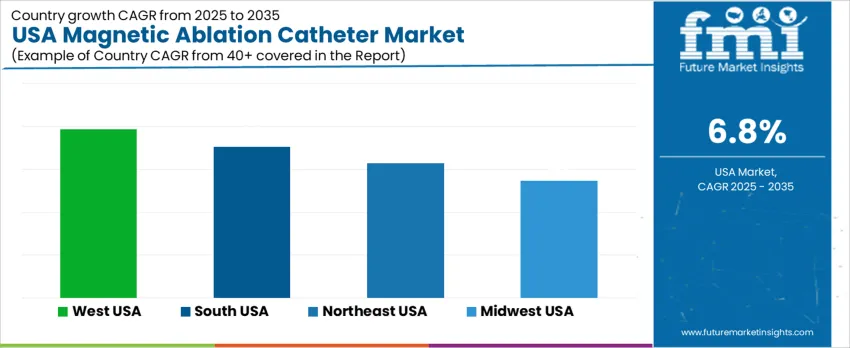
| Region | CAGR (2025-2035) |
|---|---|
| West USA | 7.9% |
| South USA | 7.0% |
| Northeast USA | 6.3% |
| Midwest USA | 5.5% |
How is the West USA driving demand for magnetic ablation catheters?
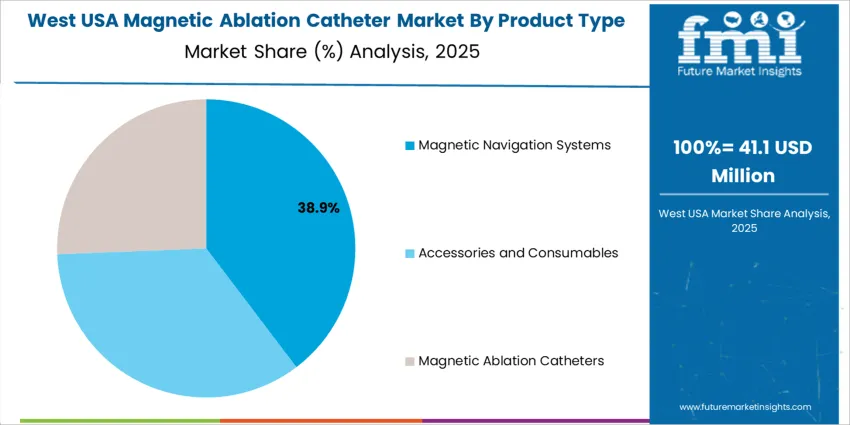
The West USA records 7.9% CAGR, driven by leading electrophysiology centers in California and Washington where hospitals invest in robotic-assisted catheterization systems. Large academic medical networks perform high volumes of atrial fibrillation and ventricular tachycardia ablations, requiring precision navigation tools that magnetic catheters provide. Technology evaluations focus on signal-transmission stability, improved tip-control accuracy, and compatibility with intra-cardiac mapping systems. Insurance participation supports reimbursement for minimally invasive ablation when clinical guidelines demonstrate improved patient outcomes. Private practices are establishing satellite electrophysiology labs equipped for complex cardiac-rhythm management, extending access beyond metro hubs. Procurement teams prioritize vendor service support and sterilization sustainability to streamline operating-room turnover.
- Academic hospitals supporting high-volume ablation treatments
- Capital budget allocation for robotic navigation integration
- Reimbursement alignment encouraging minimally invasive procedures
- Vendor service and sterilization efficiency influencing selection
How is the South USA supporting growth in adoption?
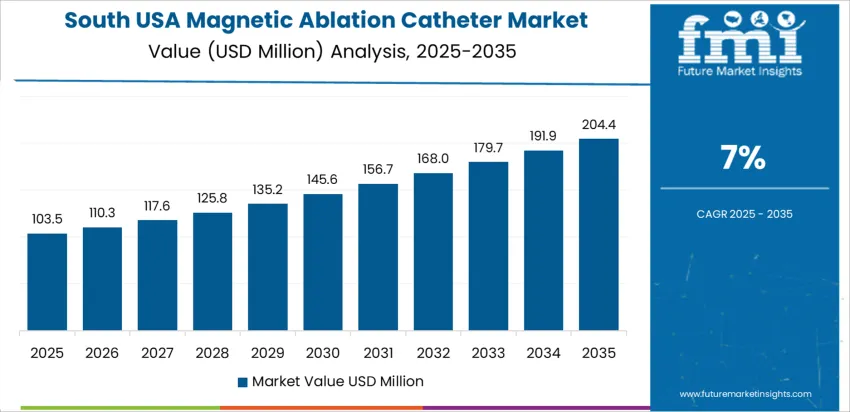
The South USA expands at 7.0% CAGR, driven by high cardiovascular burden across Texas, Florida, and Georgia. Electrophysiology programs incorporate magnetic-guided ablation to reduce fluoroscopy exposure for both clinical staff and patients. Regional hospital networks expand cath-lab capacity to serve growing suburban populations with elevated risk of arrhythmias linked to diabetes and hypertension trends. Outpatient cardiovascular centers increasingly adopt catheter-based procedures as alternatives to surgical interventions. Supply-chain routing through Gulf logistics hubs ensures reliable delivery of sterile-packed consumables needed for uninterrupted procedure scheduling.
- High arrhythmia prevalence requiring advanced care access
- Hospital expansion in fast-growing suburban regions
- Reduced-radiation clinical workflows shaping adoption
- Reliable consumable distribution supporting continuous procedure volume
How is the Northeast USA advancing demand patterns?
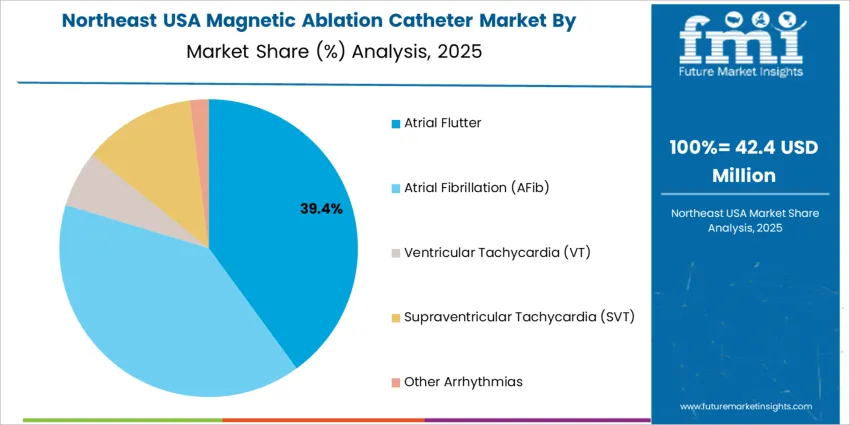
The Northeast USA achieves 6.3% CAGR, supported by premier cardiology institutes across New York, Pennsylvania, and Massachusetts that influence best-practice adoption nationwide. Hospitals deploy magnetic-navigation catheters for complex rhythm disorders in high-risk cardiac patients where precision is critical. Reimbursement approvals and clinical evidence help streamline procurement decisions. Dense populations enable concentrated procedure volumes, improving utilization rates of integrated mapping platforms. Physician training programs strengthen operator familiarity with advanced ablation tools, shortening learning curves for new installations. Buyers verify catheter tip durability and tracking fidelity for extended treatment durations.
- Clinical-research hospitals raising USAge of advanced ablation technology
- Strong reimbursement recognition encouraging accessibility
- Concentrated patient populations improving equipment utilization
- Professional training reducing adoption barriers
How is the Midwest USA contributing to adoption growth?
The Midwest USA grows at 5.5% CAGR, characterized by steady expansion of electrophysiology capacity in Illinois, Ohio, and Michigan. Health systems integrate magnetic-assisted catheters into standardized cardiac-care pathways supporting minimally invasive treatment options. Many facilities focus on reducing surgical waitlists by shifting eligible patients toward catheter-guided rhythm correction. Procurement emphasizes equipment-lifecycle reliability and catheter consistency across multiple procedure types, optimizing cost efficiency. Extended rural coverage areas motivate investment in mobile and community-connected health systems to broaden access to ablation services beyond metropolitan hospitals.
- Standardized cardiac-care protocols supporting uptake
- Procedure expansion reducing surgery dependency
- Cost-efficiency prioritization guiding procurement
- Mobile-care networks extending reach of specialized cardiac services
How is competitive positioning structured among magnetic ablation catheter suppliers in the United States?
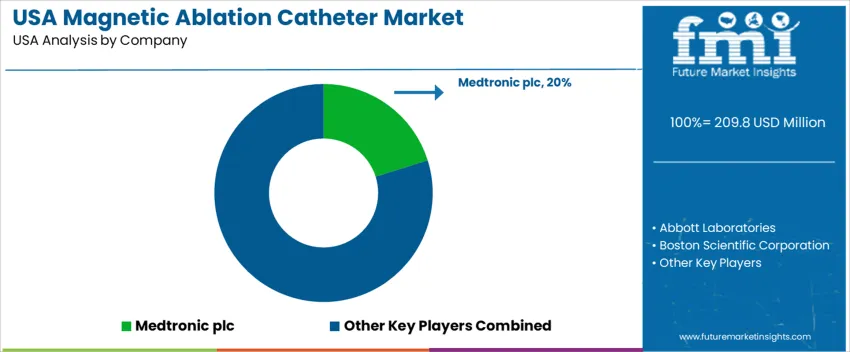
Competitive dynamics for magnetic ablation catheters in the United States are shaped by electrophysiology lab adoption, integration with navigation systems, and clinical evidence supporting precise lesion formation in atrial fibrillation and complex arrhythmias. Medtronic plc holds an estimated 20.2%, supported by proprietary magnetic-navigation compatibility and long-standing relationships with cardiac-rhythm-management centers. Its positioning benefits from standardized workflows and a broad cardiac device portfolio that strengthens clinical purchasing alignment.
Abbott Laboratories competes with advanced mapping connectivity and steerable catheter designs optimized for conduction-pathway targeting. Its presence expands where physicians prioritize tactile response and device interoperability within existing electrophysiology suites. Boston Scientific Corporation maintains share through ablation platforms designed to balance navigational control with catheter stability, appealing to centers transitioning from manual procedures toward more automated support.
Biosense Webster, Inc. (Johnson & Johnson) reinforces competitive advantage with integration into 3D electroanatomical mapping systems widely used to visualize complex cardiac structures. Adoption is strongest where operators rely on real-time visualization for precision placement. Biotronik SE & Co. KG focuses on durability and consistent energy delivery, gaining traction in programs emphasizing predictable outcomes and device longevity.
Key Players in USA Magnetic Ablation Catheter Demand
- Medtronic plc
- Abbott Laboratories
- Boston Scientific Corporation
- Biosense Webster, Inc. (Johnson & Johnson)
- Biotronik SE & Co. KG
Scope of the Report
| Items | Values |
|---|---|
| Quantitative Units | USD million |
| Product Type | Magnetic Navigation Systems, Accessories and Consumables, Magnetic Ablation Catheters |
| Application | Atrial Flutter, Atrial Fibrillation (AFib), Ventricular Tachycardia (VT), Supraventricular Tachycardia (SVT), Other Arrhythmias |
| End User | Hospitals, Ambulatory Surgical Centers (ASCs), Electrophysiology (EP) Labs, Cardiac Catheterization Labs |
| Regions Covered | West USA, South USA, Northeast USA, Midwest USA |
| Key Companies Profiled | Medtronic plc, Abbott Laboratories, Boston Scientific Corporation, Biosense Webster, Inc. (Johnson & Johnson), Biotronik SE & Co. KG |
| Additional Attributes | Dollar sales by product type, application spectrum, and end-user settings; regional procedure volume and arrhythmia treatment adoption; competitive landscape in catheter-based magnetic navigation technologies; integration with advanced electrophysiology mapping systems and minimally invasive ablation approaches; growth tied to rising AFib patient population, improved catheter precision, and EP lab upgrades across U.S. healthcare networks. |
USA Magnetic Ablation Catheter Demand by Segments
Product Type:
- Magnetic Navigation Systems
- Accessories and Consumables
- Magnetic Ablation Catheters
Application:
- Atrial Flutter
- Atrial Fibrillation (AFib)
- Ventricular Tachycardia (VT)
- Supraventricular Tachycardia (SVT)
- Other Arrhythmias
End User:
- Hospitals
- Ambulatory Surgical Centers (ASCs)
- Electrophysiology (EP) Labs
- Cardiac Catheterization Labs
Region:
- West USA
- South USA
- Northeast USA
- Midwest USA
Frequently Asked Questions
How big is the demand for magnetic ablation catheter in USA in 2025?
The demand for magnetic ablation catheter in USA is estimated to be valued at USD 209.8 million in 2025.
What will be the size of magnetic ablation catheter in USA in 2035?
The market size for the magnetic ablation catheter in USA is projected to reach USD 406.5 million by 2035.
How much will be the demand for magnetic ablation catheter in USA growth between 2025 and 2035?
The demand for magnetic ablation catheter in USA is expected to grow at a 6.8% CAGR between 2025 and 2035.
What are the key product types in the magnetic ablation catheter in USA?
The key product types in magnetic ablation catheter in USA are magnetic navigation systems, accessories and consumables and magnetic ablation catheters.
Which application segment is expected to contribute significant share in the magnetic ablation catheter in USA in 2025?
In terms of application, atrial flutter segment is expected to command 40.9% share in the magnetic ablation catheter in USA in 2025.
Preview the report firsthand - request a free sample
Get SampleGet the brochure for pricing and purchase details.
Get PDFTable of Content
- Executive Summary
- USA Market Outlook
- Demand-side Trends
- Supply-side Trends
- Technology Roadmap Analysis
- Analysis and Recommendations
- Market Overview
- Market Coverage / Taxonomy
- Market Definition / Scope / Limitations
- Market Background
- Market Dynamics
- Drivers
- Restraints
- Opportunity
- Trends
- Scenario Forecast
- Demand in Optimistic Scenario
- Demand in Likely Scenario
- Demand in Conservative Scenario
- Opportunity Map Analysis
- Product Life Cycle Analysis
- Supply Chain Analysis
- Investment Feasibility Matrix
- Value Chain Analysis
- PESTLE and Porter’s Analysis
- Regulatory Landscape
- Regional Parent Market Outlook
- Production and Consumption Statistics
- Import and Export Statistics
- Market Dynamics
- USA Market Analysis 2020 to 2024 and Forecast, 2025 to 2035
- Historical Market Size Value (USD Million) Analysis, 2020 to 2024
- Current and Future Market Size Value (USD Million) Projections, 2025 to 2035
- Y-o-Y Growth Trend Analysis
- Absolute $ Opportunity Analysis
- USA Market Pricing Analysis 2020 to 2024 and Forecast 2025 to 2035
- USA Market Analysis 2020 to 2024 and Forecast 2025 to 2035, By Product Type
- Introduction / Key Findings
- Historical Market Size Value (USD Million) Analysis By Product Type , 2020 to 2024
- Current and Future Market Size Value (USD Million) Analysis and Forecast By Product Type , 2025 to 2035
- Magnetic Navigation Systems
- Accessories and Consumables
- Magnetic Ablation Catheters
- Y-o-Y Growth Trend Analysis By Product Type , 2020 to 2024
- Absolute $ Opportunity Analysis By Product Type , 2025 to 2035
- USA Market Analysis 2020 to 2024 and Forecast 2025 to 2035, By Application
- Introduction / Key Findings
- Historical Market Size Value (USD Million) Analysis By Application, 2020 to 2024
- Current and Future Market Size Value (USD Million) Analysis and Forecast By Application, 2025 to 2035
- Atrial Flutter
- Atrial Fibrillation (AFib)
- Ventricular Tachycardia (VT)
- Supraventricular Tachycardia (SVT)
- Other Arrhythmias
- Y-o-Y Growth Trend Analysis By Application, 2020 to 2024
- Absolute $ Opportunity Analysis By Application, 2025 to 2035
- USA Market Analysis 2020 to 2024 and Forecast 2025 to 2035, By End User
- Introduction / Key Findings
- Historical Market Size Value (USD Million) Analysis By End User, 2020 to 2024
- Current and Future Market Size Value (USD Million) Analysis and Forecast By End User, 2025 to 2035
- Hospitals
- Ambulatory Surgical Centers (ASCs)
- Electrophysiology (EP) Labs
- Cardiac Catheterization Labs
- Y-o-Y Growth Trend Analysis By End User, 2020 to 2024
- Absolute $ Opportunity Analysis By End User, 2025 to 2035
- Market Structure Analysis
- Competition Dashboard
- Competition Benchmarking
- Market Share Analysis of Top Players
- By Regional
- By Product Type
- By Application
- By End User
- Competition Analysis
- Competition Deep Dive
- Medtronic plc
- Overview
- Product Portfolio
- Profitability by Market Segments (Product/Age /Sales Channel/Region)
- Sales Footprint
- Strategy Overview
- Marketing Strategy
- Product Strategy
- Channel Strategy
- Abbott Laboratories
- Boston Scientific Corporation
- Biosense Webster, Inc. (Johnson & Johnson)
- Biotronik SE & Co. KG
- Medtronic plc
- Competition Deep Dive
- Assumptions & Acronyms Used
- Research Methodology


