

- Industry Size (2025)
- USD 32.2 Mn
- Forecast (2035)
- USD 54.5 Mn
- CAGR (2025 to 2035)
- 5.4%
Demand for Magnetic Ablation Catheter in Japan Forecast and Outlook 2025 to 2035
The demand for magnetic ablation catheters in Japan is expected to grow steadily from USD 32.2 million in 2025 to USD 54.5 million in 2035, reflecting a 5.4% CAGR. Year-on-year (YoY) growth exhibits a consistent upward trend, with the largest increases occurring in the early years of the forecast period. From 2025 to 2026, demand increases by USD 1.8 million, reaching USD 34.0 million, representing a 5.6% YoY growth. This growth rate remains strong in subsequent years, as the technology for magnetic ablation catheters continues to gain adoption in Japan, driven by the growing number of heart-related treatments and a greater focus on minimally invasive procedures.
Quick Stats of the Demand for Magnetic Ablation Catheter in Japan
- Demand for Magnetic Ablation Catheter in Japan Value (2025): USD 32.2 million
- Demand for Magnetic Ablation Catheter in Japan Forecast Value (2035): USD 54.5 million
- Demand for Magnetic Ablation Catheter in Japan Forecast CAGR (2025-2035): 5.4%
- Demand for Magnetic Ablation Catheter in Japan Leading Product Type: Magnetic Navigation Systems
- Demand for Magnetic Ablation Catheter in Japan Key Growth Regions: Kyushu & Okinawa, Kanto, Kansai, Chubu, Tohoku, Rest of Japan
- Demand for Magnetic Ablation Catheter in Japan Top Players: Medtronic plc, Abbott Laboratories, Boston Scientific Corporation, Biosense Webster, Inc. (Johnson & Johnson), Biotronik SE & Co. KG
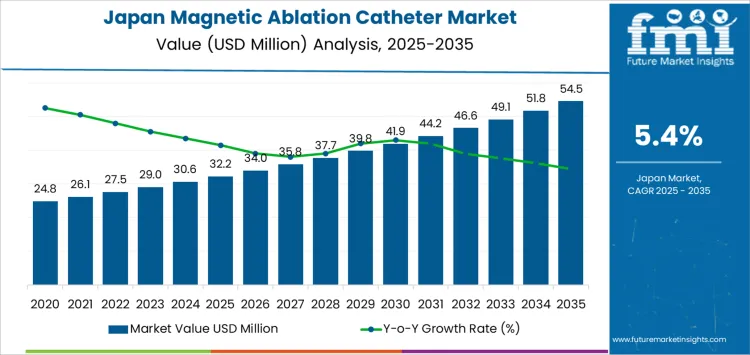
The growth continues but at a more moderate pace between 2026 and 2035, with YoY increments of approximately USD 1.8–2.0 million per year. For example, between 2030 and 2031, the demand is projected to grow from USD 41.9 million to USD 44.2 million, representing a 5.5% YoY growth, maintaining consistency in demand expansion. However, as the industry matures, the growth rate gradually stabilizes. By the end of the forecast period, the YoY growth becomes slightly more tempered but remains steady, reflecting the industry's continued reliance on magnetic ablation catheters for advanced heart treatments. Despite this gradual slowdown, the overall demand trajectory for magnetic ablation catheters remains positive, driven by ongoing technological advancements and the increasing need for precise, efficient treatment options in cardiac healthcare.
Demand for Magnetic Ablation Catheter in Japan Key Takeaways
| Metric | Value |
|---|---|
| Demand for Magnetic Ablation Catheter in Japan Value (2025) | USD 32.2 million |
| Demand for Magnetic Ablation Catheter in Japan Forecast Value (2035) | USD 54.5 million |
| Demand for Magnetic Ablation Catheter in Japan Forecast CAGR (2025-2035) | 5.4% |
Why is the Demand for Magnetic Ablation Catheter in Japan Growing?
The demand for magnetic ablation catheters in Japan is increasing as the country places a strong emphasis on advanced medical technologies for treating cardiovascular diseases. These catheters are primarily used in the treatment of arrhythmias, where targeted energy is delivered to specific parts of the heart to restore normal rhythm. The rising prevalence of cardiovascular conditions, especially in Japan’s aging population, is driving the demand for these specialized devices. As the population continues to age, there is a growing focus on improving healthcare outcomes and providing minimally invasive treatment options, with magnetic ablation catheters being at the forefront of such innovations.
The demand is further fueled by advancements in catheter technology, which have led to increased precision and improved safety during procedures. Newer models of magnetic ablation catheters offer better targeting capabilities, reducing the risks associated with treatments and contributing to quicker recovery times. These technological advancements make treatments more effective and have contributed to the widespread adoption of these devices in clinical settings.
Japan’s healthcare policies are promoting the use of cutting-edge medical technologies to enhance treatment efficiency and patient outcomes. The country's healthcare infrastructure is evolving, and awareness of effective arrhythmia treatments is increasing, making magnetic ablation catheters a valuable tool in addressing the growing healthcare needs. This combination of an aging population, technological innovations, and supportive healthcare policies is ensuring that the demand for magnetic ablation catheters will continue to rise, shaping the future of cardiovascular treatment in Japan.
What is the Segment-Wise Analysis of Demand for Magnetic Ablation Catheters in Japan?
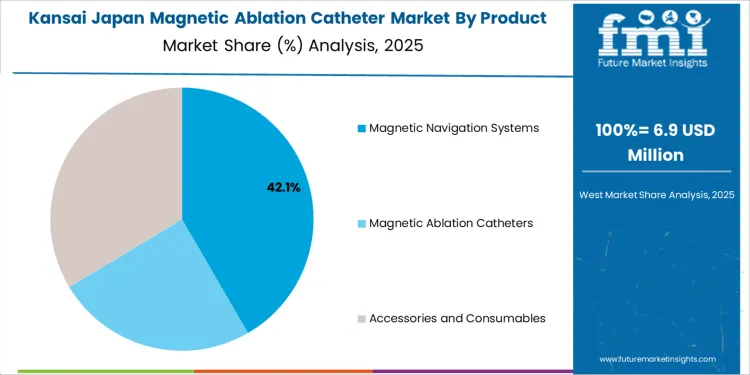
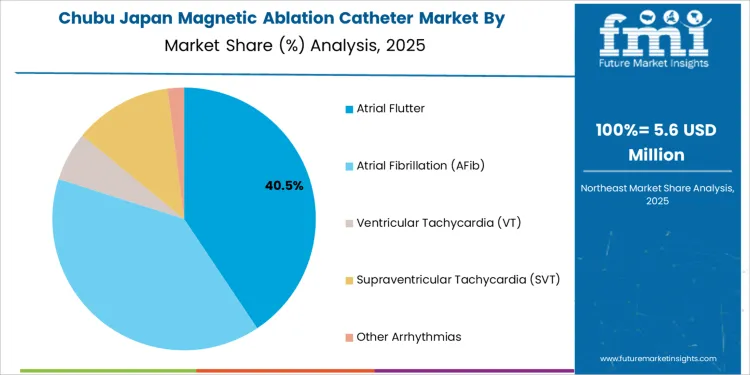
Demand for magnetic ablation catheters in Japan is segmented by product type, application, end user, and region. By product type, demand is divided into magnetic navigation systems, magnetic ablation catheters, and accessories and consumables, with magnetic navigation systems leading at 41%. The demand is also segmented by application, including atrial flutter, atrial fibrillation (AFib), ventricular tachycardia (VT), supraventricular tachycardia (SVT), and other arrhythmias, with atrial flutter accounting for 40.9%. End users include hospitals, ambulatory surgical centers (ASCs), electrophysiology (EP) labs, and cardiac catheterization labs. Regionally, demand spans across Kyushu & Okinawa, Kanto, Kansai, Chubu, Tohoku, and the rest of Japan.
How Do Magnetic Navigation Systems Lead the Demand for Magnetic Ablation Catheters in Japan?
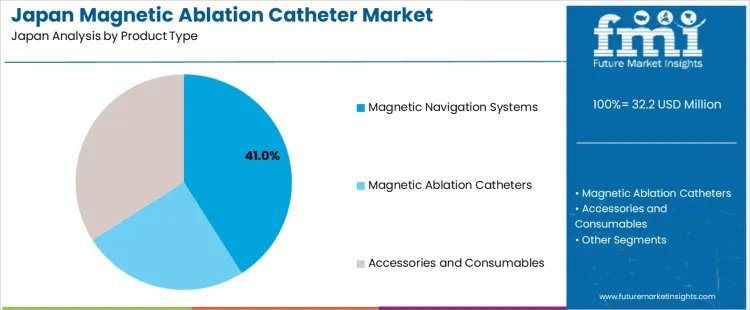
Magnetic navigation systems account for 41% of the demand for magnetic ablation catheters in Japan, driven by their ability to provide precise, minimally invasive treatments for arrhythmias. These systems use advanced electromagnetic technology to guide catheters with exceptional accuracy, improving outcomes in complex ablation procedures, particularly for conditions like atrial fibrillation and atrial flutter. Magnetic navigation enhances catheter placement precision, reducing the likelihood of complications and improving patient recovery times. As the demand for efficient, less invasive treatments grows, these systems are becoming increasingly popular in Japan's electrophysiology industry. The healthcare sector’s investment in cutting-edge technology and its focus on patient-centric care further fuel the adoption of magnetic navigation systems. Their role in improving the safety and success rates of ablation procedures makes them a vital component in the treatment of arrhythmias, ensuring their continued dominance in the industry for magnetic ablation catheters.
Why Does Atrial Flutter Lead the Demand for Magnetic Ablation Catheters in Japan?
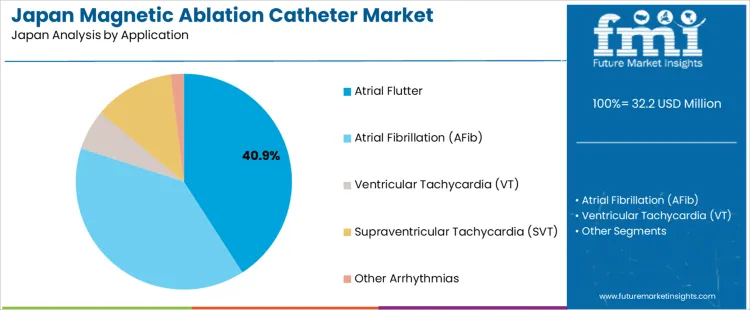
Atrial flutter accounts for 40.9% of the demand for magnetic ablation catheters in Japan, primarily due to the high prevalence of this arrhythmia and the growing preference for catheter ablation as an effective treatment. Atrial flutter, characterized by rapid and irregular heartbeats, often leads to serious health complications if untreated, making precise treatment essential. Magnetic ablation catheters offer a minimally invasive and highly effective solution for managing atrial flutter, reducing reliance on traditional methods like medication and surgery. The ability to perform accurate ablation with minimal recovery time is a major driver for their use. With Japan’s aging population and the increasing prevalence of cardiovascular diseases, the demand for effective treatments for atrial flutter is rising. As more patients seek long-term, efficient solutions, the use of magnetic ablation catheters for atrial flutter will continue to expand, solidifying their critical role in the treatment of this common arrhythmia.
What are the Key Trends, Drivers, and Restraints in Demand for Ablation Catheters in Japan?
Demand for ablation catheters in Japan is growing, driven by an increasing incidence of cardiac arrhythmias, particularly Atrial Fibrillation (AF), in the aging population. The rise in catheter-based cardiac ablation as a minimally invasive alternative to long-term medication or surgery is encouraging demand. The ablation catheter industry in Japan is a significant part of the electrophysiology (EP) devices industry. However, the high cost of advanced catheters, the need for skilled electrophysiologists, and the infrastructure required for complex procedures may limit adoption, particularly in smaller hospitals or rural areas.
Why is Demand for (Magnetic / Advanced) Ablation Catheters Growing in Japan?
The aging population is a primary driver; as older adults are more likely to develop arrhythmias such as AF. Minimally invasive procedures like catheter ablation offer a quicker recovery and better outcomes compared to traditional open-heart surgery, leading to increased preference. The rising healthcare investments in advanced electrophysiology technologies are expanding the number of medical centers that can perform ablation procedures. As hospitals increasingly adopt robotic and magnetic navigation systems to improve precision and reduce complications, demand for magnetic ablation catheters is expected to rise. The growing shift toward precision medicine and personalized treatment also contributes to the growing demand for advanced catheter technology.
How are Technological & Industry Innovations Driving Demand?
Advancements in catheter design, particularly magnetic and robotic navigation technologies, are enhancing the precision and safety of ablation procedures, thereby driving the demand for these devices in Japan. Magnetic ablation catheters allow for greater stability and navigation during procedures, reducing the risks associated with manual catheter manipulation. Integration with advanced EP mapping systems, real-time imaging, and 3D navigation improves the accuracy of ablation, leading to better patient outcomes and fewer complications. Innovations in energy delivery, such as radiofrequency, cryoablation, and balloon technologies, are also increasing the efficiency of the procedure, further driving demand. As healthcare systems in Japan increasingly prioritize minimally invasive and energy-efficient technologies, these innovations are making advanced ablation catheters more attractive to both patients and healthcare providers.
What are the Key Challenges and Risks That Could Limit Ablation Catheter Demand in Japan?
The high upfront cost of advanced catheter systems and the required hospital infrastructure could limit accessibility, particularly in smaller medical centers or rural areas. The need for skilled electrophysiologists to operate advanced catheters also presents a challenge, as training and specialization are required. Repeat ablations may be needed for patients with recurring arrhythmias, which could deter some individuals from opting for the procedure. Finally, regional disparities in the availability of electrophysiology specialists and access to cutting-edge ablation technologies may contribute to uneven adoption rates across the country. Concerns about the long-term cost-effectiveness and reimbursement for such high-end medical devices may hinder broader adoption.
What is the Regional Demand Outlook for Magnetic Ablation Catheters in Japan?
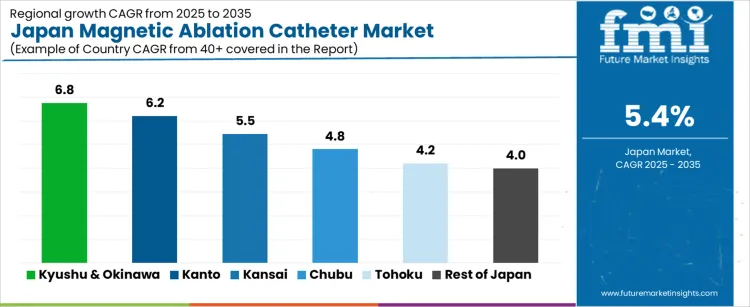
Demand for magnetic ablation catheters in Japan is growing steadily across all regions, with Kyushu & Okinawa leading at a 6.8% CAGR, driven by the increasing adoption of advanced medical technologies in the region's healthcare sector. Kanto follows with a 6.2% CAGR, supported by the region's large and technologically advanced healthcare infrastructure. Kansai shows a 5.5% CAGR, fueled by the region’s strong medical research base and growing need for advanced cardiovascular treatments. Chubu experiences a 4.8% CAGR, with steady demand from hospitals and medical centers investing in new treatment technologies. Tohoku and the Rest of Japan see moderate growth at 4.2% and 4.0%, respectively, as awareness of advanced medical treatments spreads across both urban and rural healthcare providers.
| Region | CAGR (%) |
|---|---|
| Kyushu & Okinawa | 6.8% |
| Kanto | 6.2% |
| Kansai | 5.5% |
| Chubu | 4.8% |
| Tohoku | 4.2% |
| Rest of Japan | 4.0% |
How is Demand for Magnetic Ablation Catheters Growing in Kyushu & Okinawa?
Kyushu & Okinawa leads the demand for magnetic ablation catheters, growing at a 6.8% CAGR. The region's increasing focus on healthcare innovation and the adoption of advanced medical technologies are key factors driving this growth. Kyushu & Okinawa are seeing more healthcare providers invest in minimally invasive procedures, particularly for cardiac and neurological conditions, where magnetic ablation catheters are highly effective. The region’s growing healthcare infrastructure, along with an aging population, is contributing to rising demand for advanced therapeutic solutions. Okinawa, with its focus on improving health outcomes for residents and tourists, is also seeing increased use of these catheters for efficient treatment. As healthcare providers in the region continue to upgrade their medical technologies, demand for magnetic ablation catheters is expected to remain strong, supporting continued growth in Kyushu & Okinawa’s medical sector.
Why is Demand for Magnetic Ablation Catheters Rising in Kanto?
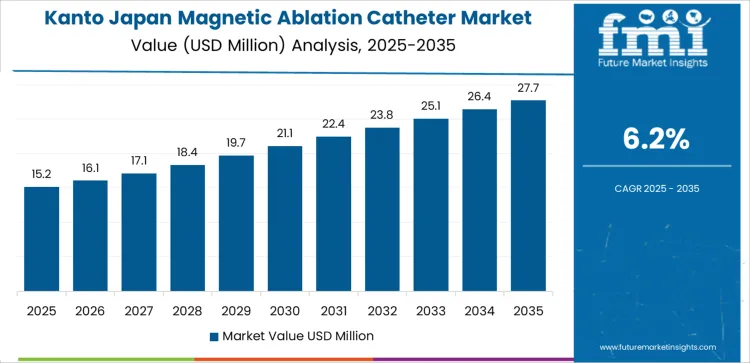
In Kanto, demand for magnetic ablation catheters is rising at a 6.2% CAGR. The region’s well-developed healthcare infrastructure, particularly in Tokyo, makes it a leading industry for advanced medical technologies, including ablation procedures. As one of Japan’s largest medical hubs, Kanto is home to numerous hospitals and medical centers that are increasingly adopting minimally invasive techniques for treating cardiovascular and neurological diseases. Magnetic ablation catheters are particularly valued for their precision and ability to reduce recovery times compared to traditional methods. The growing demand for high-quality, efficient treatments in Kanto, driven by both public and private healthcare sectors, supports this rising demand. The increasing prevalence of lifestyle-related diseases and an aging population further contribute to the need for advanced catheter-based therapies. As Kanto continues to lead in medical innovation, the demand for magnetic ablation catheters is expected to grow steadily.
How is Demand for Magnetic Ablation Catheters Expanding in Kansai?
Kansai shows steady demand for magnetic ablation catheters, growing at a 5.5% CAGR. The region’s strong medical research base and its focus on advanced cardiovascular and neurological treatments are key factors driving this growth. Cities like Osaka and Kyoto are home to numerous research institutions and hospitals that are adopting cutting-edge technologies to provide more effective, minimally invasive treatment options. Magnetic ablation catheters, which offer precise and efficient treatment for conditions like arrhythmia, are increasingly being integrated into these institutions’ medical practices. As the healthcare system in Kansai continues to modernize, the demand for advanced medical devices such as these catheters is expected to grow. Kansai’s aging population and the increasing prevalence of chronic conditions such as heart disease also contribute to the rising demand for these innovative treatment solutions, ensuring continued growth in the region’s industry for magnetic ablation catheters.
Why is Demand for Magnetic Ablation Catheters Growing in Chubu?
Chubu is experiencing steady demand for magnetic ablation catheters, growing at a 4.8% CAGR. The region’s healthcare providers are increasingly adopting advanced medical technologies to treat cardiovascular diseases and other conditions that benefit from minimally invasive treatments. Chubu’s strong industrial and technological sectors are also contributing to the growth, as local hospitals and medical centers invest in high-quality, effective treatment solutions. Magnetic ablation catheters, known for their precision and ability to reduce treatment time and recovery, are gaining traction in both public and private healthcare institutions in Chubu. The region’s focus on providing cutting-edge healthcare services and improving patient outcomes is driving the demand for these advanced therapeutic tools. As the medical sector in Chubu continues to evolve and modernize, demand for magnetic ablation catheters is expected to grow steadily, especially with the region’s emphasis on treating age-related conditions and chronic diseases.
How is Demand for Magnetic Ablation Catheters Expanding in Tohoku?
Tohoku is seeing moderate growth in magnetic ablation catheter demand, with a 4.2% CAGR. While the region’s healthcare adoption rate is slower compared to major urban centers, there is a growing interest in advanced medical technologies as Tohoku continues to modernize its healthcare infrastructure. As awareness of the benefits of minimally invasive procedures increases, local healthcare providers are gradually adopting these technologies to treat cardiovascular and neurological conditions more effectively. Tohoku’s aging population is a key driver of demand as older adults are more prone to conditions that benefit from catheter-based treatments. The region’s focus on improving healthcare access and patient care is contributing to the gradual adoption of magnetic ablation catheters. Over time, as the region’s healthcare system further integrates advanced technologies, the demand for these catheters is expected to increase, supporting steady industry growth.
Why is Demand for Magnetic Ablation Catheters Steady in the Rest of Japan?
The Rest of Japan is experiencing steady demand for magnetic ablation catheters, with a 4.0% CAGR. Although the adoption of these advanced medical devices is slower in smaller cities and rural areas, the growing need for effective treatments for cardiovascular and neurological conditions is driving demand. As healthcare systems across Japan continue to modernize and shift toward minimally invasive procedures, the Rest of Japan is gradually embracing technologies like magnetic ablation catheters. The region’s aging population, along with increased awareness of advanced medical treatments, is contributing to steady growth. Government support for improving healthcare infrastructure and access to innovative medical solutions is encouraging the adoption of magnetic ablation catheters in more rural and smaller cities. As these regions continue to invest in healthcare modernization and awareness increases, the demand for magnetic ablation catheters is expected to rise steadily.
What is Driving the Demand for Magnetic Ablation Catheters in Japan and Who Are the Key Providers?
The demand for magnetic ablation catheters in Japan is growing due to the rising incidence of cardiac arrhythmias, particularly Atrial Fibrillation (AF). As the Japanese population continues to age, the number of individuals affected by heart rhythm disorders is increasing. Magnetic ablation catheters are increasingly being adopted because they offer a minimally invasive treatment that provides high precision and stability. These catheters use magnetic guidance to navigate the heart, enabling accurate procedures that reduce tissue damage and improve success rates, thus addressing the growing need for effective arrhythmia treatments.
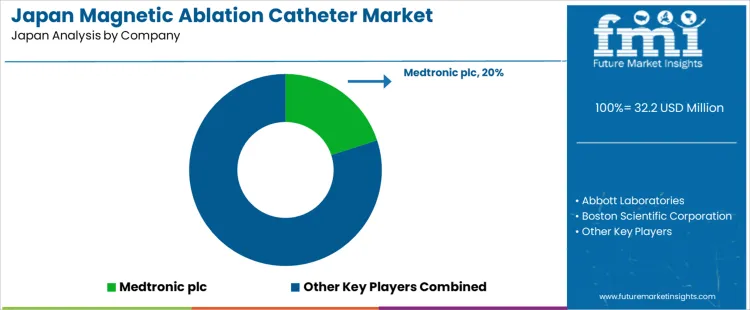
Key providers of magnetic ablation catheters in Japan include Medtronic plc, Abbott Laboratories, Boston Scientific Corporation, Biosense Webster, Inc. (part of Johnson & Johnson), and Biotronik SE & Co. KG. Medtronic leads the way with a 20.0% share, offering advanced magnetic navigation systems and ablation solutions for treating arrhythmias. These companies are critical in providing the cutting-edge technologies required for modern electrophysiology procedures, particularly in the treatment of AF. Their solutions help meet the increasing demand for minimally invasive, highly effective cardiac treatments in Japan's healthcare sector, which is focused on precision and improved patient outcomes.
As Japan’s healthcare system continues to emphasize innovation and efficient treatments, magnetic ablation catheters are becoming integral to cardiac care. With ongoing advancements in mapping systems, magnetic-guided catheter technology is enabling safer procedures, reducing recovery times, and improving treatment outcomes. The continued rise in arrhythmia cases due to Japan's aging population ensures that the demand for these specialized catheters will grow, allowing more patients to access advanced treatments and benefiting Japan’s overall healthcare landscape.
Key Players in Japan Magnetic Ablation Catheter Demand
- Medtronic plc
- Abbott Laboratories
- Boston Scientific Corporation
- Biosense Webster, Inc. (Johnson & Johnson)
- Biotronik SE & Co. KG
Scope of Report
| Items | Values |
|---|---|
| Quantitative Units (2025) | USD million |
| Product Type | Magnetic Navigation Systems, Magnetic Ablation Catheters, Accessories and Consumables |
| Application | Atrial Flutter, Atrial Fibrillation (AFib), Ventricular Tachycardia (VT), Supraventricular Tachycardia (SVT), Other Arrhythmias |
| End User | Hospitals, Ambulatory Surgical Centers (ASCs), Electrophysiology (EP) Labs, Cardiac Catheterization Labs |
| Region | Kyushu & Okinawa, Kanto, Kansai, Chubu, Tohoku, Rest of Japan |
| Countries Covered | Japan |
| Key Companies Profiled | Medtronic plc, Abbott Laboratories, Boston Scientific Corporation, Biosense Webster, Inc. (Johnson & Johnson), Biotronik SE & Co. KG |
| Additional Attributes | Dollar sales by product type and application; regional CAGR and growth trends; increasing demand for electrophysiology procedures; rising prevalence of atrial fibrillation and other arrhythmias. |
Japan Magnetic Ablation Catheter Demand by Key Segments
Product Type
- Magnetic Navigation Systems
- Magnetic Ablation Catheters
- Accessories and Consumables
Application
- Atrial Flutter
- Atrial Fibrillation (AFib)
- Ventricular Tachycardia (VT)
- Supraventricular Tachycardia (SVT)
- Other Arrhythmias
End User
- Hospitals
- Ambulatory Surgical Centers (ASCs)
- Electrophysiology (EP) Labs
- Cardiac Catheterization Labs
Region
- Kyushu & Okinawa
- Kanto
- Kansai
- Chubu
- Tohoku
- Rest of Japan
Frequently Asked Questions
How big is the demand for magnetic ablation catheter in Japan in 2025?
The demand for magnetic ablation catheter in Japan is estimated to be valued at USD 32.2 million in 2025.
What will be the size of magnetic ablation catheter in Japan in 2035?
The market size for the magnetic ablation catheter in Japan is projected to reach USD 54.5 million by 2035.
How much will be the demand for magnetic ablation catheter in Japan growth between 2025 and 2035?
The demand for magnetic ablation catheter in Japan is expected to grow at a 5.4% CAGR between 2025 and 2035.
What are the key product types in the magnetic ablation catheter in Japan?
The key product types in magnetic ablation catheter in Japan are magnetic navigation systems, magnetic ablation catheters and accessories and consumables.
Which application segment is expected to contribute significant share in the magnetic ablation catheter in Japan in 2025?
In terms of application, atrial flutter segment is expected to command 40.9% share in the magnetic ablation catheter in Japan in 2025.
Preview the report firsthand - request a free sample
Get SampleGet the brochure for pricing and purchase details.
Get PDFTable of Content
- Executive Summary
- Japan Market Outlook
- Demand-side Trends
- Supply-side Trends
- Technology Roadmap Analysis
- Analysis and Recommendations
- Market Overview
- Market Coverage / Taxonomy
- Market Definition / Scope / Limitations
- Market Background
- Market Dynamics
- Drivers
- Restraints
- Opportunity
- Trends
- Scenario Forecast
- Demand in Optimistic Scenario
- Demand in Likely Scenario
- Demand in Conservative Scenario
- Opportunity Map Analysis
- Product Life Cycle Analysis
- Supply Chain Analysis
- Investment Feasibility Matrix
- Value Chain Analysis
- PESTLE and Porter’s Analysis
- Regulatory Landscape
- Regional Parent Market Outlook
- Production and Consumption Statistics
- Import and Export Statistics
- Market Dynamics
- Japan Market Analysis 2020 to 2024 and Forecast, 2025 to 2035
- Historical Market Size Value (USD Million) Analysis, 2020 to 2024
- Current and Future Market Size Value (USD Million) Projections, 2025 to 2035
- Y-o-Y Growth Trend Analysis
- Absolute $ Opportunity Analysis
- Japan Market Pricing Analysis 2020 to 2024 and Forecast 2025 to 2035
- Japan Market Analysis 2020 to 2024 and Forecast 2025 to 2035, By Product Type
- Introduction / Key Findings
- Historical Market Size Value (USD Million) Analysis By Product Type , 2020 to 2024
- Current and Future Market Size Value (USD Million) Analysis and Forecast By Product Type , 2025 to 2035
- Magnetic Navigation Systems
- Magnetic Ablation Catheters
- Accessories and Consumables
- Y-o-Y Growth Trend Analysis By Product Type , 2020 to 2024
- Absolute $ Opportunity Analysis By Product Type , 2025 to 2035
- Japan Market Analysis 2020 to 2024 and Forecast 2025 to 2035, By Application
- Introduction / Key Findings
- Historical Market Size Value (USD Million) Analysis By Application, 2020 to 2024
- Current and Future Market Size Value (USD Million) Analysis and Forecast By Application, 2025 to 2035
- Atrial Flutter
- Atrial Fibrillation (AFib)
- Ventricular Tachycardia (VT)
- Supraventricular Tachycardia (SVT)
- Other Arrhythmias
- Y-o-Y Growth Trend Analysis By Application, 2020 to 2024
- Absolute $ Opportunity Analysis By Application, 2025 to 2035
- Japan Market Analysis 2020 to 2024 and Forecast 2025 to 2035, By End User
- Introduction / Key Findings
- Historical Market Size Value (USD Million) Analysis By End User, 2020 to 2024
- Current and Future Market Size Value (USD Million) Analysis and Forecast By End User, 2025 to 2035
- Hospitals
- Ambulatory Surgical Centers (ASCs)
- Electrophysiology (EP) Labs
- Cardiac Catheterization Labs
- Y-o-Y Growth Trend Analysis By End User, 2020 to 2024
- Absolute $ Opportunity Analysis By End User, 2025 to 2035
- Market Structure Analysis
- Competition Dashboard
- Competition Benchmarking
- Market Share Analysis of Top Players
- By Regional
- By Product Type
- By Application
- By End User
- Competition Analysis
- Competition Deep Dive
- Medtronic plc
- Overview
- Product Portfolio
- Profitability by Market Segments (Product/Age /Sales Channel/Region)
- Sales Footprint
- Strategy Overview
- Marketing Strategy
- Product Strategy
- Channel Strategy
- Abbott Laboratories
- Boston Scientific Corporation
- Biosense Webster, Inc. (Johnson & Johnson)
- Biotronik SE & Co. KG
- Medtronic plc
- Competition Deep Dive
- Assumptions & Acronyms Used
- Research Methodology


