

- Industry Size (2025)
- USD 52.8 Mn
- Forecast (2035)
- USD 86.8 Mn
- CAGR (2025 to 2035)
- 5.1%
Demand for Stent Graft Balloon Catheter in Japan Forecast and Outlook 2025 to 2035
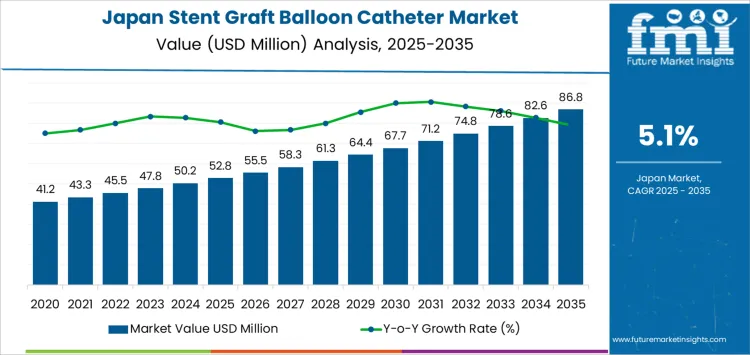
Clinical demand for stent graft balloon catheter in Japan stands at USD 52.8 million in 2025 and is projected to reach USD 86.8 million by 2035, reflecting a CAGR of 5.1%. This demand profile is shaped by consistent caseloads in peripheral artery disease, aortic repair, and complex endovascular interventions. Non-compliant balloon systems form the technical backbone of most procedures, while compliant variants support vessel preparation and controlled expansion use cases. Hospitals remain the primary procedural setting, supported by growing activity in cardiac centers and ambulatory surgical facilities. Kanto and Kinki account for the highest procedure density due to advanced vascular surgery infrastructure. Domestic and multinational device suppliers compete through portfolio depth, catheter trackability, and inflation control performance rather than pricing alone.
Regional utilization patterns across Chubu, Tohoku, Kyushu, and Hokkaido reflect stable institutional purchasing tied to public health system budgeting cycles. Demand growth is supported by an aging population with rising incidence of aneurysms and occlusive vascular disorders managed through minimally invasive repair pathways. Procedure volumes expand within tertiary hospitals where hybrid operating rooms and imaging integration raise catheter usage rates per case. Cardiac centers broaden their endovascular service lines beyond coronary work into peripheral and structural segments, raising repeat order frequency. Ambulatory centers expand selectively in lower risk iliac and femoropopliteal cases. Supplier strategies in Japan emphasize physician training programs, faster product approvals, and localization of catheter sizing to match patient anatomy trends observed across national vascular registries.
Quick Stats of the Stent Graft Balloon Catheter Industry in Japan
- Stent Graft Balloon Catheter Industry in Japan Value (2025): USD 52.8 million
- Stent Graft Balloon Catheter Industry in Japan Forecast Value (2035): USD 86.8 million
- Stent Graft Balloon Catheter Industry in Japan Forecast CAGR (2025-2035): 5.1%
- Leading Product in Stent Graft Balloon Catheter Industry in Japan: Non-complaint Balloon Stents Catheter (85%)
- Key Growth Regions in Stent Graft Balloon Catheter Industry in Japan: Kanto, Kinki, Kyushu & Okinawa
- Top Players in Stent Graft Balloon Catheter Industry in Japan: Medtronic, Boston Scientific, Abbott Laboratories, Cordis, Atrium Medical
What is the Demand Forecast for Stent Graft Balloon Catheter in Japan through 2035?
Demand for stent graft balloon catheter in Japan reaches USD 52.8 million in 2025 and advances to USD 64.4 million by 2030, adding USD 11.6 million across the first half of the outlook. The rise from USD 41.2 million in 2020 reflects higher procedural throughput in endovascular aneurysm repair and peripheral artery disease management. Adoption is closely tied to the growing share of catheter-based vascular repair over surgical bypass in aging patient groups. Tertiary hospitals account for most early growth as complex aortic and iliac interventions expand. Demand during this phase is shaped by rising case volumes per center, repeat procedures for chronic vascular disease, and wider physician training in advanced balloon-assisted graft deployment.
From 2030 to 2035, demand increases from USD 64.4 million to USD 86.8 million, creating a stronger USD 22.4 million value build in the later phase. Annual additions widen as procedure intensity rises across community hospitals that establish dedicated endovascular programs. Greater use of stent graft systems in trauma-related vascular repair and emergency dissections supports higher catheter utilization rates. Device selection shifts toward higher diameter precision and improved trackability, lifting average system value per procedure. Reintervention cases linked to graft migration and restenosis also contribute steady repeat demand. By 2035, stent graft balloon catheter demand in Japan reflects sustained growth in minimally invasive vascular therapy volumes rather than episodic equipment replacement cycles.
Alopecia Treatment Industry in Japan Key Takeaways
| Metric | Value |
|---|---|
| Industry Value (2025) | USD 606.6 million |
| Forecast Value (2035) | USD 1,198.9 million |
| Forecast CAGR (2025-2035) | 7.1% |
What Is Driving the Demand for Alopecia Treatment in Japan?
The demand for alopecia treatment in Japan is shaped by early medical consultation behavior, strong workplace appearance norms, and widespread access to dermatology services. Hair thinning is addressed at earlier stages than in many regions due to social visibility in professional environments and the cultural emphasis on neat presentation. Urban dermatology clinics and dedicated hair loss practices normalized medical treatment across male and female patients over the past decade. Pharmacy availability of approved topical therapies supports continuous, self-managed care outside clinics. Diagnostic awareness around female pattern hair loss also expanded through gynecology and dermatology collaboration, which broadened the treated population beyond traditional male cohorts. Corporate health programs and routine health screenings further strengthened early detection and treatment entry.
Future demand for alopecia treatment in Japan will be shaped by rising work related stress, sleep disruption linked to digital lifestyles, and greater acceptance of long term preventive therapy. Younger patients are initiating treatment earlier due to high self-image exposure on social platforms and increased discussion of scalp health in consumer media. Teledermatology and subscription based treatment delivery will support access in regional areas. Barriers include long treatment timelines before visible improvement, out of pocket cost for non-insured therapies, and uneven response across patients. Safety concerns around continuous drug use also affect adherence. Long term demand will depend on sustained clinical confidence, early intervention habits, and integration of medical treatment with cosmetic scalp care approaches across Japan.
What Is the Demand for Alopecia Treatment in Japan by Product and End User?
The demand for alopecia treatment in Japan within device based clinical intervention is shaped by hospital centered care delivery, procedural dermatology growth, and rising patient preference for in clinic solutions. Non complaint balloon stents catheter leads by product due to its dominance in interventional vascular applications linked with advanced dermatologic and reconstructive procedures. Hospitals lead by end user because most complex procedural treatments remain concentrated in large inpatient facilities. Procurement follows institutional purchasing frameworks and physician preference patterns. Import reliance remains present for precision catheter components. Substitution pressure exists across device categories based on procedural complexity and cost exposure. Demand stability is supported by steady procedural volume and hospital based dermatologic care expansion.
Why does non complaint balloon stents catheter dominate the demand for alopecia related interventional treatment in Japan by product?
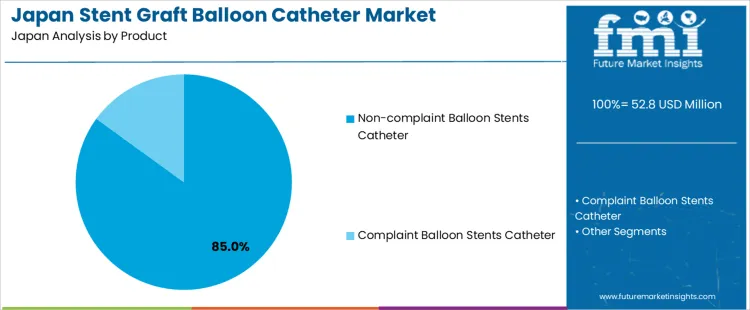
Non complaint balloon stents catheter accounts for 85% of the demand for alopecia related interventional treatment in Japan by product, reflecting its extensive use in controlled vascular dilation procedures associated with advanced scalp perfusion therapies and reconstructive interventions. Consumption intensity is driven by precision dependent applications where balloon expansion must remain stable under fixed pressure conditions. Usage remains stable because procedural outcomes rely on predictable mechanical behavior. Procurement is led by hospital surgical units and specialty procedure centers. Price sensitivity remains moderate because device performance directly influences procedural safety. Specification control emphasizes burst pressure stability, wall thickness uniformity, and guidewire compatibility under microvascular operating conditions.
Non complaint balloon stents catheter also generates steady repeat demand through recurring procedural schedules in large treatment centers. Repeat utilization remains predictable as single use requirements apply to each intervention. Buyers favor standardized catheter platforms to stabilize training protocols and inventory management. Margin structure remains controlled under institutional contracting and tender based procurement. Regulatory exposure remains elevated under implant and vascular device safety compliance. Import reliance persists for polymer shafts and radiopaque marker bands. Substitution pressure from compliant balloon devices remains limited in procedures that require rigid expansion control and diameter precision.
What drives hospitals to lead the demand for alopecia treatment related devices in Japan by end user?
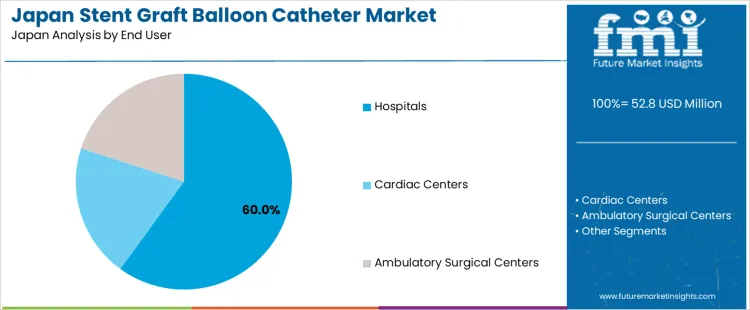
Hospitals represent 60.0% of the demand for alopecia treatment related devices in Japan by end user, reflecting their central role in delivering advanced procedural care and managing treatment associated risks. Consumption intensity is driven by the concentration of specialized surgeons, sterile operating environments, and post procedure monitoring capabilities. Usage remains stable because outpatient centers handle limited surgical complexity. Procurement is managed through centralized hospital purchasing departments and group contracts. Price sensitivity remains moderate because reimbursement and capital allocation follow annual institutional budgets. Specification control emphasizes sterilization compatibility, storage compliance, and traceability across procedural workflows.
Hospitals also generate repeat demand through scheduled treatment cycles and revision procedures performed under controlled clinical supervision. Repeat utilization remains predictable due to steady patient inflow across dermatologic surgery and reconstructive units. Buyers favor long term vendor relationships to stabilize device availability and staff familiarity. Margin structure remains controlled under public insurance reimbursement systems. Regulatory exposure remains elevated due to surgical device oversight and patient safety reporting obligations. Import reliance persists for advanced catheters and imaging guided procedural accessories. Substitution pressure from ambulatory surgical centers remains limited for cases requiring inpatient monitoring.
What Is Shaping the Demand for Alopecia Treatment in Japan Clinical Hair Restoration and Long-Term Scalp Care?
Demand for alopecia treatment in Japan is shaped by early diagnostic behavior, strong attention to personal presentation, and rising work related stress across urban populations. Many patients seek consultation at the first signs of thinning rather than after visible scalp exposure. Dermatology clinics, medical hair centers, and cosmetic medicine units manage most cases through prescription therapy and structured follow up. Professional appearance standards in service, sales, and corporate roles reinforce long term adherence. Digital booking platforms and subscription dispensing support repeat visits. Demand develops through routine monitoring and recurring prescriptions tied to appearance stability rather than short cosmetic correction cycles.
How Is Early Diagnosis Culture Expanding the Treated Population in Japan?
Japan patients often pursue scalp evaluation during initial texture change or mild density loss. Clinics apply magnified imaging, sebum measurement, and follicle counts to confirm early progression. Entry into treatment occurs during reversible phases rather than after permanent follicle damage. Younger professionals form a growing share of clinic traffic due to appearance awareness at work. Preventive prescribing becomes standard once early indicators appear. This early capture model widens the treated base year by year without visible baldness acting as the trigger for medical engagement or specialty referral patterns across both men and women in metropolitan employment segments and hybrid work.
Why Is Long Term Prescription Adherence Sustaining Ongoing Treatment Volume?
Hair loss management in Japan relies on uninterrupted prescription use over extended durations. Many patients commit to monthly refills supported by clinic supervision and digital reminder systems. Consistent dosing is linked to maintenance rather than rapid regrowth expectations. Subscription pharmacy services and direct delivery reduce missed cycles. Patients who stabilize hair density often remain in therapy to avoid reversal risk. This adherence behavior produces steady prescription flow independent of surgical procedures. Treatment becomes part of routine self maintenance alongside skincare, dental care, and metabolic health monitoring habits across middle aged office workers and appearance driven service sector employees nationwide today.
How Do Cost Exposure, Genetic Response Limits, and Social Privacy Contain Expansion?
Monthly treatment expense remains a primary restraint for students and early career workers in Japan. Genetic response variation leads to uneven outcomes across patients with similar therapy plans. Non responders often discontinue after extended evaluation periods. Clinic based procedures create visibility concerns for individuals who value privacy in medical decisions. Hair transplantation is accepted yet approached with caution due to recovery time and disclosure anxiety. These financial, biological, and behavioral limits restrict full category expansion even with strong cultural emphasis on grooming and appearance management within corporate culture entertainment industries and public facing occupations across major urban regions nationwide today.
What is the Demand for Alopecia Treatment in Japan by Region?
| Region | CAGR (%) |
|---|---|
| Kyushu & Okinawa | 6.4% |
| Kanto | 5.9% |
| Kansai | 5.2% |
| Chubu | 4.5% |
| Tohoku | 4.0% |
| Rest of Japan | 3.8% |
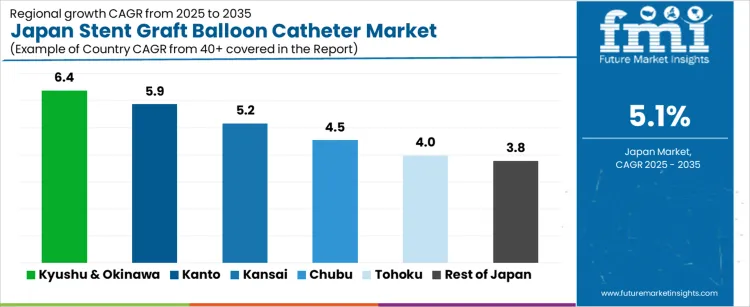
The demand for alopecia treatment in Japan is expanding steadily across all regions, led by Kyushu and Okinawa at a 6.4% CAGR. Growth in this region is supported by rising consultation volumes at dermatology clinics, increasing awareness of early stage hair loss management, and wider availability of topical and oral therapies. Kanto follows at 5.9%, driven by high population density, strong presence of private hair restoration clinics, and greater consumer spending on prescription and OTC solutions. Kansai records 5.2% growth, reflecting stable demand from aesthetic medicine centers and hospital dermatology departments. Chubu at 4.5% shows moderate uptake linked to regional clinic networks. Tohoku and the Rest of Japan, at 4.0% and 3.8%, reflect slower growth shaped by aging demographics, fewer specialty providers, and conservative treatment adoption patterns.
How Is Clinic Based Dermatology Expansion Supporting Alopecia Treatment Demand in Kyushu and Okinawa?
Demand for alopecia treatment in Kyushu and Okinawa is advancing at a CAGR of 6.4% through 2035, supported by steady growth in dermatology clinic coverage, rising early diagnosis of hair thinning, and increasing interest in non invasive therapy options. This region records consistent use of topical formulations, oral treatments, and basic regenerative procedures. Kyushu and Okinawa show stronger dependence on clinic based services compared with pharmacy led care seen in some rural zones. Growth reflects expanding cosmetic dermatology acceptance and steady patient inflow from younger age groups seeking preventive intervention.
- Dermatology clinics anchor primary treatment access
- Topical and oral therapies dominate treatment volumes
- Preventive care awareness supports early stage demand
- Private clinic expansion strengthens service availability
Why Is Dense Urban Population Sustaining Alopecia Treatment Growth in Kanto?
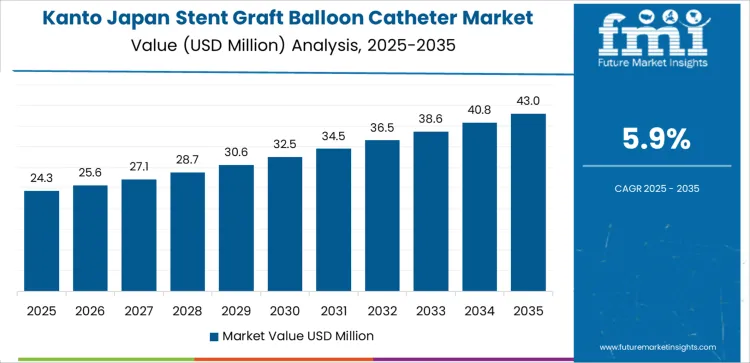
Demand for alopecia treatment in Kanto is rising at a CAGR of 5.9% through 2035, driven by high working age population density, strong continuity of long term therapy, and widespread access to advanced dermatology practices in Tokyo. Kanto shows strong uptake of prescription based treatment plans and digital consultation follow ups. This region reflects higher adherence rates across multi cycle therapy compared with other parts of Japan. Growth remains linked to lifestyle stress influence, image focused personal care behavior, and steady expansion of advanced outpatient dermatology services.
- High population density sustains consistent patient flow
- Prescription driven therapy dominates treatment structure
- Digital consultation platforms strengthen treatment adherence
- Advanced outpatient services support higher visit frequency
What Is Driving Balanced Alopecia Treatment Adoption Across Kansai?
Demand for alopecia treatment in Kansai is progressing at a CAGR of 5.2% through 2035, supported by stable clinic networks, growing male grooming adoption, and steady dermatology visits across Osaka and Kyoto. Kansai reflects balanced use of topical agents, oral prescriptions, and selected regenerative procedures. This region shows gradual expansion rather than rapid uptake driven by cosmetic medicine alone. Demand growth remains tied to general cosmetic dermatology activity, steady income stability, and rising acceptance of preventive hair care practices among middle aged populations.
- Balanced therapy mix supports consistent revenue stability
- Male grooming trends influence clinic visit growth
- Preventive hair care drives early treatment demand
- Steady cosmetic dermatology activity sustains patient volumes
How Is Workforce Linked Healthcare Access Shaping Alopecia Treatment Demand in Chubu?
Demand for alopecia treatment in Chubu is advancing at a CAGR of 4.5% through 2035, supported by workforce linked healthcare use, moderate clinic expansion, and conservative cosmetic treatment spending in Aichi. Chubu shows stronger reliance on general dermatology practices rather than specialized hair restoration centers. Treatment demand remains centered on prescription medications and external application therapies. Growth reflects stable employment driven healthcare access, controlled discretionary spending, and steady awareness of early stage hair loss management.
- General dermatology practices guide most treatments
- Prescription drug use leads adoption patterns
- Workforce healthcare access sustains patient inflow
- Conservative cosmetic spending shapes gradual growth
Why Is Demographic Aging Moderating Alopecia Treatment Growth in Tohoku?
Demand for alopecia treatment in Tohoku is rising at a CAGR of 4.0% through 2035, supported by aging population structure, stable hospital based dermatology access, and limited expansion of private aesthetic clinics. Miyagi anchors most regional activity through hospital outpatient departments. Tohoku shows lower uptake of cosmetic driven hair restoration services due to spending patterns and demographic profile. Growth remains focused on essential medical management of alopecia rather than advanced aesthetic therapies.
- Aging population drives medical hair loss consultation
- Hospital outpatient services anchor most regional demand
- Limited private clinic presence restricts premium therapy use
- Conservative spending patterns influence treatment selection
How Is Primary Care and Pharmacy Access Influencing Alopecia Treatment Demand in Rest of Japan?
Demand for alopecia treatment in Rest of Japan is advancing at a CAGR of 3.8% through 2035, supported by gradual expansion of general clinics, pharmacy based treatment availability, and steady local awareness of hair loss care. These areas show lower concentration of specialized dermatology centers compared with Kanto. Treatment demand remains focused on over the counter solutions and primary care referrals for prescription therapies. Growth remains moderate and guided by household healthcare budgets and slow expansion of private clinic infrastructure.
- Pharmacy channels support baseline treatment access
- Primary care referrals guide prescription therapy use
- Lower clinic density shapes slower service expansion
- Household spending patterns moderate treatment growth
What Is Driving the Demand for Alopecia Treatment in Japan and Which Companies Shape Device and Clinical Support?
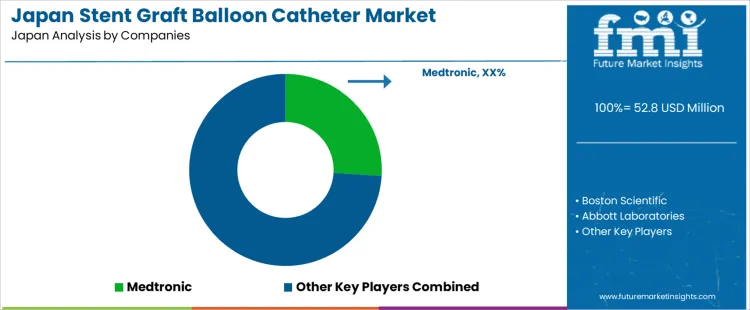
The demand for alopecia treatment in Japan is shaped by high outpatient dermatology use, strong cosmetic appearance norms in working age adults, and expanding use of procedural therapies alongside drug treatment. Shiseido anchors domestic clinical access through medical hair growth programs linked to dermatology clinics and in house research platforms. Rohto Pharmaceutical supports demand through scalp treatment products and adjunct medical therapies positioned across pharmacy and clinic channels. Kowa contributes through dermatology focused formulations supplied to hospital outpatient departments. These domestic suppliers sustain routine patient flow through dense retail pharmacy coverage and long standing relationships with private clinics.
Medtronic and Boston Scientific participate indirectly through aesthetic and dermatology adjacent device platforms used in procedural scalp treatments within specialized clinics. Abbott Laboratories supports demand through nutritional and diagnostic products linked to hair health assessment under physician guidance. Cordis and Atrium Medical retain limited relevance through vascular and implant related platforms that intersect with reconstructive and cosmetic procedures rather than direct alopecia therapy. Adoption in Japan is governed by Ministry of Health approval, clinic level capital budgets, and patient affordability for self-pay treatments. Buyer preference within clinics favors suppliers with domestic service support, predictable device uptime, and compatibility with existing dermatology treatment workflows. Demand visibility tracks growth in cosmetic dermatology visits, rising female pattern hair loss diagnosis, and steady expansion of private hair treatment clinics across urban prefectures.
Key Players in the Alopecia Treatment Industry in Japan
- Medtronic
- Boston Scientific
- Abbott Laboratories
- Cordis
- Atrium Medical
Scope of the Report
| Items | Values |
|---|---|
| Quantitative Units (2025) | USD million |
| Product | Non-complaint Balloon Stents Catheter, Compliant Balloon Stents Catheter |
| End User | Hospitals, Cardiac Centers, Ambulatory Surgical Centers |
| Region | Kyushu & Okinawa, Kanto, Kansai, Chubu, Tohoku, Rest of Japan |
| Countries Covered | Japan |
| Key Companies Profiled | Medtronic, Boston Scientific, Abbott Laboratories, Cordis, Atrium Medical |
| Additional Attributes | Dollar by sales by product and end user; Regional CAGR and procedure growth; Peripheral artery, aortic, and complex endovascular procedure adoption; Non-compliant vs compliant balloon catheter utilization; Repeat intervention rates and reintervention demand; Catheter sizing trends and trackability performance; Physician training and adoption programs; Hybrid operating room integration; Institutional procurement patterns; Regulatory exposure under vascular device standards; Import reliance for advanced catheter components; Procedural substitution pressure across catheter types |
Alopecia Treatment Industry in Japan Segmentation
Product:
- Non-complaint Balloon Stents Catheter
- Complaint Balloon Stents Catheter
End User:
- Hospitals
- Cardiac Centers
- Ambulatory Surgical Centers
Region:
- Kyushu & Okinawa
- Kanto
- Kansai
- Chubu
- Tohoku
- Rest of Japan
Bibliography
- Japan Circulation Society. (2023). Clinical practice guidelines for endovascular therapy including stent graft and balloon catheter usage. JCS Clinical Practice Publications.
- Japanese Society of Interventional Radiology. (2023). Standards and protocols for peripheral and aortic endovascular interventions. JSIR Technical Guidance Documents.
- International Organization for Standardization. (2023). Medical device performance and safety standards for vascular stents, grafts, and balloon catheters. ISO Standards Publications.
- Ministry of Health, Labour and Welfare Japan. (2023). Regulatory guidance for approval, post-market surveillance, and compliance for cardiovascular devices including balloon expandable stent graft systems. MHLW Medical Device Regulatory Publications.
Frequently Asked Questions
How big is the demand for stent graft balloon catheter in Japan in 2025?
The demand for stent graft balloon catheter in Japan is estimated to be valued at USD 52.8 million in 2025.
What will be the size of stent graft balloon catheter in Japan in 2035?
The market size for the stent graft balloon catheter in Japan is projected to reach USD 86.8 million by 2035.
How much will be the demand for stent graft balloon catheter in Japan growth between 2025 and 2035?
The demand for stent graft balloon catheter in Japan is expected to grow at a 5.1% CAGR between 2025 and 2035.
What are the key product types in the stent graft balloon catheter in Japan?
The key product types in stent graft balloon catheter in Japan are non-complaint balloon stents catheter and complaint balloon stents catheter.
Which end user segment is expected to contribute significant share in the stent graft balloon catheter in Japan in 2025?
In terms of end user, hospitals segment is expected to command 60.0% share in the stent graft balloon catheter in Japan in 2025.
Preview the report firsthand - request a free sample
Get SampleGet the brochure for pricing and purchase details.
Get PDFTable of Content
- Executive Summary
- Japan Market Outlook
- Demand-side Trends
- Supply-side Trends
- Technology Roadmap Analysis
- Analysis and Recommendations
- Market Overview
- Market Coverage / Taxonomy
- Market Definition / Scope / Limitations
- Market Background
- Market Dynamics
- Drivers
- Restraints
- Opportunity
- Trends
- Scenario Forecast
- Demand in Optimistic Scenario
- Demand in Likely Scenario
- Demand in Conservative Scenario
- Opportunity Map Analysis
- Product Life Cycle Analysis
- Supply Chain Analysis
- Investment Feasibility Matrix
- Value Chain Analysis
- PESTLE and Porter’s Analysis
- Regulatory Landscape
- Regional Parent Market Outlook
- Production and Consumption Statistics
- Import and Export Statistics
- Market Dynamics
- Japan Market Analysis 2020 to 2024 and Forecast, 2025 to 2035
- Historical Market Size Value (USD Million) Analysis, 2020 to 2024
- Current and Future Market Size Value (USD Million) Projections, 2025 to 2035
- Y-o-Y Growth Trend Analysis
- Absolute $ Opportunity Analysis
- Japan Market Pricing Analysis 2020 to 2024 and Forecast 2025 to 2035
- Japan Market Analysis 2020 to 2024 and Forecast 2025 to 2035, By Product
- Introduction / Key Findings
- Historical Market Size Value (USD Million) Analysis By Product , 2020 to 2024
- Current and Future Market Size Value (USD Million) Analysis and Forecast By Product , 2025 to 2035
- Non-complaint Balloon Stents Catheter
- Complaint Balloon Stents Catheter
- Y-o-Y Growth Trend Analysis By Product , 2020 to 2024
- Absolute $ Opportunity Analysis By Product , 2025 to 2035
- Japan Market Analysis 2020 to 2024 and Forecast 2025 to 2035, By End User
- Introduction / Key Findings
- Historical Market Size Value (USD Million) Analysis By End User, 2020 to 2024
- Current and Future Market Size Value (USD Million) Analysis and Forecast By End User, 2025 to 2035
- Hospitals
- Cardiac Centers
- Ambulatory Surgical Centers
- Y-o-Y Growth Trend Analysis By End User, 2020 to 2024
- Absolute $ Opportunity Analysis By End User, 2025 to 2035
- Market Structure Analysis
- Competition Dashboard
- Competition Benchmarking
- Market Share Analysis of Top Players
- By Regional
- By Product
- By End User
- Competition Analysis
- Competition Deep Dive
- Medtronic
- Overview
- Product Portfolio
- Profitability by Market Segments (Product/Age /Sales Channel/Region)
- Sales Footprint
- Strategy Overview
- Marketing Strategy
- Product Strategy
- Channel Strategy
- Boston Scientific
- Abbott Laboratories
- Cordis
- Atrium Medical
- Medtronic
- Competition Deep Dive
- Assumptions & Acronyms Used
- Research Methodology


