

- Industry Size (2025)
- USD 1.2 Bn
- Forecast (2035)
- USD 2.7 Bn
- CAGR (2025 to 2035)
- 8.5%
Demand for Medication Management System in USA 2025 to 2035
The demand for medication management system in the USA is valued at USD 1.2 billion in 2025 and is projected to reach USD 2.7 billion by 2035, reflecting an 8.5% CAGR. Growth is supported by increased digitization of hospital pharmacy workflows, broader adoption of automated dispensing, and a strong emphasis on reducing medication errors in acute and ambulatory care settings. Health systems continue investing in platforms that improve prescription accuracy, optimize drug utilization, and support regulatory compliance. Expanding integration with electronic health records enables real-time data flow across clinical teams.
Inventory management solutions represent the leading category. These systems are deployed to monitor drug availability, track controlled substances, and standardize procurement processes. Automated dispensing cabinets and smart storage units reduce waste, strengthen audit trails, and improve replenishment planning. Visibility into USAge analytics supports improved operational control within hospital pharmacies and outpatient facilities.
Demand is concentrated in the West, South, and Northeast due to the presence of large health systems, advanced hospital networks, and ongoing automation initiatives. Key suppliers include BD, Omnicell, Inc., Cerner Corporation, McKesson Corporation, and Swisslog Healthcare. Their development focus includes interoperability upgrades, RFID item-tracking enhancements, and cloud-enabled platforms for scalable deployment across multi-facility healthcare organizations.
Quick Stats for USA Medication Management System Demand
- USA Medication Management System Sales Value (2025): USD 1.2 billion
- USA Medication Management System Forecast Value (2035): USD 2.7 billion
- USA Medication Management System Forecast CAGR (2025–2035): 8.5%
- Leading Category in USA Medication Management System Demand: Inventory Management Solutions
- Key Growth Regions in USA Medication Management System Demand: West USA, South USA, Northeast USA
- Top Players in USA Medication Management System Demand: BD; Omnicell, Inc.; Cerner Corporation; McKesson Corporation; Swisslog Healthcare
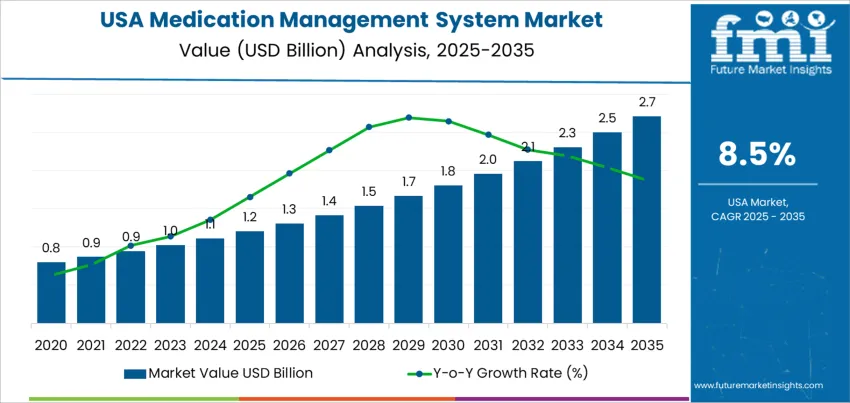
What is the Growth Forecast for Medication Management System Industry in USA through 2035?
Saturation dynamics for demand for medication management systems in the United States reflect high adoption rates in hospitals and integrated health networks. Many large providers have already digitized medication workflows through automated dispensing, barcode verification, and electronic prescribing. This creates a mature base that limits rapid acceleration during later forecast years. Procurement transitions from first-time installations toward software upgrades and optimization projects, which reduces incremental volume growth.
Remaining expansion potential lies in outpatient settings, ambulatory care, and home-based medication management, where adoption is less uniform. Aging populations and increasing prevalence of polypharmacy support the ongoing need for adherence and safety tools. Pharmacist-led programs and payer-led initiatives extend demand beyond acute care environments. Market saturation approaches a mid-to-high level in clinical institutions but stays lower in decentralized care. The curve indicates slowing growth as institutional saturation rises, but a full plateau remains unlikely. Continuous enhancements in analytics, interoperability, and remote monitoring sustain interest in system evolution. Regulatory support for medication safety metrics prevents stagnation, creating a stable but moderated path forward.
USA Medication Management System Key Takeaways
| Metric | Value |
|---|---|
| USA Medication Management System Sales Value (2025) | USD 1.2 billion |
| USA Medication Management System Forecast Value (2035) | USD 2.7 billion |
| USA Medication Management System Forecast CAGR (2025-2035) | 8.5% |
Why is the Demand for Medication Management Systems in the USA Growing?
Demand for medication management systems in the USA is increasing because hospitals, pharmacies and home care providers need reliable tools to reduce medication errors and improve adherence. Chronic disease prevalence remains high, and many patients take multiple prescriptions each day. Digital systems that track dosing schedules, refill status and drug interactions support safer medication use among older adults and patients with complex therapies. Electronic prescribing and pharmacy automation improve accuracy in dispensing and reduce administrative workload for clinicians.
Health systems adopt medication management platforms that integrate with electronic health records to support real time monitoring and data sharing across care teams. Remote patient monitoring programs use smart pill dispensers and mobile reminders to support adherence outside clinical settings, which helps prevent avoidable hospital admissions. Insurers and accountable care organizations promote technology that improves treatment outcomes and reduces costs linked to non-adherence. Constraints include integration challenges when linking systems across multiple providers, upfront software and training expenses and variable digital literacy among patients. Privacy concerns and data security requirements also influence adoption, especially in community care environments that operate with limited technical support.
Which Software Types and Delivery Modes Lead Demand for Medication Management Systems in the USA?
Demand for medication management systems in the United States is driven by the rising focus on patient safety, error prevention, prescription accuracy, and streamlined medication workflows across hospitals and pharmacies. Adoption is reinforced by the need to reduce adverse drug events, enhance treatment adherence, and support regulatory compliance. Healthcare modernization, electronic health record integration, and hospital digitization accelerate system deployment across large care networks.
By Software Type, Inventory Management Solutions Hold the Largest Reported Share
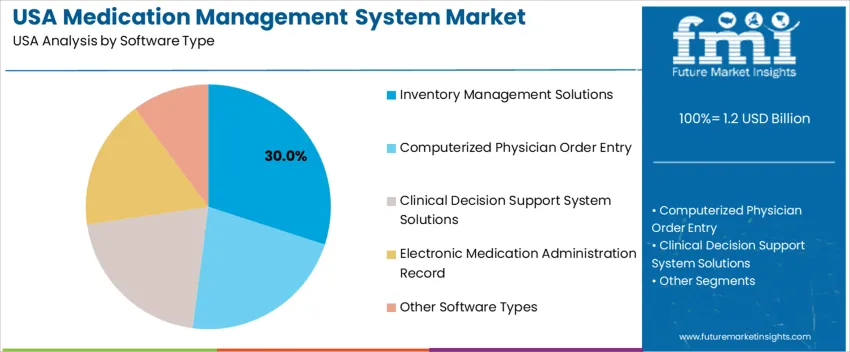
Inventory management solutions account for 30.0%, driven by the need to monitor stock levels, automate resupply, and prevent medication shortages in hospitals and retail pharmacies. These platforms ensure expiration tracking, controlled substance security, and optimized purchasing aligned with utilization patterns. Their adoption supports cost control and reduces wasteful over-ordering. The remaining software categories, including computerized physician order entry, clinical decision support systems, electronic medication administration records, and other solutions, support safe prescribing and administration processes, though specific shares are not provided. They are increasingly integrated within unified medication management ecosystems to support better care coordination and workflow efficiency.
Key Points:
- Leading demand comes from medication stock management and supply continuity
- Hospitals rely on automated ordering and expiration control
- Interconnected platforms reduce operational errors and purchasing inefficiencies
By Delivery Mode, Cloud-Based Solutions Hold the Largest Share
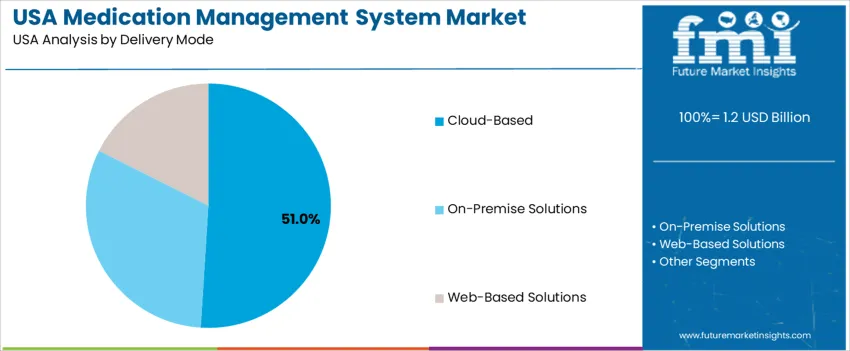
Cloud-based deployment accounts for 51.0%, supported by scalability, lower upfront cost, remote accessibility, and faster software updates across distributed healthcare facilities. Cloud platforms help organizations comply with data security standards while enabling centralized control of medication tracking across multiple sites. On-premise and web-based systems make up the remaining USAge share, with adoption influenced by existing legacy IT infrastructure and internal security policies. These approaches continue where data localization or private network control is prioritized. Overall, U.S. demand shows steady movement toward hosted platforms supporting advanced analytics, interoperability, and disaster-proof performance for medication workflows.
Key Points:
- Cloud systems lead due to rapid deployment and accessible scalability
- On-premise persists in security-sensitive healthcare environments
- Shift favors unified remote management across large health networks
What are the Drivers, Restraints, and Key Trends of the Demand for Medication Management Systems in the USA?
Growth of chronic disease management programs, increased hospital focus on medication safety and rising adoption of digital pharmacy workflows are driving demand.
In the United States, medication management systems gain steady utilization as hospitals and clinics address medication errors that affect patient outcomes and reimbursement under value-based care policies. Providers serving patients with diabetes, heart failure and respiratory diseases rely on electronic prescribing and automated dispensing to improve adherence and reduce readmissions. Retail and specialty pharmacies use software and smart packaging to track refill behavior and coordinate delivery schedules for older adults. Health insurers and pharmacy benefit managers adopt monitoring platforms to control drug spending and encourage guideline-compliant prescribing. These safety, compliance and cost-control priorities sustain consistent investment in digital medication workflows across acute and ambulatory care environments.
Integration costs, workflow disruption during implementation and variable digital readiness among patients restrain demand.
Hospitals require significant capital and IT staffing to connect medication management modules with electronic health records and automated dispensing cabinets. Nursing teams may face temporary workload increases during system transition, which can delay adoption in smaller facilities. Home users with limited digital literacy may struggle to maintain device connectivity or respond to alerts, affecting adherence support. Independent pharmacies evaluate software additions carefully when reimbursement margins are tight. These operational constraints contribute to staggered deployment rather than universal adoption.
Shift toward remote adherence monitoring, increased use of clinical decision support and rising automation in hospital pharmacies define key trends.
Care teams expand remote medication monitoring tools that send adherence data to clinicians, supporting timely intervention for high-risk patients. Clinical decision support systems within ordering workflows help prescribers reduce drug-drug interactions and align therapies with evidence-based protocols. Hospital pharmacies invest in robotics and barcode verification to improve medication accuracy and reduce labor pressure during dispensing. Insurers reward systems that demonstrate reduction in avoidable emergency visits linked to non-adherence. These developments indicate sustained, patient-safety-focused demand for medication management systems throughout the United States healthcare network.
Analysis of the Demand for Medication Management Systems in the USA by Region
Demand for medication management systems in the United States is rising as hospitals, long-term care facilities, and pharmacy networks adopt digital workflows to ensure reliable medication dispensing and adherence tracking. Increasing chronic-disease cases across aging populations require automated accuracy at both inpatient and home-care levels. Electronic prescribing, barcode medication administration, and real-time inventory monitoring are shaping technology decisions, while staffing shortages strengthen interest in automation that reduces human-error risk. Data-governance requirements reinforce adherence to traceability and controlled-substance oversight. West USA leads at 9.7% CAGR, followed by South USA at 8.7%, Northeast USA at 7.8%, and Midwest USA at 6.8%, reflecting differences in healthcare digitization and operational scale across regions.
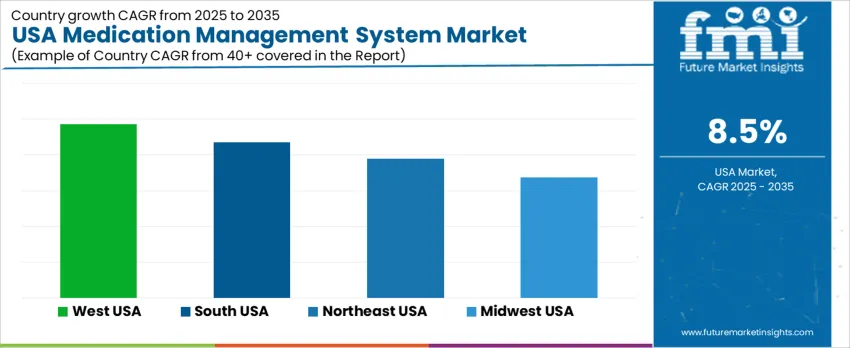
| Region | CAGR (2025-2035) |
|---|---|
| West USA | 9.7% |
| South USA | 8.7% |
| Northeast USA | 7.8% |
| Midwest USA | 6.8% |
How is the West USA driving demand for medication management systems?
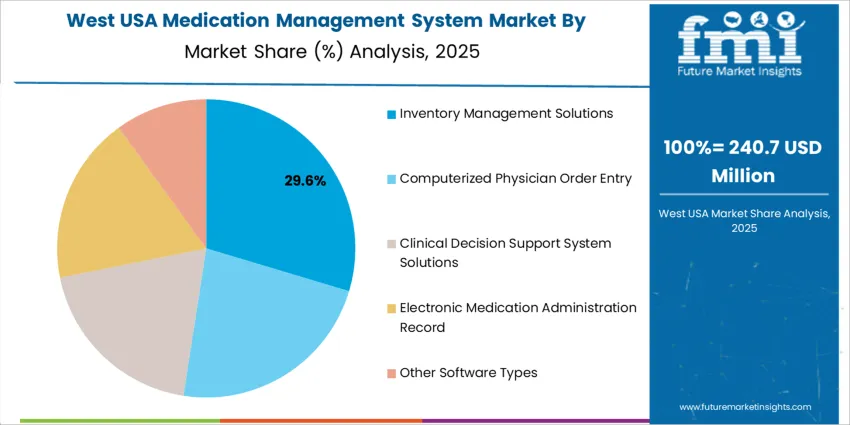
West USA reports 9.7% CAGR, supported by strong health-technology ecosystems in California and Washington that drive rapid adoption of closed-loop medication workflows. Large hospital networks integrate automated dispensing cabinets and barcode validation into high-acuity wards, reducing dose-administration variance. Retail pharmacies and outpatient clinics rely on e-prescription systems that synchronize with telehealth follow-ups. High prescription volume for oncology and chronic-pain therapies raises requirements for error-prevention safeguards. Technology vendors maintain proximity to clinical innovators, enabling quick refinement of user-interface and alert-management functions. Procurement decisions emphasize interoperability with diverse EHR platforms, uptime reliability, and data-encryption compliance for sensitive medication-record access.
- Closed-loop processes reducing error risk
- Telehealth-linked e-prescription fulfillment
- Clinical innovation hubs accelerating adoption
- Data-security compliance influencing vendor selection
How is the South USA shaping demand for medication management systems?
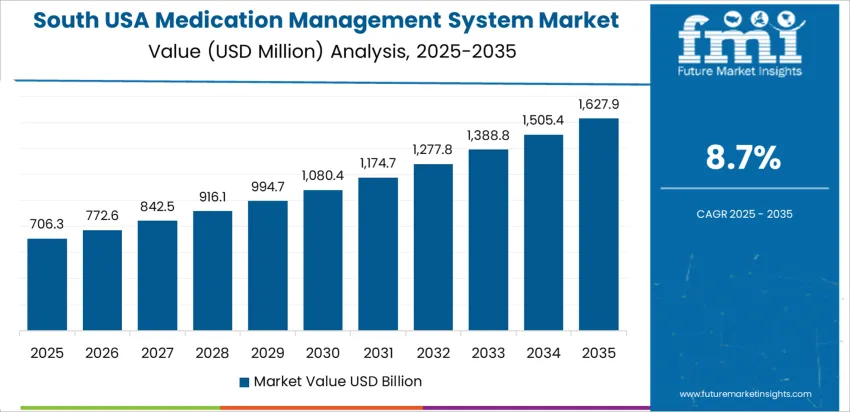
South USA expands at 8.7% CAGR, driven by high medication-adherence needs in states such as Texas, Florida, and Georgia, which manage elevated chronic-disease burdens across large senior populations. Hospitals address staffing shortages through automated inventory-tracking to improve discharge processes and continuity of care. Mail-order pharmacies and home-health agencies implement digital-monitoring tools that alert clinicians to missed doses. Warm-climate regions experience seasonal storm-related disruptions, reinforcing interest in resilient supply-management systems. Buyers evaluate device affordability, refill logistics, and accurate patient-identification workflows tailored for diverse care settings.
- Chronic-disease management increasing digital tool USAge
- Home-care mobility support extending adoption
- Operational resilience influencing procurement standards
- Automated inventory and discharge workflows reducing risk
How is the Northeast USA influencing procurement patterns?
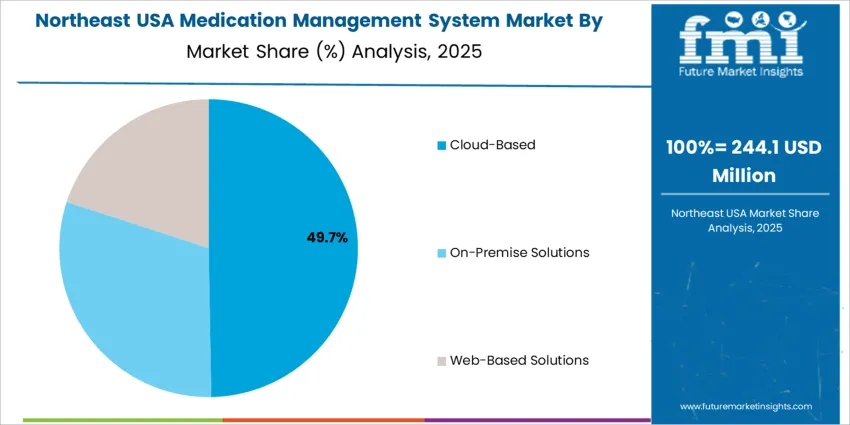
Northeast USA achieves 7.8% CAGR, shaped by high clinical-quality standards in academic medical networks across New York, Massachusetts, and Pennsylvania. Barcode-based administration safeguards support patient-safety targets in complex therapeutic environments. Urban populations dependent on fast-paced outpatient care promote e-prescribing utilization and same-day refill authentication. Hospitals evaluate system analytics that identify adverse-event risks and optimize medication timing. Tighter regulatory oversight accelerates adoption of auditable digital records for controlled substances. Procurement teams seek integration stability when interfacing with multi-vendor health-IT environments.
- Academic hospitals driving advanced-system validation
- Dense urban networks supporting high-volume automation
- Analytics improving medication-safety intelligence
- Regulatory alignment shaping technology requirements
How is the Midwest USA contributing to demand growth?
Midwest USA expands at 6.8% CAGR, supported by integrated hospital-pharmacy networks across Illinois, Ohio, and Michigan emphasizing accuracy during labor-constrained operations. Medication-tracking tools are deployed to support cardiovascular and metabolic-disease treatment plans prevalent across the region. Rural health networks adopt centralized verification systems to coordinate prescriptions for dispersed patient populations, reducing travel and dispensing delays. Procurement priorities focus on durable hardware, intuitive clinician workflows, and cost-efficiency across long equipment life cycles.
- Workforce-efficiency gains accelerating system reliance
- Chronic-care infrastructure reinforcing adoption
- Rural-care coordination improving continuity
- Value-driven purchasing guiding supplier selection
What does the competitive landscape for medication management system demand in the United States look like?
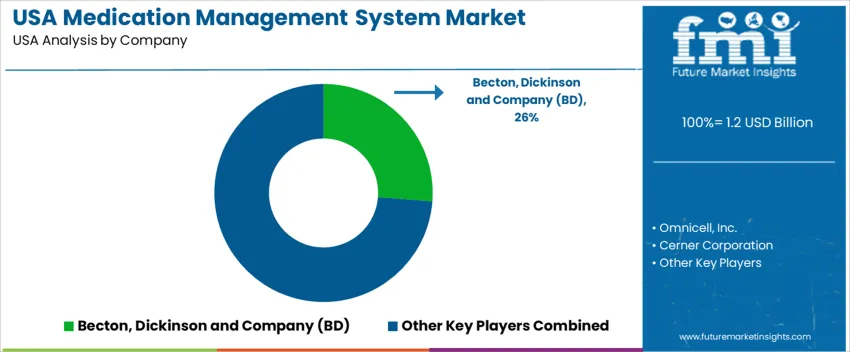
Medication management systems in the United States support hospitals, long-term care facilities, retail pharmacy networks, and outpatient clinics. These systems enable accurate dispensing, track controlled substances, improve medication adherence, and limit human error in high-volume environments. Adoption aligns with safety standards from hospital accrediting bodies and requirements for integrated electronic medical record workflows. Procurement teams emphasize automation benefits, system uptime, and technical service presence capable of supporting around-the-clock operations. Becton, Dickinson and Company (BD) holds an estimated 26.2% share through automated dispensing and software that connects pharmacy operations with clinical workflows. Installed footprints in acute-care institutions contribute to continued upgrades and service contracts.
Omnicell, Inc. engages hospitals and ambulatory networks with cabinet automation and cloud-based optimization tools that help reduce waste and support inventory control. Cerner Corporation strengthens electronic administration records, supporting inpatient medication workflows tied to clinical decision support within hospital EHR systems. McKesson Corporation participates in distribution-connected adherence platforms and pharmacy automation that improve continuity of medication supply and tracking. Swisslog Healthcare focuses on robotic transport, pneumatic conveyance, and integrated pharmacy automation within large health systems aiming to reduce manual handling. Competitive positioning in the United States reflects the ability to deliver traceability from pharmacy to bedside, maintain cybersecurity safeguards, and support compliance with controlled-substance accountability requirements while sustaining efficient clinical throughput.
Key Players in USA Medication Management System Demand
- Becton, Dickinson and Company (BD)
- Omnicell, Inc.
- Cerner Corporation
- McKesson Corporation
- Swisslog Healthcare
Scope of the Report
| Items | Values |
|---|---|
| Quantitative Units | USD billion |
| Software Type | Inventory Management Solutions, Computerized Physician Order Entry, Clinical Decision Support System Solutions, Electronic Medication Administration Record, Other Software Types |
| Delivery Mode | Cloud-Based, On-Premise Solutions, Web-Based Solutions |
| Regions Covered | West USA, South USA, Northeast USA, Midwest USA |
| Key Companies Profiled | Becton, Dickinson and Company (BD), Omnicell, Inc., Cerner Corporation, McKesson Corporation, Swisslog Healthcare |
| Additional Attributes | Dollar sales by software type and delivery mode; adoption trends across hospitals, retail pharmacies, and long-term care facilities; integration with electronic health records and automated dispensing technologies; regional insights into cloud migration and regulatory compliance; improvements in medication error reduction, barcode-enabled drug administration, and clinical decision support; competitive landscape focused on analytics, inventory automation, and interoperability within U.S. healthcare systems. |
USA Medication Management System Demand by Segments
Software Type:
- Inventory Management Solutions
- Computerized Physician Order Entry
- Clinical Decision Support System Solutions
- Electronic Medication Administration Record
- Other Software Types
Delivery Mode:
- Cloud-Based
- On-Premise Solutions
- Web-Based Solutions
Region:
- West USA
- South USA
- Northeast USA
- Midwest USA
Frequently Asked Questions
How big is the demand for medication management system in USA in 2025?
The demand for medication management system in USA is estimated to be valued at USD 1.2 billion in 2025.
What will be the size of medication management system in USA in 2035?
The market size for the medication management system in USA is projected to reach USD 2.7 billion by 2035.
How much will be the demand for medication management system in USA growth between 2025 and 2035?
The demand for medication management system in USA is expected to grow at a 8.5% CAGR between 2025 and 2035.
What are the key product types in the medication management system in USA?
The key product types in medication management system in USA are inventory management solutions, computerized physician order entry, clinical decision support system solutions, electronic medication administration record and other software types.
Which delivery mode segment is expected to contribute significant share in the medication management system in USA in 2025?
In terms of delivery mode, cloud-based segment is expected to command 51.0% share in the medication management system in USA in 2025.
Preview the report firsthand - request a free sample
Get SampleGet the brochure for pricing and purchase details.
Get PDFTable of Content
- Executive Summary
- USA Market Outlook
- Demand-side Trends
- Supply-side Trends
- Technology Roadmap Analysis
- Analysis and Recommendations
- Market Overview
- Market Coverage / Taxonomy
- Market Definition / Scope / Limitations
- Market Background
- Market Dynamics
- Drivers
- Restraints
- Opportunity
- Trends
- Scenario Forecast
- Demand in Optimistic Scenario
- Demand in Likely Scenario
- Demand in Conservative Scenario
- Opportunity Map Analysis
- Product Life Cycle Analysis
- Supply Chain Analysis
- Investment Feasibility Matrix
- Value Chain Analysis
- PESTLE and Porter’s Analysis
- Regulatory Landscape
- Regional Parent Market Outlook
- Production and Consumption Statistics
- Import and Export Statistics
- Market Dynamics
- USA Market Analysis 2020 to 2024 and Forecast, 2025 to 2035
- Historical Market Size Value (USD Million) Analysis, 2020 to 2024
- Current and Future Market Size Value (USD Million) Projections, 2025 to 2035
- Y-o-Y Growth Trend Analysis
- Absolute $ Opportunity Analysis
- USA Market Pricing Analysis 2020 to 2024 and Forecast 2025 to 2035
- USA Market Analysis 2020 to 2024 and Forecast 2025 to 2035, By Software Type
- Introduction / Key Findings
- Historical Market Size Value (USD Million) Analysis By Software Type , 2020 to 2024
- Current and Future Market Size Value (USD Million) Analysis and Forecast By Software Type , 2025 to 2035
- Inventory Management Solutions
- Computerized Physician Order Entry
- Clinical Decision Support System Solutions
- Electronic Medication Administration Record
- Other Software Types
- Y-o-Y Growth Trend Analysis By Software Type , 2020 to 2024
- Absolute $ Opportunity Analysis By Software Type , 2025 to 2035
- USA Market Analysis 2020 to 2024 and Forecast 2025 to 2035, By Delivery Mode
- Introduction / Key Findings
- Historical Market Size Value (USD Million) Analysis By Delivery Mode, 2020 to 2024
- Current and Future Market Size Value (USD Million) Analysis and Forecast By Delivery Mode, 2025 to 2035
- Cloud-Based
- On-Premise Solutions
- Web-Based Solutions
- Y-o-Y Growth Trend Analysis By Delivery Mode, 2020 to 2024
- Absolute $ Opportunity Analysis By Delivery Mode, 2025 to 2035
- Market Structure Analysis
- Competition Dashboard
- Competition Benchmarking
- Market Share Analysis of Top Players
- By Regional
- By Software Type
- By Delivery Mode
- Competition Analysis
- Competition Deep Dive
- Becton, Dickinson and Company (BD)
- Overview
- Product Portfolio
- Profitability by Market Segments (Product/Age /Sales Channel/Region)
- Sales Footprint
- Strategy Overview
- Marketing Strategy
- Product Strategy
- Channel Strategy
- Omnicell, Inc.
- Cerner Corporation
- McKesson Corporation
- Swisslog Healthcare
- Becton, Dickinson and Company (BD)
- Competition Deep Dive
- Assumptions & Acronyms Used
- Research Methodology


