

- Industry Size (2025)
- USD 1.3 Bn
- Forecast (2035)
- USD 2.0 Bn
- CAGR (2025 to 2035)
- 5.8%
Demand for Microfiber Synthetic Leather in USA Forecast and Outlook 2025 to 2035
Demand for microfiber synthetic leather in the USA is expected to grow from USD 1.3 billion in 2025 to USD 2.0 billion by 2035, reflecting a compound annual growth rate (CAGR) of 5.8%. This growth is driven by rising demand for sustainable, eco-friendly, and durable alternatives to traditional leather across industries such as automotive, fashion, furniture, and footwear. Microfiber synthetic leather, known for its similarity to real leather yet with a lower environmental impact, is becoming increasingly popular for its versatility, performance, and ethical appeal.
The market is also supported by the growing demand for vegan and cruelty-free products, as well as innovations in synthetic leather production that enhance the material's quality, feel, and durability. As consumers and industries alike become more environmentally conscious, the demand for microfiber synthetic leather in the USA is expected to rise, driven by its suitability for a wide range of applications in both high-end and mass-market products.
Quick Stats of the Demand for Microfiber Synthetic Leather in USA
- Demand for Microfiber Synthetic Leather in USA Value (2025): USD 1.3 billion
- Demand for Microfiber Synthetic Leather in USA Forecast Value (2035): USD 2.0 billion
- Demand for Microfiber Synthetic Leather in USA Forecast CAGR (2025-2035): 5.8%
- Demand for Microfiber Synthetic Leather in USA Leading Application: Clothing (45.5%)
- Demand for Microfiber Synthetic Leather in USA Key Growth Regions: West USA, South USA, Northeast USA, Midwest USA
- Demand for Microfiber Synthetic Leather in USA Key Players: Kuraray Co., Ltd., Toray Industries, Inc., Asahi Kasei Corporation, Teijin Limited, Huafon Group
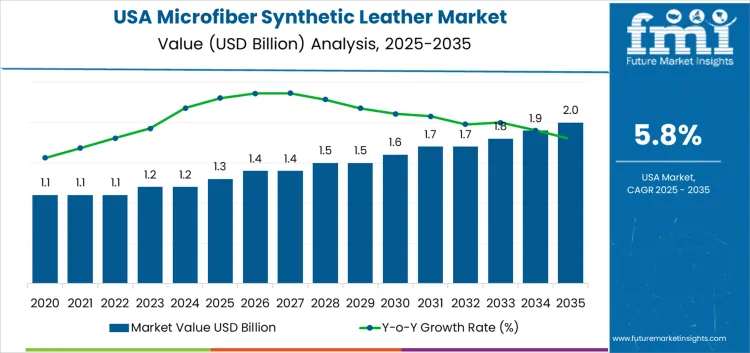
What is the Growth Forecast for the Microfiber Synthetic Leather Market through 2035?
The growth rate volatility index for the microfiber synthetic leather market in the USA shows consistent, stable growth over the forecast period. Starting at USD 1.3 billion in 2025, the market gradually increases, reaching USD 1.4 billion in 2026 and USD 1.4 billion in 2027. This period reflects early, steady growth driven by rising awareness and adoption of microfiber synthetic leather products.
From 2028 onward, the growth rate starts to experience more moderate fluctuations, with the market reaching USD 1.5 billion in 2028, USD 1.6 billion in 2029, and USD 1.7 billion in 2030. The volatility index indicates that while there may be slight shifts in the growth rate due to evolving consumer preferences and market dynamics, the overall trend is positive. By 2035, the market is projected to reach USD 2.0 billion, demonstrating a steady yet predictable rise with stable annual growth, reflecting the increasing demand for synthetic leather as a sustainable and versatile alternative.
USA Microfiber Synthetic Leather Industry Key Takeaways
| Metric | Value |
|---|---|
| Industry Sales Value (2025) | USD 1.3 billion |
| Industry Forecast Value (2035) | USD 2 billion |
| Industry Forecast CAGR (2025-2035) | 5.8% |
Why is the Demand for Microfiber Synthetic Leather Growing in the USA?
Demand for microfiber synthetic leather in the USA is rising as more consumers and industries shift toward sustainable, cruelty free, and high performance alternatives to genuine leather. Microfiber synthetic leather offers the look and feel of real leather while being more affordable, durable, and easier to maintain. Its resistance to wear and tear, water resistance, and soft texture make it well suited for a wide range of applications, from furniture and upholstery to footwear, bags, and apparel. As awareness about animal welfare, environmental impact, and the benefits of synthetic alternatives grows, more American manufacturers and brands are selecting microfiber leather for products aimed at both quality conscious and eco conscious customers.
At the same time, growth in key end use sectors in the USA, especially automotive interiors, furniture, and fashion, is accelerating uptake of microfiber synthetic leather. In automotive interiors, rising demand for stylish, durable, and easy to maintain materials makes microfiber leather a popular choice for seats, dashboards, and door panels. In the furniture sector, consumers increasingly choose sofas, chairs, and other upholstery made with microfiber leather because of its durability, stain resistance, and ease of cleaning. Meanwhile, in fashion and accessories, shifting consumer preferences toward vegan and sustainable materials are boosting demand for synthetic leather footwear, handbags, and clothing. Given these factors, sustainability concerns, versatility, and strong demand from automotive, furniture, and fashion sectors, the microfiber synthetic leather market in the USA is poised to grow steadily in coming years.
What Are the Key Segments in Microfiber Synthetic Leather Market in the USA?
Overview The microfiber synthetic leather market in the USA is segmented by product type and application. PU-based synthetic leather holds the largest market share, representing 30% of the total demand. Other product types, such as bio-based synthetic leather, are emerging but still represent a smaller portion of the market. In terms of application, clothing is the largest segment, making up 45.5% of the market, followed by other sectors like furnishing, bags, sports equipment, and footwear.
Which Product Type Dominates the Microfiber Synthetic Leather Market in the USA?
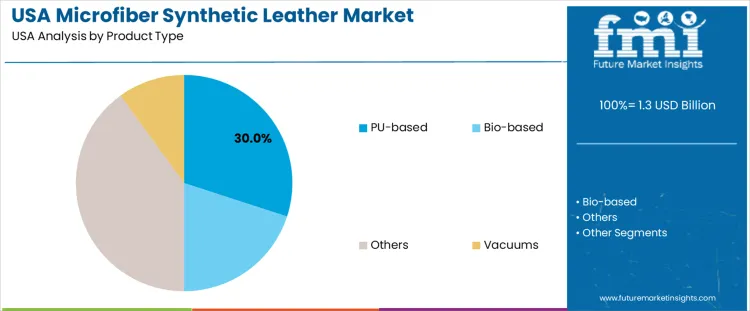
The PU-based microfiber synthetic leather leads the product type segment, holding a 30% share of the market in the USA. This dominance is attributed to the versatility and durability of PU-based synthetic leather, which makes it ideal for a wide range of applications. It is widely used in clothing, footwear, bags, and furniture due to its ability to mimic real leather while offering a more cost-effective and animal-free alternative. PU-based synthetic leather’s popularity is further boosted by its lightweight properties, ease of maintenance, and flexibility in design. Additionally, advancements in technology have improved the overall quality and longevity of PU-based materials, ensuring its continued preference across various industries. Despite the growing interest in bio-based synthetic leather, PU-based products remain dominant in the market.
Which Application Drives Demand for Microfiber Synthetic Leather in the USA?
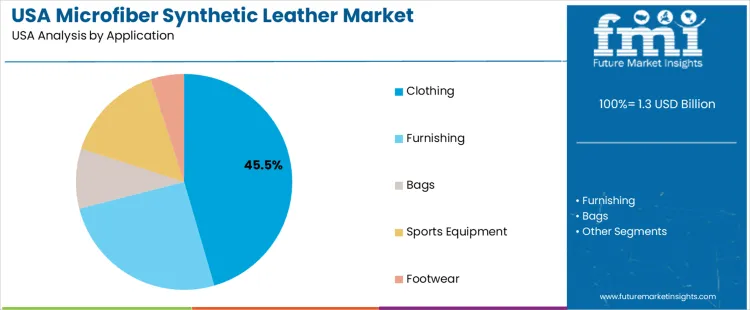
The clothing sector is the largest end-use application for microfiber synthetic leather, representing 45.5% of the market share. This application’s strength lies in the increasing demand for fashion products made from sustainable and ethical materials. Microfiber synthetic leather offers a more affordable and versatile alternative to traditional leather, making it popular for use in jackets, coats, pants, and accessories. Its lightweight nature, along with the ability to mimic the look and feel of real leather, has made it a top choice in the fashion industry. As consumers increasingly seek eco-friendly and cruelty-free alternatives, the demand for microfiber synthetic leather in clothing is expected to continue growing. Other applications, including furnishings, bags, sports equipment, and footwear, also contribute to the market’s expansion, with each benefiting from the material's durability, cost-effectiveness, and design flexibility.
What is the Summary of Demand for Microfiber Synthetic Leather in USA?
Demand for microfiber synthetic leather in the USA is expanding rapidly, driven by its growing adoption across industries such as automotive, fashion, furniture, and accessories. This material is favored for its durability, cost-effectiveness, and versatility in various applications. As consumer demand shifts toward more sustainable, cruelty-free, and vegan-friendly alternatives to traditional leather, microfiber synthetic leather is increasingly preferred for its ability to replicate the look and feel of real leather while being eco-friendlier. The US market for this material is expected to see significant growth as awareness of its benefits spreads.
What are the Drivers of Demand for Microfiber Synthetic Leather in USA?
Several factors are driving the increasing demand for microfiber synthetic leather in the USA. First, there is a strong consumer preference for ethical, cruelty-free, and sustainable products. Microfiber synthetic leather, as a plant-based alternative to animal leather, aligns with these growing demands. Second, the material’s cost-effectiveness compared to traditional leather makes it an attractive option for industries like automotive and fashion, where large volumes are required. Third, the improvement in production techniques has enhanced the quality and durability of microfiber synthetic leather, making it a more competitive alternative. Finally, environmental concerns and a shift towards more sustainable sourcing in the manufacturing process contribute to the material's increasing popularity.
What are the Restraints on Demand for Microfiber Synthetic Leather in USA?
Despite its growth, several challenges may hinder the widespread adoption of microfiber synthetic leather. One key restraint is the perception that synthetic leather is inferior to real leather in terms of quality and longevity, which may limit its appeal in luxury products. Another challenge is the higher cost of premium-grade microfiber synthetic leather compared to lower-cost alternatives like PVC or other synthetic materials. Additionally, concerns around the environmental impact of production processes, especially if petroleum-based ingredients are used, could limit demand. Competition from other sustainable materials and a potential preference for natural fibers may also slow its adoption in certain segments.
What are the Key Trends Influencing Demand for Microfiber Synthetic Leather in USA?
Key trends influencing the demand for microfiber synthetic leather in the USA include the increasing consumer focus on ethical consumerism, with a growing preference for vegan and cruelty-free products. Additionally, innovations in material science are leading to better-performing microfiber synthetic leathers that are closer in texture and durability to real leather, driving their adoption in high-quality applications. Another trend is the rise of sustainable manufacturing practices that promote eco-friendly production methods. The demand for multifunctional materials that offer both aesthetic appeal and environmental benefits is expected to increase, as consumers seek products that align with their values of sustainability and ethical sourcing.
What is the Regional Demand Outlook for the Microfiber Synthetic Leather Market in the USA?
The Microfiber Synthetic Leather market in the USA is expected to grow steadily, with the West USA leading the way at a projected CAGR of 6.7%. South USA follows closely with a growth rate of 6%, while the Northeast USA is expected to grow at 5.3%. The Midwest USA shows moderate growth with a CAGR of 4.6%. Microfiber synthetic leather, known for its durability, eco-friendly properties, and versatility, is increasingly being used in a wide range of applications, including automotive, fashion, and furniture industries. As demand for sustainable and high-performance alternatives to traditional leather continues to rise, microfiber synthetic leather is expected to see increased adoption in the USAmarket.
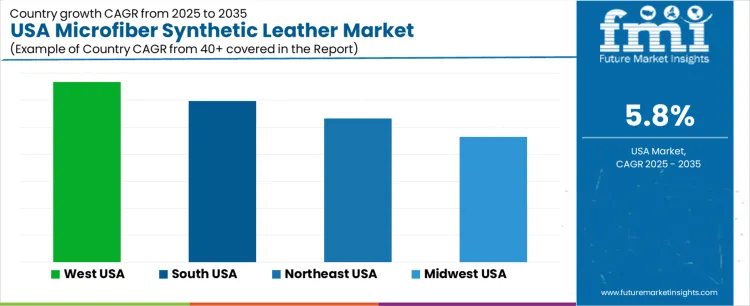
| Region | CAGR (2025-2035) |
|---|---|
| West USA | 6.7% |
| South USA | 6% |
| Northeast USA | 5.3% |
| Midwest USA | 4.6% |
What is Driving the Growth of Microfiber Synthetic Leather in the West USA?
The West USA is expected to experience the highest growth in the Microfiber Synthetic Leather market, with a projected CAGR of 6.7%. The region’s focus on sustainability and environmental concerns is a key driver behind the increased adoption of microfiber synthetic leather. As consumers become more environmentally conscious, there is a growing preference for eco-friendly and cruelty-free alternatives to traditional leather. Microfiber synthetic leather’s durability, lightweight nature, and versatility in applications such as automotive upholstery, furniture, and fashion accessories make it an attractive option for manufacturers in the West USA. Furthermore, the region’s strong manufacturing and tech industries are fostering innovation in synthetic leather materials, further boosting the demand for microfiber synthetic leather products. As e-commerce continues to grow, the availability of sustainable products, including microfiber synthetic leather, is expected to rise, supporting further market expansion.
Why is Microfiber Synthetic Leather Gaining Popularity in South USA?
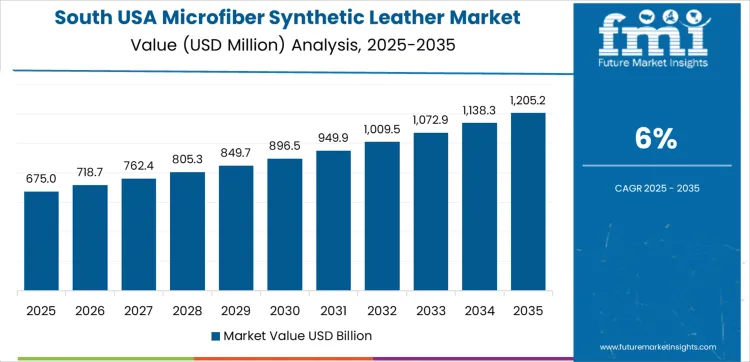
In South USA, the demand for microfiber synthetic leather is projected to grow at a CAGR of 6%. The growing automotive industry in the region plays a significant role in the increasing use of microfiber synthetic leather, particularly in vehicle upholstery. Known for its durability and superior performance compared to traditional leather, microfiber synthetic leather is being adopted in a wide range of automotive applications. Additionally, the South USA’s expanding fashion and furniture sectors are contributing to the rise in demand for microfiber synthetic leather, as consumers seek sustainable alternatives that do not compromise on quality or aesthetics. The increasing awareness of environmental concerns, particularly regarding the impact of traditional leather production on the environment, is also driving the shift toward microfiber synthetic leather. With the rising focus on sustainability, manufacturers in South USA are increasingly turning to microfiber synthetic leather for its eco-friendly benefits and versatile applications.
How is the Microfiber Synthetic Leather Market Expanding in the Northeast USA?
In the Northeast USA, the market for microfiber synthetic leather is projected to grow at a CAGR of 5.3%. The region’s strong fashion, furniture, and automotive industries are driving the adoption of microfiber synthetic leather, as consumers increasingly seek high-quality, sustainable alternatives to traditional leather. The Northeast USA’s emphasis on innovative materials and eco-conscious production methods is further accelerating the demand for microfiber synthetic leather. Additionally, the growing preference for cruelty-free and ethically produced goods is contributing to the shift toward synthetic materials. Microfiber synthetic leather’s versatility in applications, from clothing to interior design, and its eco-friendly properties make it an attractive option for manufacturers in the Northeast. As sustainability becomes a priority for both consumers and brands in the region, the demand for microfiber synthetic leather is expected to continue to rise.
What Drives the Growth of Microfiber Synthetic Leather in the Midwest USA?
In the Midwest USA, the demand for microfiber synthetic leather is expected to grow at a more moderate rate of 4.6%. The Midwest’s strong manufacturing and automotive industries are key drivers of the microfiber synthetic leather market. As more consumers and manufacturers seek sustainable alternatives to traditional leather, microfiber synthetic leather is gaining popularity in automotive upholstery and home furnishings. The versatility, durability, and cost-effectiveness of microfiber synthetic leather, combined with growing concerns over the environmental impact of leather production, are contributing to its adoption in the region. As the demand for eco-friendly materials continues to rise, particularly in industries like furniture and fashion, microfiber synthetic leather is expected to see gradual but steady growth in the Midwest USA. Additionally, as consumers become more conscious of ethical sourcing and sustainable practices, manufacturers in the region are increasingly turning to microfiber synthetic leather as a viable alternative.
What is the Competitive Landscape for the Microfiber Synthetic Leather Market in the USA?
Demand for microfiber synthetic leather in the USA is steadily increasing as industries and consumers increasingly prefer sustainable, durable, and versatile alternatives to genuine leather. Microfiber synthetic leather is popular across sectors such as automotive, furniture, fashion, and footwear due to its durability, water resistance, soft texture, and ease of maintenance compared to natural leather. The material’s ability to mimic the look and feel of genuine leather, while offering lower cost and enhanced performance, makes it an attractive choice for applications requiring high-quality, lightweight, and long-lasting materials. The shift toward eco-friendly, cruelty-free options further drives adoption, particularly in the automotive industry where microfiber leather is used for seat covers, door panels, dashboards, and other interior components. This trend is supported by growing demand in home décor, footwear, and fashion, where consumers and manufacturers seek stain-resistant, easy-to-clean, and sustainable materials.
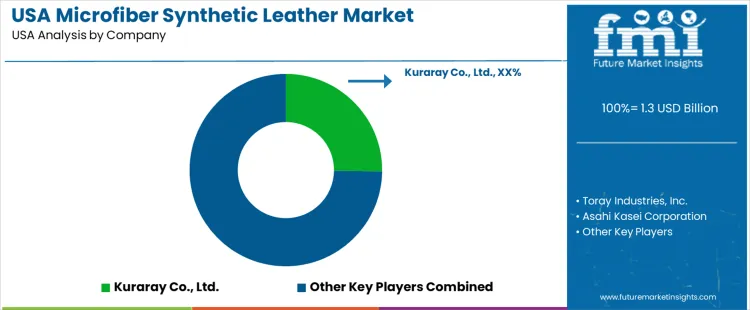
On the supply side, the USA market is served by several key players, including Kuraray Co., Ltd., which holds a significant market share (approximately 25.2%). Other leading suppliers include Toray Industries, Inc., Asahi Kasei Corporation, Teijin Limited, and Huafon Group. These companies provide high-quality microfiber synthetic leather suitable for diverse industries, from automotive to fashion. Competition among suppliers is driven by product quality, material performance (such as durability, texture, and aesthetic appeal), regulatory compliance, and the ability to scale production for large OEMs. Some companies differentiate by offering eco-conscious or recycled variants, catering to the growing consumer preference for sustainable products. Suppliers that maintain strong global distribution networks, invest in innovative manufacturing techniques, and ensure consistent product quality are well-positioned to benefit from the growing demand for microfiber synthetic leather in the USA market.
Key Players of the Microfiber Synthetic Leather Industry in USA
- Kuraray Co., Ltd.
- Toray Industries, Inc.
- Asahi Kasei Corporation
- Teijin Limited
- Huafon Group
Scope of the Report
| Items | Details |
|---|---|
| Quantitative Units | USD Billion |
| Regions Covered | USA |
| Product Type | Bio based, PU based, Others (non PU, non-bio) |
| Application | Clothing, Furnishing, Bags, Sports Equipment, Footwear |
| Key Companies Profiled | Kuraray Co., Ltd.; Toray Industries, Inc.; Asahi Kasei Corporation; Teijin Limited; Huafon Group |
| Additional Attributes | Dollar sales by product type and application show strong demand for PU based microfiber leather, especially in footwear and automotive sectors. Bio-based products are gaining traction. Growth is driven by the demand for lightweight, sustainable, and durable alternatives to animal leather in fashion, furniture, and sports equipment. |
Key Segments in the Demand for Microfiber Synthetic Leather in USA
Product Type
- Bio based
- PU based
- Others
Application
- Clothing
- Furnishing
- Bags
- Sports Equipment
- Footwear
Region
- Northeast USA
- West USA
- Midwest USA
- South USA
Frequently Asked Questions
How big is the demand for microfiber synthetic leather in USA in 2025?
The demand for microfiber synthetic leather in USA is estimated to be valued at USD 1.3 billion in 2025.
What will be the size of microfiber synthetic leather in USA in 2035?
The market size for the microfiber synthetic leather in USA is projected to reach USD 2.0 billion by 2035.
How much will be the demand for microfiber synthetic leather in USA growth between 2025 and 2035?
The demand for microfiber synthetic leather in USA is expected to grow at a 5.8% CAGR between 2025 and 2035.
What are the key product types in the microfiber synthetic leather in USA?
The key product types in microfiber synthetic leather in USA are pu-based, bio-based, others and vacuums.
Which application segment is expected to contribute significant share in the microfiber synthetic leather in USA in 2025?
In terms of application, clothing segment is expected to command 45.5% share in the microfiber synthetic leather in USA in 2025.
Preview the report firsthand - request a free sample
Get SampleGet the brochure for pricing and purchase details.
Get PDFTable of Content
- Executive Summary
- USA Market Outlook
- Demand-side Trends
- Supply-side Trends
- Technology Roadmap Analysis
- Analysis and Recommendations
- Market Overview
- Market Coverage / Taxonomy
- Market Definition / Scope / Limitations
- Market Background
- Market Dynamics
- Drivers
- Restraints
- Opportunity
- Trends
- Scenario Forecast
- Demand in Optimistic Scenario
- Demand in Likely Scenario
- Demand in Conservative Scenario
- Opportunity Map Analysis
- Product Life Cycle Analysis
- Supply Chain Analysis
- Investment Feasibility Matrix
- Value Chain Analysis
- PESTLE and Porter’s Analysis
- Regulatory Landscape
- Regional Parent Market Outlook
- Production and Consumption Statistics
- Import and Export Statistics
- Market Dynamics
- USA Market Analysis 2020 to 2024 and Forecast, 2025 to 2035
- Historical Market Size Value (USD Million) Analysis, 2020 to 2024
- Current and Future Market Size Value (USD Million) Projections, 2025 to 2035
- Y-o-Y Growth Trend Analysis
- Absolute $ Opportunity Analysis
- USA Market Pricing Analysis 2020 to 2024 and Forecast 2025 to 2035
- USA Market Analysis 2020 to 2024 and Forecast 2025 to 2035, By Product Type
- Introduction / Key Findings
- Historical Market Size Value (USD Million) Analysis By Product Type , 2020 to 2024
- Current and Future Market Size Value (USD Million) Analysis and Forecast By Product Type , 2025 to 2035
- PU-based
- Bio-based
- Others
- Vacuums
- Y-o-Y Growth Trend Analysis By Product Type , 2020 to 2024
- Absolute $ Opportunity Analysis By Product Type , 2025 to 2035
- USA Market Analysis 2020 to 2024 and Forecast 2025 to 2035, By Application
- Introduction / Key Findings
- Historical Market Size Value (USD Million) Analysis By Application, 2020 to 2024
- Current and Future Market Size Value (USD Million) Analysis and Forecast By Application, 2025 to 2035
- Clothing
- Furnishing
- Bags
- Sports Equipment
- Footwear
- Y-o-Y Growth Trend Analysis By Application, 2020 to 2024
- Absolute $ Opportunity Analysis By Application, 2025 to 2035
- Market Structure Analysis
- Competition Dashboard
- Competition Benchmarking
- Market Share Analysis of Top Players
- By Regional
- By Product Type
- By Application
- Competition Analysis
- Competition Deep Dive
- Kuraray Co., Ltd.
- Overview
- Product Portfolio
- Profitability by Market Segments (Product/Age /Sales Channel/Region)
- Sales Footprint
- Strategy Overview
- Marketing Strategy
- Product Strategy
- Channel Strategy
- Toray Industries, Inc.
- Asahi Kasei Corporation
- Teijin Limited
- Huafon Group
- Kuraray Co., Ltd.
- Competition Deep Dive
- Assumptions & Acronyms Used
- Research Methodology


