

- Industry Size (2025)
- USD 192.2 Mn
- Forecast (2035)
- USD 300.7 Mn
- CAGR (2025 to 2035)
- 4.6%
Demand for Microfiber Synthetic Leather in Japan Forecast and Outlook 2025 to 2035
Demand for microfiber synthetic leather in Japan is valued at USD 192.2 million in 2025 and is projected to reach USD 300.7 million by 2035, expanding at a CAGR of 4.6%. Automotive interiors remain the backbone of demand as Japanese OEMs continue to substitute natural leather with lightweight, uniform, and abrasion resistant microfiber materials across passenger vehicles. Footwear, furniture upholstery, fashion accessories, and industrial gloves form the secondary demand base.
Kanto and Chubu represent the largest regional consumption centers due to the concentration of automotive manufacturing, tier one component suppliers, and consumer goods production. Key companies shaping domestic supply include Toray Industries, Teijin, Kuraray, Asahi Kasei, and Kolon Industries Japan operations.
Quick Stats of the Demand for Microfiber Synthetic Leather in Japan
- Demand for Microfiber Synthetic Leather in Japan Value (2025): USD 192.2 million
- Demand for Microfiber Synthetic Leather in Japan Forecast Value (2035): USD 300.7 million
- Demand for Microfiber Synthetic Leather in Japan Forecast CAGR (2025 to 2035): 4.6%
- Leading Product Type in Japan (2025): Others (40%)
- Key Growth Regions in Japan: Kyushu & Okinawa, Kanto, Kinki, Chubu
- Top Players in Japan: Kuraray Co., Ltd., Toray Industries, Inc., Asahi Kasei Corporation, Teijin Limited, Huafon Group
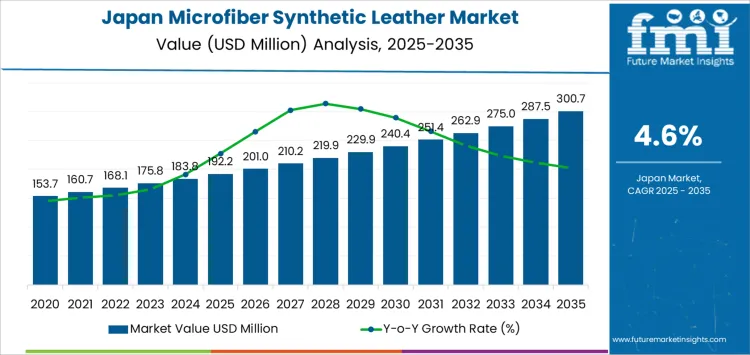
What is the Demand Forecast for Microfiber Synthetic Leather in Japan through 2035?
From 2025 to 2030, growth momentum is driven by vehicle interior upgrades, rising demand for premium seating materials in compact and mid segment cars, and steady export oriented footwear production. After 2030, expansion becomes more design and application led, with demand shifting toward breathable upholstery grades, ultra-thin fashion variants, and high durability industrial formats. Automotive seating and dashboard coverings retain the largest segment share, while furniture and lifestyle applications gain gradual traction.
Pricing remains closely linked to crude oil derivatives and polymer input costs, keeping margins sensitive to feedstock volatility. Distribution is dominated by long term supply contracts with OEMs and upholstery converters, limiting spot market exposure while ensuring stable volume visibility for domestic producers.
The demand for microfiber synthetic leather in Japan is valued at USD 192.2 million in 2025 and rises to USD 229.9 million by 2030, reflecting an absolute increase of USD 37.7 million in the first half of the forecast period. The progression from USD 153.7 million in 2020 to current levels highlights firm integration across automotive interiors, premium footwear, furniture upholstery, and industrial gloves. The Japan microfiber synthetic leather industry is shaped by consistent output from domestic automakers, replacement demand in public transport seating, and steady orders from fashion brands that favor uniform texture and abrasion resistance. Growth in this phase is manufacturing-led, tied to material substitution in mid-range products rather than premium design experimentation.
From 2030 to 2035, demand expands from USD 229.9 million to USD 300.7 million, delivering a larger USD 70.8 million increase in the second half of the outlook. Annual value additions rise from roughly USD 10.5 million to more than USD 13.2 million toward the end of the period, indicating strengthening downstream pull. This phase is supported by wider deployment in electric vehicle interiors, commercial seating, marine upholstery, and high-durability luggage where microfiber synthetic leather meets durability and maintenance requirements. Export-oriented production of bags, sports goods, and automotive components also reinforces procurement volumes. By 2035, demand in Japan is driven more by structural material replacement across mobility and furnishing industries than by seasonal fashion cycles.
Microfiber Synthetic Leather Industry in Japan Key Takeaways
| Metric | Value |
|---|---|
| Industry Value (2025) | USD 192.2 million |
| Forecast Value (2035) | USD 300.7 million |
| Forecast CAGR (2025 to 2035) | 4.6% |
What Is Driving the Demand for Microfiber Synthetic Leather in Japan?
The demand for microfiber synthetic leather in Japan is closely tied to manufacturing precision, material performance standards, and shifting preferences in automotive and consumer goods production. Traditionally, genuine leather held strong cultural and industrial value, particularly in automotive interiors, footwear, and upholstery. Over time, microfiber alternatives gained acceptance due to their uniform quality, abrasion resistance, and consistency across large production runs.
Japanese automakers adopted microfiber synthetic leather for seat covers, steering components, and interior trims where durability, weight control, and surface uniformity are critical. The material also found steady use in premium footwear, sports gear, bags, and furniture, where controlled texture, color stability, and ease of maintenance supported demand across domestic brands.
Future demand for microfiber synthetic leather in Japan will be shaped by electric vehicle production, export oriented consumer goods, and material substitution in response to ethical and supply chain pressures. Lightweight interior components in next generation vehicles will increase use of engineered synthetic surfaces that reduce overall cabin weight without sacrificing tactile quality. Growth is also expected in apparel accessories, performance footwear, and household furnishings where stain resistance and long service life matter.
Barriers include higher material cost compared with basic synthetic leathers, technical dependence on specialized fiber production, and competition from emerging bio based alternatives. Long term demand will depend on how well Japanese manufacturers balance performance expectations, environmental accountability, and cost control across automotive and consumer product supply chains.
What Is the Structural Breakdown of the Demand for Microfiber Synthetic Leather in Japan by Product Type and Application?
The demand for microfiber synthetic leather in Japan is segmented by product type and application. By product type, usage includes bio based, PU based, others, and vacuum engineered formats. By application, demand is distributed across clothing, furnishing, bags, sports equipment, and footwear. These segment divisions reflect how performance requirements, tactile expectations, and durability targets guide material selection across Japanese consumer goods manufacturing. Product type demand is shaped by abrasion resistance, flexibility, and surface consistency. Application demand is driven by fashion seasonality, retail output cycles, and industrial assembly throughput. Centralized sourcing, strict material testing, and consistent batch quality define procurement behavior across domestic supply chains.
Why Do Others Dominate the Demand for Microfiber Synthetic Leather in Japan by Product Type?
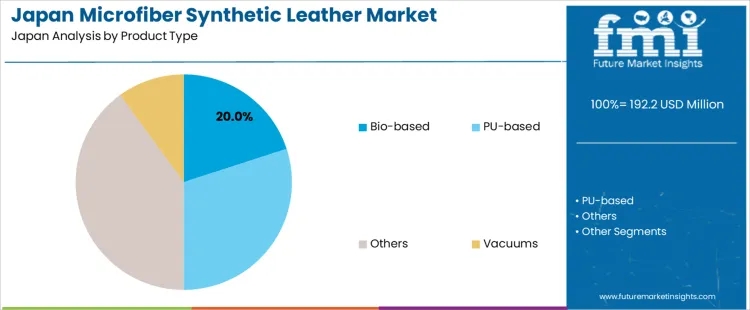
Others account for 40% of the demand for microfiber synthetic leather in Japan by product type, reflecting broad industrial and utility driven usage beyond standard apparel grades. This category covers mixed polymer hybrids, reinforced microfiber sheets, and specialty coated variants used where abrasion resistance and shape retention dominate over softness. Consumption intensity is driven by mass production of carry goods, automotive accessories, protective covers, and utility upholstery. Procurement is largely contract based through converters supplying diversified end users. Price sensitivity remains moderate because functional durability outweighs aesthetic requirements. Specification control centers on tensile strength, coating adhesion, and thickness uniformity overall.
Others also drive incremental demand through applications requiring repeat bending, moisture exposure, and mechanical load tolerance under daily use. Repeat purchase frequency remains high in manufacturing segments supplying bags, sports gear, and protective equipment. Buyers favor bulk procurement with fixed technical datasheets to avoid downstream failure risks. Margin structure remains tight under competition from PU based materials. Certification exposure remains moderate due to fluctuating chemical composition across hybrid designs. Import reliance persists for specialty coated bases sourced from East Asia. Lead time risk is managed through dual supplier contracts. Substitution pressure from natural leather remains present, though weight, cost stability.
What Is Driving Clothing to Lead the Demand for Microfiber Synthetic Leather in Japan by Application?
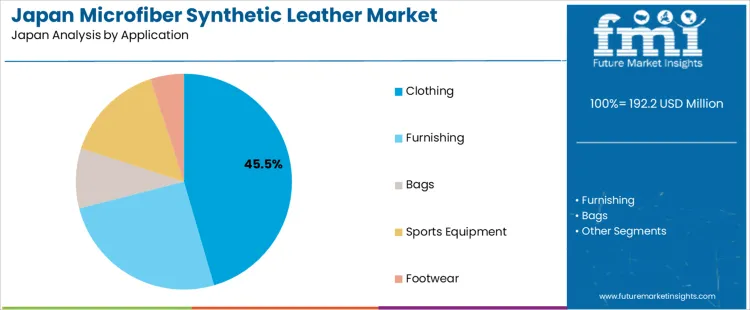
Clothing accounts for 45.5% of the demand for microfiber synthetic leather in Japan by application, reflecting strong positioning in fashion outerwear, performance jackets, and vegan lifestyle apparel. Consumption intensity is driven by seasonal apparel cycles, export oriented garment assembly, and rising preference for uniform texture finishes. Usage remains stable across spring and autumn production peaks. Procurement is led by apparel brands through nominated material suppliers. Price sensitivity remains moderate because hand feel, drape, and surface consistency directly affect garment positioning. Specification requirements emphasize breathability balance, tear resistance, and color fastness under repeated washing and ultraviolet exposure daily retail handling conditions.
Clothing contributes strongly to recurring demand because fast fashion drop cycles and private label collections shorten replenishment intervals. Repeat ordering remains high as brands maintain core fabric standards across multiple seasons. Buyers favor long term supply agreements to stabilize shade consistency and fabric behavior during mass cutting. Margin structure remains narrow because apparel pricing competition limits material markup. Certification exposure is elevated under textile chemical safety rules and export testing standards. Import dependence persists for base microfiber rolls produced in China and Southeast Asia. Lead time risk is managed through buffer stock at garment clusters. Substitution from recycled polyester leather.
What Is Driving the Demand for Microfiber Synthetic Leather in Japan Automotive, Apparel, and Interior Industries?
Demand for microfiber synthetic leather in Japan is driven by automotive interior upgrading, premium consumer goods manufacturing, and strict material performance standards. Japanese automakers specify microfiber leather for seat covers, steering wheels, and door trims due to its abrasion resistance, uniform texture, and low defect rates. Fashion accessories, sports goods, and furniture brands also rely on microfiber for consistency and durability. Environmental pressure to reduce natural leather usage strengthens substitution logic. Demand is therefore guided by performance engineering, visual precision, and production uniformity rather than low-cost material replacement alone.
How Is Automotive Interior Standardization Strengthening Material Adoption?
Japan automotive industry places strong emphasis on tactile quality, surface uniformity, and long-term wear performance. Microfiber synthetic leather allows precise control over grain pattern, color tone, and thickness across large production runs. It also delivers stable performance under temperature cycling and UV exposure common in vehicle cabins. Hybrid and electric vehicle platforms further favor lightweight interior materials to support efficiency targets. Seating suppliers and Tier 1 interior module manufacturers increasingly integrate microfiber leather as a standard material rather than a premium upgrade. This automotive-led standardization creates structurally stable industrial demand.
Why Are Footwear, Sports Goods, and Luxury Accessories Creating Parallel Demand?
Japan footwear, sports equipment, and luxury accessory segments generate parallel demand for microfiber synthetic leather due to its tear resistance, water repellency, and color stability. Athletic shoe manufacturers use it in uppers and reinforcement layers where weight control and durability must coexist. Luxury bags, wallets, and travel goods depend on microfiber for consistent appearance and low defect rejection. Domestic brands value the ability to maintain supply continuity without reliance on global hide availability. This diversified demand base supports year-round industrial throughput beyond automotive cycles.
How Do Production Cost, Recycling Limits, and Consumer Perception Restrain Expansion?
Demand for microfiber synthetic leather in Japan is restrained by higher production cost compared with standard PU leather and limited end-of-life recycling options. Multilayer fiber and resin structures complicate mechanical recycling under Japan waste separation systems. Some premium consumers still associate natural leather with higher prestige, especially in luxury apparel and high-end furniture. In addition, moisture vapor transmission limitations restrict use in breathable fashion applications. These factors moderate full substitution despite strong industrial and automotive acceptance.
What is the Demand for Microfiber Synthetic Leather in Japan by Region?
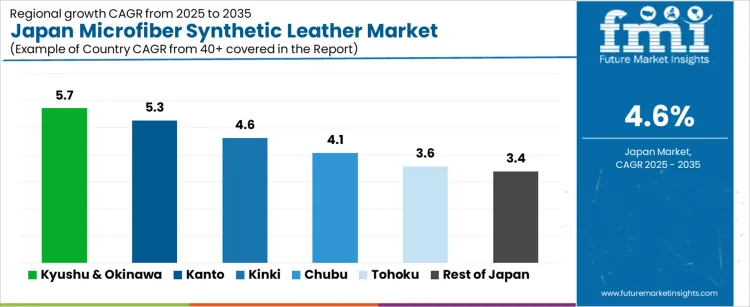
| Region | CAGR (%) |
|---|---|
| Kyushu & Okinawa | 5.7% |
| Kanto | 5.3% |
| Kinki | 4.6% |
| Chubu | 4.1% |
| Tohoku | 3.6% |
| Rest of Japan | 3.4% |
The demand for microfiber synthetic leather in Japan is expanding steadily across manufacturing regions, led by Kyushu and Okinawa at a 5.7% CAGR. Growth here is supported by footwear production, furniture upholstery, and automotive interior component manufacturing. Kanto follows at 5.3%, driven by high consumption in fashion goods, sports equipment, and premium interior applications. Kinki records 4.6% growth, reflecting steady demand from accessory manufacturers and contract upholstery suppliers. Chubu at 4.1% shows moderate uptake linked to automotive seating, trims, and industrial gloves. Tohoku and the Rest of Japan, at 3.6% and 3.4%, reflect slower expansion shaped by lower industrial density, limited fashion manufacturing, and longer material qualification cycles for synthetic leather in regulated product applications.
How Is Automotive Interior Production in Kyushu and Okinawa Supporting Microfiber Synthetic Leather Demand?
Demand for microfiber synthetic leather in Kyushu and Okinawa is advancing at a CAGR of 5.7% through 2035, supported by automotive seat manufacturing, marine upholstery, and sports equipment production across coastal industrial hubs. Fukuoka and nearby zones host tier two suppliers producing seats, steering covers, and interior trims. This region contrasts with Tohoku through stronger export oriented manufacturing rather than local consumption led demand. Microfiber synthetic leather is increasingly specified for heat resistance, durability, and uniform surface finish in vehicle interiors and leisure goods.
- Automotive seating anchors core material demand
- Marine and leisure products support secondary usage
- Export focused suppliers stabilize long term volumes
- Tier two manufacturers dominate procurement activity
What Is Driving Microfiber Synthetic Leather Consumption Across Lifestyle and Mobility Segments in Kanto?
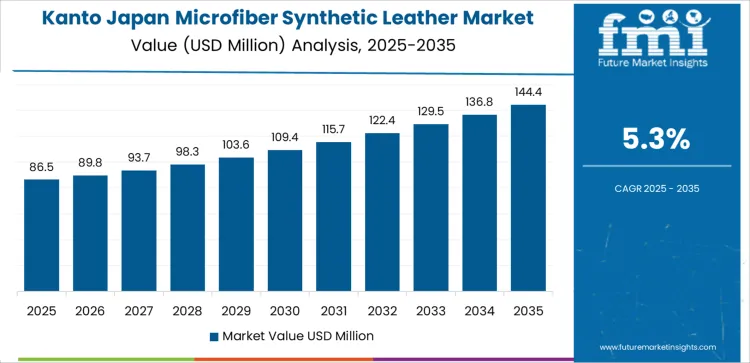
Demand for microfiber synthetic leather in Kanto is expanding at a CAGR of 5.3% through 2035, led by footwear brands, furniture manufacturing, and dense automotive aftermarket customization across Tokyo and surrounding prefectures. Kanto differs from Kyushu and Okinawa through stronger pull from consumer lifestyle products rather than industrial manufacturing alone. The material is widely used in sneakers, handbags, office chairs, and custom car interiors. Large retail brands and private label furniture producers drive steady replacement and design driven material turnover.
- Footwear and bag brands sustain high turnover demand
- Furniture production supports large surface area usage
- Car customization expands aftermarket applications
- Retail driven sourcing influences material specifications
Why Is Sports Goods and Regional Manufacturing Supporting Steady Growth in Kinki?
Microfiber synthetic leather demand in Kinki is advancing at a CAGR of 4.6% through 2035, supported by sports equipment manufacturing, premium footwear, and mid scale automotive interior suppliers in Osaka, Kobe, and surrounding areas. Kinki contrasts with Kanto through higher dependence on sports and performance goods rather than mass lifestyle retail. The material is used in footballs, training gear, fashion sneakers, and motorcycle seats. Regional brands and contract producers anchor consistent production volumes.
- Sports equipment drives performance grade leather demand
- Premium footwear supports higher quality material usage
- Motorcycle seating adds niche transport applications
- Regional brands shape stable procurement cycles
How Is Industrial Manufacturing and Transport Equipment Demand Influencing Chubu Adoption?
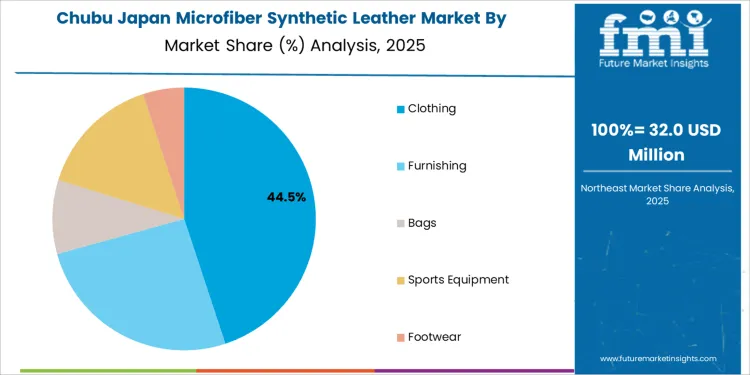
Demand for microfiber synthetic leather in Chubu is progressing at a CAGR of 4.1% through 2035, supported by automotive interior suppliers, heavy transport seating, and industrial equipment coverings around Nagoya. Chubu differs from Kinki through its stronger alignment with large scale vehicle production rather than lifestyle goods. The material is used in truck cabs, bus interiors, industrial machine pads, and automotive trim modules. Long term supply contracts between material producers and transport OEMs sustain steady offtake.
- Automotive interior modules anchor primary demand
- Commercial transport seating supports volume stability
- Industrial equipment coverings add secondary usage
- OEM contracts define procurement consistency
What Is Sustaining Gradual Microfiber Synthetic Leather Uptake in Tohoku Manufacturing?
Demand for microfiber synthetic leather in Tohoku is increasing at a CAGR of 3.6% through 2035, supported by small automotive parts plants, regional furniture workshops, and sports goods assembly units. Tohoku contrasts with Kanto and Chubu through lower production density and limited private label brand presence. The material is mainly used in compact furniture upholstery, training equipment, and basic vehicle interior components. Slower capital investment and limited export exposure continue to restrain faster adoption across this region.
- Small furniture workshops drive baseline material usage
- Training equipment supports recurring volume demand
- Limited export activity slows production expansion
- Lower automation moderates scaling speed
How Do Local Consumer Goods and Small Workshops Shape Demand in the Rest of Japan?
Demand for microfiber synthetic leather in the Rest of Japan is advancing at a CAGR of 3.4% through 2035, shaped by small scale footwear makers, craft furniture units, and regional consumer goods production. This region contrasts with Kanto and Chubu through low industrial concentration and minimal integration with national supply chains. The material is primarily used in budget shoes, household seating, protective covers, and locally sold accessories. Procurement volumes remain modest and closely tied to distributor led supply networks.
- Budget footwear supports basic material consumption
- Craft furniture sustains small batch upholstery demand
- Local accessories create niche product usage
- Distributor sourcing dominates supply relationships
What Is Driving the Demand for Microfiber Synthetic Leather in Japan and Which Producers Anchor Material Supply
The demand for microfiber synthetic leather in Japan is shaped by automotive interior upgrades, premium footwear production, and steady use in sports goods and industrial gloves. Kuraray holds a central domestic position through long established artificial leather platforms used by Japanese automakers, shoe brands, and upholstery processors. Toray Industries supports demand through high performance nonwoven and microfiber structures supplied to interior trim and functional apparel applications.
Asahi Kasei maintains a strong presence in suede type synthetic leather used in fashion, lifestyle goods, and automotive seating. Teijin supports technical applications where lightweight structure, abrasion resistance, and process stability are required for long cycle manufacturing programs. These producers anchor domestic supply through close coordination with OEM design and material testing teams.
Huafon Group participates through imported microfiber synthetic leather supplied to cost sensitive footwear, furniture, and mass retail goods serving value segments. Procurement in Japan is guided by surface uniformity, breathability, hydrolysis resistance, and stable color fastness under heat and humidity exposure. Buyer preference favors suppliers with domestic production, short development cycles, and repeatable batch quality for high volume programs. Qualification cycles are tied to automotive model renewals, seasonal fashion production schedules, and export oriented sports goods manufacturing. Demand visibility reflects vehicle interior refresh programs, global athletic footwear output, and continued replacement of natural leather in applications requiring weight control and supply consistency.
Key Players in the Microfiber Synthetic Leather Industry in Japan
- Kuraray Co., Ltd.
- Toray Industries, Inc.
- Asahi Kasei Corporation
- Teijin Limited
- Huafon Group
Scope of the report
| Items | Values |
|---|---|
| Quantitative Units (2025) | USD million |
| Product Type | Bio-based, PU-based, Others, Vacuum engineered |
| Application | Clothing, Furnishing, Bags, Sports Equipment, Footwear |
| End Use Industry | Automotive Interiors, Fashion & Lifestyle, Furniture, Sports Goods, Industrial Gloves |
| Regions Covered | Kyushu & Okinawa, Kanto, Kansai, Chubu, Tohoku, Rest of Japan |
| Key Companies Profiled | Kuraray Co., Ltd., Toray Industries, Inc., Asahi Kasei Corporation, Teijin Limited, Huafon Group |
| Additional Attributes | Dollar by sales by product type, application, and region; CAGR projections through 2035; automotive interior substitution rates; export oriented consumer goods contribution; fashion and footwear volume growth; regional production clusters; supply contract penetration; pricing sensitivity linked to polymer feedstock; material performance metrics (abrasion resistance, breathability, color fastness, tensile strength); procurement patterns and OEM alignment; batch consistency and repeat order frequency; influence of electric and hybrid vehicle interiors; impact of lifestyle trends on clothing and bags; industrial use trends in gloves and marine upholstery; domestic vs imported supply share; long-term demand drivers vs seasonal fashion cycles |
Microfiber Synthetic Leather Industry in Japan Segmentation
Product Type:
- Bio-based
- PU-based
- Others
- Vacuums
Application:
- Clothing
- Furnishing
- Bags
- Sports Equipment
- Footwear
Region
- Kyushu & Okinawa
- Kanto
- Kansai
- Chubu
- Tohoku
- Rest of Japan
Frequently Asked Questions
How big is the demand for microfiber synthetic leather in Japan in 2025?
The demand for microfiber synthetic leather in Japan is estimated to be valued at USD 192.2 million in 2025.
What will be the size of microfiber synthetic leather in Japan in 2035?
The market size for the microfiber synthetic leather in Japan is projected to reach USD 300.7 million by 2035.
How much will be the demand for microfiber synthetic leather in Japan growth between 2025 and 2035?
The demand for microfiber synthetic leather in Japan is expected to grow at a 4.6% CAGR between 2025 and 2035.
What are the key product types in the microfiber synthetic leather in Japan?
The key product types in microfiber synthetic leather in Japan are bio-based, pu-based, others and vacuums.
Which application segment is expected to contribute significant share in the microfiber synthetic leather in Japan in 2025?
In terms of application, clothing segment is expected to command 45.5% share in the microfiber synthetic leather in Japan in 2025.
Preview the report firsthand - request a free sample
Get SampleGet the brochure for pricing and purchase details.
Get PDFTable of Content
- Executive Summary
- Japan Market Outlook
- Demand-side Trends
- Supply-side Trends
- Technology Roadmap Analysis
- Analysis and Recommendations
- Market Overview
- Market Coverage / Taxonomy
- Market Definition / Scope / Limitations
- Market Background
- Market Dynamics
- Drivers
- Restraints
- Opportunity
- Trends
- Scenario Forecast
- Demand in Optimistic Scenario
- Demand in Likely Scenario
- Demand in Conservative Scenario
- Opportunity Map Analysis
- Product Life Cycle Analysis
- Supply Chain Analysis
- Investment Feasibility Matrix
- Value Chain Analysis
- PESTLE and Porter’s Analysis
- Regulatory Landscape
- Regional Parent Market Outlook
- Production and Consumption Statistics
- Import and Export Statistics
- Market Dynamics
- Japan Market Analysis 2020 to 2024 and Forecast, 2025 to 2035
- Historical Market Size Value (USD Million) Analysis, 2020 to 2024
- Current and Future Market Size Value (USD Million) Projections, 2025 to 2035
- Y-o-Y Growth Trend Analysis
- Absolute $ Opportunity Analysis
- Japan Market Pricing Analysis 2020 to 2024 and Forecast 2025 to 2035
- Japan Market Analysis 2020 to 2024 and Forecast 2025 to 2035, By Product Type
- Introduction / Key Findings
- Historical Market Size Value (USD Million) Analysis By Product Type , 2020 to 2024
- Current and Future Market Size Value (USD Million) Analysis and Forecast By Product Type , 2025 to 2035
- Bio-based
- PU-based
- Others
- Vacuums
- Y-o-Y Growth Trend Analysis By Product Type , 2020 to 2024
- Absolute $ Opportunity Analysis By Product Type , 2025 to 2035
- Japan Market Analysis 2020 to 2024 and Forecast 2025 to 2035, By Application
- Introduction / Key Findings
- Historical Market Size Value (USD Million) Analysis By Application, 2020 to 2024
- Current and Future Market Size Value (USD Million) Analysis and Forecast By Application, 2025 to 2035
- Clothing
- Furnishing
- Bags
- Sports Equipment
- Footwear
- Y-o-Y Growth Trend Analysis By Application, 2020 to 2024
- Absolute $ Opportunity Analysis By Application, 2025 to 2035
- Market Structure Analysis
- Competition Dashboard
- Competition Benchmarking
- Market Share Analysis of Top Players
- By Regional
- By Product Type
- By Application
- Competition Analysis
- Competition Deep Dive
- Kuraray Co., Ltd.
- Overview
- Product Portfolio
- Profitability by Market Segments (Product/Age /Sales Channel/Region)
- Sales Footprint
- Strategy Overview
- Marketing Strategy
- Product Strategy
- Channel Strategy
- Toray Industries, Inc.
- Asahi Kasei Corporation
- Teijin Limited
- Huafon Group
- Kuraray Co., Ltd.
- Competition Deep Dive
- Assumptions & Acronyms Used
- Research Methodology


