

- Industry Size (2025)
- USD 1.3 Bn
- Forecast (2035)
- USD 2.4 Bn
- CAGR (2025 to 2035)
- 6.3%
Upcycled Textile Pouch Market Size and Share Forecast Outlook 2025 to 2035
The upcycled textile pouch market is likely to increase from USD 1.3 billion in 2025 to USD 2.4 billion by 2035, registering a CAGR of 6.3%. Growth is driven by expanding demand for sustainable packaging, textile waste valorisation, and eco-conscious retail innovation. Cotton and denim waste are increasingly repurposed into durable and aesthetically appealing pouch formats. Between 2025 and 2030, the rise of zero-waste fashion brands and ethical accessory packaging will accelerate adoption. Asia-Pacific will lead production, while Europe and North America focus on branded sustainability compliance and traceability.
Quick Stats for Upcycled Textile Pouch Market
- Market Value (2025): USD 1.3 billion
- Market Forecast Value (2035): USD 2.4 billion
- Market Forecast CAGR: 6.3%
- Leading Segment (2025): Fashion and Apparel - 43.5%
- Key Growth Region: Asia-Pacific (led by South Korea at 7.1% CAGR)
- Top Companies: Logo Pouch, Alchemy Goods, Looptworks, Suay Sew Shop, Bagworld India, Lucid Upcycled Private Ltd, Jaggery, ReCharkhaEcoSocial, Earth Care Bags, Mdecopack Private Ltd

| Metric | Value |
|---|---|
| Industry Size (2025E) | USD 1.3 billion |
| Industry Value (2035F) | USD 2.4 billion |
| CAGR (2025 to 2035) | 6.3% |
Between 2020 and 2024, circular fashion and waste-reduction movements reshaped the global pouch industry. Brands began upcycling pre-consumer and post-consumer textiles to replace plastic and virgin-fiber packaging. By 2035, the market will achieve USD 2.4 billion, driven by consumer preference for eco-certified and ethically produced pouches. Asia-Pacific will dominate low-cost upcycling operations, while Europe will advance in luxury and artisan pouch segments, emphasizing sustainable craftsmanship.
Why Is the Upcycled Textile Pouch Market Growing?
Sustainability commitments from fashion, beauty, and lifestyle brands fuel market growth. Textile waste upcycling reduces landfill pressure and carbon emissions, aligning with circular economy principles. Rising demand for reusable, stylish, and ethically sourced packaging further strengthens the market’s trajectory.
What is the Segmental Overview in the Upcycled Textile Pouch Market?
The market is segmented by material, pouch type, application, end-use industry, and region. Materials include cotton textile waste, polyester textile waste, denim and canvas waste, and mixed fabric composites. Pouch types comprise stand-up pouches, flat pouches, zipper pouches, and drawstring pouches. Key applications include apparel & accessories packaging, cosmetics & personal care, food & beverage dry goods, and household products. End-use industries include fashion & apparel, cosmetics & personal care, retail & e-commerce, and food & beverages.
Why does Cotton Textile Waste Lead Material Type?

Cotton textile waste is projected to account for 36.5% of the market in 2025, driven by its softness, biodegradability, and alignment with luxury sustainability goals. It provides a natural, reusable packaging alternative that enhances brand perception and environmental responsibility.
Its availability from post-industrial and post-consumer textile sources ensures circular production scalability. The tactile and aesthetic appeal of cotton-based materials resonates with premium brands seeking plastic-free packaging. As upcycled materials gain market traction, cotton textile waste remains the leading sustainable substrate in textile packaging.
How does Stand-Up Pouches Dominate Pouch Type Segment?
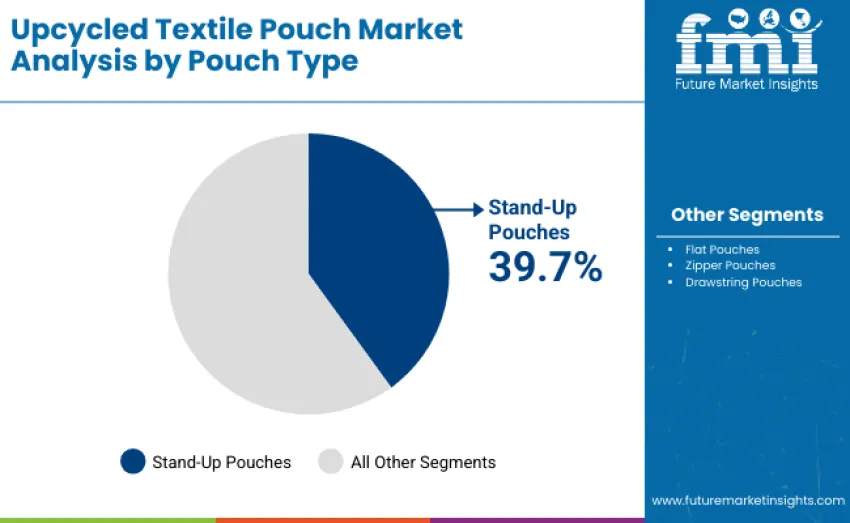
Stand-up pouches are forecast to hold 39.7% of the market in 2025, supported by their balance of form and functionality. Their upright structure enhances retail presentation and allows efficient storage while accommodating a range of textile and hybrid materials.
They are widely adopted in apparel, accessories, and cosmetic packaging for their lightweight and reusable properties. Custom printing and closure options strengthen brand identity and consumer appeal. As fashion brands transition to eco-conscious packaging formats, stand-up pouches remain the dominant packaging type.
Why does Apparel and Accessories Packaging Lead Applications Segment?

Apparel and accessories packaging is expected to capture 35.9% of the market in 2025, reflecting the fashion industry’s move away from disposable plastics. Textile-based pouches and wraps provide a reusable, breathable, and aesthetically appealing alternative for premium and boutique segments.
These solutions enhance unboxing experiences while reducing waste in secondary packaging. Integration with natural dyes and biodegradable coatings further strengthens sustainability positioning. As conscious consumerism rises, apparel and accessories packaging continues to lead in application adoption.
Why does Fashion and Apparel Lead End-Use Segment?
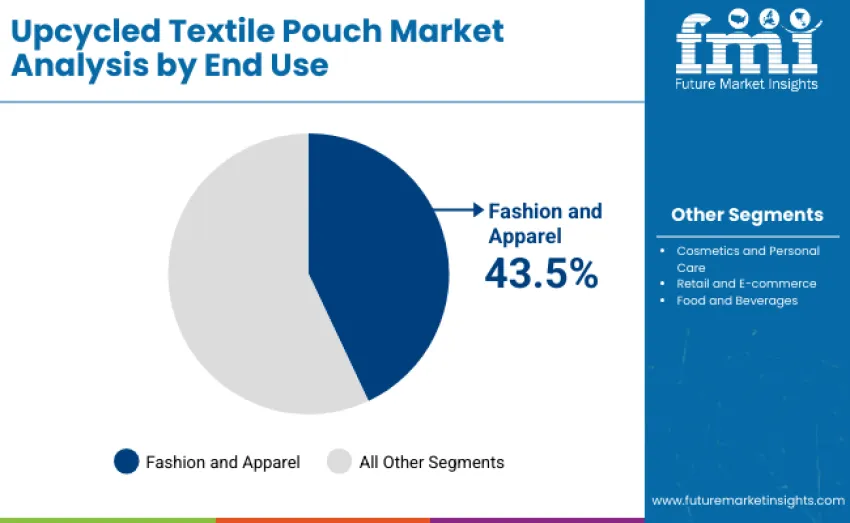
The fashion and apparel sector is anticipated to dominate with 43.5% of the market in 2025, fueled by designer initiatives and eco-label certification programs. Brands are embracing upcycled textile packaging to reinforce sustainability narratives and circular economy practices.
Reusable cloth bags and cotton pouches are replacing plastic covers across luxury and mass-market apparel chains. Their durability supports repeat use and long-term brand exposure. As sustainability becomes integral to brand storytelling, fashion and apparel remain the leading end-use segment in textile-based packaging.
What are the Key Drivers, Restraints, Opportunities and Trends in the Upcycled Textile Pouch Market?
The market is being driven by the rise of circular fashion initiatives and increasing textile waste recycling efforts across the apparel and lifestyle sectors. Eco-luxury brands are adopting upcycled textile packaging as a premium, sustainable alternative to conventional materials. The shift toward responsible consumption and brand storytelling around sustainability is further fueling demand for reusable and aesthetically distinctive packaging formats.
Market growth is limited by variability in textile quality and the high manual labor costs associated with producing upcycled packaging. The sourcing and sorting of post-consumer fabrics require intensive craftsmanship and time, which impact scalability. Inconsistent material availability and color variations also pose challenges for maintaining brand uniformity in large-volume orders, restricting mass-market adoption.
Expanding applications in corporate gifting, event packaging, and B2B collaborations are creating new opportunities for upcycled textile packaging. The use of sustainable fabrics such as organic cotton, denim scraps, and jute blends aligns with growing corporate ESG goals. Designers and manufacturers are exploring scalable production models that integrate automation while retaining artisanal value, allowing greater reach across retail, hospitality, and luxury markets. The market is witnessing the rise of artisan upcycling collectives and localized production networks that promote fair trade and craft preservation. Traceable supply chains supported by digital tagging are enhancing transparency and consumer confidence. Eco-certified pouch printing and low-impact dyeing processes are emerging as preferred methods for customization. Together, these trends are positioning upcycled textile packaging as a symbol of ethical luxury and circular innovation in sustainable branding.
Analysis of Upcycled Textile Pouch Market by Key Countries
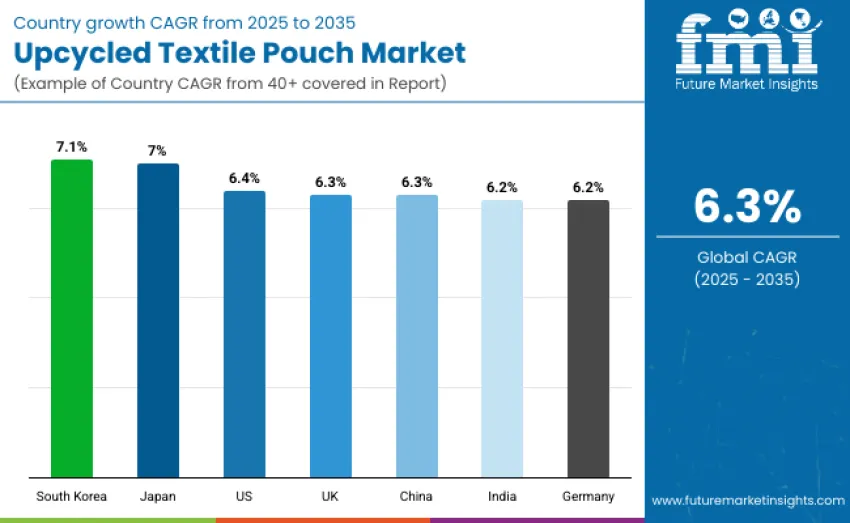
The global upcycled textile pouch market is expanding as sustainability, circular fashion, and eco-conscious branding drive adoption across industries. Asia-Pacific dominates manufacturing due to affordable textile waste sourcing and scalable production networks. North America and Europe lead innovation in design, customization, and traceable sustainability practices, focusing on fashion, gifting, and retail packaging. The integration of upcycled materials into premium, reusable pouches aligns with global zero-waste goals and supports ethical supply chain transformation across consumer brands.
How is the Sales Outlook in the United States?
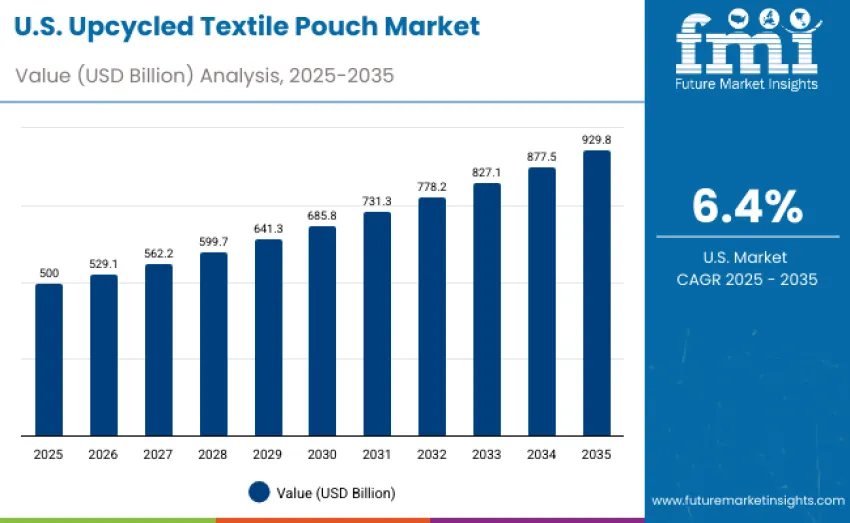
The USA will grow at 6.4% CAGR, driven by eco-conscious retailers and D2C brands incorporating upcycled pouches into sustainable packaging. Collaborations between brands and local textile upcyclers are promoting transparency and craftsmanship in green packaging initiatives.
- Rapid adoption by eco-conscious fashion retailers.
- Integration of upcycled pouches in D2C packaging.
- Collaboration between brands and local upcyclers.
How is the Demand Outlook in Germany?
Germany will expand at 6.2% CAGR, supported by eco-friendly pouch adoption in retail and designer packaging. Circular packaging mandates and textile waste recovery programs are fostering innovation in blended-material pouch production.
- Increased retail use of eco-friendly pouches.
- Expansion of designer packaging with textile blends.
- Circular packaging mandates encourage innovation.
How is the Expansion Outlook in the United Kingdom?
The UK will grow at 6.3% CAGR, led by fashion industry collaborations and luxury gifting applications. Investments in textile reuse infrastructure and local upcycling networks strengthen the country’s position in sustainable retail packaging.
- Strong fashion industry partnerships in upcycling.
- Growing luxury gifting segment for branded pouches.
- Investments in local textile reuse infrastructure.
What is the Sales Outlook in China?
China will grow at 6.3% CAGR, driven by large-scale textile recovery programs and affordable raw material availability. The country’s expanding export base in cotton-based upcycled pouches supports both domestic retail and e-commerce sectors.
- High-scale textile recovery initiatives drive adoption.
- Growth in exports of cotton-based upcycled pouches.
- Integration with e-commerce and logistics channels.
What is the Opportunity Outlook in India?
India will grow at 6.2% CAGR, supported by small and mid-scale enterprises specializing in textile upcycling. Partnerships with apparel exporters and eco-packaging firms are boosting domestic adoption of reusable pouch designs.
- Expansion of small-scale textile upcycling enterprises.
- Partnerships with apparel exporters for eco packaging.
- Increase in domestic demand for reusable retail pouches.
What is the Growth Outlook in Japan?
Japan will grow at 7.0% CAGR, focusing on high-precision, premium-grade upcycled pouch manufacturing. Innovations in recycled cotton and canvas enhance durability, while collaborations between luxury brands and packaging firms promote upscale sustainability.
- Development of precision-made premium pouches.
- Innovations in recycled cotton and canvas material.
- Partnerships between fashion houses and packaging firms.
What is the South Korea Expansion Outlook?
South Korea will lead with 7.1% CAGR, spearheading the use of technology and design in upcycled pouch production. The cosmetic, lifestyle, and fashion industries are driving demand for premium, traceable, and export-ready pouch solutions.
- Dominance in tech-enabled and designer pouch formats.
- Adoption across cosmetic and lifestyle industries.
- Export of sustainable pouches to global fashion labels.
How is the Competitive Landscape in the Upcycled Textile Pouch Market?
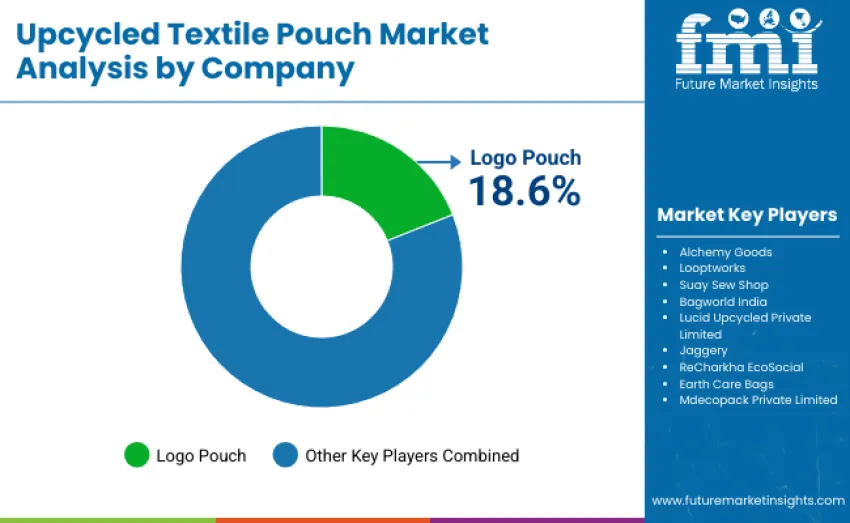
The market is moderately fragmented with key players such as Logo Pouch, Alchemy Goods, Looptworks, Suay Sew Shop, Bagworld India, Lucid Upcycled Private Ltd, Jaggery, ReCharkhaEcoSocial, Earth Care Bags, and Mdecopack Private Ltd. Companies are focusing on expanding eco-certified collections, enhancing durability, and integrating community-based upcycling models.
Key Companies
- Logo Pouch
- Alchemy Goods
- Looptworks
- Suay Sew Shop
- Bagworld India
- Lucid Upcycled Private Limited
- Jaggery
- ReCharkhaEcoSocial
- Earth Care Bags
- Mdecopack Private Limited
Scope of the Report
| Item | Value |
|---|---|
| Quantitative Units | USD 1.3 Billion (2025) |
| By Material | Cotton, Polyester, Denim, Mixed Fabric Composites |
| By Pouch Type | Stand-Up, Flat, Zipper, Drawstring |
| By Application | Apparel & Accessories, Cosmetics & Personal Care, Dry Goods, Household |
| By End-Use Industry | Fashion & Apparel, Cosmetics & Personal Care, Retail & E-commerce, Food & Beverages |
| Key Companies Profiled | Logo Pouch, Alchemy Goods, Looptworks, Suay Sew Shop, Jaggery |
| Additional Attributes | Market driven by textile circularity, sustainable fashion, and eco-conscious brand initiatives |
Key Segmentation
By Material:
- Cotton Textile Waste
- Polyester Textile Waste
- Denim and Canvas Waste
- Mixed Fabric Composites
By Pouch Type:
- Stand-Up Pouches
- Flat Pouches
- Zipper Pouches
- Drawstring Pouches
By Application:
- Apparel and Accessories Packaging
- Cosmetics and Personal Care
- Food and Beverage Dry Goods
- Household Products
By End-Use Industry:
- Fashion and Apparel
- Cosmetics and Personal Care
- Retail and E-commerce
- Food and Beverages
By Region:
- North America
- Europe
- Asia-Pacific
- Latin America
- Middle East & Africa
Frequently Asked Questions
What is the market size of the Upcycled Textile Pouch Market in 2025?
The market is valued at USD 1.3 billion in 2025, reflecting growing demand for sustainable and reusable packaging.
What will be the market size by 2035?
It will reach USD 2.4 billion by 2035, supported by global initiatives promoting textile circularity.
What is the CAGR for 2025-2035?
The market is projected to grow at a CAGR of 6.3% during the forecast period.
Which material leads the market in 2025?
Cotton Textile Waste dominates with a 36.5% share, due to its recyclability and premium texture.
Who are the key companies in the Upcycled Textile Pouch Market?
Key players include Logo Pouch, Alchemy Goods, Looptworks, Suay Sew Shop, Bagworld India, and Jaggery, known for innovation in eco-luxury pouch design.
Preview the report firsthand - request a free sample
Get SampleGet the brochure for pricing and purchase details.
Get PDFTable of Content
- Executive Summary
- Industry Introduction, including Taxonomy and Market Definition
- Upcycled Textile Pouch Market Trends and Success Factors, including Macro-economic Factors, Market Dynamics, and Recent Industry Developments
- Global Market Demand Analysis 2020 to 2024 and Forecast 2025 to 2035, including Historical Analysis and Future Projections
- Pricing Analysis
- Global Market Analysis 2020 to 2024 and Forecast 2025 to 2035
- Material
- Pouch Type
- Application
- End-Use Industry
- Global Market Analysis 2020 to 2024 and Forecast 2025 to 2035, By Material
- Cotton Textile Waste
- Polyester Textile Waste
- Denim and Canvas Waste
- Mixed Fabric Composites
- Global Market Analysis 2020 to 2024 and Forecast 2025 to 2035, By Pouch Type
- Stand-Up Pouches
- Flat Pouches
- Zipper Pouches
- Drawstring Pouches
- Global Market Analysis 2020 to 2024 and Forecast 2025 to 2035, By Application
- Apparel and Accessories Packaging
- Cosmetics and Personal Care
- Food and Beverage Dry Goods
- Household Products
- Global Market Analysis 2020 to 2024 and Forecast 2025 to 2035, By End-Use Industry
- Fashion and Apparel
- Cosmetics and Personal Care
- Retail and E-commerce
- Food and Beverages
- Global Market Analysis 2020 to 2024 and Forecast 2025 to 2035, By Region
- North America
- Latin America
- Europe
- East Asia
- South Asia
- Middle East & Africa
- North America Sales Analysis 2020 to 2024 and Forecast 2025 to 2035, by Key Segments and Countries
- Latin America Sales Analysis 2020 to 2024 and Forecast 2025 to 2035, by Key Segments and Countries
- Europe Sales Analysis 2020 to 2024 and Forecast 2025 to 2035, by Key Segments and Countries
- East Asia Sales Analysis 2020 to 2024 and Forecast 2025 to 2035, by Key Segments and Countries
- South Asia Sales Analysis 2020 to 2024 and Forecast 2025 to 2035, by Key Segments and Countries
- Middle East & Africa Sales Analysis 2020 to 2024 and Forecast 2025 to 2035, by Key Segments and Countries
- Sales Forecast 2025 to 2035 by Material, Pouch Type, Application, End-Use Industry and for Countries
- Competition Outlook, including Market Structure Analysis, Company Share Analysis by Key Players, and Competition Dashboard
- Company Profile
- Logo Pouch
- Alchemy Goods
- Looptworks
- Suay Sew Shop
- Bagworld India
- Lucid Upcycled Private Limited
- Jaggery
- ReCharkha EcoSocial
- Earth Care Bags
- Mdecopack Private Limited


