

- Industry Size (2026)
- USD 220 Mn
- Forecast (2036)
- USD 640 Mn
- CAGR (2026 to 2036)
- 11.3%
Zero-Gravity Packaging Market Forecast and Outlook 2026 to 2036
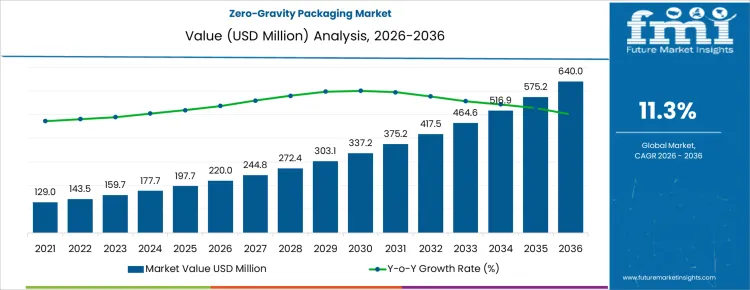
The zero-gravity packaging market is expected to experience consistent growth from 2026 to 2036. In 2026, the market value is projected at USD 220 million, with steady growth anticipated, reaching USD 640 million by 2036. The compound annual growth rate (CAGR) is forecasted at 11.3%, driven by increasing demand for advanced packaging solutions in industries such as aerospace, healthcare, and consumer goods. The market is expected to benefit from the ongoing innovations in packaging technology, particularly in applications requiring lightweight and durable materials.
The market’s acceleration phase is expected to begin from 2026 to 2030, where growth will be more pronounced due to rising interest in zero-gravity applications in specialized sectors. After 2030, the market will experience deceleration, with a gradual but steady increase in value as zero-gravity packaging technology matures and reaches a broader market. By 2036, the market will have fully evolved, reaching USD 640 million, supported by continued advancements and increased adoption across industries.
Quick Stats of the Zero-Gravity Packaging Market
- Zero-Gravity Packaging Market Value (2026): USD 220 million
- Zero-Gravity Packaging Market Forecast Value (2036): USD 640 million
- Zero-Gravity Packaging Market Global Forecast CAGR (2026-2036): 11.3%
- Zero-Gravity Packaging Market Leading Segment: Packaging Format(Flexible pouches & sachets) 50%
- Key Growth Regions in Zero-Gravity Packaging Market: China, India, United States, Germany, Brazil
- Top Players in Zero-Gravity Packaging Market: Amcor, OHB-linked suppliers, CASI Packaging Units ,ISRO vendor ecosystem, Local research suppliers, Mitsubishi Heavy Industries, Lockheed Martin Packaging
What is the Growth Forecast for the Zero-Gravity Packaging Market through 2036?
The growth forecast for the zero-gravity packaging market shows a clear acceleration and deceleration pattern, with a projected CAGR of 11.3%. Starting at USD 220 million in 2026, the market is expected to grow rapidly in the first few years, reaching USD 244.9 million in 2027, USD 272.5 million in 2028, and USD 303.3 million in 2029. The growth will continue to accelerate through 2030, reaching USD 337.6 million, driven by the expanding use of packaging in niche industries.
From 2031 onward, the market will enter a deceleration phase as growth slows but remains positive. In 2031, the market will reach USD 375.7 million, followed by USD 418.2 million in 2032. By 2033, the market will grow to USD 465.5 million, followed by USD 518.1 million in 2034. By 2035, the market is expected to reach USD 576.6 million, with a final projected value of USD 640 million by 2036, marking a steady but sustained increase in demand for zero-gravity packaging solutions.
Zero-Gravity Packaging Market Key Takeaways
| Metric | Value |
|---|---|
| Industry Sales Value (2026) | USD 220 million |
| Industry Forecast Value (2036) | USD 640 million |
| Industry Forecast CAGR (2026-2036) | 11.3% |
What Is Driving the Demand for the Zero Gravity Packaging Market Globally?
The global demand for zero gravity packaging is being driven by increased activity in space exploration, satellite deployment, and commercial space missions, where traditional packaging solutions do not perform effectively under microgravity conditions. Zero gravity packaging refers to materials and systems designed to function reliably in environments with little or no gravitational force, facilitating containment, handling, dispensing, and protection of products aboard spacecraft, space stations, and orbital platforms. As government space agencies and private space companies expand launch frequency and diversify mission profiles, there is a growing need for packaging that addresses challenges such as fluid behaviour in microgravity, particulate control, ease of use by suited or gloved astronauts, and minimisation of loose debris that could interfere with equipment. Applications extend to food and beverage systems for crewed missions, medical supplies, scientific instruments, hardware components, and waste containment. The rise in small satellite (smallsat) constellations, extended duration missions, and interest in lunar or Mars missions all reinforce the need for specialised packaging solutions that maintain integrity, sterility, and usability where gravity cannot be relied on to control movement, settling, or orientation of contents.
Future demand for zero gravity packaging is expected to grow as space activity becomes more routine and diversified, and as sustainability and reusability considerations shape long duration mission logistics. Advances in materials science, including lightweight composites, flexible containers with controlled release mechanisms, and modular pack designs, will support performance under microgravity while minimising mass - a crucial parameter in space logistics cost. Growth in commercial space tourism and private astronaut missions will broaden the addressable market beyond government programmes, driving demand for user friendly, safe, and reliable packaging for consumables and personal items. Integration of smart technologies such as embedded sensors for condition monitoring, tamper detection, and real time inventory management will further differentiate zero gravity packaging as part of broader spacecraft systems. Standards development for space materials and payload interfaces will influence how packaging is specified and certified, reinforcing requirements for reliability, compatibility with life support systems, and prevention of contamination or debris. Sustainability drivers, including recyclability and repurposing of packaging materials aboard long term habitats, will also shape innovation. As international collaboration in space exploration expands and commercial missions diversify, zero gravity packaging solutions that balance functional performance, safety, and mass efficiency are expected to see steady worldwide growth.
What are the Leading Segments in the Global Zero-Gravity Packaging Market?
The global zero-gravity packaging market is segmented by application and packaging format. Among applications, space food & aerospace R&D leads the market, accounting for 45% of the share, followed by research & defense, space missions, ISRO & defense research, academic research, and JAXA programs. The space food & aerospace R&D segment is driven by the growing demand for packaging solutions that can withstand the unique conditions of zero-gravity environments, ensuring food safety and usability in space. On the packaging format side, flexible pouches & sachets dominate the market, capturing 50% of the share, followed by specialized pouches, space-grade food packs, and sachets & pouches. Flexible pouches and sachets are preferred for their lightweight, compact, and efficient nature, making them ideal for use in space missions and research.
What Drives the Growth of Space Food & Aerospace R&D in the Zero-Gravity Packaging Market?
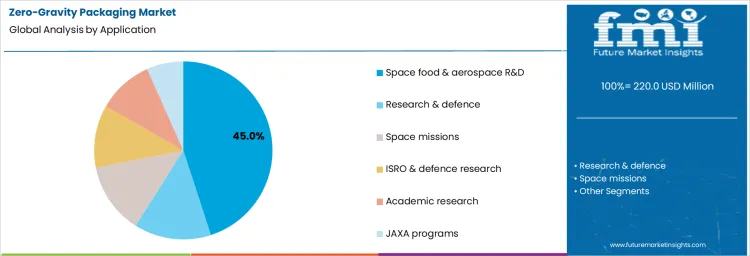
Space food & aerospace R&D is the leading application segment in the zero-gravity packaging market, accounting for 45% of the share. The need for specialized packaging solutions to ensure the safety, durability, and convenience of food in space is a key driver for this segment. Zero-gravity environments pose unique challenges for food storage, including the risk of contamination, spoilage, and difficulty in handling. Packaging solutions for space food must be carefully designed to preserve freshness, prevent leakage, and ensure easy consumption in microgravity conditions. As space missions and research activities continue to grow, particularly with the increasing number of international space agencies and private companies conducting missions, the demand for innovative packaging solutions in space food & aerospace R&D is expected to rise. Flexible packaging formats that are lightweight, space-efficient, and durable are critical for meeting these requirements, further driving the growth of this segment in the market.
What is Driving the Demand for Flexible Pouches & Sachets in the Zero-Gravity Packaging Market?
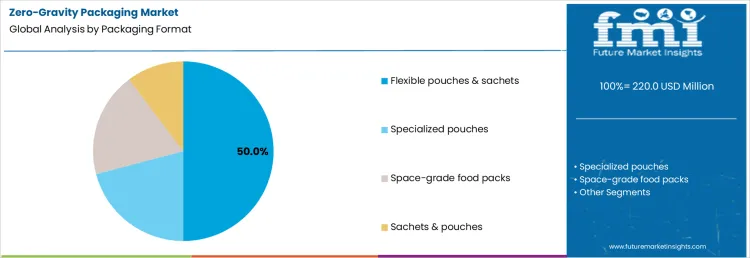
Flexible pouches & sachets are the leading packaging format in the zero-gravity packaging market, holding 50% of the share. These formats are highly favored in space missions and research due to their ability to hold and protect food and other materials in a compact, lightweight, and space-efficient manner. Flexible pouches and sachets are ideal for zero-gravity environments because they are easy to store, consume, and handle in microgravity, where traditional rigid packaging can be cumbersome. Additionally, these formats are cost-effective and customizable, allowing for better management of limited space on spacecraft or in research facilities. As the demand for space-grade food packaging grows, flexible pouches and sachets remain the preferred choice for space food, aerospace R&D, and defense applications, thanks to their versatility, ease of use, and ability to maintain food integrity under extreme conditions. The continued expansion of space exploration, including missions by agencies such as NASA, ISRO, and JAXA, will likely further increase the demand for flexible pouches and sachets in zero-gravity packaging.
What is the Key Dynamics for the Global Zero Gravity Packaging Market?
The global zero gravity packaging market is growing as industries supporting space travel and habitation develop methods to contain and dispense materials in microgravity environments. These solutions ensure powders, liquids and solids behave predictably without settling or floating uncontrollably, improving safety and usability aboard spacecraft, space stations, and future lunar or Martian outposts. Market activity reflects increasing investment in crewed missions, commercial spaceflight and in orbit manufacturing. Demand also arises from analog terrestrial applications in unique industrial settings. Adoption is tied to rising interest in sustained human presence beyond Earth and integration of resilient packaging technologies across mission profiles.
What are the Key Drivers for the Global Zero Gravity Packaging Market?
Expanding space exploration programs and commercial missions drive need for packaging that performs reliably where gravity is absent. Crew safety and resource efficiency demand containment systems that control flow, dosing and retrieval of food, medicines and experiment materials. Advances in aerospace materials and flexible packaging design allow development of solutions that prevent contamination and loss of supply. Partnerships between space agencies, private aerospace firms and research institutions encourage innovation and refinement of zero gravity packaging formats. Increased launch cadence and ambitions for orbital tourism and deep space research elevate demand for tailored containment strategies that support mission objectives.
What are the Restraints for the Global Zero Gravity Packaging Market?
Development of zero gravity packaging systems faces challenges related to high cost of testing and validation in relevant environments, which often require parabolic flights, drop towers or orbital platforms. Engineering solutions that maintain structural integrity, seal integrity and ease of use in microgravity can extend development timelines and resources. Limited access to flight test opportunities can slow iteration and product refinement. Market size remains constrained by the still emerging scale of crewed missions and specialized research programs, which influences investment decisions by manufacturers and specifiers. Regulatory and safety certification requirements specific to aerospace operations add complexity.
What is the Key Trends in the Global Zero Gravity Packaging Market?
An emerging trend is integration of smart features such as controlled release valves, one handed dispensing mechanisms and materials compatible with automated systems used in spacecraft. Packaging designers are applying learnings from space to support terrestrial niche uses such as high reliability medical, remote field operations and subsea applications. Use of lightweight, high strength polymers and novel closure systems enhances performance while reducing mass and volume, key considerations in space travel. Collaboration between packaging engineers and human factors specialists is increasing to optimize usability under constraints of limited dexterity and protective gear. Research into reusable and easily sterilized formats aligns with sustainability goals across long duration missions.
What is the Country-Wise Analysis of the Zero-Gravity Packaging Market?
The zero-gravity packaging market is expected to grow significantly, driven by increasing demand for advanced, innovative packaging solutions in sectors such as aerospace, pharmaceuticals, and high-tech consumer goods. Zero-gravity packaging focuses on minimizing the impact of gravitational forces, enabling the safe transport and storage of sensitive items in space or low-gravity environments. High-growth markets like China and India are leading the way due to rapid industrialization, technological advancements, and growing investments in space exploration and advanced manufacturing technologies. Developed markets such as the USA and Germany are also experiencing strong growth, supported by demand for innovative packaging solutions in aerospace, medical, and technology industries.
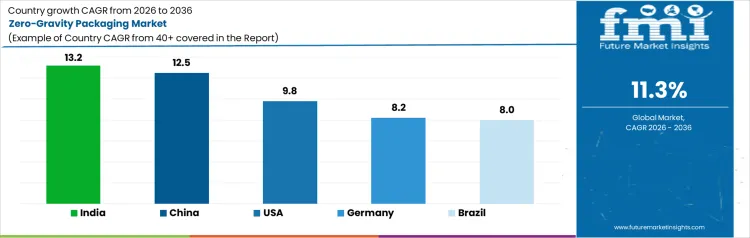
| Country | CAGR (%) |
|---|---|
| China | 12.5 |
| India | 13.2 |
| United States | 9.8 |
| Germany | 8.2 |
| Brazil | 8 |
What is the Growth Outlook for the Zero-Gravity Packaging Market in China?
The zero-gravity packaging market in China is expected to grow at a strong pace, with a projected CAGR of 12.5%. China’s expanding space exploration initiatives, along with rapid advancements in manufacturing and technology, are driving significant demand for specialized packaging solutions. As China’s aerospace and high-tech industries grow, the need for zero-gravity packaging solutions to protect sensitive materials in space environments is increasing. The government’s support for space programs and research is accelerating the adoption of cutting-edge packaging technologies. Additionally, China’s manufacturing sector is becoming a leader in advanced material solutions, further contributing to the rapid growth of the zero-gravity packaging market.
What is the Market Outlook for the Zero-Gravity Packaging Market in India?
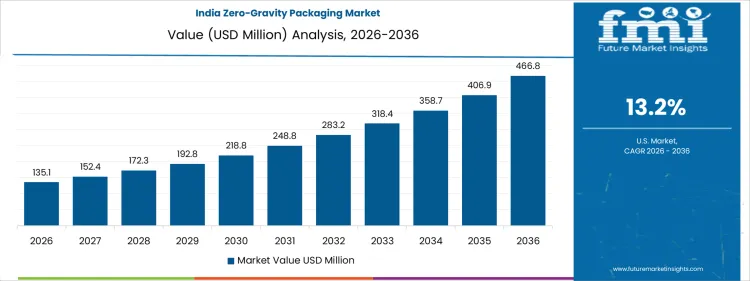
The zero-gravity packaging market in India is projected to grow at the highest rate, with a projected CAGR of 13.2%. India’s growing investments in space exploration, defense, and high-tech industries are driving the demand for innovative packaging solutions. The country’s space program, including satellite launches and exploration missions, is fueling the need for packaging that can withstand zero-gravity environments. Additionally, as India’s manufacturing sector continues to modernize and adopt advanced technologies, the market for zero-gravity packaging is expanding. With increasing government support for space and technology sectors, India is poised for strong growth in this market, becoming one of the global leaders in zero-gravity packaging innovation.
What is the Growth Forecast for the Zero-Gravity Packaging Market in the United States?
The zero-gravity packaging market in the United States is expected to grow steadily, with a projected CAGR of 9.8%. The U.S. is a global leader in space exploration and high-tech industries, driving demand for advanced packaging solutions that meet the specific needs of low-gravity environments. The growing space industry, coupled with innovations in aerospace, medical, and technology sectors, is creating significant demand for zero-gravity packaging. The U.S. government’s investment in space programs and the increasing involvement of private space companies are further accelerating market growth. As the need for safer, more efficient packaging in space-related industries increases, the U.S. market for zero-gravity packaging is set to continue expanding.
What is the Market Outlook for the Zero-Gravity Packaging Market in Germany?
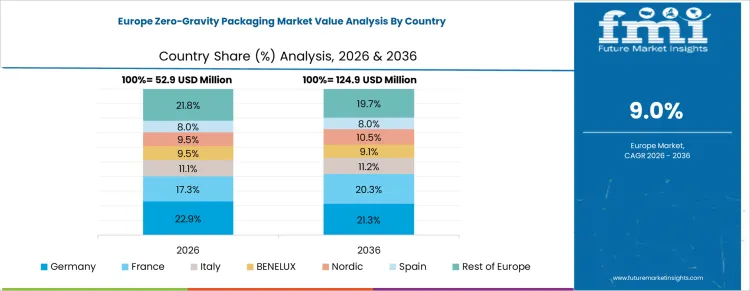
The zero-gravity packaging market in Germany is projected to grow at a steady pace, with a projected CAGR of 8.2%. Germany, known for its leadership in aerospace technology and engineering, is witnessing increased demand for specialized packaging solutions in space exploration and high-tech industries. The country’s commitment to advancing space programs and its strong manufacturing base are driving the adoption of zero-gravity packaging solutions. As industries in Germany seek more efficient ways to package sensitive materials for space missions and other specialized applications, the market for zero-gravity packaging is expected to grow steadily. Germany’s emphasis on innovation and quality will continue to support the development of advanced packaging solutions in this market.
What are the Growth Prospects for the Zero-Gravity Packaging Market in Brazil?
The zero-gravity packaging market in Brazil is expected to grow at a moderate pace, with a projected CAGR of 8%. Brazil’s aerospace and space exploration efforts, while still developing compared to other regions, are contributing to a growing need for advanced packaging solutions. As the country increasingly invests in its space program and high-tech industries, the demand for zero-gravity packaging solutions is expected to rise. Brazil’s manufacturing sector is also evolving, with advancements in materials science and technology that support the development of packaging solutions for space-related applications. While growth in Brazil may be slower compared to other regions, the market for zero-gravity packaging is expected to continue expanding as Brazil’s space and technology sectors grow.
What is the Competitive Landscape for the Zero-Gravity Packaging Market?
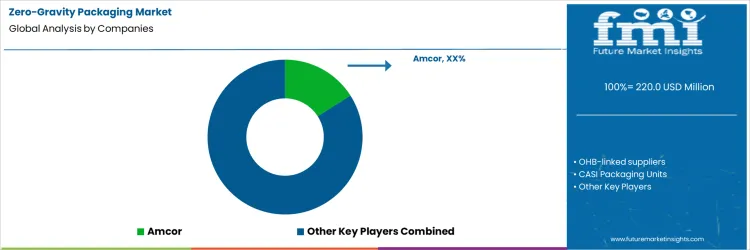
The zero-gravity packaging market is growing as industries related to space exploration, satellite deployment, and specialized scientific applications require innovative packaging solutions capable of withstanding the unique conditions of zero-gravity environments. Amcor leads the market with its advanced packaging technologies, offering durable and reliable solutions tailored for zero-gravity applications. Their focus on quality, performance, and adaptability has positioned them as a dominant player in this niche market. OHB-linked suppliers, CASI Packaging Units, and ISRO vendor ecosystem are significant competitors, providing packaging solutions designed to meet the high standards required by the space industry. OHB-linked suppliers focus on developing specialized packaging for satellite and space equipment, while CASI Packaging Units and ISRO offer solutions tailored to specific needs within the aerospace sector.
Local research suppliers, Mitsubishi Heavy Industries, and Lockheed Martin Packaging contribute further to the competitive landscape. Local research suppliers are involved in developing innovative packaging solutions based on emerging technologies, while Mitsubishi Heavy Industries and Lockheed Martin Packaging focus on creating advanced, robust packaging that meets the stringent requirements of space missions. These companies compete by focusing on technology, customization, and the ability to develop packaging solutions that can function effectively in zero-gravity environments, supporting the growing need for safe and efficient packaging in the space industry.
Key Players of the Zero-Gravity Packaging Market
- Amcor
- OHB-linked suppliers
- CASI Packaging Units
- ISRO vendor ecosystem
- Local research suppliers
- Mitsubishi Heavy Industries
- Lockheed Martin Packaging
Scope of the Report
| Items | Values |
|---|---|
| Quantitative Units (2026) | USD Million |
| Application | Space Food & Aerospace R&D, Research & Defence, Space Missions, ISRO & Defence Research, Academic Research, JAXA Programs |
| Packaging Format | Flexible Pouches & Sachets, Specialized Pouches, Space-Grade Food Packs, Sachets & Pouches, Others |
| Material | Multilayer Barrier Films, High-Barrier Laminates, PET/Alu Laminates, Barrier Films, Others |
| Technology | Anti-Float, Controlled-Dispense Valves, Precision Sealing Systems, Zero-Leak Sealing, Indigenous Sealing Tech |
| Companies | Amcor, OHB-Linked Suppliers, CASI Packaging Units, ISRO Vendor Ecosystem, Local Research Suppliers, Mitsubishi Heavy Industries, Lockheed Martin Packaging |
| Regions Covered | North America, Latin America, Western Europe, Eastern Europe, South Asia and Pacific, East Asia, Middle East & Africa |
| Countries Covered | United States, Canada, Mexico, Brazil, Argentina, Germany, France, United Kingdom, Italy, Spain, Netherlands, China, India, Japan, South Korea, ANZ, GCC Countries, South Africa |
| Additional Attributes | Dollar by sales by application, packaging format, material, technology, and region. Includes market trends in zero-gravity packaging, focusing on multilayer films, high-barrier laminates, and PET/Alu laminates. Highlights the role of anti-float valves, precision sealing systems, and zero-leak sealing in aerospace, research, and defence applications. Focus on sustainability, performance, regulatory compliance, and market share of key companies in the specialized packaging sector. |
Zero-Gravity Packaging Market Segmentation
Application
- Space food & aerospace R&D
- Research & defence
- Space missions
- ISRO & defence research
- Academic research
- JAXA programs
Packaging Format
- Flexible pouches & sachets
- Specialized pouches
- Space-grade food packs
- Sachets & pouches
- Others
Material
- Multilayer barrier films
- High-barrier laminates
- PET/Alu laminates
- Barrier films
- Others
Technology
- Anti-float, controlled-dispense valves
- Precision sealing systems
- Zero-leak sealing
- Indigenous sealing tech
- Others
Region
- Asia Pacific
- China
- Japan
- South Korea
- India
- Australia & New Zealand
- ASEAN
- Rest of Asia Pacific
- Europe
- Germany
- United Kingdom
- France
- Italy
- Spain
- Nordic
- BENELUX
- Rest of Europe
- North America
- United States
- Canada
- Mexico
- Latin America
- Brazil
- Chile
- Rest of Latin America
- Middle East & Africa
- Kingdom of Saudi Arabia
- Other GCC Countries
- Turkey
- South Africa
- Other African Union
- Rest of Middle East & Africa
Frequently Asked Questions
How big is the zero-gravity packaging market in 2026?
The global zero-gravity packaging market is estimated to be valued at USD 220.0 million in 2026.
What will be the size of zero-gravity packaging market in 2036?
The market size for the zero-gravity packaging market is projected to reach USD 640.0 million by 2036.
How much will be the zero-gravity packaging market growth between 2026 and 2036?
The zero-gravity packaging market is expected to grow at a 11.3% CAGR between 2026 and 2036.
What are the key product types in the zero-gravity packaging market?
The key product types in zero-gravity packaging market are space food & aerospace r&d, research & defence, space missions, isro & defence research, academic research and jaxa programs.
Which packaging format segment to contribute significant share in the zero-gravity packaging market in 2026?
In terms of packaging format, flexible pouches & sachets segment to command 50.0% share in the zero-gravity packaging market in 2026.
Preview the report firsthand - request a free sample
Get SampleGet the brochure for pricing and purchase details.
Get PDFTable of Content
- Executive Summary
- Global Market Outlook
- Demand-side Trends
- Supply-side Trends
- Technology Roadmap Analysis
- Analysis and Recommendations
- Market Overview
- Market Coverage / Taxonomy
- Market Definition / Scope / Limitations
- Market Background
- Market Dynamics
- Drivers
- Restraints
- Opportunity
- Trends
- Scenario Forecast
- Demand in Optimistic Scenario
- Demand in Likely Scenario
- Demand in Conservative Scenario
- Opportunity Map Analysis
- Product Life Cycle Analysis
- Supply Chain Analysis
- Investment Feasibility Matrix
- Value Chain Analysis
- PESTLE and Porter’s Analysis
- Regulatory Landscape
- Regional Parent Market Outlook
- Production and Consumption Statistics
- Import and Export Statistics
- Market Dynamics
- Global Market Analysis 2021 to 2025 and Forecast, 2026 to 2036
- Historical Market Size Value (USD Million) Analysis, 2021 to 2025
- Current and Future Market Size Value (USD Million) Projections, 2026 to 2036
- Y-o-Y Growth Trend Analysis
- Absolute $ Opportunity Analysis
- Global Market Pricing Analysis 2021 to 2025 and Forecast 2026 to 2036
- Global Market Analysis 2021 to 2025 and Forecast 2026 to 2036, By Application
- Introduction / Key Findings
- Historical Market Size Value (USD Million) Analysis By Application , 2021 to 2025
- Current and Future Market Size Value (USD Million) Analysis and Forecast By Application , 2026 to 2036
- Space food & aerospace R&D
- Research & defence
- Space missions
- ISRO & defence research
- Academic research
- JAXA programs
- Y-o-Y Growth Trend Analysis By Application , 2021 to 2025
- Absolute $ Opportunity Analysis By Application , 2026 to 2036
- Global Market Analysis 2021 to 2025 and Forecast 2026 to 2036, By Packaging Format
- Introduction / Key Findings
- Historical Market Size Value (USD Million) Analysis By Packaging Format, 2021 to 2025
- Current and Future Market Size Value (USD Million) Analysis and Forecast By Packaging Format, 2026 to 2036
- Flexible pouches & sachets
- Specialized pouches
- Space-grade food packs
- Sachets & pouches
- Y-o-Y Growth Trend Analysis By Packaging Format, 2021 to 2025
- Absolute $ Opportunity Analysis By Packaging Format, 2026 to 2036
- Global Market Analysis 2021 to 2025 and Forecast 2026 to 2036, By Material
- Introduction / Key Findings
- Historical Market Size Value (USD Million) Analysis By Material, 2021 to 2025
- Current and Future Market Size Value (USD Million) Analysis and Forecast By Material, 2026 to 2036
- Multilayer barrier films
- High-barrier laminates
- PET/Alu laminates
- Barrier films
- Y-o-Y Growth Trend Analysis By Material, 2021 to 2025
- Absolute $ Opportunity Analysis By Material, 2026 to 2036
- Global Market Analysis 2021 to 2025 and Forecast 2026 to 2036, By Technology
- Introduction / Key Findings
- Historical Market Size Value (USD Million) Analysis By Technology, 2021 to 2025
- Current and Future Market Size Value (USD Million) Analysis and Forecast By Technology, 2026 to 2036
- Anti-float, controlled-dispense valves
- Precision sealing systems
- Zero-leak sealing
- Indigenous sealing tech
- Y-o-Y Growth Trend Analysis By Technology, 2021 to 2025
- Absolute $ Opportunity Analysis By Technology, 2026 to 2036
- Global Market Analysis 2021 to 2025 and Forecast 2026 to 2036, By Region
- Introduction
- Historical Market Size Value (USD Million) Analysis By Region, 2021 to 2025
- Current Market Size Value (USD Million) Analysis and Forecast By Region, 2026 to 2036
- North America
- Latin America
- Western Europe
- Eastern Europe
- East Asia
- South Asia and Pacific
- Middle East & Africa
- Market Attractiveness Analysis By Region
- North America Market Analysis 2021 to 2025 and Forecast 2026 to 2036, By Country
- Historical Market Size Value (USD Million) Trend Analysis By Market Taxonomy, 2021 to 2025
- Market Size Value (USD Million) Forecast By Market Taxonomy, 2026 to 2036
- By Country
- USA
- Canada
- Mexico
- By Application
- By Packaging Format
- By Material
- By Technology
- By Country
- Market Attractiveness Analysis
- By Country
- By Application
- By Packaging Format
- By Material
- By Technology
- Key Takeaways
- Latin America Market Analysis 2021 to 2025 and Forecast 2026 to 2036, By Country
- Historical Market Size Value (USD Million) Trend Analysis By Market Taxonomy, 2021 to 2025
- Market Size Value (USD Million) Forecast By Market Taxonomy, 2026 to 2036
- By Country
- Brazil
- Chile
- Rest of Latin America
- By Application
- By Packaging Format
- By Material
- By Technology
- By Country
- Market Attractiveness Analysis
- By Country
- By Application
- By Packaging Format
- By Material
- By Technology
- Key Takeaways
- Western Europe Market Analysis 2021 to 2025 and Forecast 2026 to 2036, By Country
- Historical Market Size Value (USD Million) Trend Analysis By Market Taxonomy, 2021 to 2025
- Market Size Value (USD Million) Forecast By Market Taxonomy, 2026 to 2036
- By Country
- Germany
- UK
- Italy
- Spain
- France
- Nordic
- BENELUX
- Rest of Western Europe
- By Application
- By Packaging Format
- By Material
- By Technology
- By Country
- Market Attractiveness Analysis
- By Country
- By Application
- By Packaging Format
- By Material
- By Technology
- Key Takeaways
- Eastern Europe Market Analysis 2021 to 2025 and Forecast 2026 to 2036, By Country
- Historical Market Size Value (USD Million) Trend Analysis By Market Taxonomy, 2021 to 2025
- Market Size Value (USD Million) Forecast By Market Taxonomy, 2026 to 2036
- By Country
- Russia
- Poland
- Hungary
- Balkan & Baltic
- Rest of Eastern Europe
- By Application
- By Packaging Format
- By Material
- By Technology
- By Country
- Market Attractiveness Analysis
- By Country
- By Application
- By Packaging Format
- By Material
- By Technology
- Key Takeaways
- East Asia Market Analysis 2021 to 2025 and Forecast 2026 to 2036, By Country
- Historical Market Size Value (USD Million) Trend Analysis By Market Taxonomy, 2021 to 2025
- Market Size Value (USD Million) Forecast By Market Taxonomy, 2026 to 2036
- By Country
- China
- Japan
- South Korea
- By Application
- By Packaging Format
- By Material
- By Technology
- By Country
- Market Attractiveness Analysis
- By Country
- By Application
- By Packaging Format
- By Material
- By Technology
- Key Takeaways
- South Asia and Pacific Market Analysis 2021 to 2025 and Forecast 2026 to 2036, By Country
- Historical Market Size Value (USD Million) Trend Analysis By Market Taxonomy, 2021 to 2025
- Market Size Value (USD Million) Forecast By Market Taxonomy, 2026 to 2036
- By Country
- India
- ASEAN
- Australia & New Zealand
- Rest of South Asia and Pacific
- By Application
- By Packaging Format
- By Material
- By Technology
- By Country
- Market Attractiveness Analysis
- By Country
- By Application
- By Packaging Format
- By Material
- By Technology
- Key Takeaways
- Middle East & Africa Market Analysis 2021 to 2025 and Forecast 2026 to 2036, By Country
- Historical Market Size Value (USD Million) Trend Analysis By Market Taxonomy, 2021 to 2025
- Market Size Value (USD Million) Forecast By Market Taxonomy, 2026 to 2036
- By Country
- Kingdom of Saudi Arabia
- Other GCC Countries
- Turkiye
- South Africa
- Other African Union
- Rest of Middle East & Africa
- By Application
- By Packaging Format
- By Material
- By Technology
- By Country
- Market Attractiveness Analysis
- By Country
- By Application
- By Packaging Format
- By Material
- By Technology
- Key Takeaways
- Key Countries Market Analysis
- USA
- Pricing Analysis
- Market Share Analysis, 2025
- By Application
- By Packaging Format
- By Material
- By Technology
- Canada
- Pricing Analysis
- Market Share Analysis, 2025
- By Application
- By Packaging Format
- By Material
- By Technology
- Mexico
- Pricing Analysis
- Market Share Analysis, 2025
- By Application
- By Packaging Format
- By Material
- By Technology
- Brazil
- Pricing Analysis
- Market Share Analysis, 2025
- By Application
- By Packaging Format
- By Material
- By Technology
- Chile
- Pricing Analysis
- Market Share Analysis, 2025
- By Application
- By Packaging Format
- By Material
- By Technology
- Germany
- Pricing Analysis
- Market Share Analysis, 2025
- By Application
- By Packaging Format
- By Material
- By Technology
- UK
- Pricing Analysis
- Market Share Analysis, 2025
- By Application
- By Packaging Format
- By Material
- By Technology
- Italy
- Pricing Analysis
- Market Share Analysis, 2025
- By Application
- By Packaging Format
- By Material
- By Technology
- Spain
- Pricing Analysis
- Market Share Analysis, 2025
- By Application
- By Packaging Format
- By Material
- By Technology
- France
- Pricing Analysis
- Market Share Analysis, 2025
- By Application
- By Packaging Format
- By Material
- By Technology
- India
- Pricing Analysis
- Market Share Analysis, 2025
- By Application
- By Packaging Format
- By Material
- By Technology
- ASEAN
- Pricing Analysis
- Market Share Analysis, 2025
- By Application
- By Packaging Format
- By Material
- By Technology
- Australia & New Zealand
- Pricing Analysis
- Market Share Analysis, 2025
- By Application
- By Packaging Format
- By Material
- By Technology
- China
- Pricing Analysis
- Market Share Analysis, 2025
- By Application
- By Packaging Format
- By Material
- By Technology
- Japan
- Pricing Analysis
- Market Share Analysis, 2025
- By Application
- By Packaging Format
- By Material
- By Technology
- South Korea
- Pricing Analysis
- Market Share Analysis, 2025
- By Application
- By Packaging Format
- By Material
- By Technology
- Russia
- Pricing Analysis
- Market Share Analysis, 2025
- By Application
- By Packaging Format
- By Material
- By Technology
- Poland
- Pricing Analysis
- Market Share Analysis, 2025
- By Application
- By Packaging Format
- By Material
- By Technology
- Hungary
- Pricing Analysis
- Market Share Analysis, 2025
- By Application
- By Packaging Format
- By Material
- By Technology
- Kingdom of Saudi Arabia
- Pricing Analysis
- Market Share Analysis, 2025
- By Application
- By Packaging Format
- By Material
- By Technology
- Turkiye
- Pricing Analysis
- Market Share Analysis, 2025
- By Application
- By Packaging Format
- By Material
- By Technology
- South Africa
- Pricing Analysis
- Market Share Analysis, 2025
- By Application
- By Packaging Format
- By Material
- By Technology
- USA
- Market Structure Analysis
- Competition Dashboard
- Competition Benchmarking
- Market Share Analysis of Top Players
- By Regional
- By Application
- By Packaging Format
- By Material
- By Technology
- Competition Analysis
- Competition Deep Dive
- Amcor
- Overview
- Product Portfolio
- Profitability by Market Segments (Product/Age /Sales Channel/Region)
- Sales Footprint
- Strategy Overview
- Marketing Strategy
- Product Strategy
- Channel Strategy
- OHB-linked suppliers
- CASI Packaging Value (USD Million)s
- ISRO vendor ecosystem
- Local research suppliers
- Mitsubishi Heavy Industries
- Lockheed Martin Packaging
- Amcor
- Competition Deep Dive
- Assumptions & Acronyms Used
- Research Methodology


